Scrap Wood Mobile Base

I spent some time this weekend cleaning up my basement when I came across a set of casters lying around. I forget why I bought them, but they were just sitting in a box for some unknown reason. When I saw them, I thought to myself that I could use them to make a mobile base for my jointer.

I’ve owned a 6″ Delta Jointer since I was a kid. I use it from time to time but eveytime I do, I have to drag it out from behind my band saw so I can plug it in. The jointer isn’t huge but it does weigh over 100lbs so it’s kind of a pain in the ass to move. I thought about buying a mobile base for it but they run between $80-100. I’m too cheap to spend money on something I wouldn’t use that often so the jointer has never been upgraded with mobility.

When I found the casters I looked around for some scrap wood to make the base. The base of the jointer stand is 19″ wide by 35″ long so the inside of the frame it needed to sit in had to be 20″ x 36″.  I grabbed some scrap 2 x 10’s and ripped them 2″ wide to make the frame. I wanted to make the long rails of the frame 40″ with 20″ stiles but as luck would have it, the longest piece of 2 x 10 I had was 36″ long so I had to make the rail of the frame 36″ and the stiles 24″ long. After the frame was screwed together, I took 1/2″ plywood, cut two squares, then cut them diagonal to make four triangles. Then I screwed, glued, and barbecued everything together.

Now is the part where I messed up. Since I was building this thing on the fly without plans, I didn’t think too much about the space the casters needed. I originally took a 2 x 8 and trimmed it to 6″ wide by 24″ long and attached it to the frame. The casters fit on the wood but they didn’t have enough room to spin around.

So, I had to add 1 1/2″ wide piece of wood to the 6″ to make the overall width 7 1/2″ wide or basically the width of a 2 x 8. Doh! Overall, I’m happy with the way it came out (especially since it was free). It actually took me longer to write this post than it did to make the mobile base. Now I won’t have to struggle dragging my jointer from behind my band saw everytime I need to use it.

No 1 Odd Jobs

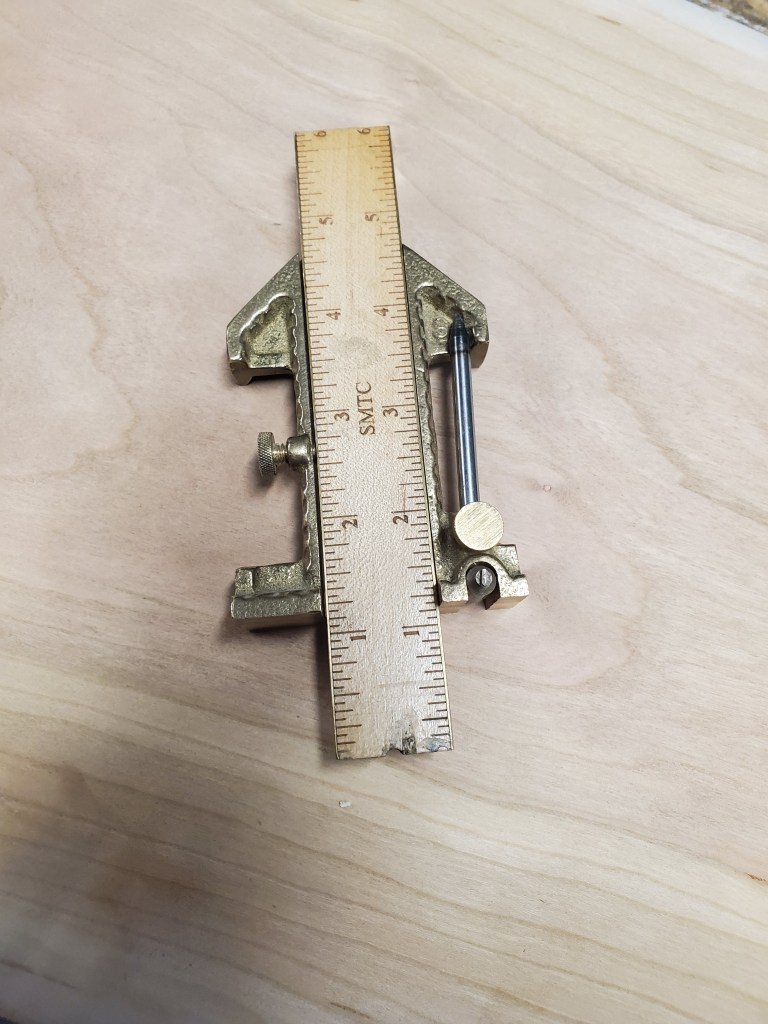
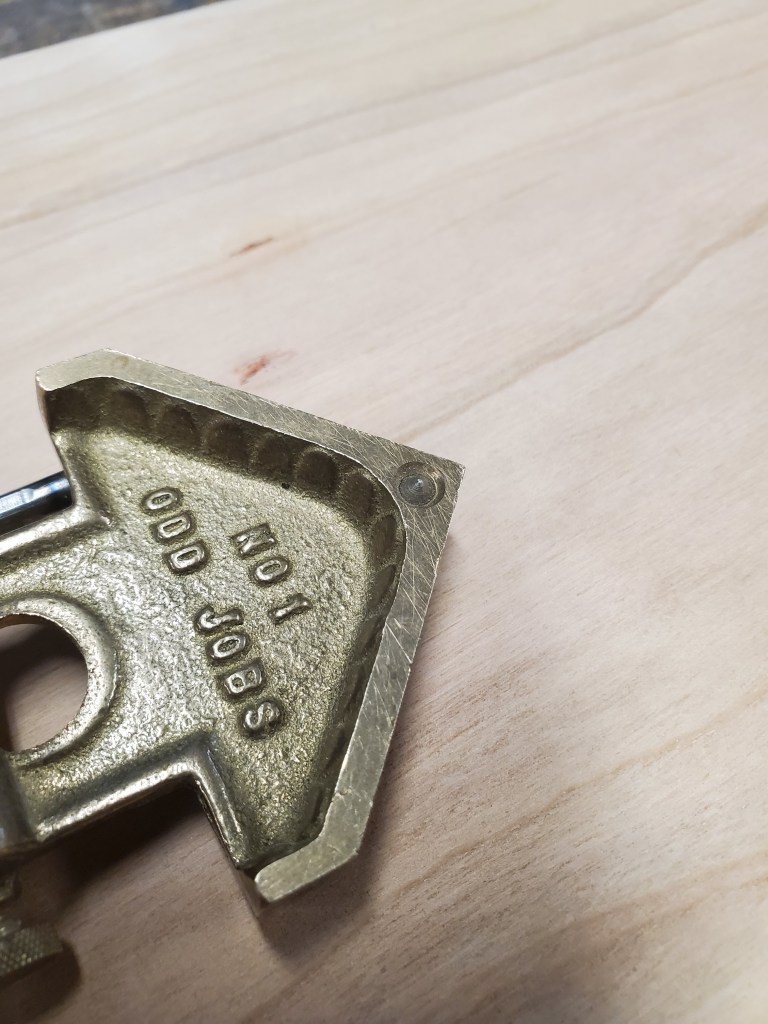
During my last post, one of my followers was asking about a special tool I used to build a cutting board and I told him I’d write a post about it. It’s called a No 1 Odd Jobs and is based off a tool Stanley made back in the early 20th century.

I bought it at Garrett Wade about twenty years ago and is one of the handiest little tools I use around the shop. It’s made by SMTC. I have no idea what the letters stand for but I assume the TC stands for Tool Company.

One side of the ruler is metric which comes in handy when you ever have to deal with metric measurements but can’t find a ruler to help you out. Honestly, the only time I deal with metric measurements is when I’m messing around with Festool tools so I hardly ever use the metric side of this ruler.

The simplist part of the tool is the 90 and 45 degree marking gauges. Because of the tool’s size, it’s easier to mark 45 degree measurements with this than a large clunky combination square.

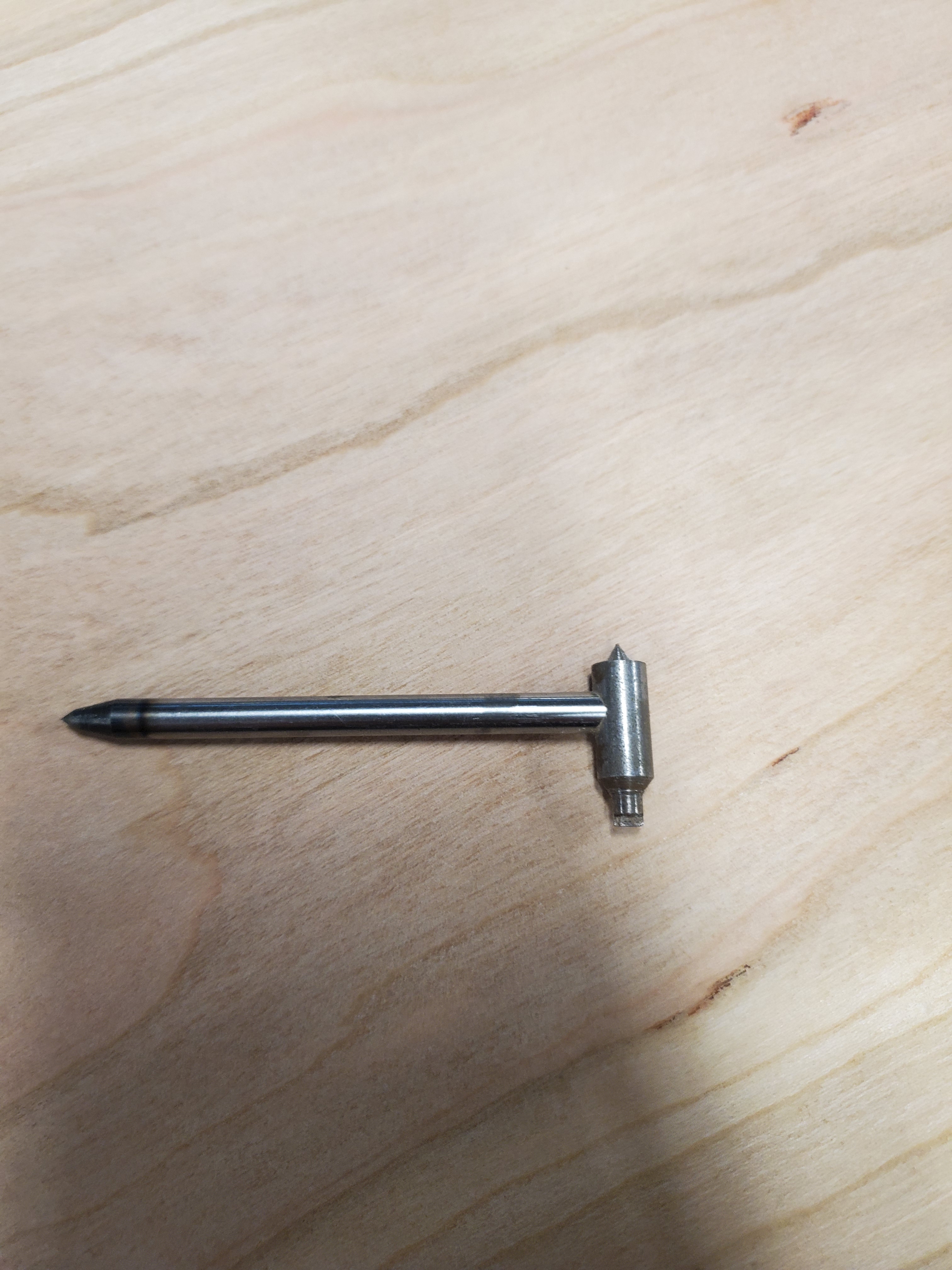
The tool comes with a marker but I never use it. I always use a pencil instead. You can use the marker to strike a line and use it like a marking gauge.

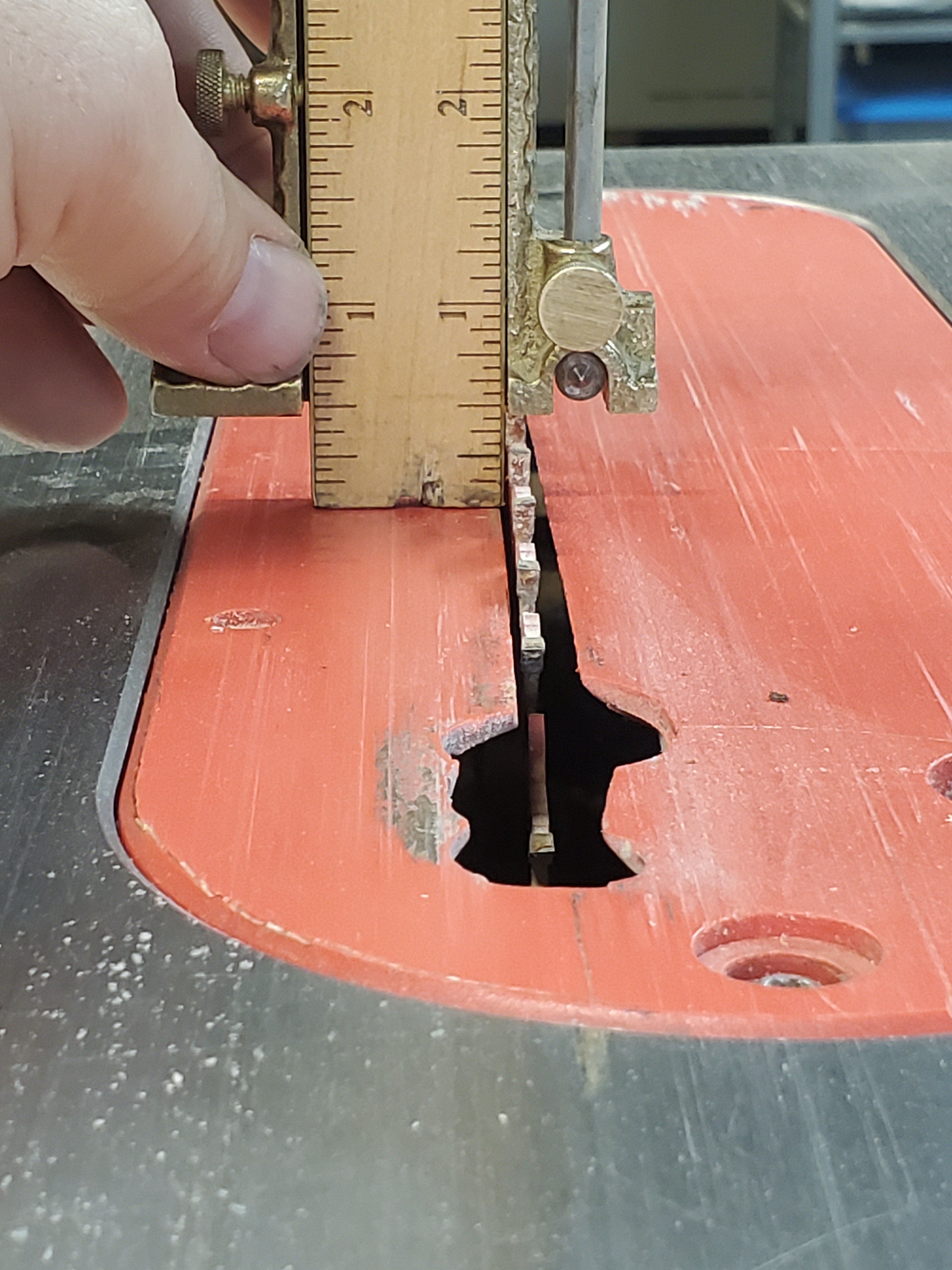
I use the tool most as a depth gauge. Either to gauge the height of my table saw blade, or to measure the bottom of a groove or mortise I cut.

There’s a pin at the top that makes it useful to use as a compass. I own a regular compass so I never use it for this either.

There’s also a bubble in the middle of the tool. I never use it. Maybe useful to help leveling pictures or small shelves but that’s about it.

Overall I love this little guy. I paid $40 for it 20 years ago and it’s still about $40 on their website. The original Stanley No 1 Odd Jobs go for around $40 without a ruler so, forget about saving some money by buying the original antique.

Here’s the link to the tool. Apparently, Garrett Wade is branding the tool with their name now and is no longer made by SMTC. By the way, I get nothing from this. I’m a nobody in the woodworking world so no one wants to use me to promote their tools.

Cutting Board with a Breadboard Edge

Last weekend I had some Eastern White Pine scraps lying around after I finished building a display cabinet for my wife for her spring show which just got cancelled due to the COVID-19 virus. I hate to throw the scraps away or toss them into the fire pit so I decided to make a small cutting board with them.

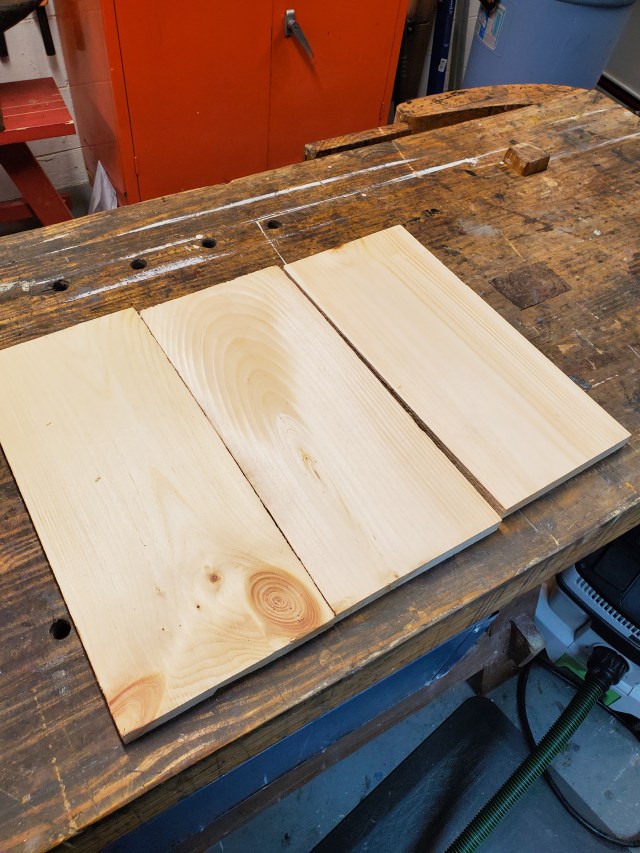
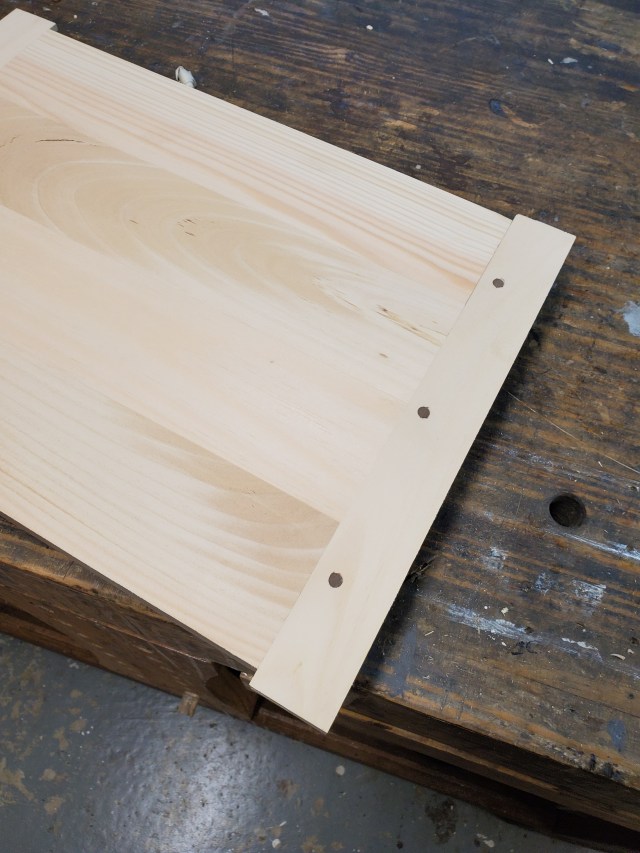
I ripped two of the boards 3″ wide and glued up the pieces. The third piece I ripped to 1 1/2″ wide which would serve as the breadboard ends,

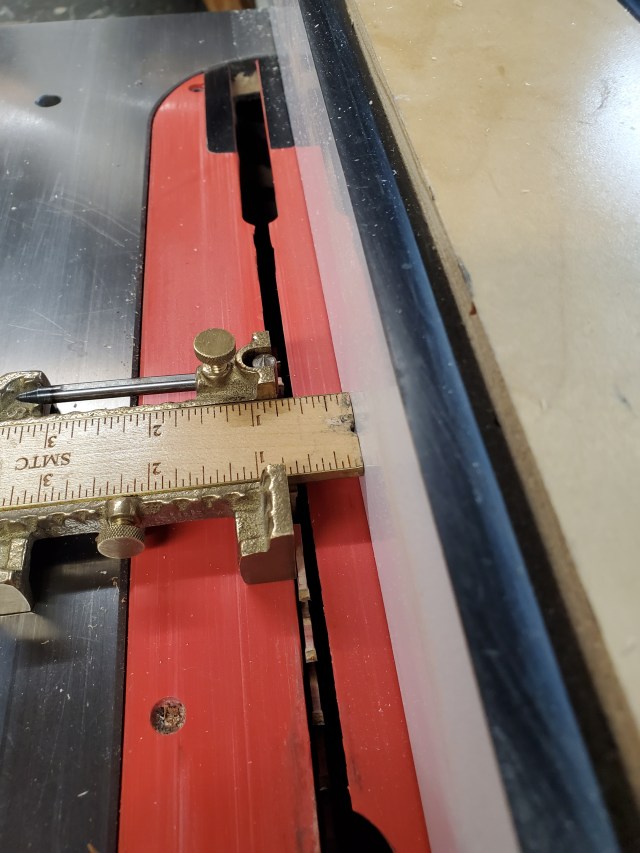
After the glue dried, I sized the board to 16 1/2″ long by 12″ wide. I set up my table saw blade at 1/4″ tall with the furthest part of the blade 3/4″ from the fence using my little Odd Jobs ruler.

I cut grooves on the top and bottom of each end to create a 1/4″ by 3/4″ tenon across the board. I then cleaned up the rough marks with a chisel and rabbet plane so I would have a nice smooth tenon on each side of the board.

Then I took the two 1 1/2″ wide boards and ran a 1/4″ groove 3/4″ high down the edges to give me a nice groove that would be snug with the tenons.

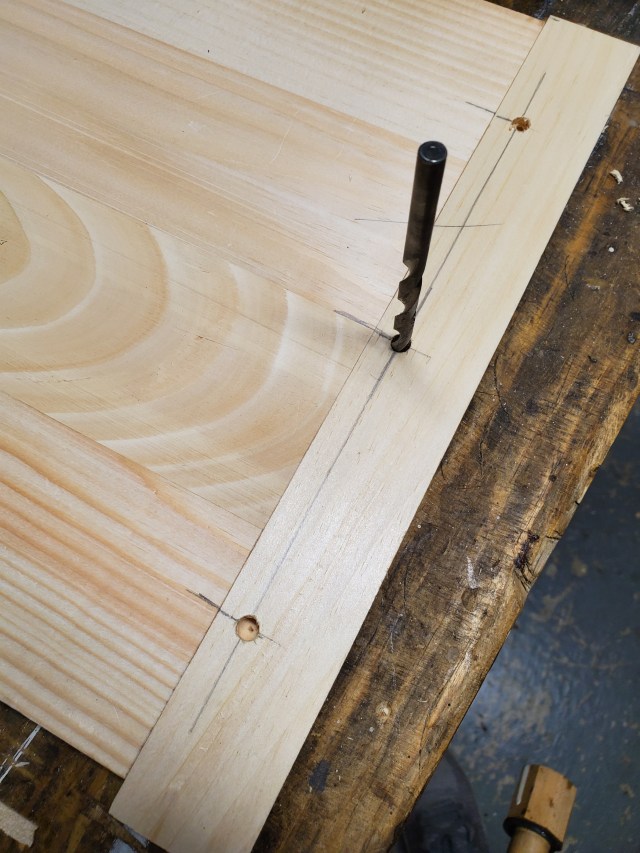
I marked where I wanted the pins to go through the tenon and drilled through the breadboard ends with a 1/4″ drill bit. Then I took the ends and marked with the drill bit where the pins would intersect the tenon. Being this cutting board is small and the sides of the breadboards fit nicely with the tenon, I didn’t bother draw boring the joint.

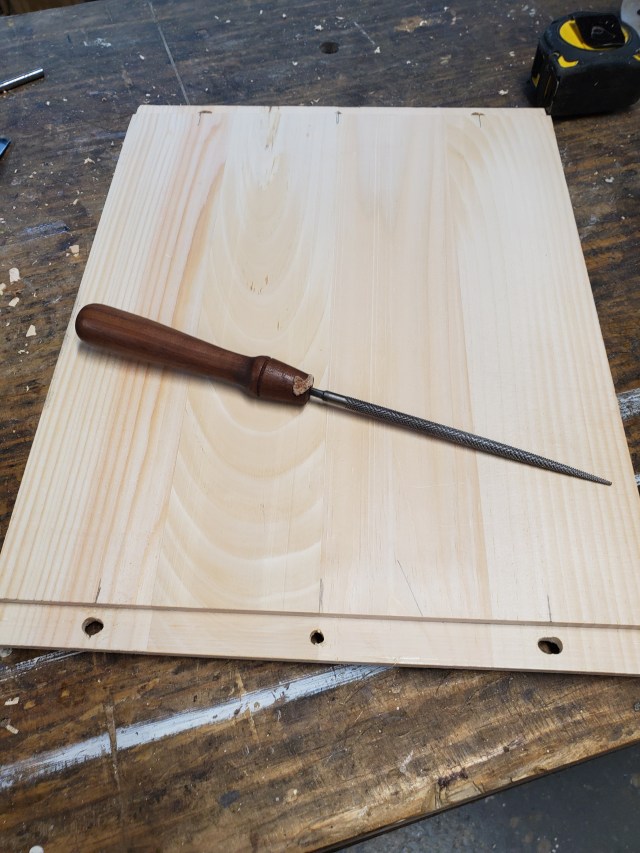
I then drilled the holes and elongated the holes at each end with a round rasp to allow for seasonal movement as the wood will expand and contrast with changes in humidity.

I applied a little glue only in the center of the tenon, clamped and drove 1/4″ walnut dowel pins through all six holes.

After the glue dried, I cut the pins flush and sanded the surface up to 220 grit sandpaper. Then I trimmed the breadboard ends flush to the sides of the cutting board and sanded the edges.

I applied a couple coats of my black shellac I made to give it an aged look. I think the board came out a little too green in color, but my wife Anita likes it. She said it makes it look old and worn. It turned out to be a quick and easy project on a Sunday afternoon.

Dining Room Table Rework

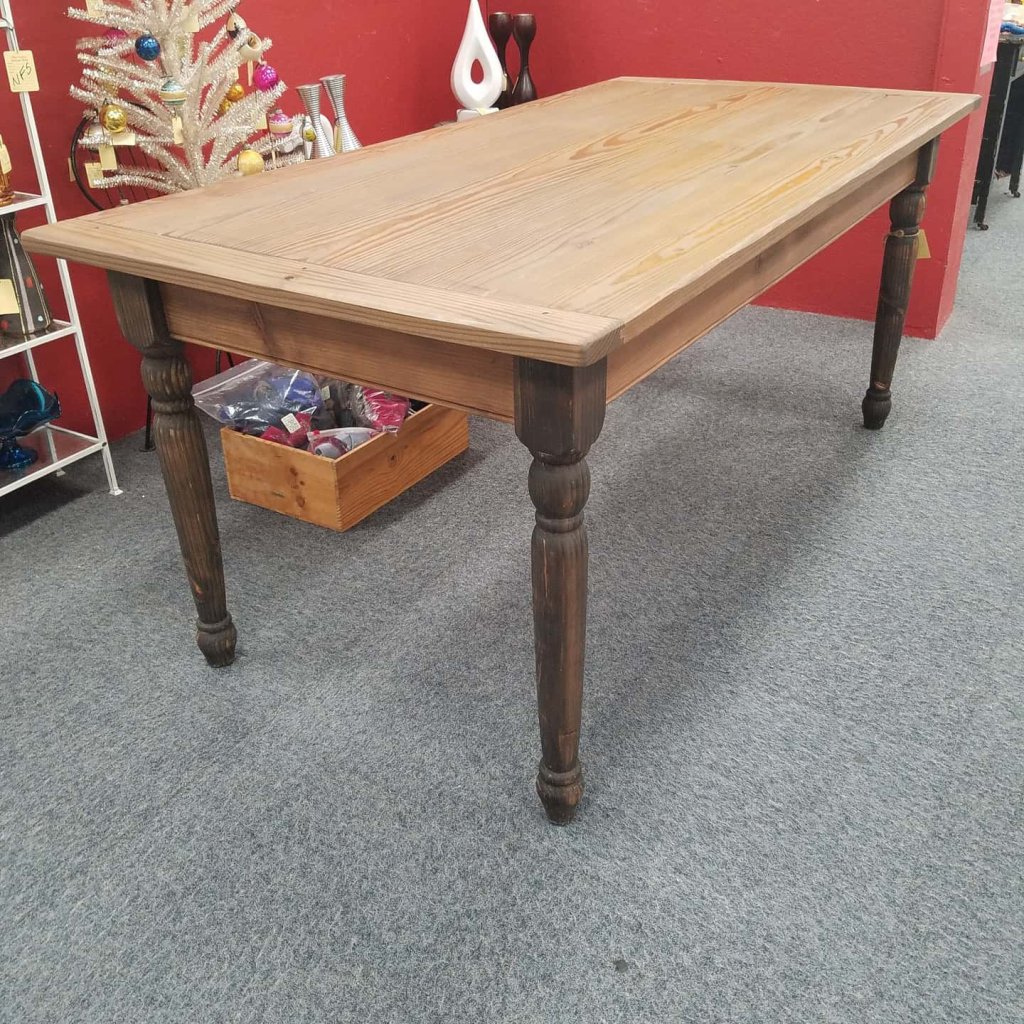
Last summer I built this farmhouse table to sell in our booth at the Ohio Valley Antique Mall in Fairfield, Ohio. I built it from construction grade 2x10s and my wife stained it a rich brown color. I thought the table would sell pretty quickly since I spent the time making real breadboard edges and Anita stained it to look like walnut. But after it sat in our booth for a couple of months, that wasn’t the case. We decided to bring the table home so Anita could paint it white.

When we put it in our dining room, Anita sat at the table and said that it was too tall. I built it to 31″ with 1/2″ protective feet on the bottom. She asked me to cut the table down 1″ so I grabbed a compass and handsaw and cut all four feet 1″ shorter. The feet turned from a tulip shape to a squished ball, but the legs still looked good.

Anita painted the table with white milk paint and distressed it to give it an aged look. I’m under a strict nondisclosure agreement so I’m not allowed to discuss her painting techniques. : ) Anita has people asking her all the time to give away her secrets so, all I can say is she paints with milk paint.

You can see the detail of her technique as she makes the grain pop through the paint.

A few days later, we bought four wooden chairs off of Facebook Marketplace and Anita painted them black. We ended up with a really nice dining room table for the time being until I build the table Anita really wants, a farmouse style trestle table made from white oak.