I bought a Disston D8 Thumb Hole Rip Saw and wanted to restore it. The saw was in pretty good condition when I bought it. The only issue it had was that the back of the handle was broken with a chip missing from it. It’s a pretty common issue as that is where your thumb and index finger ride when sawing, so it’s under a lot of friction.
I wanted to repair it, so I carefully carved out an area to glue a new piece of apple wood in its place.
After the glue dried, I shaped and sanded the wood to match the rest of the handle. It came out well , it just needed a little bit of wood putty to close up the gaps between the new wood and handle.
After the putty dried, I sanded the whole handle and applied a few coats of shellac to it. The handle looked nice, but the putty stood out like a sore thumb.
This is where I put my artistic hat on. Playing with a paint kit, I mixed up a few colors of red, brown, and yellow, mixing them around to get the best matching shade I could create. It wasn’t about creating the perfect color but laying three different colors down so that it would blend with the rest of the handle.
After a few minutes of painting, I was happy with how it turned out, so I let it dry.
The saw came out nice, and the broken end of the handle won’t dig into my skin when I’m using it. Now that is all left to do is to sharpen the blade and put it to use.
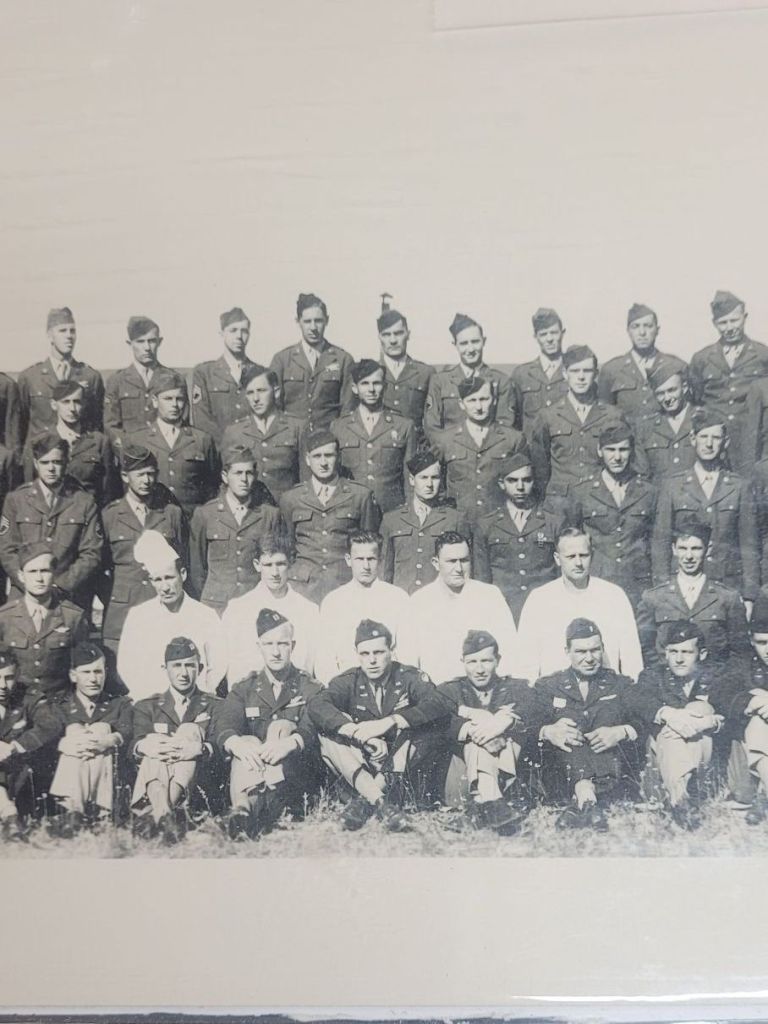
Several weeks ago, I bought a yardlong picture at an antique shop. Finding a frame to fit the picture is next to impossible, so I knew I had to make one.
I looked around for some wood and found a piece of ash from a project I made a few years ago. Ash is not the ideal wood to use with molding planes as it has a lot of moving grain. Preferably poplar or mahagony would be the ideal wood, but ash is what I have.
I ran my complex molding plane over the board and slowly cut the profile in the wood. It took about 20-30 minutes for me to cut the profile.
I then took the board over to the table saw and ripped the molding 1″ wide.
I didn’t want the sides of the frame to be flat, so I carefully gouged out the middle, starting with carving gouge, then switched over to my No 6 hollow plane. Then I finished up with a piece of sand paper wrapped around a 1/2″ dowel.
I cut the rabbets for the frames on the table saw. I made three moldings that were longer than what I needed. I wasn’t concerned about the ends of the molding because I was going to cut them away anyway.
Using my Stanley No 150 Miter Box and my miter trimmer, I cut the piece out.
The molding pieces are now looking like a frame.
After I cut all the pieces, I dried fitted them together to see how the corners met. If they needed attention, I would carve and sand the ends to meet each other.
The final frame looks pretty good. Now it’s up to my wife, Anita, if she wants to stain or paint it.
This is the first time this year where I have had time to work in the shop, and it felt great. My job keeps me busy during the week, and the weekends are often antique hunting with Anita. I’m glad I had the time yesterday.
I’m not sure which branch of the military these men served or when the picture was taken, as there is no stamp on the picture, but they may have served in WWI as many of the yardlongs I’ve seen are early 20th century. All I know is that these men fought and may have died for our country, so they need to be honored by being put into a frame and hung on someone’s wall.
A couple of weeks ago, my wife and I were antique hunting in Dayton, Ohio, where I ran into this old level in the back of a barn. I figured it was a Stanley Rule and Level Co level, but the amount of brass in the front intrigued me as it wasn’t the usual design I see all the time.
I really don’t restore levels too often, but I decided to ask how much it was as I thought it would be a fun little restoration project. After the lady told me $10.00, I took it home.
Restoring it was pretty straightforward. I applied some citrus based paint stripper on it to remove the old grime, then washed it off with a soapy dish liquid. Then I applied elbow grease to buff out brass with steel wool and liquid brass cleaner. Then, coated the level with a few coats of shellac.
You can see on the side that it’s faintly stamped 11, which I figured makes it a Stanley No 11. Stanley made No 11’s in mahagony and rosewood. When I was cleaning the wood, I got excited thinking the level was made from rosewood, but I’m pretty sure it’s mahagony. The fact that the brass is only the corners and not completely covering the end makes it an older level.
You can see the Stanley Rule & Level Co. so it’s possible it’s before they acquired their plane line.
I’m not sure how to date the level as I am unaware of a type study on Stanley Levels, but if I had to take a guess, I’d say it’s around 1860-80’s in age. And it’s in pretty nice shape for being as old as it is.
Does anyone know how old it is? Drop a comment and let me know.
Last weekend, my wife and I were antiquing in Dayton, Ohio, when we stopped in an antique store in Tipp City. I went into the back of the store when I saw this thing sitting on the shelf. I immediately knew exactly what it was as I owned one of these tools many years ago. It’s a No 40 Langdon Millers Falls Portable Mitre Box.
When I was a kid, I went to an Ohio Tool Collector Association meet-up and saw one of these miter boxes on a silent auction table. I thought it was cool as it was something I had never seen before. I put a silent auction bid of $20.00 and hoped for the best. Sure enough, I won the auction! The guy selling it wasn’t too happy about the price it received as he said that’s what he paid for it.
The tool is simple in its concept. There’s a fence that you clamp to a board and disc that you turn and set your angle with positive stops. You can even adjust the accuracy of the angle by adjusting the two screws on either side of the positive stop.
I wanted to try it out, so I grabbed a piece of scrap wood and clamped the miter gauge to it, then swung the fence to 45 degrees.
Since it’s made to be portable, the craftsman would just use a panel saw and cut the board while on the job site. The miter box is small enough that it would easily fit in a toolbox.
After I took a cut, I was surprised how accurate it was. That’s a pretty good 45 for trim carpentry work on a house.
Millers Falls made a compound angle version of this tool called the No 41, but I have never seen one in the wild.
I paid $15 for this miter box, which is cheaper than what I paid for the first one 35 years ago. People don’t know what these things are, so if you find one in the wild, chances are you’ll pick it up for a good price. I sold my first one years ago when I was unemployed and needed money. I really didn’t want to sell it back then as I thought I would never find another. Maybe the antique tool gods like me.
I’ve owned this Ohio Tool Co Moving Fillister Plane for a while now. It was missing its fence and screw when I bought it, so I decided it was time to make a new one for it.
I started by cutting a blank from some brass stock I bought on eBay. The blank I cut out was 3/8″ x 2″ x 3″.
Luckily, I have another fence off another moving fillister plane I could use as a template. While the dimensions weren’t the same, I custom drew what the fence should look like on the brass stock.
After I cut out the shape on the band saw, I punched a spot where my 3/8″ drill bit will drill a hole for the center on the fence. Then I kept moving down the fence drilling holes in the center.
I needed to remove some of the back of the fence, so I went back to the band saw to do the job.
Then, I cut off some of the face of the fence to thin it up and shaped the bottom of it with my files.
In the end, I was happy with my results. Not too shabby, as this was the first thing I have ever fabricated out of brass.
Now I needed to make the screw to hold it in place. Again, I had a screw from another plane that I could use to find something similar at the hardware store. I ended up buying a 5/16″ x 1″ screw from Home Depot, but I had to grind it round on my belt sander.
I then filed the top to a dome shape and used a hacksaw to file a slot in the top.
I polished the screw up, cleaned the body of the plane, and put everything together. The plane came out really nice and performs well after I sharpened the blade.
Another plane has been saved from the garbage bin of life and is back to use for the next hundred years.
A couple of months ago, I went over to a local blacksmith’s shop to take a class on making Roubo style holdfasts. I’ve been following Jamie Gier on Facebook for some time now and I knew he lived right down the street from me, but when I saw him making holdfasts on his page, I contacted him to see how much they would cost.
When he told me they were only $60.00, but he could teach me how to make them, I jumped at the chance and scheduled a time to meet with him after work.
When I got to his shop, he started by throwing a couple of steel rods in his furnace and heating them until they got hot. Then, he sent each one over to his power hammer to draw them out until each rod was about 16″ long.
That’s when he gave me the reigns and had me finish up drawing out the rods until they were about 20″ long.
Next, we took the steel bar over to his other power hammer and hit the middle of the bar into a form to create the 90-degree bend. This is what I’m doing in the photo here, but there is no photo of the actual form. sorry.
Next, I formed the goose head shape of the holdfasts between two round heads and played with how the head of the holdfast should look. Took some trial and error until I was happy with the result.
After the holdfasts were shaped, Jamie knocked off the burrs from the steel with a wire brush and coated each one with boiled linseed oil. I ended up with four holdfasts as he loves just being in his shop and making things.
The next day, I drilled a hole in a scrap piece of wood to test the holdfasts. They almost worked. Unfortunately, they were off just a few degrees as the pads weren’t hitting the wood where they should be.
I showed Jamie that they needed to be adjusted, so I went back over a few weeks later. He threw the holdfasts back in the furnace and adjusted the pads down about 6 degrees.
The next day, I tested them again. Sure enough, that did the trick! I now have four usable holdfasts in total but will only need to use two at the most. I drilled some more 13/16″ holes on my bench so that I could have total reach with holdfasts. The holdfasts are pretty big, with each one having a swing of 18″ in diameter.
Having a guy down the street who is willing to teach me blacksmithing is a godsend. While I was at his shop adjusting the holdfasts the other night, he taught me how to heat treat some plane blades I made for my Stanley No 48 plane out of O1 steel.
We had such a good time together that we’re talking about making Japanese style chisels next, as it’s something he has always wanted to try. This is going to be fun!
You can also follow the blacksmith group, the Goshen Historical Society School of Blacksmithing, on Facebook as well, of which him and I are members of.
I bought this unmarked antique plow plane sometime during my life. I have bought so many tools over the years, I often can’t remember when or where I got them. Not to mention what I paid for them, which can be a problem if I want to try to make money when I want to sell the tool.
The plane was complete, but the arm was broken in half, missing the bottom of it. The original owner simply stuck a big bolt from the top of the arm through the fence.
I had some Applewood in my shop for fixing handles of my Disston saws and also to turn tool handles. I grabbed a small piece and traced the outline of the good arm, and shaped a new one.
I cut the bad part of the arm off at the bandsaw and found the center of the threaded rod so that I could drill a hole down the center of it.
Unfortunately, the rod was too tall to do this on my drill press, so I had to do it free hand using a square to keep my rod at 90 degrees keeping me in line to drill a straight hole.
Once I drilled a 5/16″ hole about a 1/2″ deep, I stuck a center point in it.
Then, I pushed the center point into my new arm end and used that point to drill another 5/16″ hole into the new piece.
Thankfully, when I glued a dowel into both holes and clamped it for a few hours, the new arm was straight and looked similar to his brother.
The last thing to do was clean up the rest of the plane. I used some Citristrip to remove all the crud off the plane and washed everything with dish soap and water.
After the restoration was complete, I grabbed my antique tool reference catalogs to see if I could find out who made this plane. It turns out that it is a Denison & Co Boxwood Plow Plane. The bottom fence and nuts on my plane are nearly identical to the one in the picture.
The plane came out really well even though I used Applewood while the plane is Boxwood. The color matches well enough and will darken to a nice reddish color similar to Disston saw handles.
You can see where the plane was repaired in its past with a big screw in the brass skate that goes all the way through its body. Plus, there are four screws going up from the bottom of the body for some reason. I see no cracks as to why they are there.
I’ll keep the plane and put it in my arsenal. It’ll be a perfect plane to use since it’s not in original condition.
A couple of weeks ago, I bought Set & File by Matt Cianci from The Lost Art Press. I waited about a year for the book to be published as sharpening has never been a strong suit of mine when it comes to saw restoration.
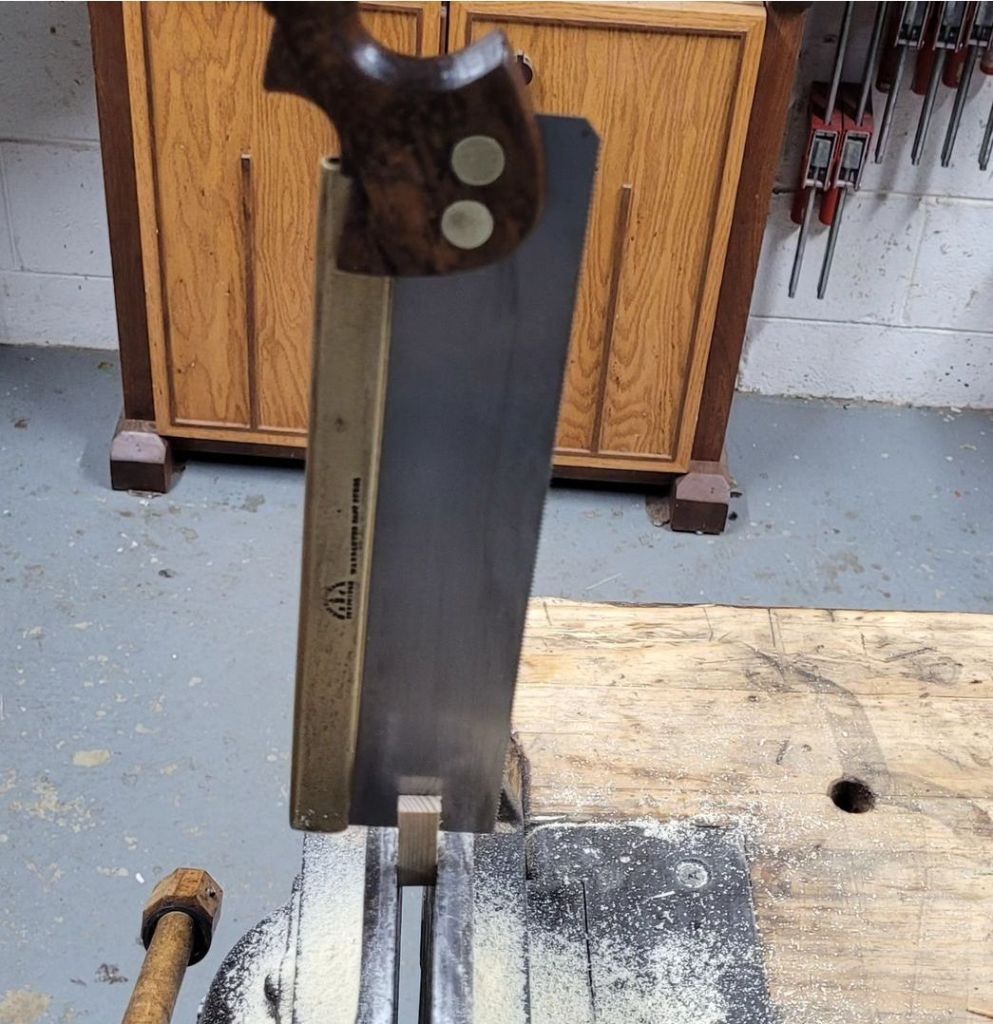
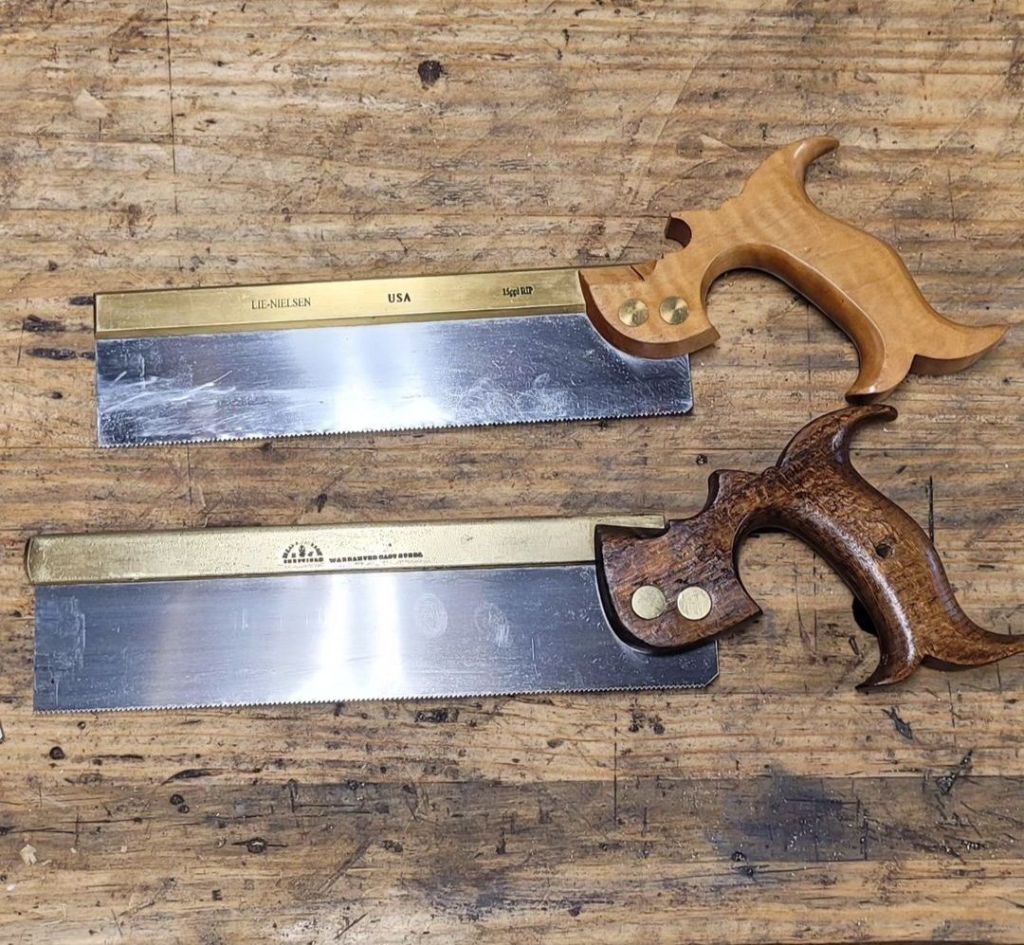
I’ve owned a Lie Nielsen dovetail saw for years and recently restored a Spears and Jackson dovetail saw. While I could sharpen the teeth fine, setting them properly was a pain as the anvil in my saw set was too big to do the job.
I read in Matt’s book where he dismantled his Stanley No 42X saw set and filed the anvil thinner in order to properly set the teeth on fine tooth saws.
Sure enough, I followed his advice and clamped the anvil in my vise, and carefully filed both sides of the anvil in order for it to look like the one in his book.
Putting the saw set back together, the anvil looked like it would now do the job.
After a few minutes of sharpening and setting the teeth, the saw sat in its kerf nice and tight. Plus, it cut like butter.
Now, I have two dovetail saws that are ready for use. It’s amazing how simple tricks can help your woodworking skills. Major props to Matt Cianci!
My wife, Anita, and I were antiquing in Madison, IN, yesterday when I stumbled upon this little workbench.
It was cute little Sloyd style workbench from the 1800s. I couldn’t believe how small it was, so I imagine it had to be built for a little kid.
It had to be about 3′ 6″ tall by 5′ long. What was so amazing about the bench was how well worn out and used it was. The child that worked on this bench used it a lot as the top is full of tool marks.
Obviously, it could have been for multiple children in a school shop class, but I never had a bench like this in elementary school, let alone a shop class. Can you imagine being the kid lucky enough to work on this bench?
No, I didn’t buy the bench as I couldn’t afford the $350.00 price tag as I’m too cheap. Plus, I didn’t want to drag it home because I had no place to put it. But it’s definitely the coolest old workbench I’ve ever seen.
I bought this old cabinet at an antique show last month. I didn’t realize it at the time that the left drawer was an imposter. It’s basically the drawer face screwed to a smaller drawer. Shame on me for not checking before I bought it.
here is the drawer. you can see Bentley is not impressed.
So I took the drawer face off the stupid faux drawer and decided to rebuild the whole thing with some white pine .
I cleaned up all the nails that the previous owner used to “fix” the drawer in order to use the existing pins as a jig to cut the dovetail tails. I also cleaned up the pins so that could work again.
Basically, what I did was scribe the pins onto the drawer side and cut tails into the wood. No different than making a drawer from scrap. The only difference is that not all the pins survived over the years, so there are ghost pins within the drawer side.
After I cut the front tails, I made normal dovetails on the back to match the other two drawers that survived.
I made a new bottom and stuck it in the drawer to make sure it worked. Everything was square and fit into the cabinet opening.
Here’s the drawer finished and glued together. They all fit nicely back into the cabinet and everything is good to go. I also glued one of the cabinet doors back together and attached both of them back on the cabinet.







 MVFlaim Furnituremaker