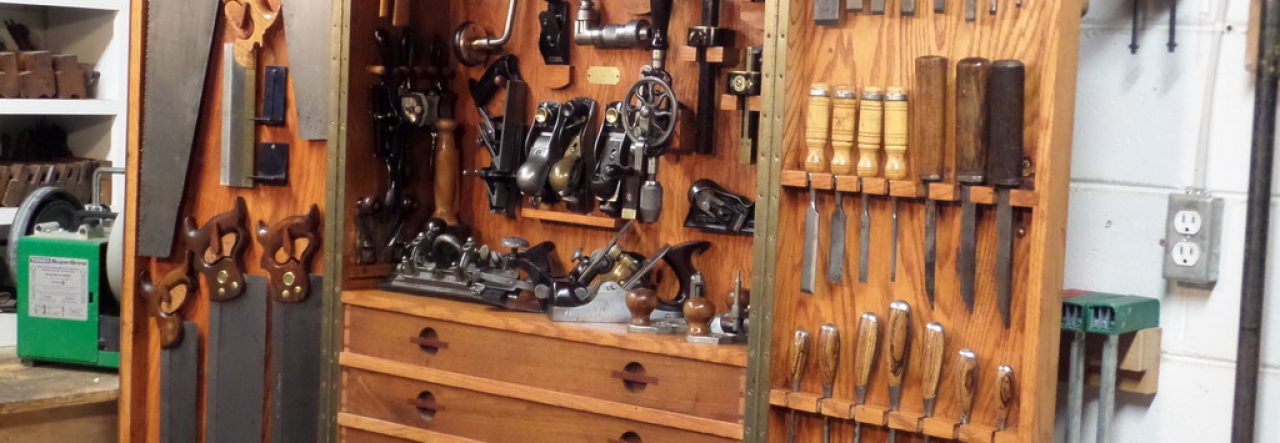
French Style Bookcase

My French style bookcase is painted and done. It turned out really well. My wife loves it which is all that really matters. I decided that I will build a few more and have my wife paint them with different colors to see if we can sell them on Craigslist. I posted these pictures on Facebook with a little bit of a description and an asking price of $450.00 which is cheap considering hand-made bookcases sell for over a $1000 in furniture stores. I’ll see if I get any offers on Facebook but even if I don’t, I won’t let it be a deterrent from building more because I feel that people will really like these bookcases.

The bookcase measures 59″ Long x 16″ Wide x 34 1/2″ High and is made from poplar. My wife did an excellent job painting it with two coats of semi-gloss black latex paint and a primer underneath. It’s turned out really well but I’m considering painting the next ones with a lacquer paint for durability. I’ll have one black, one white and one black with white stencil, or vice versa, whatever my wife decides to do.

The side shot shows the detail of the crown molding that I cut with an old molding plane and the cross bars that hold the case together. The crossbars are strong but make the whole bookcase light. The crossbars also imitate the sides of the Eiffel Tower which puts it in the French Style.

This morning my wife and I decided to fancy up bookcase by decorating it. We searched all over our home for trinkets and stuff to stick on the shelves. I used a picture of a bookcase from a furniture catalog to act as a guide on how to decorate it. After we were done, my wife didn’t want to put the stuff back from where we got them since the bookcase looked so nice.

Hopefully I’ll get good feedback from my friends on Facebook. Maybe I’ll even get an order or two.

Since when do woodworkers buy furniture from other woodworkers?

I have to admit, I’d never thought that a woodworker would buy a piece of handmade furniture from another woodworker. After all we’re woodworkers, we could just easily make it ourselves. But what has happened over the past few months has changed my opinion.

It started a couple of years ago when I made four Shaker side tables out of cherry. I had plans of listing them on Etsy and turning a handsome profit. At first it seemed easy with a sale within the first week. The problem was that the person who had “bought” the table was a scammer trying to pull some over payment cashiers check trick and then have me send him the difference back. Luckily Etsy saw the scam and cancelled the transaction.

I had the tables out on Etsy for a few months with no other bites so I decided to delist them. I was them stumped as to what to do with them so I had the idea of donating one to my local PBS station’s Action Auction. The auction went well and I had my table on TV for several minutes as well as MVFlaim Furnituremaker listed on the PBS station’s website. So, the next year I decided to do it again. Even though I didn’t get any money for them, I felt good about the exposure and helping out my local PBS station with the donation.

Then last summer I got a call from one of the people who had won the auction for one of the tables. They wanted another one! So I gave them a price and went over to their house to deliver it. I met with the woman’s husband and he started talking about woodworking and took me out to his shop. I looked around in his shop in confusion. The man obviously had a nice set up. Nice enough to be able to build the table himself. Why was he buying mine? I asked him why and he told me that while he dabbles in woodworking, he doesn’t possess the skills that I have to build the table as nice as I did. I was extremely flattered by that.

Three tables down one to go. My wife decided to stick the last one in our spare bedroom and use it for a few months. It looked nice but didn’t quite match the French country decor she was going after so she listed it on Craigslist. A couple of days ago a guy called and asked if he could have it for a certain price. My wife and I agreed to the offer and told him to come pick it up. The man came to the house, introduced himself and started asking about what type of joinery I used to build the table. I couldn’t believe it. Another woodworker! Here’s another guy who would rather buy a nice handmade table than make himself. What is going on? He told me that he spends all his time at work and really doesn’t have time to build things he wants but appreciates nice furniture when he sees it. He even told me that he went down to Tennessee to Lonnie Bird’s school to take his Dovetailing class a few years ago so he definitely had a passion for woodworking.

All I know is that I learned something new today. Even though people possess the skill to build something themselves, they’ll still pay a fair price for the work of others. I didn’t get rich from the sale of the tables. In fact, I barely got my money back from the cost of the wood, but it still felt good helping out my local PBS station the past couple of years and meeting new friends.

User vs Collectible Stanley Planes

Sometimes I’ll see people ask the simple question on woodworking forums on whether or not an old plane they picked up at a garage sale is worth anything. While chances are it’s worth what they paid for it, every once in a while they found a real gem. The key is finding out what Type of Stanley plane you have.

About twenty years ago Roger K Smith wrote a Type Study on the different features of Stanley planes through the years.  It was originally printed in Patented Transitional and Metallic Planes in America Volume I and then later used in John Walter’s book Antique and Collectible Stanley Tools Guide to Identity and Value. Unfortunately both books are out of print and tough to acquire but fortunately for us, some people have uploaded the info to the internet. Below is one of the links. http://www.tooltrip.com/tooltrip9/stanley/stan-bpl/bailey-types.htm

This Type Study is considered to be the most accurate information to date on the manufacturing of Stanley planes, however it should be noted that Stanley Works never built planes based on these Type Studies. They simply build planes with whatever parts they had lying around. So it is quite possible to have a plane that fits all the criteria of a certain Type Study but may have a part or two with an earlier or later Type to it.

Below are two Stanley No 5 planes that to an untrained eye, may look quite similar to one another but are worlds apart as far as value. The plane on the left is a Type 2 which was made from 1869-1872. The one on the right is a Type 13 made from 1925-1928.

The easiest way to tell if your plane is collectible or not is to see if there is a lateral adjustment on the frog. Planes without this lever are known as Prelateral planes. There are four Type Studies that were Prelateral planes, Type 3 being the most rare. If you come into contact with a Type 3 plane, don’t do anything to it. It’s gold to tool collectors.

The second easiest way to see if you have a collectible Stanley plane is to see where the round hole on the plane’s blade is. If it’s on top like the blade on the left, it’s a Prelateral plane blade. Why Stanley changed the position of the hole from the top to the bottom, I have no idea. The hole is there to put the cap iron nut through the blade without having to fully remove it. Seems like a silly feature  to me but that’s just me. Every plane blade ever made has this feature so I’m obviously missing something.

Another feature that distinguishes really old Stanley planes from the users is the lever cap. If your lever cap is solid without any recesses, it’s rare. I guess metal was a precious commodity back then and every ounce counted. Do the solid lever caps work better? I doubt it. It’s just a lever cap.

The fourth feature that separates the collector from the user is the brass adjustment knob in the back of the frog. I guess Stanley was trying to save money anyway they could back in the 1870’s and putting a recess in the adjustment knob saved them $.001 in brass. But hey, $.001 was a lot of money back then.

A fifth major feature is the shape of the tote. It was still being made out of rosewood but the shape on later Stanley’s became more streamed line. Stanley probably heard complaints from customers about the totes being uncomfortable so they redesigned  the shape. But that’s my guess. It wasn’t cost savings because they didn’t switch to birch hardwood until the 1940’s.

Now it’s your call of you want to use one of these old planes in your shop on a day-to-day basis. All I know is I sold the Type 2 on eBay for $175.00 while the Type 13 commonly goes for $40.00. With the economy the way it is today, if I had an old collectible Stanley plane, I’d sell it and buy a later version with a little bit more bells and whistles for a quarter of the price and fill up my truck with a tank of gas and take my wife out for dinner with the remainder of the money.

A moment with the absurd

So my wife and I are browsing through an antique store this weekend when I came across this lamp.

At first I didn’t know what it was but then it dawned on me. I hesitated for a minute and looked around at the tools that were glued and soldered together hoping that none of them were valuable. Fortunately they were not. Then I looked at the price tag. $425.00 for this piece of shit.

For $425 I could buy a 13″ DeWalt planer; a Lie-Nielsen #8 jointer plane; a Festool Rotex Sander; hell I could even buy a used copy of “The Art of Joinery” by Joseph Moxon and Chris Schwarz on Amazon.  

Now I understand that beauty is in the eye of the beholder and whoever built this thing was proud of it. Which they should be. But why in the world someone else would try to sell this thing for over $400 is beyond me. Are they trying to recoup the cost of the tools? If so, $40 should do it. None of the tools are worth more than $10.00. An old molding plane, fore plane, marking gauge, twist auger, clamp, a set of calipers and a beat up old draw knife. What the lantern is doing on the side I have no idea. I would think having a lantern on a lamp is an oxymoron.

It just makes one realize that you need to be careful when shopping in antique stores where vendors ask ridiculous amounts for their junk. More likely the next home for this lamp is in the dumpster. All I know is for $425.00, the thing should have at least come with a freaking shade.

“The Art of Joinery” by Joseph Moxon and Chris Schwarz

A few years ago I attended the first Woodworking in America conference in Berea, KY. While there, I picked up the book “The Art of Joinery”. The book was originally written by Joseph Moxon about 300 years ago. Chris Schwarz rewrote parts of the book in plain English and added a bunch of photos with captions under them.

It’s a good book that is a quick enjoyable read but unfortunately it’s no longer in print. So one day I was browsing eBay and saw that somebody was asking $400 for the book. I thought to myself “yeah right”. Then I searched amazon.com and saw people were asking $500 for their copy. I knew those prices were ridiculous but was intrigued what the book was actually worth. So, I threw the book on eBay last week with a starting bid of $39.99 and watched where it would go. It ended up selling for $59.12 plus shipping.

I can’t remember what I paid for the book but I think it was only around $8.00 -$12.00. Chris Schwartz signed the book with his name on the first page which may have helped its final selling price. Pretty good return on my investment if you ask me. In fact, it makes me want to buy a couple dozen copies of “The Anarchist Tool Chest” and drive across the Ohio River to Chris’s house to have him sign the books.

Making crown molding with a complex molding plane

While in the process of building a Bourdonnais French style bookcase I needed to make some crown molding for the top.

I wasn’t about to go out and spend money on some pre-made crown molding. That would be the easy way out. I have a boat load of antique molding planes in my shop, so I decided to put one of those bad boys to use.

The first step in make making crown molding is to get the stock prepared. I ripped a couple of pieces of straight grained poplar 5/8″ x 2″ x 6′ long. It’s important to get wood with grain as straight as possible to avoid tear out caused by the plane’s blade.

I then chopped off a section of one of the boards to use as a test piece. Placing the piece in my sticking board, I began running my molding plane over the board to create the Roman ogee profile. After a few strokes, the shape was completed in about five minutes. By the way, my sticking board is similar to the one based off of Jim Toplin’s in the book “The New Traditional Woodworker” by Popular Woodworking Books.

The next step is to create the angles on the board so that is works as crown molding on the case. I took the board over to the table saw and set the blade to 30 degrees. Once I set the fence to the proper location, I ran the board through and then flipped the board over to rip off the same 30 degree angle off the other end of the board.

I then took the molding back to the bench to finalize the profile. I used a block plane and just knocked off the top corner. This corner should be 90 degree to the 30 degree angle cut on the table saw so that it will lay on the case properly. (It’s really helpful to have a small sample piece of crown molding laying around so that you can use all the angles on the molding as a template for your piece).

Once the profile has been completed, a light sanding with 120 grit sand paper helps clean up any chatter left by the molding plane. I use a styrofoam sanding sponge and some sticky sand paper to sand the profile.

After sanding the only thing left to do is attach it to the case. Always make more molding than you need. There may and will be parts of the molding where the plane falls out of line a little bit and the profile won’t match the rest of the board. You simply cuts those parts off and use the rest.

ToolCo Router Bits

A couple of months ago there was a thread on a woodworking forum I host called The Burl www.theburlforum.com where people were talking about which router bits were the best. I made the comment that I usually buy Whiteside router bits because they were of good quality and made in the USA.

I was told by a member of The Burl that there was another USA made router bit company around that makes bits under their name as well as private labels them for other companies called ToolCo. I had never heard of them but was intrigued so I searched them on the internet and found their website at www.toolcobits.com.

After visiting their website, I was impressed with the vast amount of bits they made and was eager to try them out but had no way of knowing where to buy them as it lacks a dealer locator.

Then miraculously, I was contacted by an employee of the company who asked If I would be interested in getting some. After exchanging a few emails he sent me a package of router bits.

At first glance I could tell these bits were bad ass. The majority of router bits I have in my shop are 1/4″ shank Chinese shit bits I bought as a set at Costco a few years ago. These ToolCo bits were 1/2″ shank and looked like they could kick some serious hardwood ass.

You can definitely see the quality difference between ToolCo and the crap bits. For one thing, there’s more metal to the body and the carbide is thicker. I’m sure the carbide itself is better grade of material but I don’t know much about metallurgy to even comment on that. All I know is that when I stuck them in my router they cut like butter.

Even the spiral up cut bit is wicked looking. I’ve never seen a bit with that many tight spirals up the shank. A few weeks after I got my bits, I attended The Woodworking Show in Columbus Ohio and went to the booth where they sell a lot of router bits. I looked for their spiral up cuts to compare to the ToolCo I have. I could tell the ones they sold at The Woodworking Shows were made for homeowners while these ToolCo bits are sold for Industrial use.

Obviously I haven’t had time to try out all the bits I got but, it’s like the old saying; you don’t have to eat the entire pie to know it taste good. All I know is the next time I’m in need of a new router bit, ToolCo is where I’ll look. I just hope they update their website so I can find a local dealer who stocks them.

Making a Roubo Style Workbench Part 5 – revisited

Well the bench is all done. I am really happy the way it has turned out. A few mistakes here and there but it’s just a workbench so in time it will be beaten to pieces anyway.

I finished up the base cutting through mortise and tenons through the front and back legs for the side stretchers. The front and back stretchers I cut slot dovetail joints so it won’t rack from front to back. No where on the bench (other than the top) did I use any glue. If and when I move out of my house, I need to be able to disassemble it and carry it out of my basement.

After the base was built I had to focus my attention back onto the legs. A couple of the legs split  down the sides as they were drying in my basement. I cut some 3/4″ thick butterfly keys out of red oak and pounded them into place. I then took some polyurethane glue and poured into the cracks to help stabilize the material. Honestly, I  don’t think the poly glue did anything other than make me feel better as I hear polyurethane glue doesn’t have any gap filling properties anyway.

On the bench leg that I installed my leg vise on, I needed to cut out and insert a southern yellow pine wedge. ACQ lumber is very corrosive to metal and because my leg vise hardware is made out of cast iron, I needed to insert a wedge so it wouldn’t corrode. I attached the wedge to the leg with wax coated screws designed for the ACQ lumber.

Once the bench was put together, I applied some deck stain to the base and then worked on the accessories like the crochet, the deadman, leg vise jaw and the drawer. On the curves of the crochet and deadman, I used my Stanley #113 circular plane. The plane’s bed can flex to a concave as well as a convex shape with the turning of a screw on top of the plane. I planed both sides of the crochet with ease however, you could also do this with an oscillating spindle sander if you don’t own one of these planes.


When I originally drew the bench, I didn’t incorporate a drawer. My old bench had a tool tray where I laid my bench dogs and hold fasts in. The tray worked fine but every time I planed or sawed something, the bench would rack and the tools in the tray would vibrate annoying me. It was only after I built the bench, that I realized that there was no way for this bench to rack, so I quickly built a drawer 12″ long x 3″ tall x 16″ deep. Even though in the picture the drawer looks like it’s in the way of the deadman, it can be pushed back so that the deadman can slide by.

I drilled 3/4″ holes down the front of the bench top for my bench dogs. In the back I drilled four 5/8″ holes to accommodate my hold fasts. I made they hold fasts while taking a blacksmith class from Don Weber in Paint Lick, KY in January. He showed me how to take an old car spring, heat it up, hammer it straight, then pound the pad and bend the curve to make a hold fast with incredible holding power. Spring steel hold fasts work far better than the cheap cast iron ones you find in woodworking stores because the steel has the ability to flex. The class was a lot of fun and Don is an honory gentleman filled with Welsh chair bodging and blacksmithing knowledge. Hopefully I’ll be able to go back to take his Tool Making for Woodworkers class in April.

After the bench was complete, I applied a coat of shellac to the top. It gave it some protection but also it raised the grain a little bit so that the top wouldn’t be so slick. Having a top with a little bit of grip is a good thing so tools won’t slide off.

Using the Emmert Pattermakers Vise

Some people say that owning a pattermaker vise for cabinet work is a little over kill as you will never really need all the versatility that the vise offers. I say, “it’s better to have it and not need it, than need it and not have it”. Actually I have found one major advantage of using the vise.

Often the biggest disadvantage of building a bench that is designed low enough for planing is that when it comes to cutting joinery, the work piece is too low making it uncomfortable. Some woodworkers build a smaller bench that sits on top of the bench or simply switch over to a taller work bench when cutting joinery. Because the Emmert vise face can turn 360 degrees, I swing the jaws up making the the top of the jaws 38″ from the floor. Now it’s a lot easier on my back cutting dovetails.

I’m sure there is a lot more useful things I can do with this vise but I’ll need some more time to experiment to find out what they are. I plan on making chairs some day and the jaws ability to angle 10 degrees will come in handy when I’m working with tapered legs.

Making a Roubo Style Workbench Part 4 – revisited

After I completed the assembly of the base I focused my attention on installing the Emmert Turtleback Patternmaker’s Vise. Called a turtleback because the front looks like a turtle’s shell, you can read more about these vises at http://www.mprime.com/Emmert The vise will be installed at the end of the bench so that I can use vise pins along with my bench dogs down the length of the bench.

The first thing I did is determine exactly where I wanted the vise to sit. I sat the vise upside down on my bench and traced around it. Next I took my circular saw and cut half way through following the traced lines, plunging the saw down where necessary. Then I flipped over the top, retraced the vise and repeated the saw cuts. I finished up using a jigsaw in the area the circular saw wouldn’t reach. Once the chunk of wood is removed I cleaned up the cuts with my belt sander.

Next I needed to mark out the area for the hub of the vise to lay on the underside of the bench top. The hub is 5 1/4″ in diameter by about 3 1/4″ deep. Since there was no reason to have a perfect fit, I marked out the hub 5 1/2″ in diameter by 3 1/2″ deep. I took my circular saw and cut saw kerfs by eye, chiseling out the waste with chisels and gouges. I imagine I could have created an elaborate jig to route out this area with a plunge router but it only took 20 minutes doing it by hand.

Now it was time to move on to the screw bar of the vise. The cutting process was the same as the hub. The bar was 2″ wide by 18″ long so my channel was 2 1/4″ wide x 20″ long. When the waste was chopped out, I cleaned up the bottom of the channel with my router plane. If you never had the opportunity to use one of these planes you owe it to yourself to buy one. It’s one of the those specialty planes that you don’t use that often but when you do, you’re glad you have it.

Once the bottom was complete, I flipped over the top and used my plunge router to route out the area where the vise plate sits on top of the bench. The plate is about 1/8″ thick so I routed out 3/16″ deep making the vise a 1/16″ shy from the top. When I finalize planing my top with my Stanley #4 smooth plane, the plate should be flush with the bench top. 

I screwed down the vise to the top using 3″ #14 wood screws. The screw in the middle of the plate is only 1 1/2″ long because of the hub directly underneath it. The only caveat I have is that I’m screwing into end grain where the plate forms a 90 degrees. The screws are tight but it’s not an ideal hold since end grain has very little grabbing power. If you install your vise on the side of your bench like most, you won’t have to worry about this.

After the vise was installed, I needed to locate where to position the swing lock down bar. I slapped some double sided turners tape on the bottom of the lock and stuck it where it would work the best. Once I determined where that was, I screwed it down with 1 1/2″ #14 wood screws.

Now I just need to make a handle that’s 7/8″ in diameter and finish up my bench. Stay tuned.