J W Roof’s Tool Chest

Last weekend, I ventured out to an antique show in Urbana, OH. I got there around 8:00 am and walked around for a couple of hours buying a handful of tools. I was happy with what I bought as I just go to these antique shows because I enjoy going regardless of what I buy.

I decided to make one more pass around the fairgrounds when I decided to go down a little part that I didn’t visit before when I stumbled upon this guy.

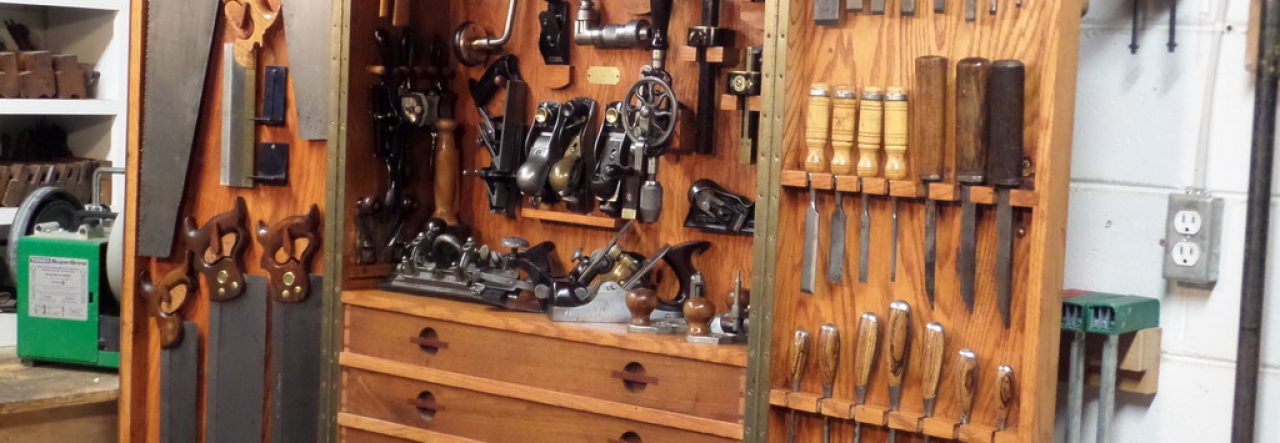
A huge tool chest full of tools. The guy selling it said he took out of a house in Troy, OH from a woman who had it in her garage. It was her Dad’s tool chest. She had nowhere to keep it as she was moving into a retirement home, so she had to ged rid of it.

I looked inside at the tools and immediately noticed a Stanley No 8 and 5 Type 4 prelateral planes and an early version of a Stanley No 45 Combination plane. The guy told me he wanted $350 for the chest and tools and that he’s had a few offers for the chest alone. He then told me he’d sell all the tools in it for $200.  At this point, wheels were spinning in my head as to where I was going to put this thing as my shop is already overflowing with tools from the auction I went to a few months back.

Then the guy told me he’d take $300 for everything as he really wanted to get rid of it. At $300, I might as well buy the whole thing as the tool chest alone was worth more than a $100.  I told him I’d take, but I had to go to the ATM and get some cash.

I came back, gave him the money then drove into the fairgrounds to put it in my truck. I was stoked! In 35 years of collecting antique tools, I’ve never bought a tool chest, let alone one with a bunch of tools in it.

When I got home, I decided to look at the tool chest more closely. It was a pine box dovetailed together with brass hardware on the corners. Inside were mahogany tool bins with veneered banding on top.

Underneath the veneered bins were two tool totes for various tools and parts.

Removing those bins, were two more filled with auger bits and chisels.

Underneath those is where the planes were. There were only two bench planes but he had a decent collection of molding planes with most stamped J W ROOF.

I brought everything in my basement and cataloged all the tools that were inside. There were over 100 with a lot of them being small drill bits and hardware. There were a nice collection on incannel gouges along with metal working punches and wrenches. I’m trying to figure out what he did for a living but it may be impossible to figure out as who knows what tools are missing and which tools were just thrown into the chest over the years. 

With the age of the Stanley planes, I estimating that the chest was made in the 1870 -80’s  Now I need to decide what to do with it.  Nevertheless, what a great Birthday present to myself!

A Great Auction

A couple of weeks ago, I had the opportunity to attend the tool auction of Jim “Rooster” Brown. I knew Jim a little bit. He always helped out the Amish Tool Auction in Adams Co Ohio every 4th of July. I went to that auction every year for over fifteen years, and it was always something I looked forward to every year. Jim would help out the auctioneer Hess Auction Co as they sold Hostetler’s tools. I would always end up with a boatload of tools. So much so that one year, my Mom got mad at me for all the money I spent (about $500) when I came home with my loot.

Since it was an auction, I never spent too much time talking to Jim because he was too busy holding up and handing out tools during the auction but when I did talk to him he was a super nice guy. I remember one year, a Stanley No 444 Dovetail Plane came up for sale, and I ended up winning it for $200. Jim yelled out, “He stole it!”  Everyone laughed, but I was happy that I did indeed steal it. I owned that plane for many years until I had to sell it due to being unemployed after losing my job.

Jim was a collector of Ohio made tools. He had thousands of them after collecting for decades. His collection consisted of hundreds of molding planes, cooper tools, axes, and saws. The first part of the auction was all of his axes, so I had time to look around and examine all the woodworking tools. I couldn’t believe what I was looking at. 

Dozens of panel raiser planes, multiple scroll saws, cooper jointer planes, dozens of plow planes, and several tool boxes full of tools that sold as a complete set.

There was a Stanley No 1 plane that sold for $1450.00, and this panther saw that sold for $2625.00. I’ve never seen one in person, and I doubt I ever will again. Some of us thought that the winner overpaid, but one just recently sold for $3500.00.

This Ohio Tool Center Wheel Ivory Tip Plow Plane sold for $2700. The gentleman who won the bid was a personal friend of Jim’s, and he would show it to him every time he visited his home. He was ecstatic that he won his friends favorite plane.

This workbench sold for over $1400.00. I hope it won’t become a kitchen island but you never know these days. lol

This was Jim’s obituary. He worked for the post office for 30 years and was a founding member of the Ohio Tool Collectors.

During the auction, I started to get more involved and bid on the tools. Some of the hand planes I wanted went a little too high for me as a couple of Stanley No 2’s sold for $300 each. At first, I didn’t think I’d win anything, but about halfway through, things started to heat up for me. When they got to the table with all his panel raiser planes, they sold “Choice” off the table. After a couple of rounds, the auctioneer sold all the planes on the table at once. I thought to myself, “Holy shit,” so I got in view of the auctioneer and kept bidding. By the time the bidding ended, I ended up winning all the planes on the table (about 25) for a few hundred dollars. Then, a few minutes later, it happened again, and I ended up buying a second table full of planes for one money. After that, it was full go for me as I was bidding and winning multiple lots.

In the end, this is what I ended up winning. A total of 166 tools. The most tools I ever won and the most money I ever spent at an auction. But boy, did I have fun!

When I got home, I wrote in my book everything I won and what I paid for each tool. I could hear Jim call down from Heaven. “He stole it!”

An Amazing Opportunity

Sometimes life gives you an opportunity you didn’t know existed.

My friend Tim called me last summer saying that he cuts the grass for our old Junior High Shop Teacher, Mr Morganroth, and he had some old tools he wanted to sell. Mr Morganroth was our shop teacher in the seventh grade. In class, we would make swordfish and ducks out of a piece of walnut, then attach painted metal for the fins and the wings. The class was the basics of woodworking, where we learned the simple steps of using surform files, grades of sandpaper, and cutting things out on the band saw. These simple steps got me hooked on woodworking, and I started to slowly build a shop in my parents’ basement when I was in high school.

Mr Morganroth said he was moving to Tennessee and wanted to get rid of some old tools he had been collecting asking if I would be interested in them. I told Tim I was but wanted to know what he had beforehand, so he sent me a few pics from his phone.

Tim sent me the photos, and I took a close look at them and I said I was interested, but I don’t want all of them since a lot were just common tools. Unfortunately, Morganroth wanted to sell them all at once, so I just let it go and forgot about it.

Then, a few weeks ago, Tim called me again and said Morganroth really wanted to get rid of them, so I contacted him directly and asked him to send me better pictures of what he had. Morganroth said he wanted to sell everything but the cooper’s tools as they were his grandfather’s.

Understanding that, we went back and forth for a few days, and I gave him an offer for the tools he wanted to sell (I really had my eye on the slick at the time). He responded that he would think about my offer. 

Then last week he got back with me and said he’ll include the cooper’s tools as well and he’ll also throw in some woodworking books he had. I made him an offer higher than the first one I gave him, and he agreed to the price.

Friday, I went over to his house and picked up the tools. He had them hanging in his house for 30 years. He said his kids have no interest in them as neither of them work with wood, so he was glad they were going to a good home.

I brought them home and clipped them off the barn wood they were attached to to take a better look at them. The tools on the bench are the tools that his grandfather used when coopering. I plan on keeping them together as a set. I’m even considering making a tool chest for them.

It’s an incredible honor to buy old tools from the man who got me started in woodworking over 40 years ago.

Making a Yardlong Frame

Several weeks ago, I bought a yardlong picture at an antique shop. Finding a frame to fit the picture is next to impossible, so I knew I had to make one.

I looked around for some wood and found a piece of ash from a project I made a few years ago. Ash is not the ideal wood to use with molding planes as it has a lot of moving grain. Preferably poplar or mahagony would be the ideal wood, but ash is what I have.

I ran my complex molding plane over the board and slowly cut the profile in the wood. It took about 20-30 minutes for me to cut the profile.

I then took the board over to the table saw and ripped the molding 1″ wide.

I didn’t want the sides of the frame to be flat, so I carefully gouged out the middle, starting with carving gouge, then switched over to my No 6 hollow plane. Then I finished up with a piece of sand paper wrapped around a 1/2″ dowel.

I cut the rabbets for the frames on the table saw. I made three moldings that were longer than what I needed. I wasn’t concerned about the ends of the molding because I was going to cut them away anyway.

Using my Stanley No 150 Miter Box and my miter trimmer, I cut the piece out.

The molding pieces are now looking like a frame.

After I cut all the pieces, I dried fitted them together to see how the corners met. If they needed attention, I would carve and sand the ends to meet each other.

The final frame looks pretty good. Now it’s up to my wife, Anita, if she wants to stain or paint it.

This is the first time this year where I have had time to work in the shop, and it felt great. My job keeps me busy during the week, and the weekends are often antique hunting with Anita. I’m glad I had the time yesterday.

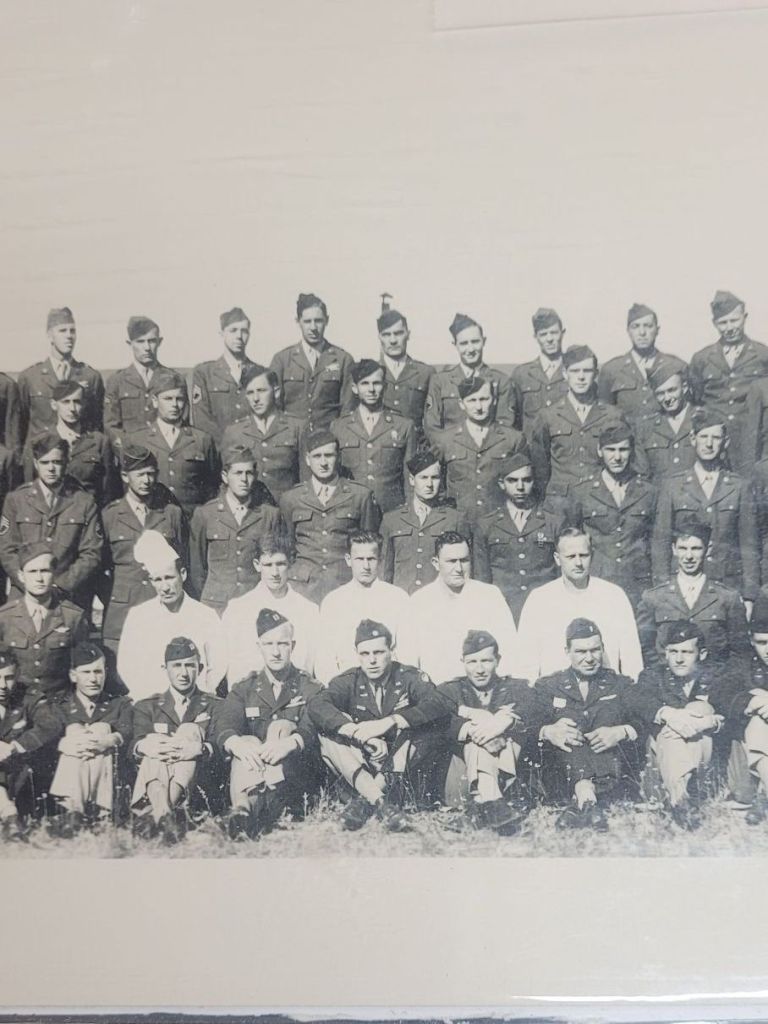
I’m not sure which branch of the military these men served or when the picture was taken, as there is no stamp on the picture, but they may have served in WWI as many of the yardlongs I’ve seen are early 20th century. All I know is that these men fought and may have died for our country, so they need to be honored by being put into a frame and hung on someone’s wall.

Happy Easter!

Old Stanley Level

A couple of weeks ago, my wife and I were antique hunting in Dayton, Ohio, where I ran into this old level in the back of a barn. I figured it was a Stanley Rule and Level Co level, but the amount of brass in the front intrigued me as it wasn’t the usual design I see all the time.

I really don’t restore levels too often, but I decided to ask how much it was as I thought it would be a fun little restoration project. After the lady told me $10.00, I took it home.

Restoring it was pretty straightforward. I applied some citrus based paint stripper on it to remove the old grime, then washed it off with a soapy dish liquid. Then I applied elbow grease to buff out brass with steel wool and liquid brass cleaner. Then, coated the level with a few coats of shellac.

You can see on the side that it’s faintly stamped 11, which I figured makes it a Stanley No 11. Stanley made No 11’s in mahagony and rosewood. When I was cleaning the wood, I got excited thinking the level was made from rosewood, but I’m pretty sure it’s mahagony. The fact that the brass is only the corners and not completely covering the end makes it an older level.

You can see the Stanley Rule & Level Co. so it’s possible it’s before they acquired their plane line.

I’m not sure how to date the level as I am unaware of a type study on Stanley Levels, but if I had to take a guess, I’d say it’s around 1860-80’s in age. And it’s in pretty nice shape for being as old as it is.

Does anyone know how old it is? Drop a comment and let me know.

Langdon Millers Falls No 40 Mitre Box

Last weekend, my wife and I were antiquing in Dayton, Ohio, when we stopped in an antique store in Tipp City. I went into the back of the store when I saw this thing sitting on the shelf. I immediately knew exactly what it was as I owned one of these tools many years ago. It’s a No 40 Langdon Millers Falls Portable Mitre Box.

When I was a kid, I went to an Ohio Tool Collector Association meet-up and saw one of these miter boxes on a silent auction table. I thought it was cool as it was something I had never seen before. I put a silent auction bid of $20.00 and hoped for the best. Sure enough, I won the auction! The guy selling it wasn’t too happy about the price it received as he said that’s what he paid for it.

The tool is simple in its concept. There’s a fence that you clamp to a board and disc that you turn and set your angle with positive stops. You can even adjust the accuracy of the angle by adjusting the two screws on either side of the positive stop.

I wanted to try it out, so I grabbed a piece of scrap wood and clamped the miter gauge to it, then swung the fence to 45 degrees.

Since it’s made to be portable, the craftsman would just use a panel saw and cut the board while on the job site. The miter box is small enough that it would easily fit in a toolbox.

After I took a cut, I was surprised how accurate it was. That’s a pretty good 45 for trim carpentry work on a house.

Millers Falls made a compound angle version of this tool called the No 41, but I have never seen one in the wild.

I paid $15 for this miter box, which is cheaper than what I paid for the first one 35 years ago. People don’t know what these things are, so if you find one in the wild, chances are you’ll pick it up for a good price. I sold my first one years ago when I was unemployed and needed money. I really didn’t want to sell it back then as I thought I would never find another. Maybe the antique tool gods like me. 

Rebuilding a Drawer

I bought this old cabinet at an antique show last month. I didn’t realize it at the time that the left drawer was an imposter. It’s basically the drawer face screwed to a smaller drawer. Shame on me for not checking before I bought it.

here is the drawer. you can see Bentley is not impressed.

So I took the drawer face off the stupid faux drawer and decided to rebuild the whole thing with some white pine .

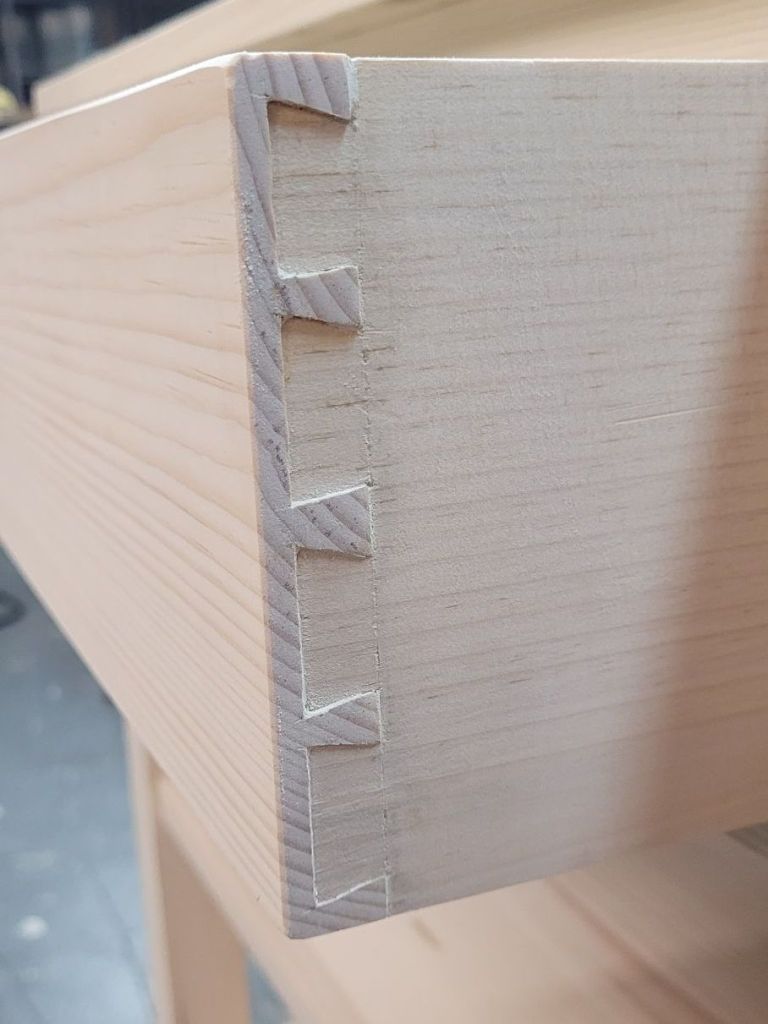
I cleaned up all the nails that the previous owner used to “fix” the drawer in order to use the existing pins as a jig to cut the dovetail tails. I also cleaned up the pins so that could work again.

Basically, what I did was scribe the pins onto the drawer side and cut tails into the wood. No different than making a drawer from scrap. The only difference is that not all the pins survived over the years, so there are ghost pins within the drawer side.

After I cut the front tails, I made normal dovetails on the back to match the other two drawers that survived.

I made a new bottom and stuck it in the drawer to make sure it worked. Everything was square and fit into the cabinet opening.

Here’s the drawer finished and glued together. They all fit nicely back into the cabinet and everything is good to go. I also glued one of the cabinet doors back together and attached both of them back on the cabinet.

Refurbishing an Old Chest

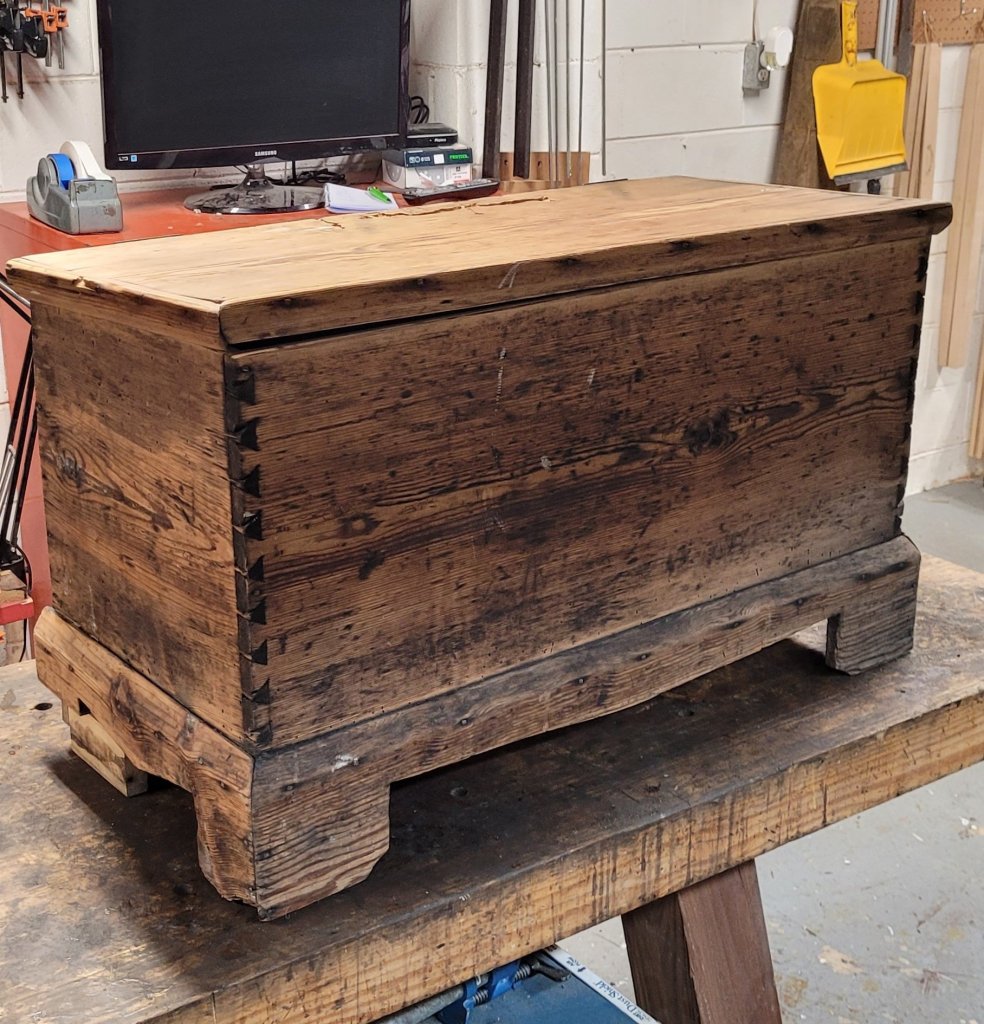
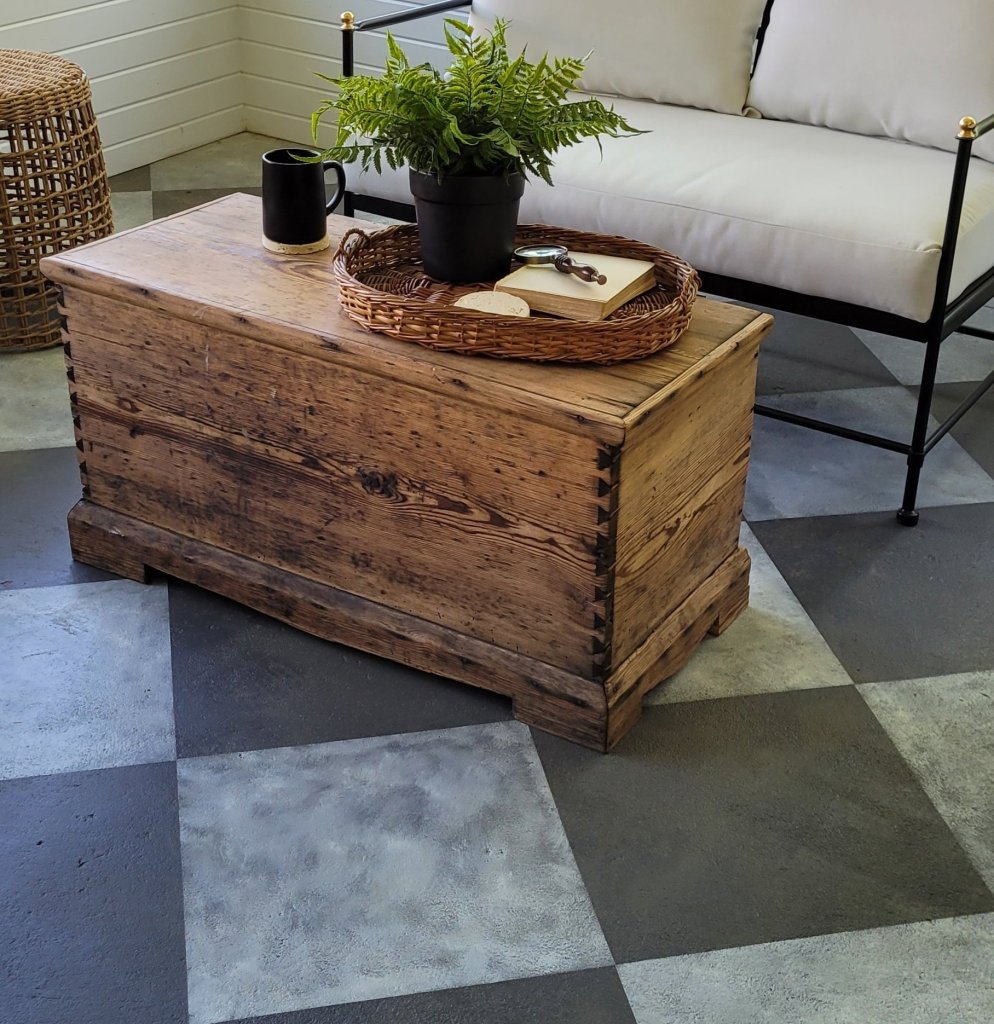
My wife came home from Florida with this old chest she bought off Facebook Marketplace for $20.00. She liked it because it was made from pine and had an old-world look to it. She asked me if I could repair it so it could be used as a coffee table.

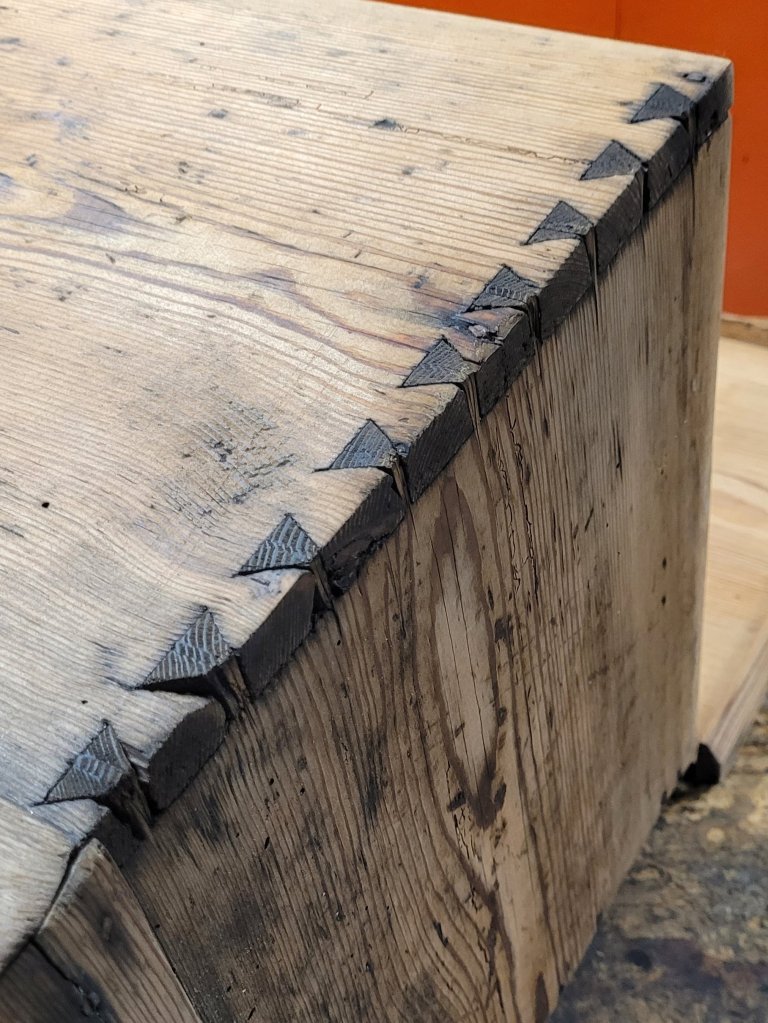
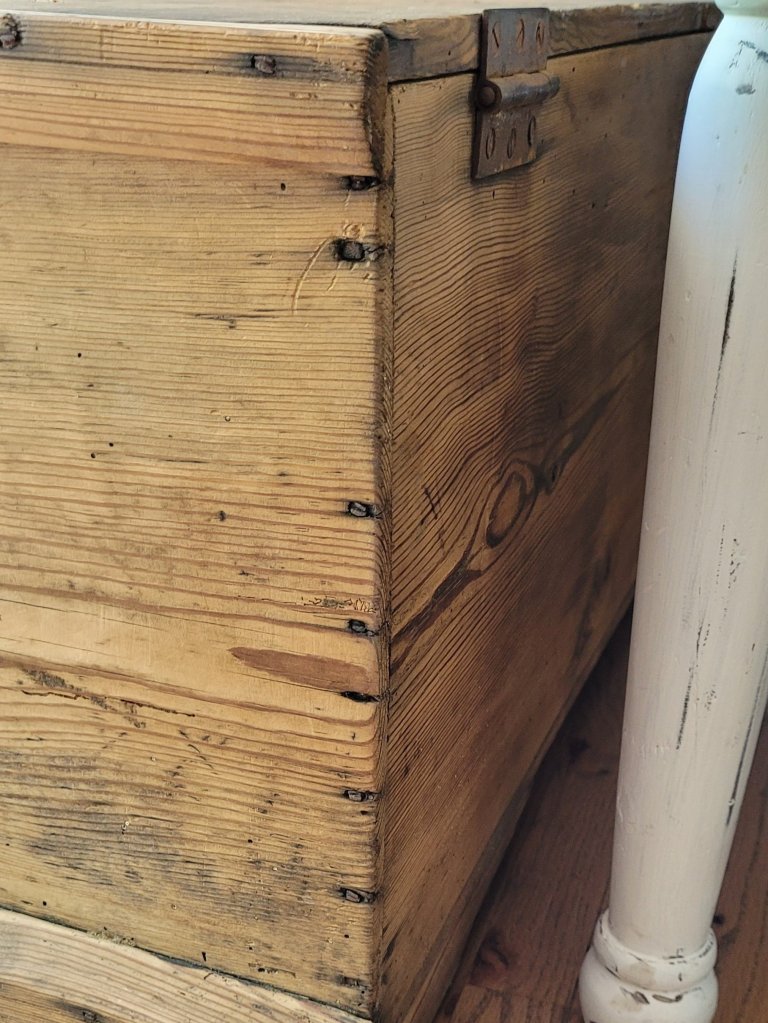
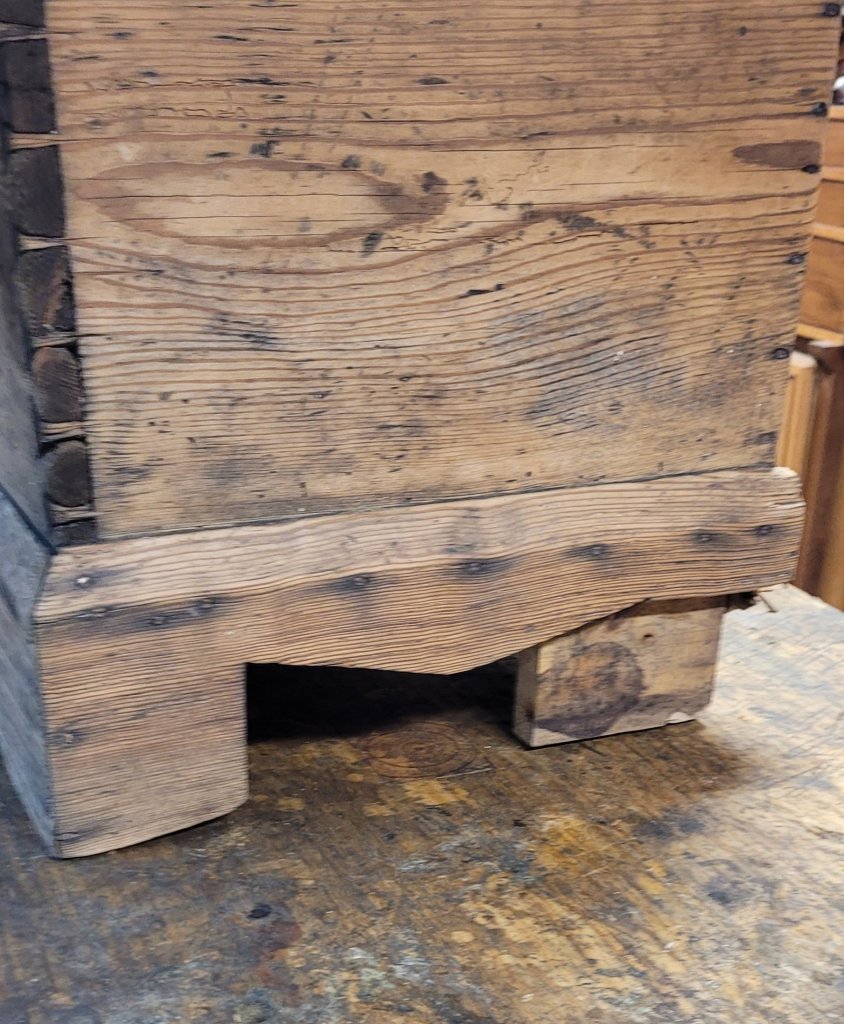
The chest had nice handcut dovetail joints on the front with really steep angles. So steep, they look like equilateral triangles. However, the back of the chest is just fastened together with a rabbet and some cut nails. I guess the craftsman who built the chest was tired of cutting so many dovetails that he opted for something easier for the back.

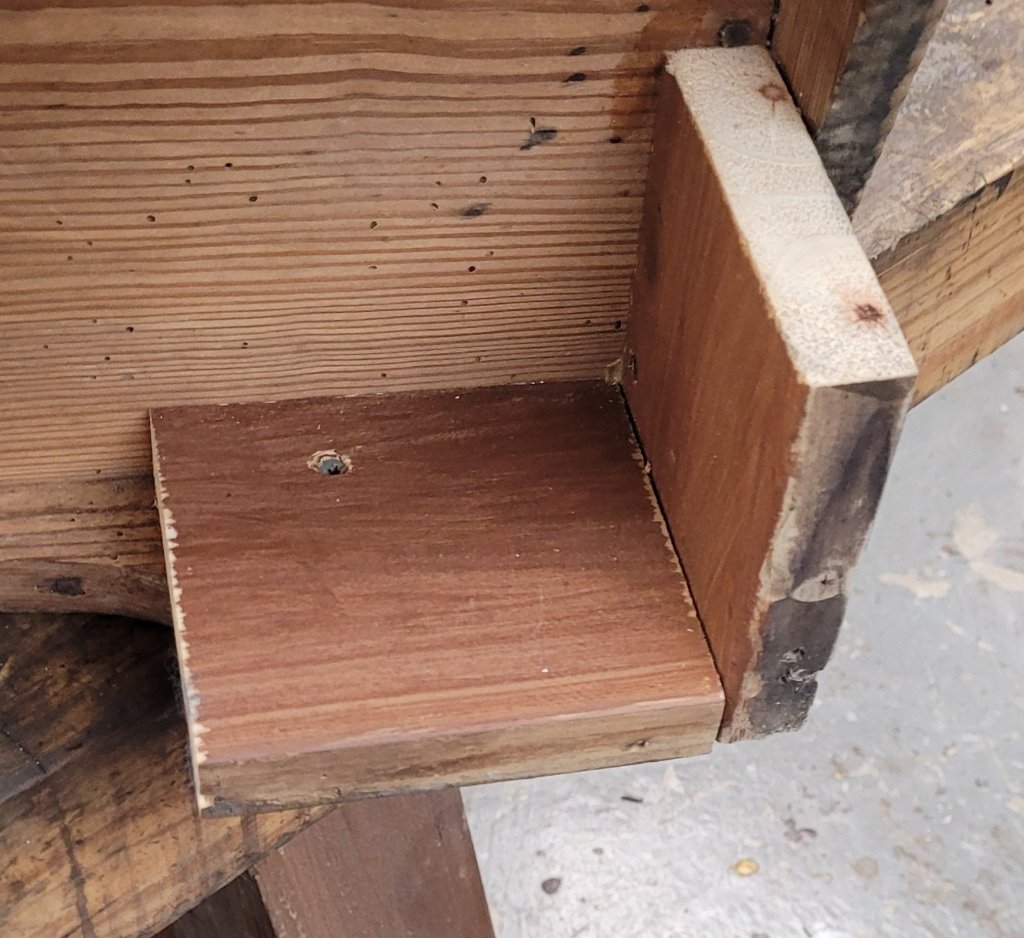
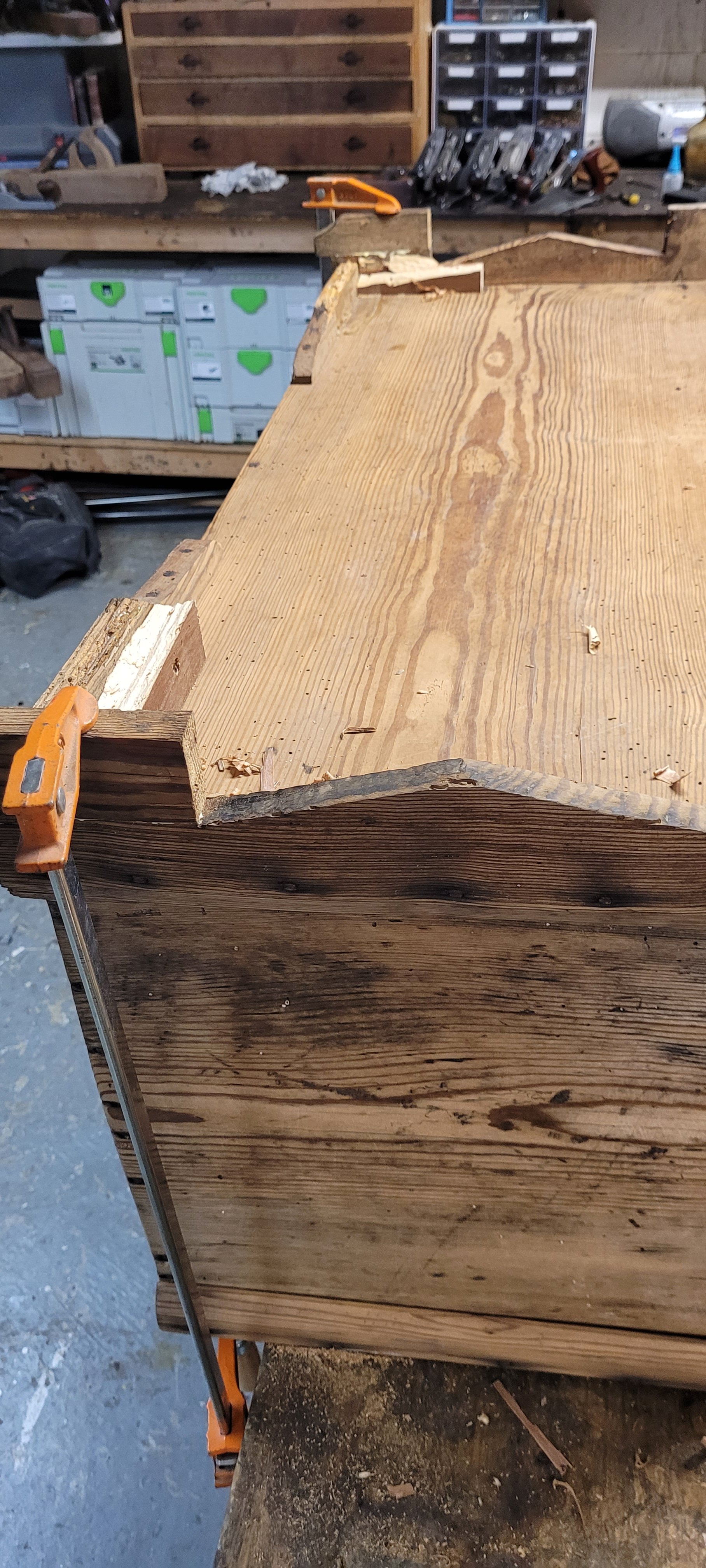
The bottom of the chest had a horrible repair to the back. Because the base was so tall, the wood failed and broke away. Somebody came in and simply installed L wood brackets to the back and screwed them in place with drywall screws.

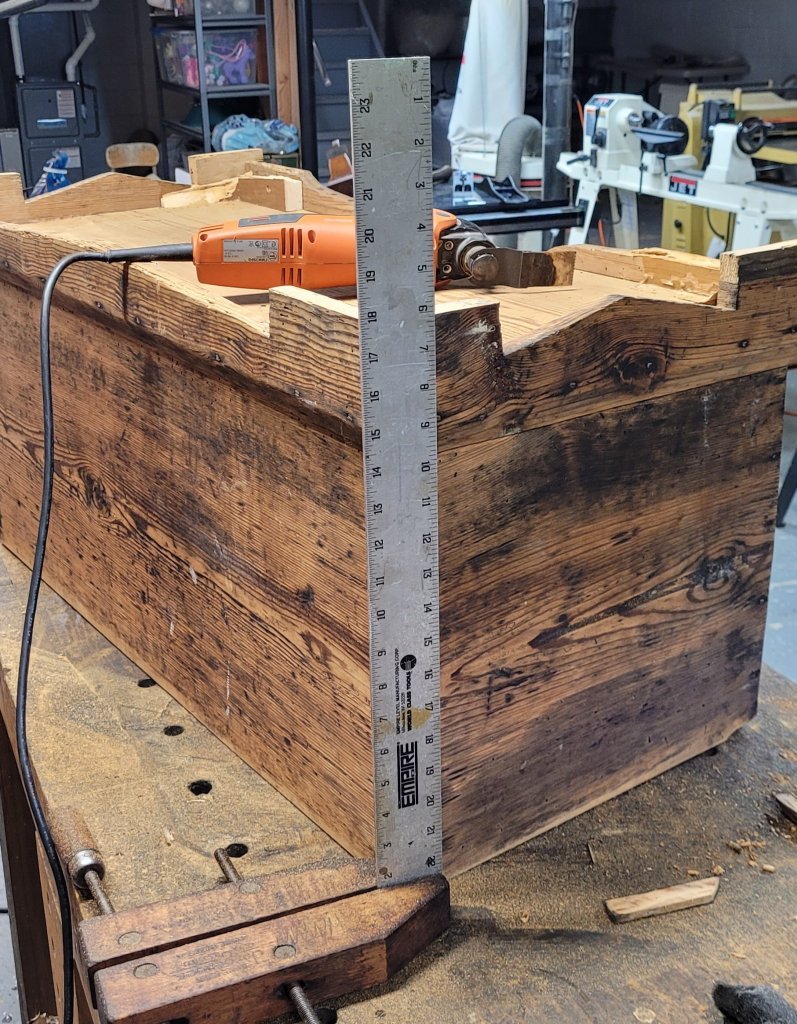
Flipping the chest on its top, I broke off the terrible repair and cut the front feet of the chest to 18″ tall. I then took the off cuts and glued them to back of the feet that were missing.

Once everything was glued, I flipped the chest back over on its feet and checked how it looked. The narrower base was more pleasing to the eye and less prone to breaking since the feet were no longer so tall.

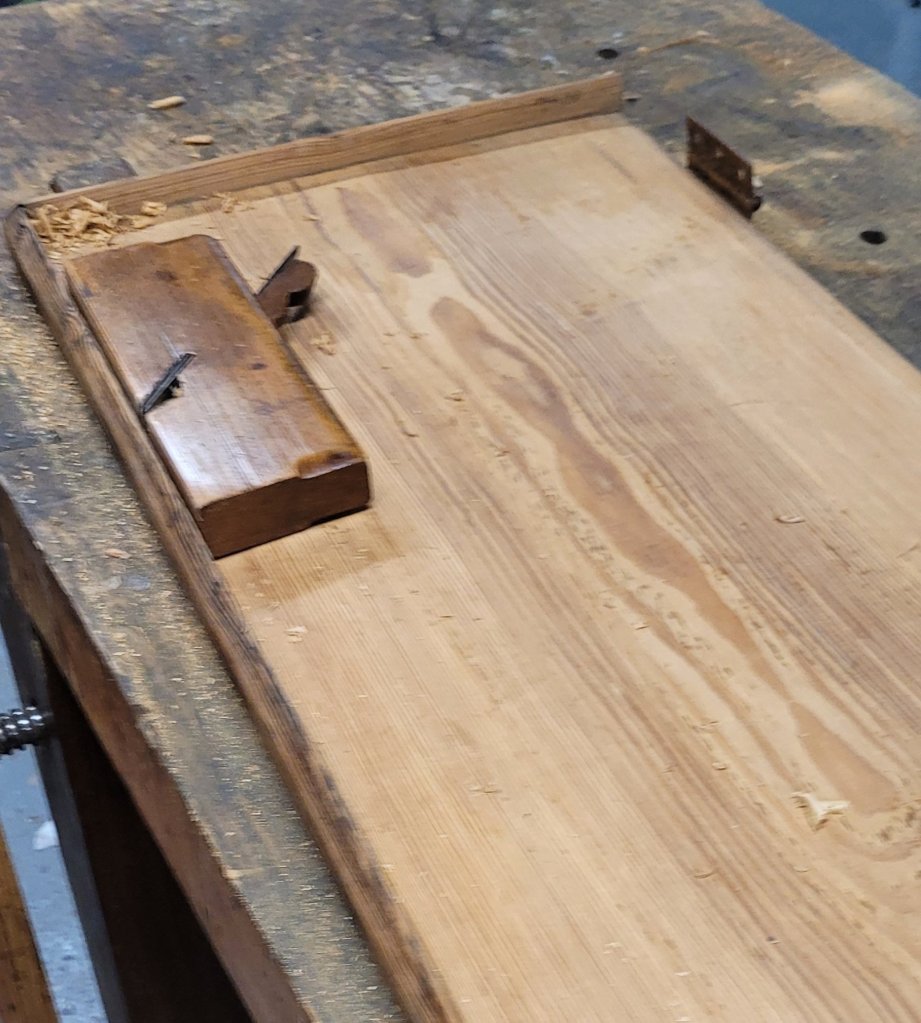
I then worked on the lid shaving away the inside of the front trim so that it would close around the chest. After a few minutes of shaving, the lid closed fine when I reinstalled it.

The chest now serves us well as a coffee table in our screened in porch. Hell of a coffee table for $20.00, and you can barely notice it has been repaired. Anita is ordering old looking chest handles for the sides as we both feel it would look nicer with them.

The Worst Plane Blade

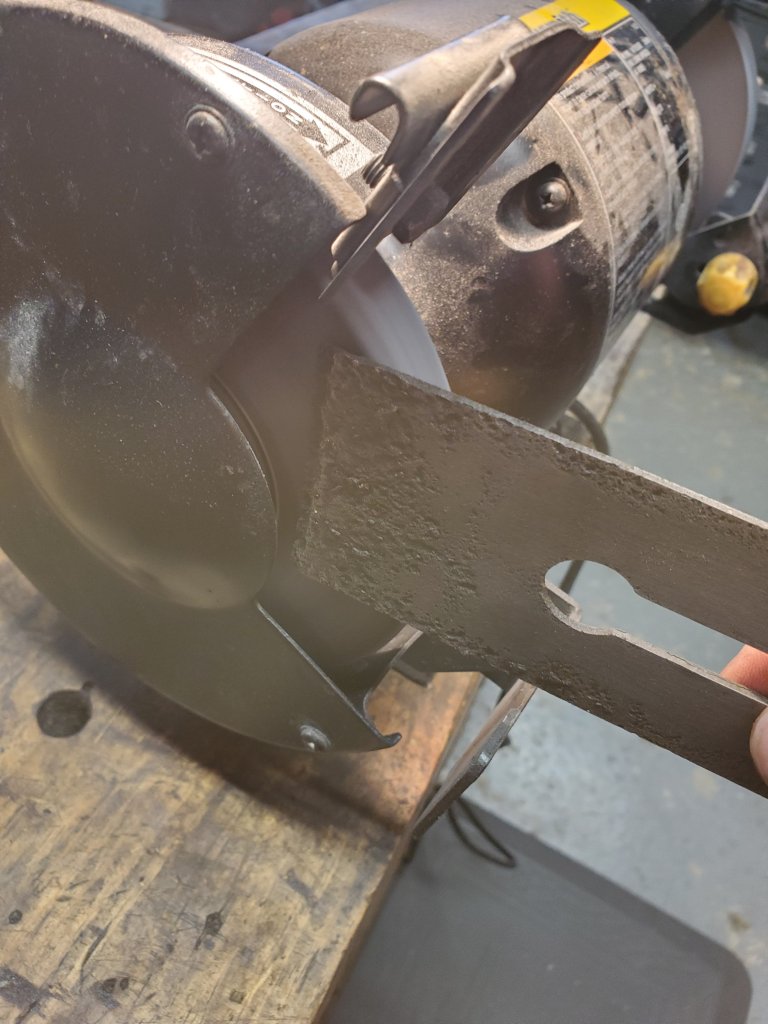
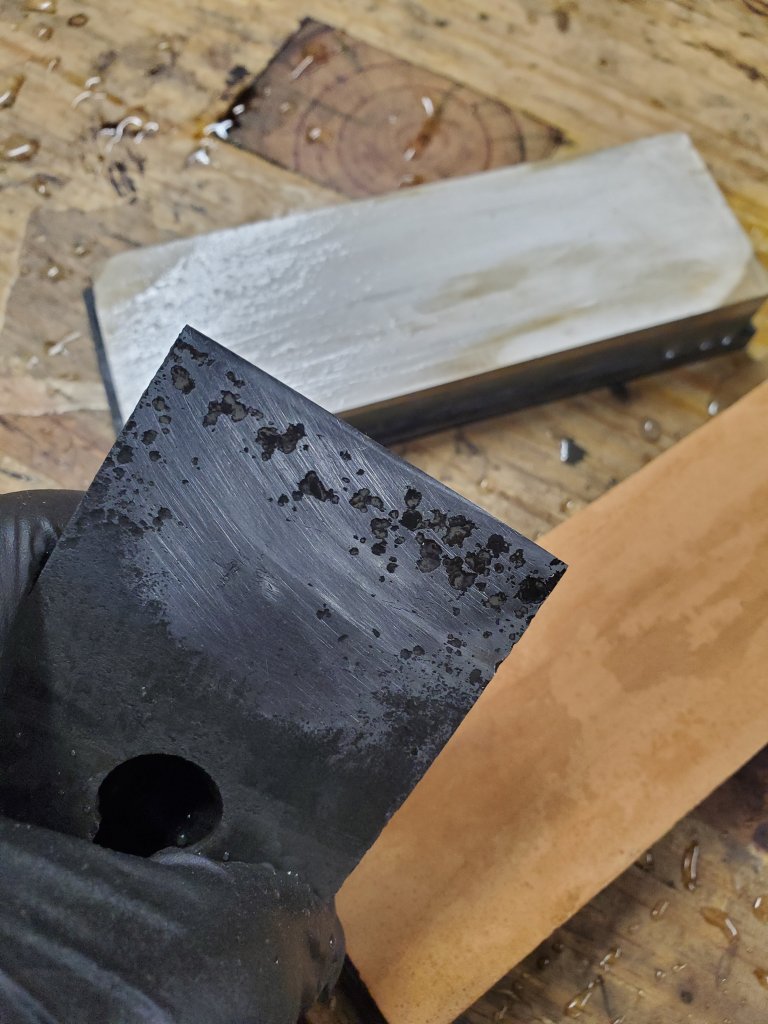
Every once in awhile I’ll come across a plane blade that is so heavily pitted and corroded, the best thing to do is to simply throw it away. This blade that came off a Stanley No 6 plane was no different. The problem was that I didn’t have a replacement blade to go with the plane I was restoring, so I was forced to see if I could get the blade to work again.

The first thing I did was take the blade over to my 8″ speed grinder and grind the face and back of the blade to remove the corrosion. I paid special attention not to heat the blade up too much so, I occasionally cooled it off in a bucket of water. Fortunately, the blade’s face had about a 1/4″ of metal at the bottom that wasn’t pitted, so I was hopeful I could still get a good edge out of it.

I took the blade over to my Tormek and ground a 25 degree bevel on it and honed the face flattler on the side of the Tormek grinding wheel the same way as I did with my 8″ speed grinder.

After the grinding was finished, I took the blade over to my water stones and sharpened it just as I do with any other blade. When I was done, there was a clean line of light at the tip of the cutting edge so I was hopeful it could achieve a nice cut.

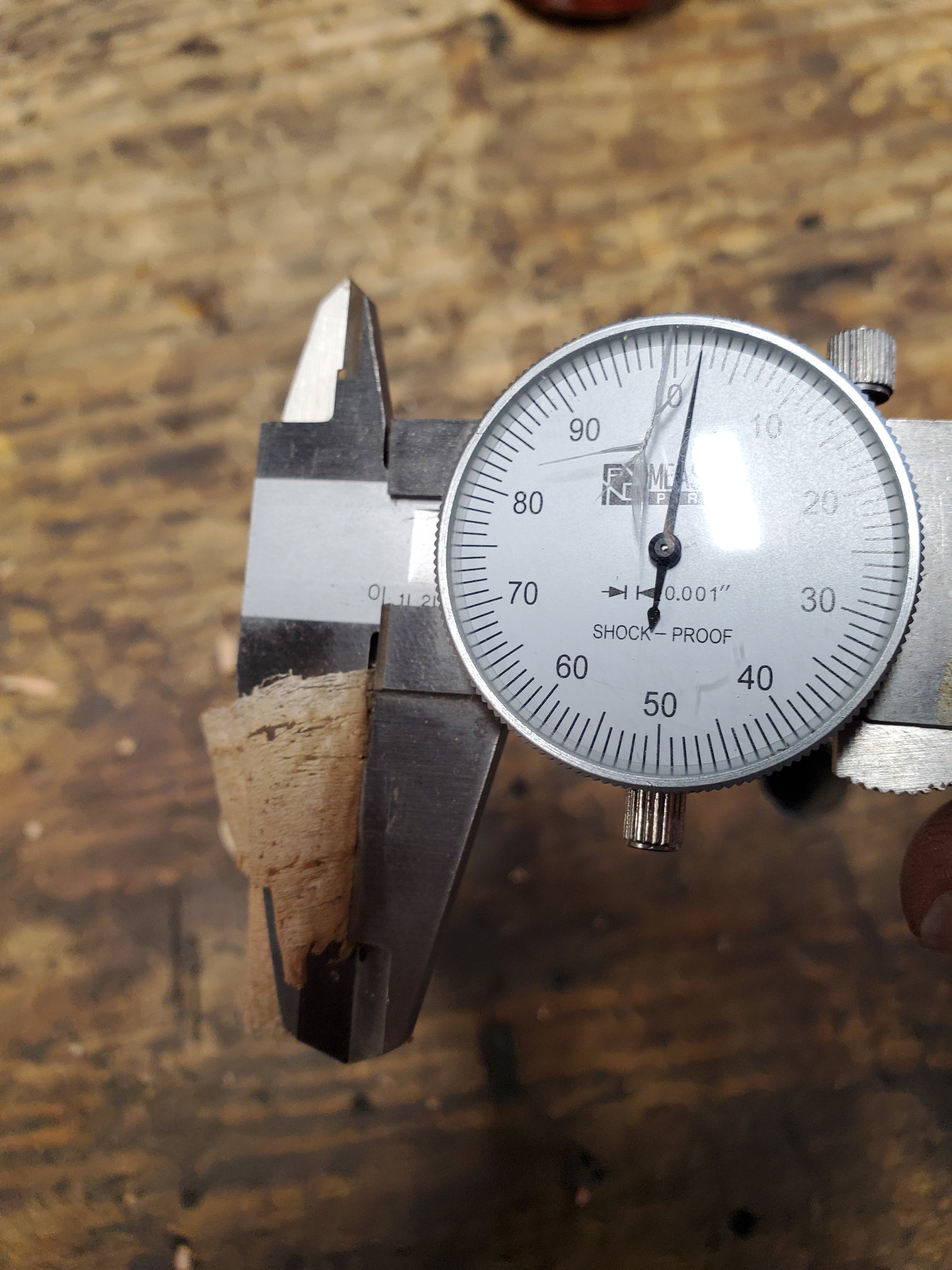
Placing the blade back into the plane, I tuned it up, and sure enough, this crappy blade cut pretty well. I took out my dial calipers, and the shavings measured .002″ thick. The blade will eventually need to be replaced, but at least the plane can function properly now.

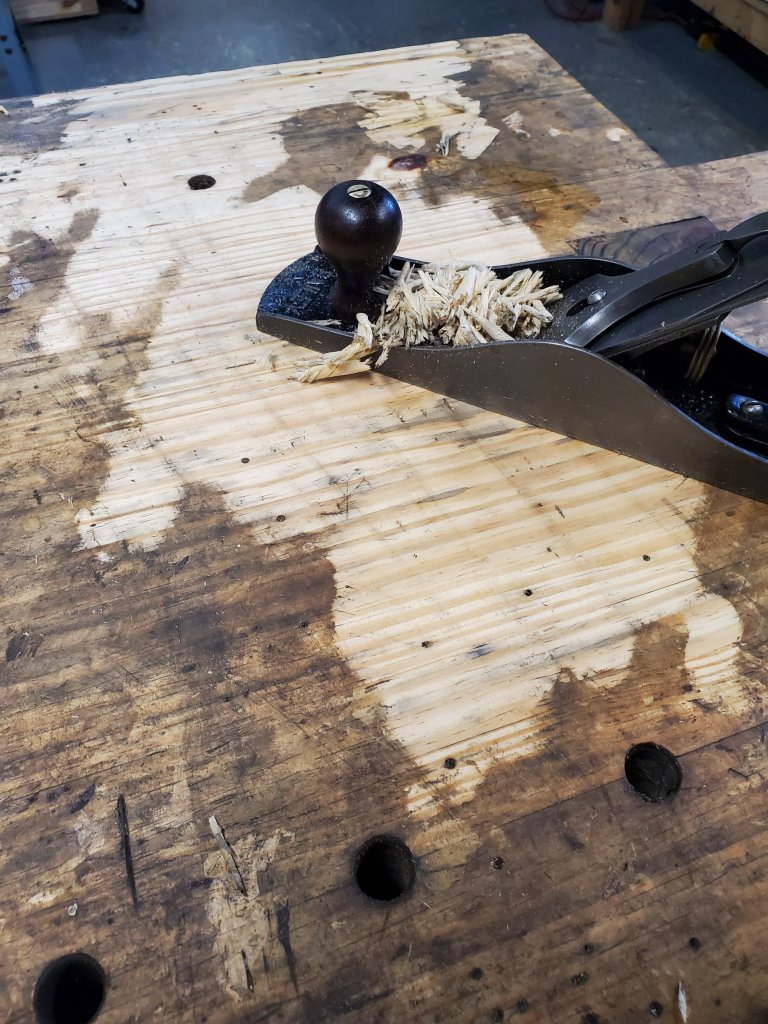
The plane performed so nicely, I used it to flatten my workbench.

Repairing a Rosewood Knob

Sometimes when buying a plane, all the parts will be in good shape until you look at the front knob and see a big chunk missing from the bottom. I’ve repaired dozens of totes over the years, but I’ve never really tackled a knob as it looked like a big pain in the ass. So, I decided to give it a go and see how it turns out.

The first thing I did was shave the broken area smooth with a bastard file. It didn’t have to be completely clean, just good enough to hold some glue.

Then I took a piece of cocobolo scrap wood and glued it to the surface of the break. I paid careful attention to the orientation of the grain so the repair would look nicer. I used Gorilla Super Glue Gel as it works well gluing all type of rosewood woods together.

Once the glue dried, I cut off the excess with a dovetail saw and shaved the thick areas away with some chisels and gouges.

I wanted to shape the new area perfectly round with the rest of the knob so I created a little holding jig to be used on my lathe.

I measured the inside diameter of the knob’s mounting hole with inside calipers and transferred that measurement unto outside calipers, then turned a tenon to the measurement. Then I stuck the knob onto the tenon and stabalized the top of the knob with the lathe live center point.

With the knob spinning nice and true, I carefully used a round scraper and gently turned the new piece of wood concentric with the knob. After a few minutes, and a little bit of sanding, the knob was finished.

I noticed that the knob had split just a little bit while it was turning, so I applied more super glue gel to the bottom of the knob to stabalize the wood.

The final step was to apply a couple coats of shellac to the knob and stick it back on the plane. Because the piece of cocobolo was a little lighter in color than the rosewood, I colored the cocobolo darker with a black Sharpie marker then wiped off the excess with some fine steel wool.

The end result came out fine. The knob looks complete and you can only notice the repair if you really look at it. In fact, the knob on the right was also repaired the same way, and you can hardly see it. Looks like I’ll have to start repairing more knobs from now on.