J W Roof’s Tool Chest

Last weekend, I ventured out to an antique show in Urbana, OH. I got there around 8:00 am and walked around for a couple of hours buying a handful of tools. I was happy with what I bought as I just go to these antique shows because I enjoy going regardless of what I buy.

I decided to make one more pass around the fairgrounds when I decided to go down a little part that I didn’t visit before when I stumbled upon this guy.

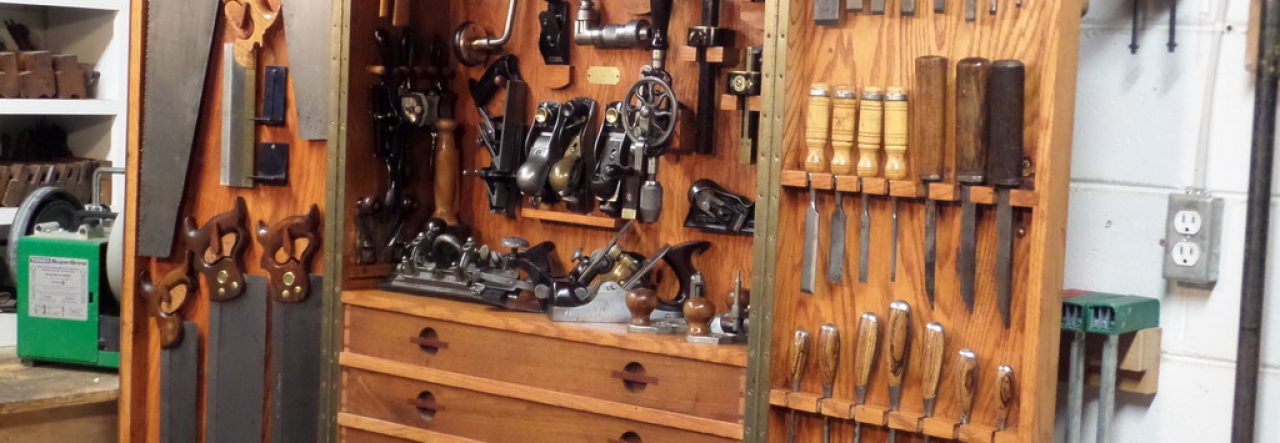
A huge tool chest full of tools. The guy selling it said he took out of a house in Troy, OH from a woman who had it in her garage. It was her Dad’s tool chest. She had nowhere to keep it as she was moving into a retirement home, so she had to ged rid of it.

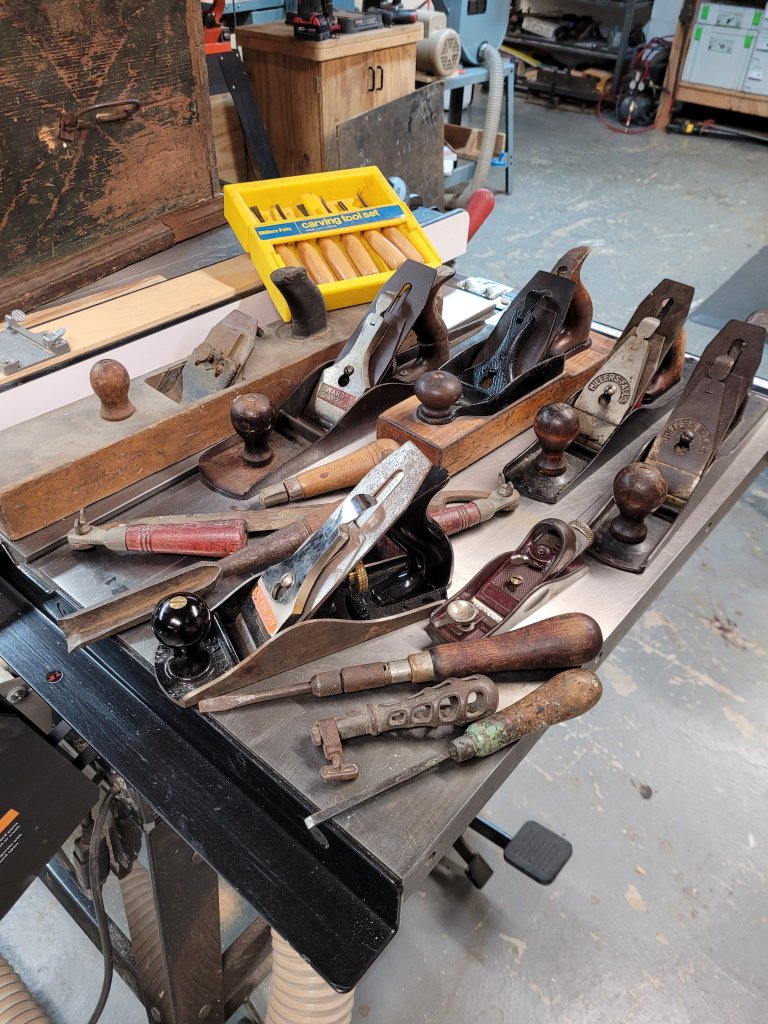
I looked inside at the tools and immediately noticed a Stanley No 8 and 5 Type 4 prelateral planes and an early version of a Stanley No 45 Combination plane. The guy told me he wanted $350 for the chest and tools and that he’s had a few offers for the chest alone. He then told me he’d sell all the tools in it for $200.  At this point, wheels were spinning in my head as to where I was going to put this thing as my shop is already overflowing with tools from the auction I went to a few months back.

Then the guy told me he’d take $300 for everything as he really wanted to get rid of it. At $300, I might as well buy the whole thing as the tool chest alone was worth more than a $100.  I told him I’d take, but I had to go to the ATM and get some cash.

I came back, gave him the money then drove into the fairgrounds to put it in my truck. I was stoked! In 35 years of collecting antique tools, I’ve never bought a tool chest, let alone one with a bunch of tools in it.

When I got home, I decided to look at the tool chest more closely. It was a pine box dovetailed together with brass hardware on the corners. Inside were mahogany tool bins with veneered banding on top.

Underneath the veneered bins were two tool totes for various tools and parts.

Removing those bins, were two more filled with auger bits and chisels.

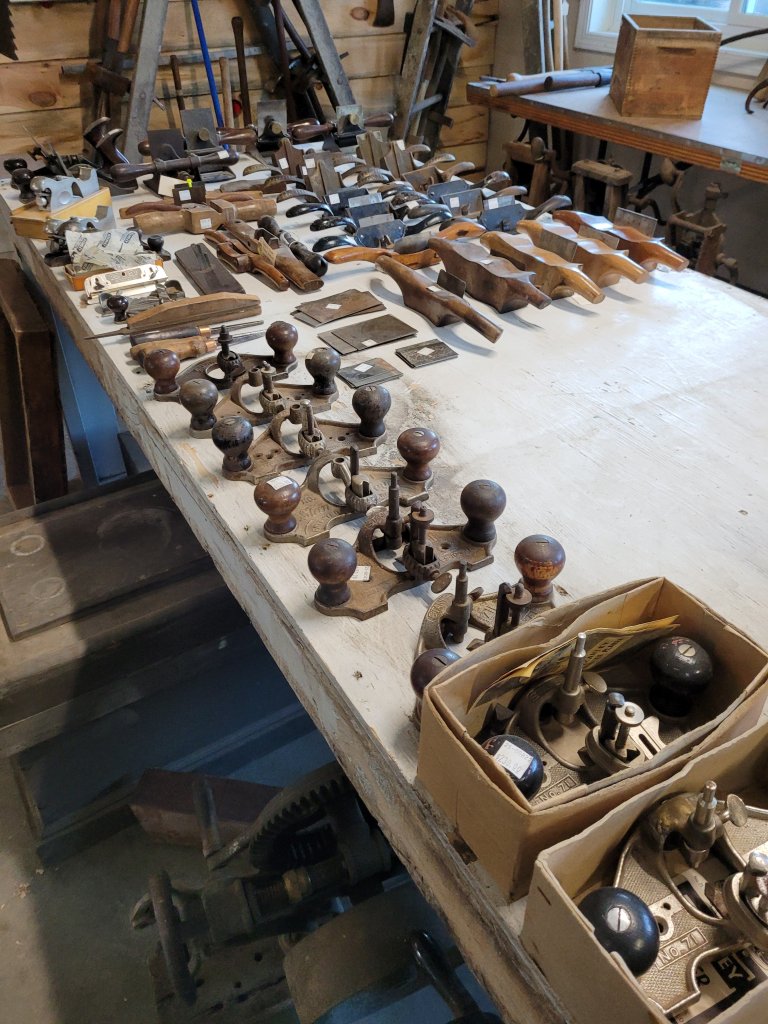
Underneath those is where the planes were. There were only two bench planes but he had a decent collection of molding planes with most stamped J W ROOF.

I brought everything in my basement and cataloged all the tools that were inside. There were over 100 with a lot of them being small drill bits and hardware. There were a nice collection on incannel gouges along with metal working punches and wrenches. I’m trying to figure out what he did for a living but it may be impossible to figure out as who knows what tools are missing and which tools were just thrown into the chest over the years. 

With the age of the Stanley planes, I estimating that the chest was made in the 1870 -80’s  Now I need to decide what to do with it.  Nevertheless, what a great Birthday present to myself!

Making a Yardlong Frame

Several weeks ago, I bought a yardlong picture at an antique shop. Finding a frame to fit the picture is next to impossible, so I knew I had to make one.

I looked around for some wood and found a piece of ash from a project I made a few years ago. Ash is not the ideal wood to use with molding planes as it has a lot of moving grain. Preferably poplar or mahagony would be the ideal wood, but ash is what I have.

I ran my complex molding plane over the board and slowly cut the profile in the wood. It took about 20-30 minutes for me to cut the profile.

I then took the board over to the table saw and ripped the molding 1″ wide.

I didn’t want the sides of the frame to be flat, so I carefully gouged out the middle, starting with carving gouge, then switched over to my No 6 hollow plane. Then I finished up with a piece of sand paper wrapped around a 1/2″ dowel.

I cut the rabbets for the frames on the table saw. I made three moldings that were longer than what I needed. I wasn’t concerned about the ends of the molding because I was going to cut them away anyway.

Using my Stanley No 150 Miter Box and my miter trimmer, I cut the piece out.

The molding pieces are now looking like a frame.

After I cut all the pieces, I dried fitted them together to see how the corners met. If they needed attention, I would carve and sand the ends to meet each other.

The final frame looks pretty good. Now it’s up to my wife, Anita, if she wants to stain or paint it.

This is the first time this year where I have had time to work in the shop, and it felt great. My job keeps me busy during the week, and the weekends are often antique hunting with Anita. I’m glad I had the time yesterday.

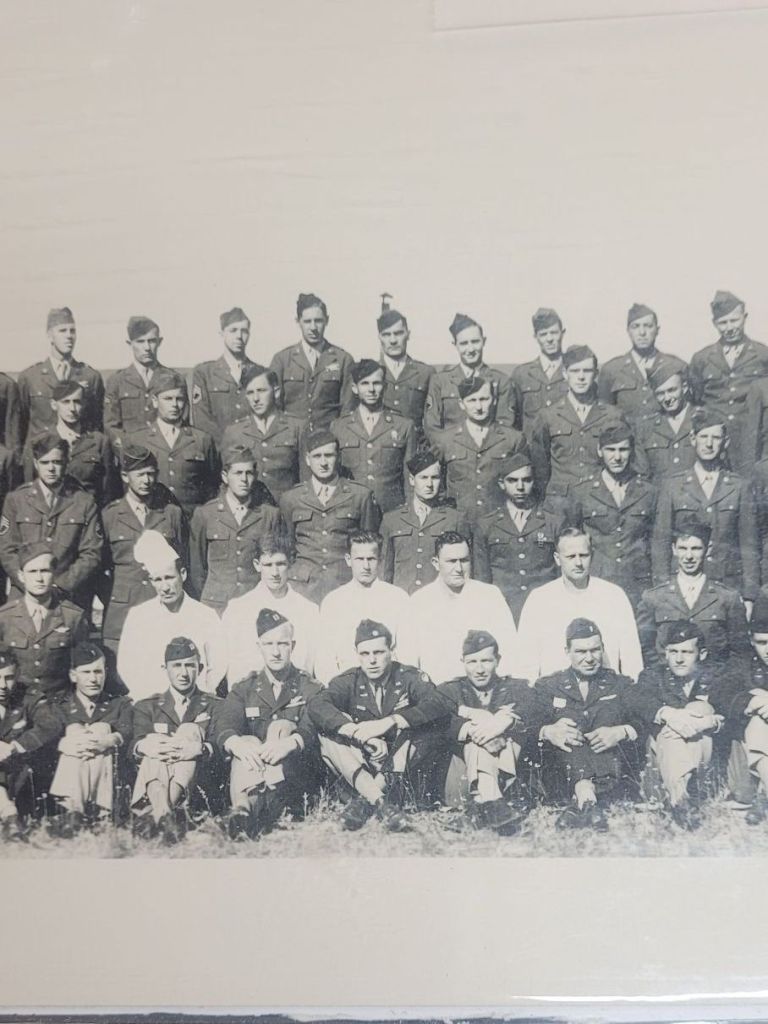
I’m not sure which branch of the military these men served or when the picture was taken, as there is no stamp on the picture, but they may have served in WWI as many of the yardlongs I’ve seen are early 20th century. All I know is that these men fought and may have died for our country, so they need to be honored by being put into a frame and hung on someone’s wall.

Happy Easter!
Denison & Co Boxwood Plow Plane

I bought this unmarked antique plow plane sometime during my life. I have bought so many tools over the years, I often can’t remember when or where I got them. Not to mention what I paid for them, which can be a problem if I want to try to make money when I want to sell the tool.

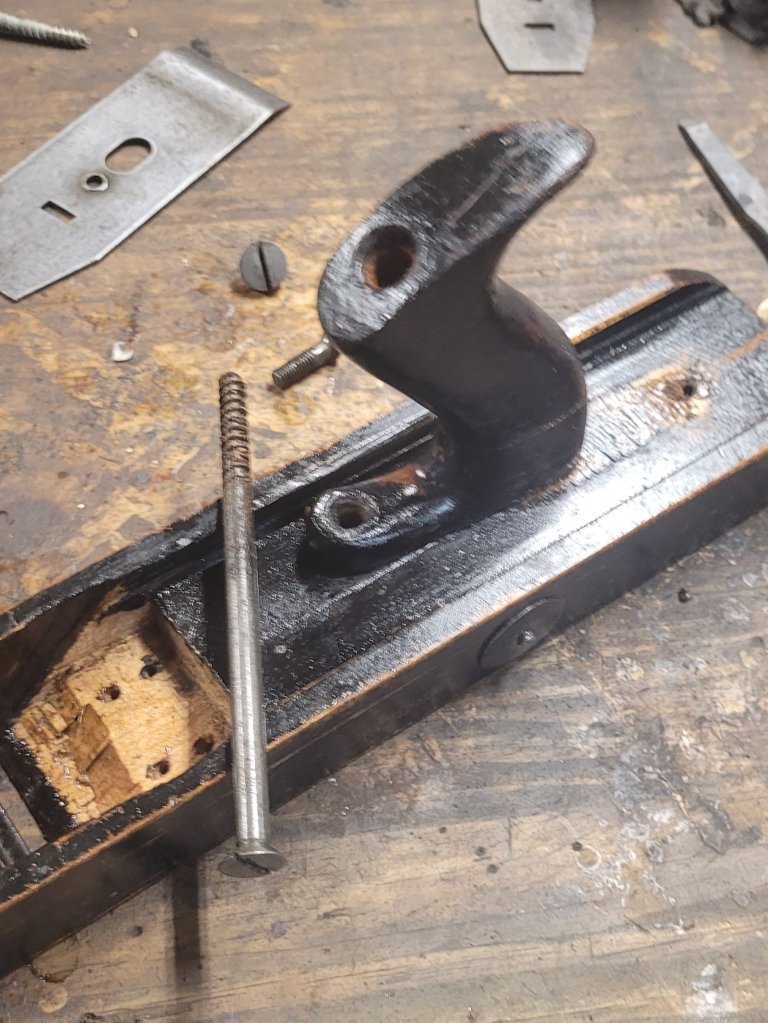
The plane was complete, but the arm was broken in half, missing the bottom of it. The original owner simply stuck a big bolt from the top of the arm through the fence.

I had some Applewood in my shop for fixing handles of my Disston saws and also to turn tool handles. I grabbed a small piece and traced the outline of the good arm, and shaped a new one.

I cut the bad part of the arm off at the bandsaw and found the center of the threaded rod so that I could drill a hole down the center of it.

Unfortunately, the rod was too tall to do this on my drill press, so I had to do it free hand using a square to keep my rod at 90 degrees keeping me in line to drill a straight hole.

Once I drilled a 5/16″ hole about a 1/2″ deep, I stuck a center point in it.

Then, I pushed the center point into my new arm end and used that point to drill another 5/16″ hole into the new piece.

Thankfully, when I glued a dowel into both holes and clamped it for a few hours, the new arm was straight and looked similar to his brother.

The last thing to do was clean up the rest of the plane. I used some Citristrip to remove all the crud off the plane and washed everything with dish soap and water.

After the restoration was complete, I grabbed my antique tool reference catalogs to see if I could find out who made this plane. It turns out that it is a Denison & Co Boxwood Plow Plane. The bottom fence and nuts on my plane are nearly identical to the one in the picture.

The plane came out really well even though I used Applewood while the plane is Boxwood. The color matches well enough and will darken to a nice reddish color similar to Disston saw handles.

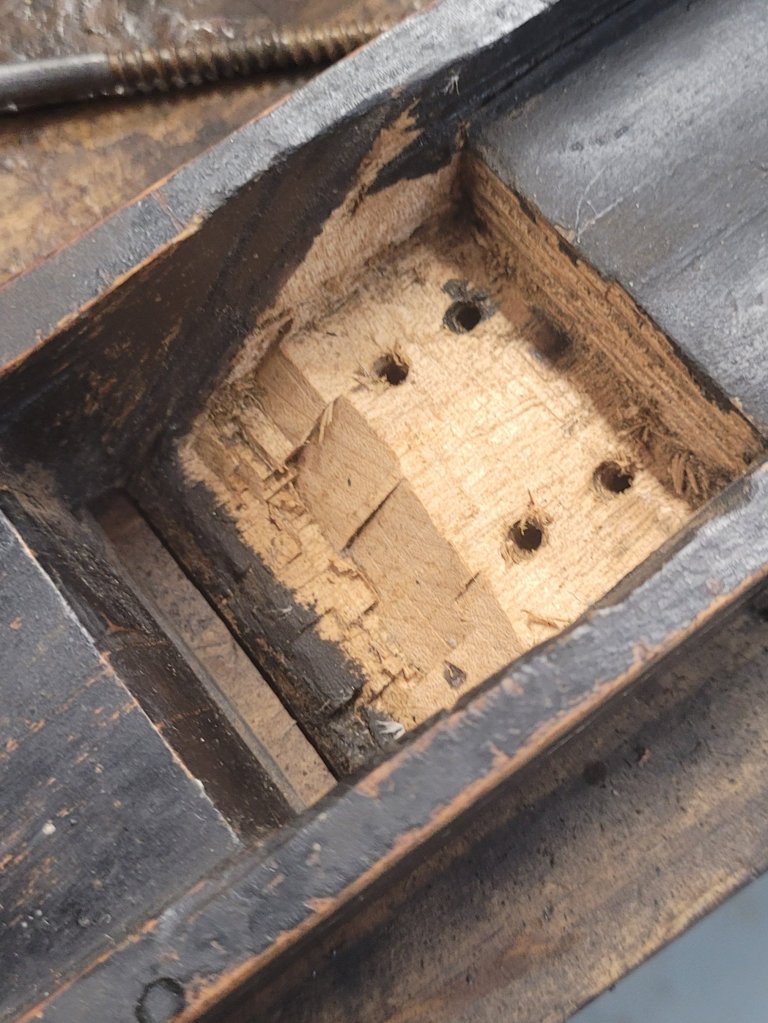
You can see where the plane was repaired in its past with a big screw in the brass skate that goes all the way through its body. Plus, there are four screws going up from the bottom of the body for some reason. I see no cracks as to why they are there.

I’ll keep the plane and put it in my arsenal. It’ll be a perfect plane to use since it’s not in original condition.

Cool Little Workbench

My wife, Anita, and I were antiquing in Madison, IN, yesterday when I stumbled upon this little workbench. 

It was cute little Sloyd style workbench from the 1800s. I couldn’t believe how small it was, so I imagine it had to be built for a little kid.

It had to be about 3′ 6″ tall by 5′ long. What was so amazing about the bench was how well worn out and used it was. The child that worked on this bench used it a lot as the top is full of tool marks.

Obviously, it could have been for multiple children in a school shop class, but I never had a bench like this in elementary school, let alone a shop class.  Can you imagine being the kid lucky enough to work on this bench?

No, I didn’t buy the bench as I couldn’t afford the $350.00 price tag as I’m too cheap. Plus, I didn’t want to drag it home because I had no place to put it. But it’s definitely the coolest old workbench I’ve ever seen.

My 15 Year Old Workbench

This year, my Roubo workbench turns fifteen years old. All I can say is that it’s one of the best things I’ve ever built as it has held up a lot better than I thought it would. It’s pretty beat up with a bunch of tool marks and stains, but it looks like every antique workbench I have ever seen in the wild, so I must be doing something right.

The bench is designed based off two Roubo workbenches, one from Roy Underhill in his book Working Wood with Wedge and Edge and Christopher Schwarz’s book Workbenches. Made from 2x material and 6×6 pressure treated wood for the legs, the bench is incredibly beefy and does not wrack when I’m planing or doing any other task on it.

The leg vise is still strong and tight, and the crochet at the end has never let the wood slip when I jammed my board into it.

Amazingly, the top is still level even after all these years. I did have to flatten the top a year or so after I first made it, but the wood is now stable and is done drying out.

The king of the bench is my Emmert Patternmakers Vise. It’s by far the best antique tool I’ve ever bought as it is extremely versatile, holding wood at various angles. I can even swivel the jaws 90 degree to raise my work pieces height higher so I can cut dovetails easier without having to bend over.

I restore a lot of tools and do a lot of sharpening, so the top is constantly dirty. I occasionally will break out my random orbital sander or even plane and remove all the gunk when I’m sick of looking at it. The downside to all the dirt and grease on top is that if I don’t lay down a protective sheet on top of the bench, the workpiece will get dirt marks on it. (which brings me to grab my sander and clean the top).

The drawer I built to go under the top is full of miscellaneous tools that I use, like pencils, hold fasts, bench cookies, etc. It’s also full of sawdust that falls through the holes on top.

I’m getting old (50), so more light is always a plus. Last year, I bought an old desk lamp at the thrift store for $8.00 and use it so I can see what I’m doing.

My fancy sliding double dovetail is still holding strong. It’s not pretty enough with my sloppy joinery and wood shrinkage to be featured in a magazine, but it has never let me down.

The bench can be disassembled so I can move it out of my shop when I eventually move someday. If I take off the Patternmakers vise, I’m hoping the top can be moved upstairs without too much trouble, but I’ll cross that bridge when I come to it.

Craftsman Made Plane

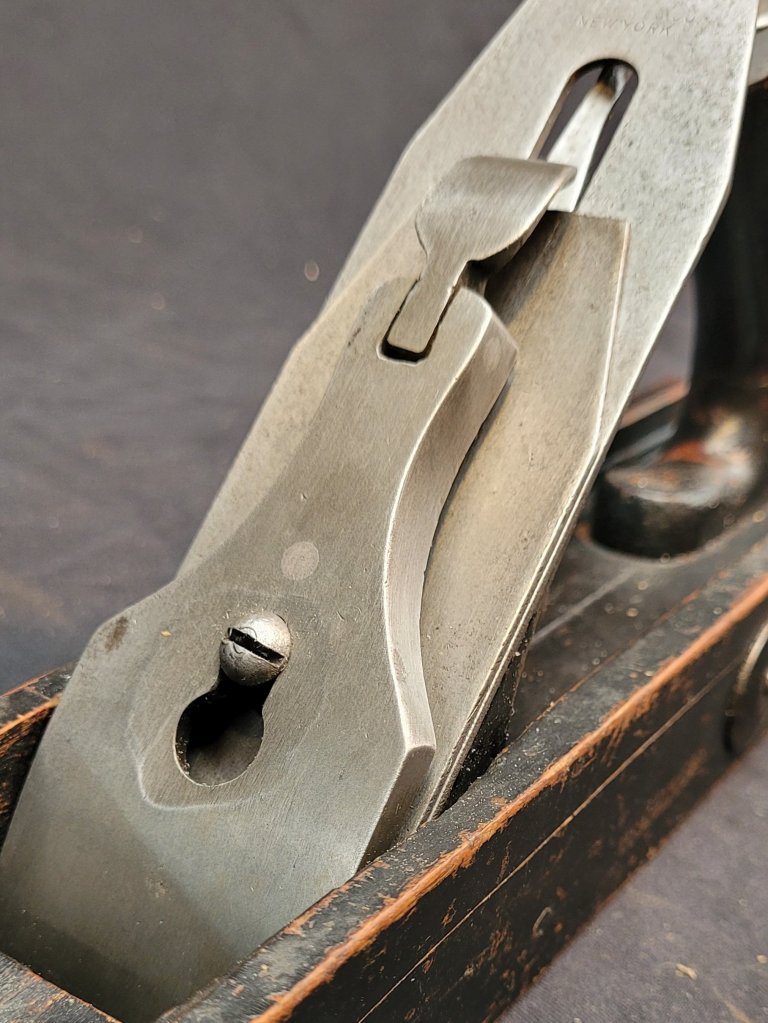
Several weeks ago, I won this craftsman made hand plane on an auction site. When I first looked at it, I thought the body was made with three pieces of wood laminated together like a Krenov plane, but after studying it, I realized it was one single piece of wood. There are a couple of rivets through the body, but I don’t know what purpose they serve.

I’m not sure what the story of this plane is, but it looks like the craftsman owned a Sargent plane that broke, so he made a custom wood body out of mahagony and turned his plane into a transitional plane. You can see the chisel marks as he dug out for the frog, which adds a cool factor to the plane.

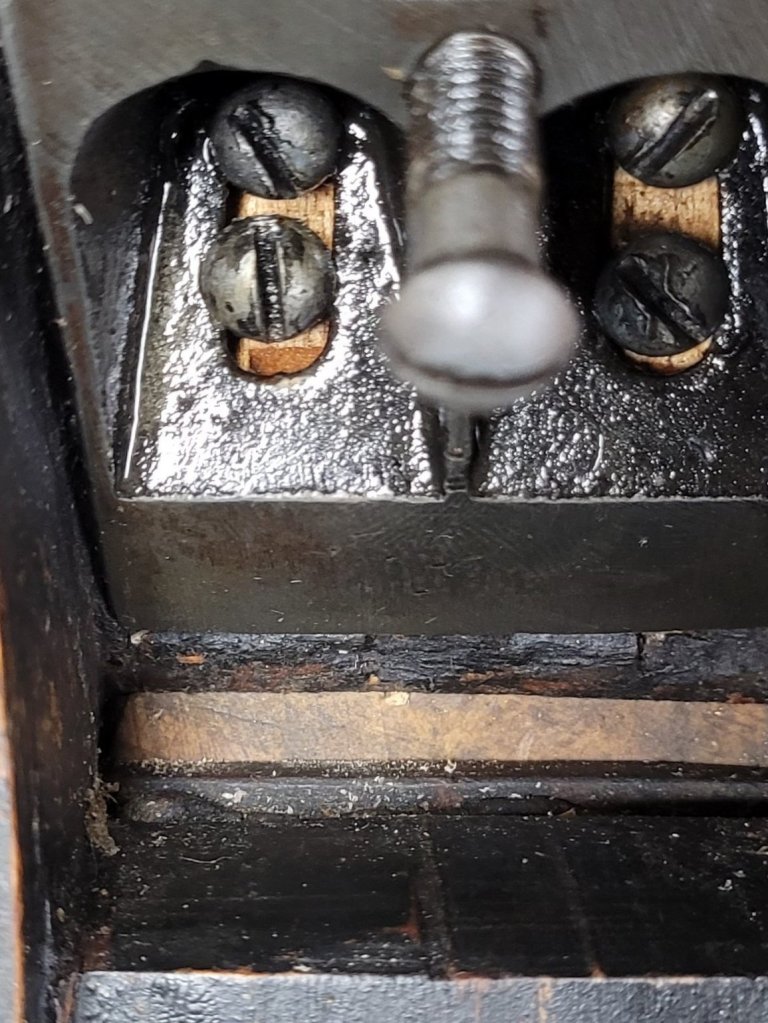
For whatever reason, he used four screws to hold down the frog to the body. It allows for very little advancement of the frog, but the plane still functions fine.

The owner also grounded the face of the lever cap down, which seems odd. You would think the original lever cap screw would have worked just fine, but maybe this screw is a replacement.

Luckily, I know the name of the craftsman of the plane (at least the last name). C Heiland is the person who made the plane. I googled “C Heiland Woodworker,” hoping I would find some information about him but had no luck. It would be awesome to have some provenance on the plane.

It’s a neat plane to look at, but I wanted to see how it performed, so I sharpened the blade and put it to work. The plane performs admirably. It was much better than the Buckeye plane I tried out from a few weeks ago.

Buckeye No 5 Plane

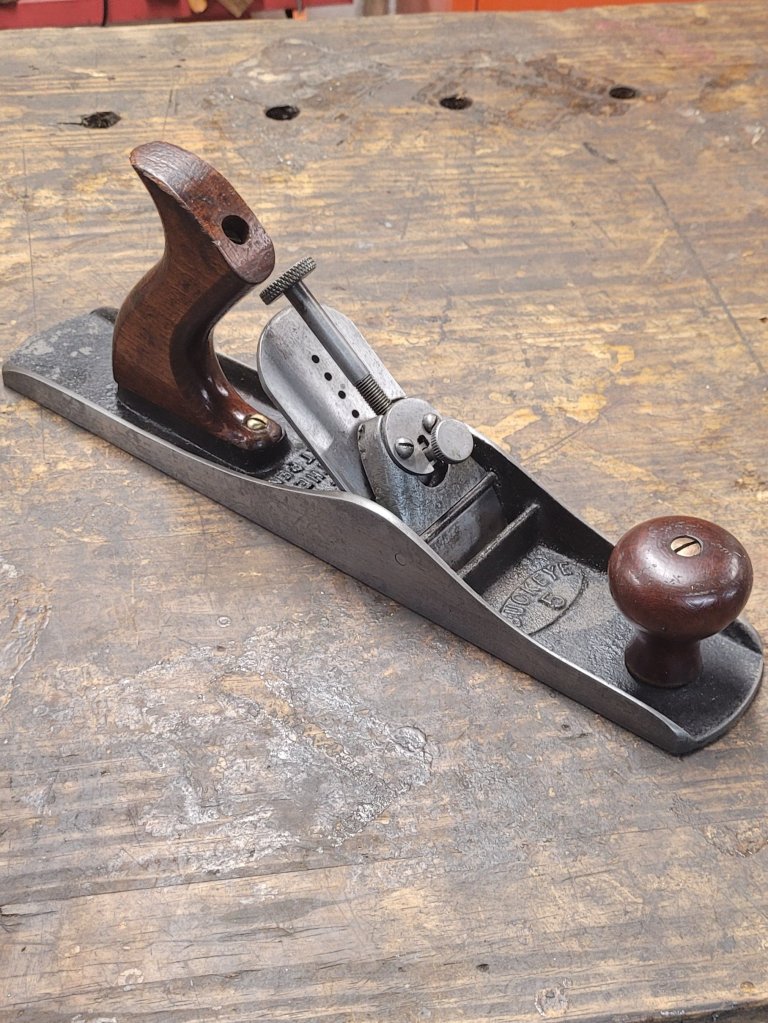
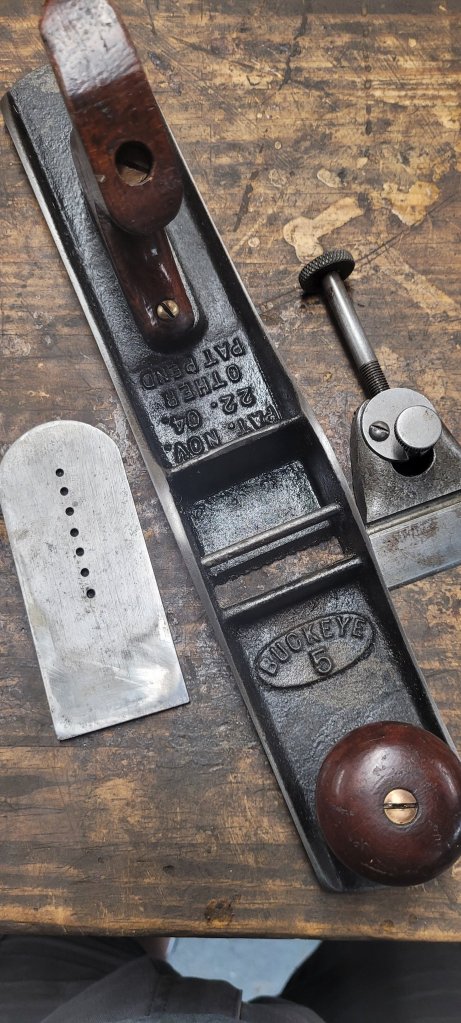
Several weeks ago, I won this Buckeye No 5 plane at auction. The look of the plane was something I had never seen before. I wanted to see how it would perform, so I took a closer look at the plane’s functions.

Buckeye planes were made by the Buckeye Saw Company, which was in business from 1904-1929, and they are known for this patented plane by John Muehl, who more likely sold his patent to The Buckeye Saw Co.

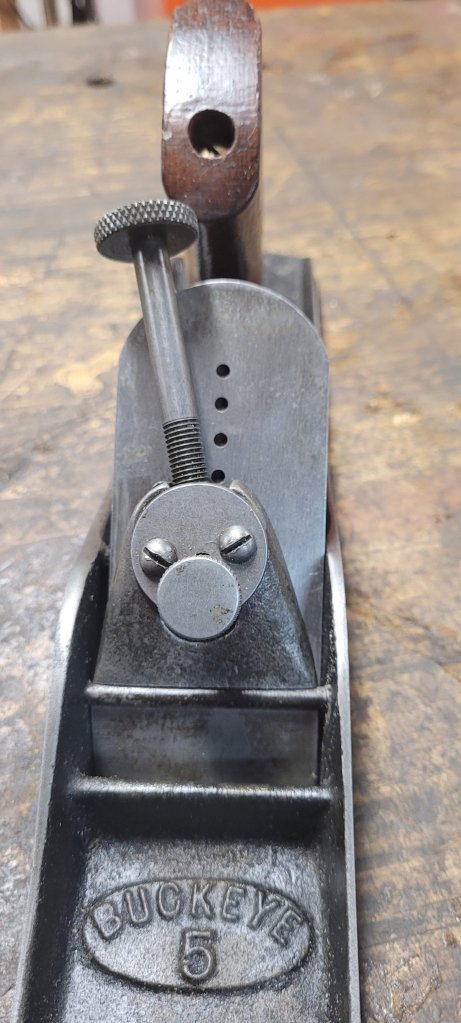
The plane has no frog. The blade simply rests on the casting of the bed, and the Norris style adjuster, pins into holes on the blade.

The lever cap acts as the cap iron as well, which usually is not a good sign for quality. The Norris style adjuster swings from left to right in order to adjust the blade from side to side.

The simplicity of the plane makes it impossible to adjust the gap in the plane’s mouth to produce a thin shaving.

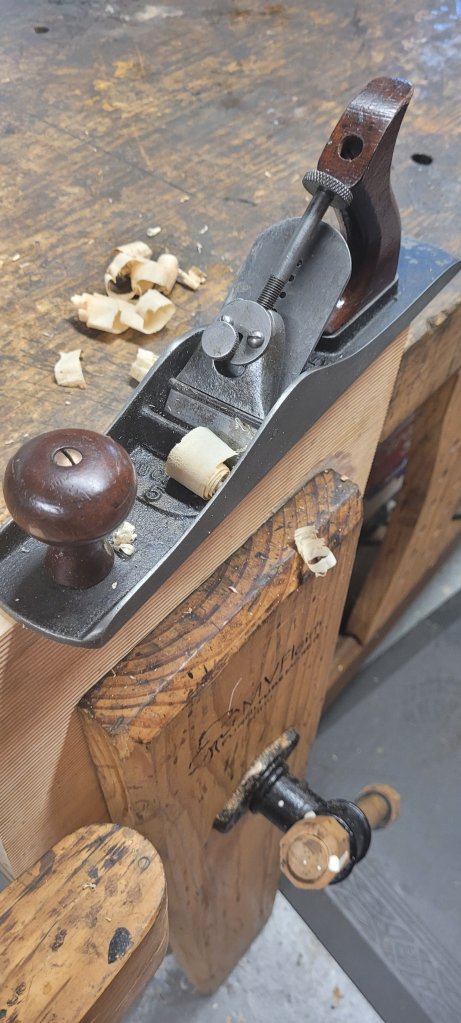
I sharpened the blade to see how it performed. Because the plane is so primitive and basic, I couldn’t get a nice shaving out of it even after messing with it for a few minutes. At best, the plane would only be good for rough carpentry work, like trimming a door and not for fine cabinetmaking.

In the end, my opinion about the quality of this plane is……it sucks!

A visit to Colonial Homestead

A couple of weekends ago, my wife and I drove up to Millersburg, OH to check out the fall colors and the antique malls up there. We visited Millersburg a couple of years back only to find out after we left, that there is an antique tool store in town. I saw Colonial Homestead on Instagram when we got home and couldn’t believe I missed it so, this time I knew I had to put it on our list of stops.

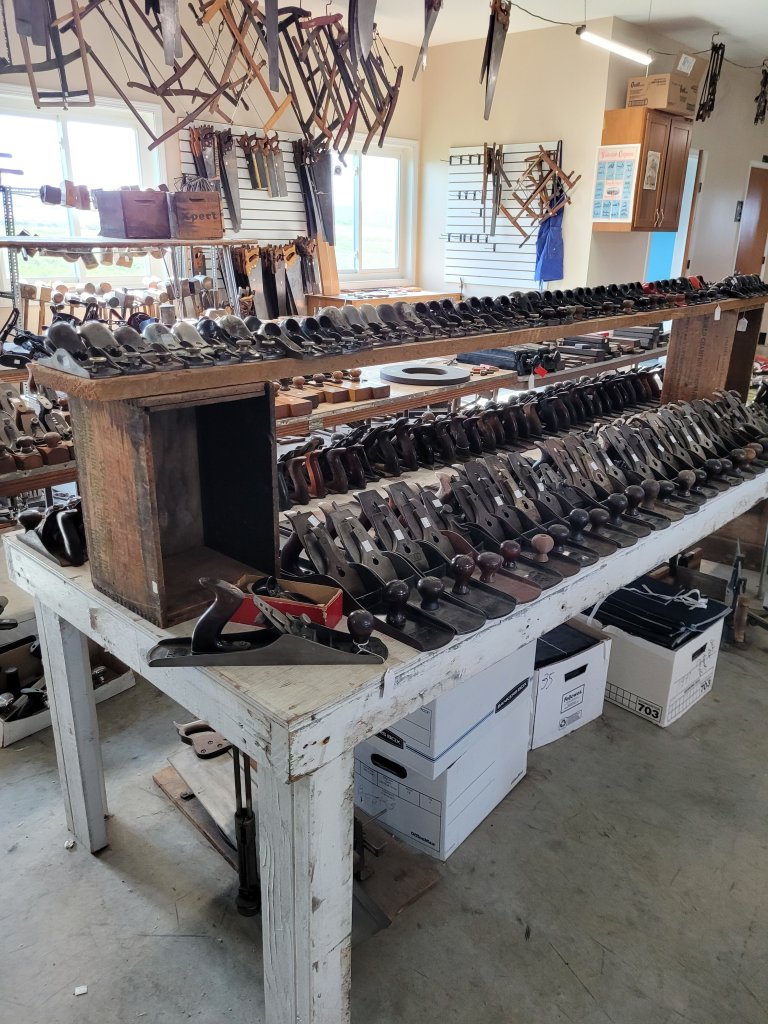
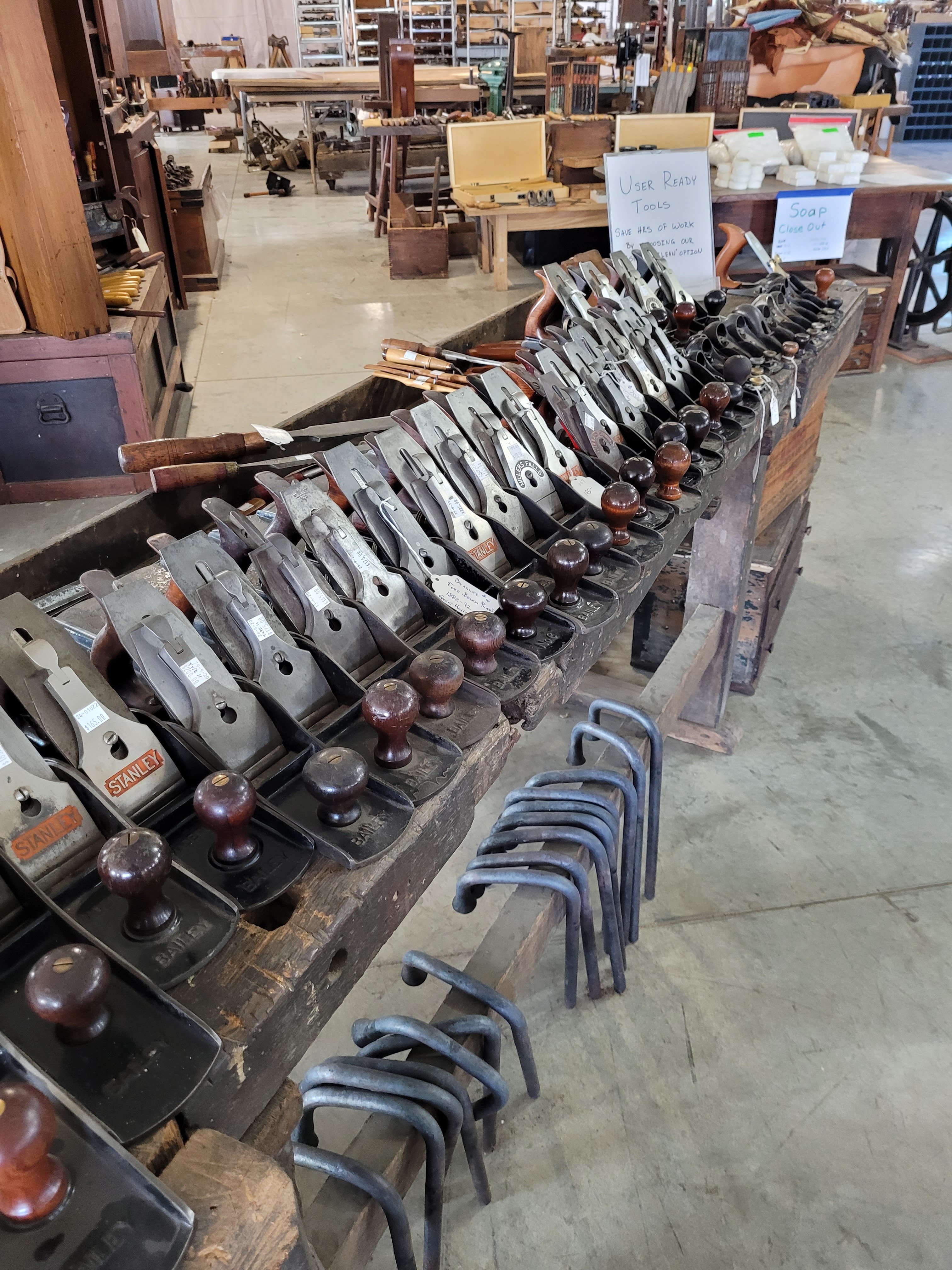
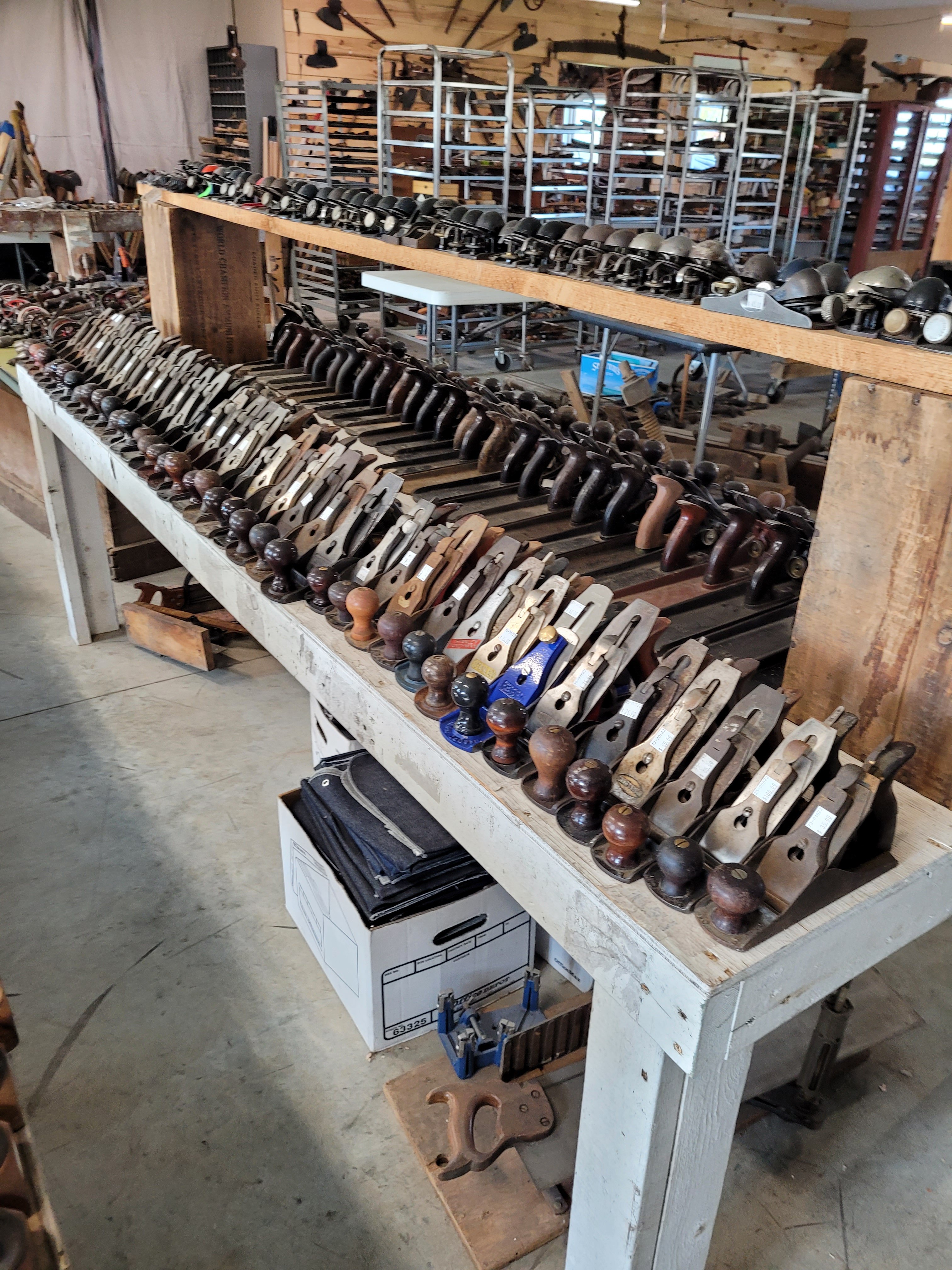
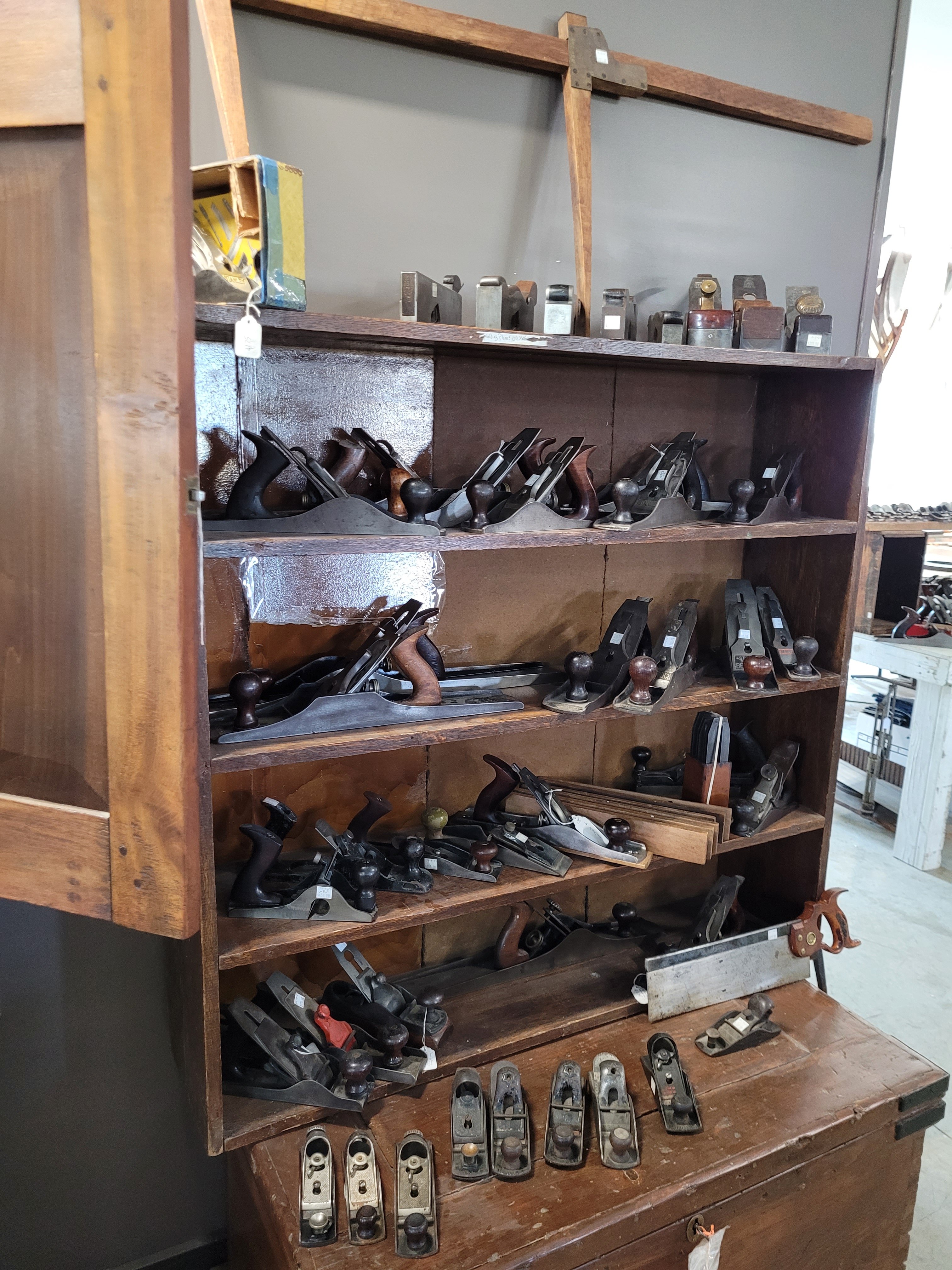
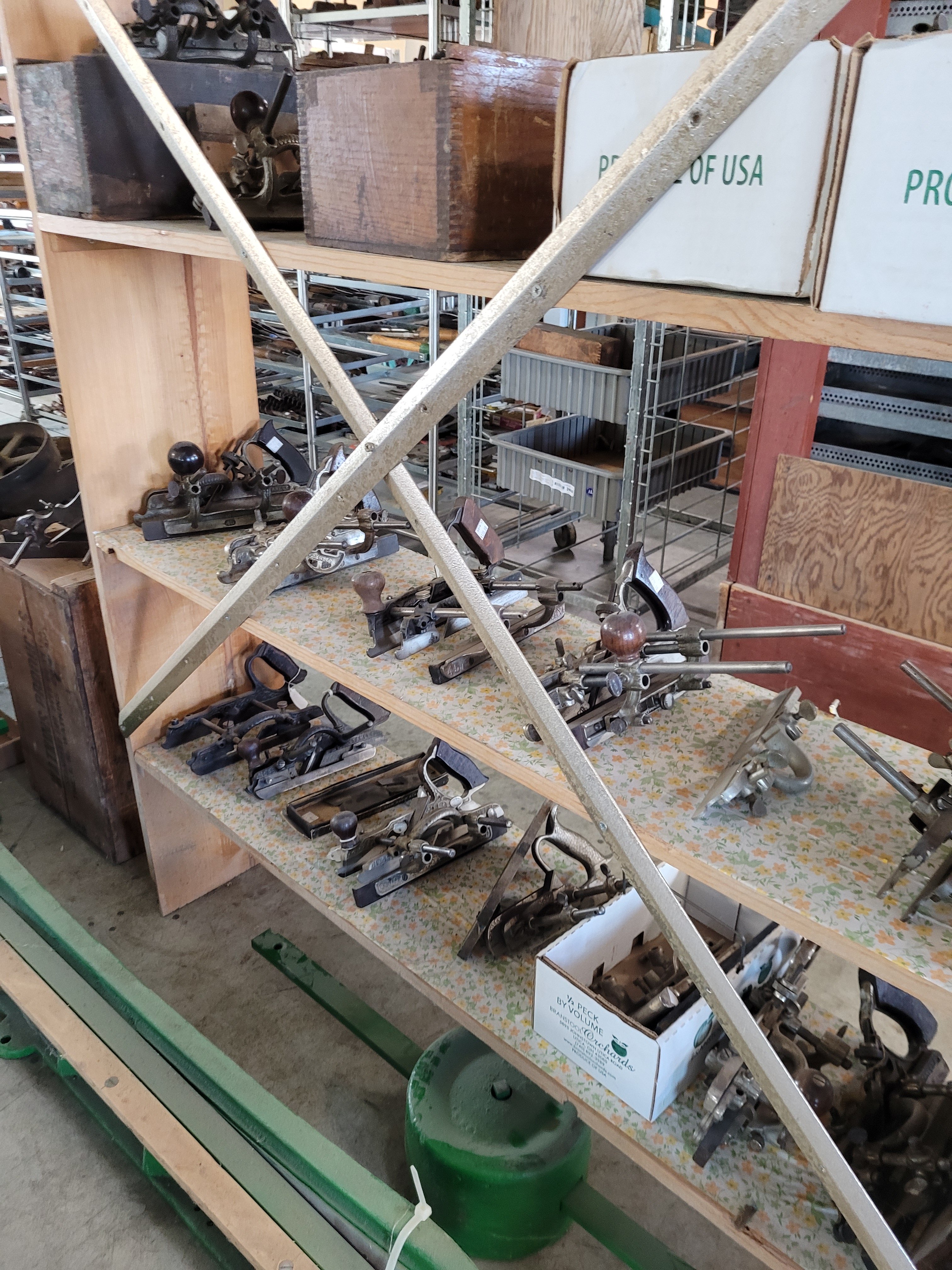
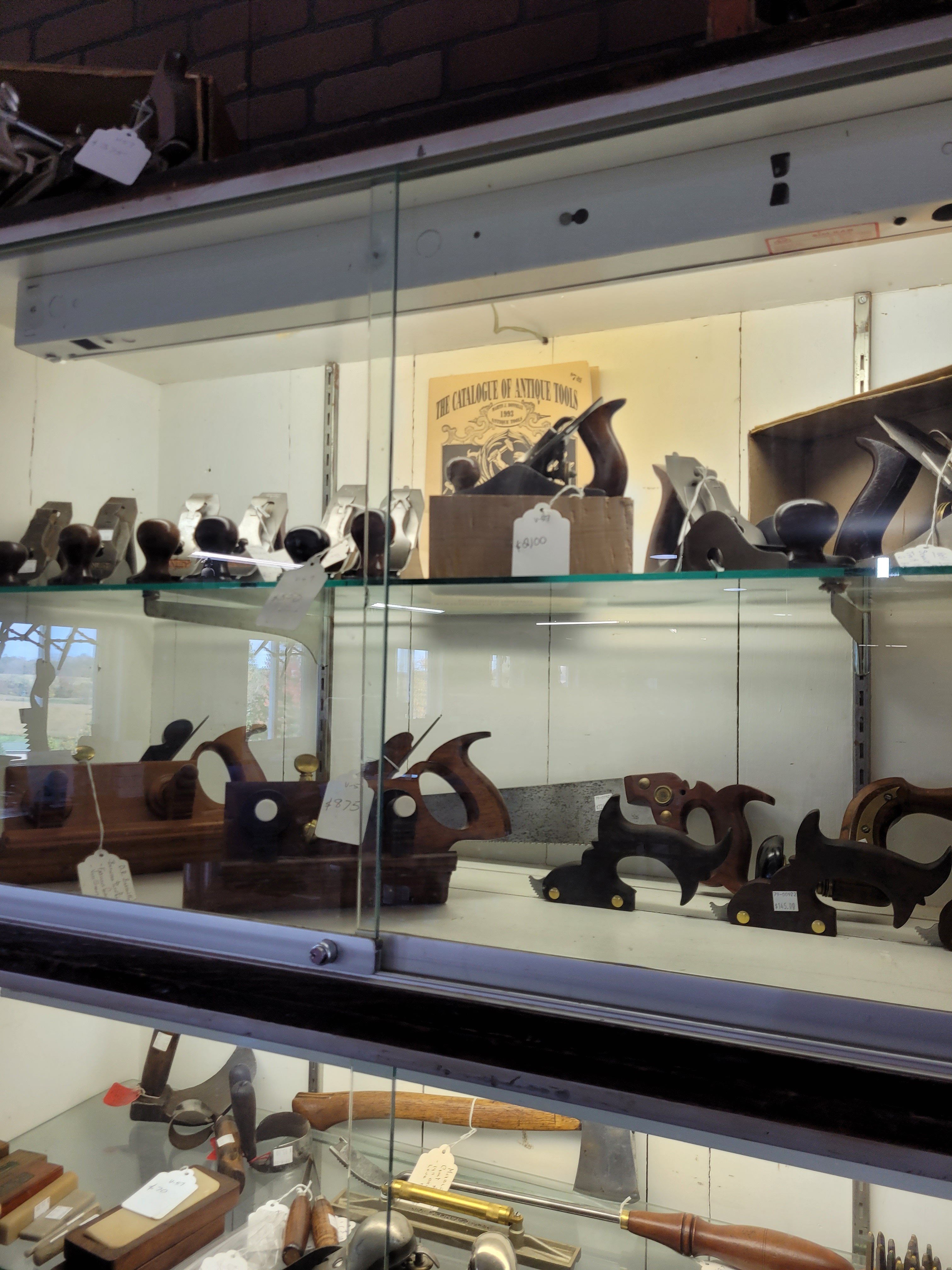
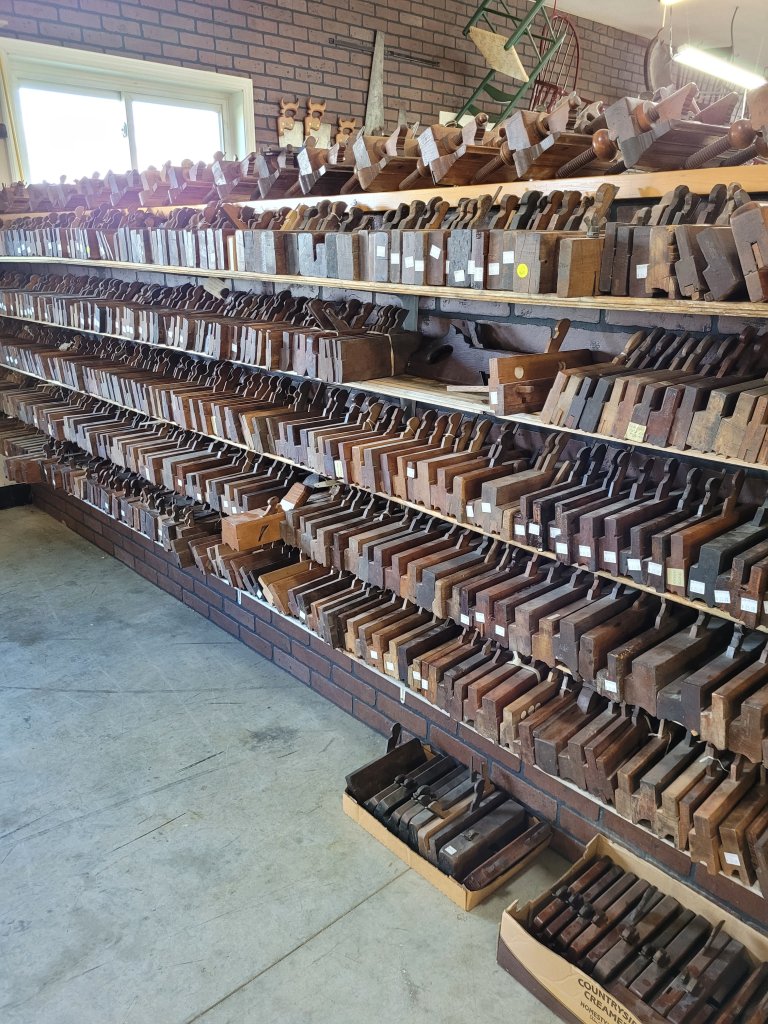
The building is about ten minutes outside of town and is a really big. Inside there are thousand of tools laying on tables and bookshelves. I immediately took a step back just to absorb everything I was looking at. There’s a table in front with a bunch of Stanley planes that are restored and ready for use.

Every tool you could imagine in this joint with some rare and unusual pieces. The prices on the tools are equivalent to eBay pricing, so don’t expect to get a steal. At least it’s not for me as I’m a picker so there was no meat-on-the-bone with the pricing on the tools. He was asking $2100 for the Stanley No 1 which was way above my budget. It looks like it’s sitting on the original box but I don’t remember noticing the box when I was looking at it.

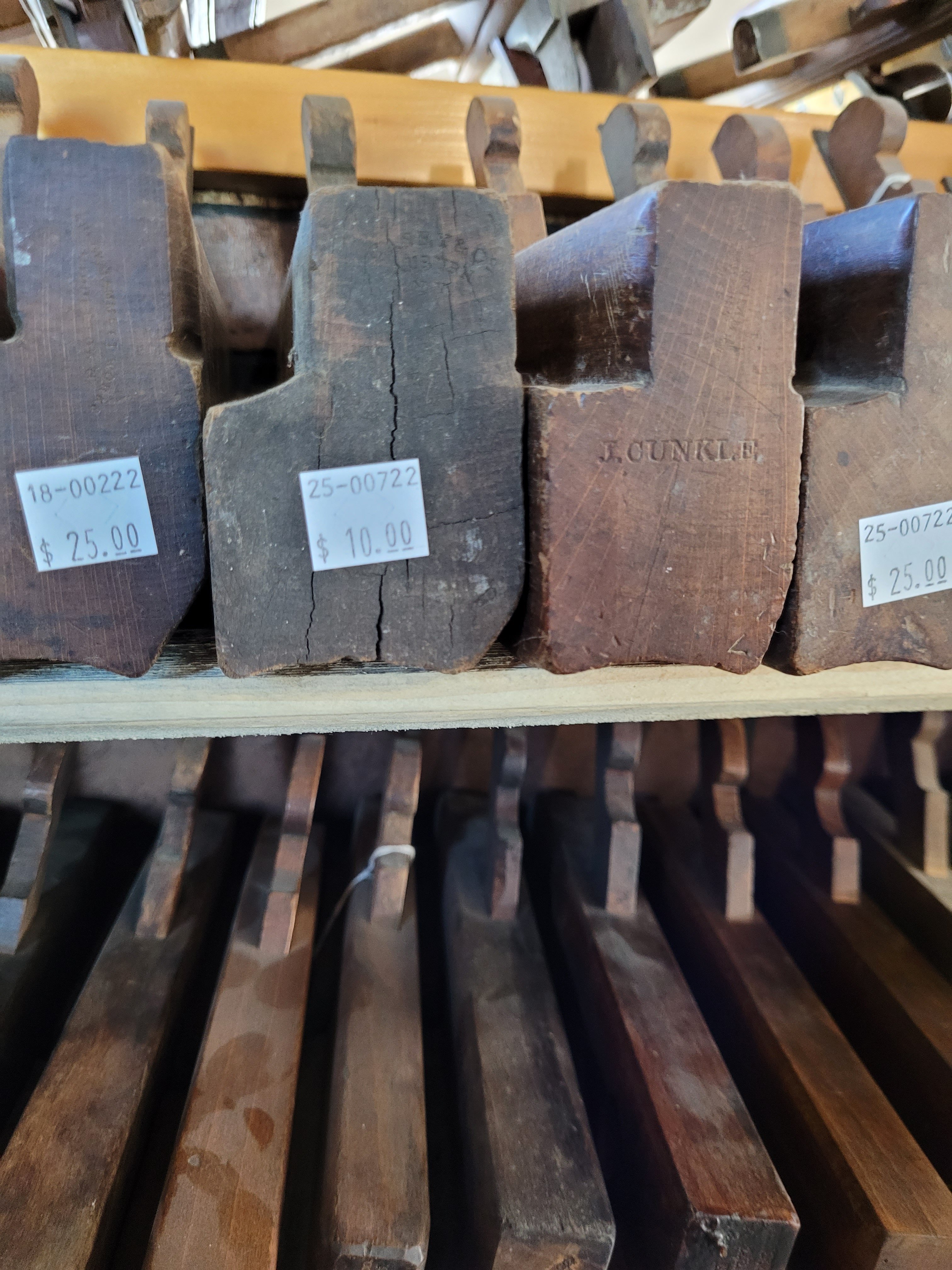
He did have a real nice selection of molding planes with prices that were in my budget however, he only takes cash and I didn’t have any on me so, it was pretty much a few minutes of browsing.

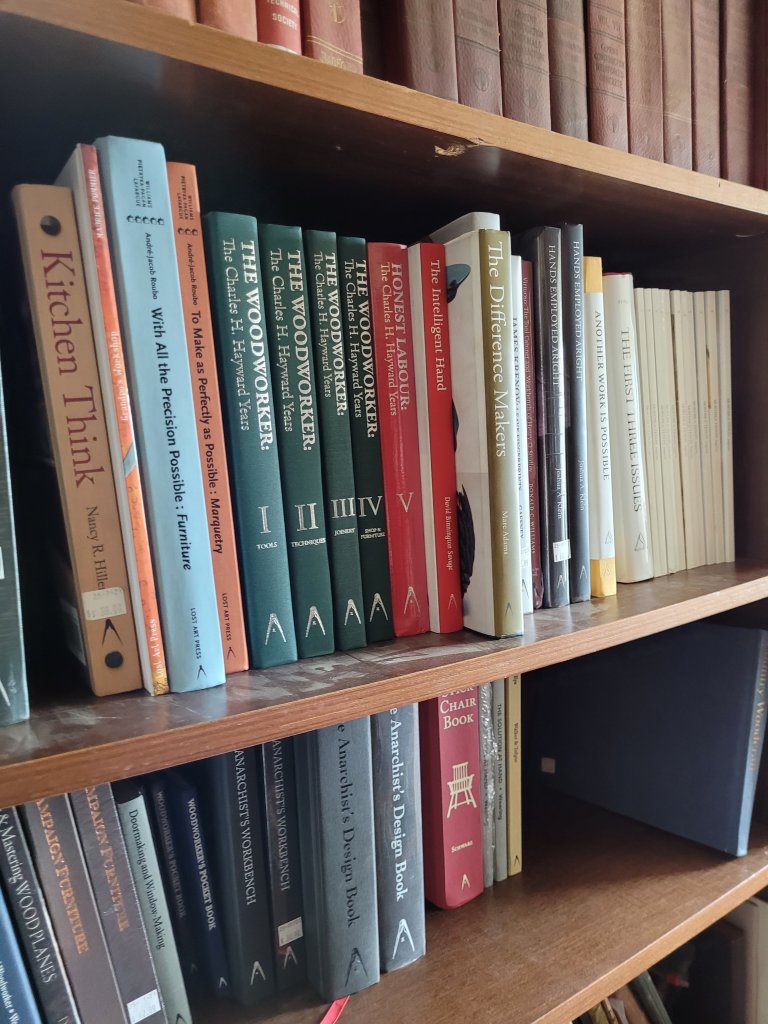
He also had a nice closet full of woodworking books. There were a lot of out of print books along with Lost Art Press favorites. I looked for the 2nd edition of the Stanley Tool Collecting book by John Walter but, there was none to be found.

After twenty minutes of browsing, I said goodbye and went on my way as my wife was waiting in the truck. The weekend wasn’t a total lost as I was able to find tools in my budget in antique malls in Berlin, and Walnut Creek, OH. The prelateral Stanley No 37 Jenny’s Plane was my favorite pick of the trip.

Restoring Wooden Clamps

Last month, I went back to the Springfield Extravaganza Antique Show in Springfield, OH. It’s the bi-yearly pilgrimage I’ve taken for the past 20 years. I love it, even though I haven’t found that many tools in the past few years. It was slim pickings again last month so, I was happy to buy a few wooden clamps for $15.00 a piece.

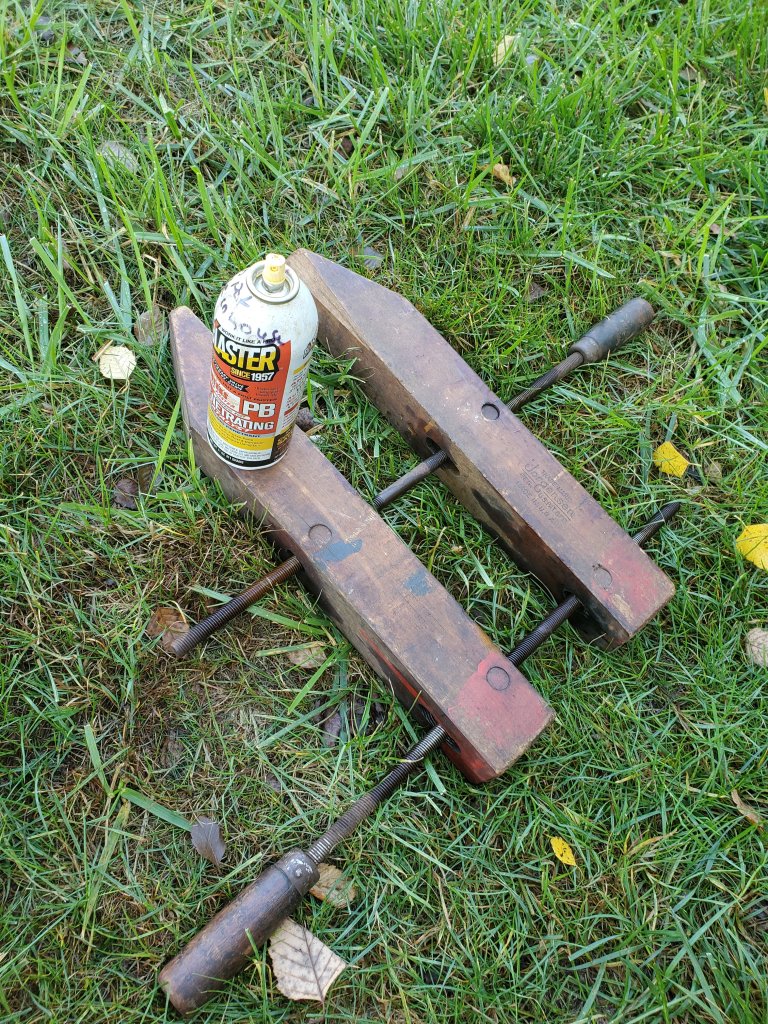
When I started restoring them, they were completely seized as the handles were unable to turn. I thought to myself “did I just piss away $30.00?” Luckily, after spraying the threads with PB Blaster for about 30 minutes, I was able to break free the rust on the threaded rods.

I then went to my tried and true antique oil, of mineral oil, orange oil, and melted beeswax. The solution not only helped the parts move freely, but it made the parts move like they’re brand new. If I had half of a brain, I’d sell this solution as it works so damn well, but I already have enough on my plate these days.

After the parts were free, I used a Japanese metal file and carved away the rust that was in the threads. You can see in the photos how corroded the threads were on the clamps. I feel lucky to have them usable again.

The final step was to coat the whole clamp with my tool solution. With a everything clean, I have two very usable clamps for a fraction of buying new wooden clamps and it was a done in one afternoon while watching football on TV. You gotta love antique shows!

Stanley No 68 Rabbet Spokeshave

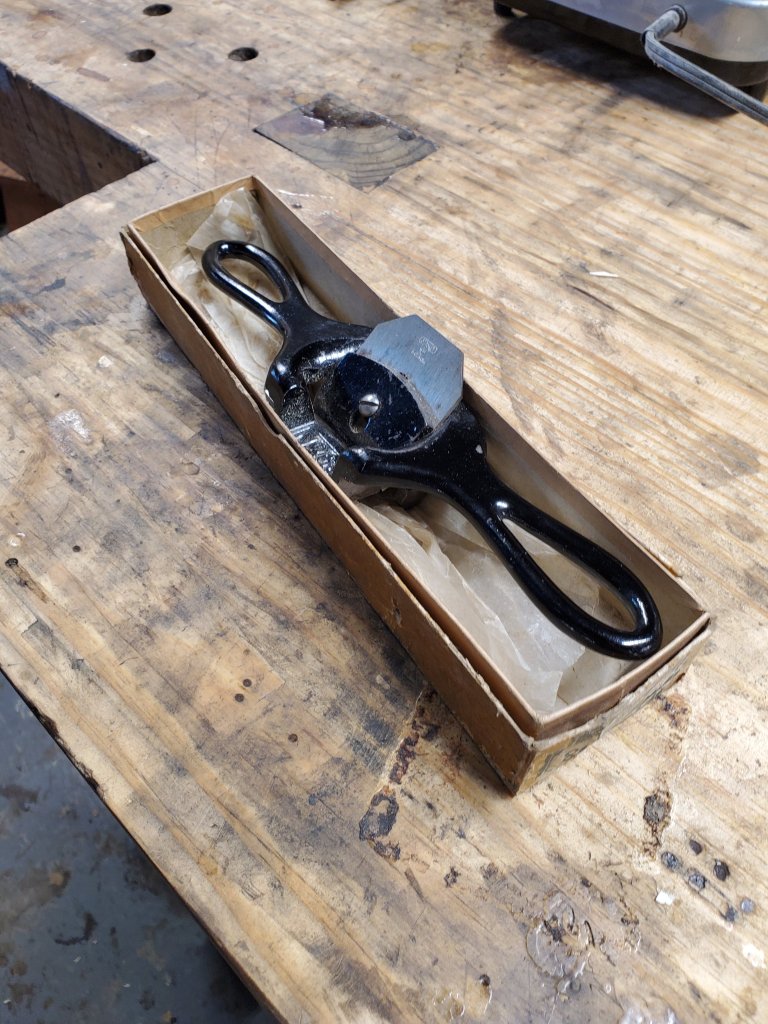
Yesterday, I went to an antique show and picked up the Stanley No 68 Rabbet Spokeshave in it’s original box. I’ve heard about the tool, but I don’t think I’ve ever seen one in person. The price the guy was asking was too good to pass up so I took it home.

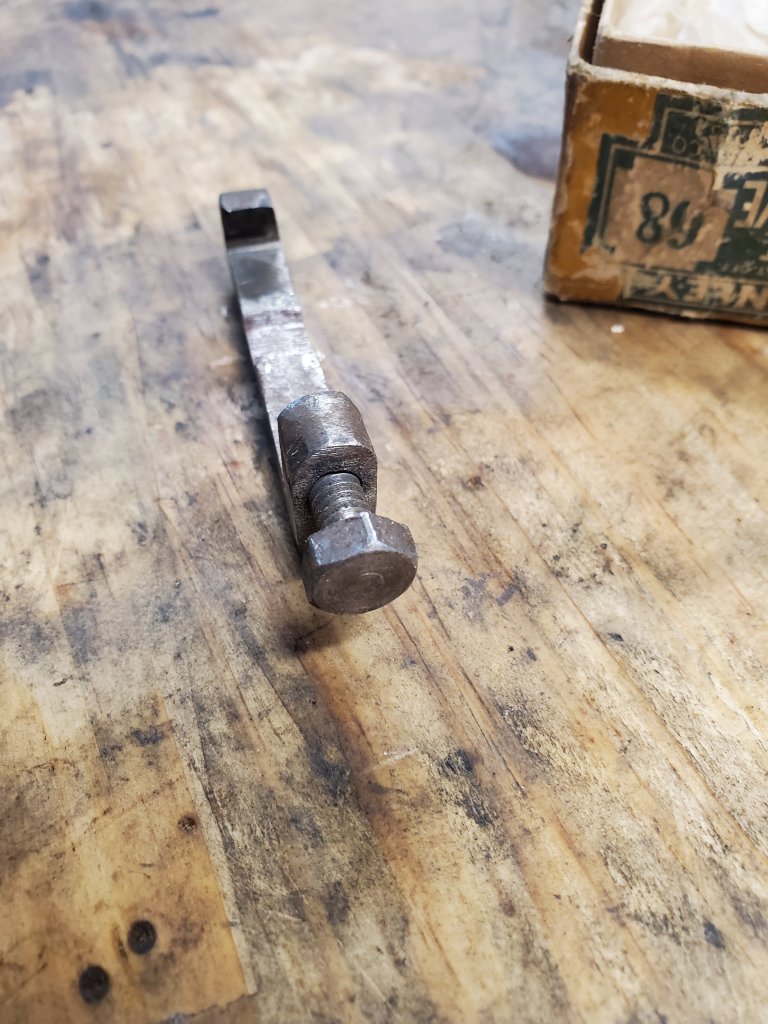
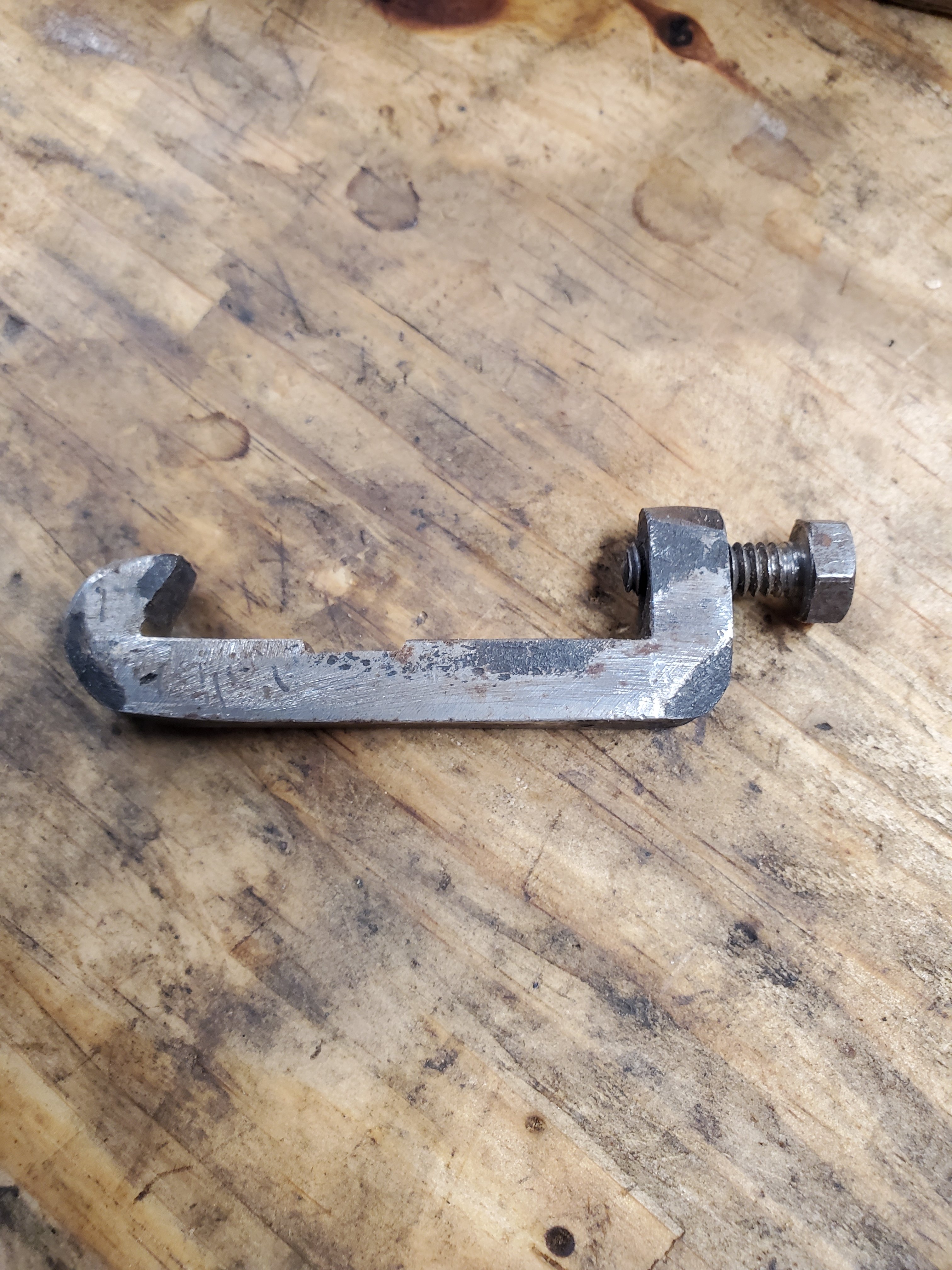
When I got home, I noticed a fence inside the box. At first, I thought it didn’t belong with the spokeshave but after looking at it for a few minutes, I saw that it clips on the back. The fence looks crude as if it was made by the original user, so I looked in John Walter’s Stanley book, but saw no mention of a fence that came with the tool.

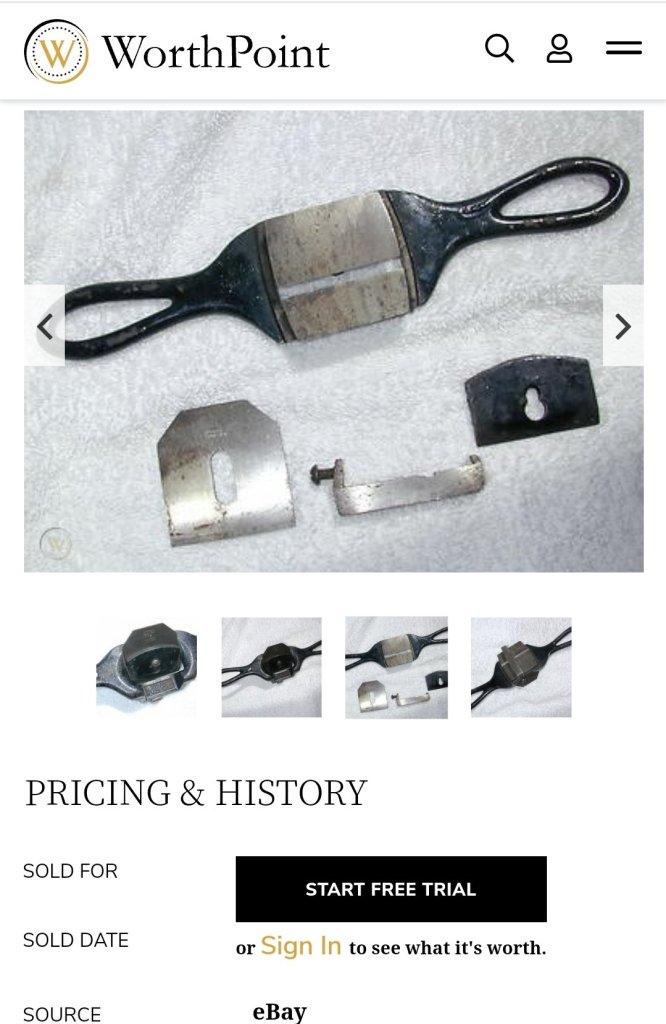
When looking online for more information for this spokeshave, I saw that the vast majority of them have no fence. Then I came across this photo on WorthPoint where it shows a similar fence as mine, except this fence has a screw to tighten it while mine has a bolt. So, I’m not sure if this was a user tip that people saw in magazines that they made themselves or not.

Here’s the spokeshave in action. It works quite well with the fence. I posted this video on instagram and people said that the spokeshave was used by boat builders and carriage makers which would make sense. Definitely an interesting tool.