Saw Sharpening

A couple of weeks ago, I bought Set & File by Matt Cianci from The Lost Art Press. I waited about a year for the book to be published as sharpening has never been a strong suit of mine when it comes to saw restoration.

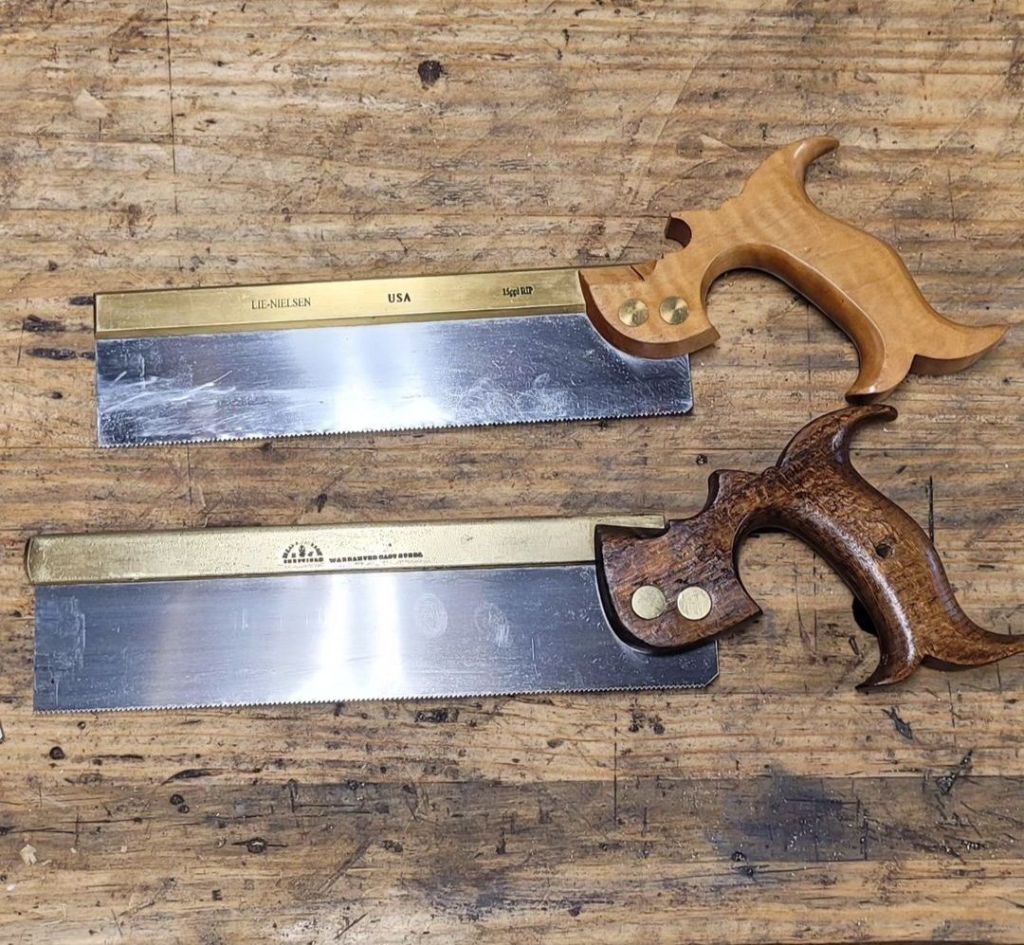
I’ve owned a Lie Nielsen dovetail saw for years and recently restored a Spears and Jackson dovetail saw. While I could sharpen the teeth fine, setting them properly was a pain as the anvil in my saw set was too big to do the job.

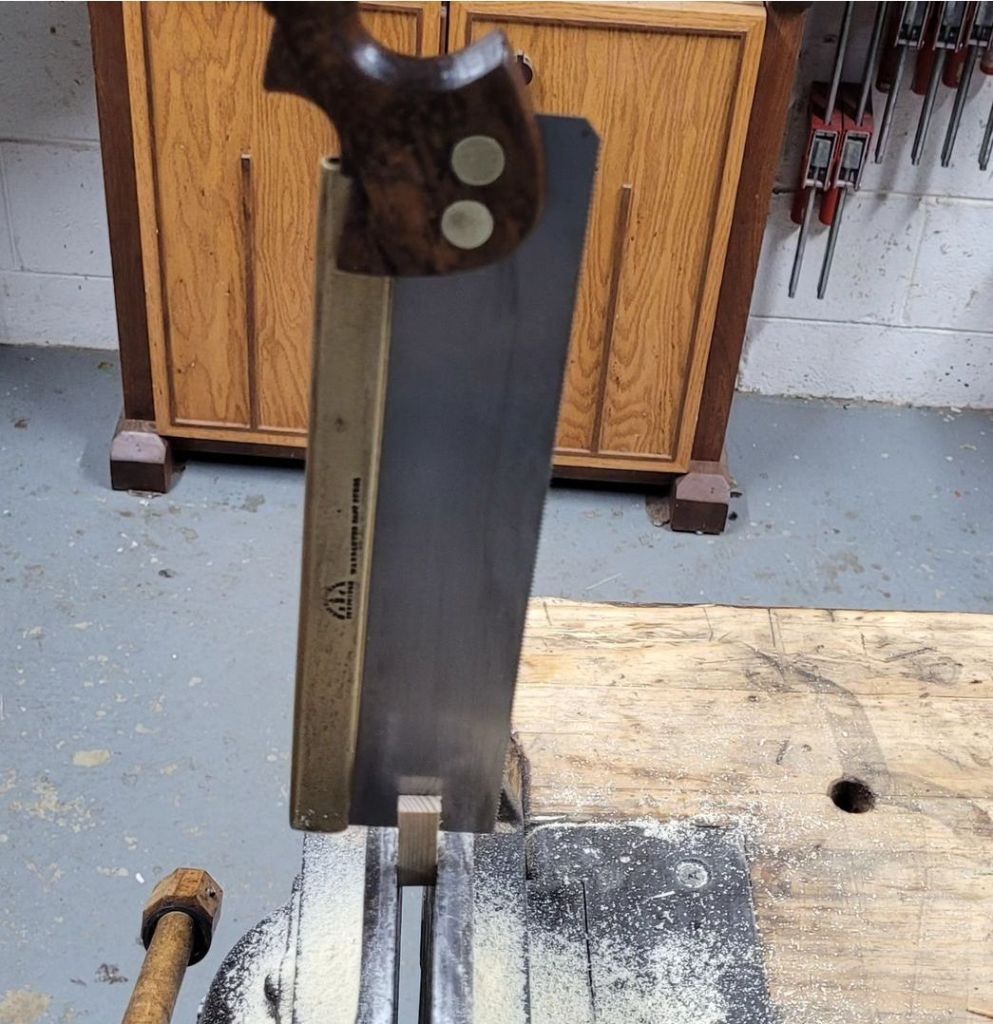
I read in Matt’s book where he dismantled his Stanley No 42X saw set and filed the anvil thinner in order to properly set the teeth on fine tooth saws.

Sure enough, I followed his advice and clamped the anvil in my vise, and carefully filed both sides of the anvil in order for it to look like the one in his book.

Putting the saw set back together, the anvil looked like it would now do the job.

After a few minutes of sharpening and setting the teeth, the saw sat in its kerf nice and tight. Plus, it cut like butter.

Now, I have two dovetail saws that are ready for use. It’s amazing how simple tricks can help your woodworking skills. Major props to Matt Cianci!

Chairmaker’s Notebook: The Best Chairmaking Book on Earth

A few weeks ago I stopped by the home office of Popular Woodworking to go to their Lie-Nielsen Hand Tool Event. It’s always fun to take a break out of my day to play around with their tools. While I was there, I tried their No 5 1/2 jack plane that cut such nice shavings it almost got me thinking of quitting restoring my old Stanley planes.

Along with Lie-Nielsen, Lost Art Press was there selling their books and apparel. I took a peek inside one of their newest offerings, “Chairmaker’s Notebook”, to see if it was something I wanted to open my wallet for. I love books about making chairs. I’ve read over a half-dozen of them over the years including John Alexander’s “Make a Chair from a Tree: An Introduction to Working Green Wood” as well as Drew Langsner’s “The Chairmaker’s Workshop”. In fact, if I was ever a professional woodworker, I’d probably be a chair maker. So, I decided to bite the bullet and purchase the book. Needless to say, I’m glad I did.

I read a few chapters a night as I wanted all the information to absorb. What I love about this book is that it takes you through all the aspects of building a chair. From buying a log at a sawmill, to setting up a chairmaker’s workshop, to modifying and sharpening your tools, to assembly and finish. Peter even gives you a scaled model of a “sightline ruler” so you can photocopy it and make one yourself. It’s by far the most complete woodworking book I’ve ever read. Absolutely nothing was missed when writing this book.

As an example of how well this book is written, in the beginning, Peter talks about buying a log from a sawmill and what to look for when picking a log. He tells you not to buy the veneer logs as they tend to be too expensive and go for a premium. He says you should ask for “veneer rejects” because those logs will work just fine for building chairs and will be a whole lot cheaper. He then goes on to recommend that you bring a chain with you to wrap around your log so that the guy on the forklift can gently lower it down on your trailer instead of slamming it down breaking your trailer in half. It’s first hand stories like this that really sets this book apart from other books I have read.

A few years ago I made a few Windsor chairs of my own, but I used kiln dried lumber because I had no idea how to go buy a log. Regretfully, had I owned this book at the time, I would have made my chairs a whole lot better.

 photo ef7d23d7-3262-4d97-8202-2d51a3494aa6.jpg

Along with the excellent information in the book, Peter is also one hell of an artist as he drew all the pictures in the book. In fact, the pictures are so well drawn, that you know exactly what he is describing in his illustrations.

 photo 20150421_200208.jpg

If you have ever been intrigued with building a chair, then I highly recommend that you add this book to your library. You can buy it from The Lost Art Press.

Woodworking in America

I stopped by the Marketplace at The Woodworking in America show in Covington, KY today after work. Living in Cincinnati I’m spoiled that I get to waltz right in like it’s no big deal when the majority of people who attend have to make travel plans and hotel accommodations. I attended the first WIA a few years back in Berea, KY and had a blast listening to presenters like Roy Underhill, Brian Boggs and Frank Klaus. However, the money has been too tight for me to afford to attend any of the seminars since then.

I picked up a few things while I was there, nothing much. I mainly went there to buy the book “By Hand & Eye” by George Walker and Jim Tolpin. I’ve read good things about it and knew Lost Art Press would have a booth so leaving with that was a no-brainer. I also picked up a couple of DVDs about using SketchUp. I’ve been wanting to learn how to use this design software for years but after fiddling around with it in the past, it never clicked. Hopefully the DVD’s will make a light bulb go off in my head.

I stopped by the Knew Concepts booth and looked at their fret saws again. I see them every year but they never bring any inventory to sell. They would give me a card and tell me to go on the website and use it for free shipping. Every year I took the card and just forgot about it. Well not this year. They finally brought saws to sell so I bought one.

I’ve wanted one of these saws for a few years now. They are much stronger and hold the blade much stiffer than an ordinary coping saw. I’ll use it mainly for cutting the waste out of dovetails as well as some fret work from time to time. The difference between a Knew Concepts saw and a coping saw is night and day. I may turn a new handle for it out of cocobolo to beautify it someday, but I’m in no rush for that.

With my Knew Concepts saw, my coping saw is perfectly happy in his new home.

All in all, the Woodworking in America is a good show that’s worth going to. It’s not like The Woodworking Show that travels around the country. It’s mainly focused on hand tool woodworking so you won’t find a lot of power tools or boxes of discount belt sander sanding belts. About three quarters of the vendors focus on hand tools which is fine by me.

I was disappointed not to see Welch chair maker Don Weber again this year. He hasn’t attended in a couple of years and I’m not sure if he will again. I took a blacksmithing class from him a few years ago at his shop in Paintlick, KY. He’s extremely knowledgeable about woodworking and a hell of a craftsman, as well as down right a nice guy. I did talk to a few young chair makers who were selling some sweet ass chair making tools. I wanted to buy a drawknife sharpener and adjustable calipers but my funds were already spent. I got their cards so maybe sometime down the road I’ll buy them off the internet.