J W Roof’s Tool Chest

Last weekend, I ventured out to an antique show in Urbana, OH. I got there around 8:00 am and walked around for a couple of hours buying a handful of tools. I was happy with what I bought as I just go to these antique shows because I enjoy going regardless of what I buy.

I decided to make one more pass around the fairgrounds when I decided to go down a little part that I didn’t visit before when I stumbled upon this guy.

A huge tool chest full of tools. The guy selling it said he took out of a house in Troy, OH from a woman who had it in her garage. It was her Dad’s tool chest. She had nowhere to keep it as she was moving into a retirement home, so she had to ged rid of it.

I looked inside at the tools and immediately noticed a Stanley No 8 and 5 Type 4 prelateral planes and an early version of a Stanley No 45 Combination plane. The guy told me he wanted $350 for the chest and tools and that he’s had a few offers for the chest alone. He then told me he’d sell all the tools in it for $200.  At this point, wheels were spinning in my head as to where I was going to put this thing as my shop is already overflowing with tools from the auction I went to a few months back.

Then the guy told me he’d take $300 for everything as he really wanted to get rid of it. At $300, I might as well buy the whole thing as the tool chest alone was worth more than a $100.  I told him I’d take, but I had to go to the ATM and get some cash.

I came back, gave him the money then drove into the fairgrounds to put it in my truck. I was stoked! In 35 years of collecting antique tools, I’ve never bought a tool chest, let alone one with a bunch of tools in it.

When I got home, I decided to look at the tool chest more closely. It was a pine box dovetailed together with brass hardware on the corners. Inside were mahogany tool bins with veneered banding on top.

Underneath the veneered bins were two tool totes for various tools and parts.

Removing those bins, were two more filled with auger bits and chisels.

Underneath those is where the planes were. There were only two bench planes but he had a decent collection of molding planes with most stamped J W ROOF.

I brought everything in my basement and cataloged all the tools that were inside. There were over 100 with a lot of them being small drill bits and hardware. There were a nice collection on incannel gouges along with metal working punches and wrenches. I’m trying to figure out what he did for a living but it may be impossible to figure out as who knows what tools are missing and which tools were just thrown into the chest over the years. 

With the age of the Stanley planes, I estimating that the chest was made in the 1870 -80’s  Now I need to decide what to do with it.  Nevertheless, what a great Birthday present to myself!

World’s Longest Yard Sale 2025

I went on the World’s Longest Yard Sale again this year. We traveled five days traveling from Russel Springs, Ky to Eaton, Ohio, at the I -70 line. It seems harder and harder to find tools. Mainly because the same vendors have the same tools I picked through the previous year. Nevertheless this is what I got.

A couple of Milers Falls planes. These are getting pricier every year as more people realize how well they work.

A bunch of Stanley bench planes and one Craftsman No 5C for $5.00. I’ll buy the parts planes if the price is right as I usually have the correct part to make it complete.

Two Stanley No 48 tongue and groove planes. One is missing a blade, but they’re relatively easy to make. The other has a user made wooden fence that is too narrow to work.

I bought this lot for $20.00. The guy didn’t know what the sun plane body was. I believe the screw handle is from a mitre clamp.

An ivory slide rule and a 2 ft caliper rule I have never seen before. Plus, there are a few odds and ends.

I found the Holy Grail of paste wax. A full can of SC Johnson paste wax for a $1.00. I hit the lottery. lol.

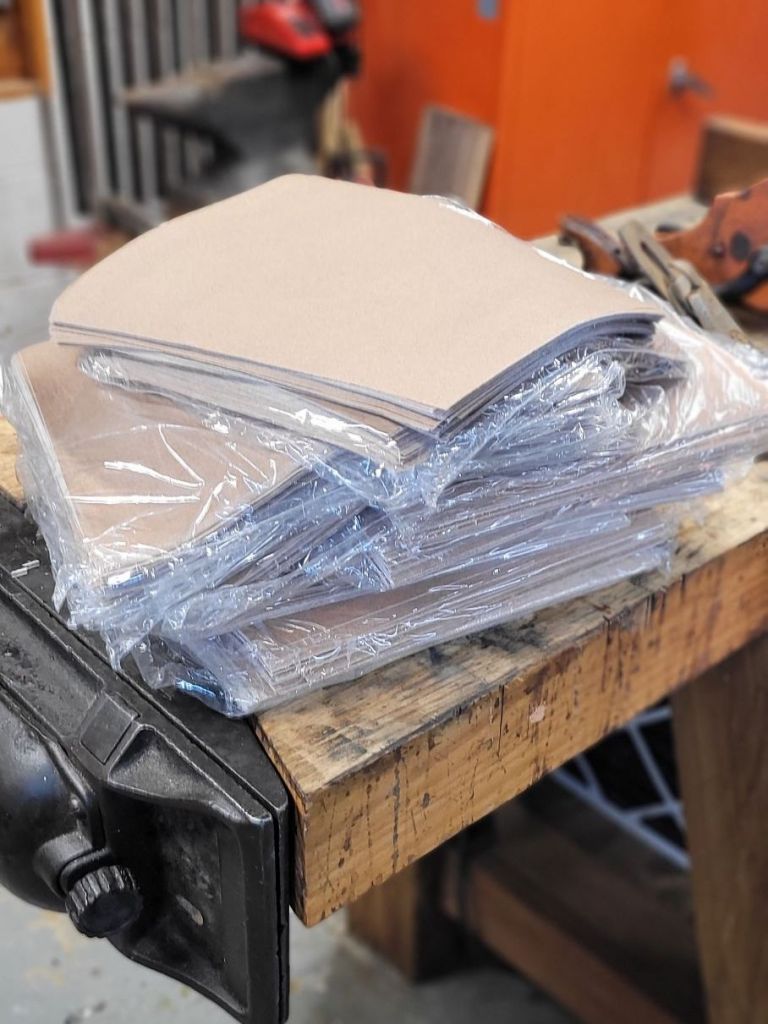
I bought 600 sheets of sandpaper for $20.00. 300 each of 150 and 220. I love cheap sandpaper. The number one rule of sandpaper is to use it like someone else is paying for it.

I only spent about $250.00 for everything, but my wife, Anita, made out well. She bought a whole lot more and spent a whole lot more money than me. You can check out her Instagram page at mybuckeyehome to see what she bought.

Cool Little Workbench

My wife, Anita, and I were antiquing in Madison, IN, yesterday when I stumbled upon this little workbench. 

It was cute little Sloyd style workbench from the 1800s. I couldn’t believe how small it was, so I imagine it had to be built for a little kid.

It had to be about 3′ 6″ tall by 5′ long. What was so amazing about the bench was how well worn out and used it was. The child that worked on this bench used it a lot as the top is full of tool marks.

Obviously, it could have been for multiple children in a school shop class, but I never had a bench like this in elementary school, let alone a shop class.  Can you imagine being the kid lucky enough to work on this bench?

No, I didn’t buy the bench as I couldn’t afford the $350.00 price tag as I’m too cheap. Plus, I didn’t want to drag it home because I had no place to put it. But it’s definitely the coolest old workbench I’ve ever seen.

My 15 Year Old Workbench

This year, my Roubo workbench turns fifteen years old. All I can say is that it’s one of the best things I’ve ever built as it has held up a lot better than I thought it would. It’s pretty beat up with a bunch of tool marks and stains, but it looks like every antique workbench I have ever seen in the wild, so I must be doing something right.

The bench is designed based off two Roubo workbenches, one from Roy Underhill in his book Working Wood with Wedge and Edge and Christopher Schwarz’s book Workbenches. Made from 2x material and 6×6 pressure treated wood for the legs, the bench is incredibly beefy and does not wrack when I’m planing or doing any other task on it.

The leg vise is still strong and tight, and the crochet at the end has never let the wood slip when I jammed my board into it.

Amazingly, the top is still level even after all these years. I did have to flatten the top a year or so after I first made it, but the wood is now stable and is done drying out.

The king of the bench is my Emmert Patternmakers Vise. It’s by far the best antique tool I’ve ever bought as it is extremely versatile, holding wood at various angles. I can even swivel the jaws 90 degree to raise my work pieces height higher so I can cut dovetails easier without having to bend over.

I restore a lot of tools and do a lot of sharpening, so the top is constantly dirty. I occasionally will break out my random orbital sander or even plane and remove all the gunk when I’m sick of looking at it. The downside to all the dirt and grease on top is that if I don’t lay down a protective sheet on top of the bench, the workpiece will get dirt marks on it. (which brings me to grab my sander and clean the top).

The drawer I built to go under the top is full of miscellaneous tools that I use, like pencils, hold fasts, bench cookies, etc. It’s also full of sawdust that falls through the holes on top.

I’m getting old (50), so more light is always a plus. Last year, I bought an old desk lamp at the thrift store for $8.00 and use it so I can see what I’m doing.

My fancy sliding double dovetail is still holding strong. It’s not pretty enough with my sloppy joinery and wood shrinkage to be featured in a magazine, but it has never let me down.

The bench can be disassembled so I can move it out of my shop when I eventually move someday. If I take off the Patternmakers vise, I’m hoping the top can be moved upstairs without too much trouble, but I’ll cross that bridge when I come to it.

Stanley No 5 1/4 Plane

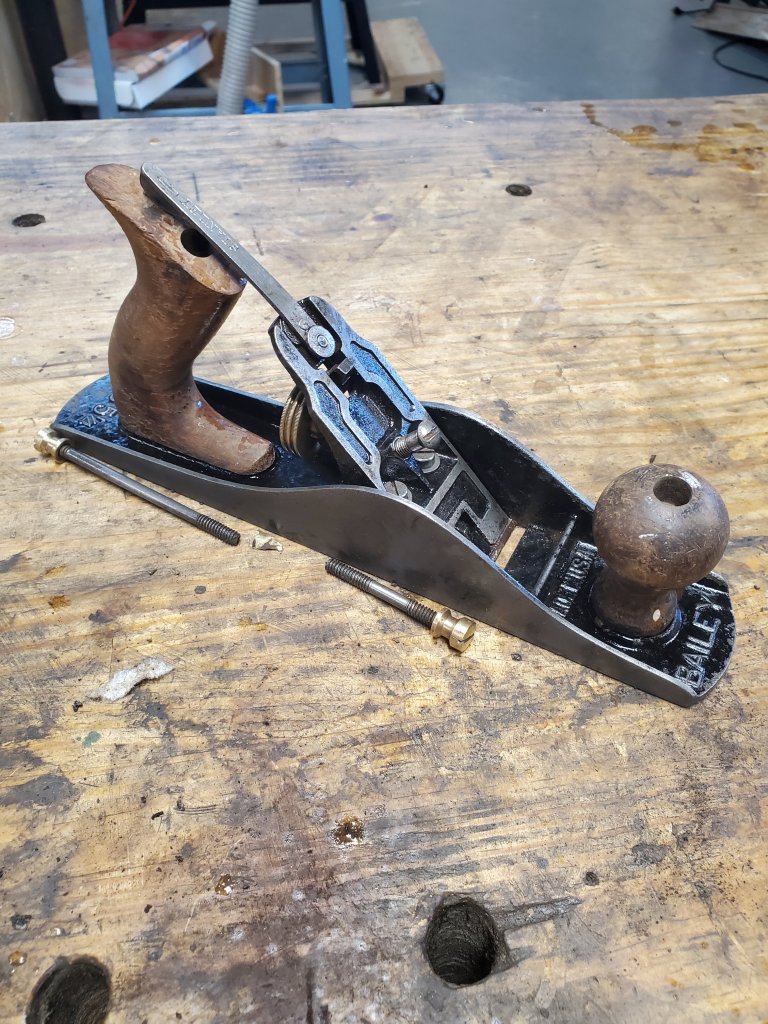
A few weeks ago, I stopped by an antique store in New Paris, OH across the state line from Richmond, IN and bought a Stanley No 5 1/4 plane strictly for the parts. The plane was missing the blade and lever cap but the price was right so I took it home.

When I cleaned up the plane a little bit, I noticed it was stamped Cincinnati Public Schools. I thought that was pretty cool since I live in Cincinnati, even though I went to Sycamore High School and not CPS. After thinking about it, a light bulb went off in my head.

I’ve owned this Stanley No 5 1/4 ish plane for years however, the plane is not marked 5 1/4 on the bed. I think it was either a Four Square plane or maybe a plane that came with a tool cabinet kit. I use it from time to time and it works well, it just sucks that it’s brazed on one side. I’m not sure where that lever cap came from as it looks like a transitional plane lever cap.

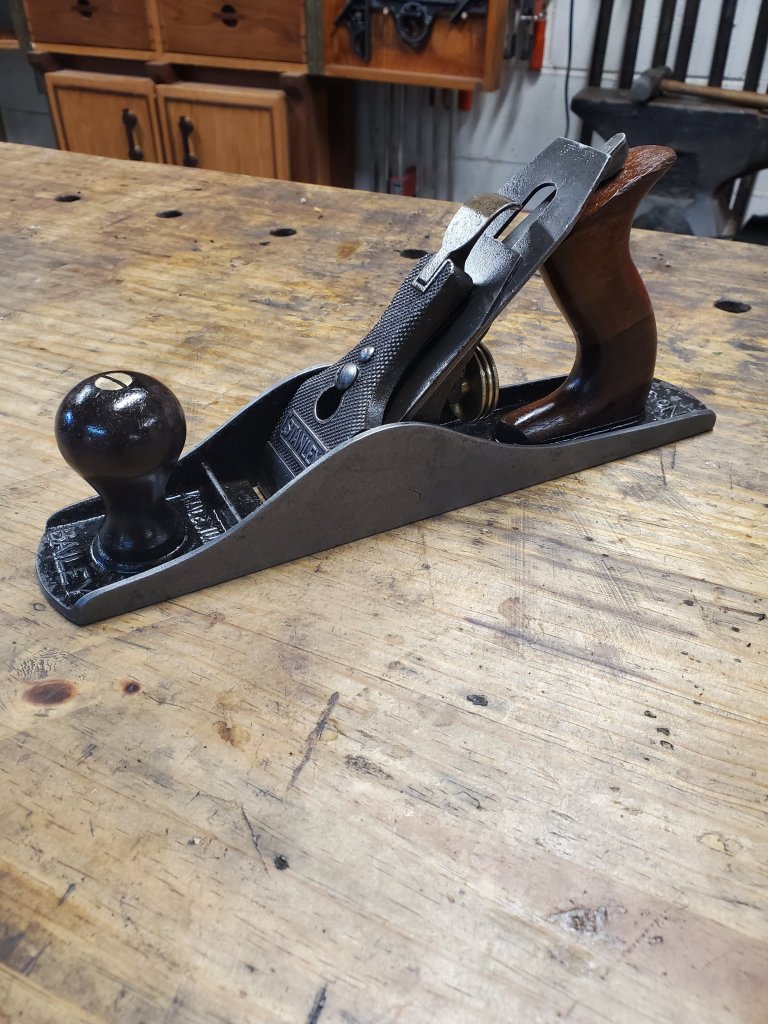
I ended up deciding to take the blade and lever cap from the old plane and put it on my new 5 1/4 plane and keep this one in my tool cabinet bidding the old brazed bed goodbye. After I cleaned all the parts, the plane came out pretty nice.

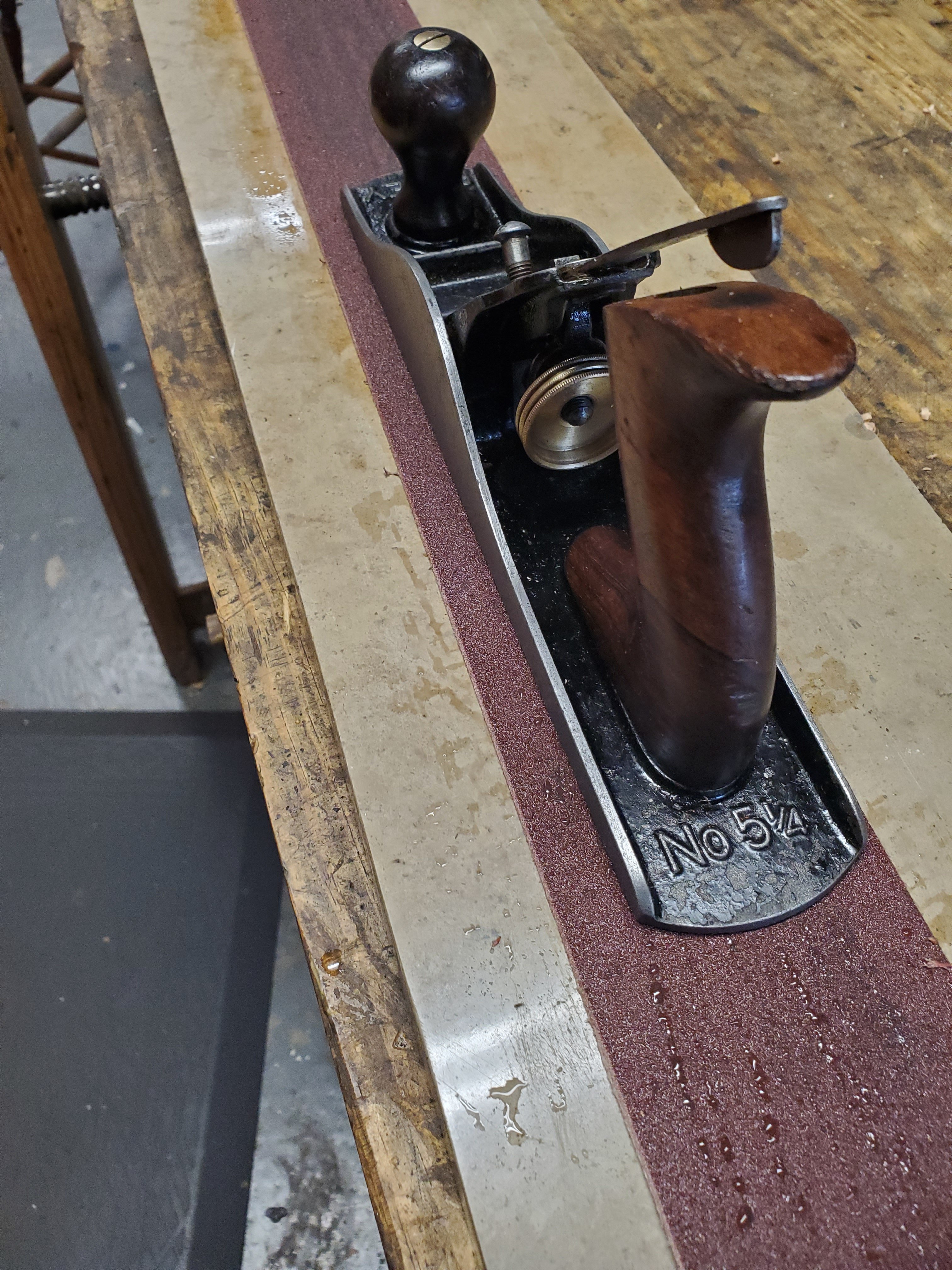
I used the plane right away to see how it cut. It worked okay but I decided to see if the bed needed to be fettled so I gtabbed some sandpaper and an old window sill to act as a surface plate and went to work.

After several minutes of fettling and changing the grits, I was happy with the outcome. Some people fettle their beds until there are no pits left on the bed and it obtains a mirror finish, but I don’t have the patience for that. As long as the front of the bed, the front and back of the mouth, and the back of the bed are even with eachother, I’m happy.

I went back to the board to see how the plane cuts and it works like a dream. Now I have a new Stanley No 5 1/4 with the provenance from my back yard.

Some people may wonder what the intended purpose of a 5 1/4 plane is, and for that, I’m not entirely sure. It’s a little too big to excel as a good smoother and a little too small to be a good jack plane. If I had to guess, I think Stanley made this size plane as well as a No 2 size plane for kids. Kid’s hands are much smaller than adults so smaller planes work well for them. The fact that this plane was marked Cincinnati Public Schools, it was more likely used by little kids in shop class. Nevertheless, I still enjoy using this plane in case one of my other planes is not set up right or it’s blade is dull.

Hold-Fast Bevel

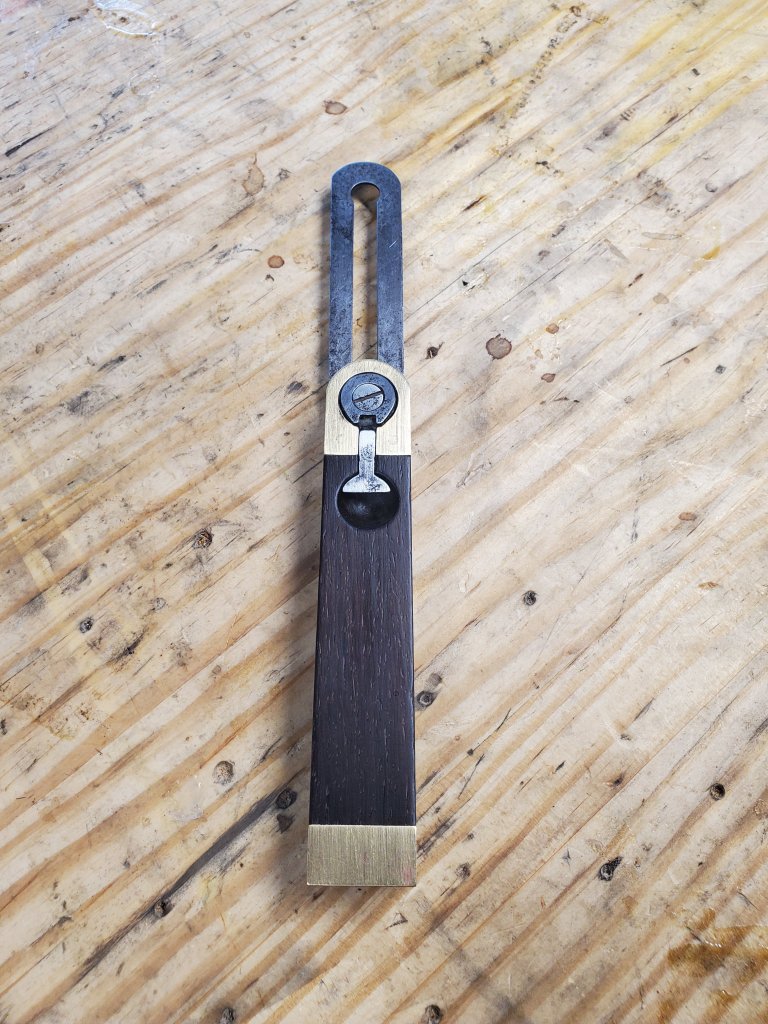
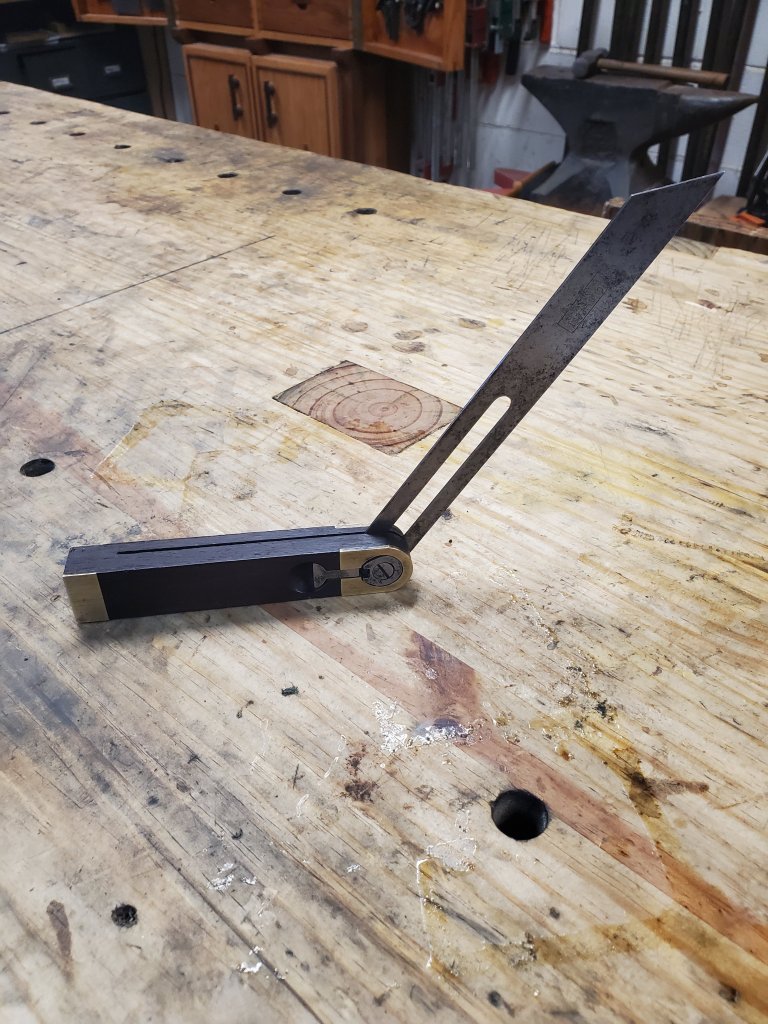
A few weeks ago, I went to an antique tool auction near Xenia, OH. On the tables was an interesting little bevel with a locking mechanism I hadn’t seen before. It’s simplistic design and art deco styling appealed to me. Intrigued, I waited for the bevel to come up for auction and ended winning it (probably paying too much.) I took home my new little friend, polished him up a bit and stuck him in my tool cabinet.

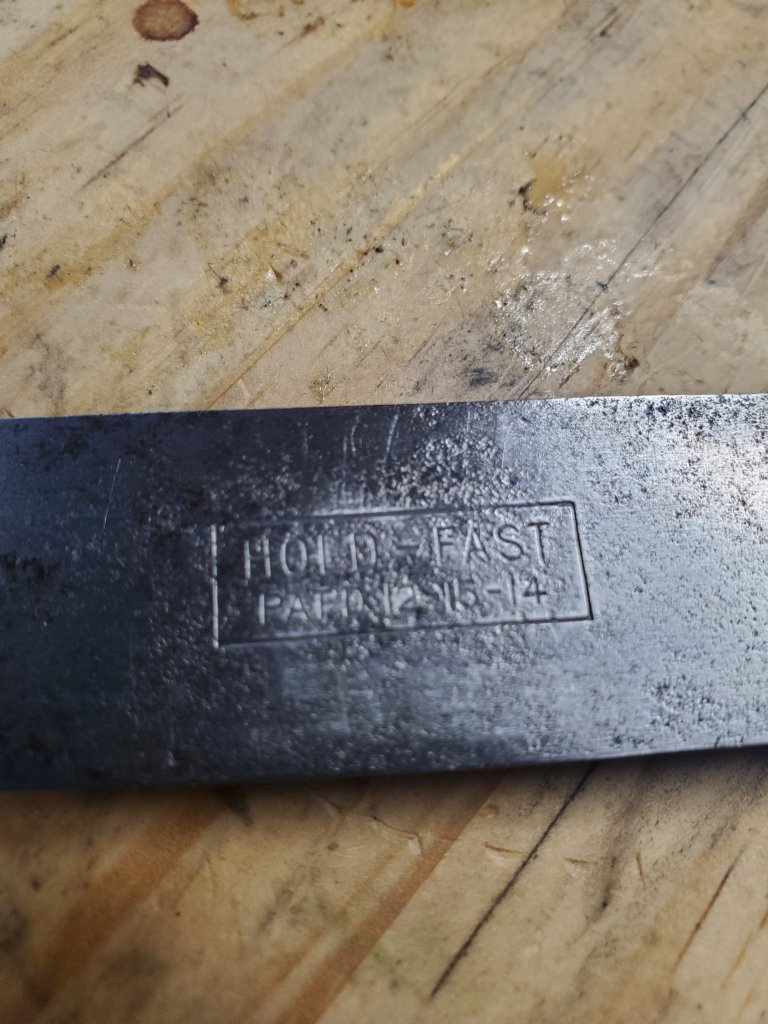
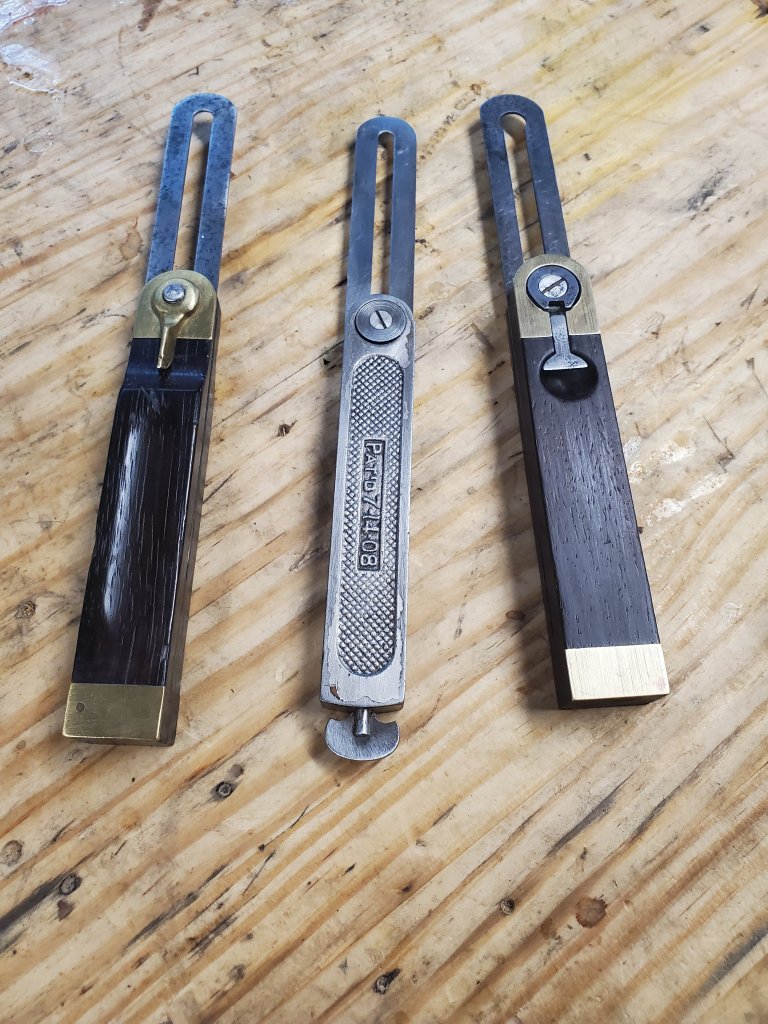
Then, a few days ago, I was reading Stewart Woodworks blog about some of his bevels he uses in his workshop. Sure enough, one of his bevels was similar to mine called a Southington, except his was all metal and not rosewood like mine. The only marks I see on my bevel are the words Hold-Fast on the blade with a patent date of 12-15-14.

A google search of Hold-Fast bevels doesn’t come up with much, and James said a google search of Southington came up with limited information on his end as well. Whether or not Southington was the name of the company or just a trade name, who knows? Nevertheless, the two have to be one of the same as both have identical locking mechanisms.

EDIT: I found out that these bevels were indeed made by Southington Hardware Co in Southington, CT. Nicholas McGrath was the patentee.

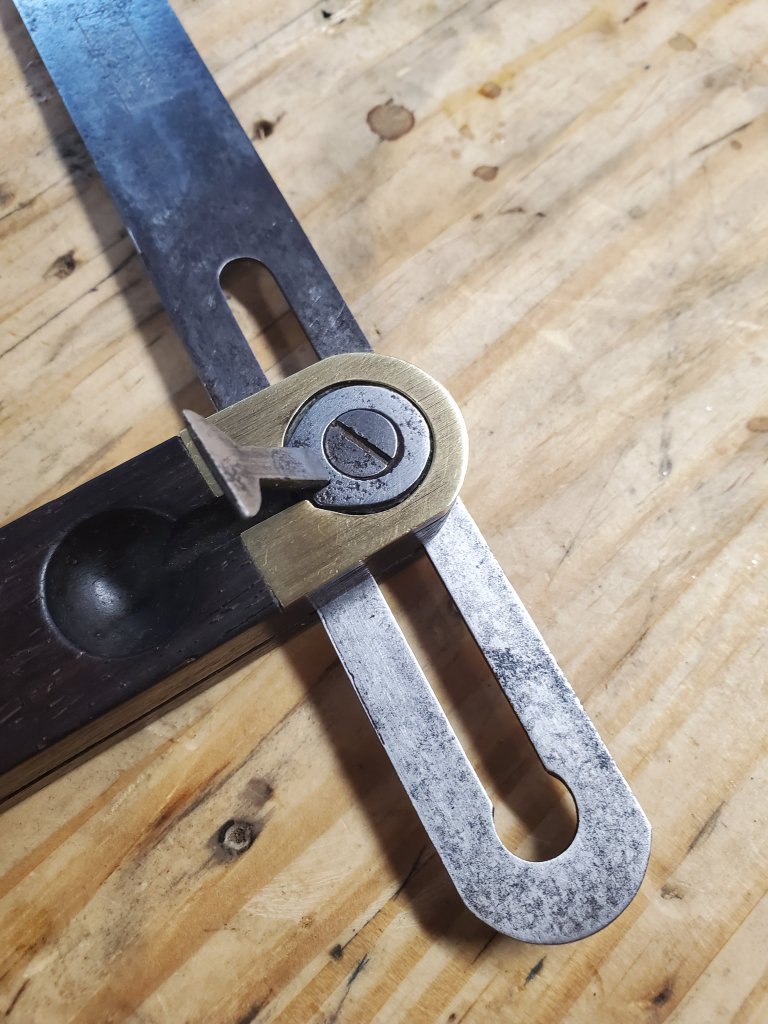
When you open up the mechanism you can see the simplicity of the design which makes it easy to use. A simple turn of the screw, tightens the locking mechanism to the blade. You adjust the screw to the proper tighteness and you’re done.

A lot of the antique bevels on the market have a one armed wing nut which you need to adjust the other nut on the back of the bevel to the proper spot in order for the wing to tighten parallel to the body so it doesn’t get in your way while using it. A lot harder than it seems. That’s why I’ve always enjoyed using Stanley No 18 bevels with the locking screw at the bottom of the body. However when I use it, I have to set the angle of the blade with one hand and tighten it in the back with my other hand. Not a big deal, but tedious none-the-less.

This new bevel is going to be even easier to use that the Stanley No 18 because I can adjust the angle of the blade and lock in place at the same time with one hand. Super quick, super easy. An ingenious design that has stood the test of time.

If you come across one of these Hold-Fast bevels at a local antique store or flea market buy it. You’ll be glad you did.

World’s Longest Yard Sale 2021

Last week, my wife and I spent the days traveling up and down US127 for the World’s Longest Yard Sale. It’s something we’ve down for the past seven or eight years and we have an absolute blast doing it. We get up at 4:30am and drive 150 miles to start our day in a different part of the country to see what we can find. After 1200 miles in my truck and five days of picking, this is what I came home with.

As much fun it isto pick, it’s frustrating that I can’t find as many Stanley Bailey planes that I used to. Even nice planes that are out of my budget were few and far between.

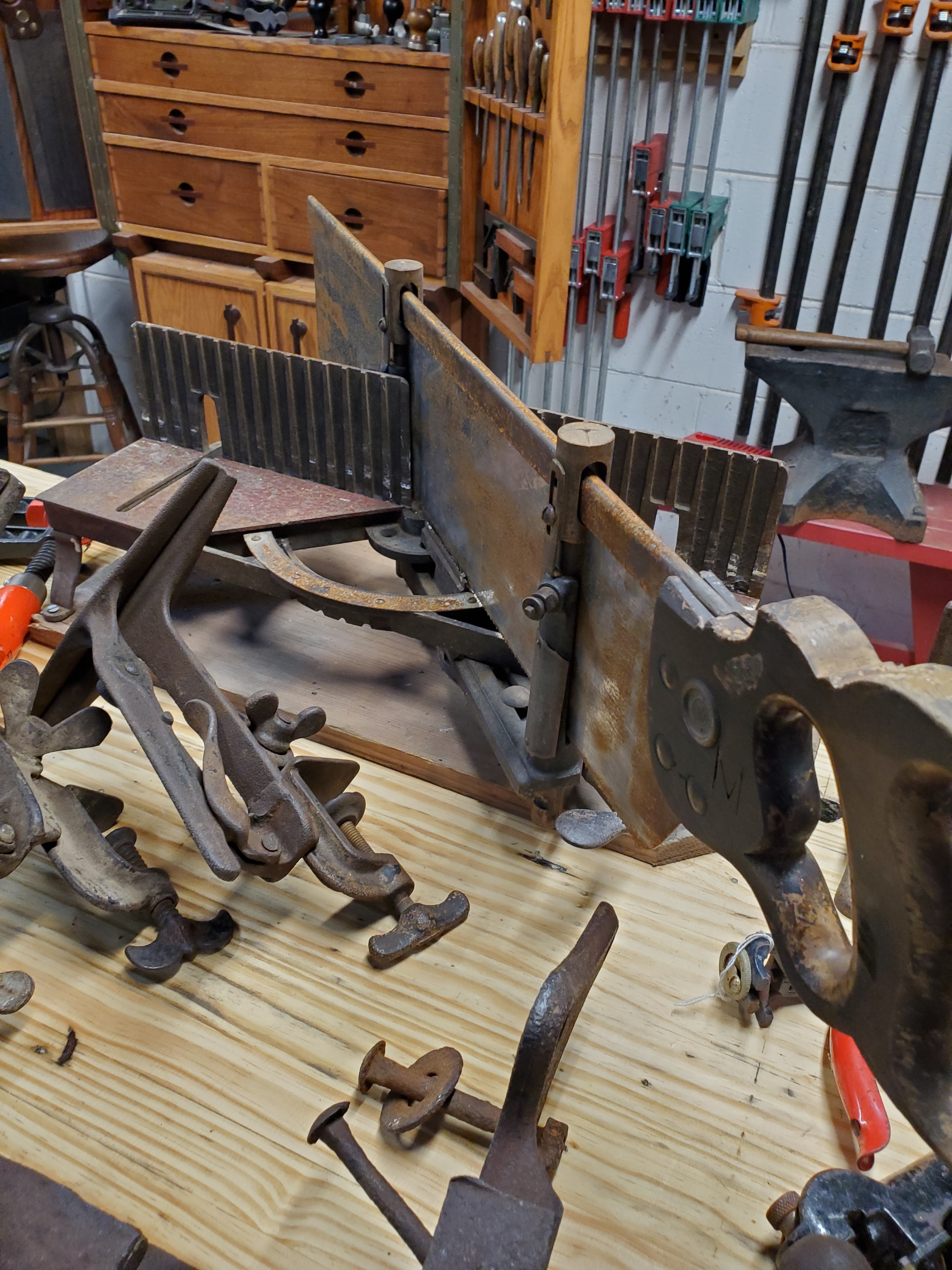
I was able to find a couple of good deals on miter boxes. One is my favorite Stanley No 150. It’s great little miter box for cutting wood that too small to cut with a powered miter saw. The other is a Miller’s Falls No 70 miter box along with a Disston saw. Both will take some time to restore but I’ll eventually get it done.

I also picked up a blacksmith post vise. The price was too good to pass up. The jaws are a touch small at 3 1/2″ wide but it’s a perfect size for a woodworker who needs to do a little metal working from time to time.

The other things I picked up were some large jaw Bessey clamps for $8.00 each. (I couldn’t whip out my wallet fast enough). Then, I found some old Fine Woodworking magazines and old testbook for a few bucks. One thing that’s great about woodworking is that the old books and magazines are still relevant because wood is wood and steal is steal. Been that way for thousands of years and it’ll be that way for a thousand more.

Overall, I’m happy with my purchases, I’m just getting a litttle nervous about not finding any decent tools on the yard sale anymore. I know damn well I haven’t bought them all.

Using a Stanley No 1 Plane

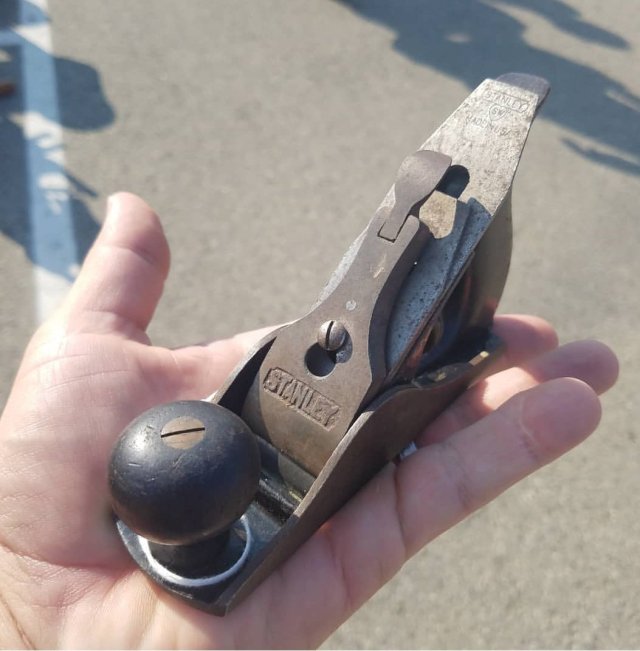
Last summer I had the opportunity to buy a Stanley No 1 plane at The Springfield Antique Extravaganza. The price the lady wanted was too good to pass up, so I went to the ATM a few times to get enough money out to buy the plane. I’ve wanted to own one of these planes for nearly thirty years so I was stoked to bring it home.

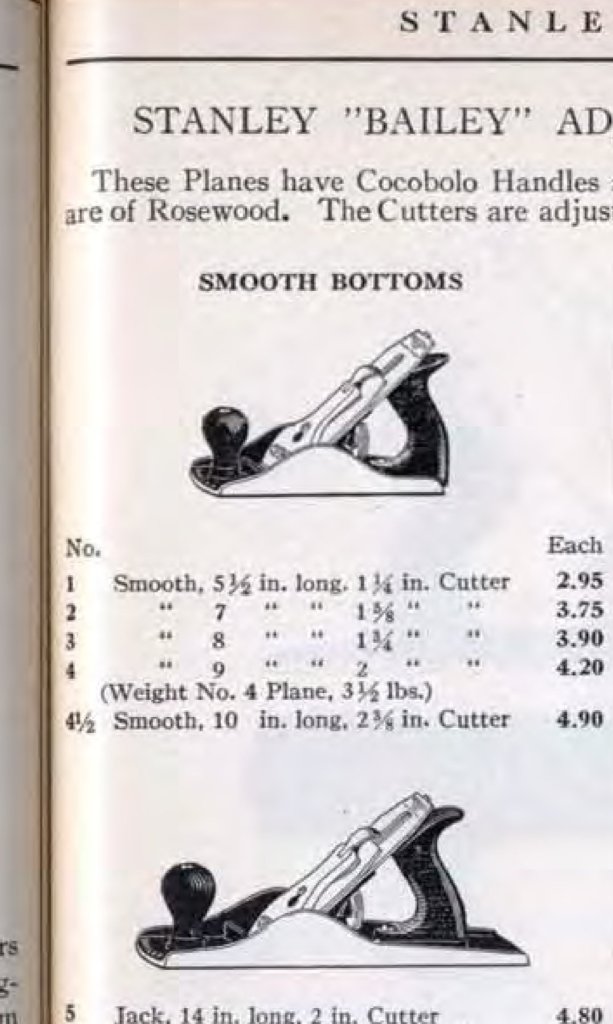
Everytime I see one of these little guys, they’re usually behind a glass case at an auctioneer’s table so holding one in my hand was a real treat. Stanley No 1 planes are often on the top of the bucket list for a lot of tool collectors. Unfortunately, their prices spiked over the past few decades so finding one at an affordable price is hard to do. I read stories from old time tool collectors that they could buy these planes at the flea market for $10-20 during the 1960’s and ’70’s. Today they command as much as $1000 or more. The odd thing is, is that Stanley never made these planes to be collectible. In fact, they were the most inexpensive bench plane they offered in their catalog. At $2.95, they were 32% cheaper than a Stanley No 3 plane which are still readily available at antique shows around the country. Never being able to use one, I often wondered what the purpose of these little guys were and how they were used.

When I got home I lightly cleaned the plane and sharpened the blade. When I flipped the plane over, I noticed that there were diagonal scratch marks on the bed. This told me that the original owner used the plane at an askew. I know when I use a plane at an askew, it’s either to prevent tear out on difficult grain or to clean up some blemishes on the wood. So I thought to myself that maybe these planes are used just to clean up little areas on the wood’s surface.

This image has an empty alt attribute; its file name is 20200124_1829156487183208178104089.jpg

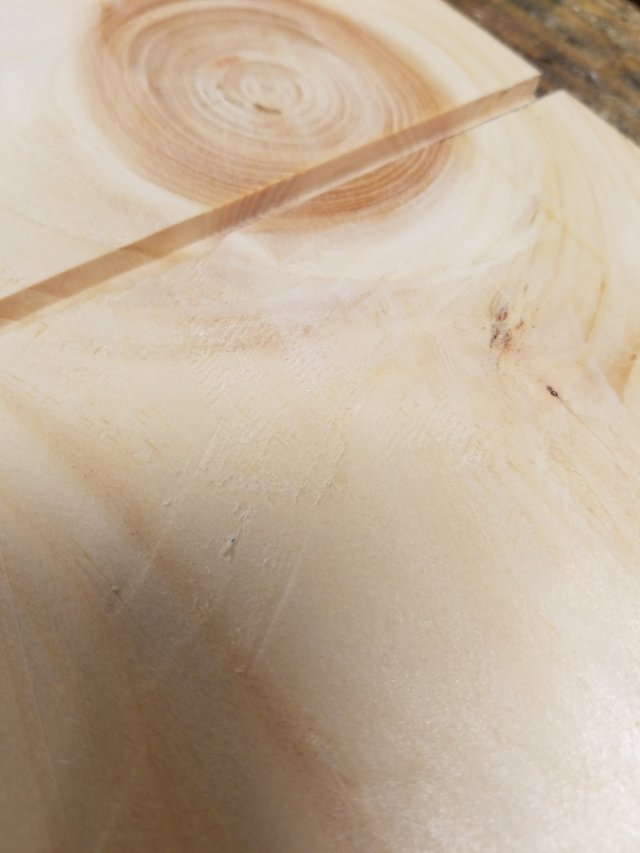
Last weekend I had a chance to test my theory. While making a display cabinet for my wife, I was planing some eastern white pine with my Stanley No 4 plane when I was getting tear out around the large knots in the wood.

The tear out wasn’t terrible as the blade on my Stanley No 4 is sharp and the bed has been fettled flat, but the tear out was still there. I decided that I would try to get rid of the tear out by using my No 1 plane.

Sure enough, after a few strokes, I noticed that the plane was cleaning up the tear out quite nicely. So I thought to myself, this must be one of the purposes of the plane. But then I started thinking about why a small plane like this would do a better job at shaving the wood than a well tuned No 4 plane. The only thing I can really think of is the small footprint on the No 1 helps the user focus on a smaller area on the wood’s surface. Also the mouth on the No 1 is tighter with less of a gap than my No 4 that is set for general planing. Both my No 4 and No 1 are sharpened the same way with water stones up to 12000 grit so it’s not that one of the plane’s blade was sharper than the other.

With how well the plane cleaned up my tear out I’m thinking that these planes were used for cleaning up the work surface and other small tasks. Whether it would be tear out, scratch marks, small gouge marks or even taking labels off of boxes. Remember these were cheap planes that were made for daily use but never took off in the marketplace. Because there’s not very many of them available, supply-and-demand shot their prices to the moon.

I know that one of the most famous tool cabinets in the world, H. O. Studley’s tool cabinet has a Stanley No 1 plane in it. His plane is in the middle left of the left hand door. Studley was a piano maker so he probably used his plane when making and fitting piano keys. I also know that instrument makers use small planes in their work so that’s another group of people that could benefit from a Stanley No 1 plane.

All I know is that it’s a nice little plane to own. It’s not the most versatile plane you can have in your arsenal, but it’s nice to have it when you need it. So do I recommend using a Stanley No 1 plane? HELL NO! They’re too valuable! Buy a Lie-Nielsen No 1 for a couple hundred bucks and let a tool collector stick this thing on his shelf.

UPDATE 1-29-23 When I wrote this article, Lie-Nielsen and Woodriver No 1 planes were readily available. Since then, the Lie-Nielsen fetches around $500-800. Woodriver No 1 is still not available.

My First Speaking Gig

After working with wood for the past 30 years, I have my first speaking engagement this month. I was contacted by a member of the Cincinnati Working Club a few weeks ago who asked if I would be interested in speaking in front of the group. At first, I was shocked and confused. I didn’t understand why he would want me to be a guest speaker, but after reading further into the email, he saw that I restore planes and have a nice tool cabinet full of antique tools. Apparently, he wants me to talk about my journey into antique tool collecting and describe the process of how I clean my tools.

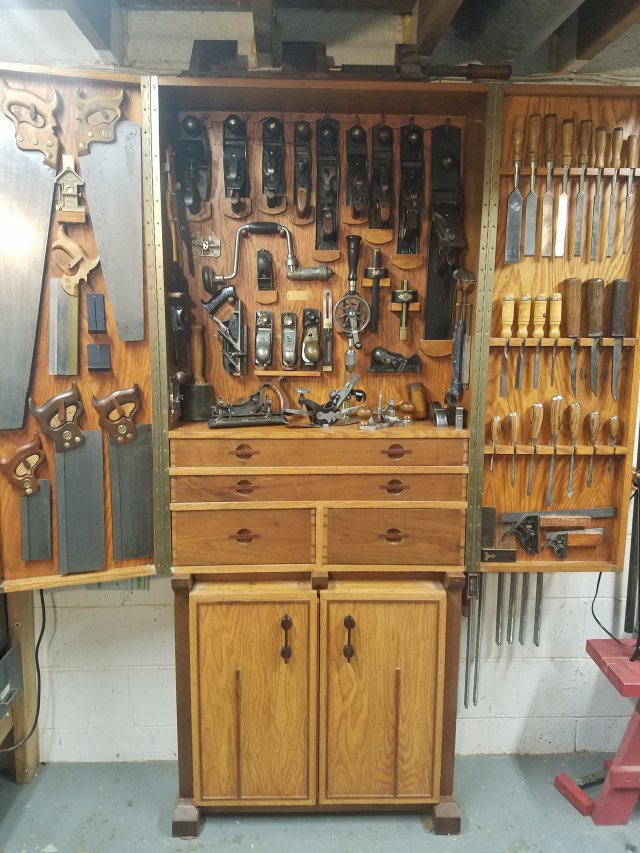
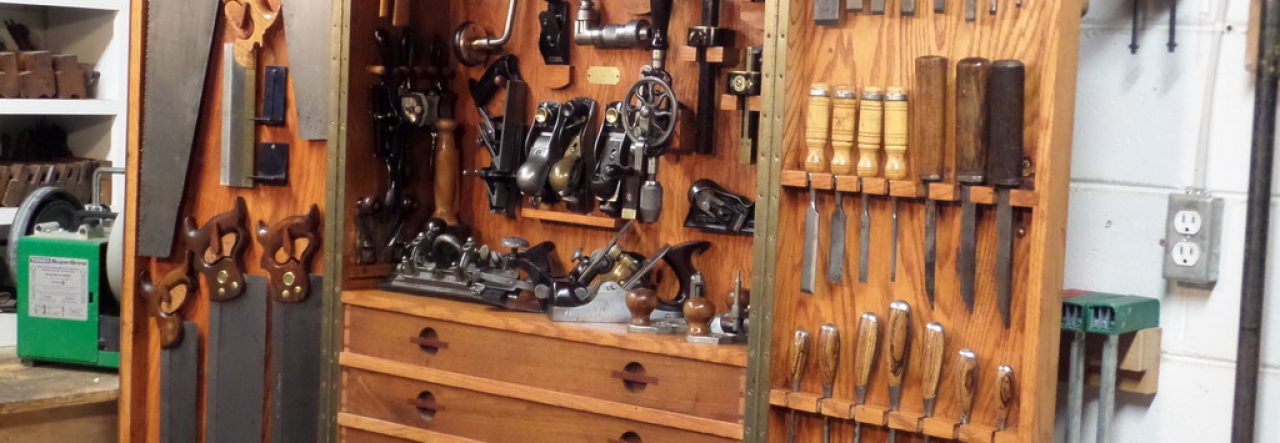
I’m going to start off talking about my tool cabinet and how it came to be. I started building it in 1999 but didn’t finish it until 2001 as it sat in my parent’s basement unfinished. It’s undergone a few transformations over the years as I added and deleted tools from the doors and back. It actually looks nicer in pictures than it does in person as the oak veneer plywood tore off in places where I removed the tool holders.

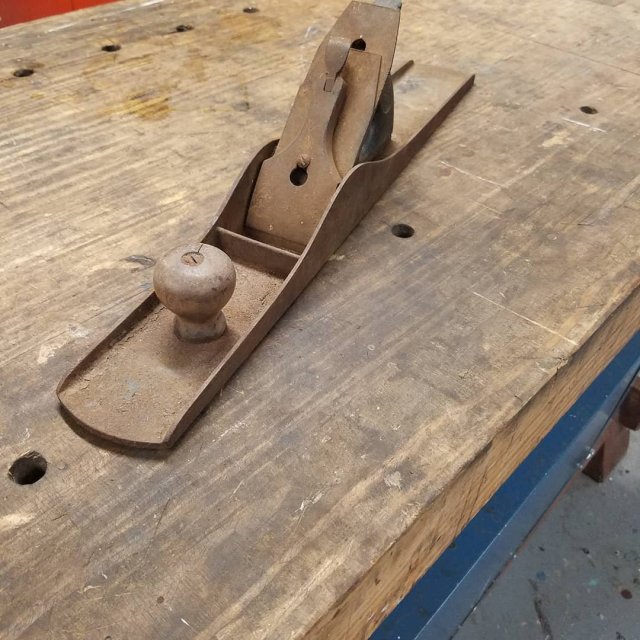
From there, I’ll describe the process of restoring this Diamond Edge Jointer. I took a bunch of pictures of the process and will upload them to a thumb drive so I can plug it into their laptop. The group meets in a church basement so I’m not sure if there is a workbench down there for people to work on. The idea of actually doing the restoration while I’m there doesn’t make much sense so pictures it will be.

Bill told me that each meeting has between 65-75 people attendees so this presentation is going to be as big as a session at the Woodworking in America events.

If you’re a member of the Cincinnati Woodworking Club, stop by on Saturday Sept, 14th at Northminster Presbyterian Church 703 Compton Road in Cincinnati, Ohio around 9:00 and watch me be nervous as hell. Just please don’t bring tomatoes to throw at me.

Removing Frozen Screws

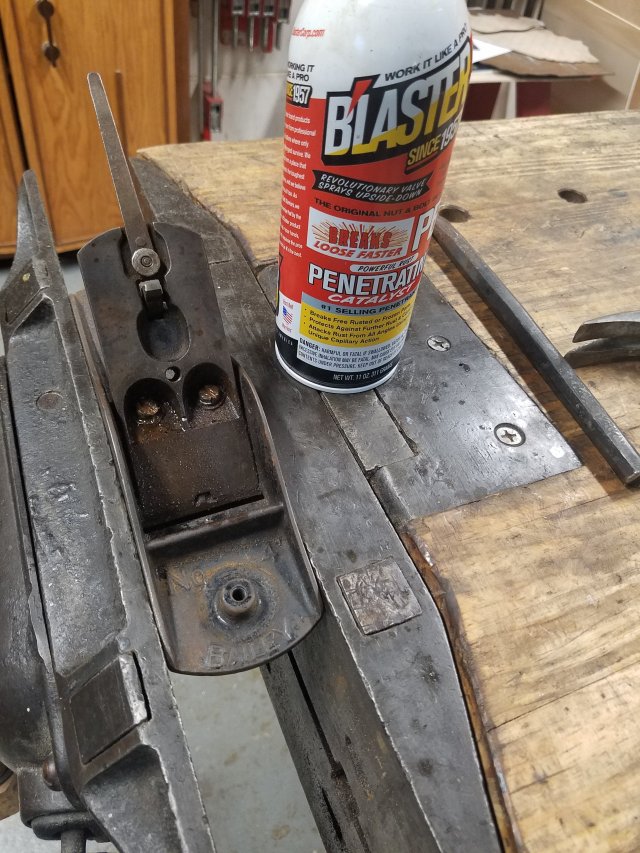
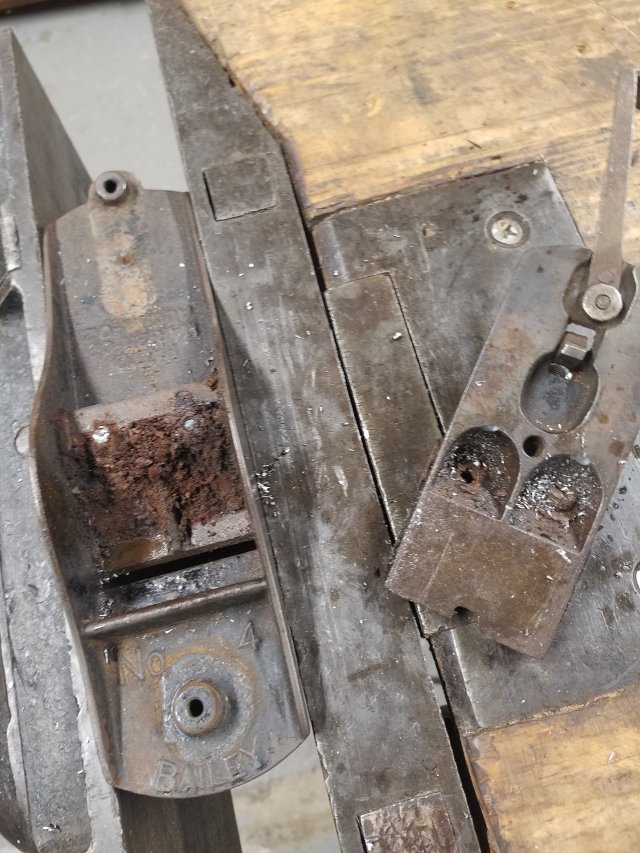
Every once in awhile I’ll buy an old tool that gives me some grief. This time it was the frog that wouldn’t come off the bed of a Stanley No 4 plane due to some rusted screws. Normally, when screws won’t budge, I use the oldest trick in the book, and tighten them before I try to loosen them. This will often break the seal of rust and allows me to unscrew the bolt with no problem. But that didn’t work this time. Not even a shot of PB Blaster could save the day.

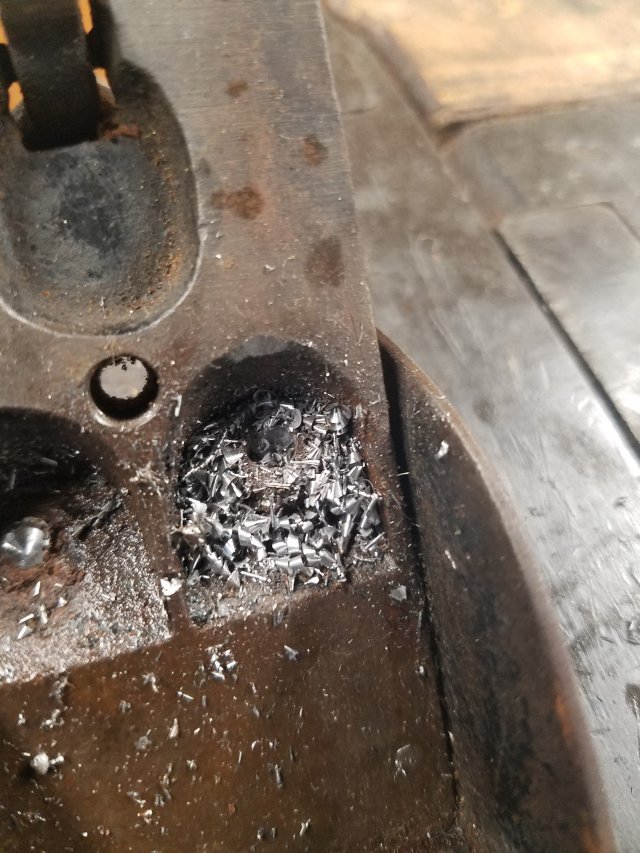
I ended up having to drill through the top of the head to break it apart from the threads so the frog could come free. I’ve read where some people use propane torches to heat up the screws and free the rusted threads that way but, my shop is in my basement and don’t feel like stinking up the whole house with the flames off of a propane torch.

After a few minutes of drilling, the frog came off of the bed. You can see all the gunk that’s been trapped underneath the frog for decades.

Now that the frog is removed, I was left with another problem. The threads of the left screw stood proud of the bed while the threads of the right screw are inside the bed.

Removing the left threads was simple, a little bit of oil and some channel locks and it unscrewed easily. The right one, not so much.

For the right one, I used a 11/64″ drill bit and carefully drilled through the threads of the screw paying careful attention not to damage the interior threads of the bed. When the majority of the screw is removed, I used a dental pick and cleaned out any remaining metal inside the threads so that new screws would seat nicely.

Grabbing a couple of spare screws I had lying around, I tested them inside the cleaned out holes. They worked just fine. Now it was time to continue on with the restoration job. I dipped all the metal parts of the plane in a citric acid bath to remove all the rust.

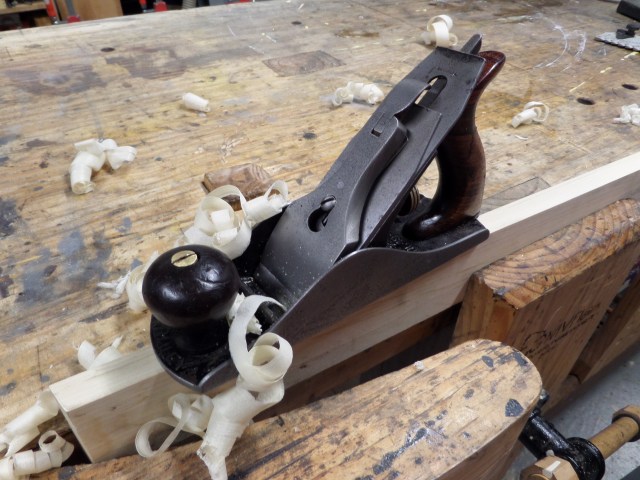
With all the parts cleaned up and the blade sharpened, the plane was restored to working order. Another plane saved from the scrap heap.