Making a Yardlong Frame

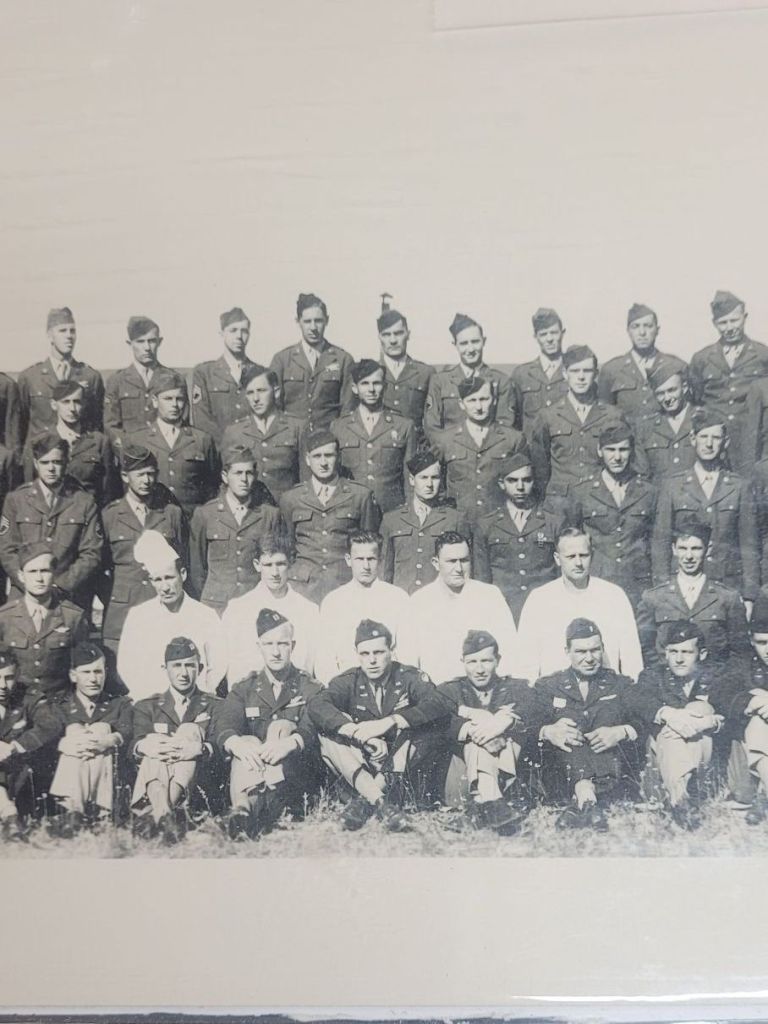
Several weeks ago, I bought a yardlong picture at an antique shop. Finding a frame to fit the picture is next to impossible, so I knew I had to make one.

I looked around for some wood and found a piece of ash from a project I made a few years ago. Ash is not the ideal wood to use with molding planes as it has a lot of moving grain. Preferably poplar or mahagony would be the ideal wood, but ash is what I have.

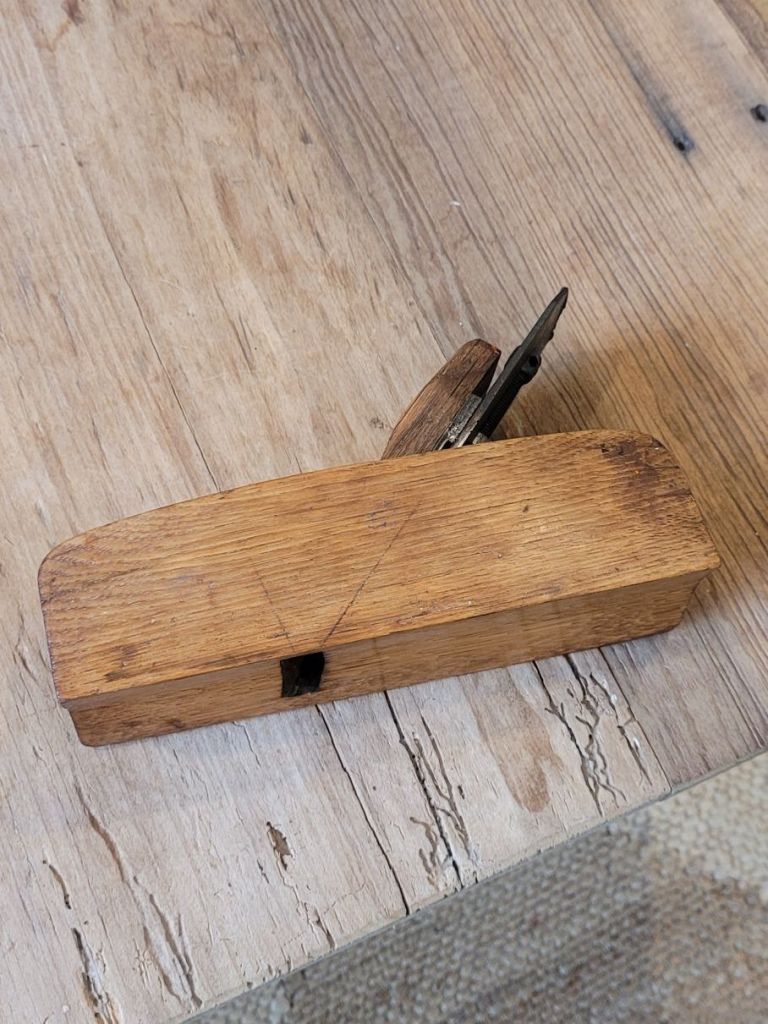
I ran my complex molding plane over the board and slowly cut the profile in the wood. It took about 20-30 minutes for me to cut the profile.

I then took the board over to the table saw and ripped the molding 1″ wide.

I didn’t want the sides of the frame to be flat, so I carefully gouged out the middle, starting with carving gouge, then switched over to my No 6 hollow plane. Then I finished up with a piece of sand paper wrapped around a 1/2″ dowel.

I cut the rabbets for the frames on the table saw. I made three moldings that were longer than what I needed. I wasn’t concerned about the ends of the molding because I was going to cut them away anyway.

Using my Stanley No 150 Miter Box and my miter trimmer, I cut the piece out.

The molding pieces are now looking like a frame.

After I cut all the pieces, I dried fitted them together to see how the corners met. If they needed attention, I would carve and sand the ends to meet each other.

The final frame looks pretty good. Now it’s up to my wife, Anita, if she wants to stain or paint it.

This is the first time this year where I have had time to work in the shop, and it felt great. My job keeps me busy during the week, and the weekends are often antique hunting with Anita. I’m glad I had the time yesterday.

I’m not sure which branch of the military these men served or when the picture was taken, as there is no stamp on the picture, but they may have served in WWI as many of the yardlongs I’ve seen are early 20th century. All I know is that these men fought and may have died for our country, so they need to be honored by being put into a frame and hung on someone’s wall.

Happy Easter!

Cool Little Workbench

My wife, Anita, and I were antiquing in Madison, IN, yesterday when I stumbled upon this little workbench. 

It was cute little Sloyd style workbench from the 1800s. I couldn’t believe how small it was, so I imagine it had to be built for a little kid.

It had to be about 3′ 6″ tall by 5′ long. What was so amazing about the bench was how well worn out and used it was. The child that worked on this bench used it a lot as the top is full of tool marks.

Obviously, it could have been for multiple children in a school shop class, but I never had a bench like this in elementary school, let alone a shop class.  Can you imagine being the kid lucky enough to work on this bench?

No, I didn’t buy the bench as I couldn’t afford the $350.00 price tag as I’m too cheap. Plus, I didn’t want to drag it home because I had no place to put it. But it’s definitely the coolest old workbench I’ve ever seen.

Custom Block Plane Tail

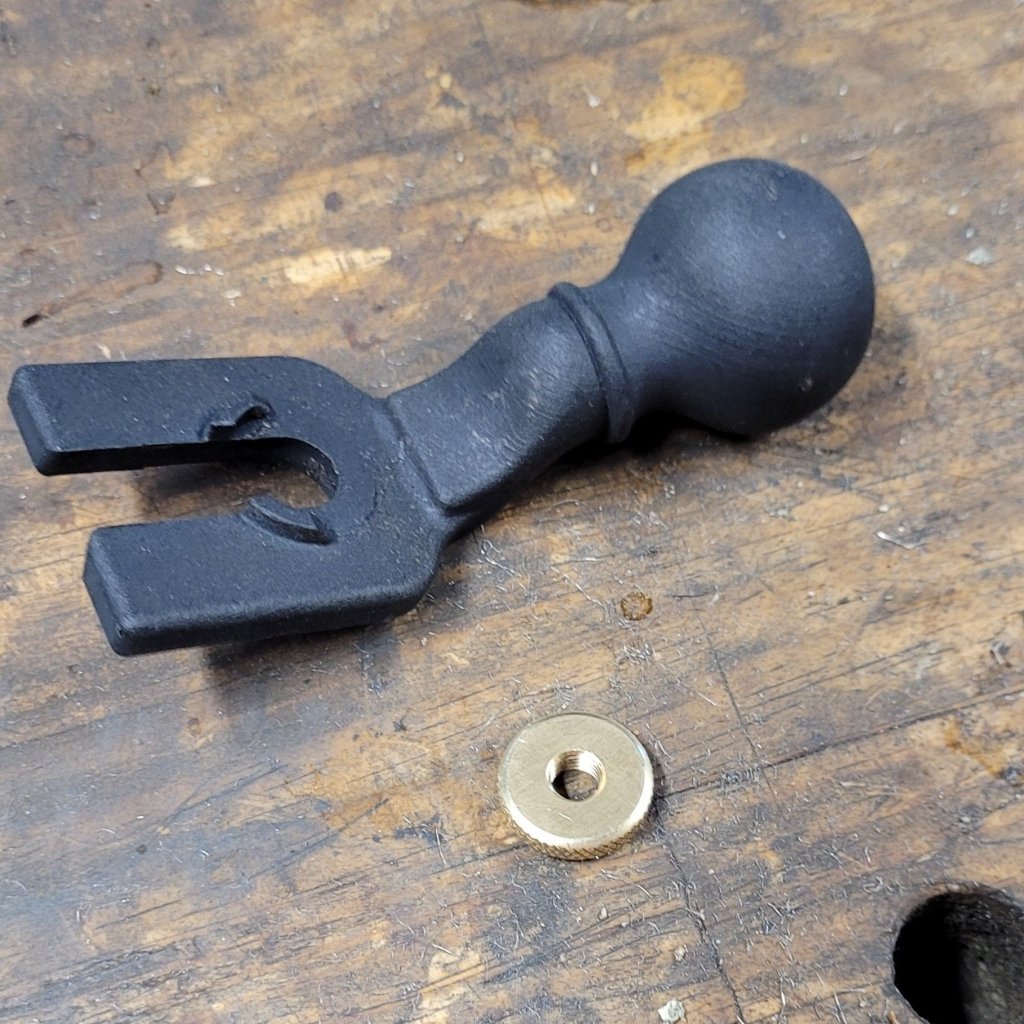
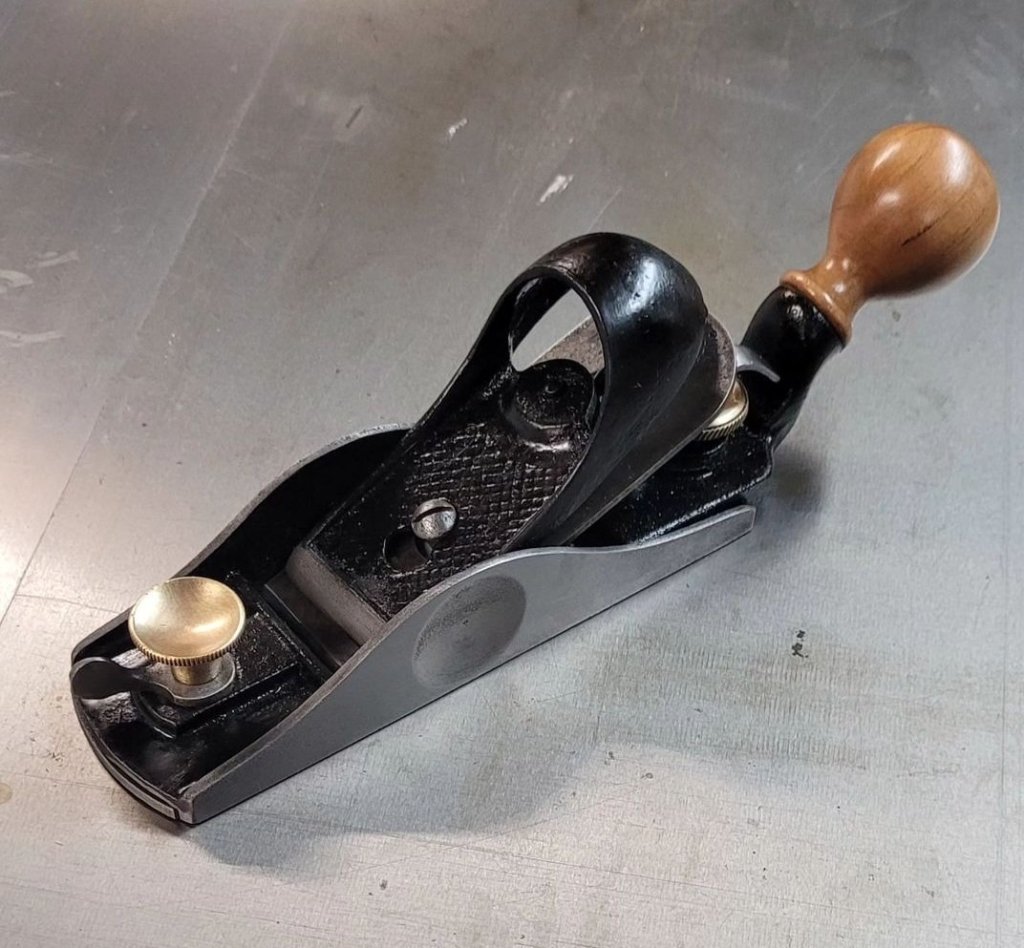
When I bought my Tote Turner a few months ago from Woodyah, I picked up this block tail accessory at the same time. This, like the Tote Turner, is printed on a 3D printer and fits Stanley block planes.

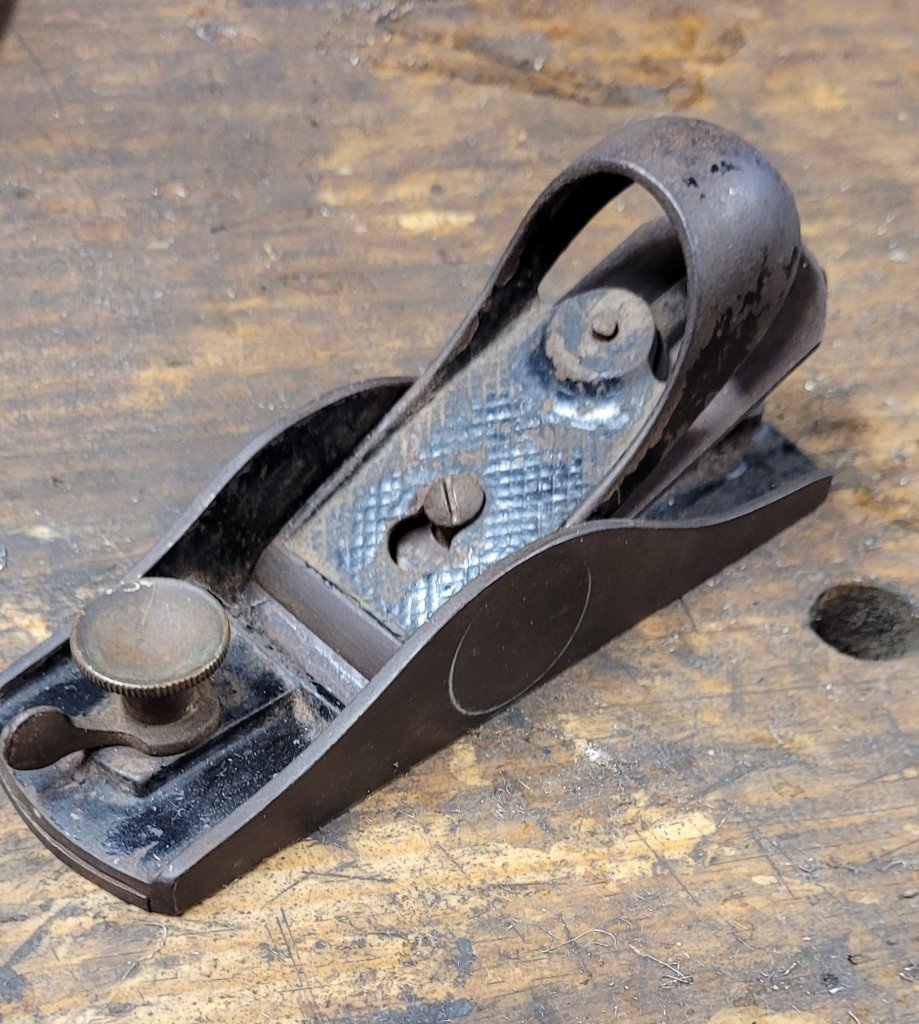
However, I wanted to install it on my Ohio Tool Co O9 1/2 block plane. Similar in size, it’s nearly identical to a Stanley No 9 1/2.

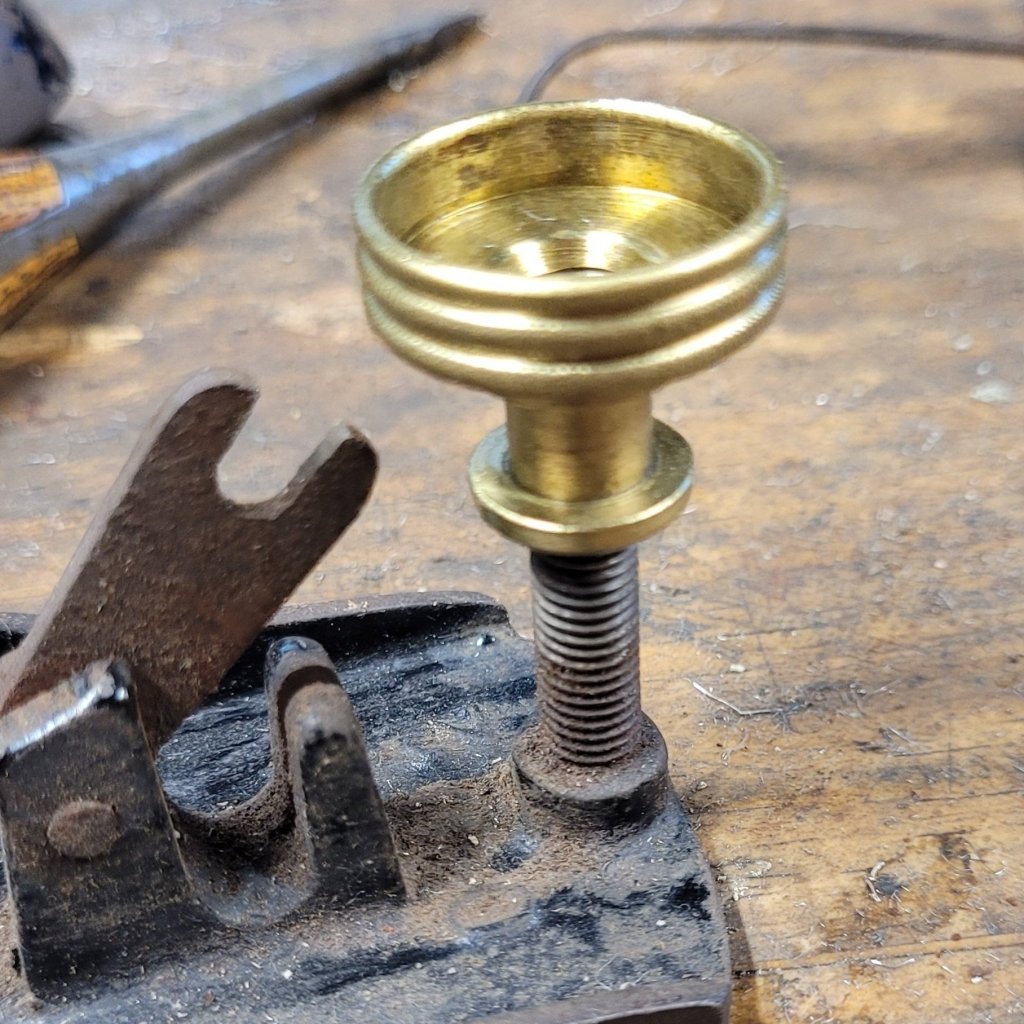
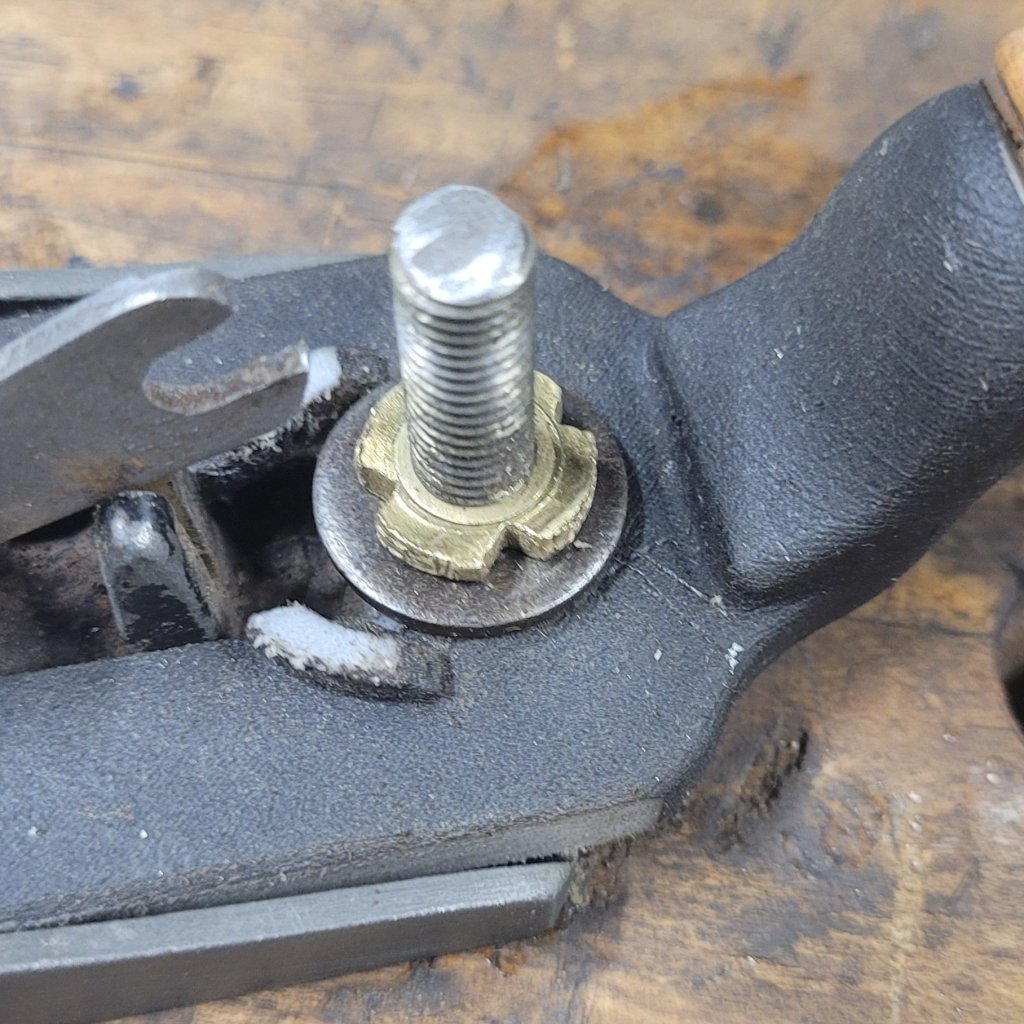
Unfortunately, the threads on my Ohio Tool Co plane are not the same as a Stanley, so the brass hold down piece won’t work. Luckily, I have an old Ohio Tool Co brass blade adjuster wheel in my parts bin, so I cut the very bottom off of the brass wheel and filed four notches in it so I could turn it with a screwdriver.

My little homemade brass hold down screw was a little too small, so I used a washer underneath to hold down the tail better.

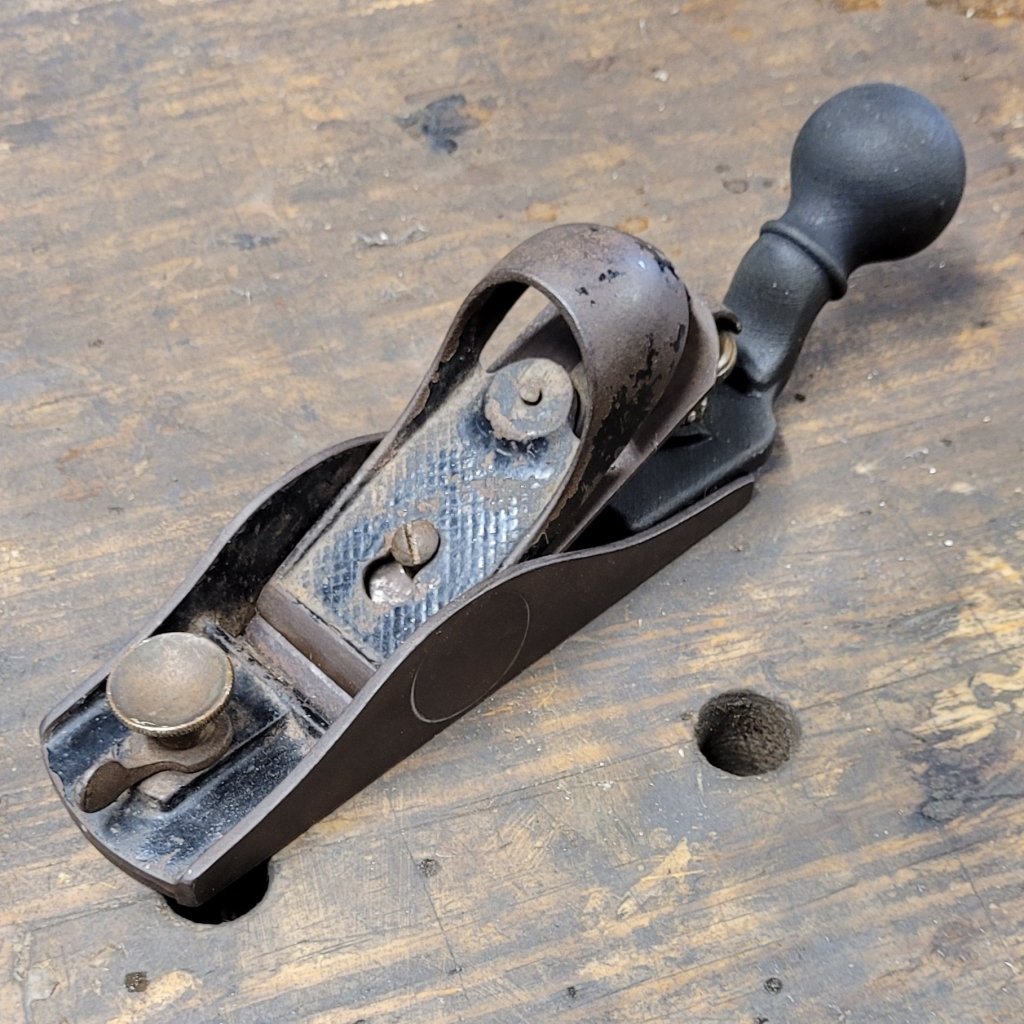
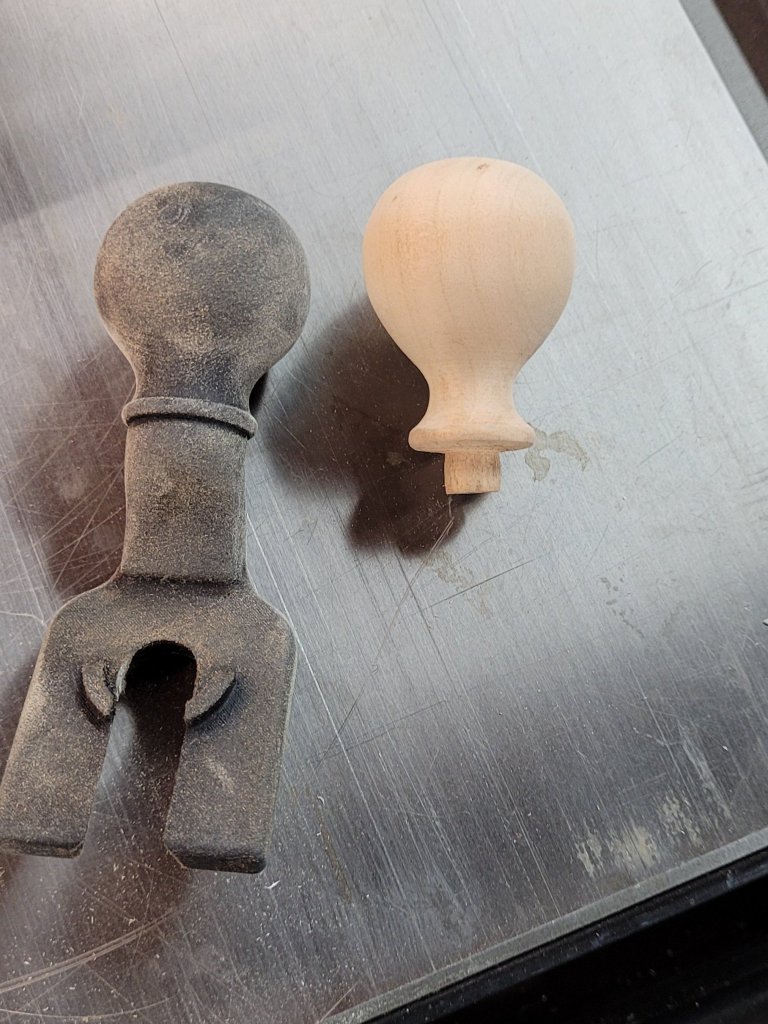
Everything worked, but I was not a big fan of the big black knob to the handle. I wanted something more historic and natural looking, so I decided to make a new knob out of cherry.

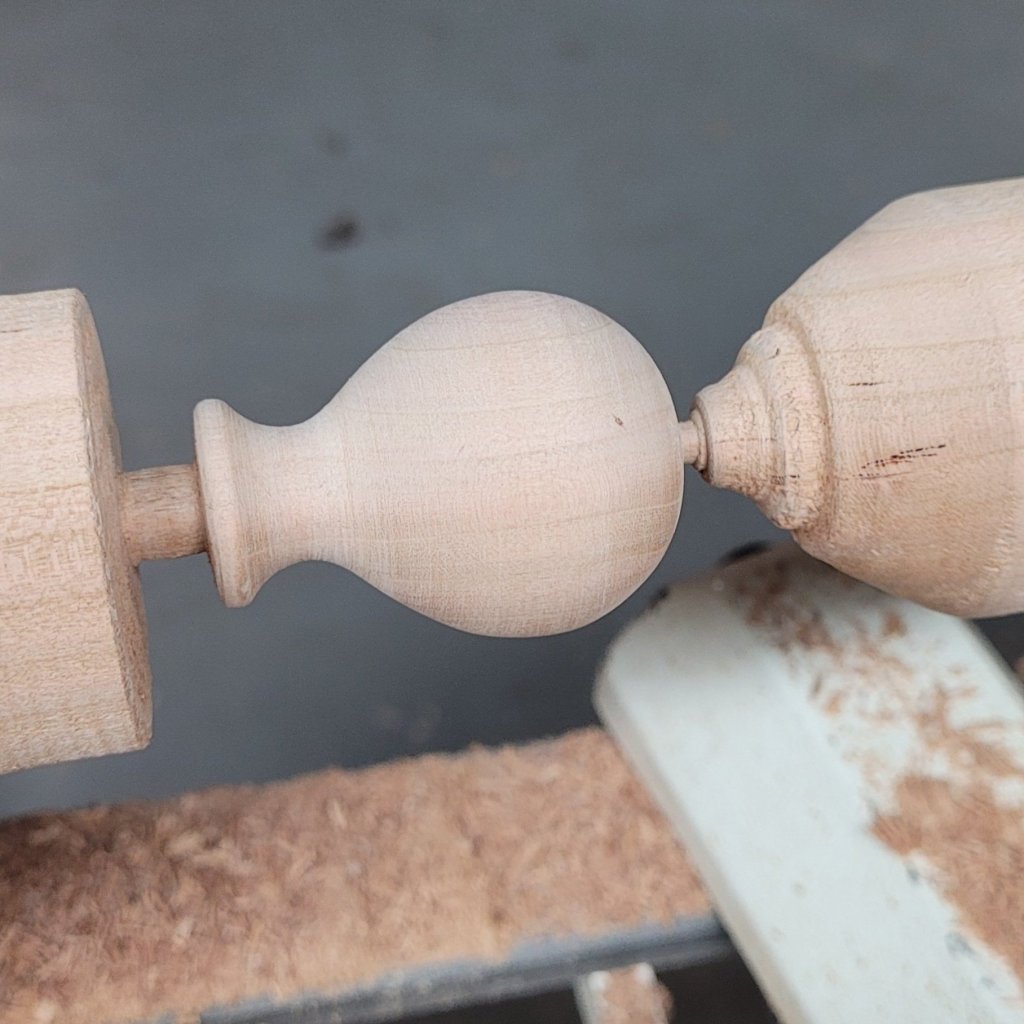
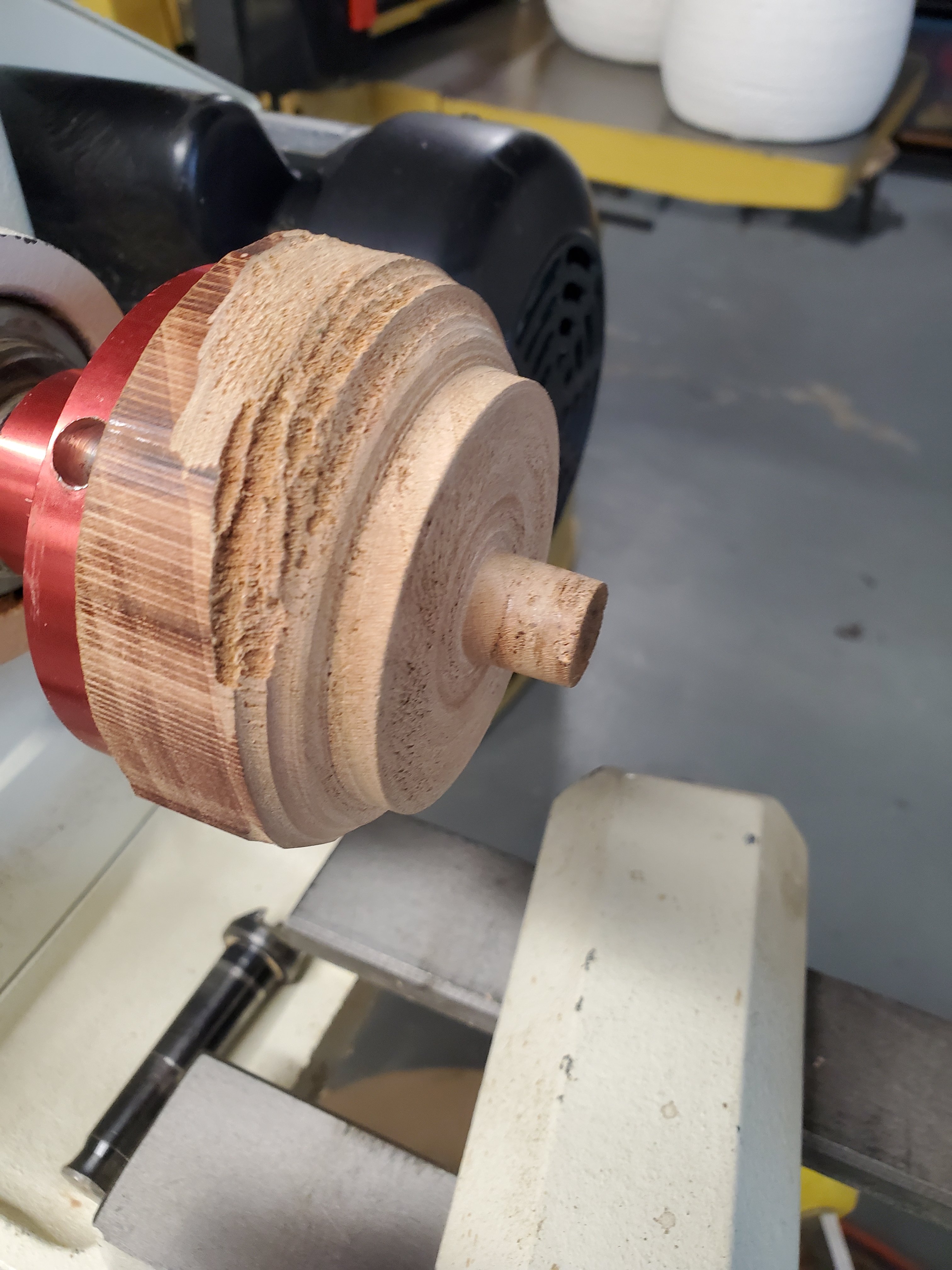
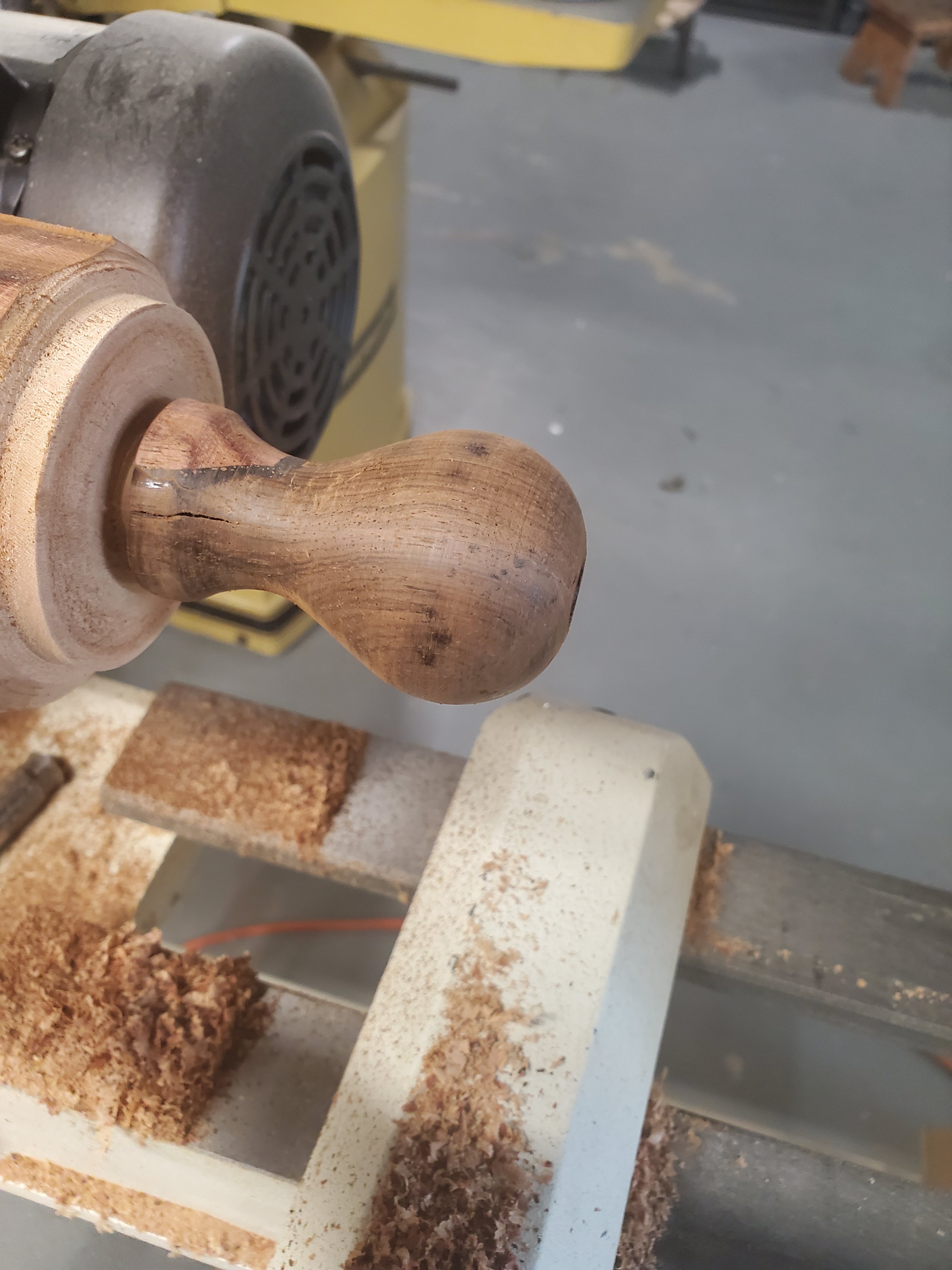
I turned a 2″ diameter knob on the lathe and added a 1/4″ tenon on the bottom.

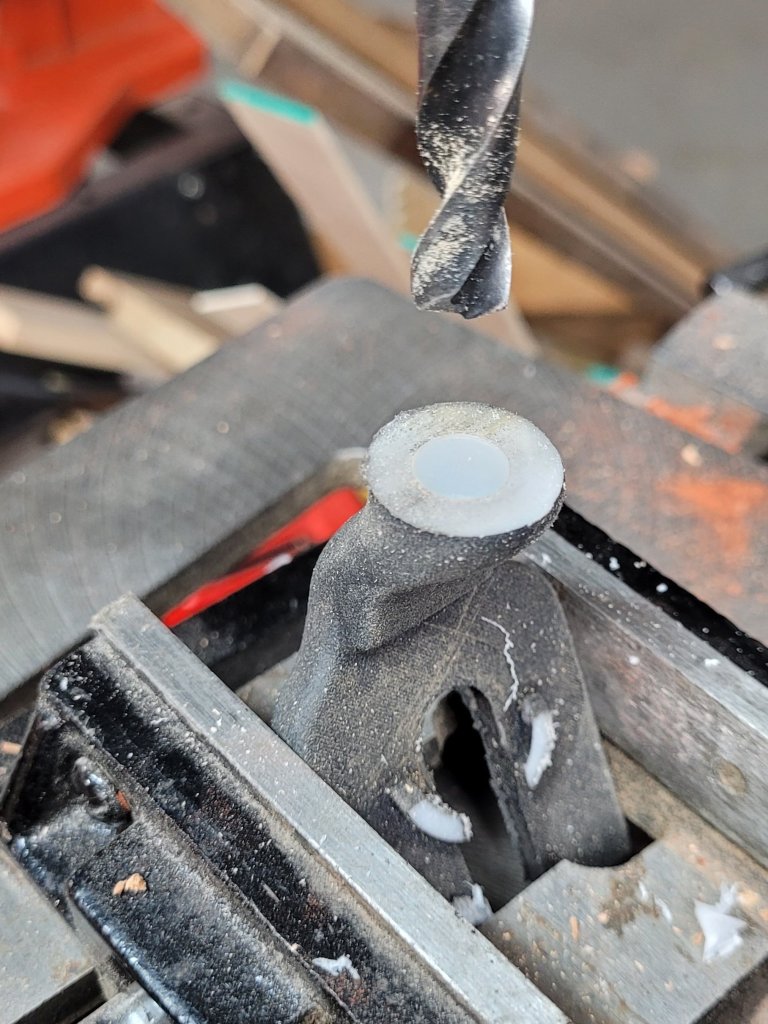
Then I sawed the ball off the tail and drilled a 1/4″ hole to accept the tenon from my wood handle.

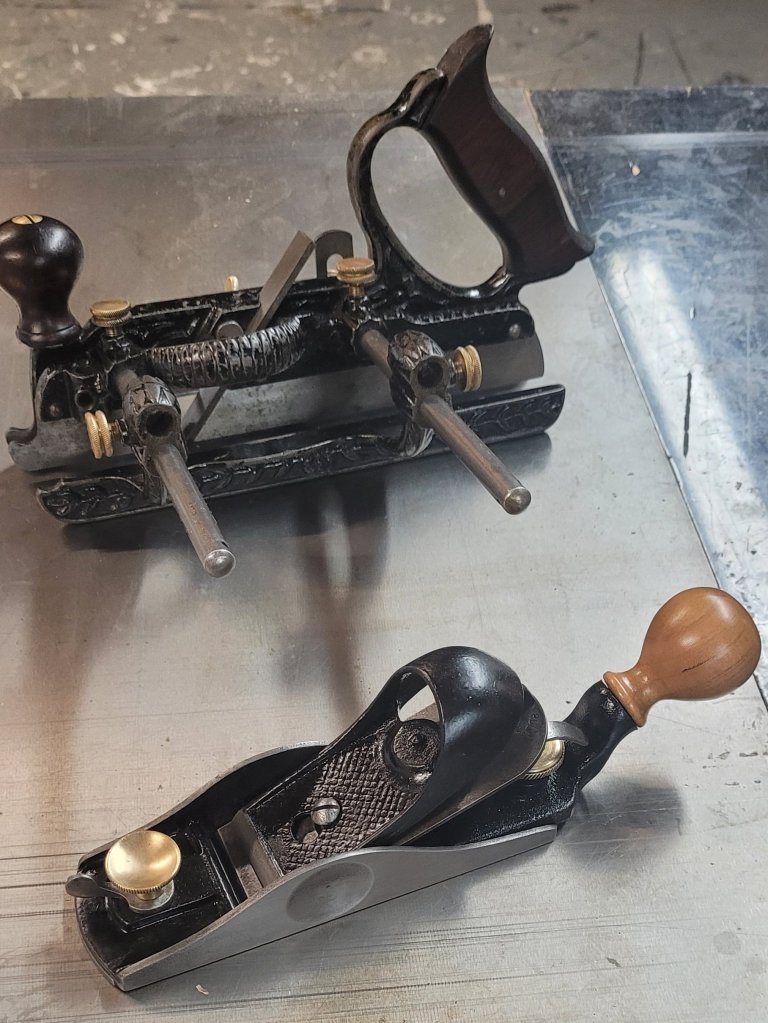
After I cleaned the rust off the block plane, I wanted all the parts to match in color and sheen, so I japanned everything during a hot day so I could use the sun as my oven.

After a couple of weeks, when the japanning dried, I put the plane together to see how everything turned out. As you can see, my japanning looks similar to the old Stanley 45 japanning behind it.

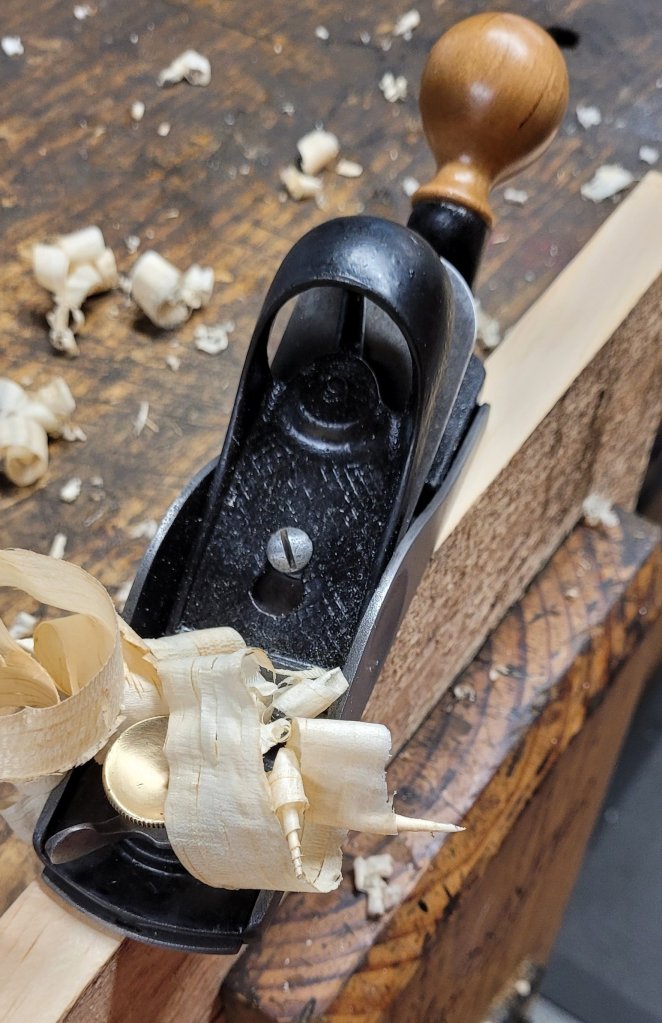
The only thing left to do was to sharpen the blade and try it out. The plane works fine. Ironically, the handle doesn’t make the plane cut any better, which begs the question, what was the purpose of them? The one thing I hear is that they were good for craftsmen who have arthritic hands, making the plane easier to hold.

Honestly, I don’t know how often I’ll use this plane as I already have a couple of my favorite block planes that I use, but it’s still a fun plane to own.

Craftsman Made Plane

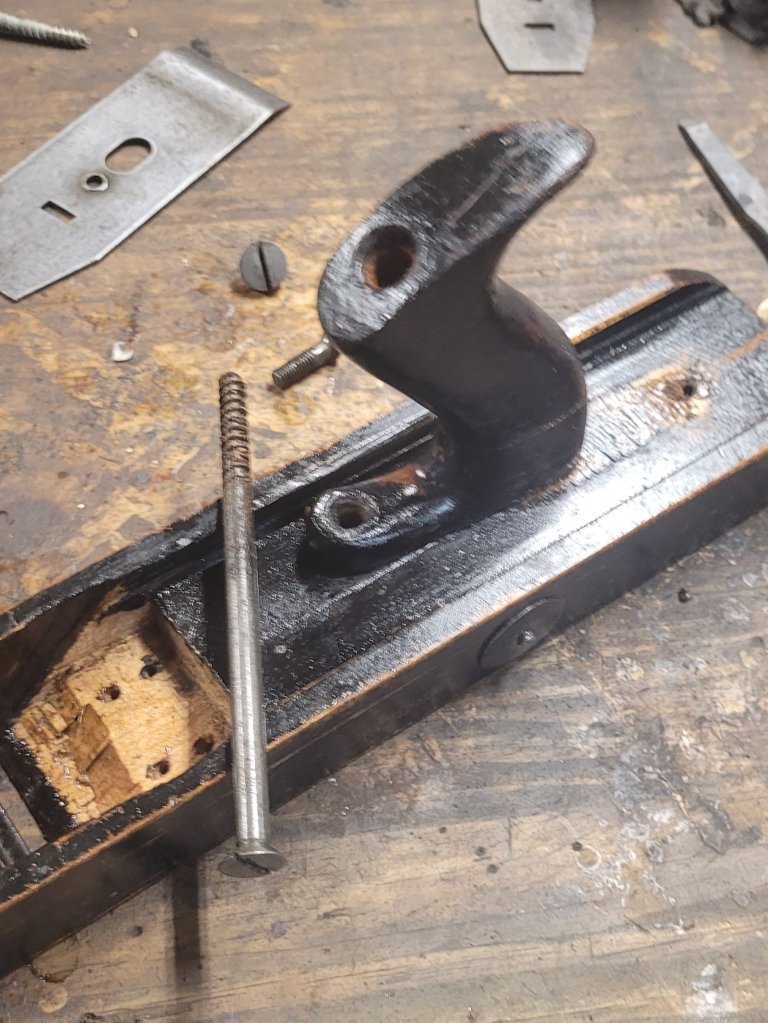
Several weeks ago, I won this craftsman made hand plane on an auction site. When I first looked at it, I thought the body was made with three pieces of wood laminated together like a Krenov plane, but after studying it, I realized it was one single piece of wood. There are a couple of rivets through the body, but I don’t know what purpose they serve.

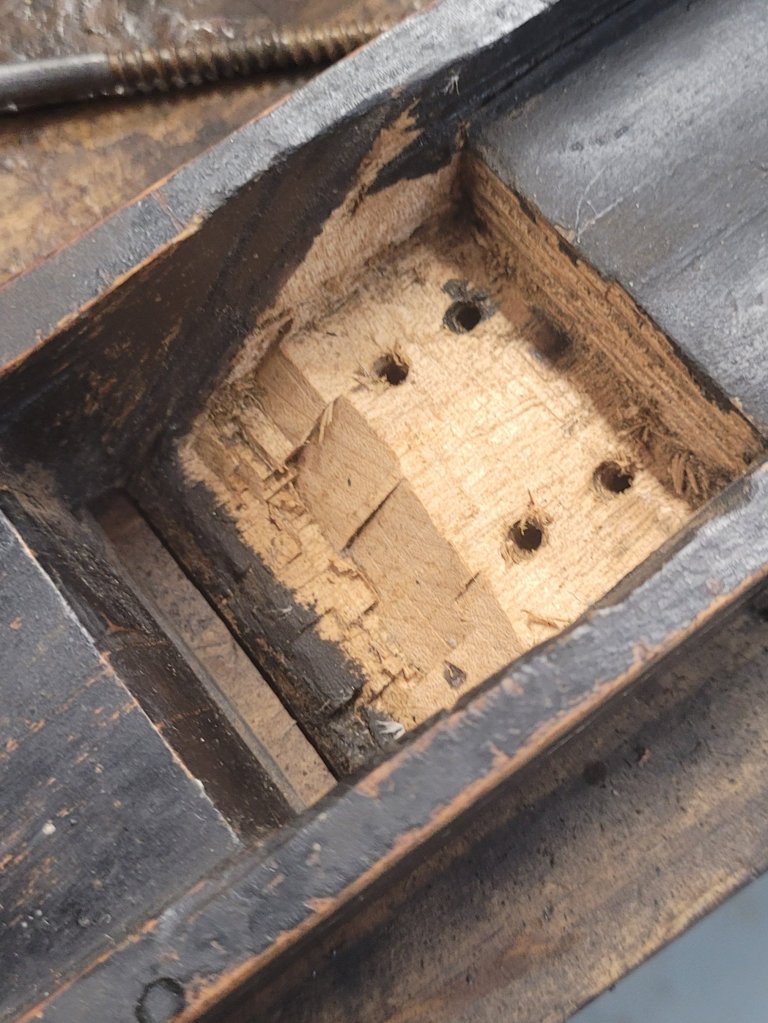
I’m not sure what the story of this plane is, but it looks like the craftsman owned a Sargent plane that broke, so he made a custom wood body out of mahagony and turned his plane into a transitional plane. You can see the chisel marks as he dug out for the frog, which adds a cool factor to the plane.

For whatever reason, he used four screws to hold down the frog to the body. It allows for very little advancement of the frog, but the plane still functions fine.

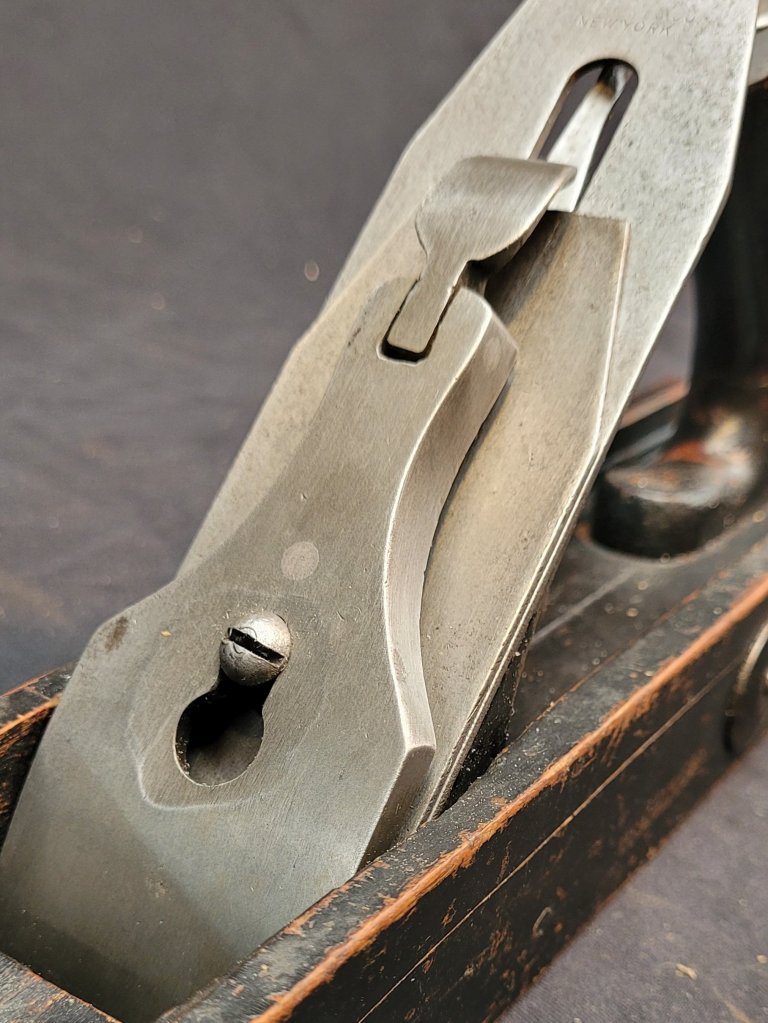
The owner also grounded the face of the lever cap down, which seems odd. You would think the original lever cap screw would have worked just fine, but maybe this screw is a replacement.

Luckily, I know the name of the craftsman of the plane (at least the last name). C Heiland is the person who made the plane. I googled “C Heiland Woodworker,” hoping I would find some information about him but had no luck. It would be awesome to have some provenance on the plane.

It’s a neat plane to look at, but I wanted to see how it performed, so I sharpened the blade and put it to work. The plane performs admirably. It was much better than the Buckeye plane I tried out from a few weeks ago.

Springfield Extravaganza

Last weekend was the Springfield Extravaganza. It’s one of my favorite antique shows that happens in May and September in Springfield, Ohio. The fairgrounds is full with over 2000 dealers selling all sorts of antiques and the occasional junk. I look forward to it as much as the World’s Longest Yard Sale up and down US127 in August.

Luckily, I found some planes this time at the show. Many times in the past, I would only be able to pick up a Stanley plane or two, but this year, the Antique Tool Gods were with me as I ended picking up almost ten Stanley planes. None are exceptionally rare but all will make nice users. In fact, the rarest plane I bought was a Union X6 vertical post plane.

Ironically, the only tools I bought this weekend were planes. I was looking for drills, chisels and saws but there weren’t too many available. The one saw I had an interest in was a Disston Thumbhole D8 rip saw that was in a barrel with 50 other saws. When I asked the guy what he wanted for it, he replied “$50 per saw, unless you want all of them, then they’re $7.00 each.” I quickly put the saw back and walked away.

I’ll spend the next few weeks cleaning my planes up, but I’m not too sure how long that’ll take me as I just started my new job today (I got promoted) as I may end up working more hours with this new gig than I did before. However, I’m optimistic I’ll get back in the shop soon.
You can follow me on Instagram to see how the planes end up looking. I’ll remove the rust and sharpen the blades so that they can be put back to work. In fact, I just posted a couple of pictures of a Stanley No 71 Router Plane I restored after finding it at a yard sale earlier this month.

The Worst Plane Blade

Every once in awhile I’ll come across a plane blade that is so heavily pitted and corroded, the best thing to do is to simply throw it away. This blade that came off a Stanley No 6 plane was no different. The problem was that I didn’t have a replacement blade to go with the plane I was restoring, so I was forced to see if I could get the blade to work again.

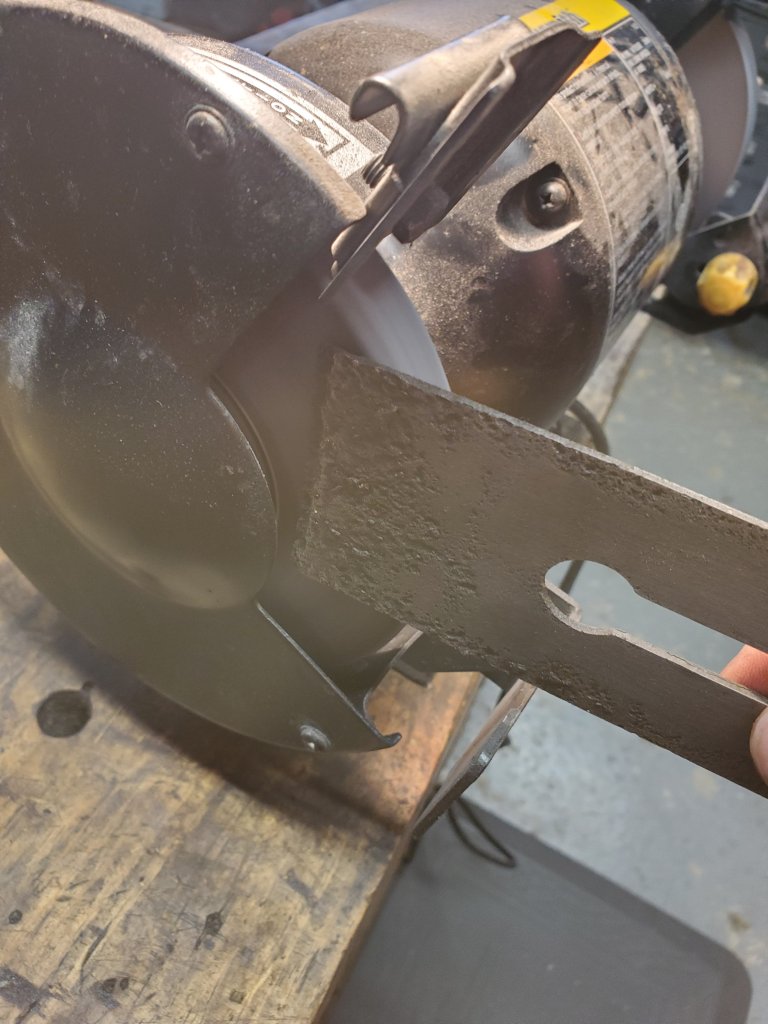
The first thing I did was take the blade over to my 8″ speed grinder and grind the face and back of the blade to remove the corrosion. I paid special attention not to heat the blade up too much so, I occasionally cooled it off in a bucket of water. Fortunately, the blade’s face had about a 1/4″ of metal at the bottom that wasn’t pitted, so I was hopeful I could still get a good edge out of it.

I took the blade over to my Tormek and ground a 25 degree bevel on it and honed the face flattler on the side of the Tormek grinding wheel the same way as I did with my 8″ speed grinder.

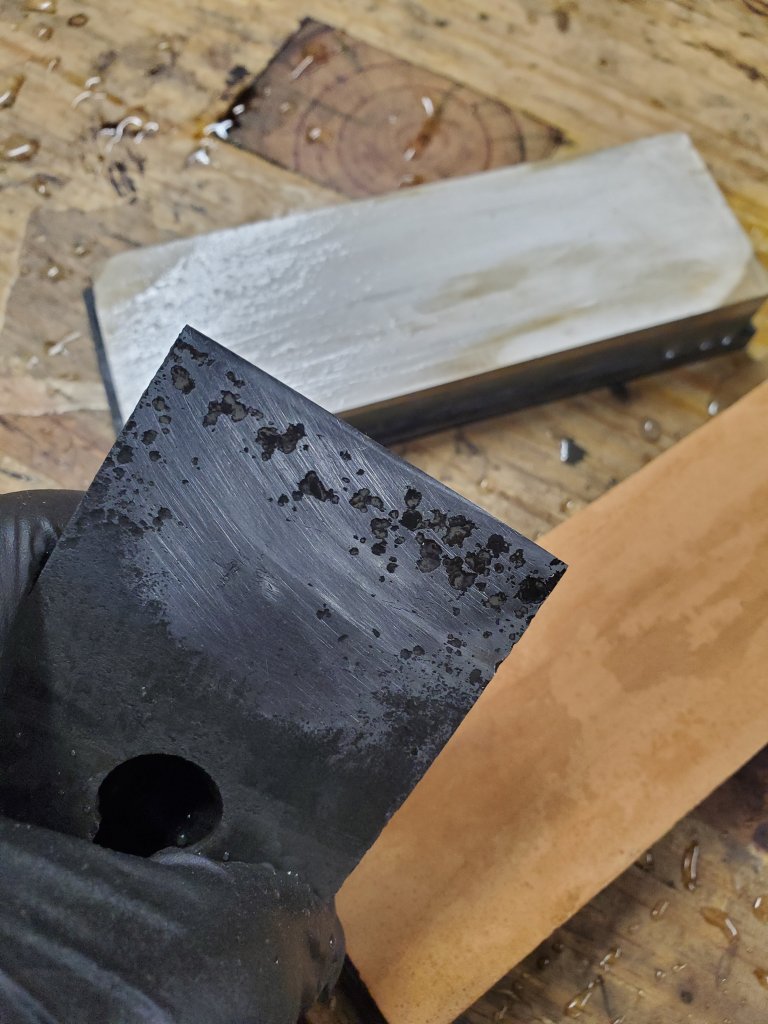
After the grinding was finished, I took the blade over to my water stones and sharpened it just as I do with any other blade. When I was done, there was a clean line of light at the tip of the cutting edge so I was hopeful it could achieve a nice cut.

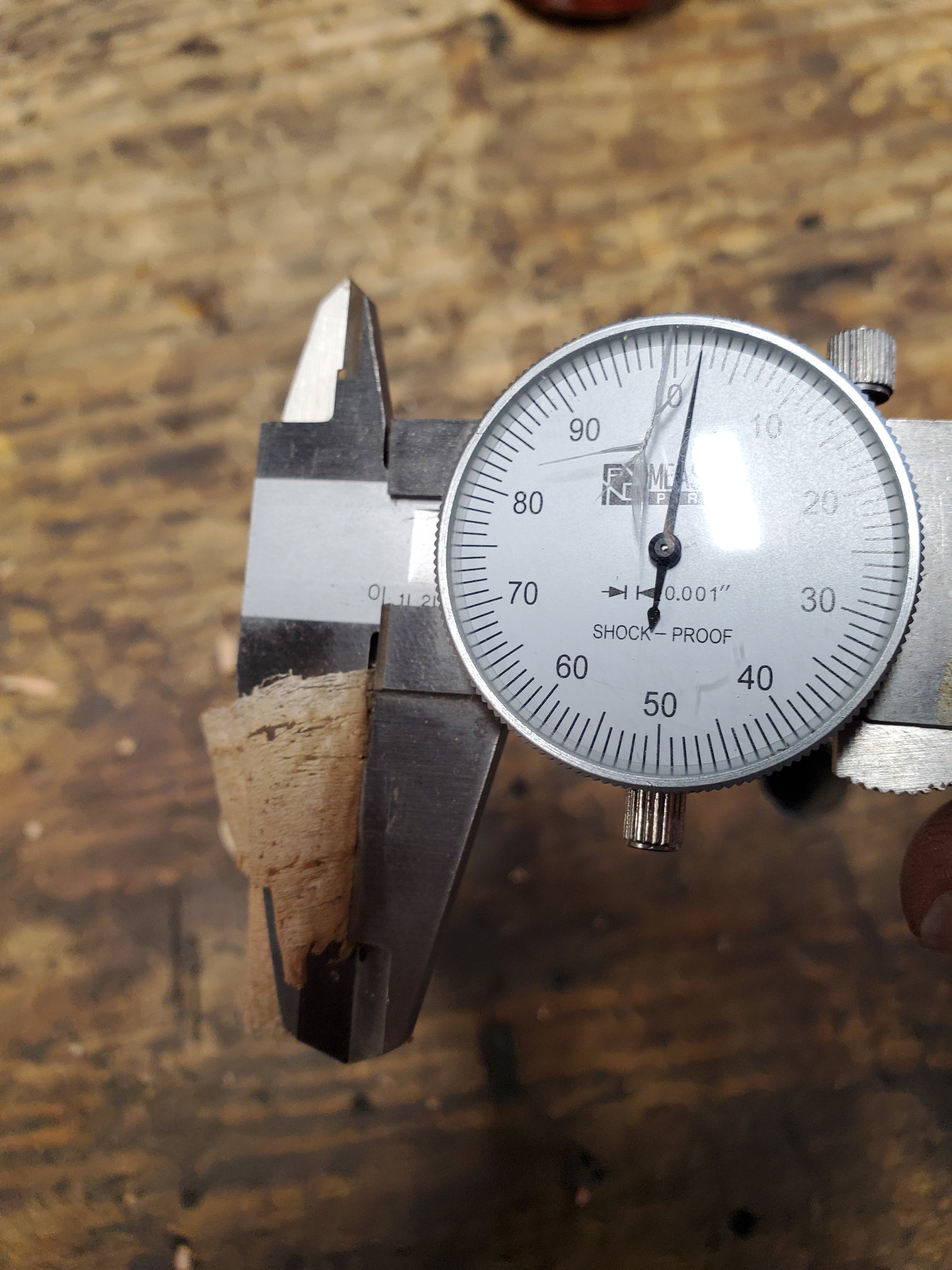
Placing the blade back into the plane, I tuned it up, and sure enough, this crappy blade cut pretty well. I took out my dial calipers, and the shavings measured .002″ thick. The blade will eventually need to be replaced, but at least the plane can function properly now.

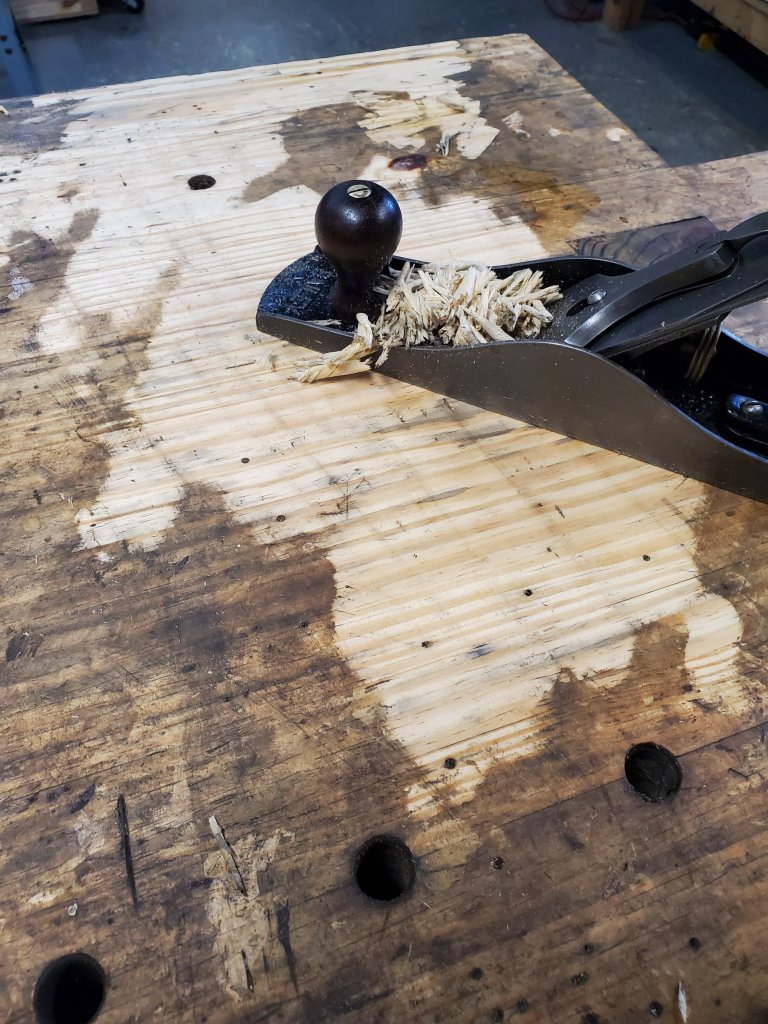
The plane performed so nicely, I used it to flatten my workbench.

Repairing a Rosewood Knob

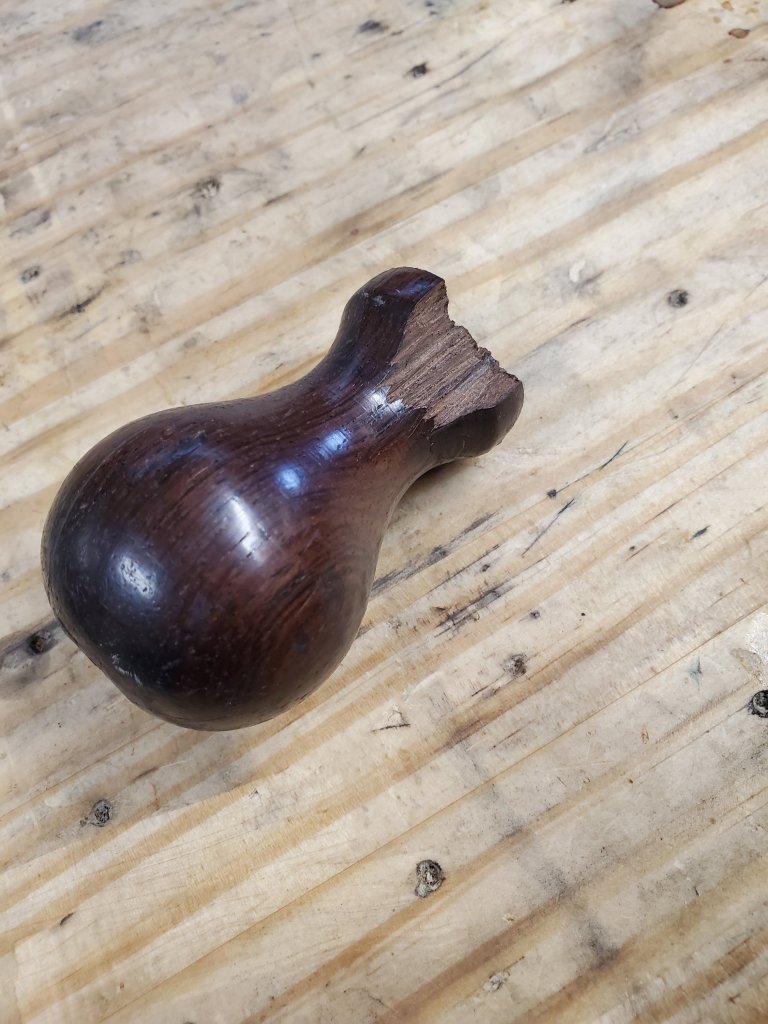
Sometimes when buying a plane, all the parts will be in good shape until you look at the front knob and see a big chunk missing from the bottom. I’ve repaired dozens of totes over the years, but I’ve never really tackled a knob as it looked like a big pain in the ass. So, I decided to give it a go and see how it turns out.

The first thing I did was shave the broken area smooth with a bastard file. It didn’t have to be completely clean, just good enough to hold some glue.

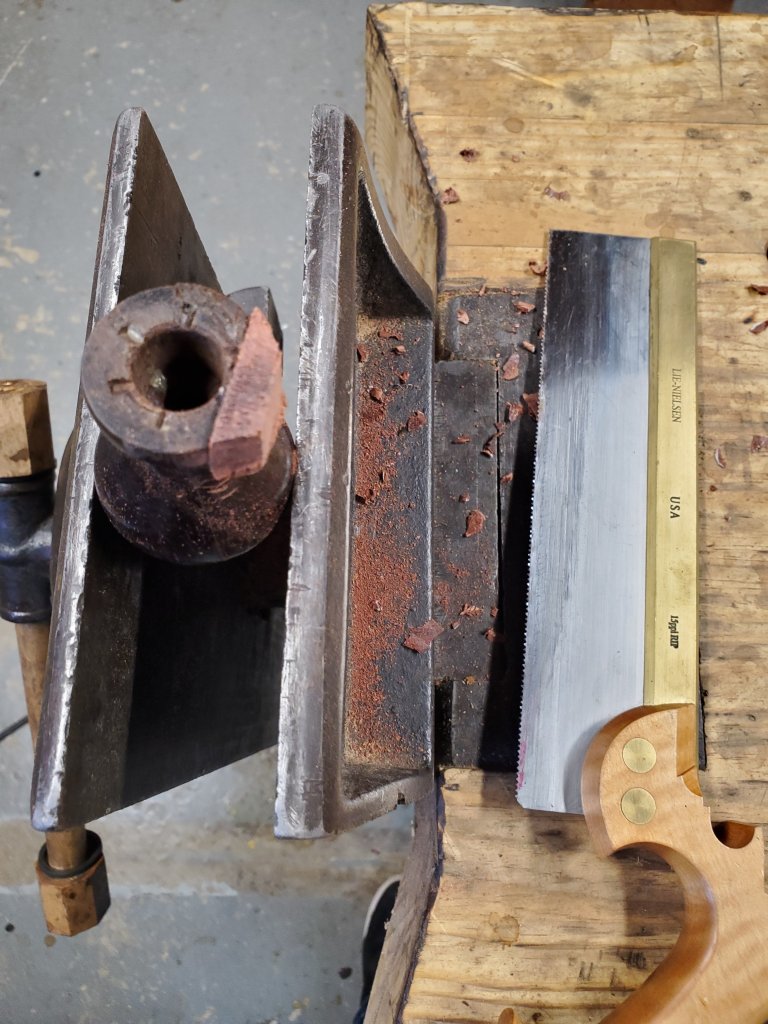
Then I took a piece of cocobolo scrap wood and glued it to the surface of the break. I paid careful attention to the orientation of the grain so the repair would look nicer. I used Gorilla Super Glue Gel as it works well gluing all type of rosewood woods together.

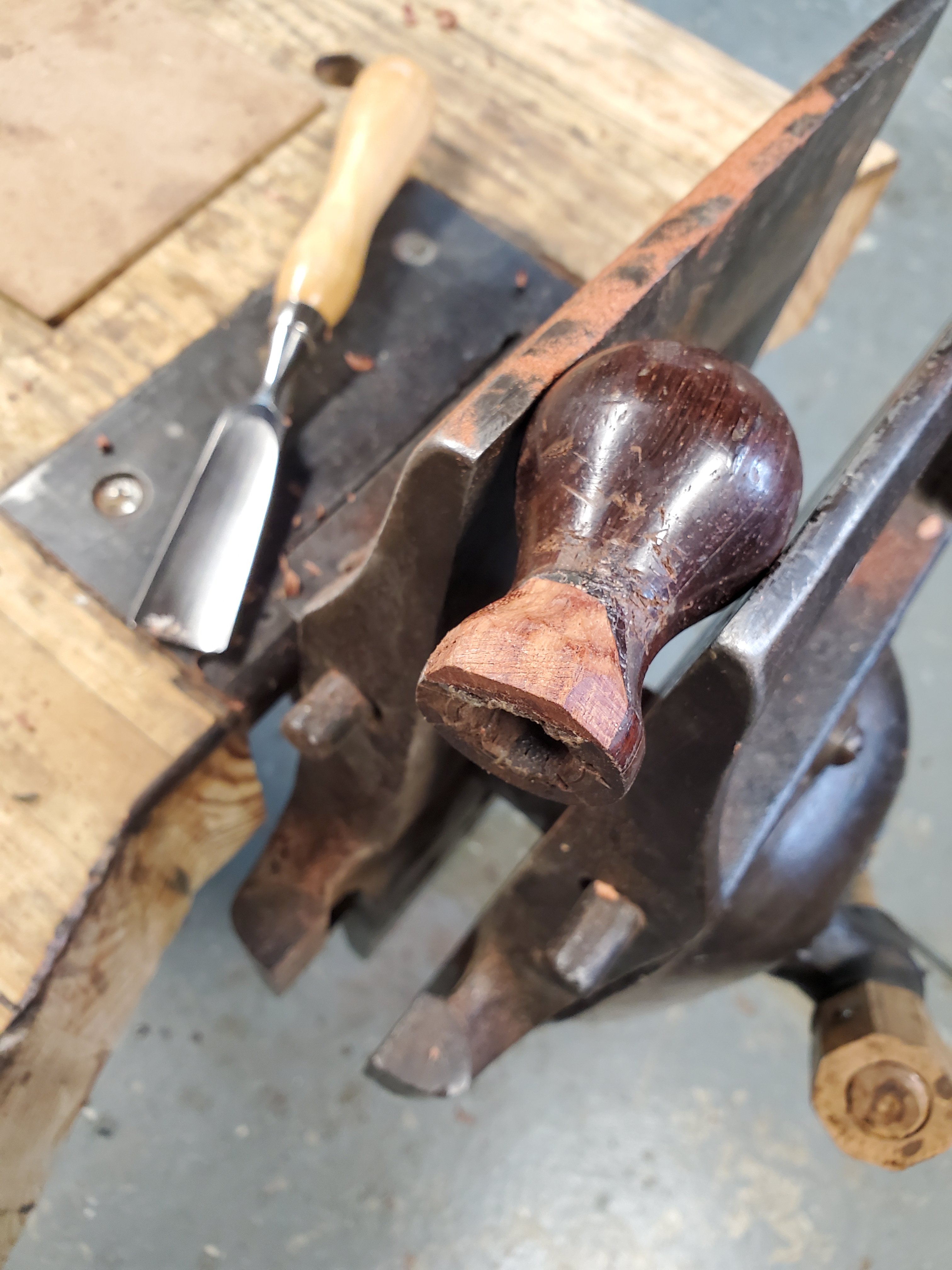
Once the glue dried, I cut off the excess with a dovetail saw and shaved the thick areas away with some chisels and gouges.

I wanted to shape the new area perfectly round with the rest of the knob so I created a little holding jig to be used on my lathe.

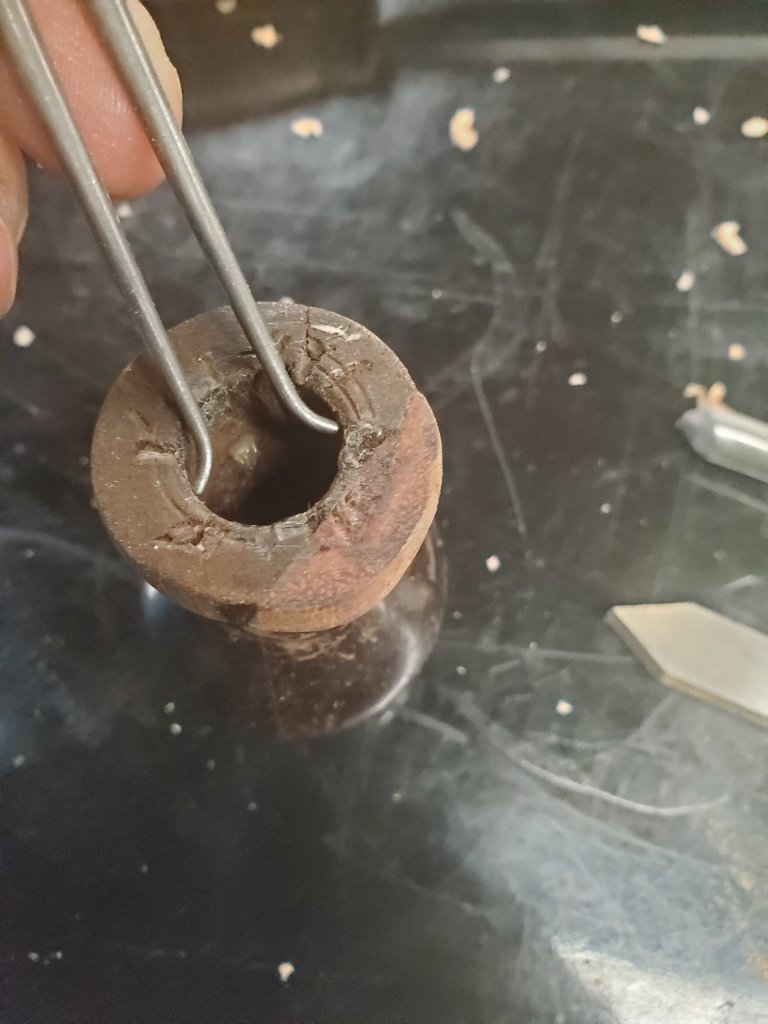
I measured the inside diameter of the knob’s mounting hole with inside calipers and transferred that measurement unto outside calipers, then turned a tenon to the measurement. Then I stuck the knob onto the tenon and stabalized the top of the knob with the lathe live center point.

With the knob spinning nice and true, I carefully used a round scraper and gently turned the new piece of wood concentric with the knob. After a few minutes, and a little bit of sanding, the knob was finished.

I noticed that the knob had split just a little bit while it was turning, so I applied more super glue gel to the bottom of the knob to stabalize the wood.

The final step was to apply a couple coats of shellac to the knob and stick it back on the plane. Because the piece of cocobolo was a little lighter in color than the rosewood, I colored the cocobolo darker with a black Sharpie marker then wiped off the excess with some fine steel wool.

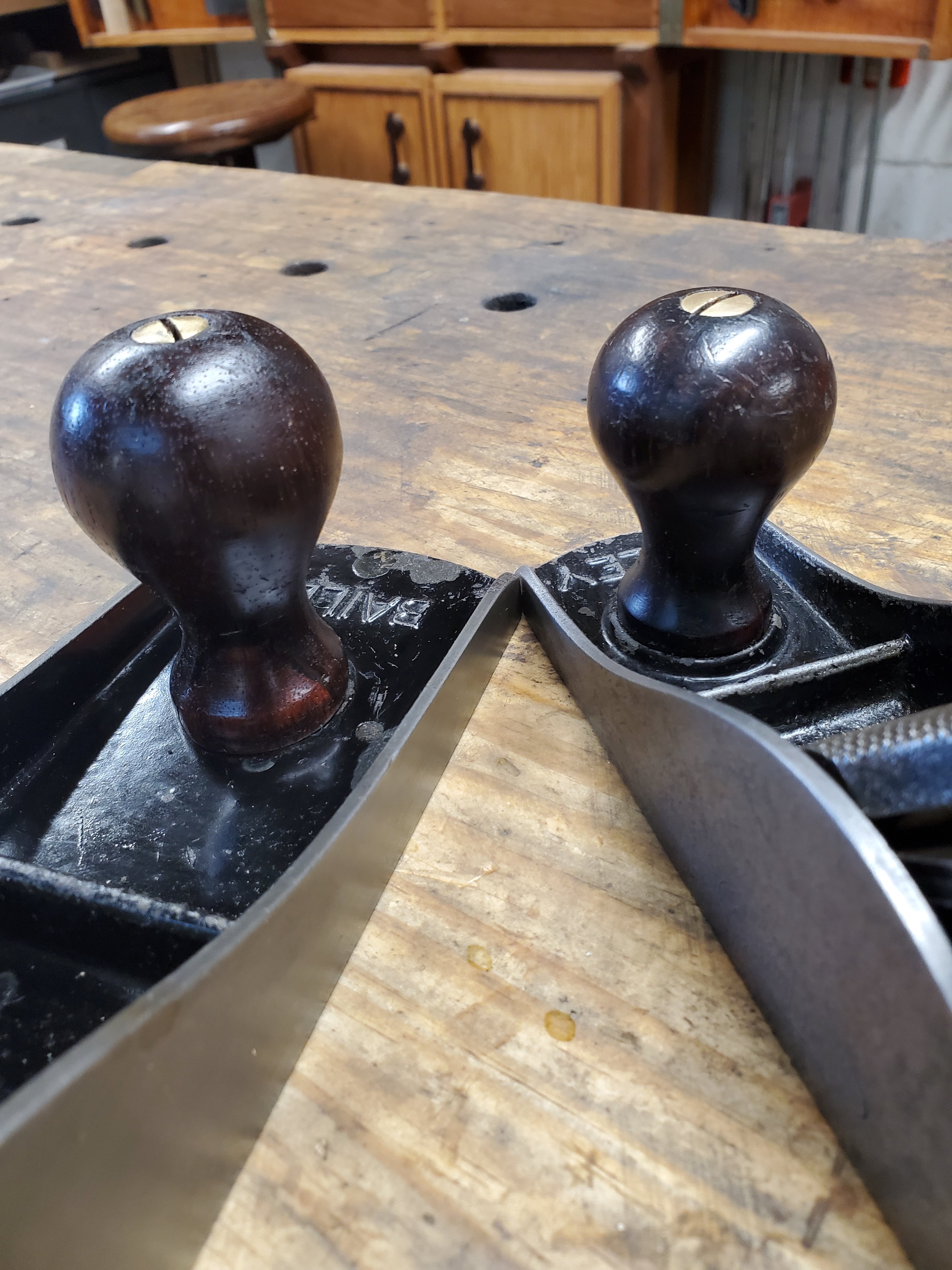
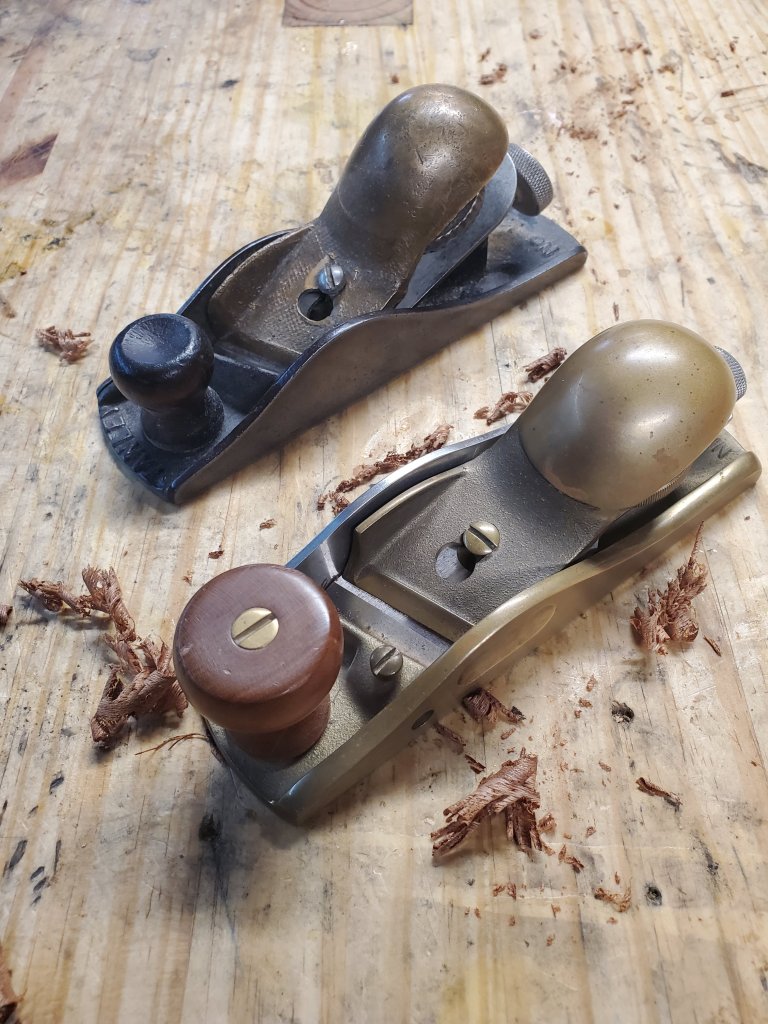
The end result came out fine. The knob looks complete and you can only notice the repair if you really look at it. In fact, the knob on the right was also repaired the same way, and you can hardly see it. Looks like I’ll have to start repairing more knobs from now on.

Stanley No 5 1/4 Plane

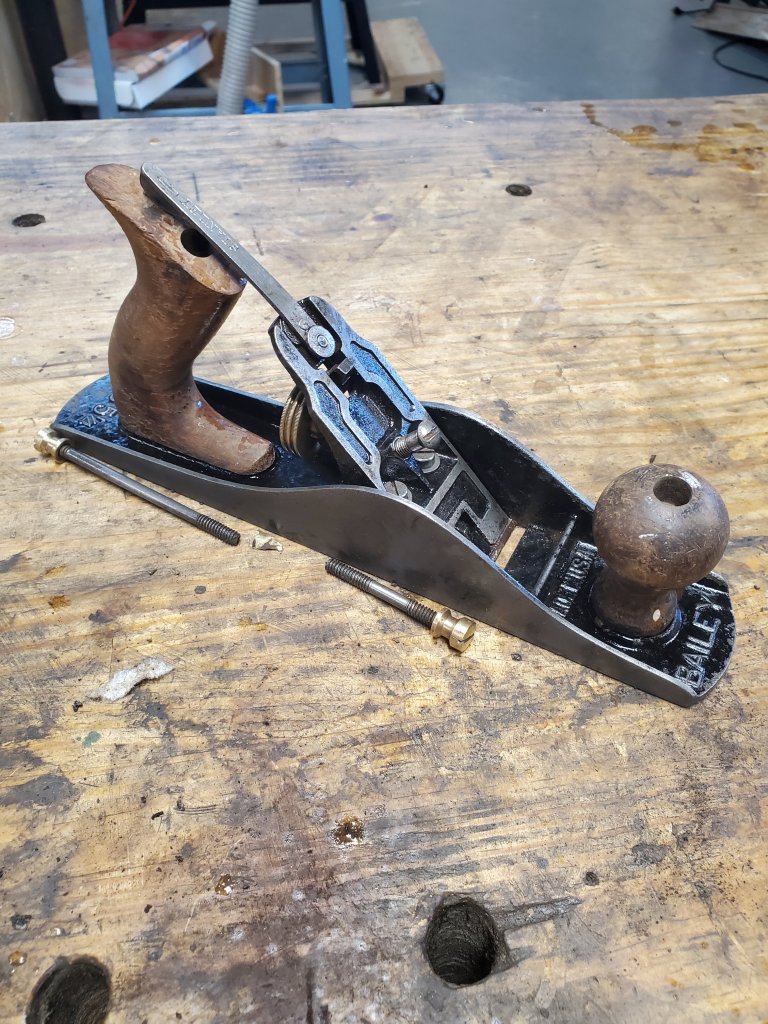
A few weeks ago, I stopped by an antique store in New Paris, OH across the state line from Richmond, IN and bought a Stanley No 5 1/4 plane strictly for the parts. The plane was missing the blade and lever cap but the price was right so I took it home.

When I cleaned up the plane a little bit, I noticed it was stamped Cincinnati Public Schools. I thought that was pretty cool since I live in Cincinnati, even though I went to Sycamore High School and not CPS. After thinking about it, a light bulb went off in my head.

I’ve owned this Stanley No 5 1/4 ish plane for years however, the plane is not marked 5 1/4 on the bed. I think it was either a Four Square plane or maybe a plane that came with a tool cabinet kit. I use it from time to time and it works well, it just sucks that it’s brazed on one side. I’m not sure where that lever cap came from as it looks like a transitional plane lever cap.

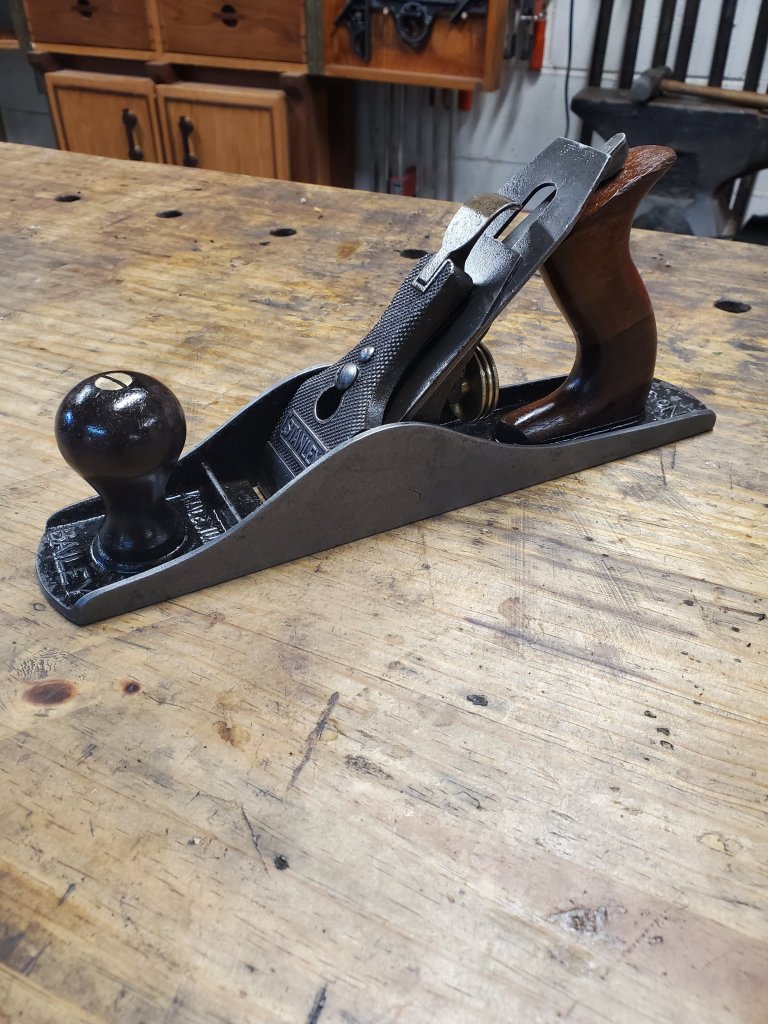
I ended up deciding to take the blade and lever cap from the old plane and put it on my new 5 1/4 plane and keep this one in my tool cabinet bidding the old brazed bed goodbye. After I cleaned all the parts, the plane came out pretty nice.

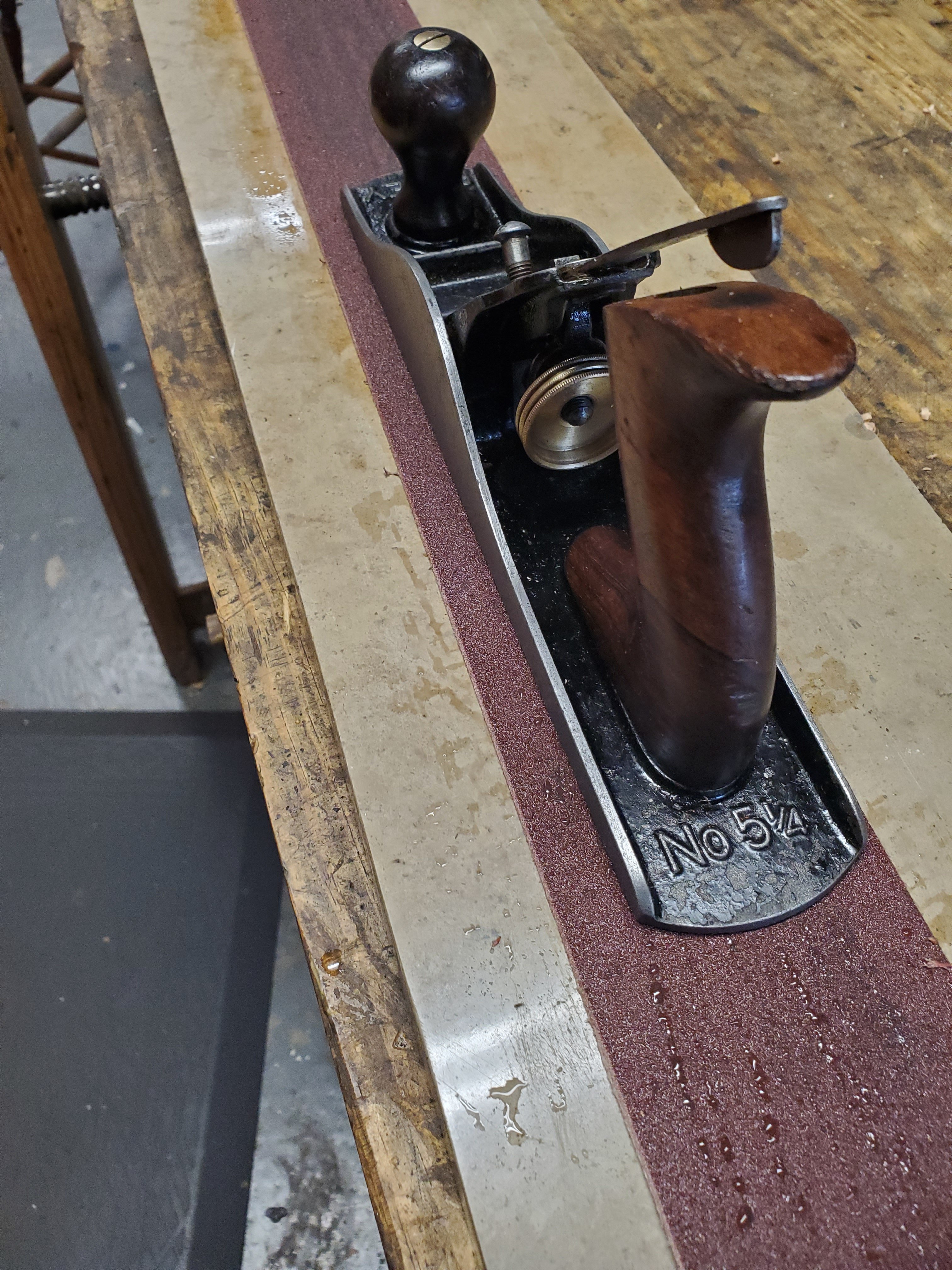
I used the plane right away to see how it cut. It worked okay but I decided to see if the bed needed to be fettled so I gtabbed some sandpaper and an old window sill to act as a surface plate and went to work.

After several minutes of fettling and changing the grits, I was happy with the outcome. Some people fettle their beds until there are no pits left on the bed and it obtains a mirror finish, but I don’t have the patience for that. As long as the front of the bed, the front and back of the mouth, and the back of the bed are even with eachother, I’m happy.

I went back to the board to see how the plane cuts and it works like a dream. Now I have a new Stanley No 5 1/4 with the provenance from my back yard.

Some people may wonder what the intended purpose of a 5 1/4 plane is, and for that, I’m not entirely sure. It’s a little too big to excel as a good smoother and a little too small to be a good jack plane. If I had to guess, I think Stanley made this size plane as well as a No 2 size plane for kids. Kid’s hands are much smaller than adults so smaller planes work well for them. The fact that this plane was marked Cincinnati Public Schools, it was more likely used by little kids in shop class. Nevertheless, I still enjoy using this plane in case one of my other planes is not set up right or it’s blade is dull.

Lie-Nielsen vs Stanley No 140 Plane

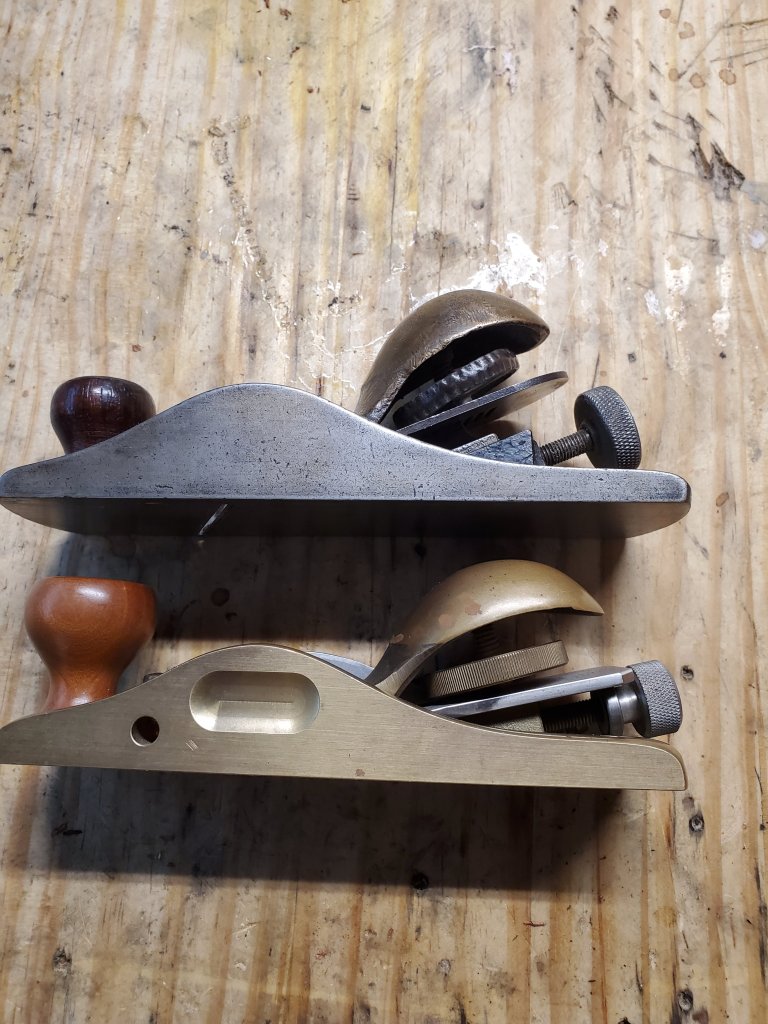
Apparently, Hell has frozen over as I bought a Lie-Nielsen plane. I never thought I would own one as restoring old Stanley’s is my gig but, I found this at an antique mall and couldn’t resist even though I already own a Stanley No 140 Rabbet Plane.

The two planes are very similar to eachother with the biggest difference is that L-N is a low angle plane. The other differences is that L-N has a thicker blade made from A2 tool steel, a cutter on the side to slice the wood fibers when using it across the grain, and a fence. This plane’s fence was missing so, I contacted Lie-Nielsen to see if a replacement fence could be bought. They told me to send them a picture of the plane to make sure it is the current version they produce. After they saw the picture I sent, they informed me that their fence probably won’t work as my plane is the earlier version. Oh well, I never wished my Stanley No 140 had a fence so maybe I would never use it anyway.

The planes are nearly identical in size as well, with Lie-Nielsen being a touch smaller. However, the Lie-Nielsen is a little bit heavier since it’s made of bronze as opposed to cast iron. The Lie-Nielsen feels much nicer in your hand. You can tell the difference in quality between the two as soon as you hold it.

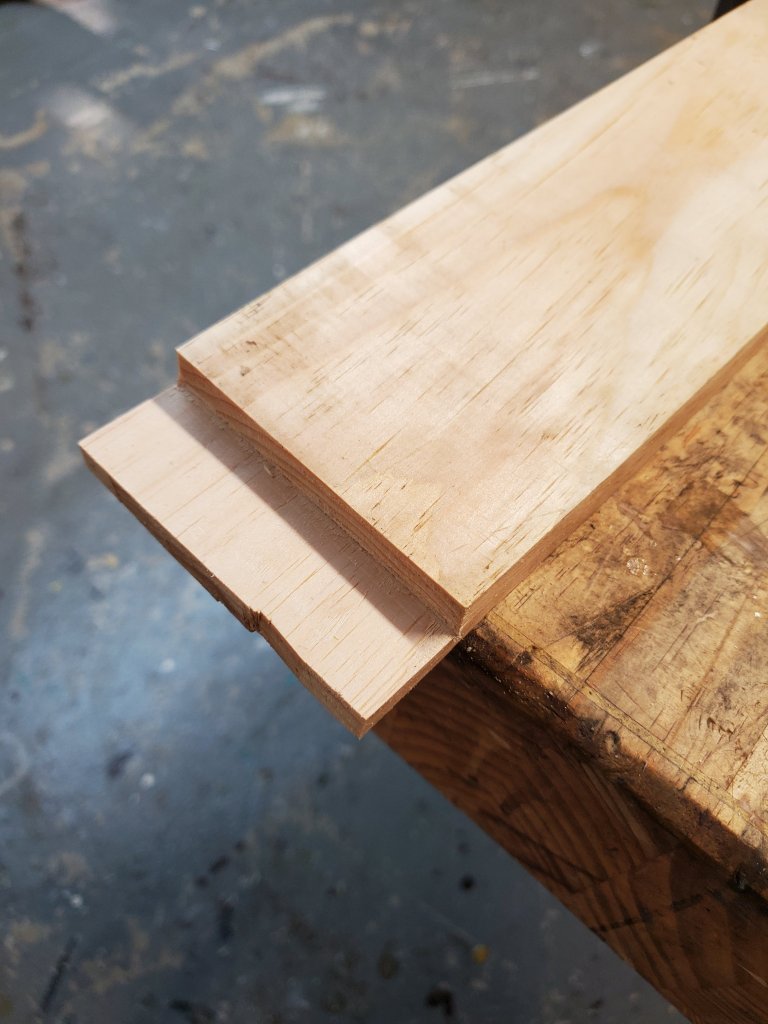
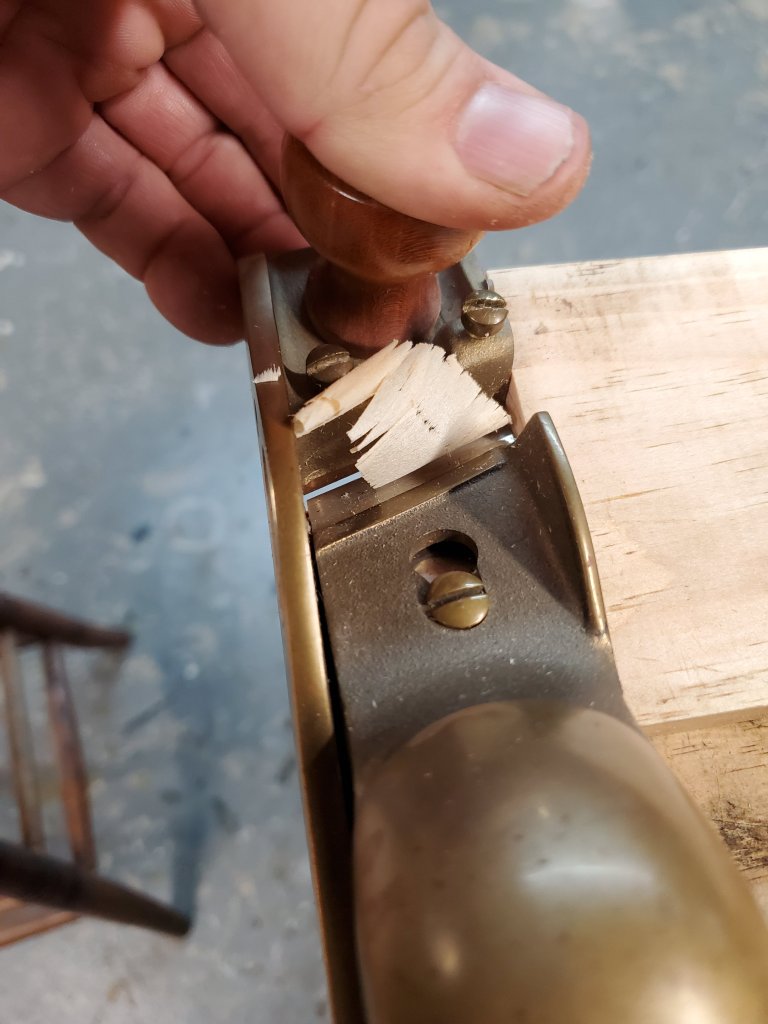
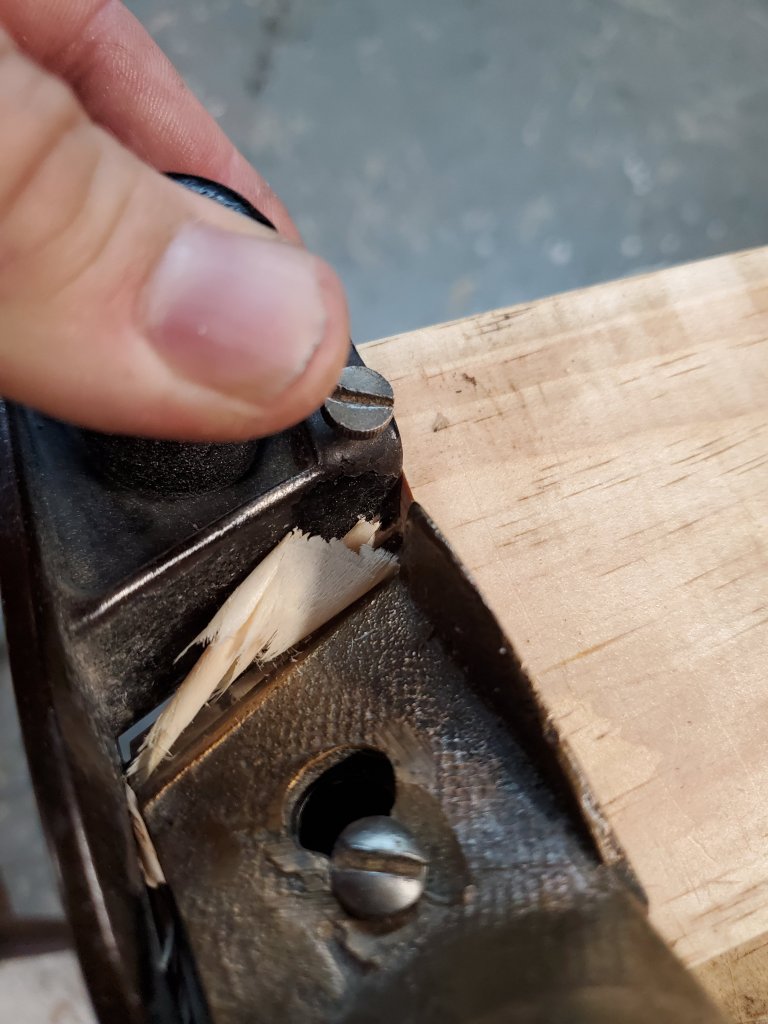
I wanted to see the difference of how each plane cuts, so I grabbed a piece of white pine and chopped a rabbet on the end. I then planed the rabbet clean with each plane.

The Lie-Nielsen cut extremely well as it shaved the wood fibers like butter. Lie-Nielsen planes are extremely well made and worth the extra money if you’re not interested in restoring old Stanley planes.

My tuned up Stanley No 140 also cut the wood fibers well. Not quite as nice as Lie-Nielsen but well enough to get the job done. You can see the shavings between the two planes are nearly identical. My Stanley No has user made bronze lever cap. It works so I never replaced it with a real lever cap. I’m cheap!

So, which is better? Lie-Nielsen wins hands down however, the price of the plane is nearly triple than that of a Stanley No 140 plane. You can find old Stanley No 140’s on eBay for around $100-150. Lie-Nielsen lists their No 140 for $385 on their website but is currently out of stock. Some used Lie-Nielsen No 140 planes have sold on eBay for over $500.

Whether or not the Lie-Nielsen is worth the extra money is up to you. Honestly, if I was a professional woodworker, I would buy Lie-Nielsen planes and depreciate their expense on my income statements. Being able to depreciate your tools is one of the nice benefits of being a pro. It’s no wonder why Lie-Nielsen tools are on backorder.

I Did It! Quercus Magazine

Well, I finally wrote an article for a woodworking magazine. It’s called Quercus and it’s based in the UK. I was asked by the editor Nick Gibbs through Instagram if I would be interested in writing an article about how and why I restore old planes. I jumped at the chance as writing for a woodworking magazine has always been a dream of mine.

I restored an old Stanley No 5 plane and documented my progress, then wrote out my article the same way as I write a blog, then sent him the file along with the pictures. It took a few months for the article to get published but, I’m in the magazine along with Paul Sellers.

When I received my copy, I was amazed by the content that was in it. The magazine features woodworkers from all around the world and their process of how and why they work with wood. There’s not too many “How To” articles and the magazine primarily focuses on hand tool woodworking so, don’t expect an article about “Building the Perfect Router Table” in it. The only other magazine that I would compare to it would be Mortise and Tenon magazine.

This is the plane that I restored for the article. I was planning on selling it, but now it carries sentimental value to me. I asked Nick if he would like for me to do another article but he hasn’t gotten back to me yet. This may be a one-off, but maybe not. Maybe I could be a constant contributor to the magazine. Wish me luck.