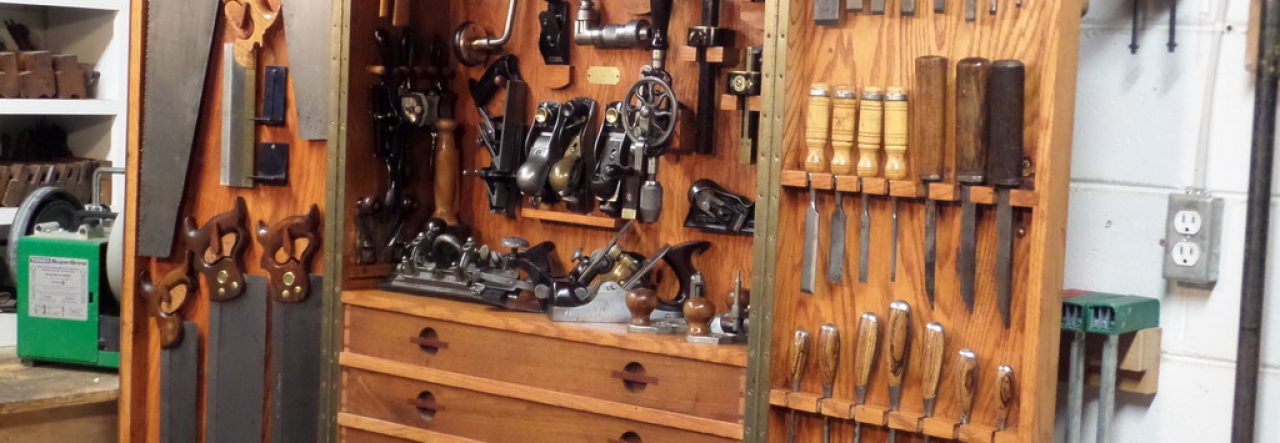
Save Shopsmith by Buying the Company

After nearly 70 years in production, Shopsmith, the maker of the Mark V and Mark 7 woodworking machines, is on its last legs and facing liquidation unless a person or group buys them.

https://www.shopsmith.com/store-closing?fbclid=IwVERDUANqJURleHRuA2FlbQIxMAABHr6hUpmcULQ58Iv_Ns7bzi1SLTYOG–pFk9Erde5_bNM2cEVgvyzn43hlAWa_aem_gZwCa98Nw06dGSo3BI0wFA

I never used a Shopsmith but always see used ones for sale on Marketplace. My understanding is that the accessories were proprietory so you were locked into only their brand of stuff. It didnt seem very user friendly to me, so I never considered buying one.

Did you own and use a Shopsmith? How is the machine? Was it a “jack of all trades, master of none” type of tool? I’ve always been curious.

Do you have a boatload of money and want to buy the company? Now is your chance. They may be liquidated by the end of the month. They are located in Dayton, OH and apparently it’s how Scott Phillips got his start with his TV show “The American Woodshop”.  The story goes he worked for Shopsmith at the time and did some How-To videos on using the machine. Someone saw his videos and asked him to do a new woodworking TV show (or something like that. He knows the story a lot better than I do).

Pipe Clamp Holders

Life has been keeping me busy with my job and antiquing with my wife on the weekends. It seems my shop time is a few minutes a week and even then, I spend that time restoring old tools. But when I saw these pipe clamp holders on an Instagram ad, I had to have them.

I’ve been fighting with my Jorgensen pipe clamps for decades. When they came out in 1980’s they were a must have woodworking tool, so I bought as many as I could afford as a teenager. Fast forward 35 years, I still use the heck out of them. The issue, is that when I use them, they have a tendancy to roll over during glue ups.
These fixtures allow you to slide the foot of the pipe clamp into a pocket and lifts it a few inches to allow you to turn the handle without hitting the bench. Simple and straight forward. Even the height of the fixture is short enough that if it is in front of back clamp pad, it won’t hit the wood being clamped, which is nice if I’m clamping a panel that is wider than my bench.
The guy who sells these makes them on a 3D Printer. They’re about $30 for four of them but they’ll last a lifetime. If you have these style of Jorgensen pipe clamps, it’s a no-brainer. I know they sell newer versions of pipe clamps with a taller base that do the same thing, but I don’t want to spend the money to replace all my pipe clamps.

You can find this guy on instagram @artisanmadethings.

Repairing a Saw Handle

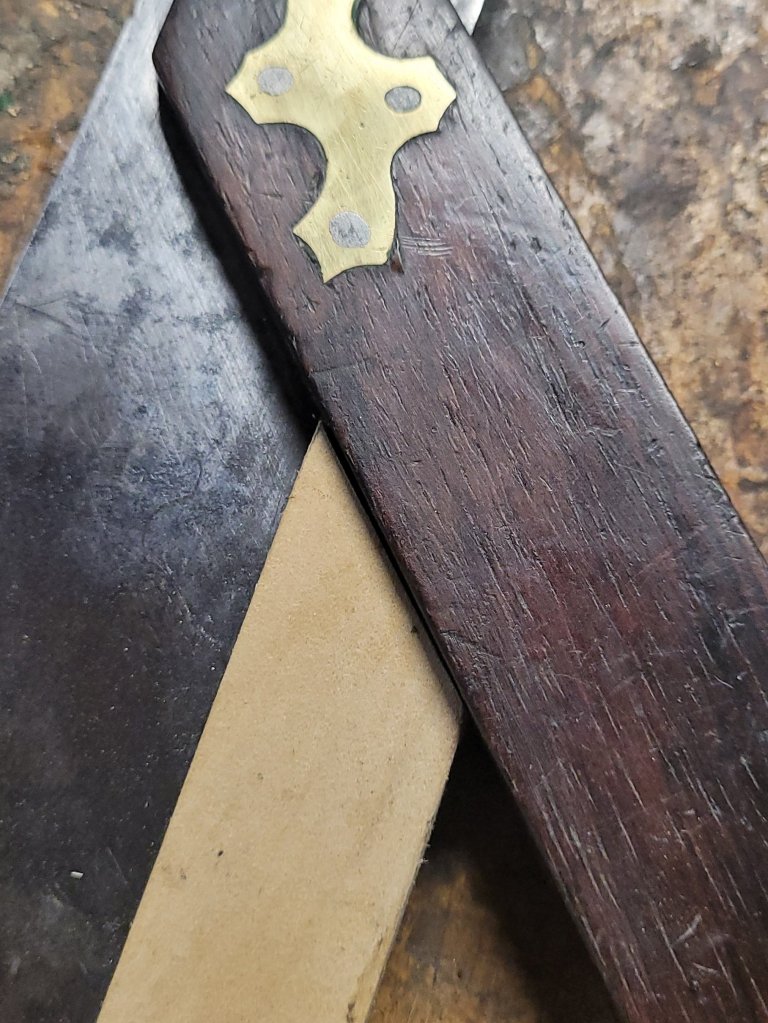
I bought a Disston D8 Thumb Hole Rip Saw and wanted to restore it. The saw was in pretty good condition when I bought it. The only issue it had was that the back of the handle was broken with a chip missing from it.  It’s a pretty common issue as that is where your thumb and index finger ride when sawing, so it’s under a lot of friction.

I wanted to repair it, so I carefully carved out an area to glue a new piece of apple wood in its place.

After the glue dried, I shaped and sanded the wood to match the rest of the handle. It came out well , it just needed a little bit of wood putty to close up the gaps between the new wood and handle.

After the putty dried, I sanded the whole handle and applied a few coats of shellac to it. The handle looked nice, but the putty stood out like a sore thumb.

This is where I put my artistic hat on. Playing with a paint kit, I mixed up a few colors of red, brown, and yellow, mixing them around to get the best matching shade I could create. It wasn’t about creating the perfect color but laying three different colors down so that it would blend with the rest of the handle.

After a few minutes of painting, I was happy with how it turned out, so I let it dry.

The saw came out nice, and the broken end of the handle won’t dig into my skin when I’m using it. Now that is all left to do is to sharpen the blade and put it to use.

Another saw saved from the scrap heap.

Saw Sharpening

A couple of weeks ago, I bought Set & File by Matt Cianci from The Lost Art Press. I waited about a year for the book to be published as sharpening has never been a strong suit of mine when it comes to saw restoration.

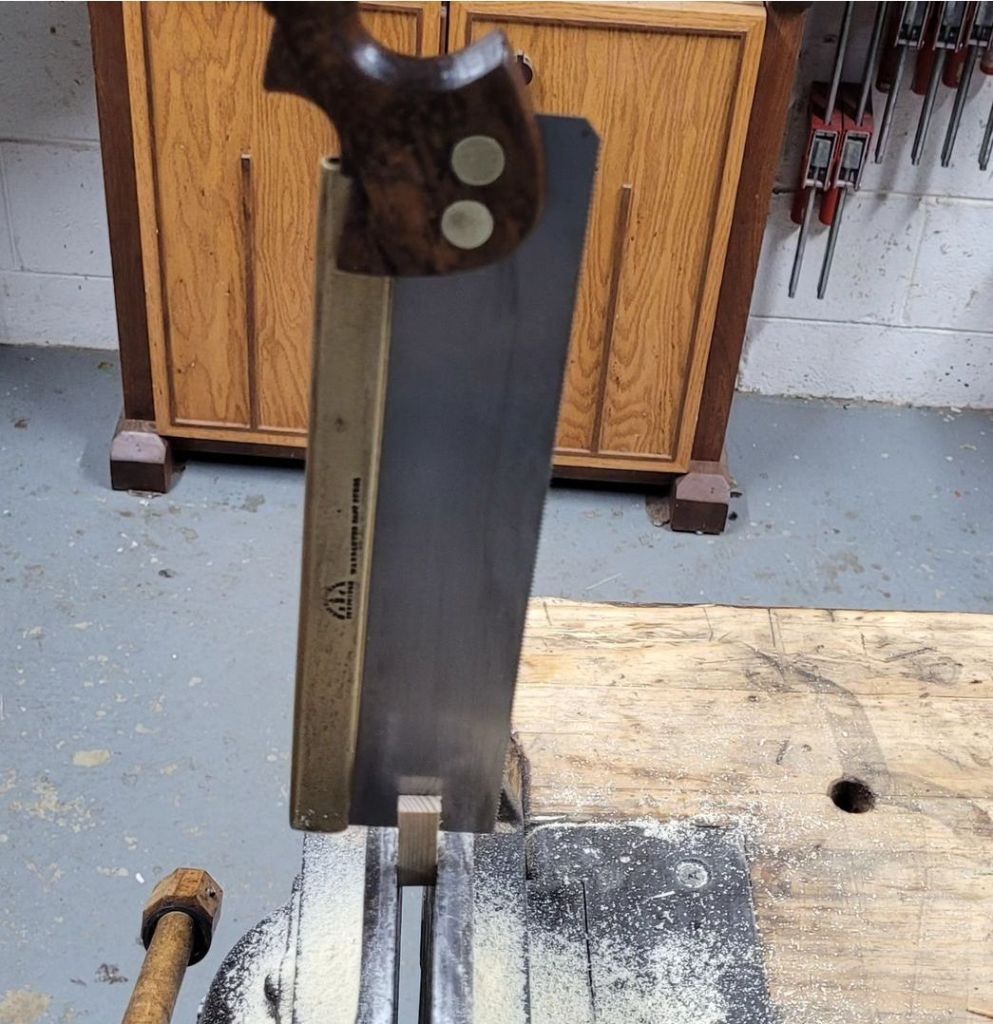
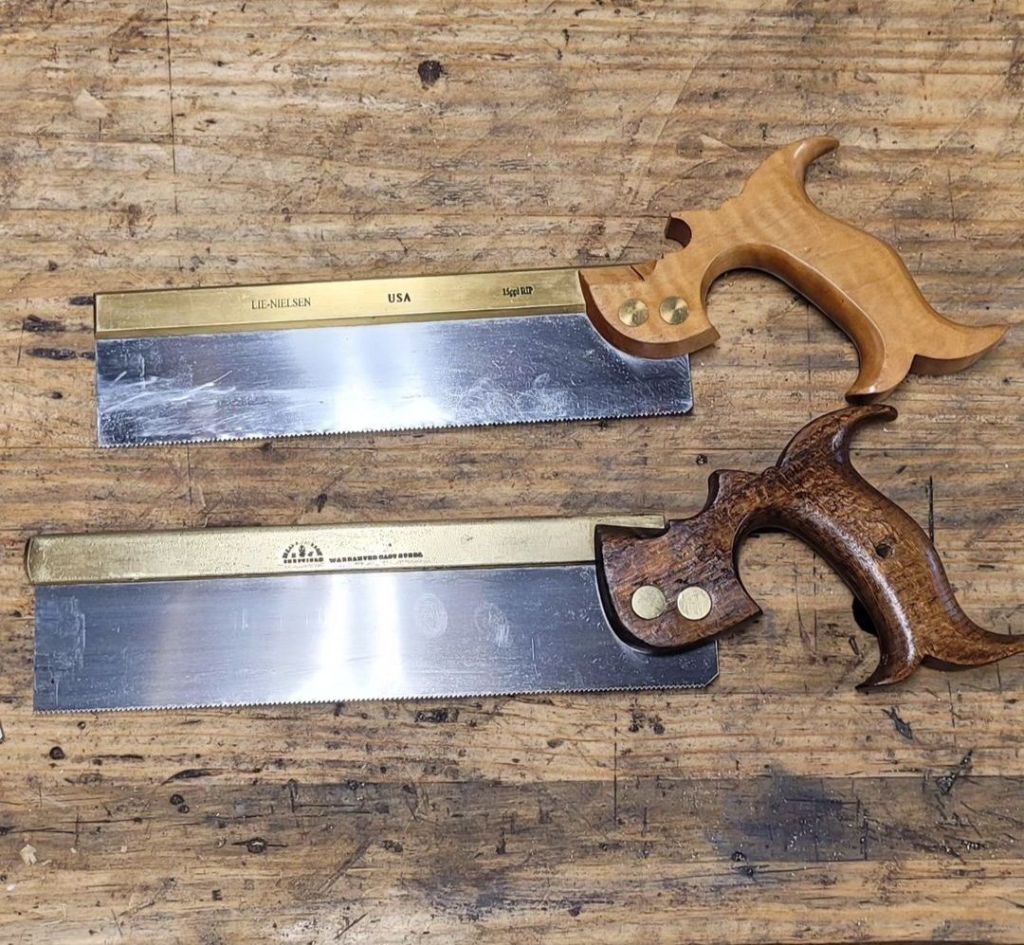
I’ve owned a Lie Nielsen dovetail saw for years and recently restored a Spears and Jackson dovetail saw. While I could sharpen the teeth fine, setting them properly was a pain as the anvil in my saw set was too big to do the job.

I read in Matt’s book where he dismantled his Stanley No 42X saw set and filed the anvil thinner in order to properly set the teeth on fine tooth saws.

Sure enough, I followed his advice and clamped the anvil in my vise, and carefully filed both sides of the anvil in order for it to look like the one in his book.

Putting the saw set back together, the anvil looked like it would now do the job.

After a few minutes of sharpening and setting the teeth, the saw sat in its kerf nice and tight. Plus, it cut like butter.

Now, I have two dovetail saws that are ready for use. It’s amazing how simple tricks can help your woodworking skills. Major props to Matt Cianci!

Cool Little Workbench

My wife, Anita, and I were antiquing in Madison, IN, yesterday when I stumbled upon this little workbench. 

It was cute little Sloyd style workbench from the 1800s. I couldn’t believe how small it was, so I imagine it had to be built for a little kid.

It had to be about 3′ 6″ tall by 5′ long. What was so amazing about the bench was how well worn out and used it was. The child that worked on this bench used it a lot as the top is full of tool marks.

Obviously, it could have been for multiple children in a school shop class, but I never had a bench like this in elementary school, let alone a shop class.  Can you imagine being the kid lucky enough to work on this bench?

No, I didn’t buy the bench as I couldn’t afford the $350.00 price tag as I’m too cheap. Plus, I didn’t want to drag it home because I had no place to put it. But it’s definitely the coolest old workbench I’ve ever seen.

My 15 Year Old Workbench

This year, my Roubo workbench turns fifteen years old. All I can say is that it’s one of the best things I’ve ever built as it has held up a lot better than I thought it would. It’s pretty beat up with a bunch of tool marks and stains, but it looks like every antique workbench I have ever seen in the wild, so I must be doing something right.

The bench is designed based off two Roubo workbenches, one from Roy Underhill in his book Working Wood with Wedge and Edge and Christopher Schwarz’s book Workbenches. Made from 2x material and 6×6 pressure treated wood for the legs, the bench is incredibly beefy and does not wrack when I’m planing or doing any other task on it.

The leg vise is still strong and tight, and the crochet at the end has never let the wood slip when I jammed my board into it.

Amazingly, the top is still level even after all these years. I did have to flatten the top a year or so after I first made it, but the wood is now stable and is done drying out.

The king of the bench is my Emmert Patternmakers Vise. It’s by far the best antique tool I’ve ever bought as it is extremely versatile, holding wood at various angles. I can even swivel the jaws 90 degree to raise my work pieces height higher so I can cut dovetails easier without having to bend over.

I restore a lot of tools and do a lot of sharpening, so the top is constantly dirty. I occasionally will break out my random orbital sander or even plane and remove all the gunk when I’m sick of looking at it. The downside to all the dirt and grease on top is that if I don’t lay down a protective sheet on top of the bench, the workpiece will get dirt marks on it. (which brings me to grab my sander and clean the top).

The drawer I built to go under the top is full of miscellaneous tools that I use, like pencils, hold fasts, bench cookies, etc. It’s also full of sawdust that falls through the holes on top.

I’m getting old (50), so more light is always a plus. Last year, I bought an old desk lamp at the thrift store for $8.00 and use it so I can see what I’m doing.

My fancy sliding double dovetail is still holding strong. It’s not pretty enough with my sloppy joinery and wood shrinkage to be featured in a magazine, but it has never let me down.

The bench can be disassembled so I can move it out of my shop when I eventually move someday. If I take off the Patternmakers vise, I’m hoping the top can be moved upstairs without too much trouble, but I’ll cross that bridge when I come to it.

Custom Block Plane Tail

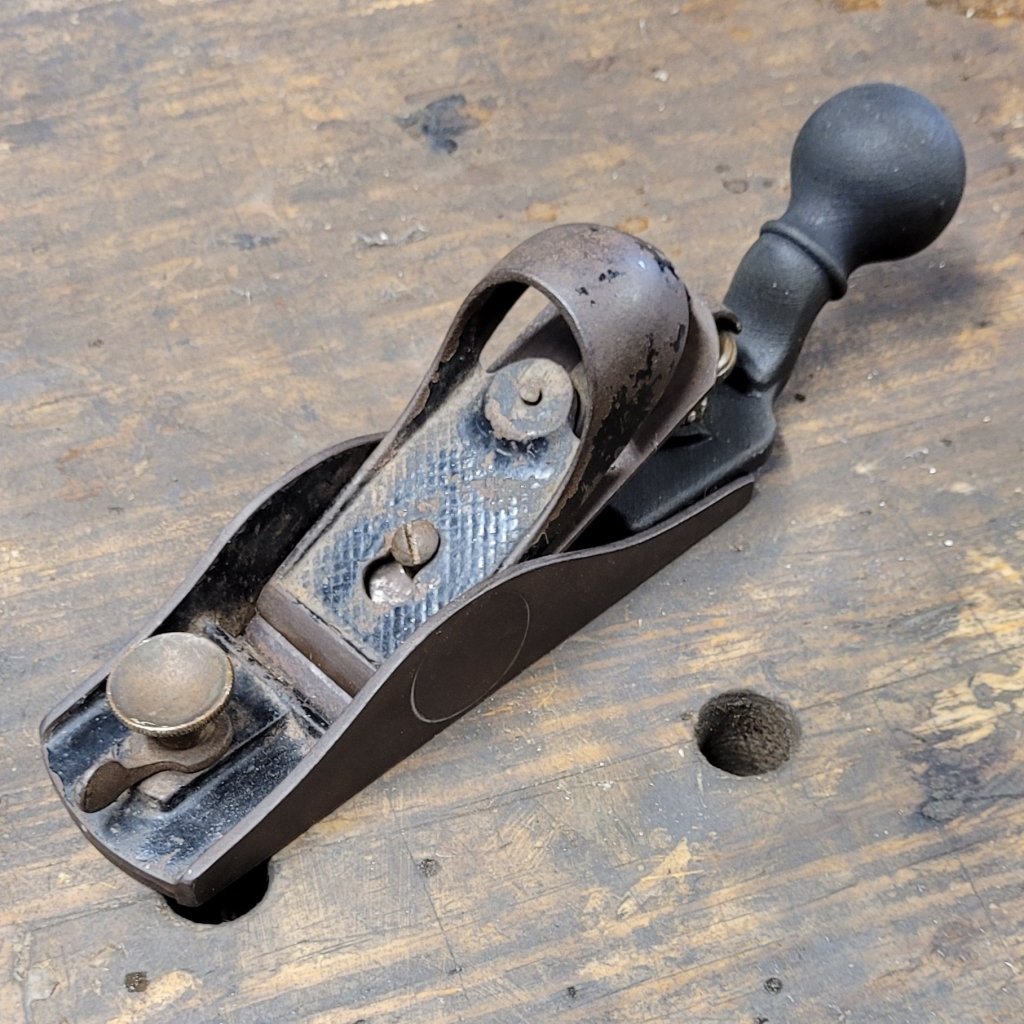
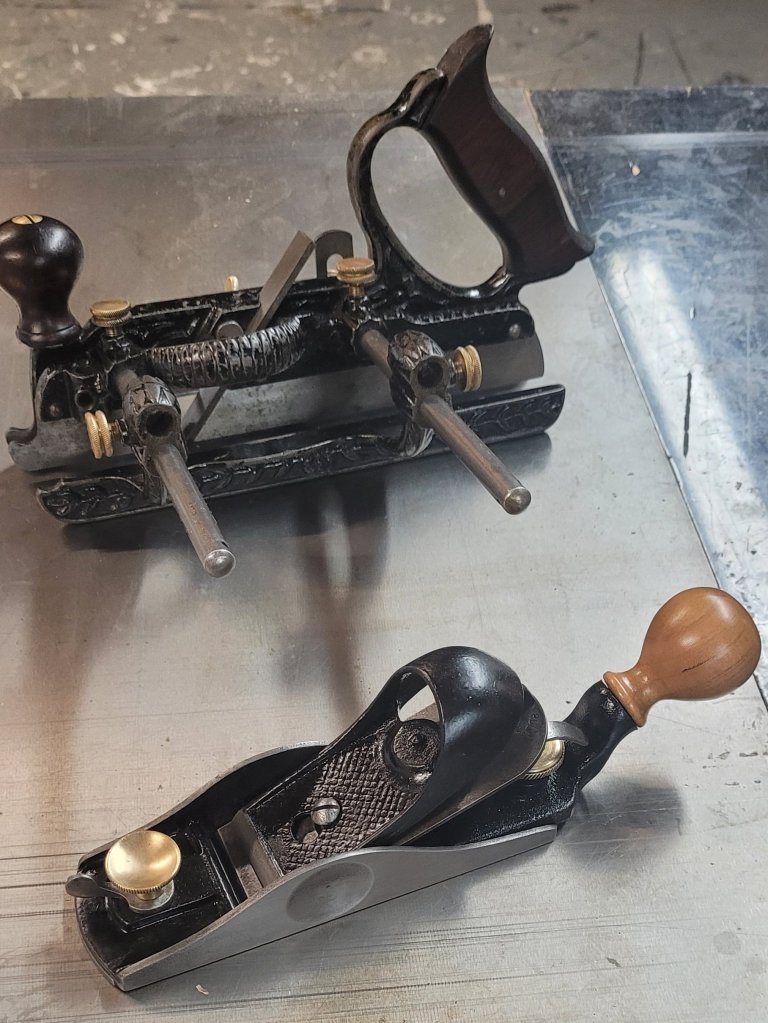
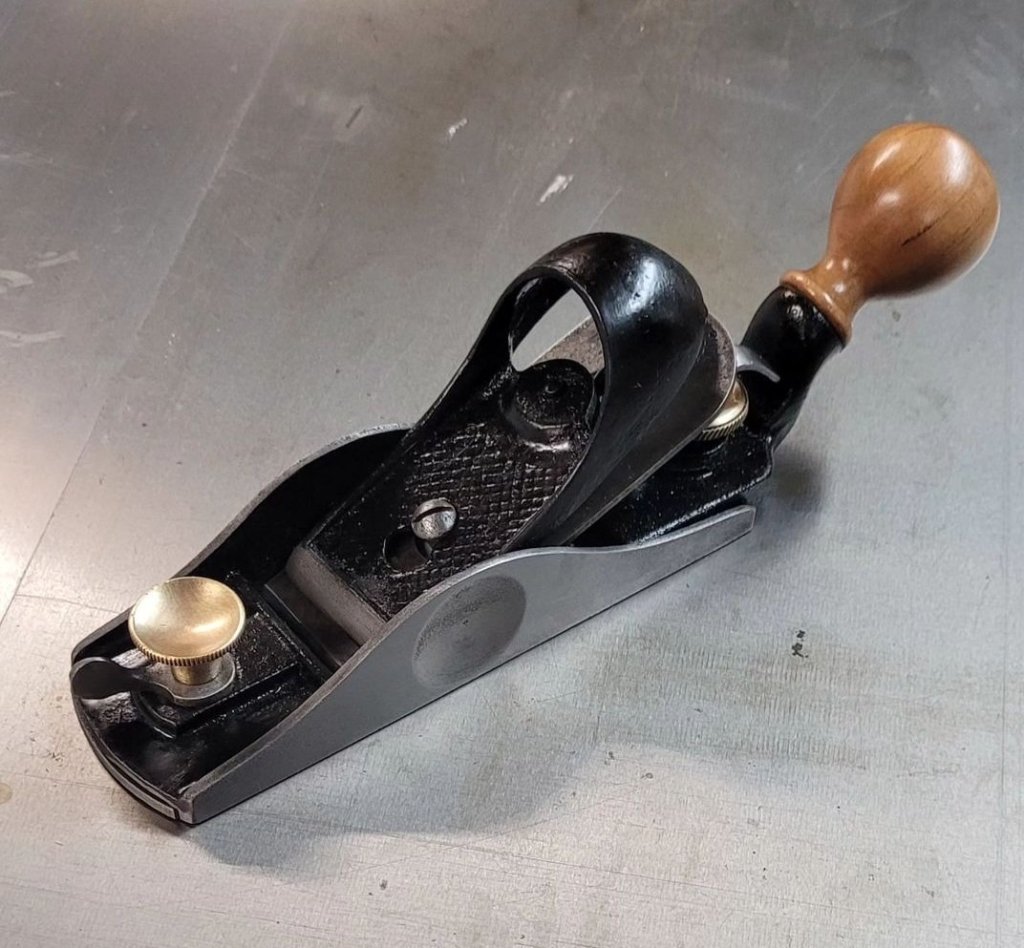
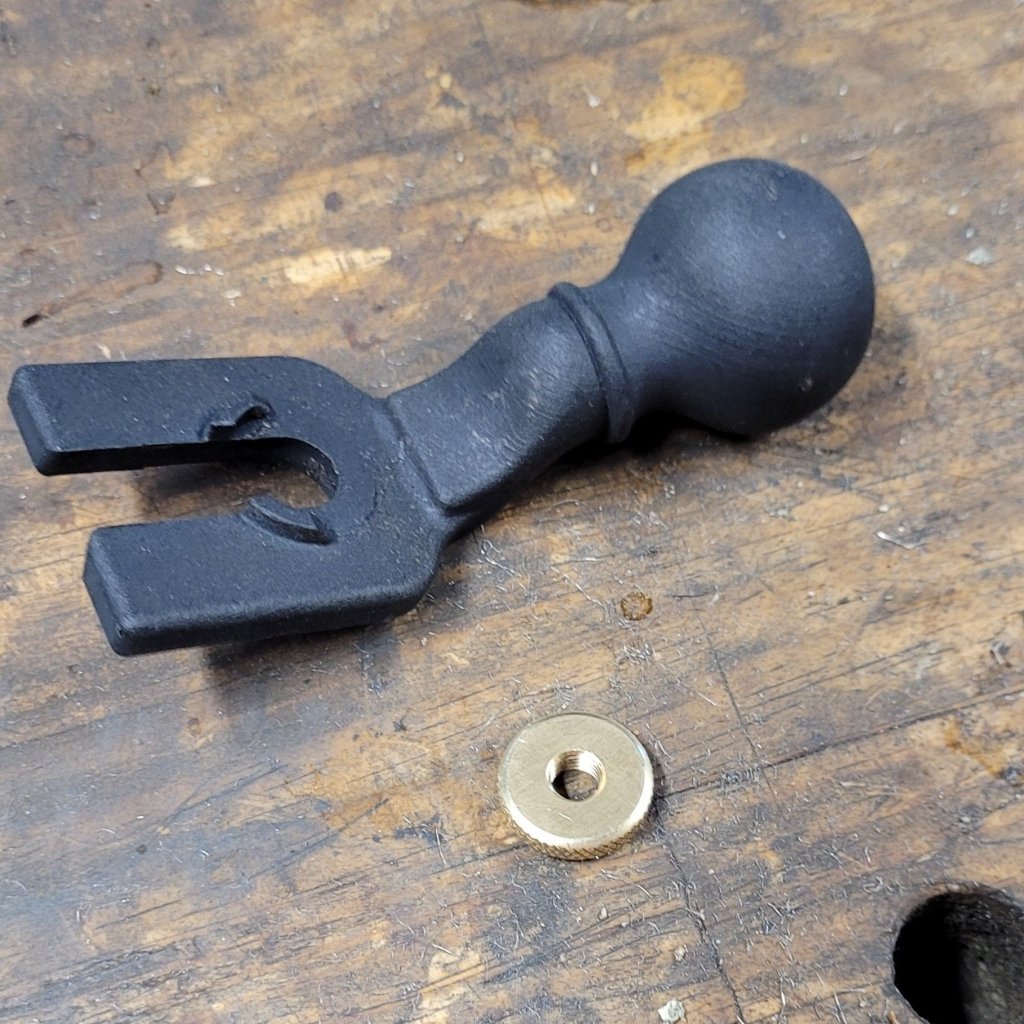
When I bought my Tote Turner a few months ago from Woodyah, I picked up this block tail accessory at the same time. This, like the Tote Turner, is printed on a 3D printer and fits Stanley block planes.

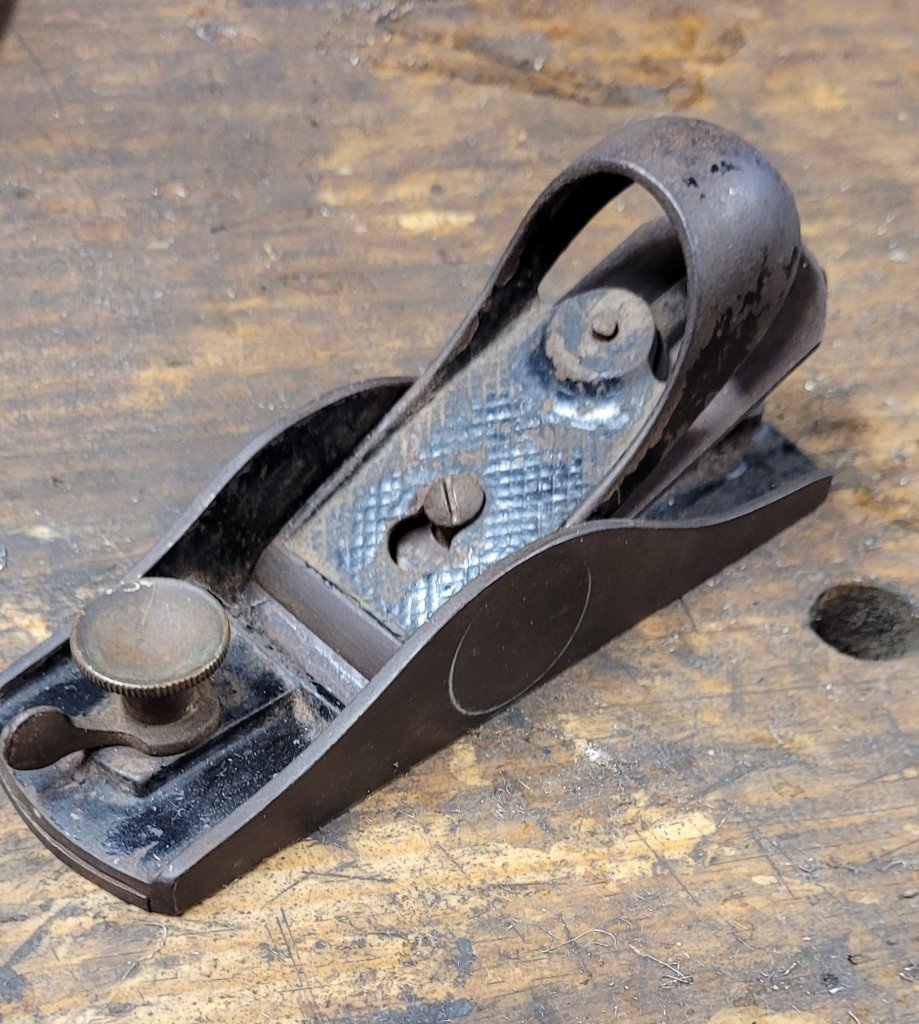
However, I wanted to install it on my Ohio Tool Co O9 1/2 block plane. Similar in size, it’s nearly identical to a Stanley No 9 1/2.

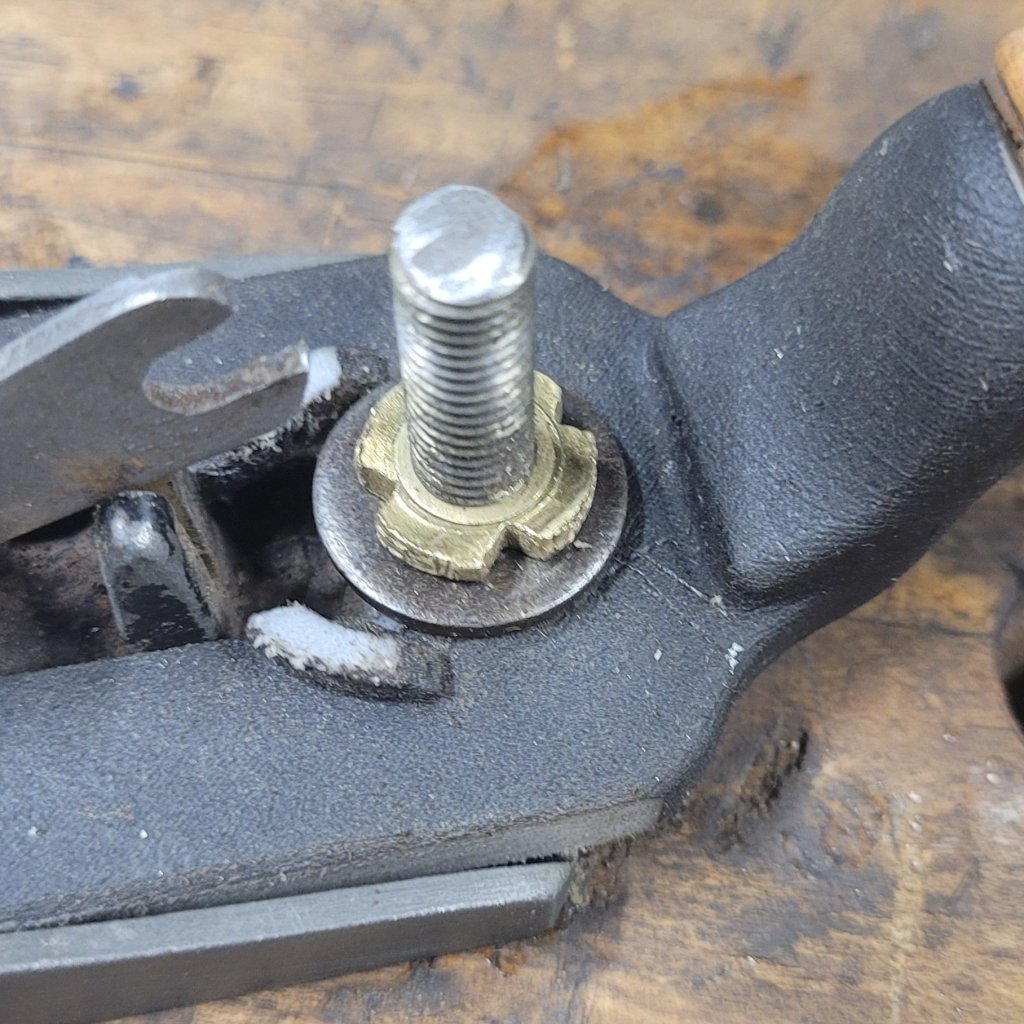
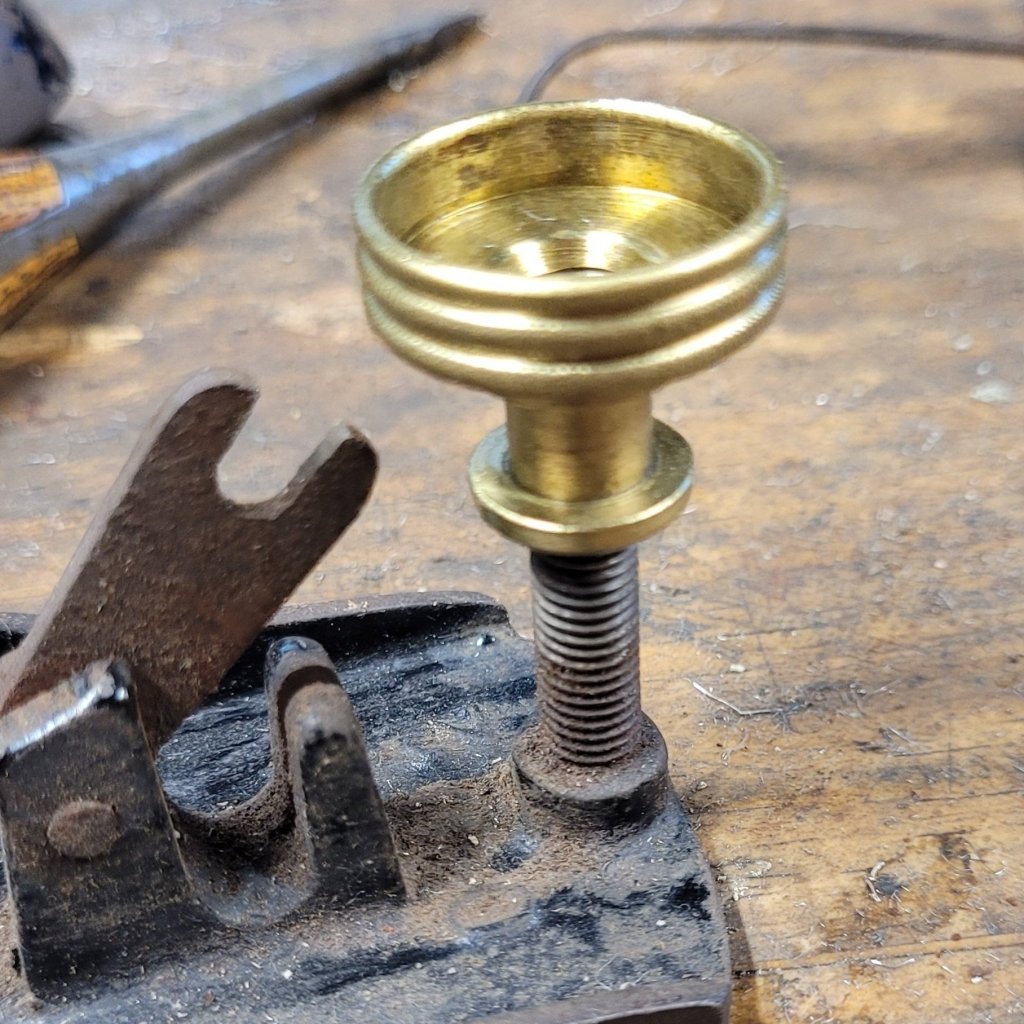
Unfortunately, the threads on my Ohio Tool Co plane are not the same as a Stanley, so the brass hold down piece won’t work. Luckily, I have an old Ohio Tool Co brass blade adjuster wheel in my parts bin, so I cut the very bottom off of the brass wheel and filed four notches in it so I could turn it with a screwdriver.

My little homemade brass hold down screw was a little too small, so I used a washer underneath to hold down the tail better.

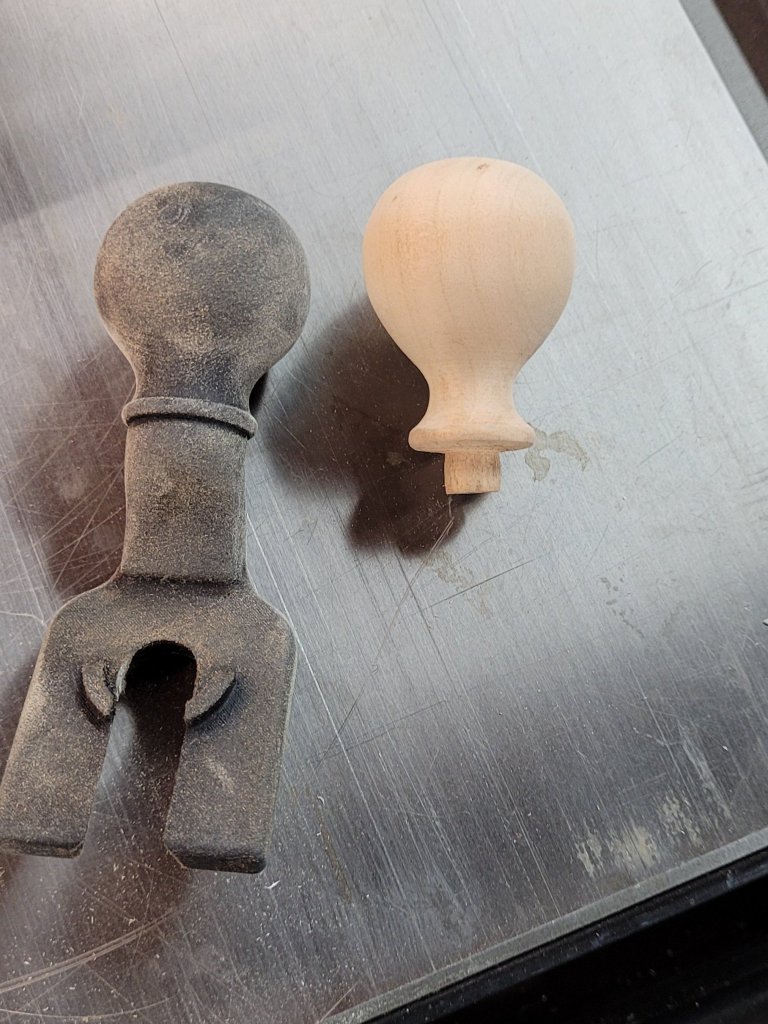
Everything worked, but I was not a big fan of the big black knob to the handle. I wanted something more historic and natural looking, so I decided to make a new knob out of cherry.

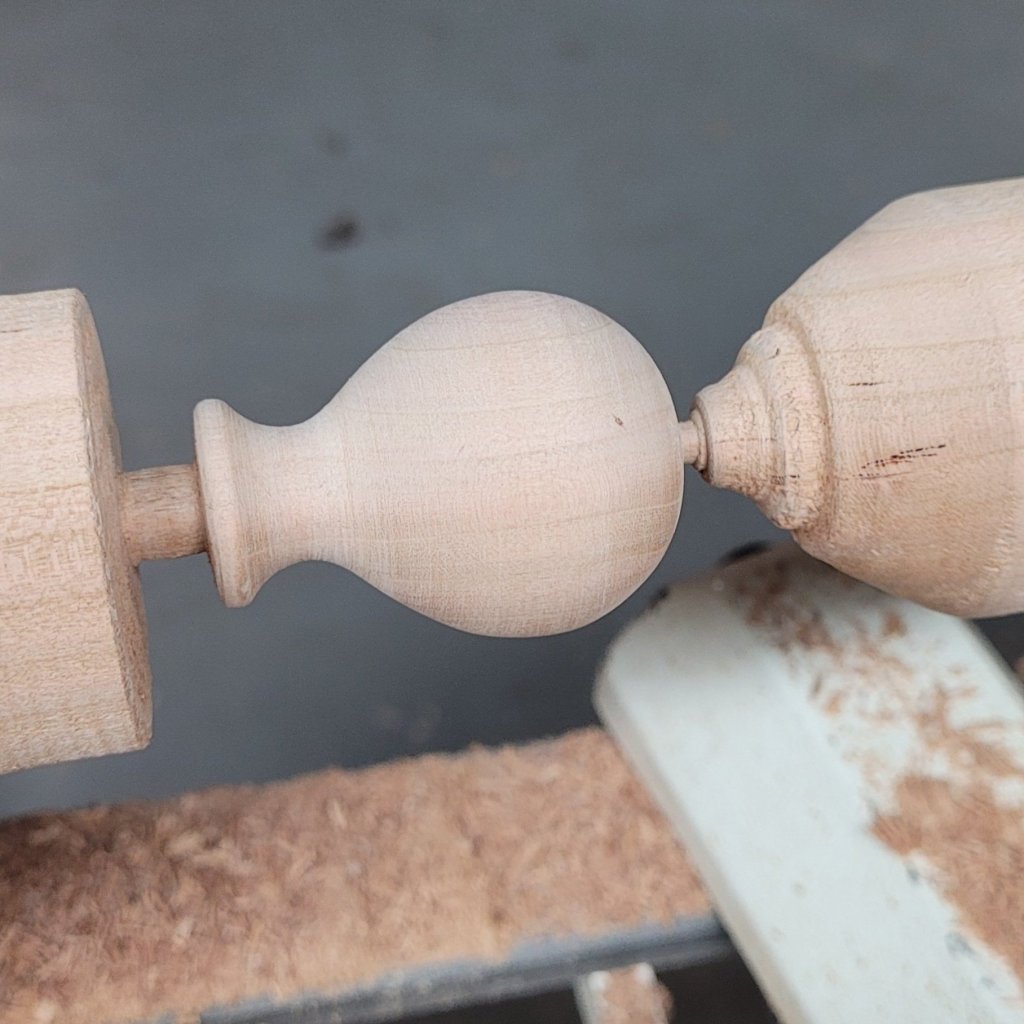
I turned a 2″ diameter knob on the lathe and added a 1/4″ tenon on the bottom.

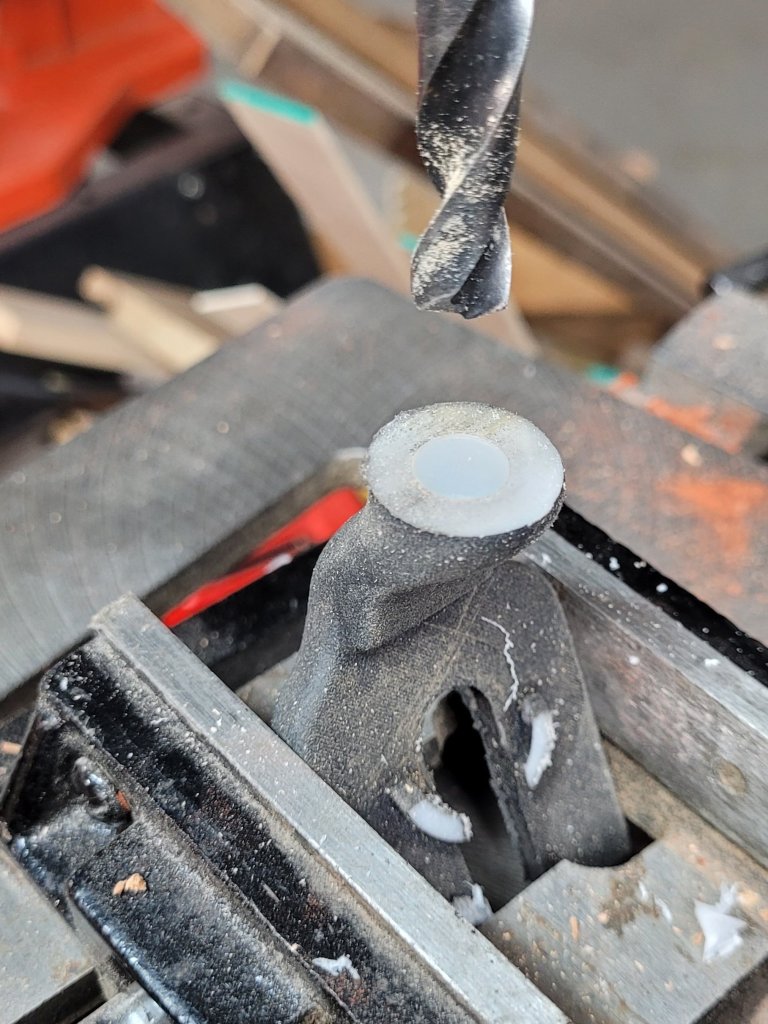
Then I sawed the ball off the tail and drilled a 1/4″ hole to accept the tenon from my wood handle.

After I cleaned the rust off the block plane, I wanted all the parts to match in color and sheen, so I japanned everything during a hot day so I could use the sun as my oven.

After a couple of weeks, when the japanning dried, I put the plane together to see how everything turned out. As you can see, my japanning looks similar to the old Stanley 45 japanning behind it.

The only thing left to do was to sharpen the blade and try it out. The plane works fine. Ironically, the handle doesn’t make the plane cut any better, which begs the question, what was the purpose of them? The one thing I hear is that they were good for craftsmen who have arthritic hands, making the plane easier to hold.

Honestly, I don’t know how often I’ll use this plane as I already have a couple of my favorite block planes that I use, but it’s still a fun plane to own.

Tote Turner

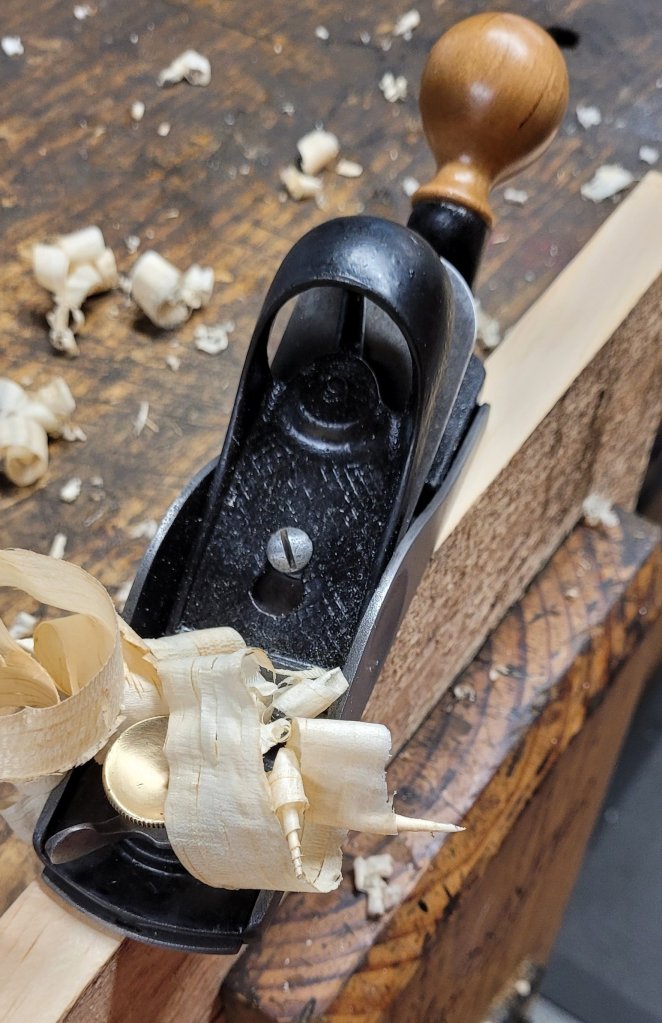
A couple of weeks ago, I received the latest issue of Popular Woodworking Magazine. Inside was a photo of a new fixture made by Woodyah that hit the market. It was a piece of plastic you put on your hand plane to make your tote tilt at an angle for using it as a shooting board plane. I thought it was pretty cool, so I went online and ordered it.

The fixture came in the mail in a few days, and I took a look at it. It’s made with a 3D printer, so it’s made precisely to fit and it comes with its own hardware. You just need to use your original front tote screw to screw the fixture onto your plane in the front. I downloaded the instructions when I bought the fixture, so I knew how to put it on before I received it.

Once everything is attached, the tote feels really comfortable in your hand, and it’s simple to install.

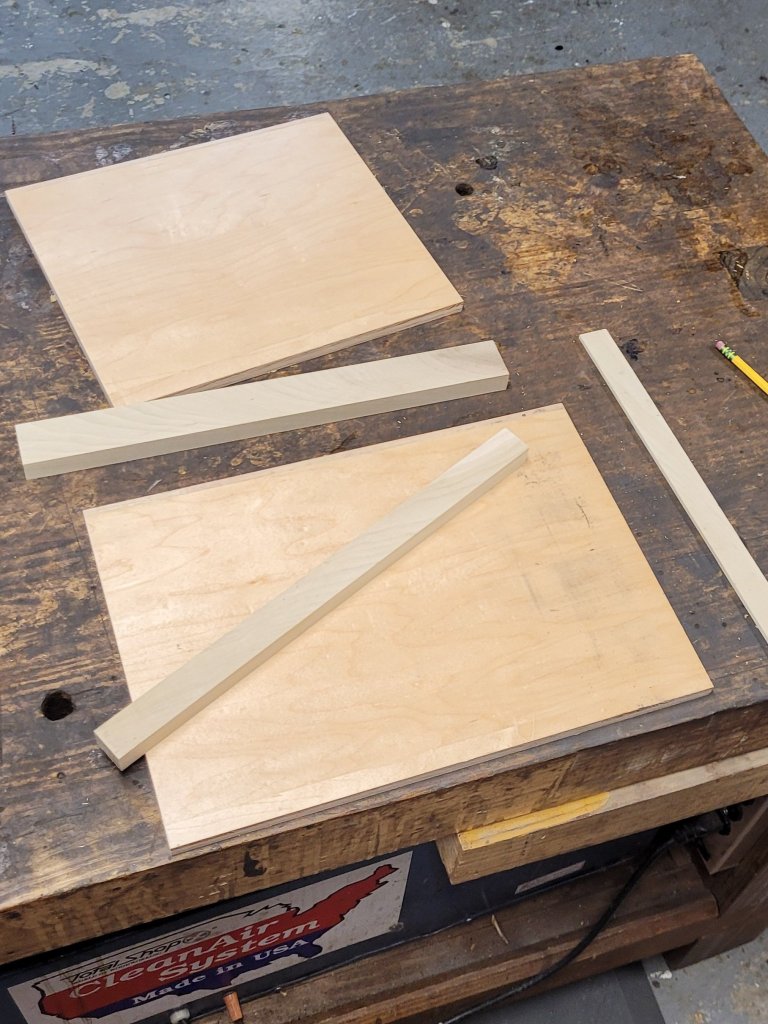
The next thing I needed to do was make a shooting board to go with the plane. I had a scrap of 1/2″ prefinished cabinet grade plywood and some poplar stock (I should have used maple, but I didn’t have any lying around.) The shooting board base is about 10″ wide by 15″ long. The length of the shooting board was simply determined by the overall length of plywood I had, knowing I had to cut it in half.

The parts were pinned and glued together, and I made sure that the side of the plane rode nicely against the thin rail of the shooting board.

Everything worked, but I needed to make sure it was accurate. I checked the squareness of the side of my plane against the bed, and it was just a touch off.

I took the plane over to my oscillating edge sander and fettled the bed first, then flipped it over on its side to fettle the side perfectly 90 degrees.

Taking the plane back to the shooting board, I made sure the bottom of the bed was a perfect 90 degrees to the face of the shooting board.

I then set the blade and tried it out. It worked well with a little bit of practice. Because there is only one point of contact between the side of the bed and the rail, I had to take slow and purposeful strokes to make sure I got a smooth cut. If I tried to use the plane fast, the plane would rock back and forth, producing an inaccurate cut.

I wanted to try shaving miter cuts with the shooting board. At first, I thought about making some sort of fixture that would attach to the base with dowels or some other mechanism. Then I thought to myself not to reinvent the wheel when I saw a plastic speed square in my tool cabinet. I simply placed the square on my shooting board where it needed to be in order to produce a perfect 45-degree angle and clamped it in place with a couple of C clamps. Then I cut a witness mark on the fence and square so I knew where it went the next time I used it.

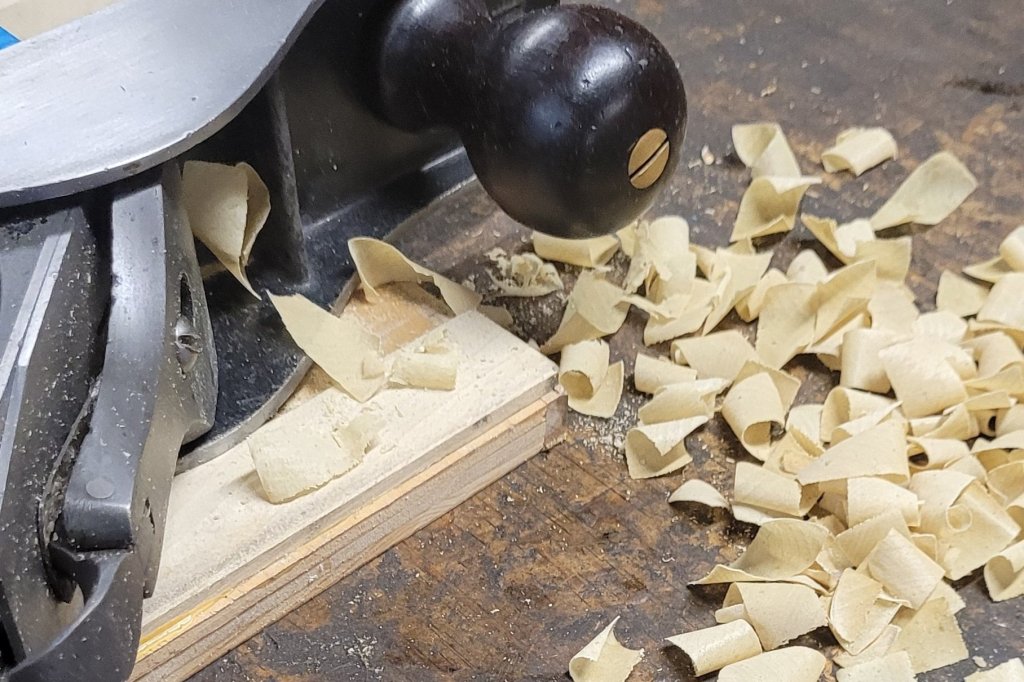
With a sharp blade, the plane was cutting incredibly clean and accurate shavings. They looked like chocolate shavings you find on fancy desserts.

Fortunately, this is the plane that I wrote an article for Quercus Magazine last year, so I’m glad I now have a use for it.

Pennsylvania Secretary

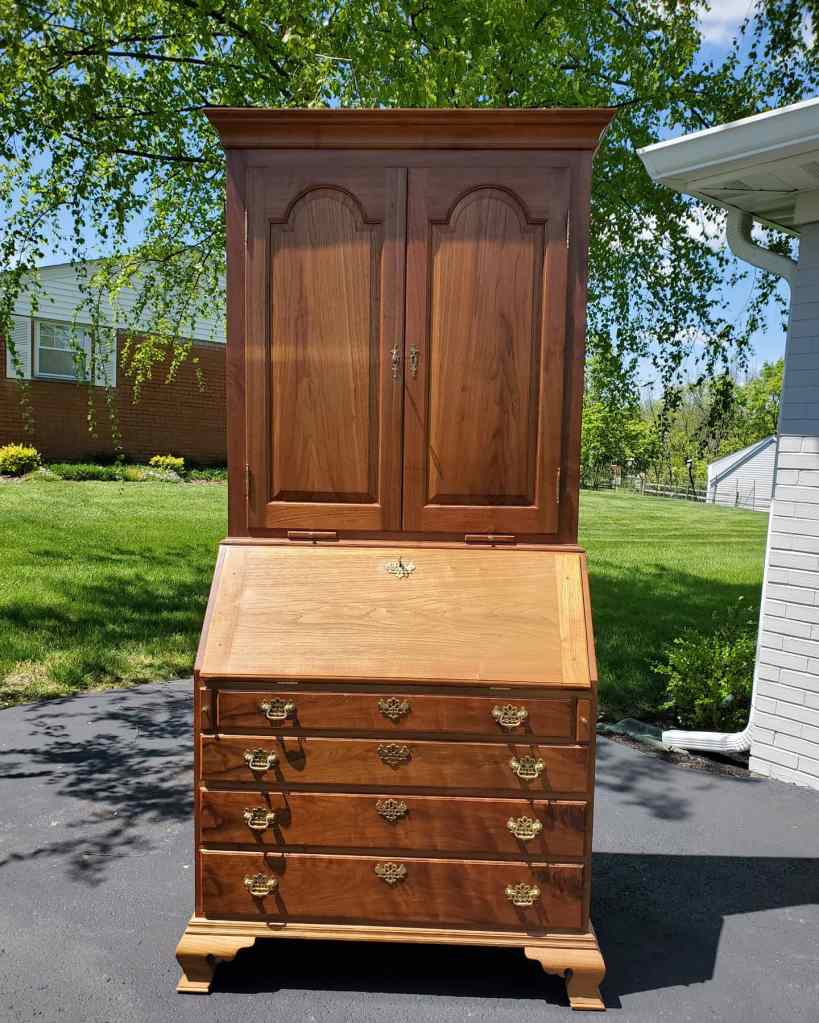
I built this Pennsylvania Secretary back in 2004. It was an article in Fine Woodworking Magazine by Ronnie Bird. I fell in love with the idea of making a piece as complicated as this with it’s intrical cubbies and drawers.

The door panels and desk lid were all sliced from a single piece of 2″ thick walnut. I sliced the wood by hand with my hand saw because the 13″ width of the wood was too wide for my band saw that could only rip stock 12″ wide. I remember it being a major pain the ass.

I used a bread board edge on the lid so that it wouldn’t warp. The joint works well because seventeen years later, the lid is still perfectly flat.

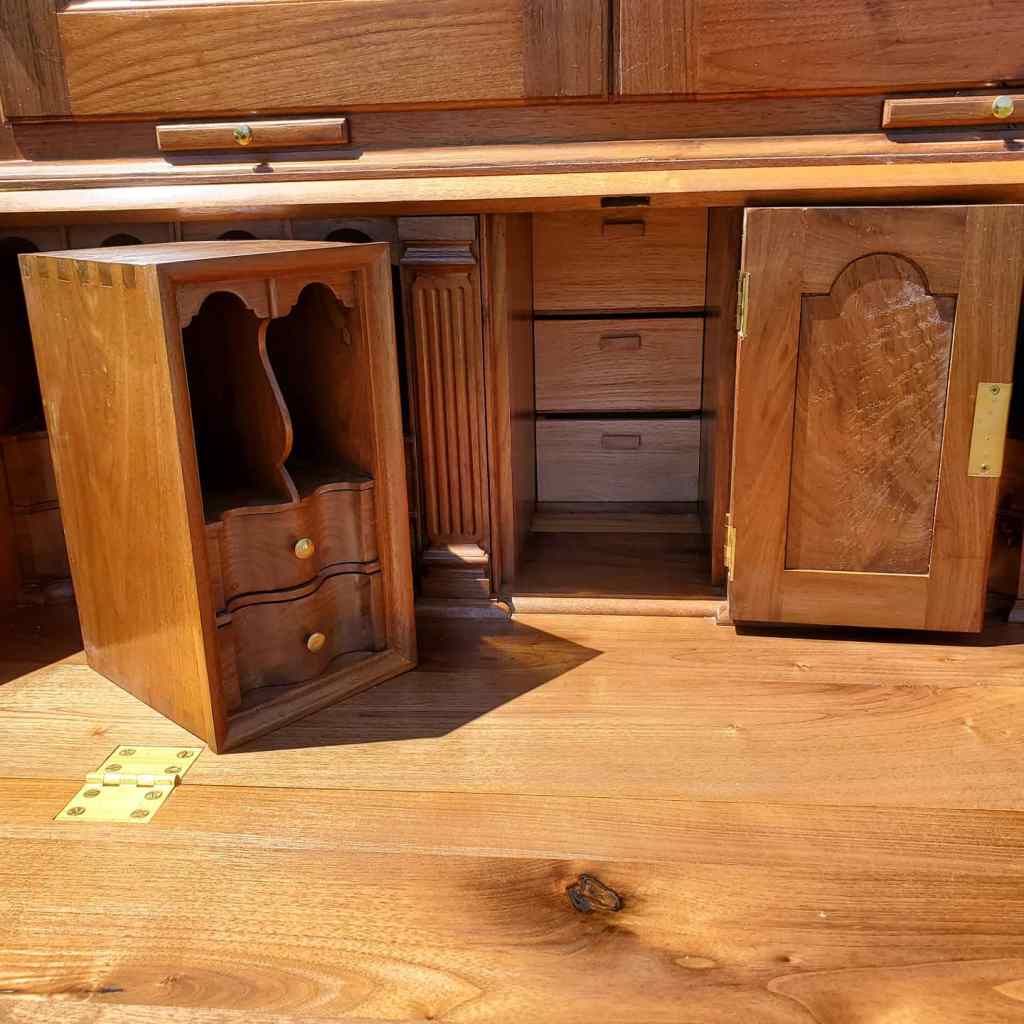
I cut the curvature of the drawers on a band saw and smoothed them with my oscillating drum sander. The panel on the small door was a piece of crotch walnut.

There are a few hidden compartments inside the desk where I kept my silver dollar coins that my Mom gave me before she passed away. The columns slide open to keep important documents but I never stored anything in them.

The drawer fronts were sliced from a single piece of curly walnut that I laminated onto a walnut substrate for each drawer. I cut the cabriolet feet on the band saw and then glued each side together.

The lid opens up to act as a working desk but it actually sucks as a desk. The lid is too high off the ground for my liking.

I built the sides and case with 7/8″ thick walnut with red oak secondary wood. I used red oak because I had a boatload of it when I bought a bundle of it from the company I used to work for. They sold it as oak fence boards so the quality of the wood was not the best. I didn’t care because it was seconday wood but it made the piece extremely heavy. I should have used white pine or poplar instead.

I used plywood on the back and drawer bottoms because the expense of making it was getting out of hand. I paid over $600 for all of the brass hardware and the walnut cost me over $800.

As nice as this piece is, it’s been used as a junk drawer all these years as we just store a bunch of crap in it. I used to store my cd collection in the top cabinet but I sold a lot of them a few years ago on half.com when I was uploading my collection into a digital format.

The secretary has been sitting in our garage ever since we got hit with the tornado last year. After the tornado, we had to take all of our furniture out of the house and into pods in our driveway while our house was being put back together. When everything was done, we never brought it back into the house because it’s too big and heavy to move.

I currently have it for sale on Facebook Marketplace for $1800 but I’ll be surprised if anyone buys it. It’s not an antique so it doesn’t have any value in that way and no one buys big pieces of furniture like this anymore. I may have to donate it or just keep it in the garage.

The secretary was fun to make, but I wouldn’t make it again. All it’s good for is to take pictures and show people “look what I made.”

UPDATE 7-16-21. After zero bites on Marketplace for weeks, I lowered to $500. We’ll see if it sells.

UPDATE 8-20-21 it never sold.

My $1.00 Plane

A couple of weekends ago, I went on the World’s Longest Yard Sale on US 127 looking for old tools and other things to sell. Sunday, I ran across a guy selling junk just north of Cincinnati and saw this plane on a table. The guy told me that his prices were negotiable so I asked what he wanted for this plane. He told me $2.00, but I countered that I would give him a buck for it and he accepted. I really didn’t need it, but I wanted to buy something during the day. The blade was marked Van Camp which I believe was a hardware store back in the day however, the plane was more likely made by the Sargent Tool Company.

20180805_151950.jpg

Every time I restore a tool, I start by sticking the parts in a tub of water with a cup of citric acid. I let the parts soak for about an hour and then wipe them clean once I take them out of the solution.

20180811_161149.jpg

I took the time to fettle the bed since the plane’s body was so small. Honestly, I don’t think the bed was that bad to deserve to be fettled, but I was in the mood. I went through a series of wet sand paper grits, from 220 to 500 to 1000 grit.

20180811_162631.jpg

You can see the smoothness of the bed when shown through the light. The bed doesn’t have to be completely free of pitting, just flat enough from front to back.

20180812_165832.jpg

After the bed was fettled, I soaked all the parts of the plane with my custom solution of mineral oil, orange oil, and melted bees-wax.

20180811_163717.jpg

Next, I sharpened the blade by using my Tormek sharpening system and a set of water stones. I was able to shave the hairs on my arm with this blade.

20180812_165801.jpg

All tuned up, the plane takes nice curly shavings. Not bad for a buck.

20180812_180847.jpg

For years I used this squirrel tailed plane. It works okay but the shavings are not that clean and it’s a pain in the ass to set properly with the screw and cap.

20180812_165945.jpg

You can see the difference when you flip the two over. The area of the mouth is a lot tighter on my buck plane than the squirrel tail plane. The tight mouth keeps the wood fibers pressed down just until they hit the edge of the blade giving me a nicer shaving.

20180812_170008.jpg

My new plane still fits nicely in the holder where my old squirrel tailed plane sat. Maybe I should have given the guy $2.00. haha

20180812_180731.jpg