An Amazing Opportunity

Sometimes life gives you an opportunity you didn’t know existed.

My friend Tim called me last summer saying that he cuts the grass for our old Junior High Shop Teacher, Mr Morganroth, and he had some old tools he wanted to sell. Mr Morganroth was our shop teacher in the seventh grade. In class, we would make swordfish and ducks out of a piece of walnut, then attach painted metal for the fins and the wings. The class was the basics of woodworking, where we learned the simple steps of using surform files, grades of sandpaper, and cutting things out on the band saw. These simple steps got me hooked on woodworking, and I started to slowly build a shop in my parents’ basement when I was in high school.

Mr Morganroth said he was moving to Tennessee and wanted to get rid of some old tools he had been collecting asking if I would be interested in them. I told Tim I was but wanted to know what he had beforehand, so he sent me a few pics from his phone.

Tim sent me the photos, and I took a close look at them and I said I was interested, but I don’t want all of them since a lot were just common tools. Unfortunately, Morganroth wanted to sell them all at once, so I just let it go and forgot about it.

Then, a few weeks ago, Tim called me again and said Morganroth really wanted to get rid of them, so I contacted him directly and asked him to send me better pictures of what he had. Morganroth said he wanted to sell everything but the cooper’s tools as they were his grandfather’s.

Understanding that, we went back and forth for a few days, and I gave him an offer for the tools he wanted to sell (I really had my eye on the slick at the time). He responded that he would think about my offer. 

Then last week he got back with me and said he’ll include the cooper’s tools as well and he’ll also throw in some woodworking books he had. I made him an offer higher than the first one I gave him, and he agreed to the price.

Friday, I went over to his house and picked up the tools. He had them hanging in his house for 30 years. He said his kids have no interest in them as neither of them work with wood, so he was glad they were going to a good home.

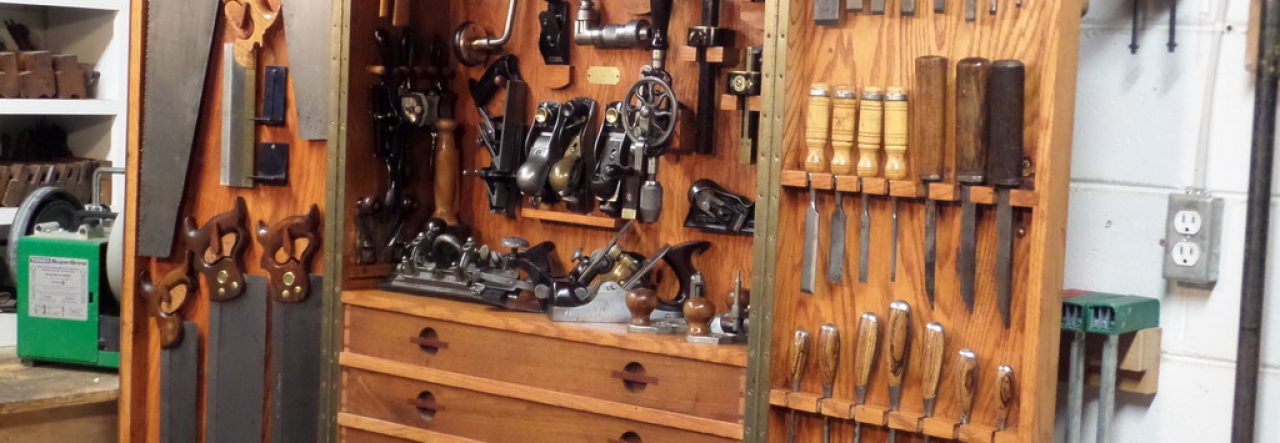
I brought them home and clipped them off the barn wood they were attached to to take a better look at them. The tools on the bench are the tools that his grandfather used when coopering. I plan on keeping them together as a set. I’m even considering making a tool chest for them.

It’s an incredible honor to buy old tools from the man who got me started in woodworking over 40 years ago.

Cool Little Workbench

My wife, Anita, and I were antiquing in Madison, IN, yesterday when I stumbled upon this little workbench. 

It was cute little Sloyd style workbench from the 1800s. I couldn’t believe how small it was, so I imagine it had to be built for a little kid.

It had to be about 3′ 6″ tall by 5′ long. What was so amazing about the bench was how well worn out and used it was. The child that worked on this bench used it a lot as the top is full of tool marks.

Obviously, it could have been for multiple children in a school shop class, but I never had a bench like this in elementary school, let alone a shop class.  Can you imagine being the kid lucky enough to work on this bench?

No, I didn’t buy the bench as I couldn’t afford the $350.00 price tag as I’m too cheap. Plus, I didn’t want to drag it home because I had no place to put it. But it’s definitely the coolest old workbench I’ve ever seen.

Tote Turner

A couple of weeks ago, I received the latest issue of Popular Woodworking Magazine. Inside was a photo of a new fixture made by Woodyah that hit the market. It was a piece of plastic you put on your hand plane to make your tote tilt at an angle for using it as a shooting board plane. I thought it was pretty cool, so I went online and ordered it.

The fixture came in the mail in a few days, and I took a look at it. It’s made with a 3D printer, so it’s made precisely to fit and it comes with its own hardware. You just need to use your original front tote screw to screw the fixture onto your plane in the front. I downloaded the instructions when I bought the fixture, so I knew how to put it on before I received it.

Once everything is attached, the tote feels really comfortable in your hand, and it’s simple to install.

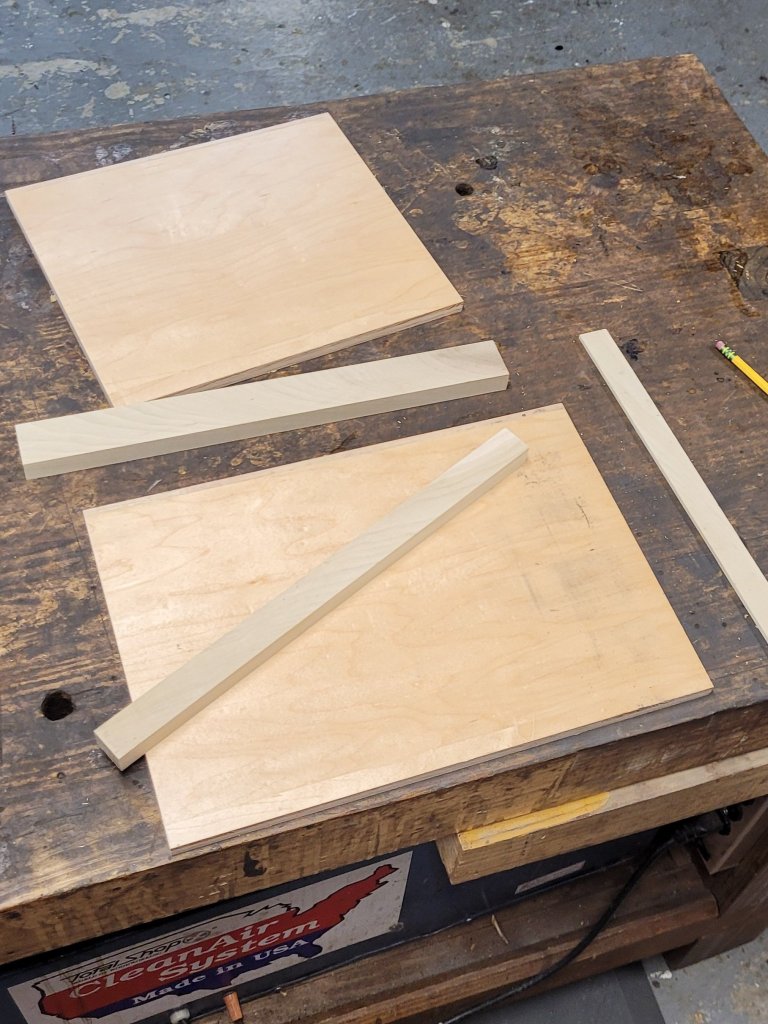
The next thing I needed to do was make a shooting board to go with the plane. I had a scrap of 1/2″ prefinished cabinet grade plywood and some poplar stock (I should have used maple, but I didn’t have any lying around.) The shooting board base is about 10″ wide by 15″ long. The length of the shooting board was simply determined by the overall length of plywood I had, knowing I had to cut it in half.

The parts were pinned and glued together, and I made sure that the side of the plane rode nicely against the thin rail of the shooting board.

Everything worked, but I needed to make sure it was accurate. I checked the squareness of the side of my plane against the bed, and it was just a touch off.

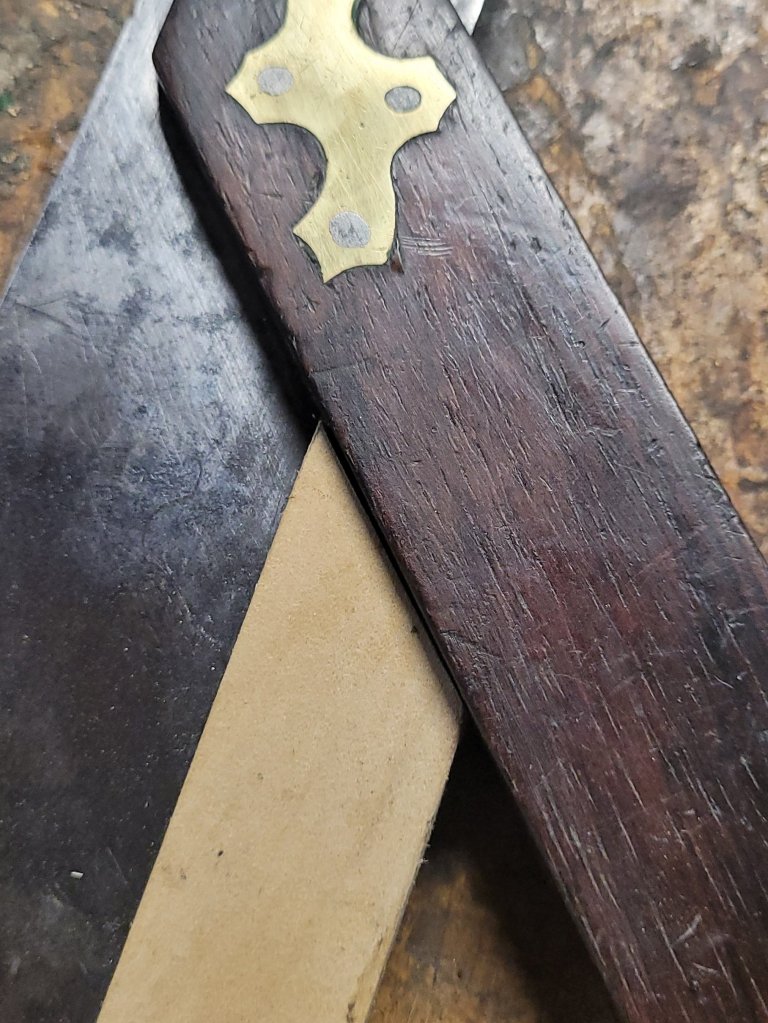
I took the plane over to my oscillating edge sander and fettled the bed first, then flipped it over on its side to fettle the side perfectly 90 degrees.

Taking the plane back to the shooting board, I made sure the bottom of the bed was a perfect 90 degrees to the face of the shooting board.

I then set the blade and tried it out. It worked well with a little bit of practice. Because there is only one point of contact between the side of the bed and the rail, I had to take slow and purposeful strokes to make sure I got a smooth cut. If I tried to use the plane fast, the plane would rock back and forth, producing an inaccurate cut.

I wanted to try shaving miter cuts with the shooting board. At first, I thought about making some sort of fixture that would attach to the base with dowels or some other mechanism. Then I thought to myself not to reinvent the wheel when I saw a plastic speed square in my tool cabinet. I simply placed the square on my shooting board where it needed to be in order to produce a perfect 45-degree angle and clamped it in place with a couple of C clamps. Then I cut a witness mark on the fence and square so I knew where it went the next time I used it.

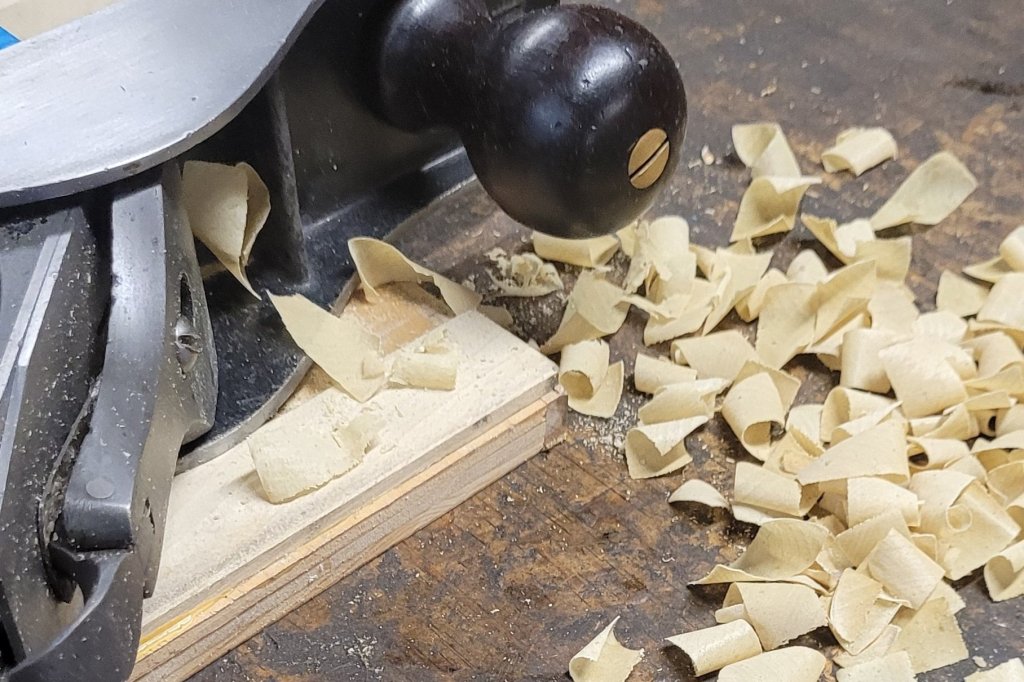
With a sharp blade, the plane was cutting incredibly clean and accurate shavings. They looked like chocolate shavings you find on fancy desserts.

Fortunately, this is the plane that I wrote an article for Quercus Magazine last year, so I’m glad I now have a use for it.

Rustic Coffee Table

Well, I finally built something! It’s been over a year since I built any type of piece of furniture. Mainly, because my new job keeps me busy during the week so the only time I have time to work in the shop is on the weekends.

My wife bought an old bookcase on Marketplace last year. She originally wanted to use the bookcase in her booth, but it was in such poor shape that she decided that she wanted me to take it apart and make a coffee table with the wood instead. So, I disassembled it and removed all of the cut nails from the boards.

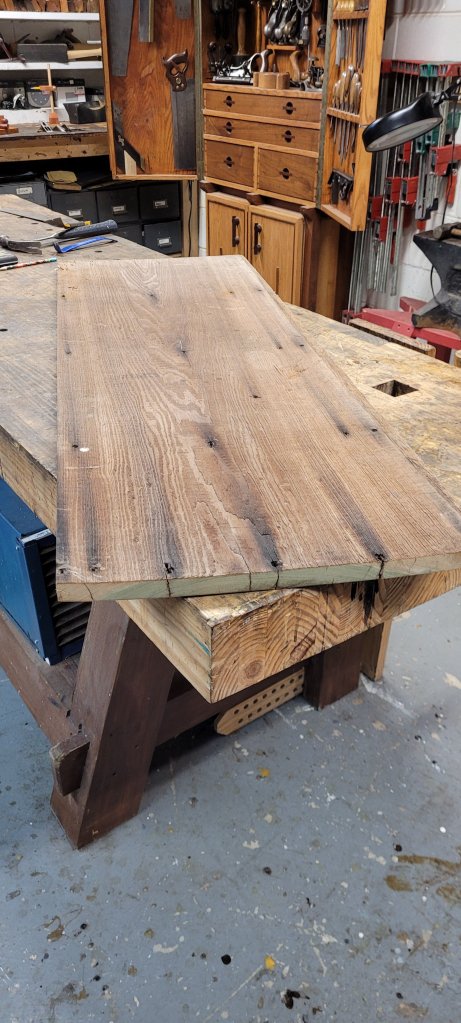
The wood was poplar and in decent shape, just dirty and covered in paint, so I sanded the surfaces clean with my random orbital sander. Some of the boards were nearly 20″ wide.

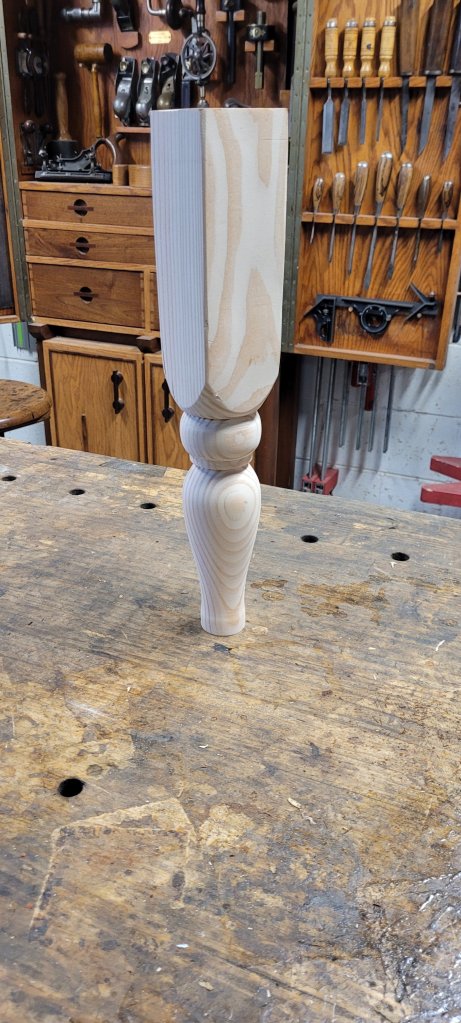
We originally wanted to use an old 4 x 4 to make the legs but came up empty at our local reclaimed wood supplier. So I ended up using a douglas fir 4 x 4 from Home Depot and turned four legs from it.

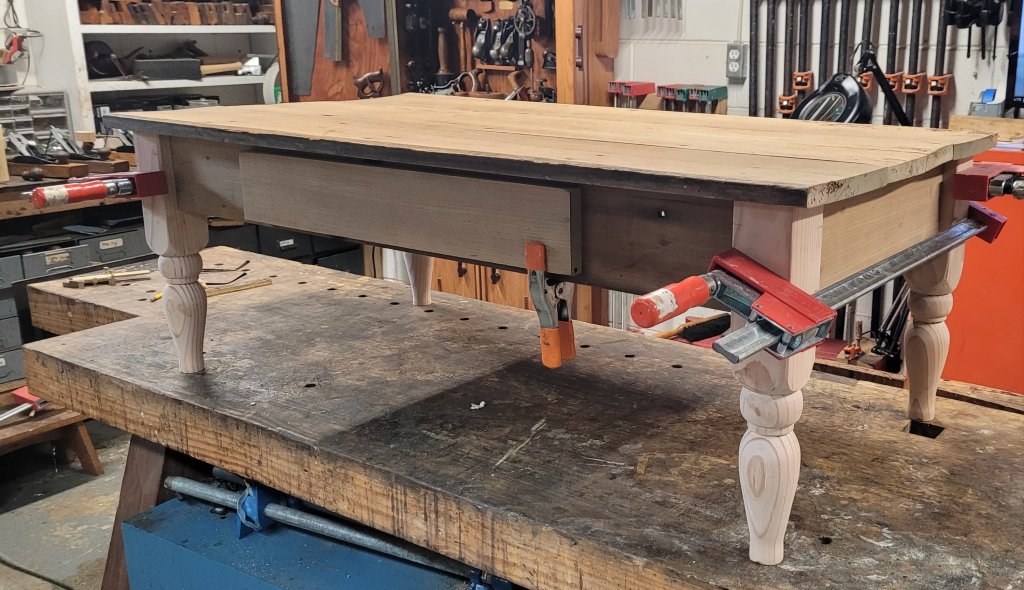
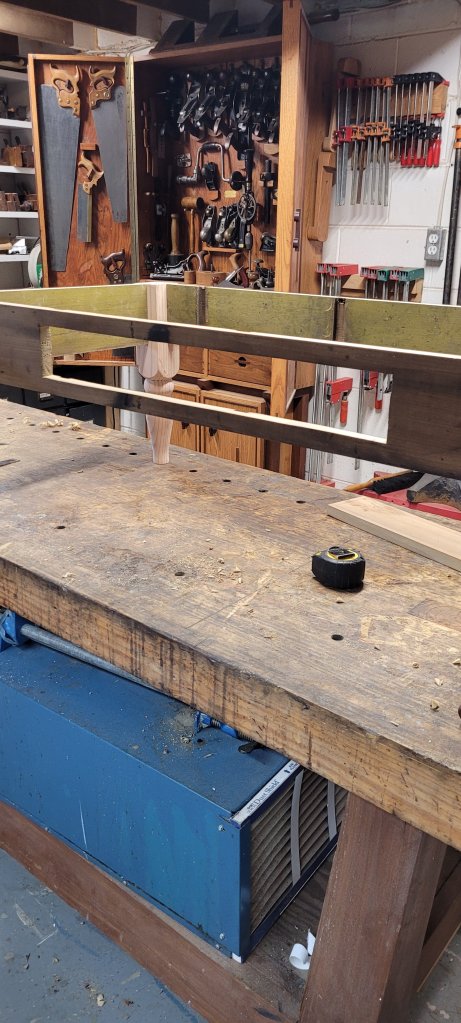
Assembling the table was super simple. I used Dominoes to attach the sides to legs and the top pieces were going to be screwed down from underneath.

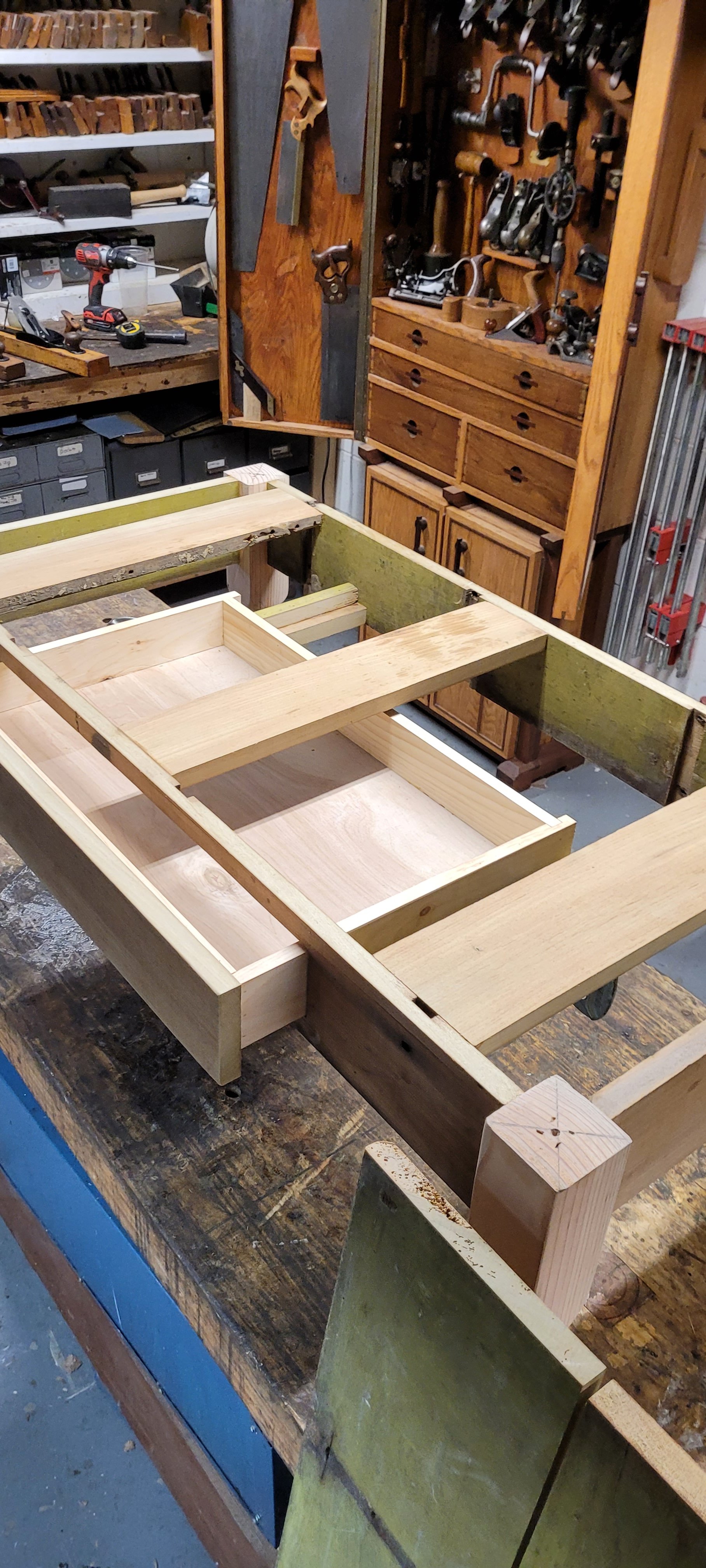
I opted to put a drawer in the front of the table so I cut out a rectangle hole in front with my jig saw. Then, I made a drawer with frame work with some scrap pine. The drawer face was glued and pinned onto the drawer box.

After the drawer was made and fitted well, I attached the top pieces and brought it upstairs into the living room. It was a fun, simple build, and it felt good to get back in the shop and build something.

I Did It! Quercus Magazine

Well, I finally wrote an article for a woodworking magazine. It’s called Quercus and it’s based in the UK. I was asked by the editor Nick Gibbs through Instagram if I would be interested in writing an article about how and why I restore old planes. I jumped at the chance as writing for a woodworking magazine has always been a dream of mine.

I restored an old Stanley No 5 plane and documented my progress, then wrote out my article the same way as I write a blog, then sent him the file along with the pictures. It took a few months for the article to get published but, I’m in the magazine along with Paul Sellers.

When I received my copy, I was amazed by the content that was in it. The magazine features woodworkers from all around the world and their process of how and why they work with wood. There’s not too many “How To” articles and the magazine primarily focuses on hand tool woodworking so, don’t expect an article about “Building the Perfect Router Table” in it. The only other magazine that I would compare to it would be Mortise and Tenon magazine.

This is the plane that I restored for the article. I was planning on selling it, but now it carries sentimental value to me. I asked Nick if he would like for me to do another article but he hasn’t gotten back to me yet. This may be a one-off, but maybe not. Maybe I could be a constant contributor to the magazine. Wish me luck.

Wooden Router Plane

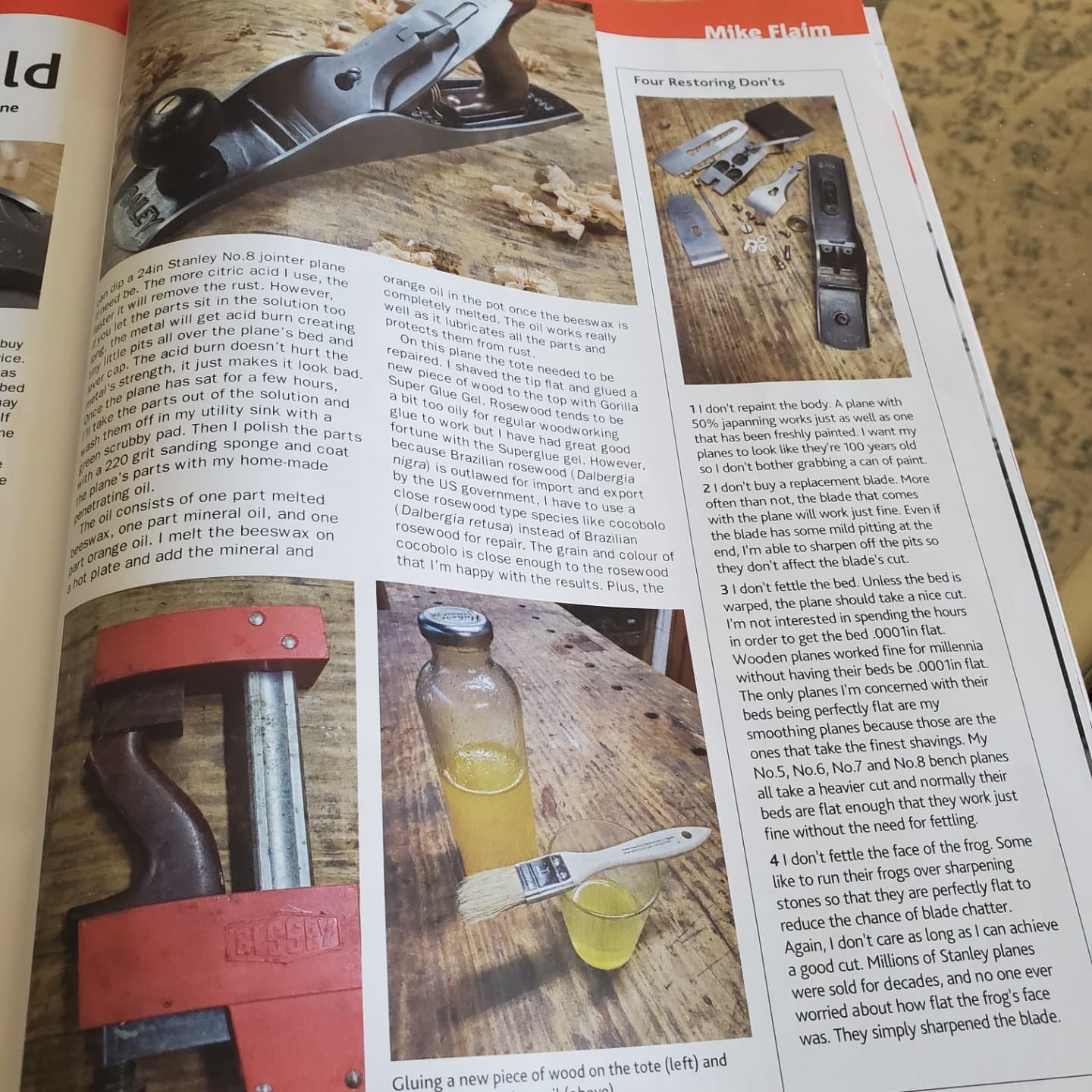
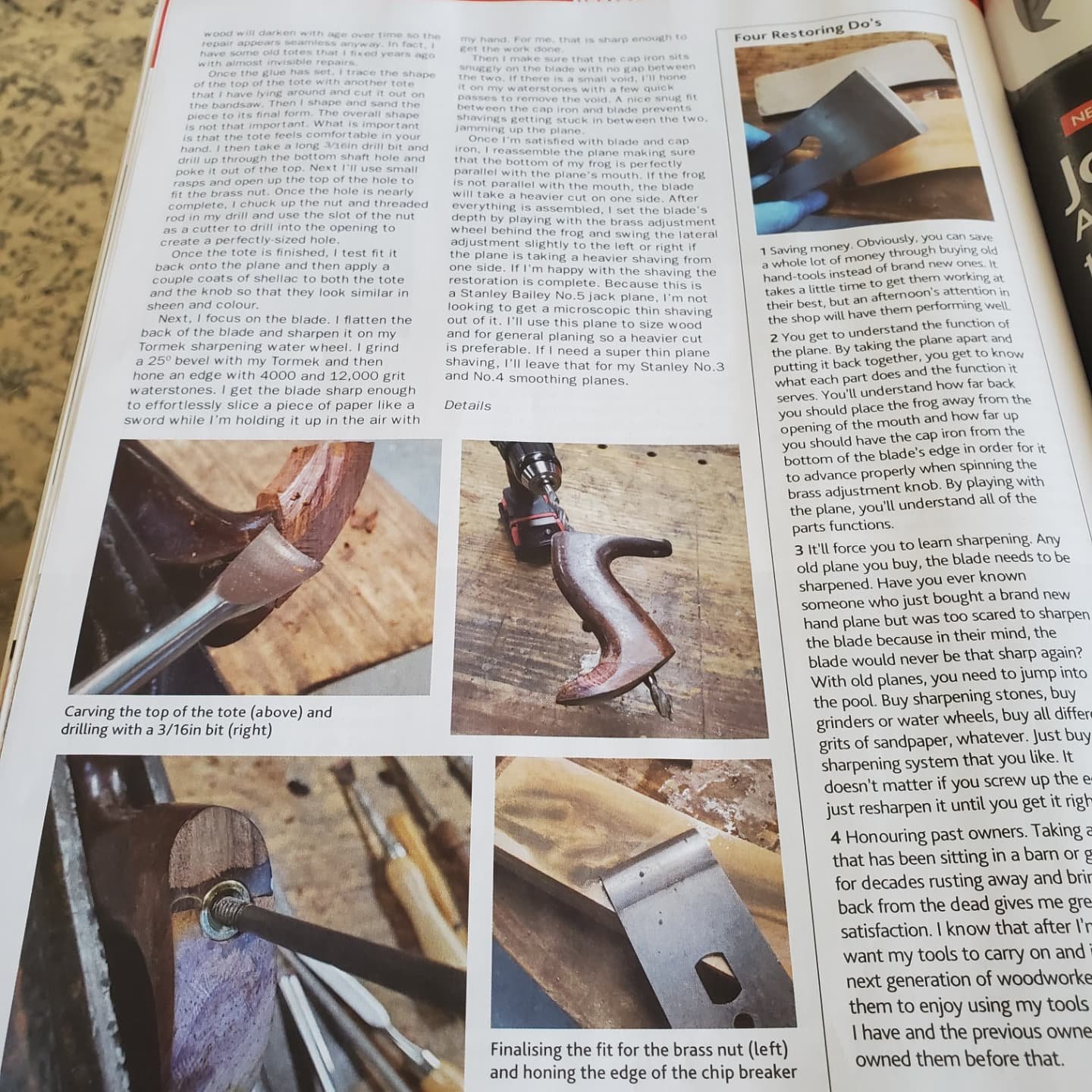
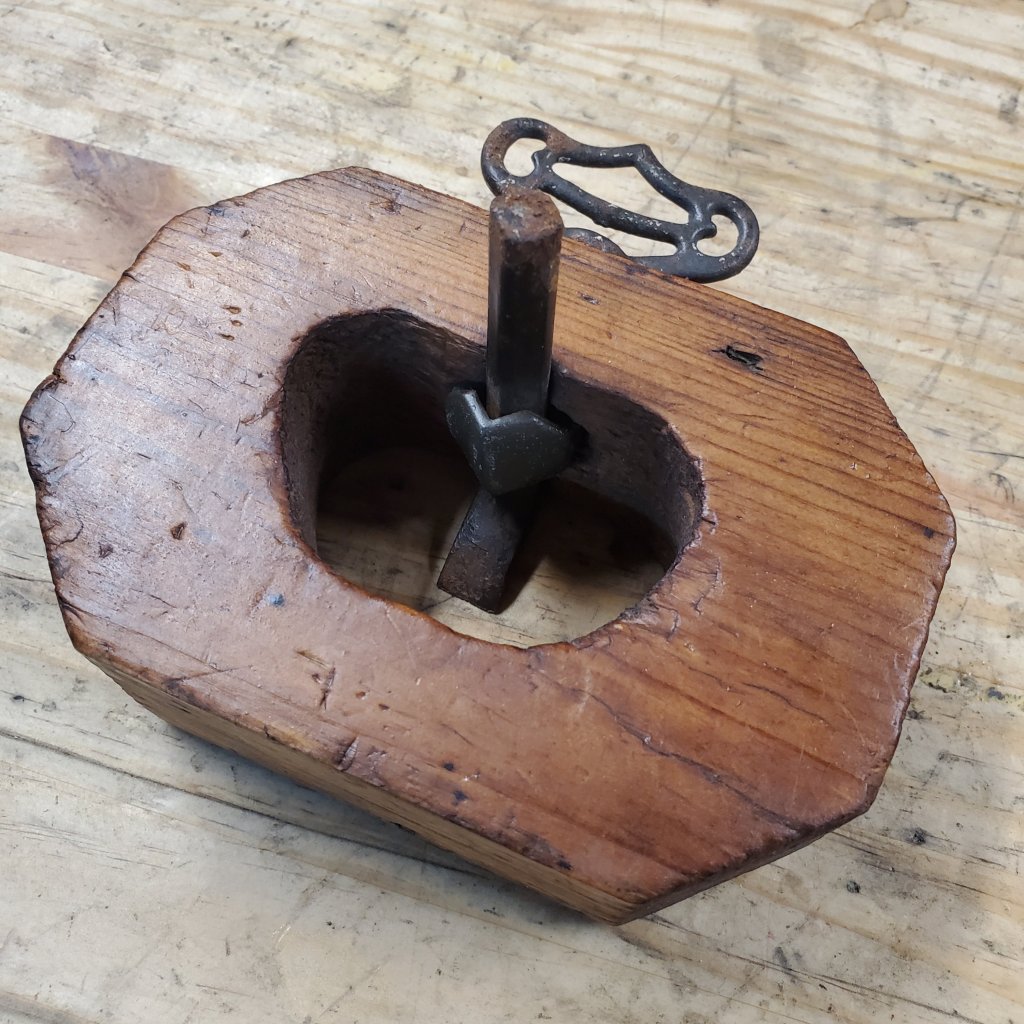
Several months ago, I bought an old wooden router at an antique store for $20. The price tag said it was a Japanese woodworking tool. I guess it could be if a Japanese guy used it. Looked like a home made wooden router plane to me. I bought the tool simply for the hardware, and the Stanley router bit it that came with it.

I search online and came up with a wooden router plan and printed it out. Then I measured, drew, and bore the three holes for the body on a piece of 2″ thick cherry.

A few minutes on the band saw I had the new body of the router.

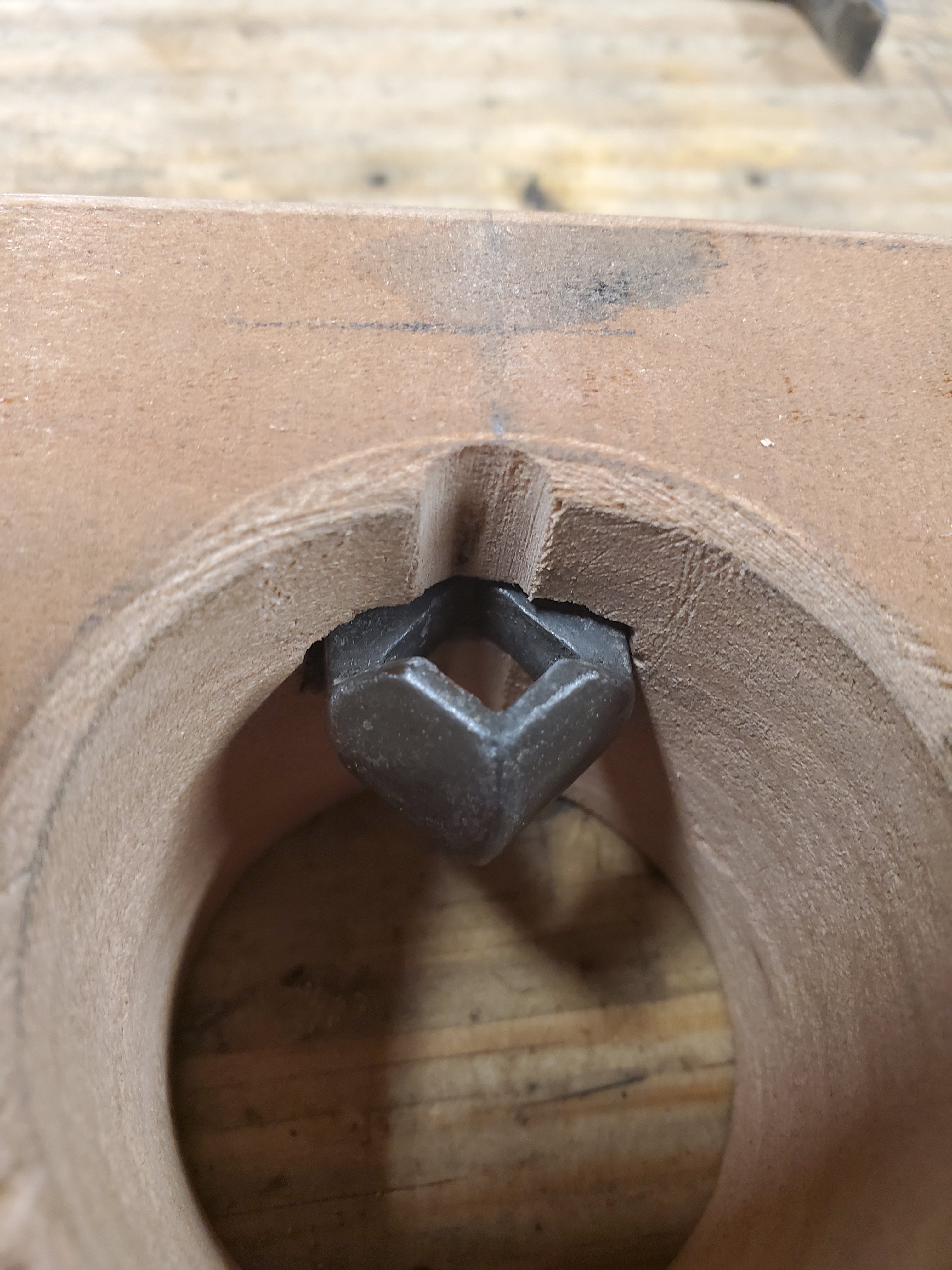
The hardest part in making the body was cutting the mortise for the blade holder. I jabbed at the wood with chisels, knives and drill bits in order for the piece to fit. I ended up getting the piece in the hole and then tightening in the back in order to crush the wood fibers into shape. It took a few attemps, but after a few minutes, it finally fit.

Once the hardware was in, I stuck the blade back in to see how the final fit. Once I was satisfied, I sanded the body and applied a few coats of shellac to it.

The last thing I needed to do was sharpen the blade. The easiest way I have found to sharpen a router plane blade is to grind a bevel on an oscillating spindle sander making sure to take a light touch in order to prevent burning the edge of the cutter. Then, I hone the edge and flatten the back with a whetstone.

I stuck the blade back into the router to see how it cuts. Cuts like butter!

If you’re in the market for a router plane, take a look at the wooden versions. They are much cheaper than their metal counterparts as some of their prices fetch up to $150. I see wooden router planes all the time at antique shows for around $40. They work pretty much the same way, they just don’t have the adjustment mechanism to raise and lower the blade. With a little practice, you can easily tap the blade down with a hammer to lower the blade for the next cut.

Herb Drying Rack

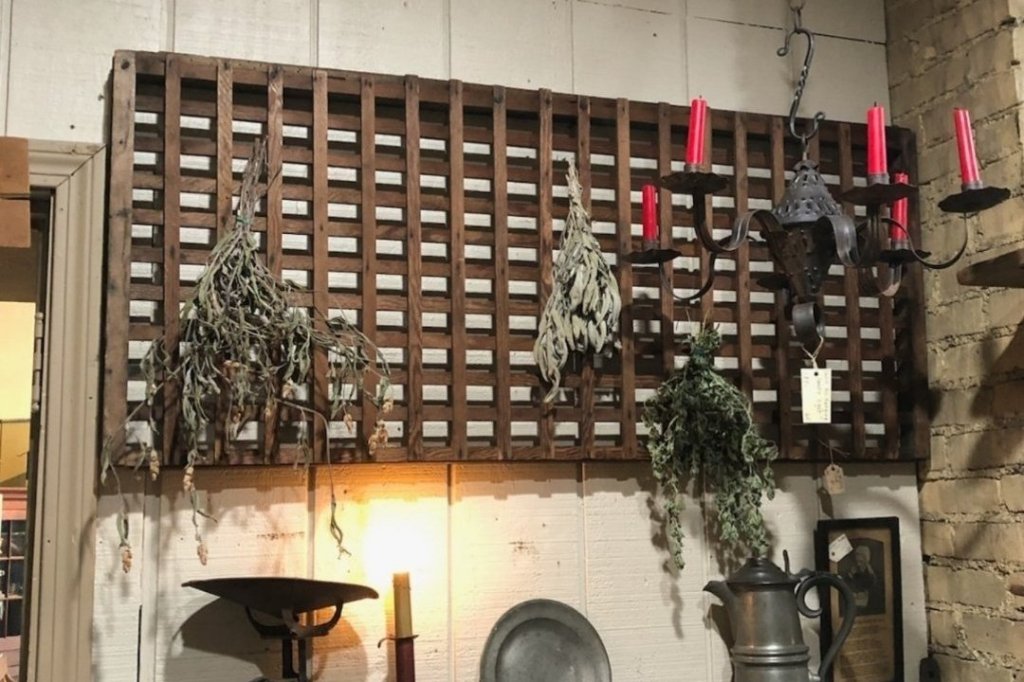
Last Saturday, Anita and I, were antiquing up in Northen Ohio around the Medina area. We stumbled into an antique store Seville, OH where Anita saw this old herb drying rack. The price was $89 but the lady said she would take $75 for it. Anita looked at it for a few minutes trying decide whether or not to buy it and if she did, where she would put it.

The rack looked old, but whether or not it was antique, who knows? It could have been made 20 years ago and just left outside to weather. While Anita debated on buying the rack, she asked me if I could make one. I told her it would super easy to do so she left it there and didn’t buy it.

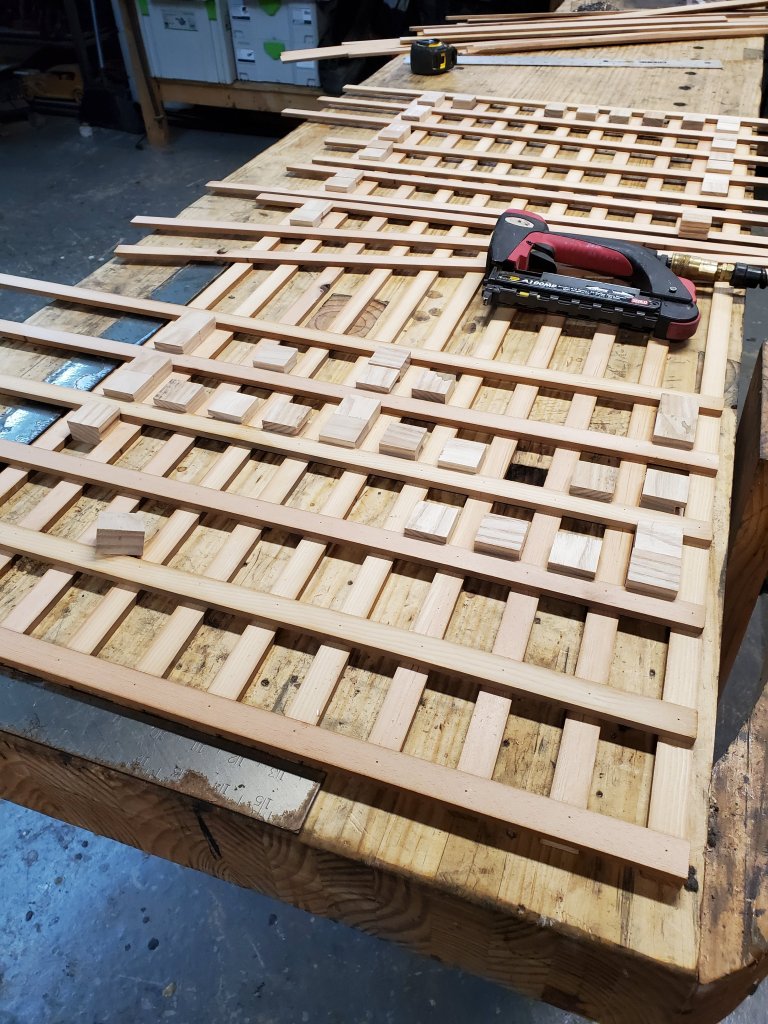
The next day, I ripped 1/4″ strips off an old pine shelf we had in the garage. I decided the spacing should be 1 1/4″ so I cut blocks by using a sled on my table saw and laid out the spacing to see how it looked.

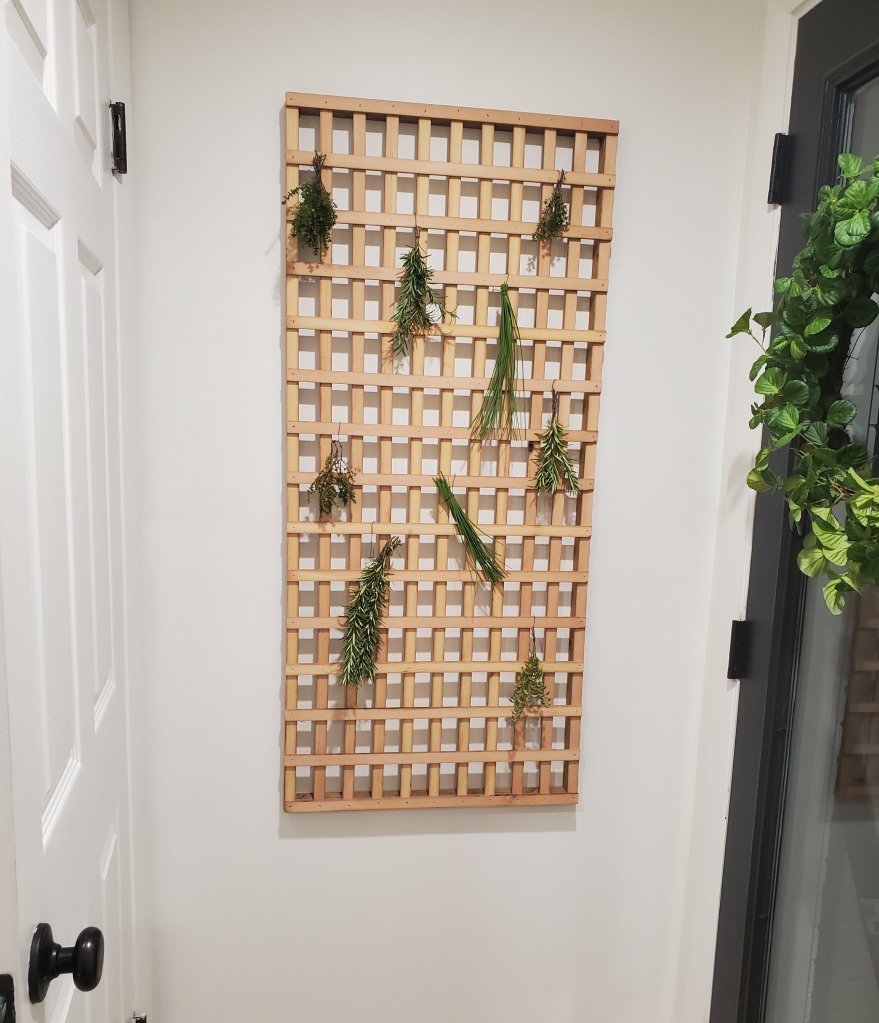
Anita came downstairs and told me she wanted rectangular spacing so she two two blocks and put them together. We both liked the new design, so I started pinning the strips together with 23 gauge pins. After we decided the overall dimensions the rack should be, I built a 1″ thick frame with the rest of the pine board. I used 18 gauge brads to attach the grid to the frame. The overall size was about 22″ wide x 47″ long.

In a few hours, the drying rack was built and hung up in our kitchen between the back door and the basement door. I posted a picture on Instagram and one of my followers said that the rack would work great for drying his weed. Maybe I should make more and sell them to a niche market. ??? Nevertheless, now Anita has a place to dry her herbs (whatever you do with dried herbs).

New Life for a Display Piece

A couple years ago I wrote a blog post about building this huge display cabinet for my wife. She wanted it to use as a backdrop for doing shows. Being 7′ long, it was long enough to stick in the back of a 10′ x 10′ booth with a little room on the sides.

She was hoping to use it for a show in the spring, then Covid hit and the show was cancelled. We waited for everything to go back to normal, but the further things went, Anita decided not to do the show anymore. In the end, we never ended up even using the piece.

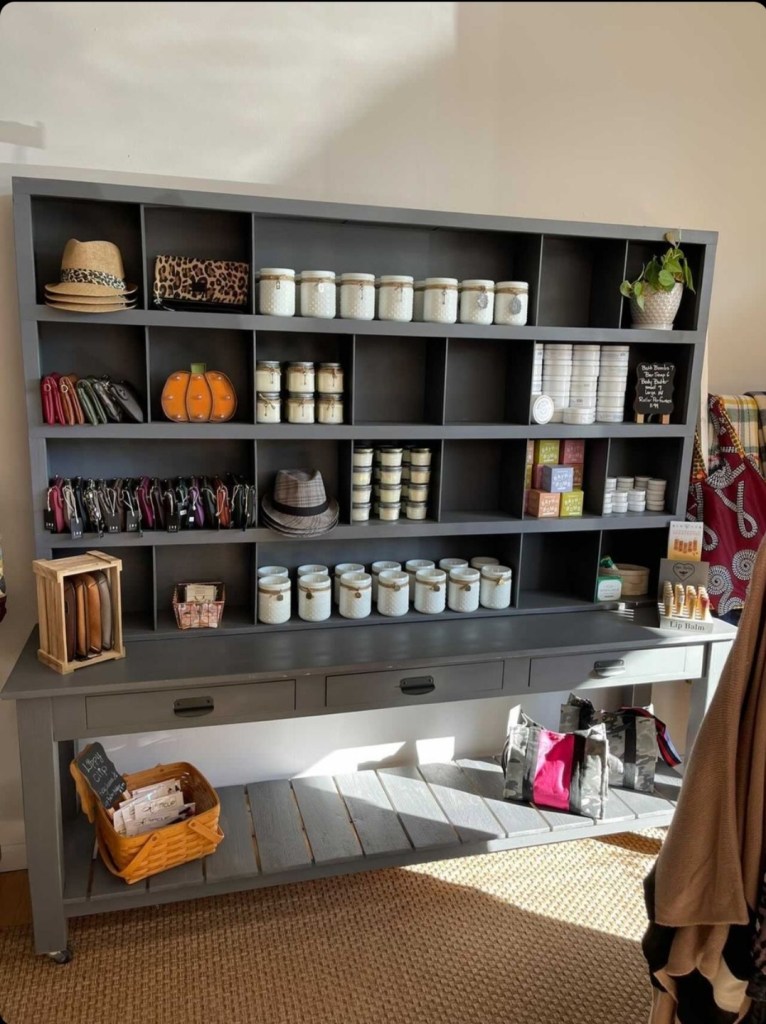
It sat in our garage over the months so Anita decided to get rid of it and told me to post it on Facebook Marketplace for dirt cheap. One of Anita’s customers saw the post and came by the next day to buy it. She owns a specialty shop and was planning on painting the piece gray and using it in her store.

Anita stopped by her shop this morning and saw the piece painted. It looks amazing in her store. At least someone got use out of it.

I’m thinking now that I should make these display pieces and put a big price tag on it instead of the garage sale price this lady got. What do you think?

Ash Display Cabinet

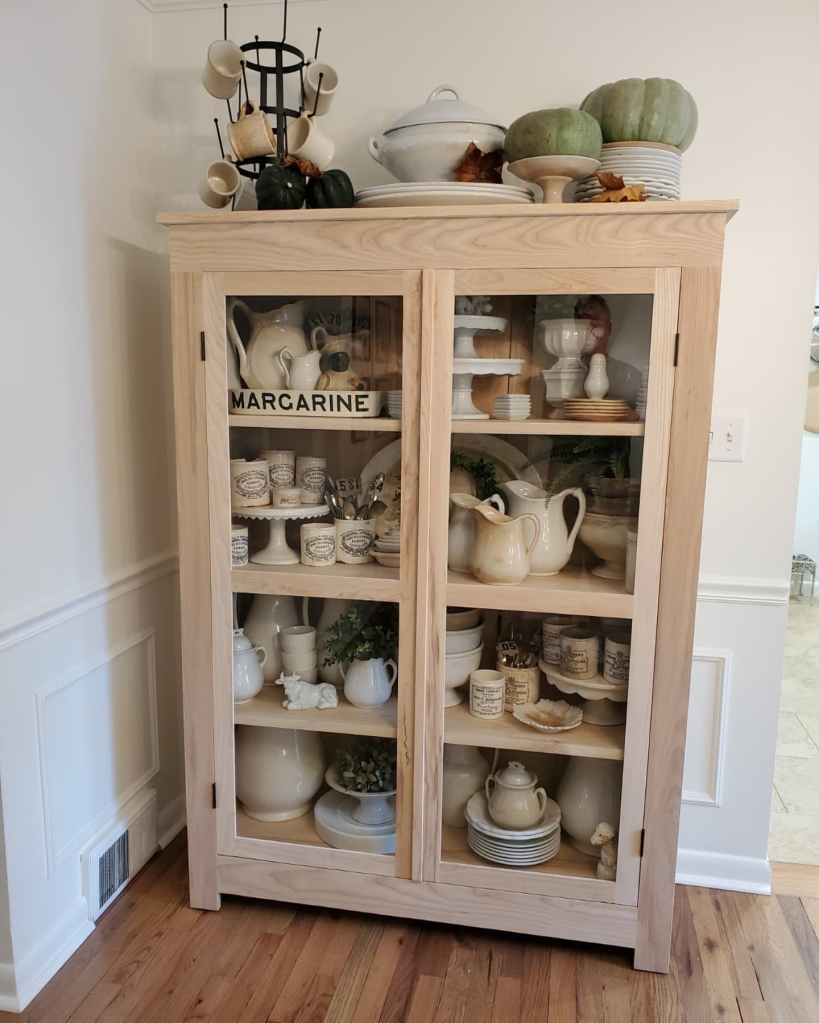
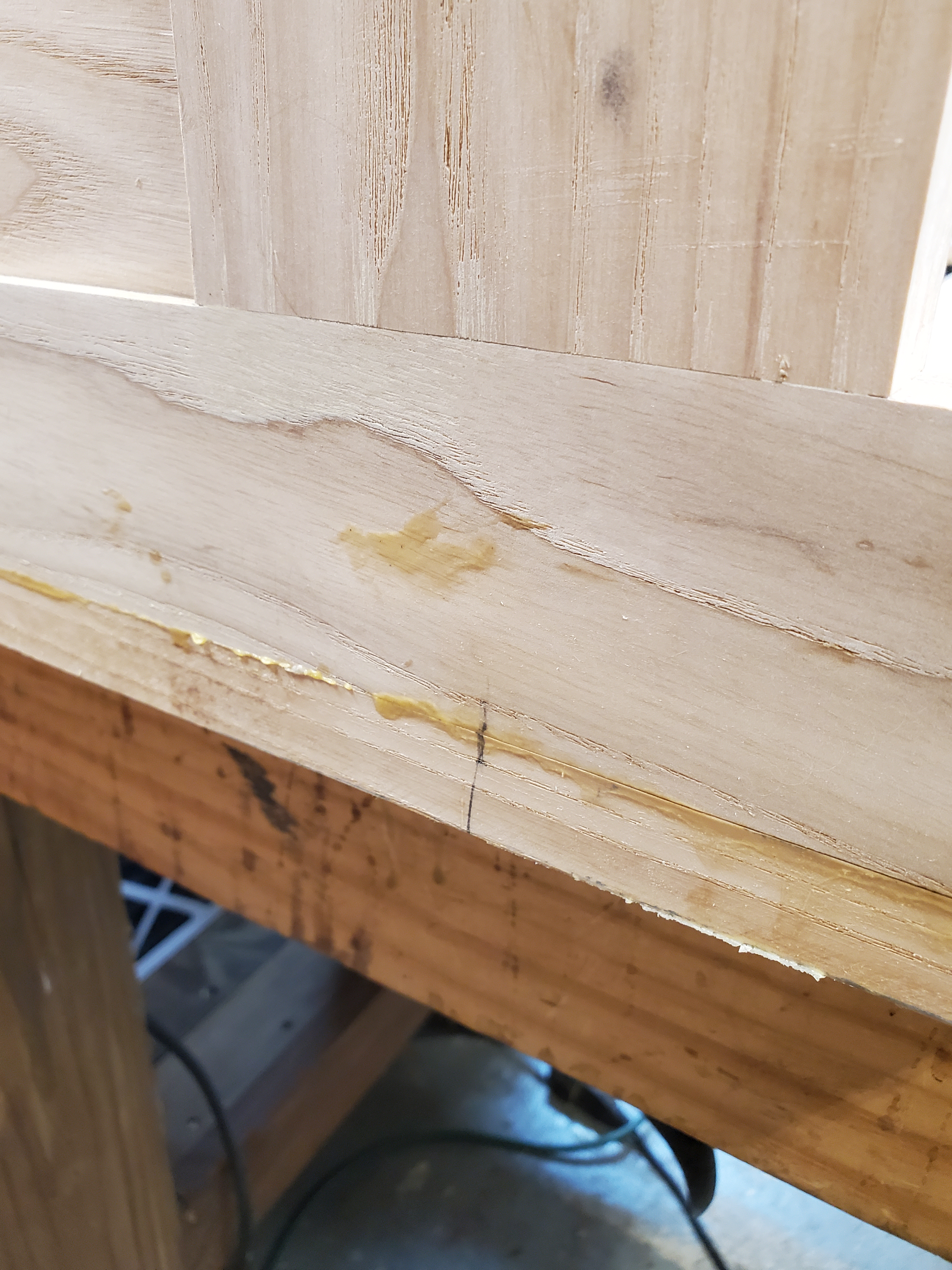
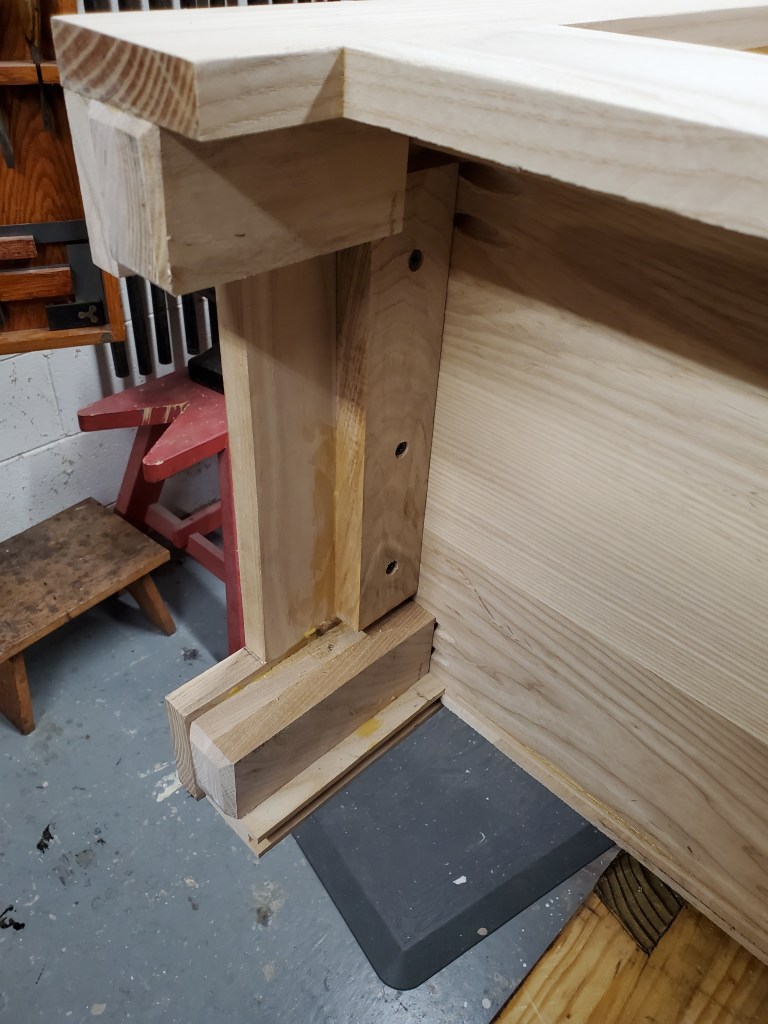
The ash display cabinet I’ve been building for Anita is finally done. Took longer than I wanted but, working full time, restoring and selling antique tools, and doing honey-do lists around the house has eaten up all of my time. Anita will eventually put handles on the doors once she figures out which ones she wants, but for the most part, it’s done.

The cabinet is 48″ x 66″ x 16″ and is the first piece of furniture I made without using a single piece of plywood. I would have at least liked to have made the shelves out of 3/4″ plywood but my lumber supplier doesn’t carry it. The piece is extremely heavy and cost me about $500 to build. But, it’s still way cheaper than the $1600 price tag that was on the one at Pottery Barn. Plus, this is made from American hardwood and not some junky looking Chinese lumber.

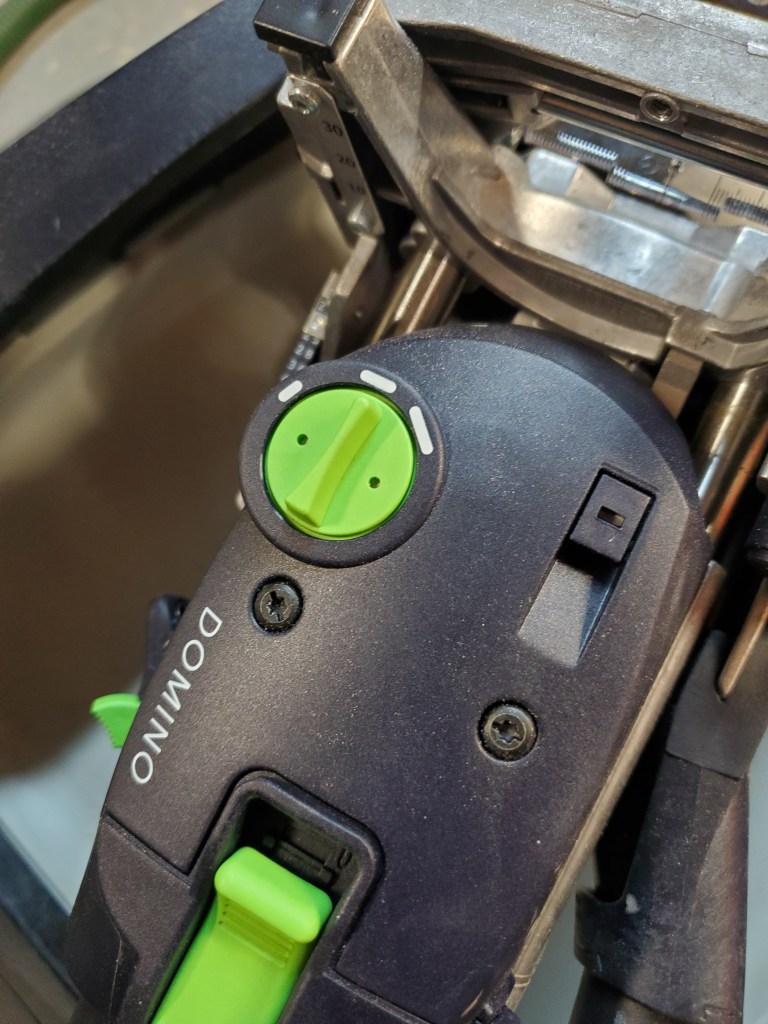
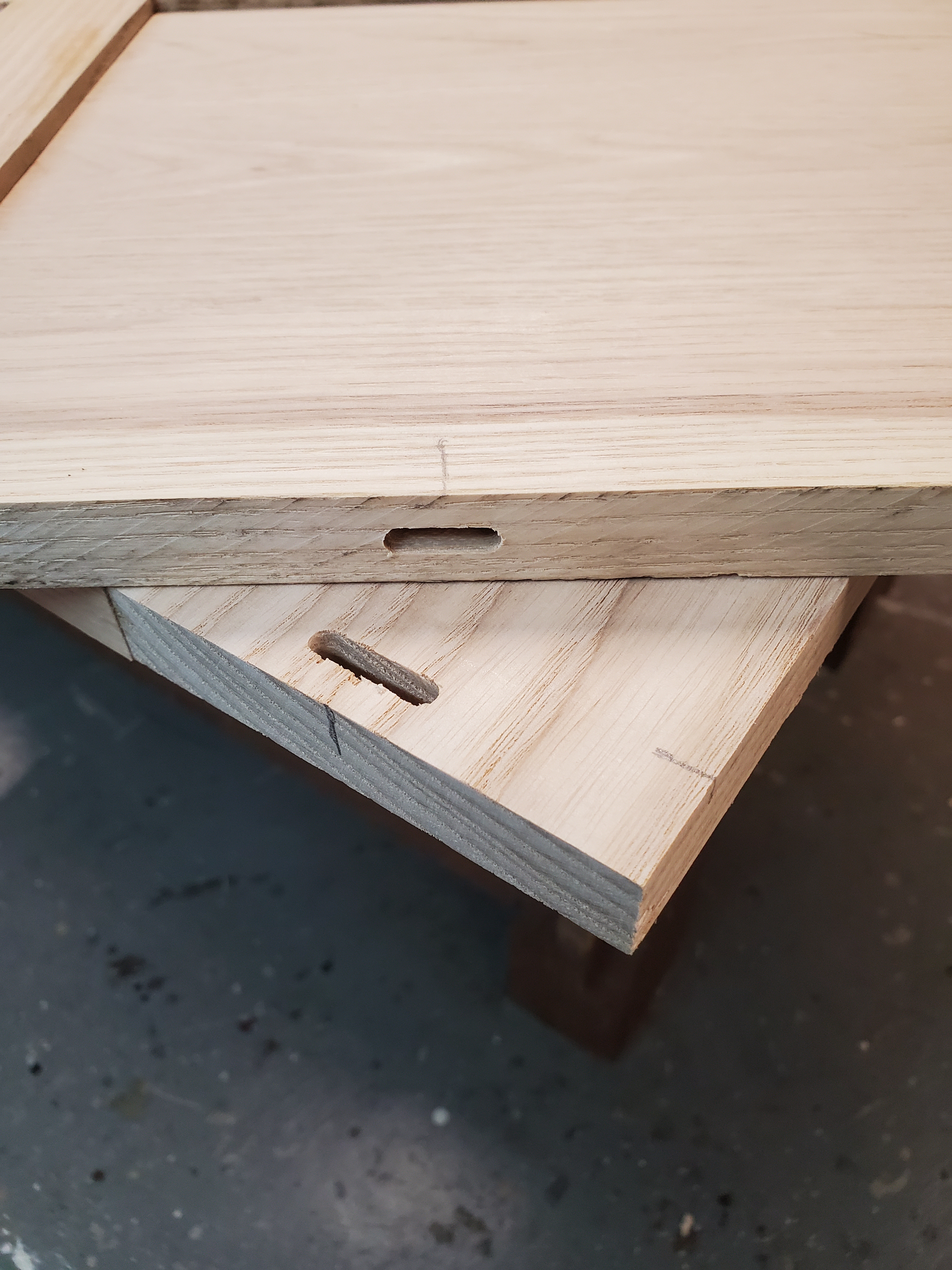
To help speed up the build, I went out and bought a Festool Domino. I waited ten years to buy one until the day I could afford it, but that day never came. So, I bit the bullet and bought the tool as well as the Domino kit with the extra drill bits. So far, I love the tool. I was told by the sales rep at the store that you set the tool on the first setting one one side of the board, then switch to the second setting for the other side of the board. The wider slot gives you a little bit of play when aligning the boards similar to using a biscuit joiner.
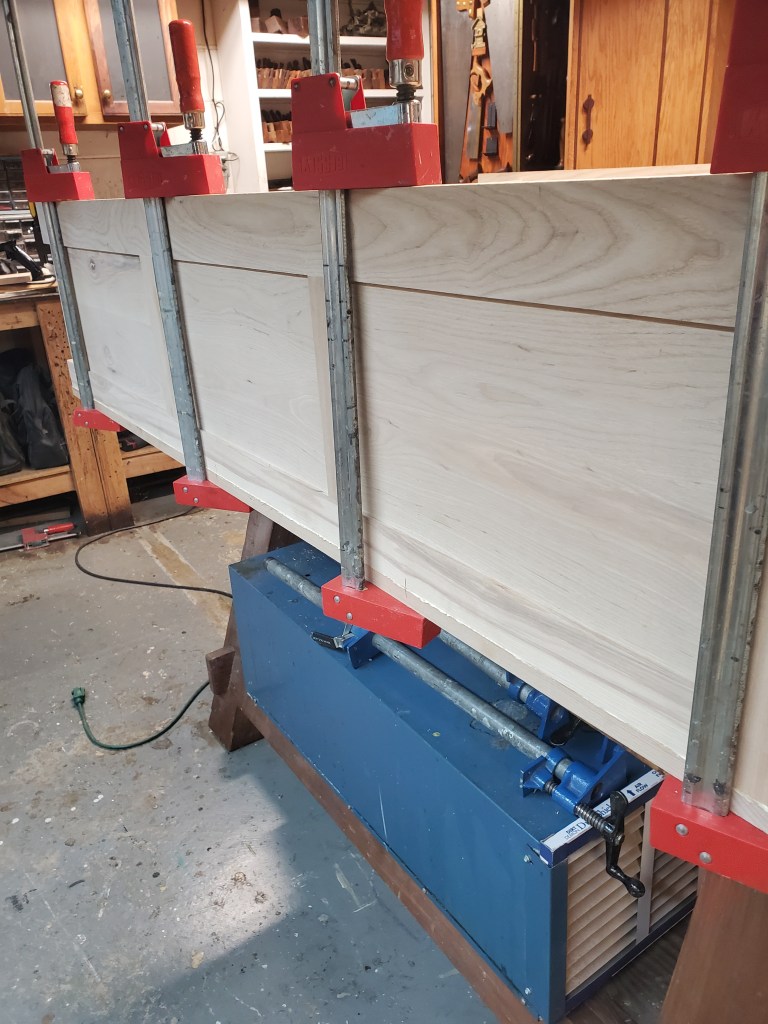
I used the machine for the case as well as the joinery on the glass doors and it performed wonderfully. The Domino is one of those tools you wished you would have bought sooner.

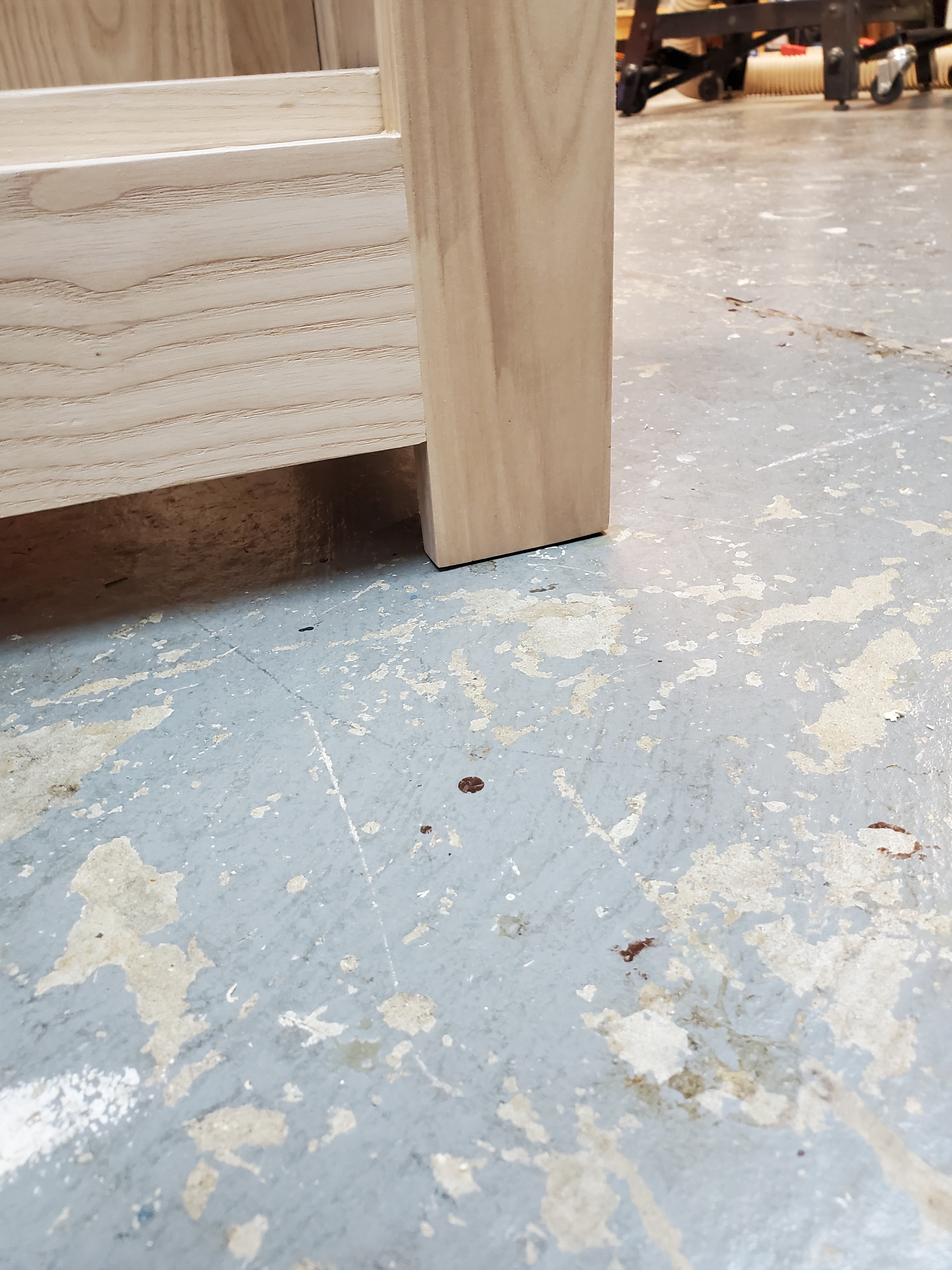
The other thing I did differently on the piece versus others I have built was to put feet on the cabinet. In years past, when I built something, the sides of the case would be the feet of piece of furniture but, after studying antiques over the years, I noticed that the well built pieces would have feet glued to the bottom. This helps protect the sides by lifting them off the floor by a 1/16″. Having square feet also makes sticking furniture pads on the bottom a lot easier.

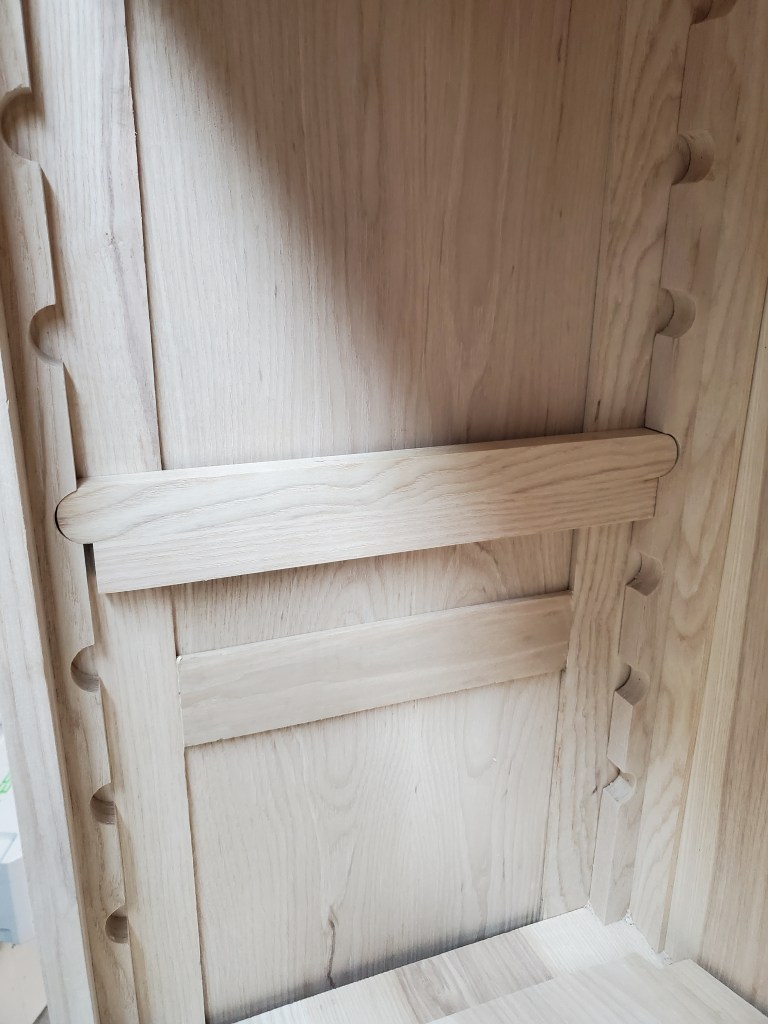
I already wrote about the wooden shelf supports a few weeks ago here. They work exceptionally well and can hold a massive amount of ironstone. I can’t even imagine all that weight on little brass pins.

Anita loves the cabinet, I love the cabinet, her friends love the cabinet, people on Instagram love the cabinet. It’s been a big hit and the money I saved building it, paid for my Festool Domino.. (see what I did there?)

Venom Steel Nitrile Gloves

I normally don’t do product reviews. The reason is because often when someone writes one, they seek affirmation that they made the right decision with what they just bought. This is especially true with tool reviews. How many times do people buy a new tool, take it out of the box, use it, and then blog about how much of a piece of shit it is? Very rarely. It’s one of the reasons I don’t put much weight on reading tool reviews in woodworking magazines. The other reason I don’t write tool reviews is that often I don’t have anything to compare the new tool to. When I bought a new random orbital sander, my old sander was twenty years old and obsolete. I can’t compare my new one to the old. That wouldn’t make any sense. Also, when I bought my random orbital sander, I didn’t try out any of other sanders on the market to see how they stacked up to mine so, I just use it and move on with life.

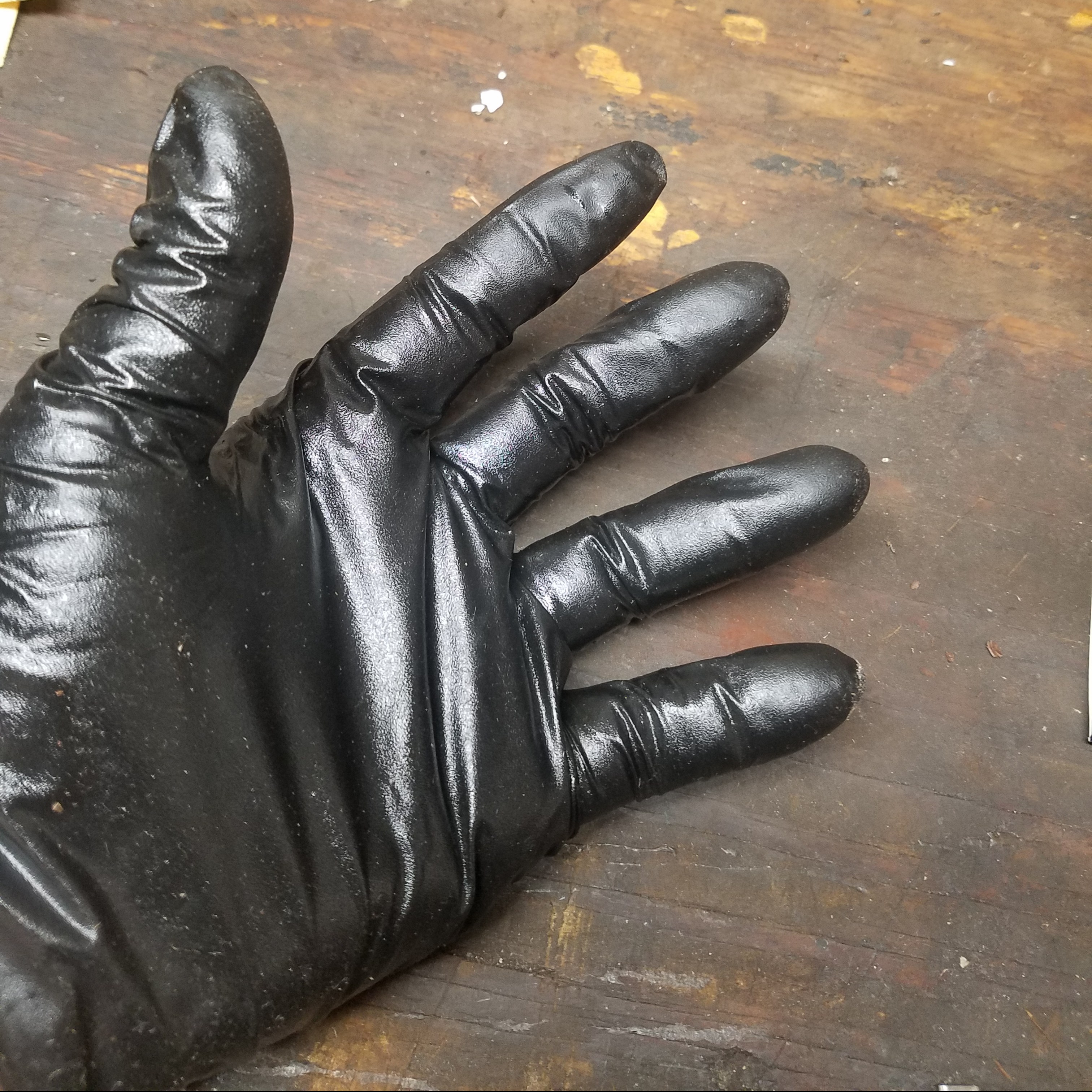
This time it’s a little different. I found these heavy-duty nitrile industrial gloves at Lowe’s a few weeks ago and was intrigued. For awhile, I was looking for something to replace my old exam gloves that would constantly tear while I was working. I tried using industrial latex gloves, but didn’t like how I couldn’t “feel” what I was doing so, I went back to the old stand by. When I saw these at Lowe’s, I opened a box, took a glove out and tried it on. Then I pulled on the glove while it was on my hand trying to rip it. It was a tough glove so, I bought the box hoping for the best.

20190331_144400.jpg

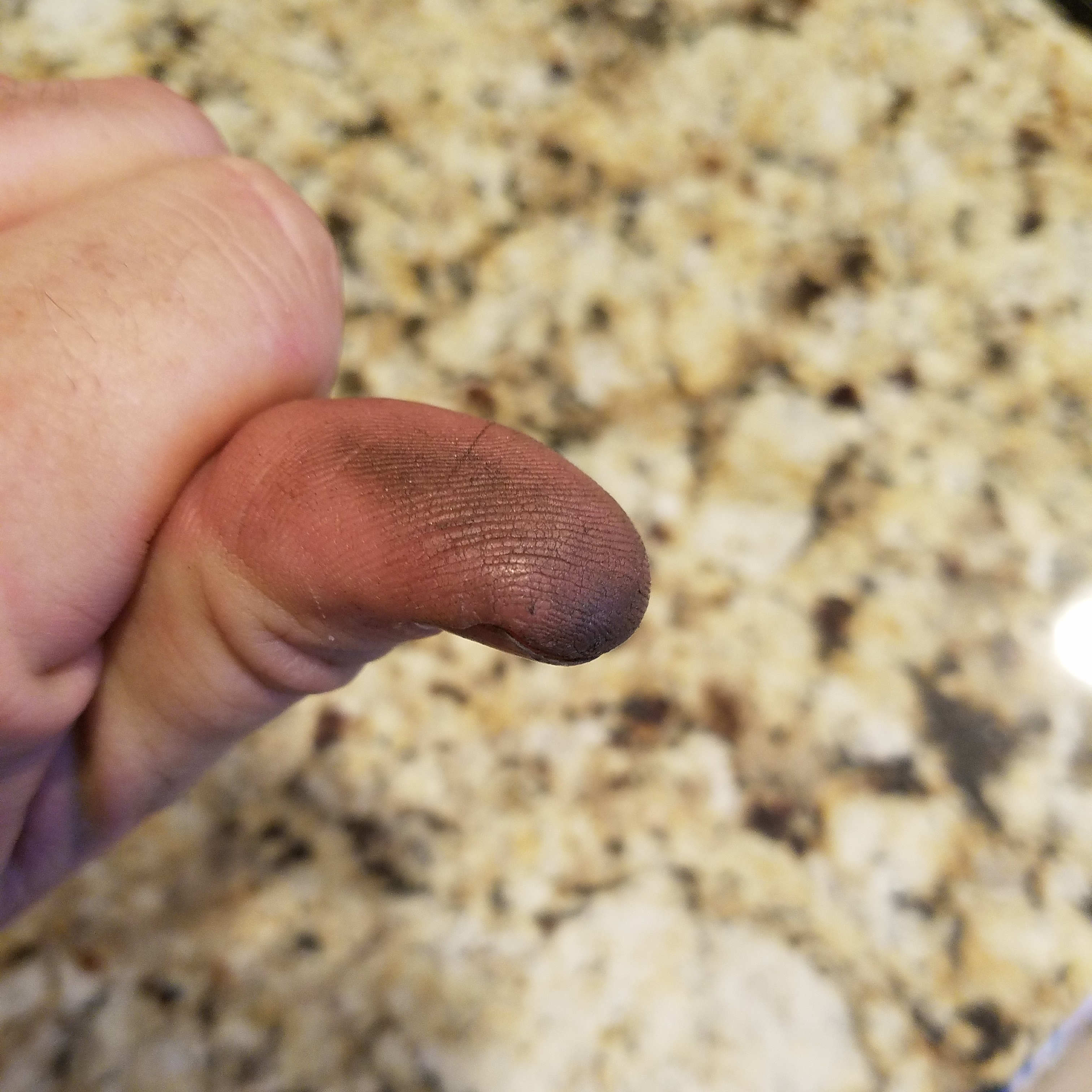
These are the nitrile exam gloves I used for years. For the price I couldn’t complain. Two boxes of 100 ran about $15.00. The problem is that I would go through three to four pairs when I spent the day sharpening. Worse yet, when they did tear, they often tore at the thumb turning my thumb black from the sharpening slurry completely defeating the purpose of wearing gloves in the first place.

20190331_144412.jpg

Typical dirty thumb even after I washed my hand from sharpening slurry. If you sharpen without gloves or do any type of metal working, you’ve experienced this as well.

20190402_183251.jpg

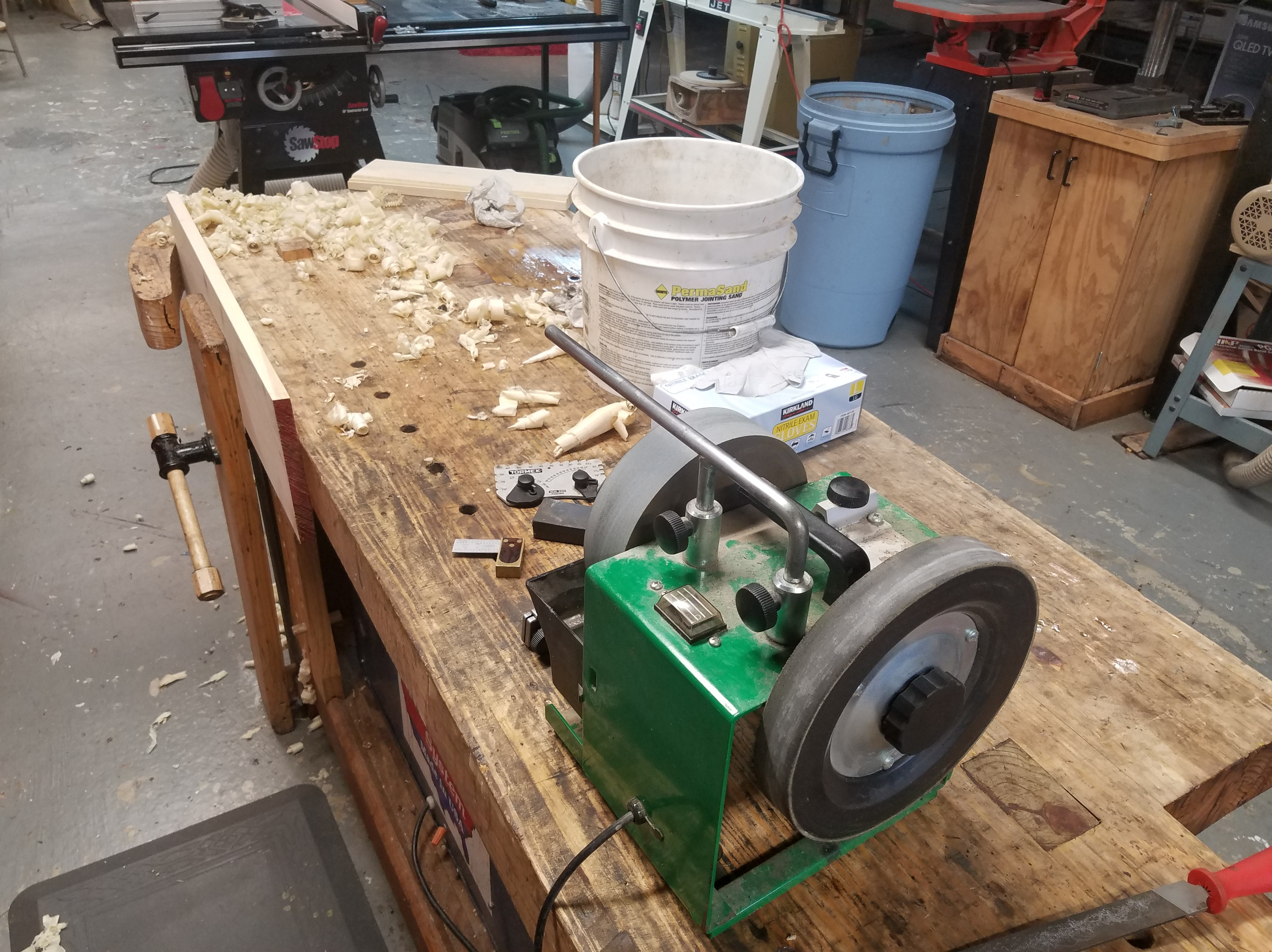
When I sharpen, I use my water-cooled sharpener along with 1000, 5000, and 12,000 grit water stones so, my hands are constantly getting wet.

20190331_144440.jpg

These are some of the planes I sharpened within an afternoon. It took about two to three hours to do all of them wearing my new tough gloves.

20190331_144436.jpg

After a dozen plane blades sharpened, the gloves took a lickin’ and kept on tickin’. No rips or tears and best yet, clean hands! If your Lowe’s doesn’t stock them, you can find them on Amazon.

20190331_144425.jpg