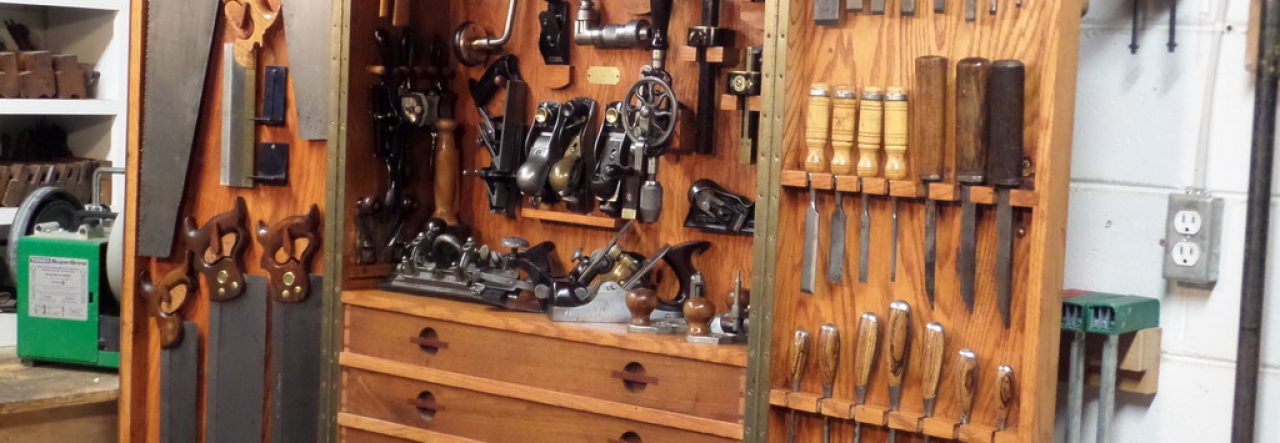
Harvest Table

A few moths ago my wife, Anita, and I picked up some old barn wood flooring in Dayton to be used for a harvest table she wanted me to build for her booth. While the wood sat in the basement, she kept looking for the right legs to use for the table. In the end, she opted for me to make some out of Douglas Fir 4×4’s I could buy from Lowe’s. She searched Pinterest for a leg she liked and printed off a picture so I could make it.

 photo ebay 014.jpg

I looked at the picture and started to turn something like it on the lathe. I kept the top of the leg similar to the picture, but changed the bottom to be a bit more simpler. After a few tweaks, I was happy with the end result. Now the challenge was to make three more legs that matched this one.

 photo ebay 017.jpg

I used a piece of scrap wood and marked every major location where there was a bead or valley in the board. I then used calipers to measure those increments and carefully tried to copy them to the next turning.

 photo ebay 019.jpg

After several minutes of careful turning, my second leg looked very similar to the first one on top. Even if the legs weren’t exactly the same, it was fine as they would be far enough away from one another that your eye wouldn’t be able to see the difference.

 photo ebay 023.jpg

If you’ve never turned Douglas Fir, I highly recommend it. It sucks..sucks bad. The crap chips like crazy even with sharp turning tools. Fortunately since the harvest table was suppose to look old, the chips wouldn’t be a big deal.
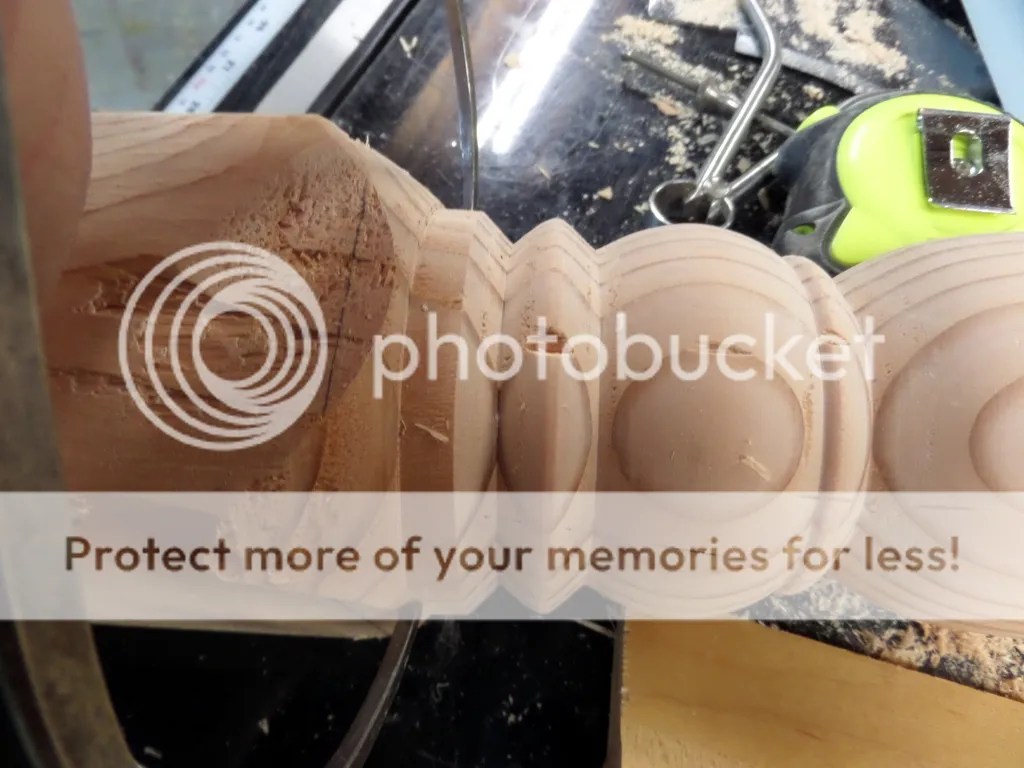
 photo ebay 022.jpg

After a couple of hours, I turned four legs that sort of looked like one another. The final step was to put them back on the lathe and use my parting tool to cut them at all the same length which was 30″ tall.

 photo ebay 026.jpg

The simplest part about building the harvest table was actually building it. I simply screwed the skirt onto the legs using 2″ screws. I didn’t even bother plugging the holes.

 photo ebay 028.jpg

I used cleats and pocket hole screws to keep the sides from bowing. I then attached the top onto the cleats using 1 1/4″ screws. Super simple.

 photo ebay 029.jpg

This was the table before sanding the grime off the boards.

 photo ebay 031.jpg

This is the table after a couple coats of white milk paint.

 photo blog 002_8.jpg

As you can see, once sanded, the milk paint gives the table a nice worn look. Even though this table breaks three of the seven deadly sins of woodworking, it works for it’s intended purpose. Just don’t expect to see it in a woodworking magazine anytime soon. All that matters is that Anita is very happy with it and finally has the harvest table she has always wanted.

 photo blog 003_10.jpg

Bathroom Cabinet

My wife, Anita, came to me a couple of months ago saying she wanted a new bathroom cabinet. I made one when we remodeled the bathroom nine years ago, but for some reason, I made it rather narrow and too deep. It was only 24″ wide by 18″ deep. The cabinet worked, just not that well. Anita loves going to Ikea so when she came home with a brochure of a cabinet she saw in their showroom, I looked at it. It was a Hemnes cabinet for $329.00. I immediately thought to myself “that’s basically a box with doors. I can make a box with doors for a lot less than $329.00”. That’s the downside of marrying a woodworker. We always want to make a piece of furniture rather than buy it. The good thing, is we usually can make it for a lot less and customize the dimensions to fit our needs.

HEMNES Cabinet with panel/glass door IKEA Solid wood has a natural feel.

I convinced Anita that I could make the cabinet quick enough that she wouldn’t have to wait six months for it to be completed. I also told her I could make it 32″ wide as opposed to 36″ so the cabinet wouldn’t cover up part of our heat register in the bathroom. A few days later, we went to Home Depot and bought a  1/2″ thick of birch plywood for about $50.00. I cut the sheet down for 11 1/4″ wide to be used for all the parts. Once I got the sides cut, I routed a couple of 1/2″ wide dadoes in the sides for the bottom and middle shelf of the cabinet. I then used a jig made from peg board to bore the shelf pin holes on each side.

SAMSUNG CAMERA PICTURES

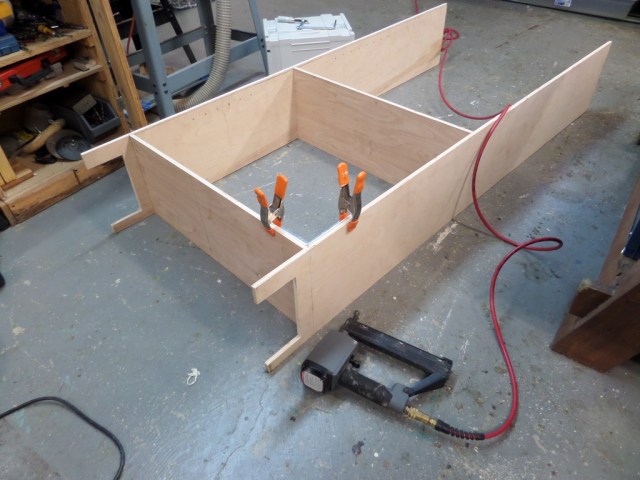
I cut the bottom and middle shelf to size and stapled them to the sides with my 1/4″ pneumatic stapler. Because I was going to apply 1/4″ thick x 2″ wide trim around the sides of the cabinet to act as a faux frame and panel, I wasn’t concerned about the driver marks in the wood made from the stapler.

SAMSUNG CAMERA PICTURES

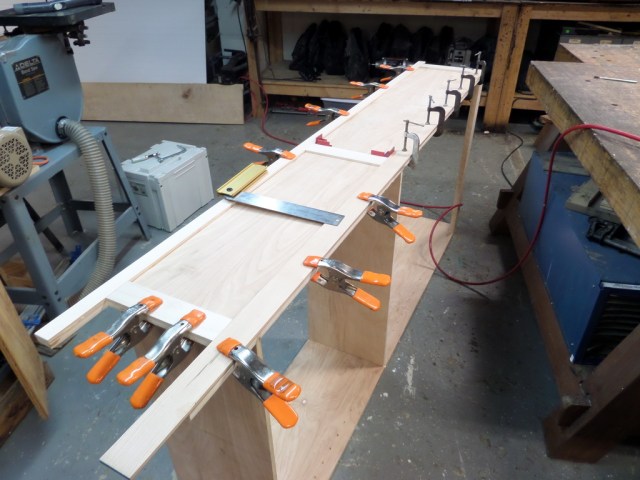
Next, I glued the 1/4″ x 2″ wood trim to the sides. Because I still needed to put a 3/4″ face frame  on the front, the trim on the front side of the cabinet was only 1 1/4″ wide, not 2″. You can see in the picture how the trim on the right (the back) is wider than the trim on the left (the front).

SAMSUNG CAMERA PICTURES

Next I glued the 3/4″ face frame to the carcass. I used pocket hole joinery to attach the stiles to the rails. This was a super easy cabinet to build.

SAMSUNG CAMERA PICTURES

I added glue block to the inside top of the cabinet where I could screw the top to the carcass.

SAMSUNG CAMERA PICTURES

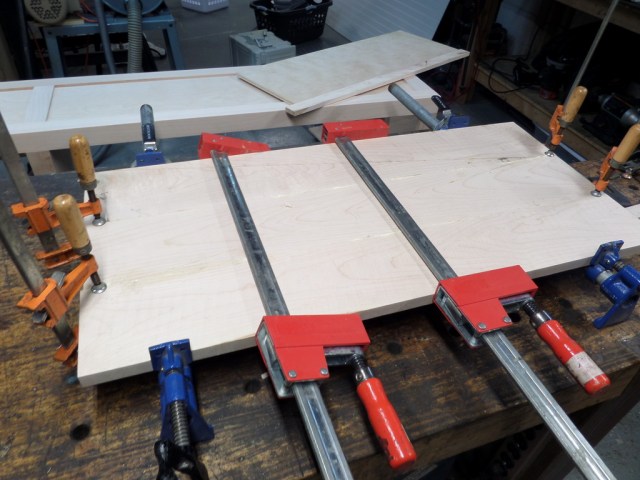
I wrote a post a few weeks ago where I described how I stretched a board to size after I cut a board too short. You can read it here. This is the board for the top of the cabinet being glued up after it was stretched.

SAMSUNG CAMERA PICTURES

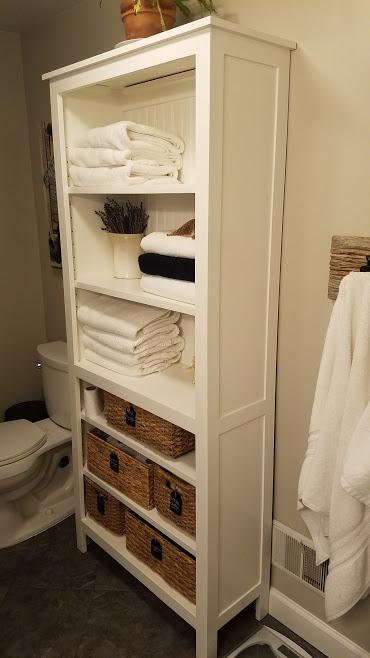
In the end, we decided not to add doors to the cabinet, but instead use baskets with open shelving. The woven baskets give the piece more character rather than having an entirely white cabinet with doors that would cover up the bottom shelves. We now have more room in the bathroom as the cabinet is only 12″ deep and is a lot more stylish.

20170820_213154