My wife, Anita, and I were antiquing in Madison, IN, yesterday when I stumbled upon this little workbench.
It was cute little Sloyd style workbench from the 1800s. I couldn’t believe how small it was, so I imagine it had to be built for a little kid.
It had to be about 3′ 6″ tall by 5′ long. What was so amazing about the bench was how well worn out and used it was. The child that worked on this bench used it a lot as the top is full of tool marks.
Obviously, it could have been for multiple children in a school shop class, but I never had a bench like this in elementary school, let alone a shop class. Can you imagine being the kid lucky enough to work on this bench?
No, I didn’t buy the bench as I couldn’t afford the $350.00 price tag as I’m too cheap. Plus, I didn’t want to drag it home because I had no place to put it. But it’s definitely the coolest old workbench I’ve ever seen.
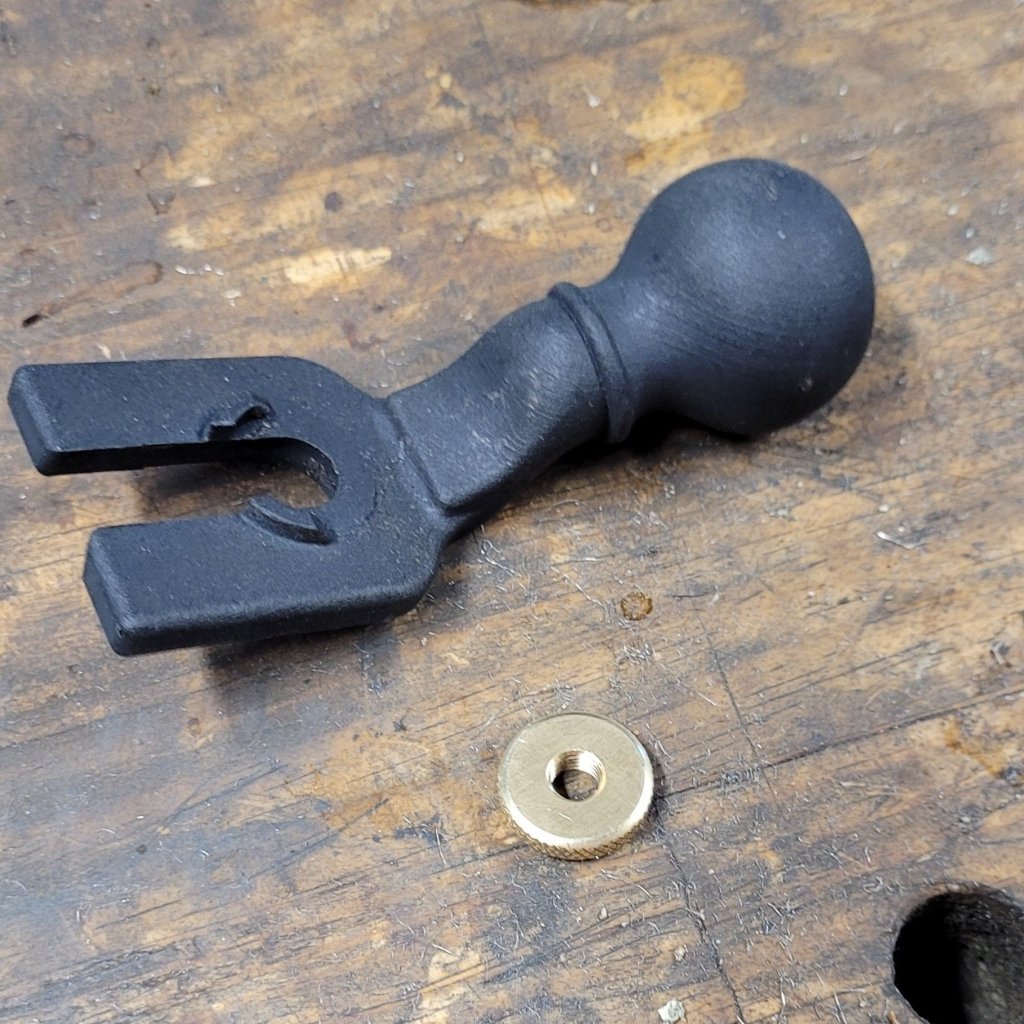
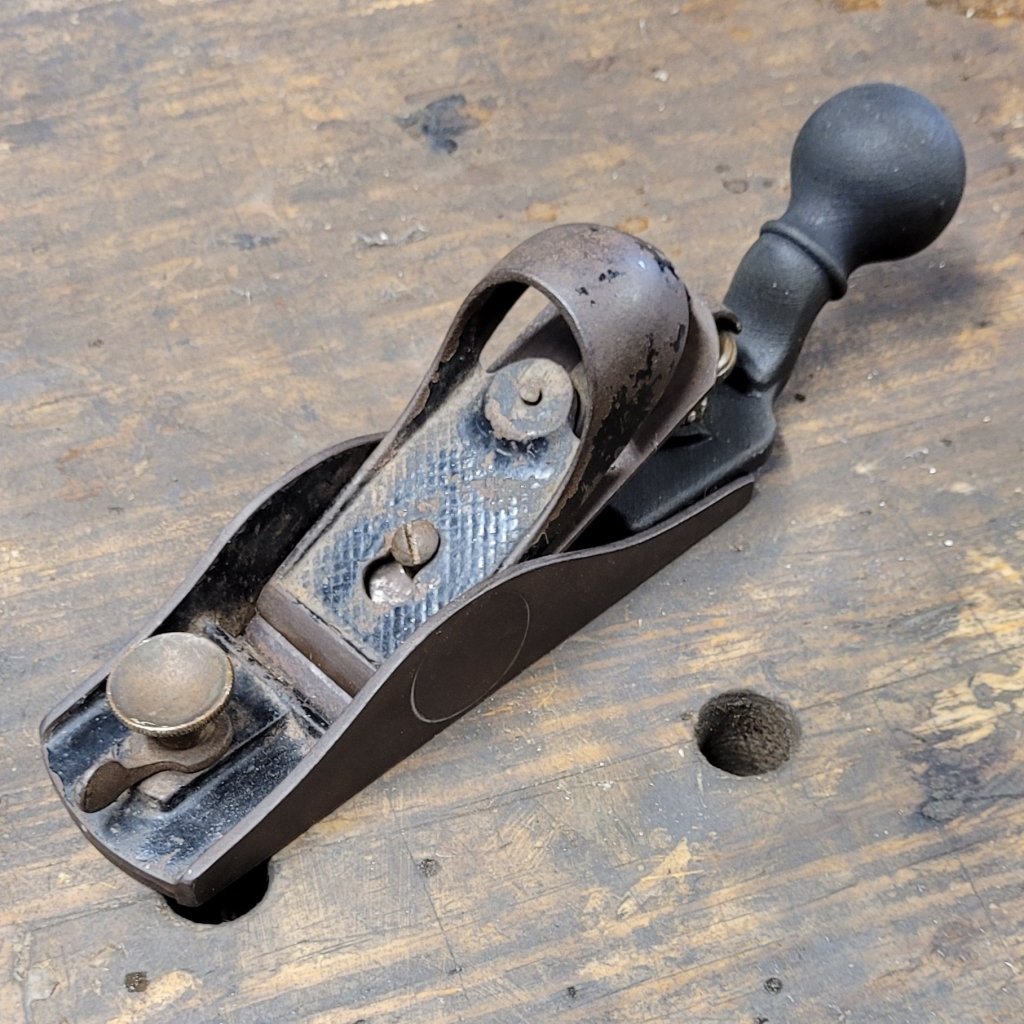
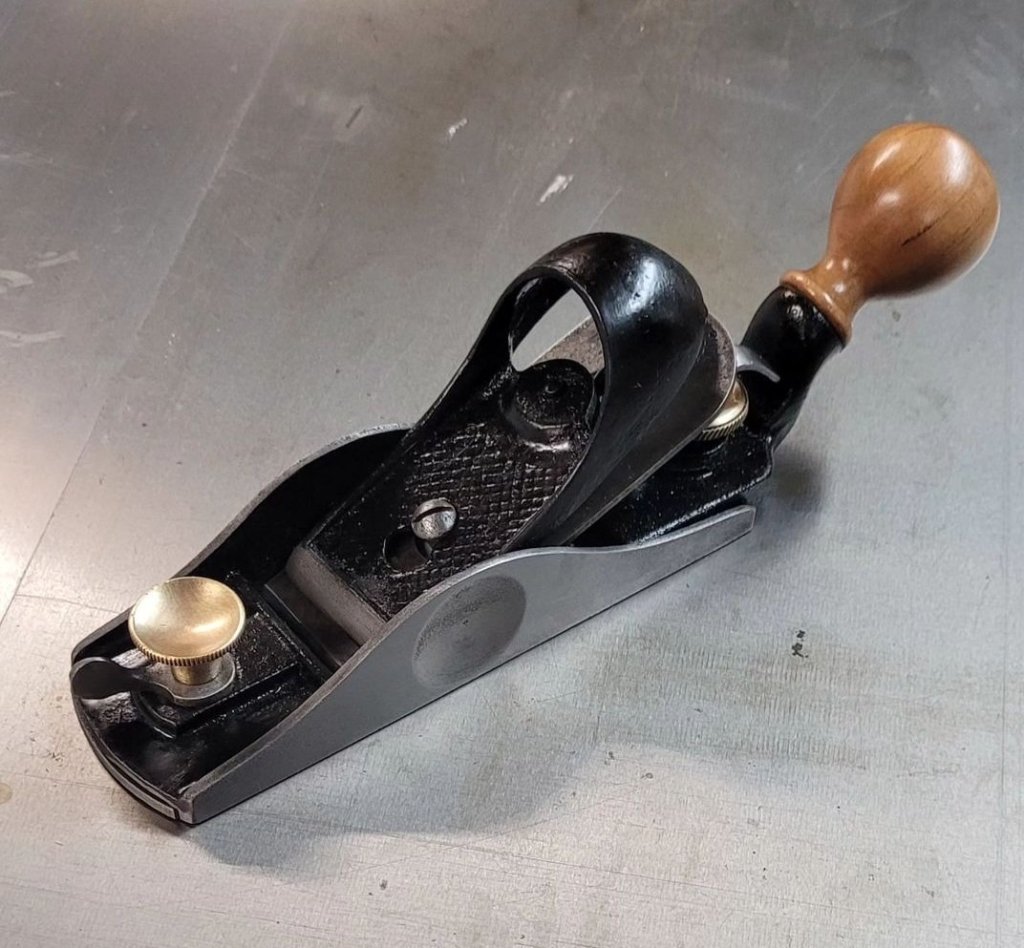
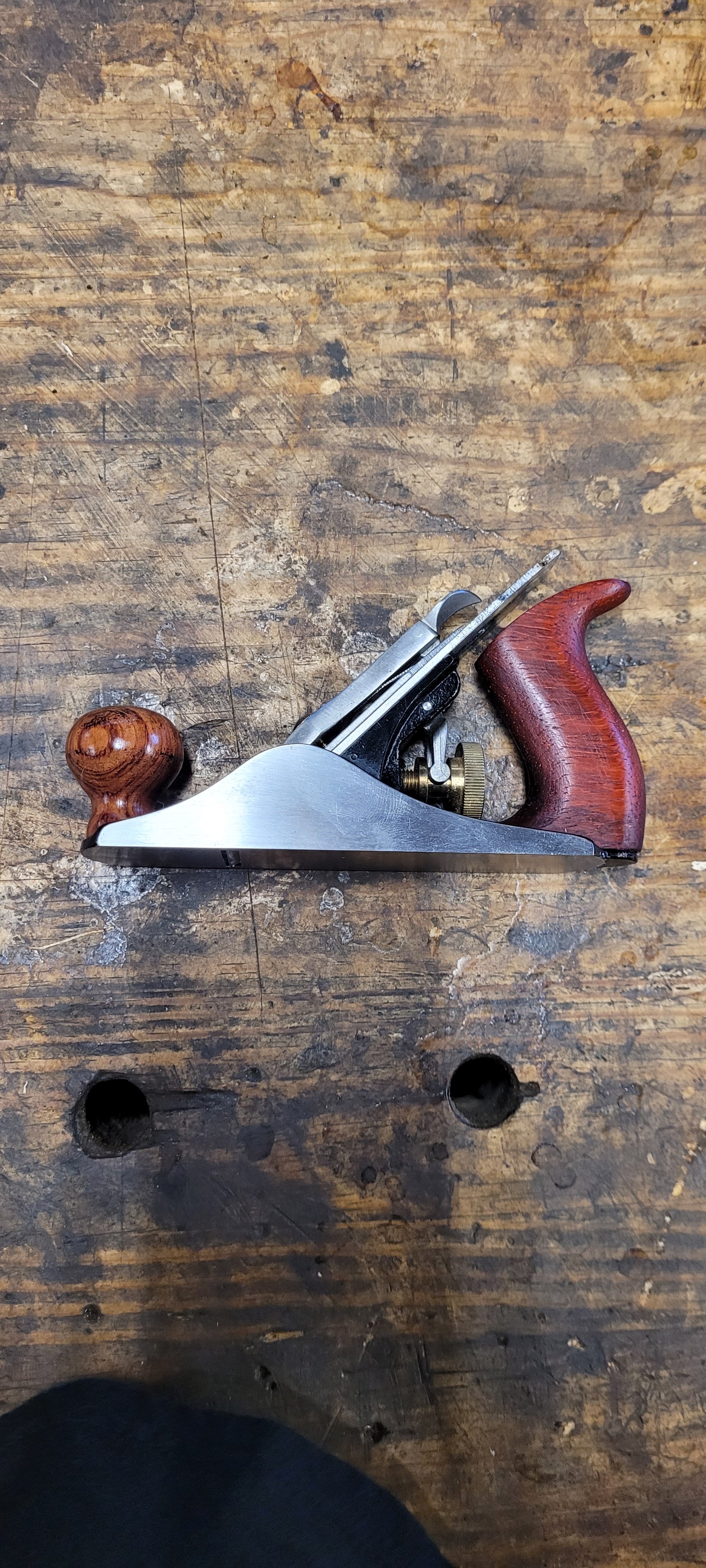
When I bought my Tote Turner a few months ago from Woodyah, I picked up this block tail accessory at the same time. This, like the Tote Turner, is printed on a 3D printer and fits Stanley block planes.
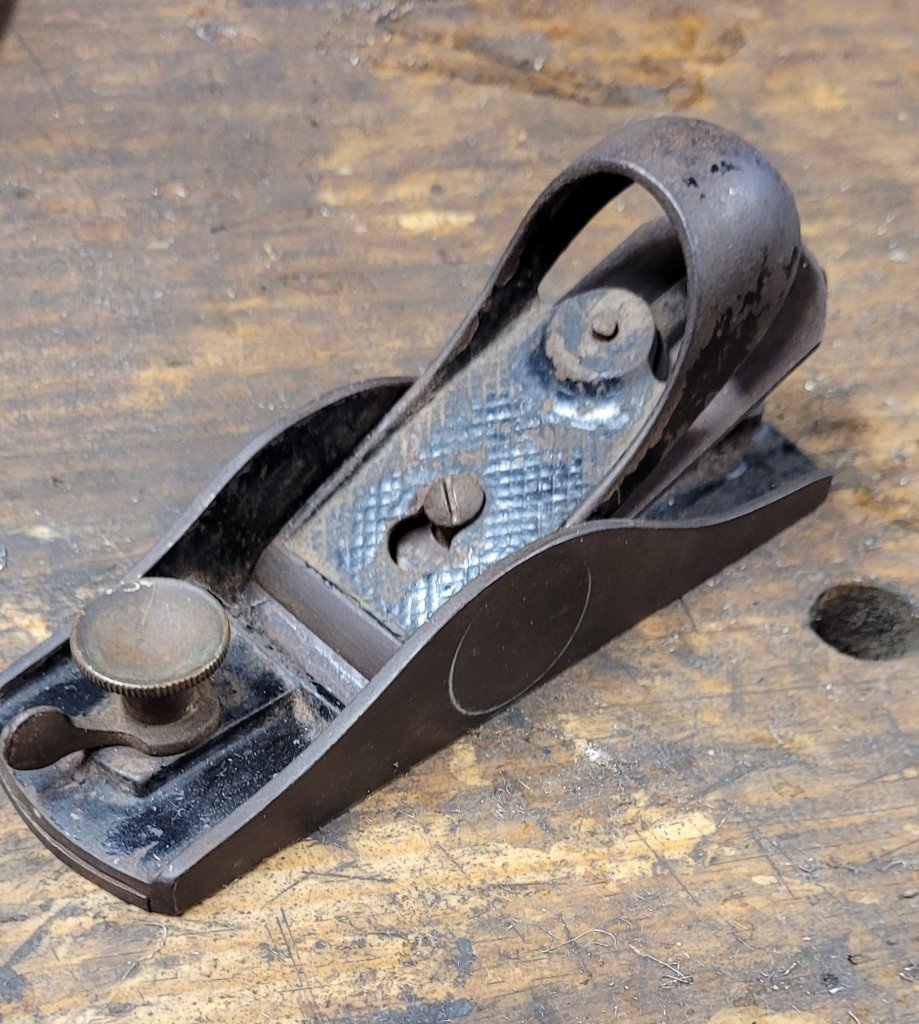
However, I wanted to install it on my Ohio Tool Co O9 1/2 block plane. Similar in size, it’s nearly identical to a Stanley No 9 1/2.
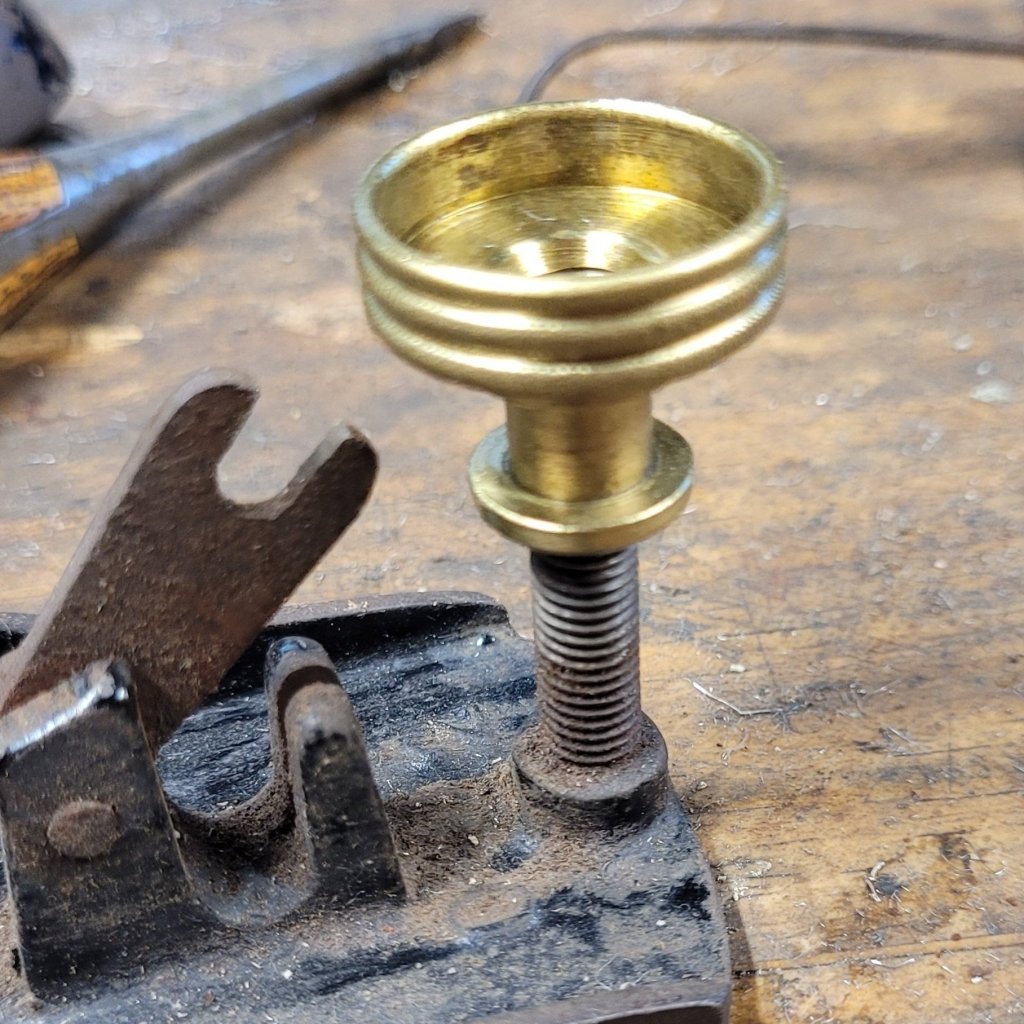
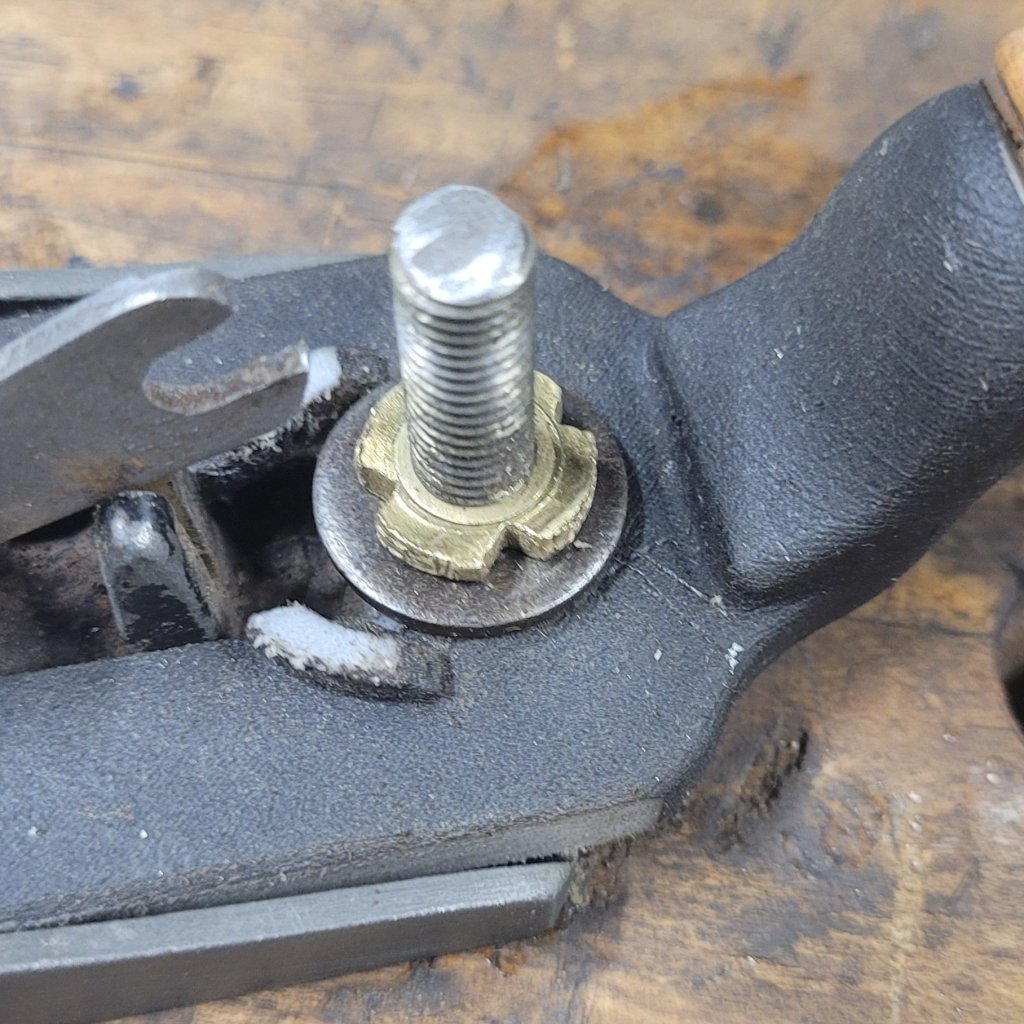
Unfortunately, the threads on my Ohio Tool Co plane are not the same as a Stanley, so the brass hold down piece won’t work. Luckily, I have an old Ohio Tool Co brass blade adjuster wheel in my parts bin, so I cut the very bottom off of the brass wheel and filed four notches in it so I could turn it with a screwdriver.
My little homemade brass hold down screw was a little too small, so I used a washer underneath to hold down the tail better.
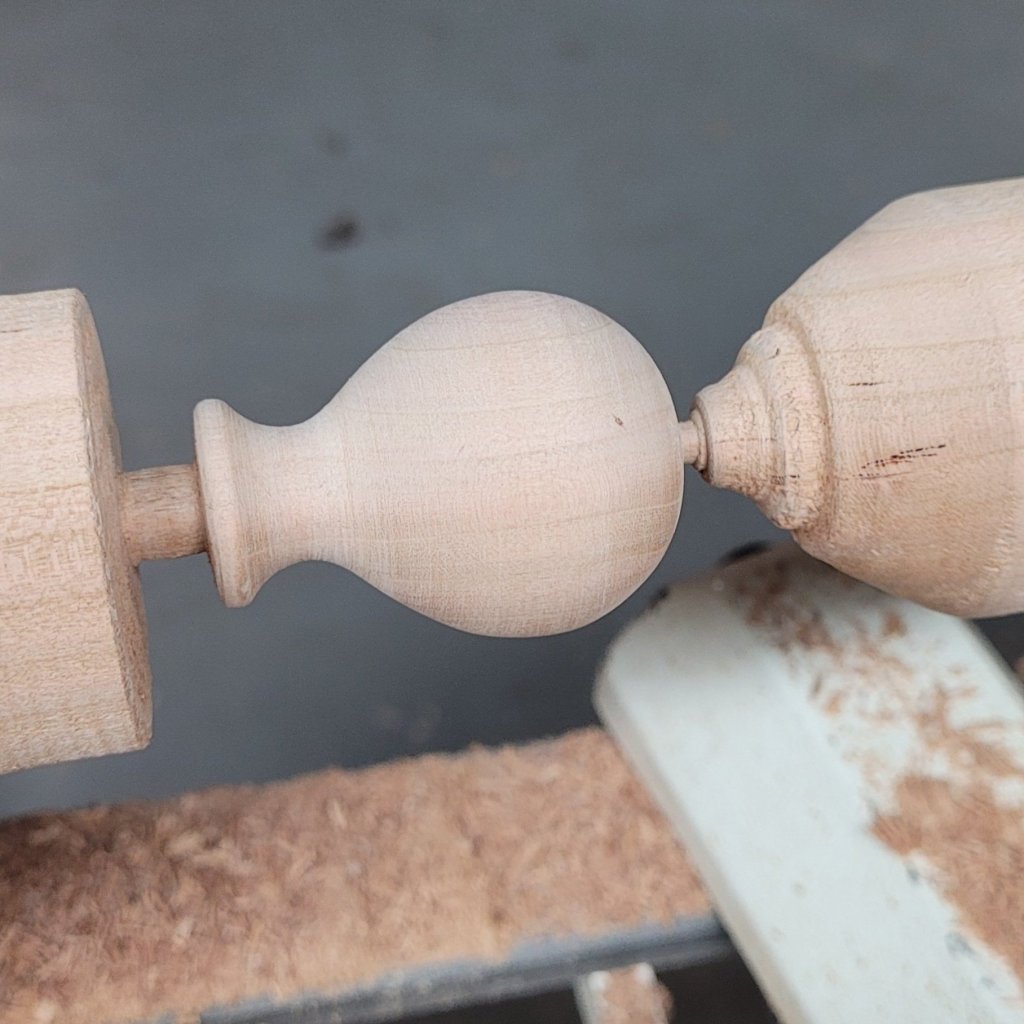
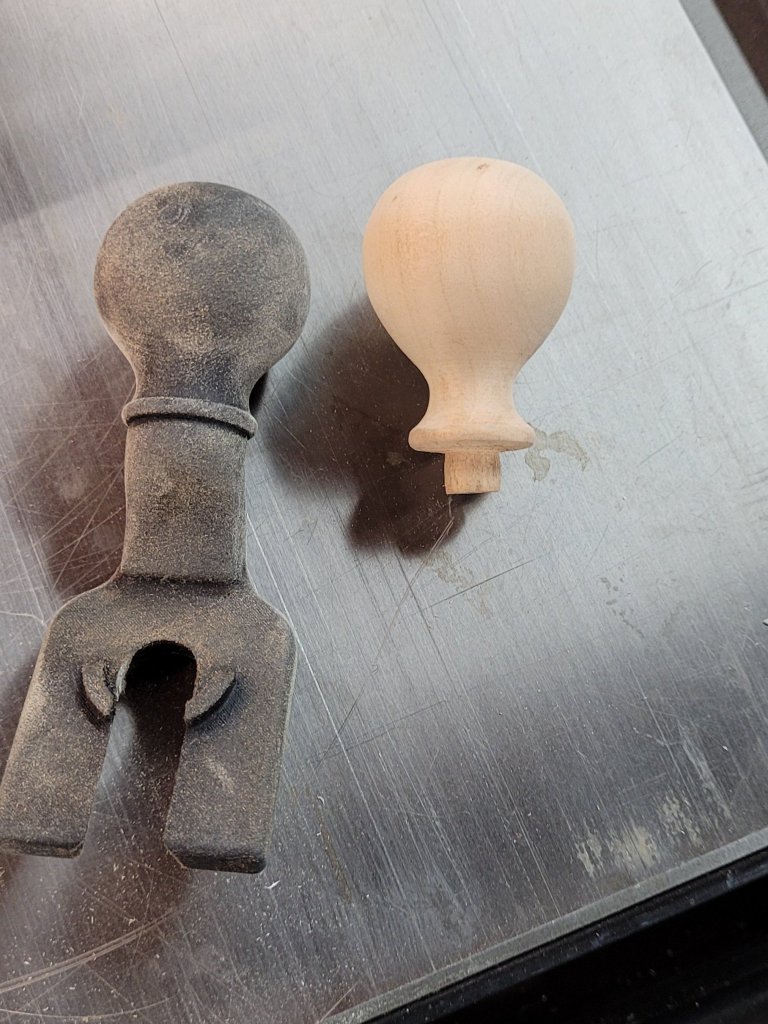
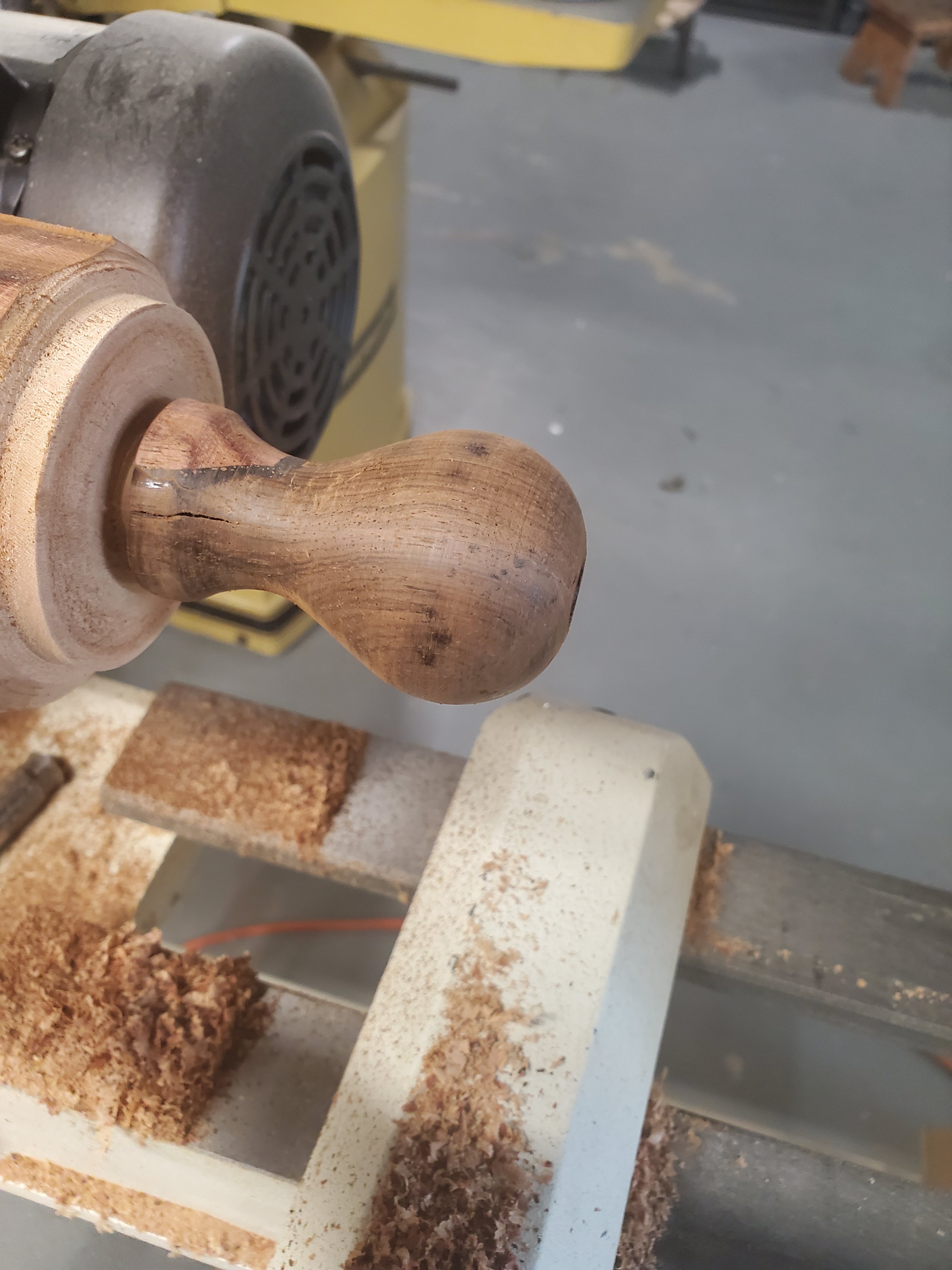
Everything worked, but I was not a big fan of the big black knob to the handle. I wanted something more historic and natural looking, so I decided to make a new knob out of cherry.
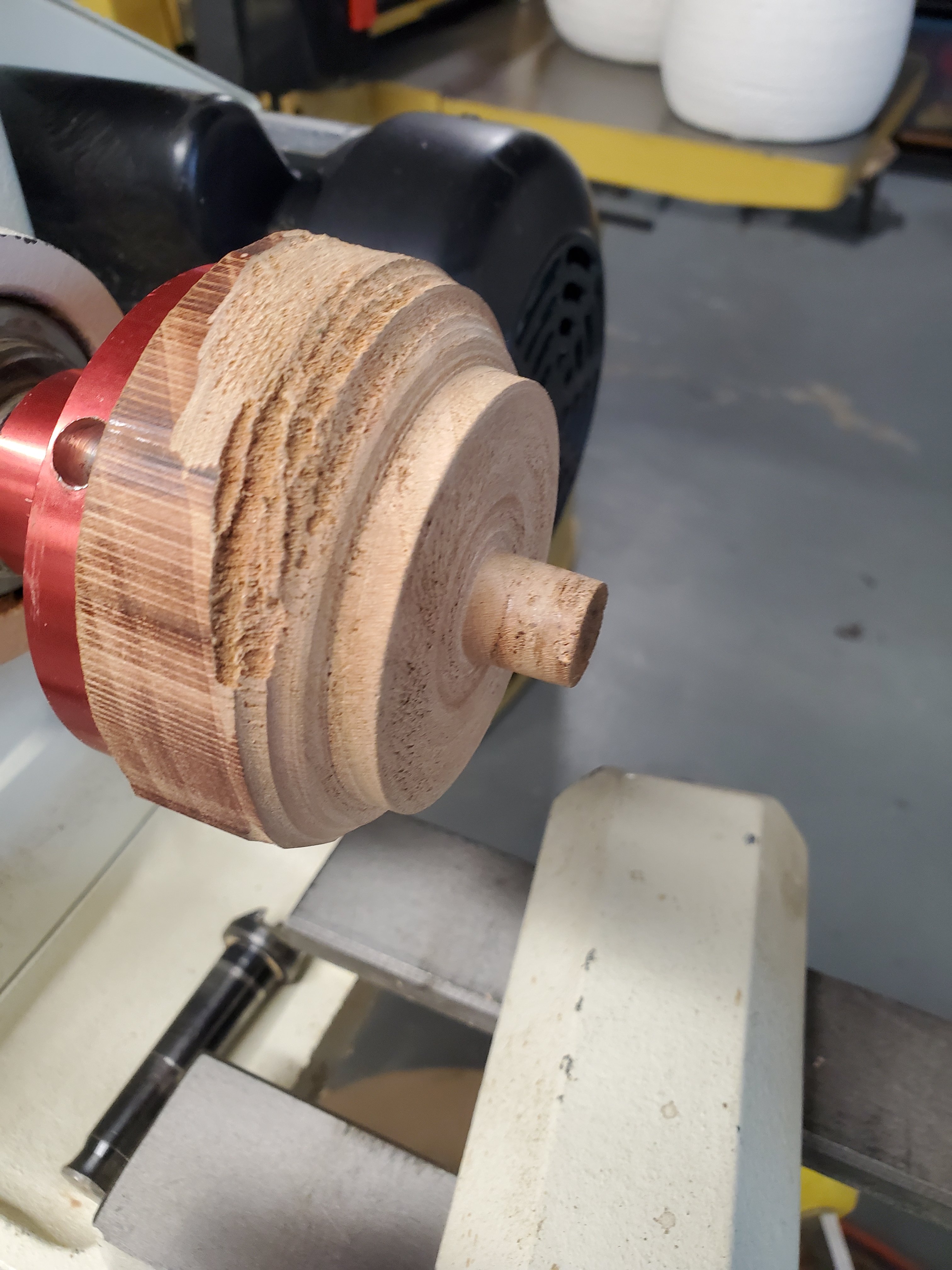
I turned a 2″ diameter knob on the lathe and added a 1/4″ tenon on the bottom.
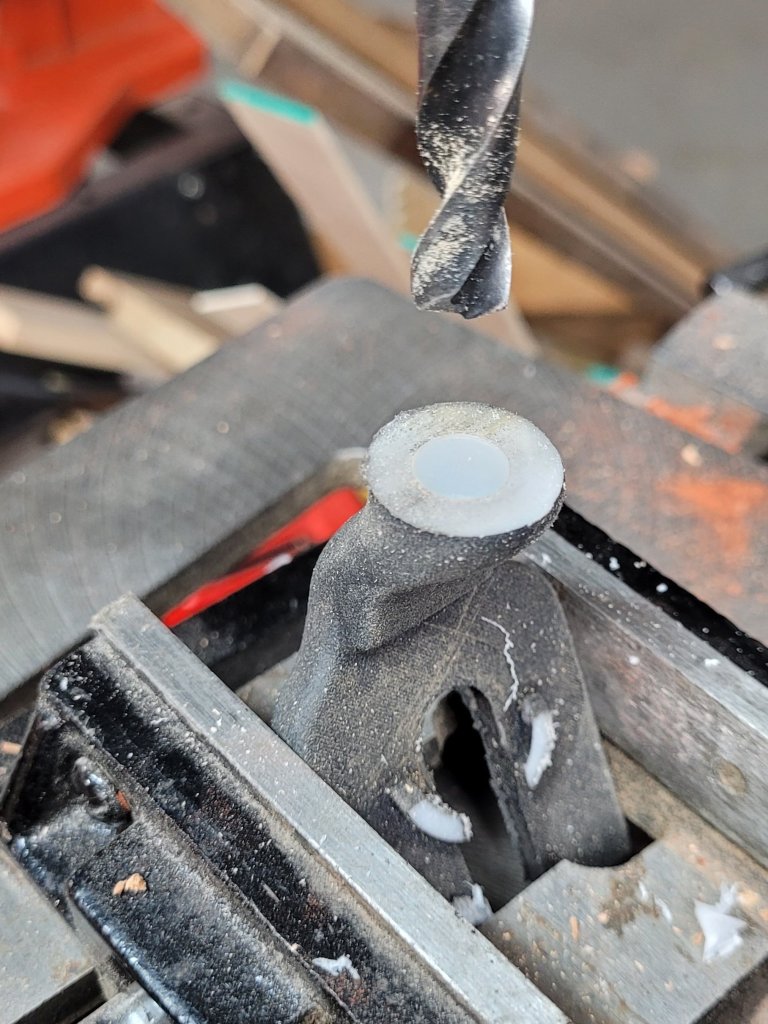
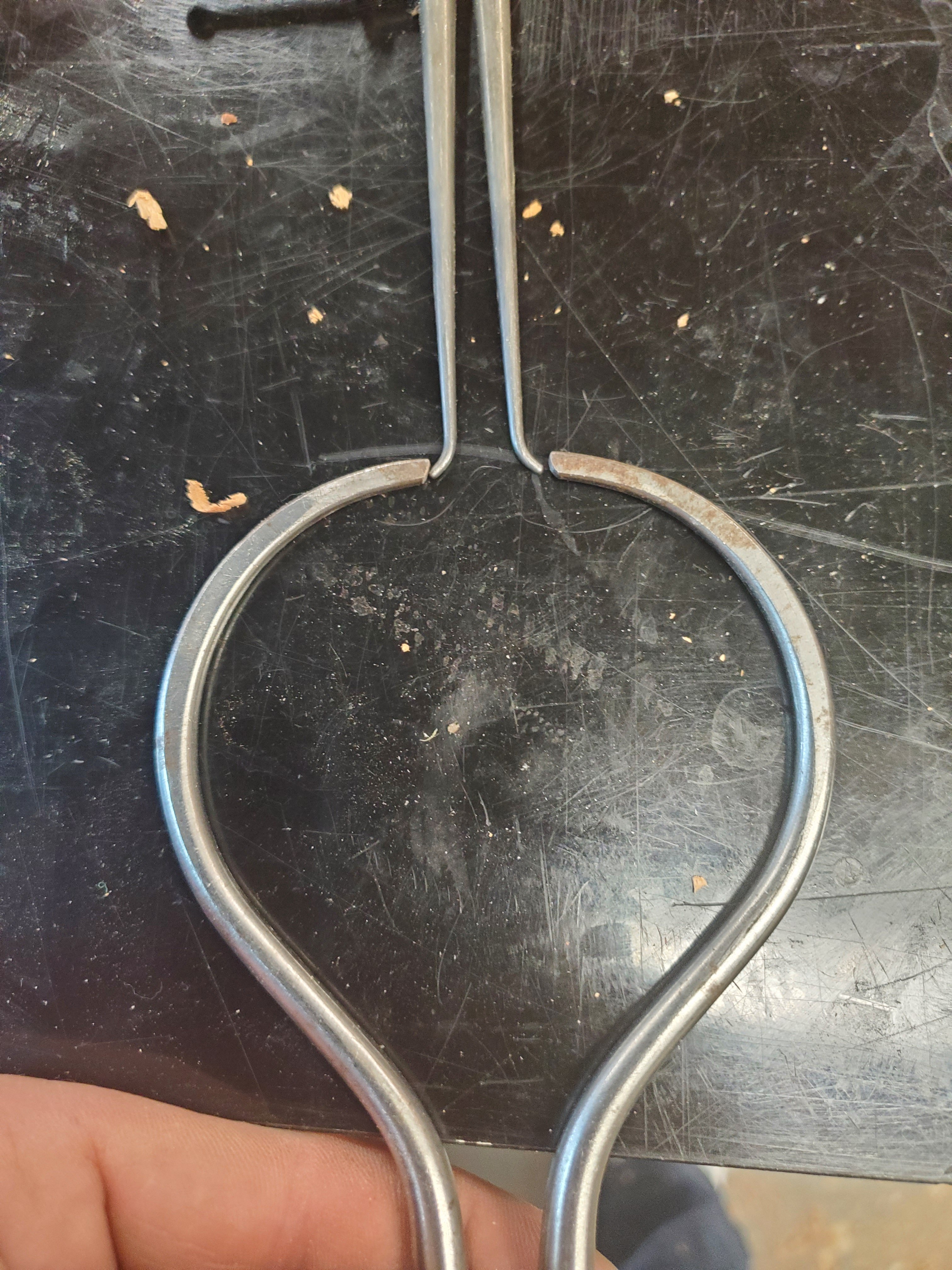
Then I sawed the ball off the tail and drilled a 1/4″ hole to accept the tenon from my wood handle.
After I cleaned the rust off the block plane, I wanted all the parts to match in color and sheen, so I japanned everything during a hot day so I could use the sun as my oven.
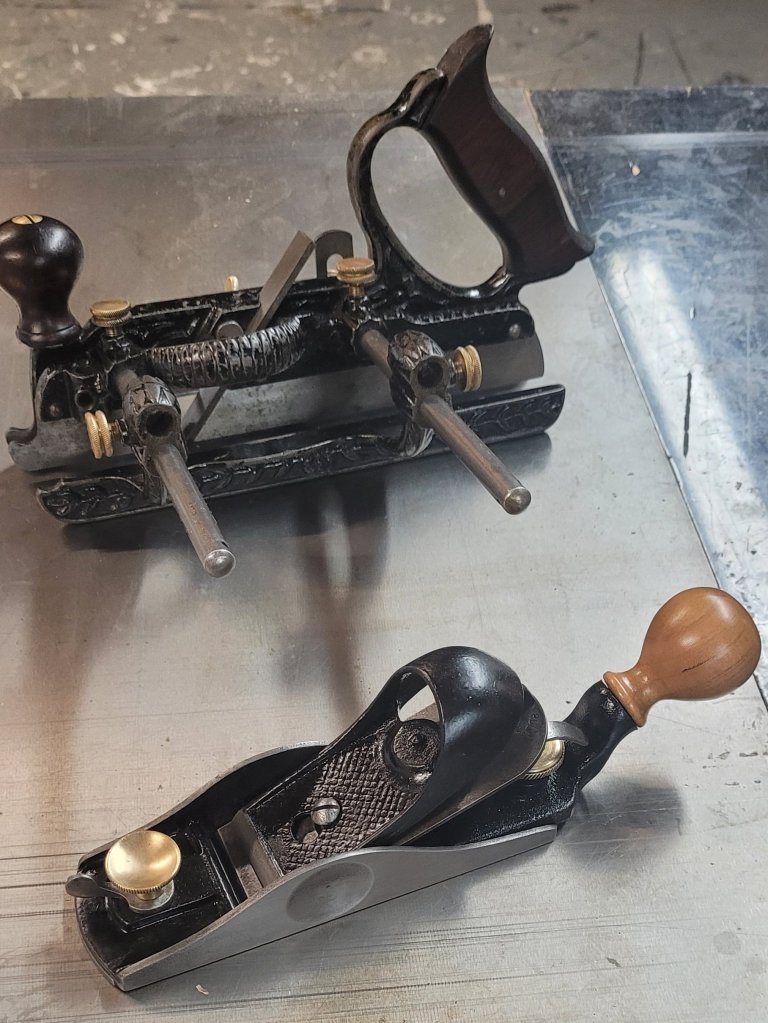
After a couple of weeks, when the japanning dried, I put the plane together to see how everything turned out. As you can see, my japanning looks similar to the old Stanley 45 japanning behind it.
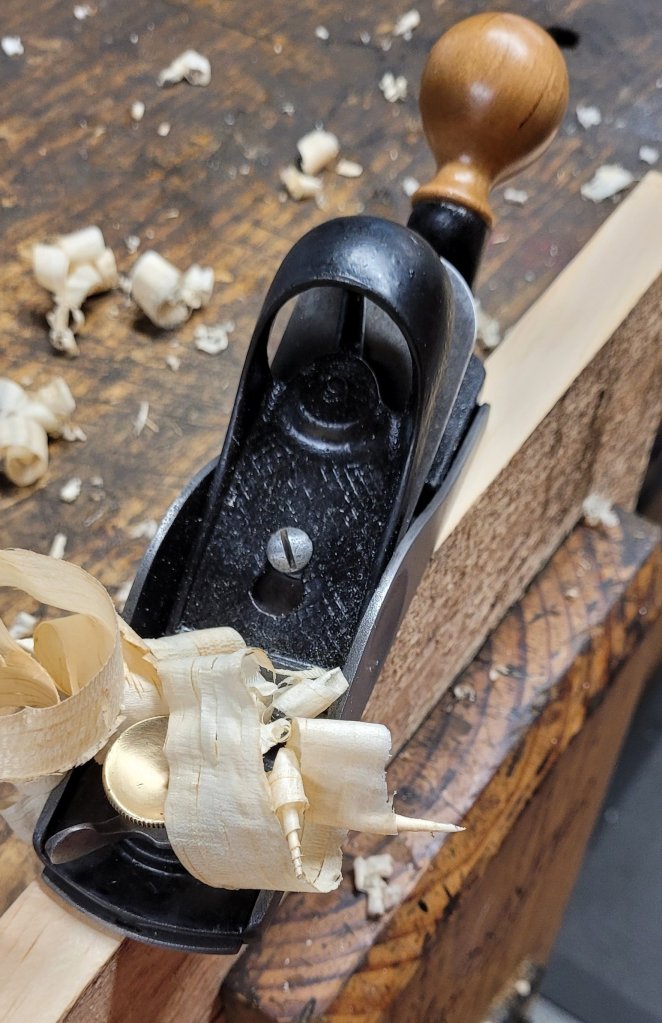
The only thing left to do was to sharpen the blade and try it out. The plane works fine. Ironically, the handle doesn’t make the plane cut any better, which begs the question, what was the purpose of them? The one thing I hear is that they were good for craftsmen who have arthritic hands, making the plane easier to hold.
Honestly, I don’t know how often I’ll use this plane as I already have a couple of my favorite block planes that I use, but it’s still a fun plane to own.
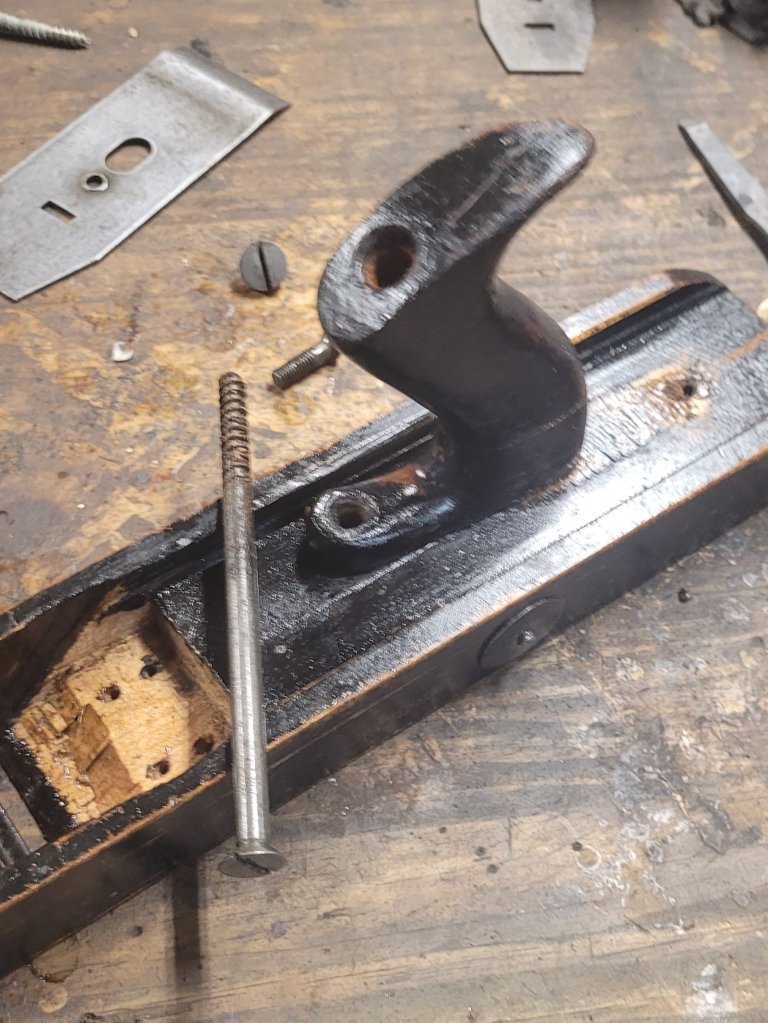
Several weeks ago, I won this craftsman made hand plane on an auction site. When I first looked at it, I thought the body was made with three pieces of wood laminated together like a Krenov plane, but after studying it, I realized it was one single piece of wood. There are a couple of rivets through the body, but I don’t know what purpose they serve.
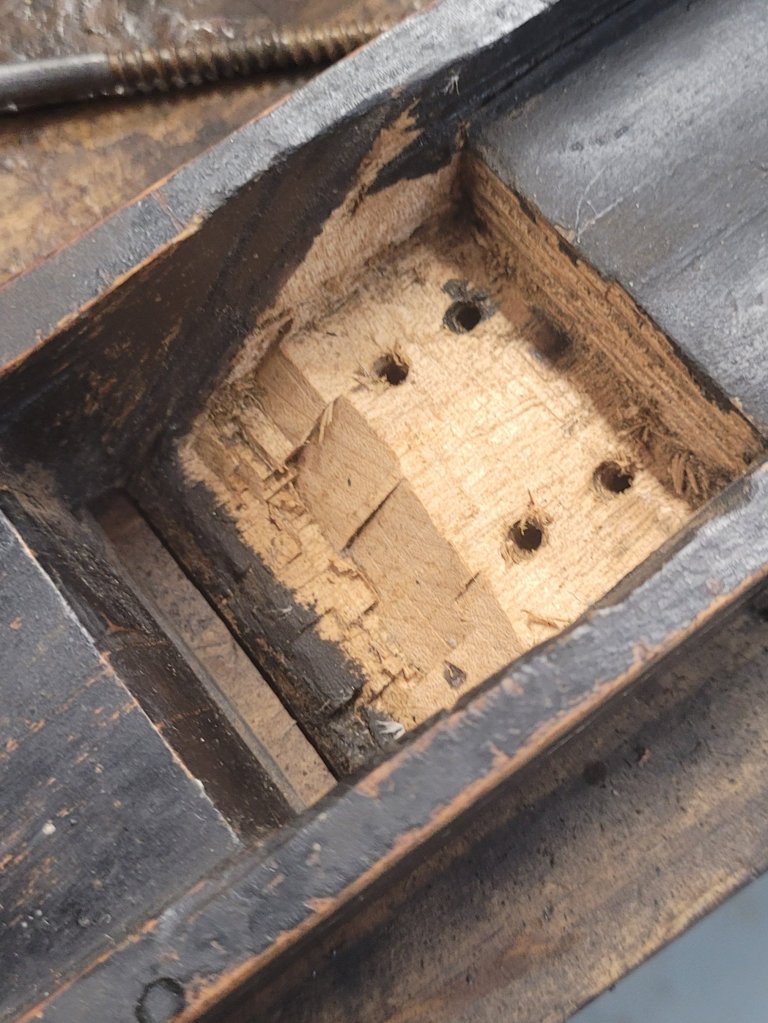
I’m not sure what the story of this plane is, but it looks like the craftsman owned a Sargent plane that broke, so he made a custom wood body out of mahagony and turned his plane into a transitional plane. You can see the chisel marks as he dug out for the frog, which adds a cool factor to the plane.
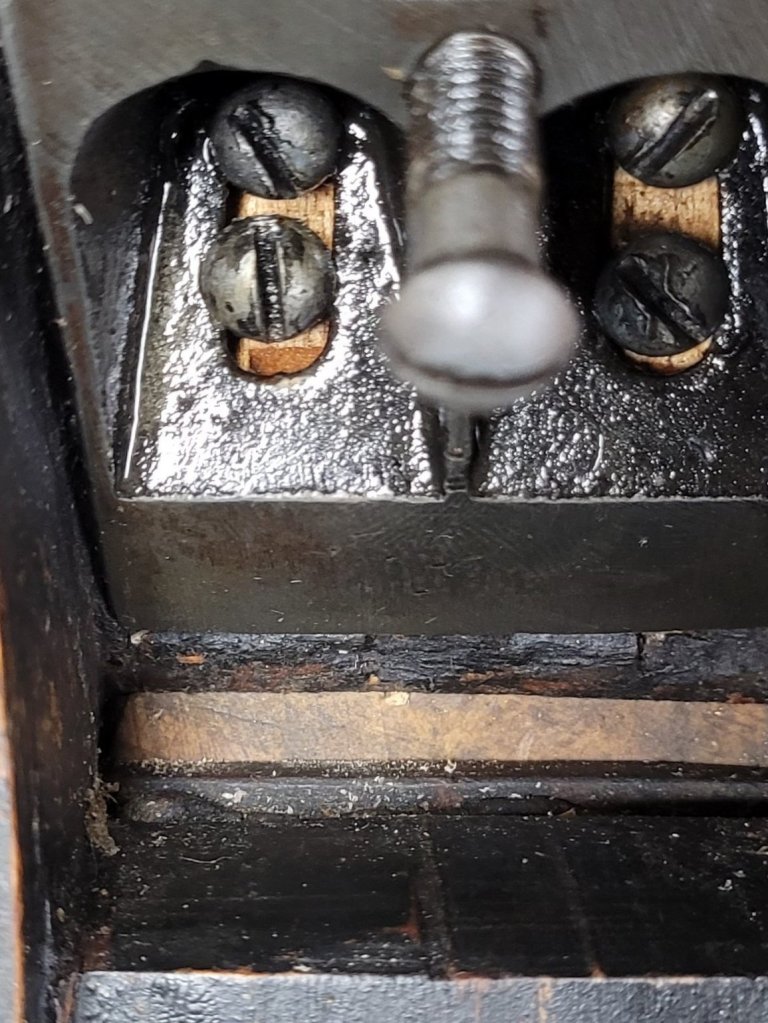
For whatever reason, he used four screws to hold down the frog to the body. It allows for very little advancement of the frog, but the plane still functions fine.
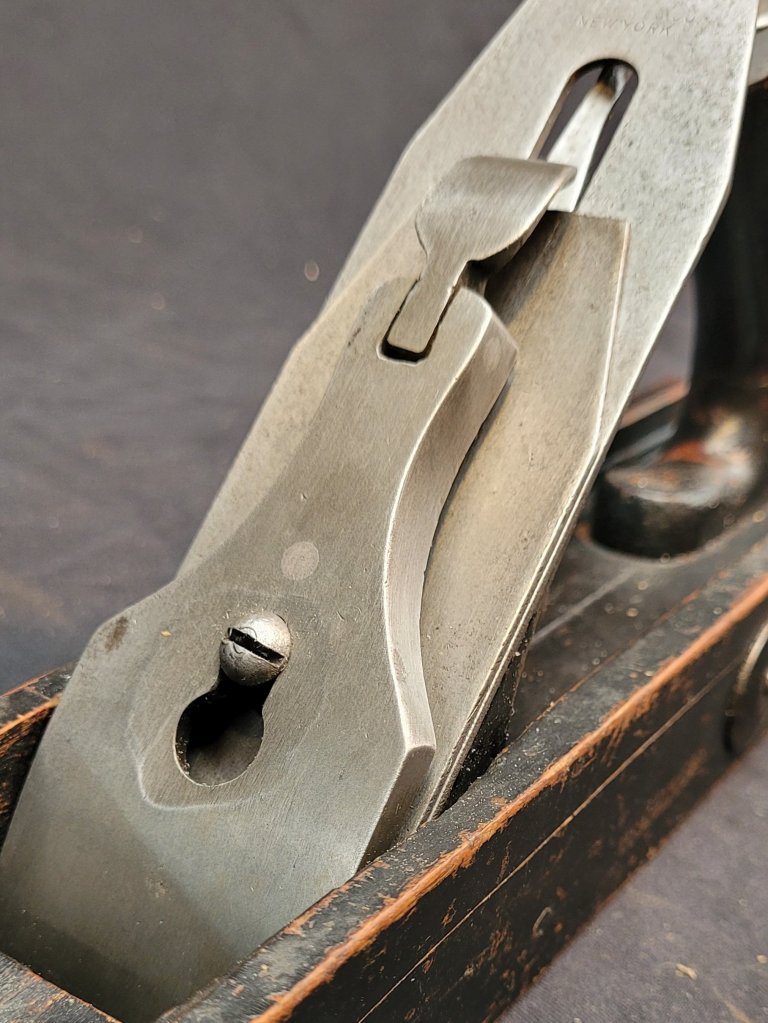
The owner also grounded the face of the lever cap down, which seems odd. You would think the original lever cap screw would have worked just fine, but maybe this screw is a replacement.
Luckily, I know the name of the craftsman of the plane (at least the last name). C Heiland is the person who made the plane. I googled “C Heiland Woodworker,” hoping I would find some information about him but had no luck. It would be awesome to have some provenance on the plane.
It’s a neat plane to look at, but I wanted to see how it performed, so I sharpened the blade and put it to work. The plane performs admirably. It was much better than the Buckeye plane I tried out from a few weeks ago.
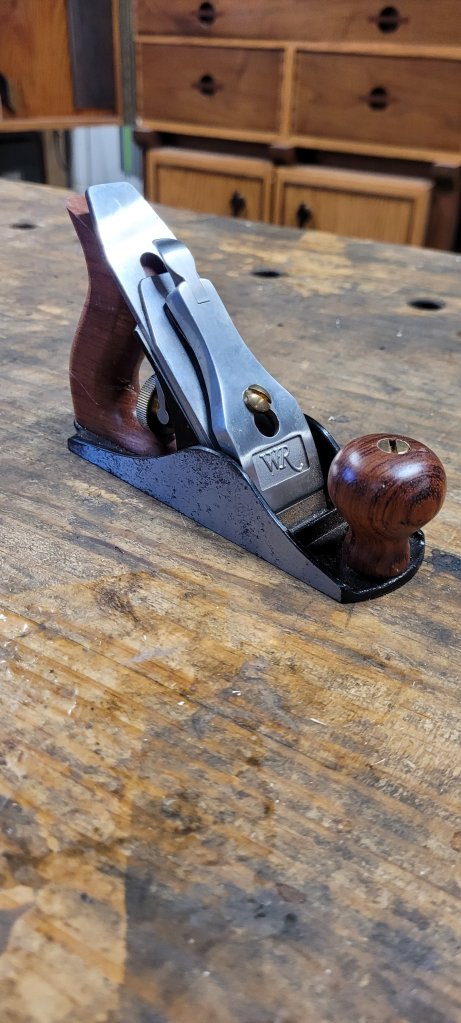
A few months ago, I bought this Woodriver No 1 Plane on eBay after missing owning my Stanley No 1 Plane that I bought at an antique show a couple of years earlier. I had to sell my Stanley No 1 because at the time, I needed the cash, but I still enjoyed using it for the short time I owned it.
I wanted to buy a Lie Nielsen No 1 plane, but those have shot up in price over the past couple of years as well. When I wrote my article about “Using a Stanley No 1 Plane,” you could buy a Lie Nielsen for about $200. Now, their prices fetch anywhere between $500-800 because apparently Lie Nielsen is no longer making them, and collectors are grabbing them up.
Woodriver No 1 planes are technically still available, but they have been on backorder from Woodcraft for over a year, which is why I had to hunt eBay for this little guy. Whether or not they come off backorder is anyone’s guess.
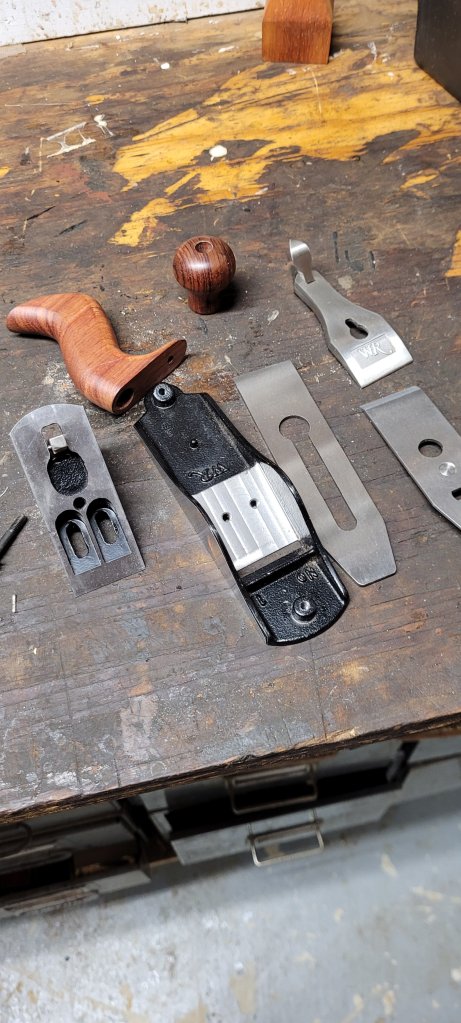
The plane needed a little cleaning, so I took it apart and polished all the parts, removing surface rust. I noticed the edges were sharp from the milling process, so I cut them down with a file and some 120 grit sand paper.
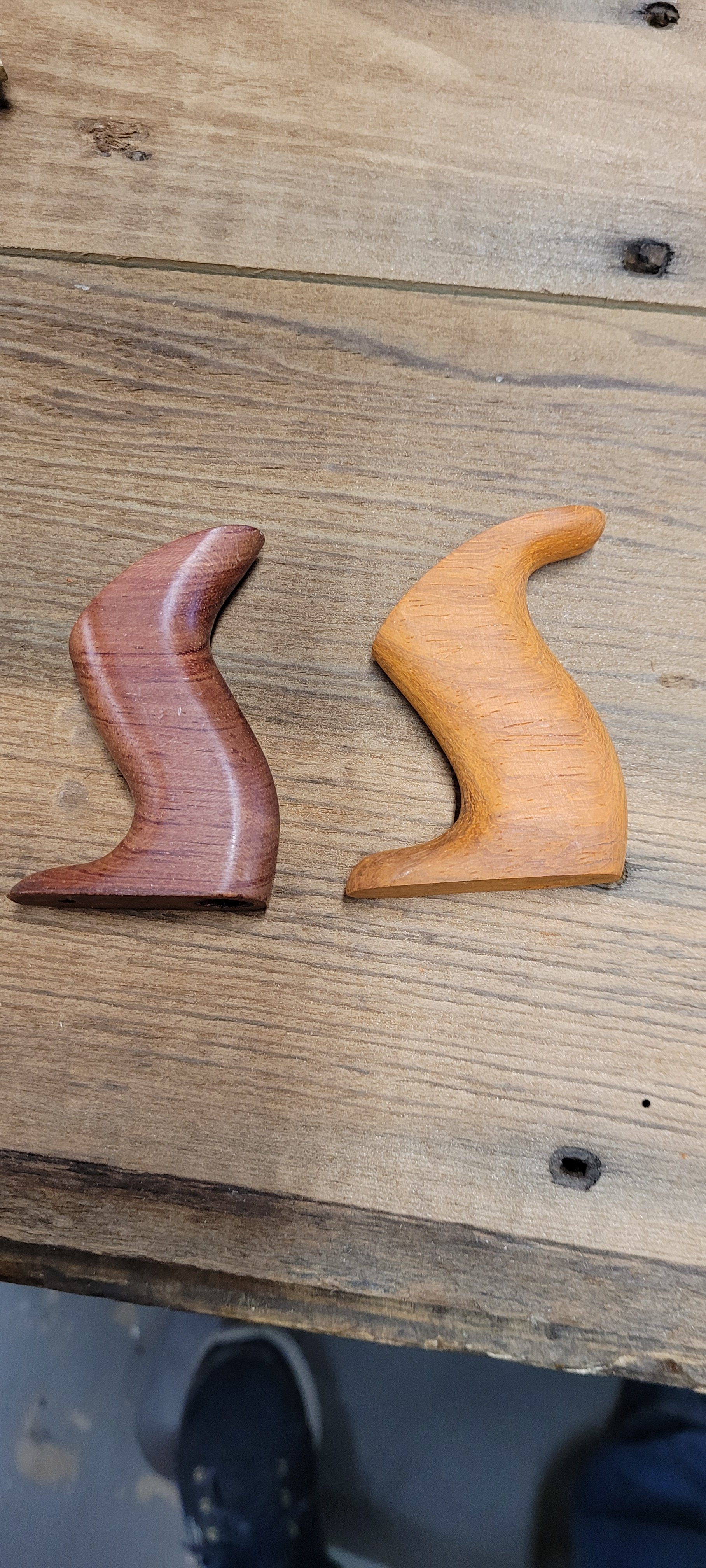
The one thing I didn’t like about the plane was the shape of the rear tote. I originally wanted to replace the handle with Brazialian Rosewood, but I couldn’t source a piece that was cheap enough, so I settled with a scrap piece of Paduak. I’m partial to the look of Stanley’s older totes, so I drew out a design that I thought looked close enough to the old Stanley planes.
I simply used chisels and files and rounded the edges of the tote. I played around with the overall shape of the tote a few times until I was satisfied with the overall look.
After the shaping was done, I had to drill the holes for the nut and threaded rod. I stuck a 1/8″ dowel through the Woodriver tote and transferred that angle onto my new tote. Then, I drilled the center hole through the body and larger holes on the top and bottom of the tote to fit the nut on top and the raised hump on the bed.
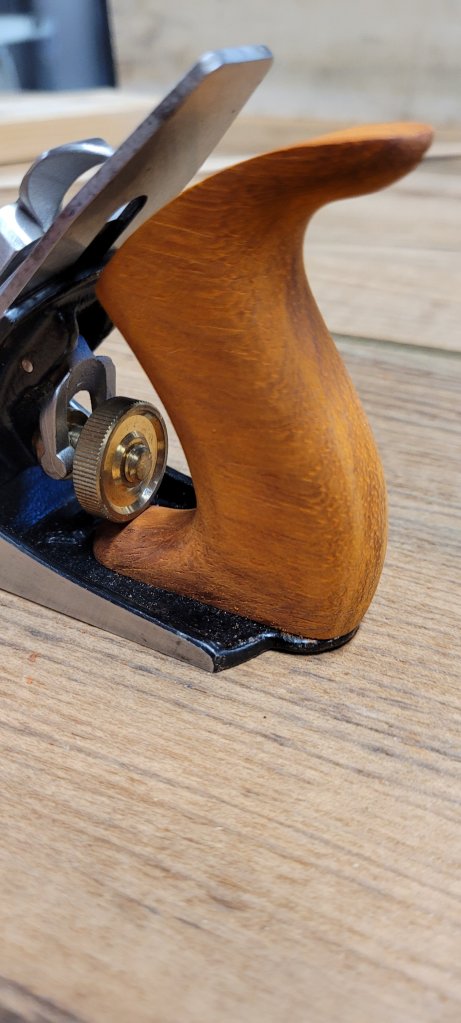
Once I put the tote onto the plane, I examined how it fit. I noticed that the front part of the tote was a little too tall for the brass adjustment screw to move freely. So I reshaped the front of the tote, giving the screw more clearance to move.
I sanded the tote smooth and applied dark walnut Danish oil on the tote to tone the reddish color down a little bit. I contemplated making a new knob as well, but I decided against it. I’m hoping that the color of the Paduak will darken over time and match the knob better in color.
Here’s the plane all cleaned up with a new tote. Looks nice, but I still would like to make Brazialian Rosewood handles someday.
I sharpened the blade to see how it performed. I grabbed a scrap piece of birch with some swirly grain and went to work. The plane worked admirably. I really do think these little guys were made to clean up rough grain produced by larger planes.
I don’t think Woodriver No 1 Planes are as nicely machined as Stanley or Lie Nielsen planes, but for the price, they’re a good substitute.
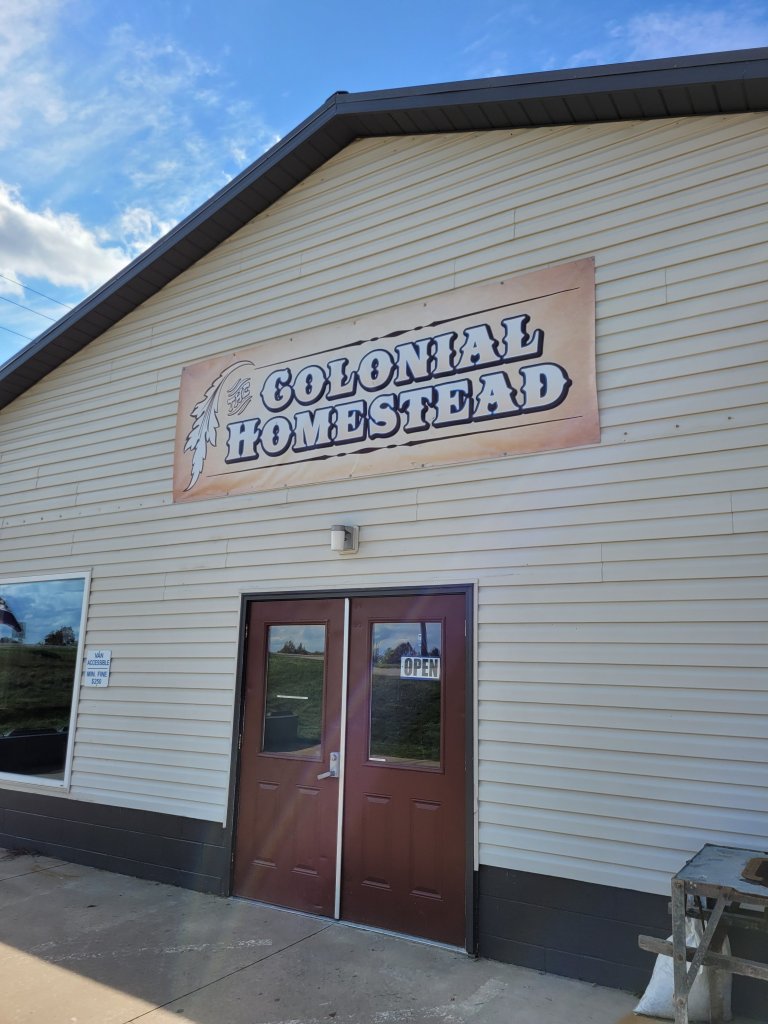
A couple of weekends ago, my wife and I drove up to Millersburg, OH to check out the fall colors and the antique malls up there. We visited Millersburg a couple of years back only to find out after we left, that there is an antique tool store in town. I saw Colonial Homestead on Instagram when we got home and couldn’t believe I missed it so, this time I knew I had to put it on our list of stops.
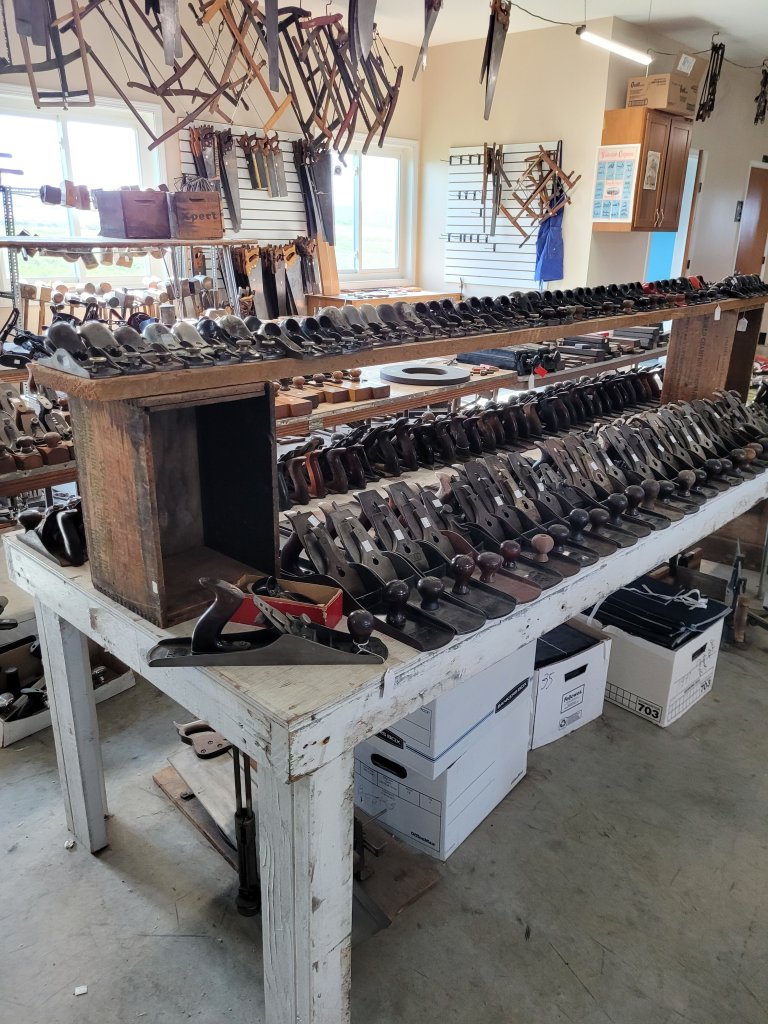
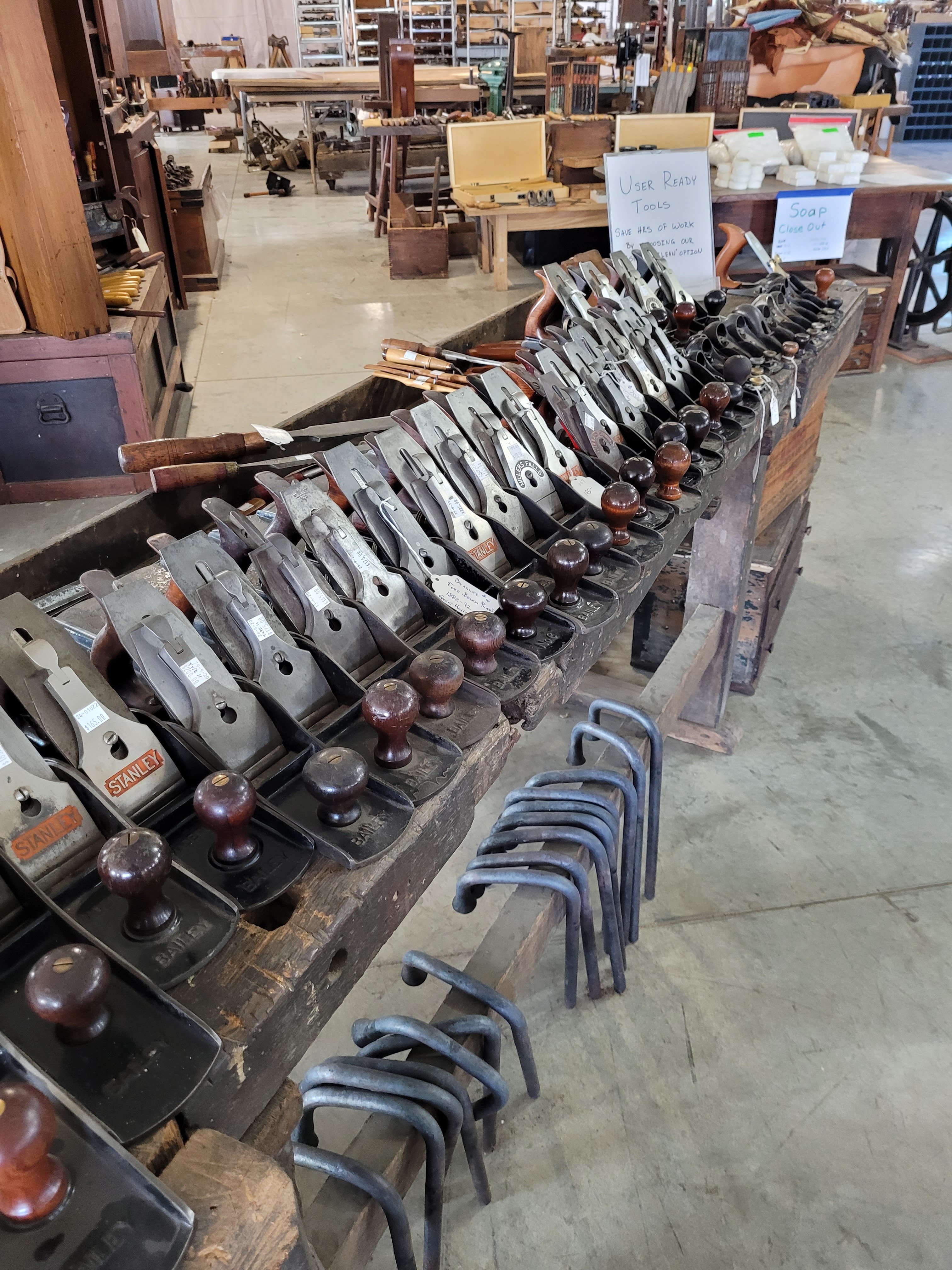
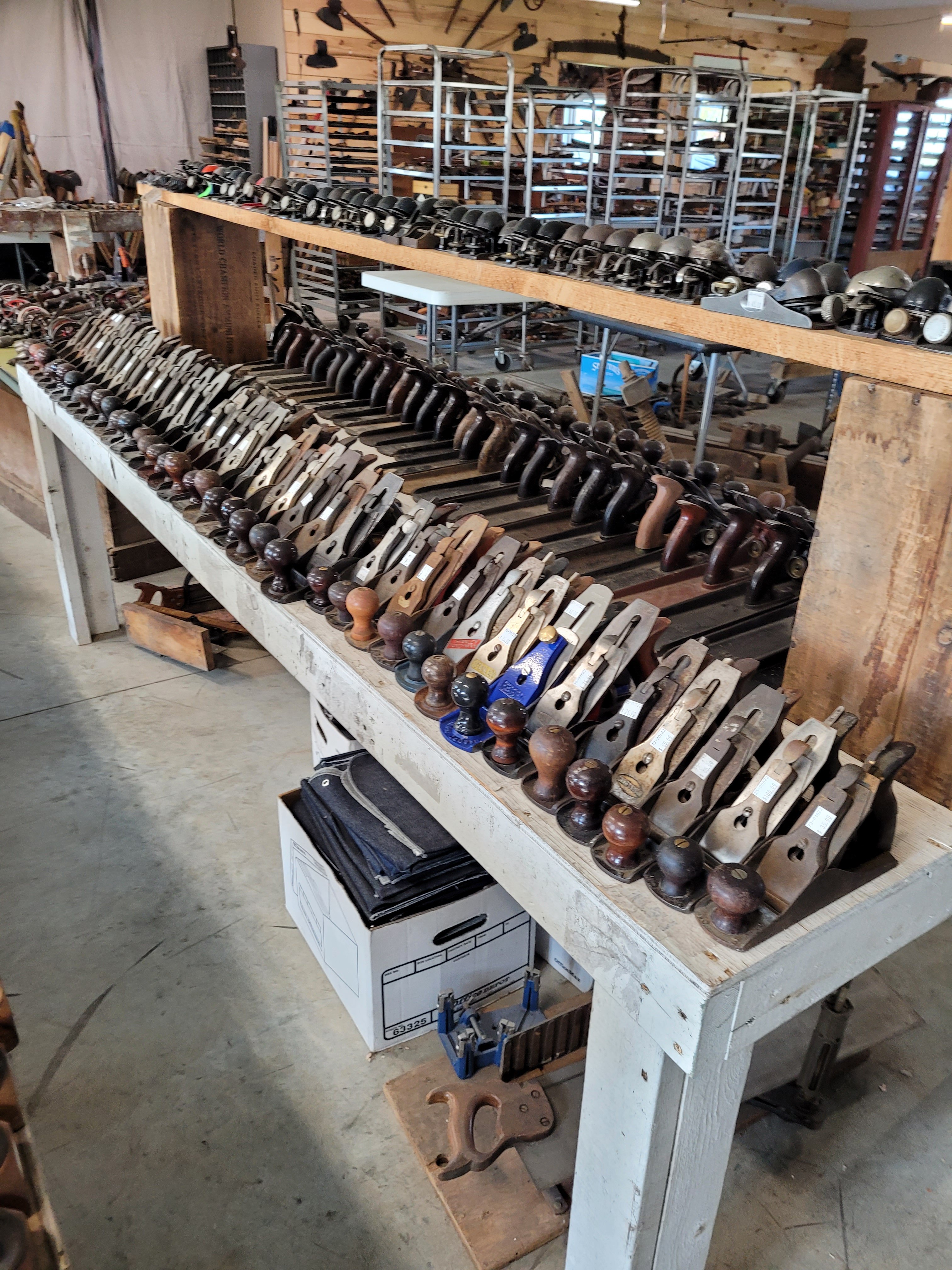
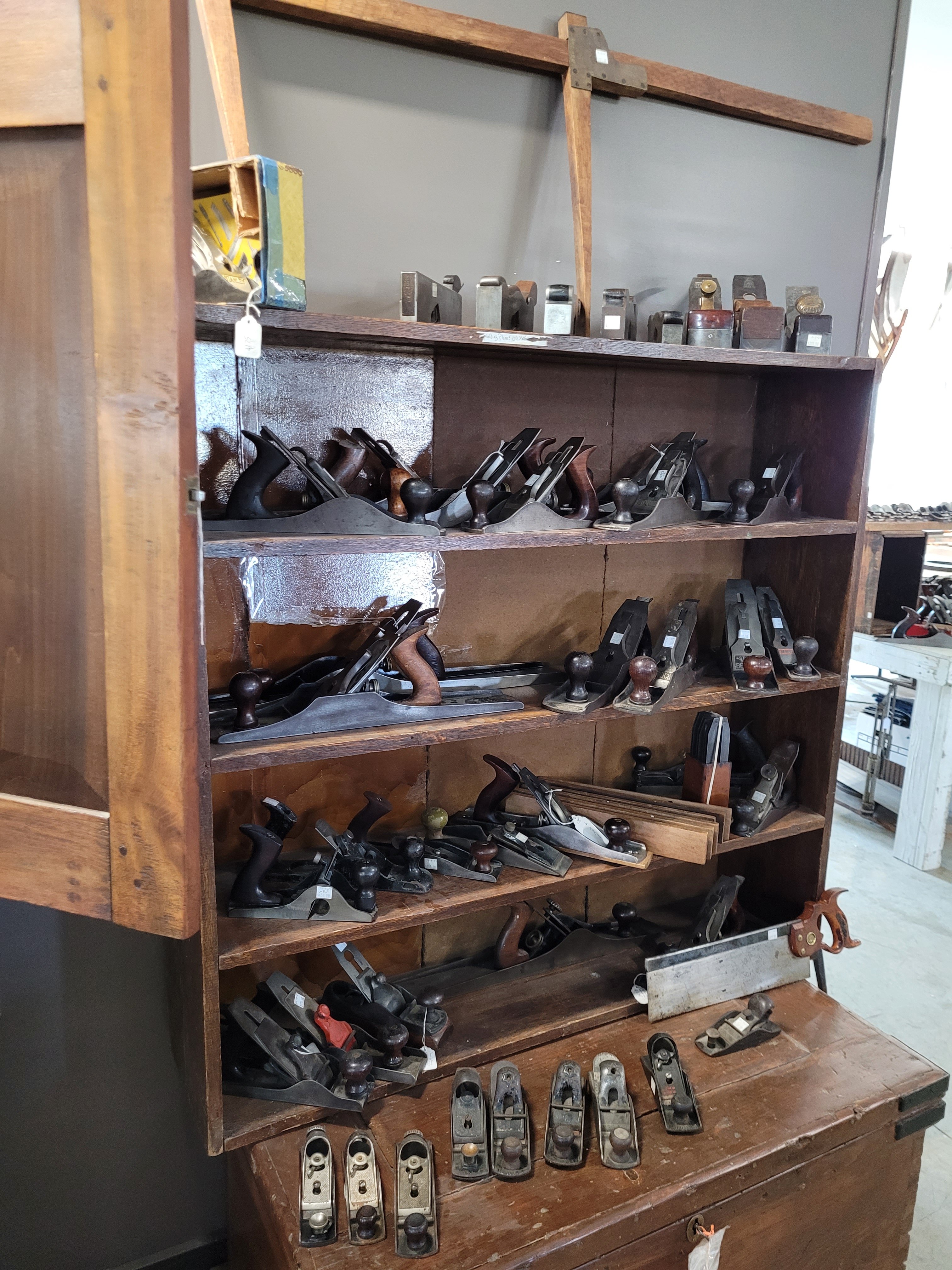
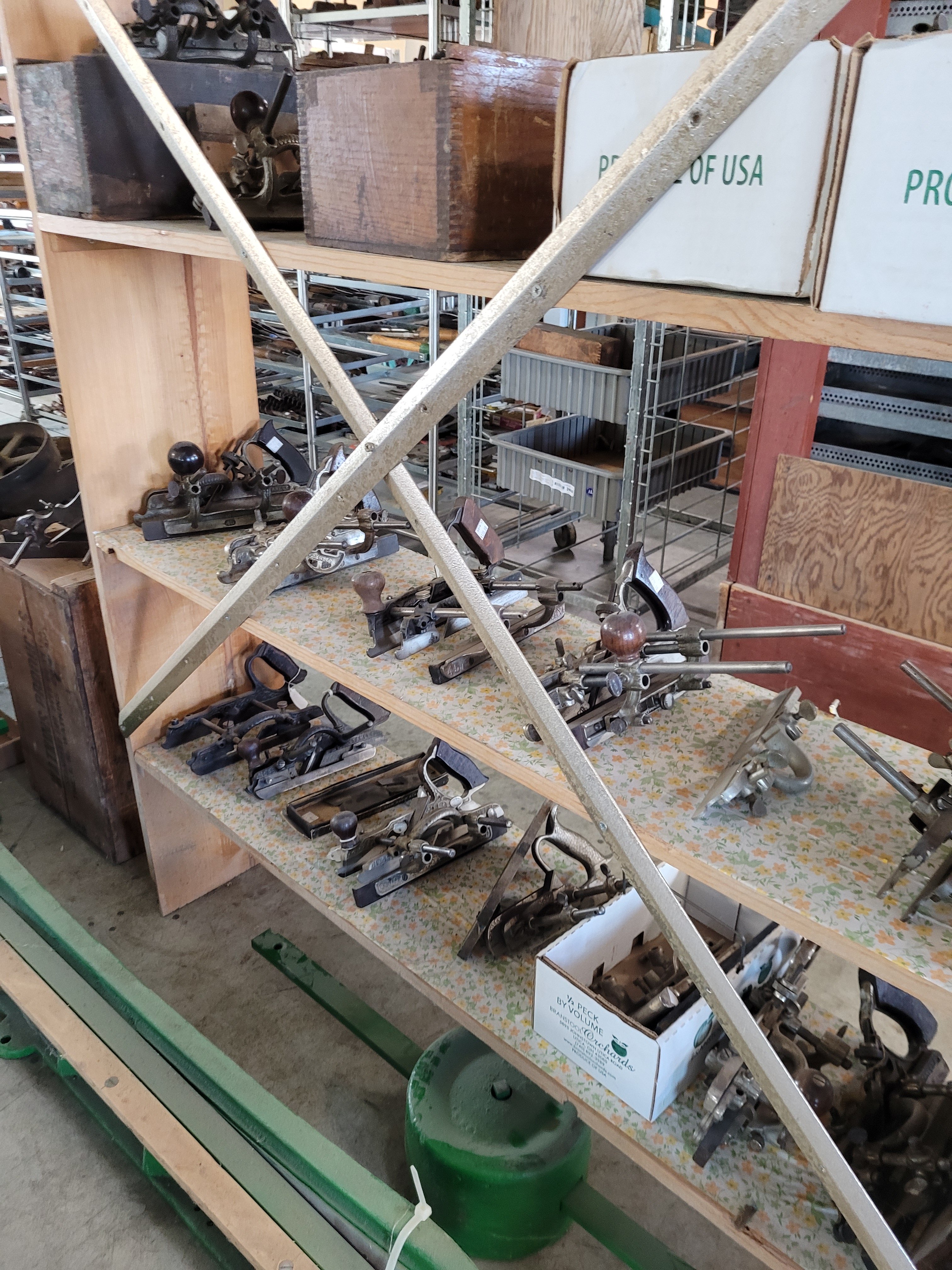
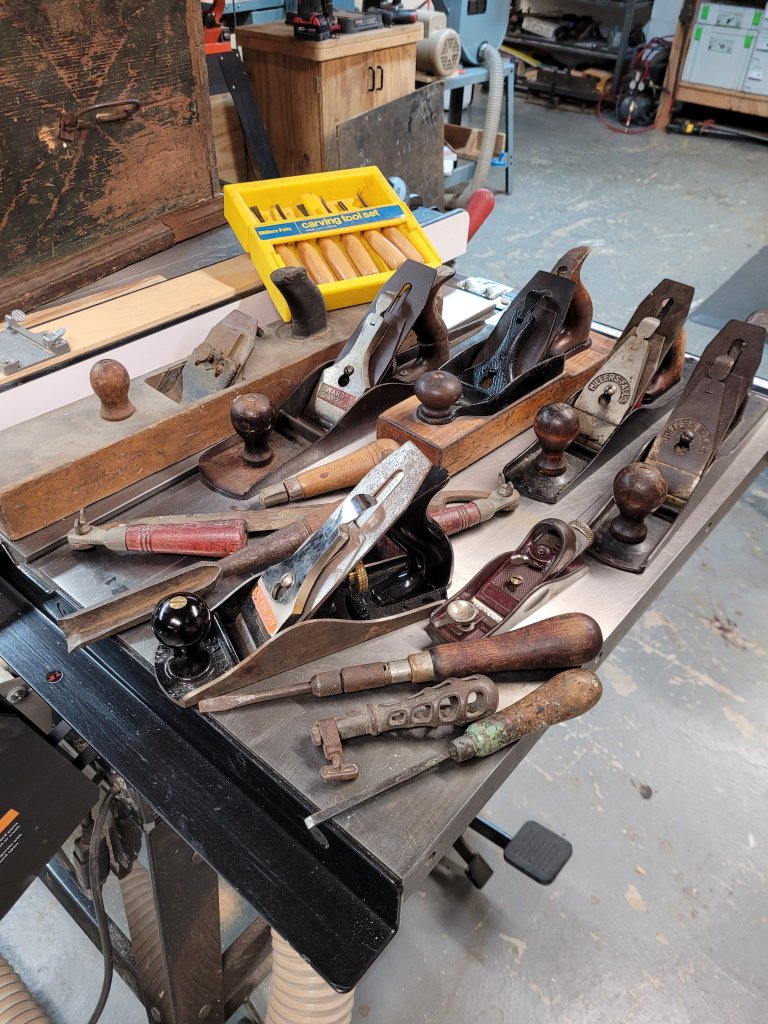
The building is about ten minutes outside of town and is a really big. Inside there are thousand of tools laying on tables and bookshelves. I immediately took a step back just to absorb everything I was looking at. There’s a table in front with a bunch of Stanley planes that are restored and ready for use.
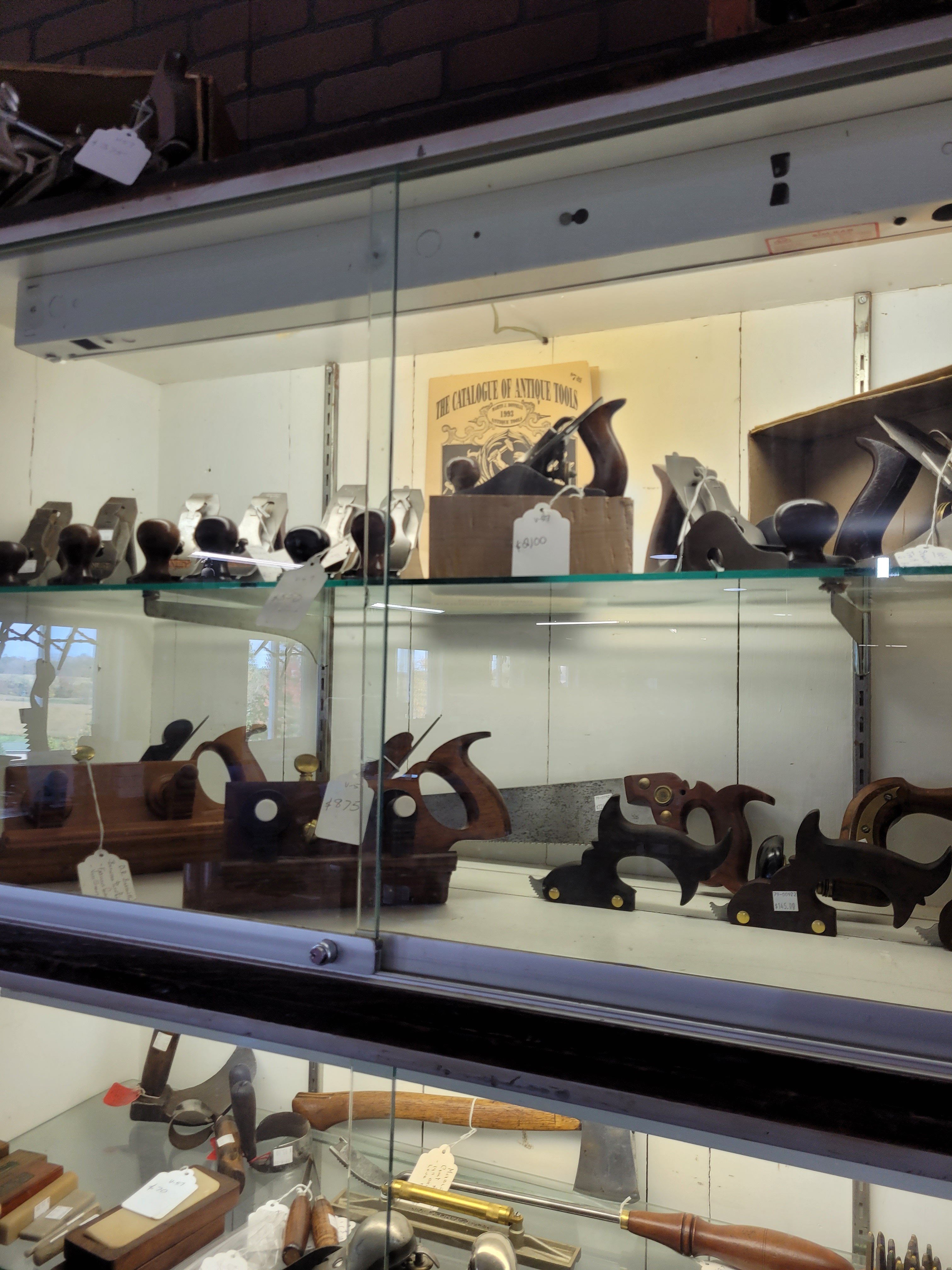
Every tool you could imagine in this joint with some rare and unusual pieces. The prices on the tools are equivalent to eBay pricing, so don’t expect to get a steal. At least it’s not for me as I’m a picker so there was no meat-on-the-bone with the pricing on the tools. He was asking $2100 for the Stanley No 1 which was way above my budget. It looks like it’s sitting on the original box but I don’t remember noticing the box when I was looking at it.
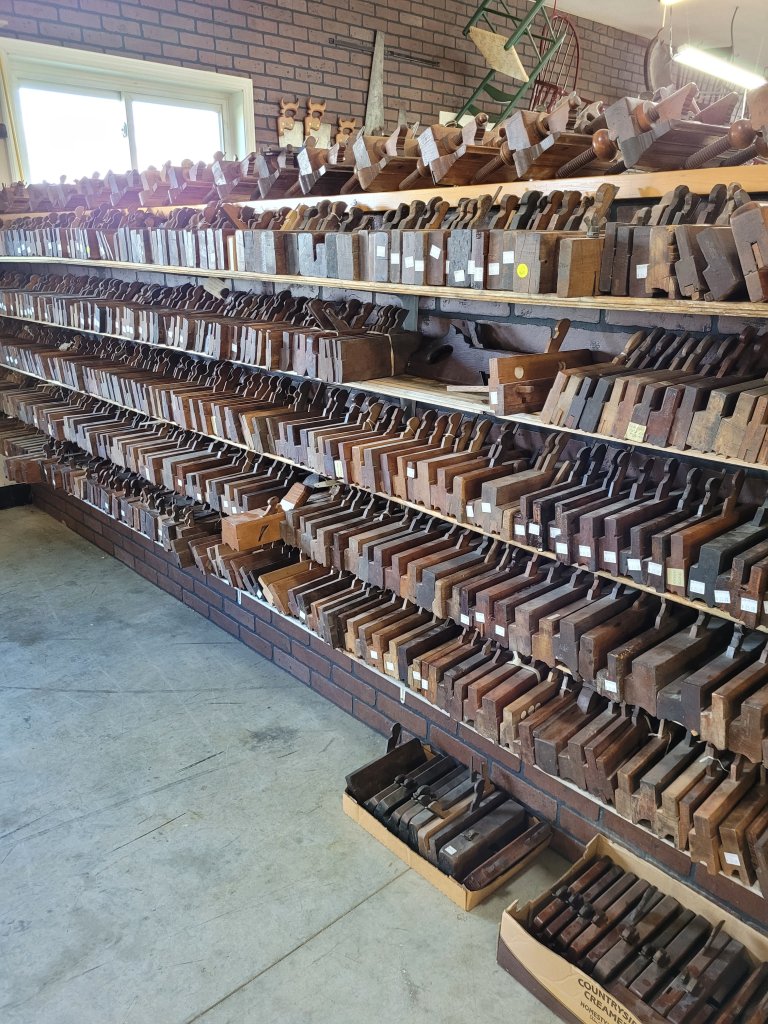
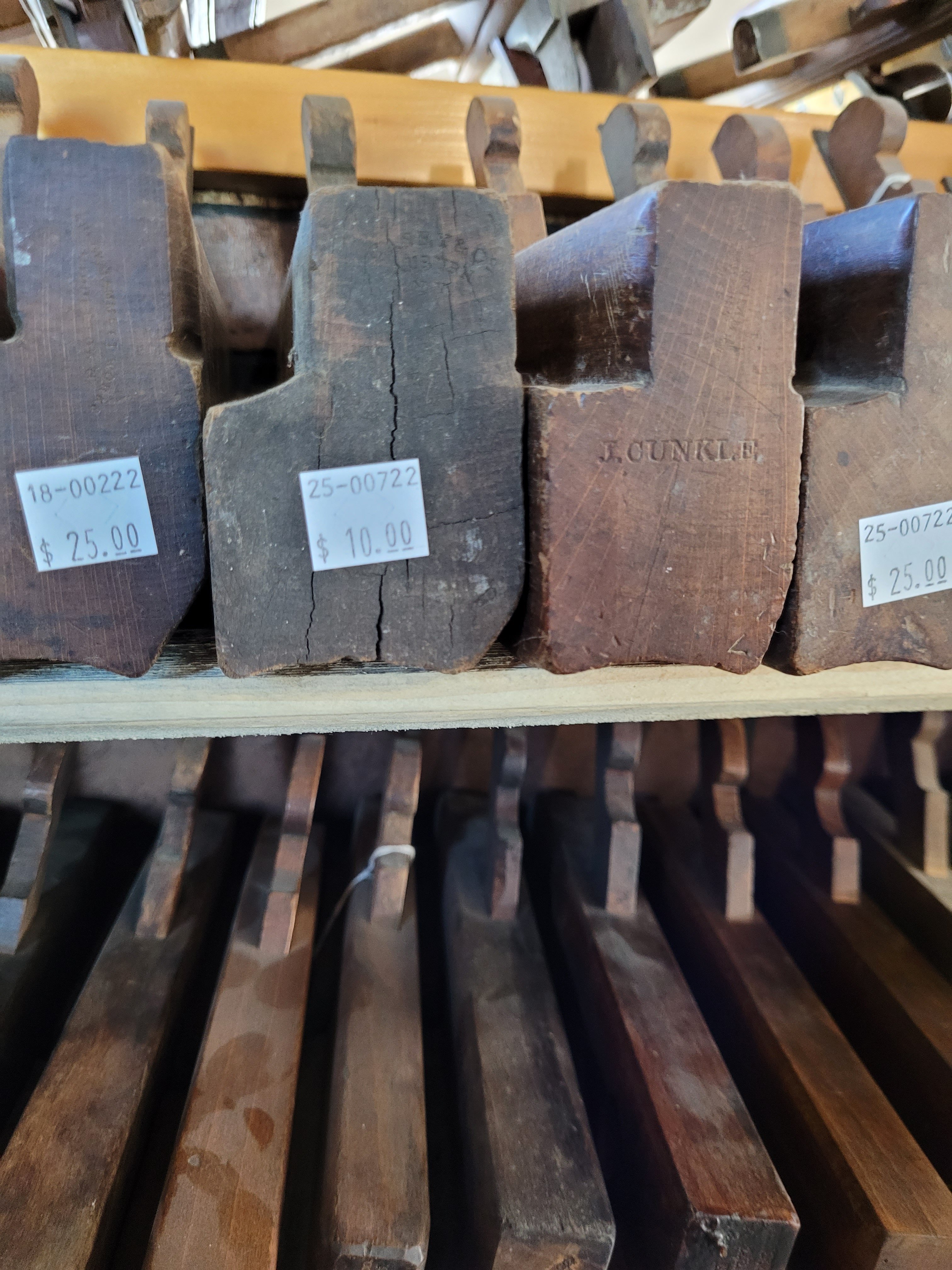
He did have a real nice selection of molding planes with prices that were in my budget however, he only takes cash and I didn’t have any on me so, it was pretty much a few minutes of browsing.
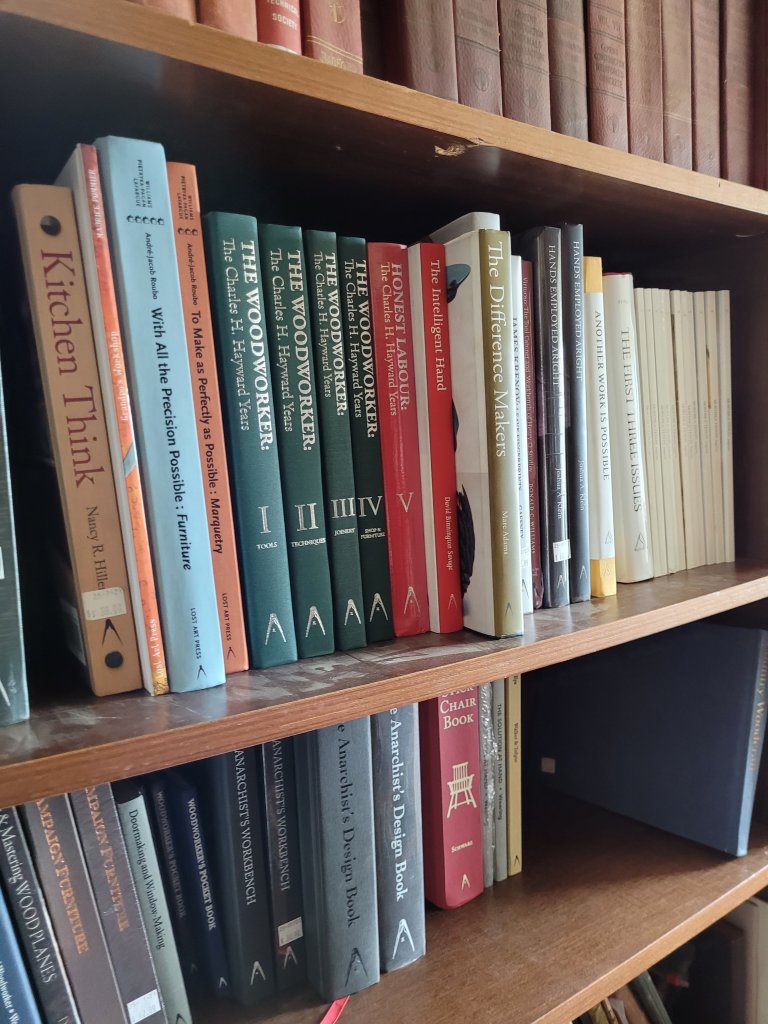
He also had a nice closet full of woodworking books. There were a lot of out of print books along with Lost Art Press favorites. I looked for the 2nd edition of the Stanley Tool Collecting book by John Walter but, there was none to be found.
After twenty minutes of browsing, I said goodbye and went on my way as my wife was waiting in the truck. The weekend wasn’t a total lost as I was able to find tools in my budget in antique malls in Berlin, and Walnut Creek, OH. The prelateral Stanley No 37 Jenny’s Plane was my favorite pick of the trip.
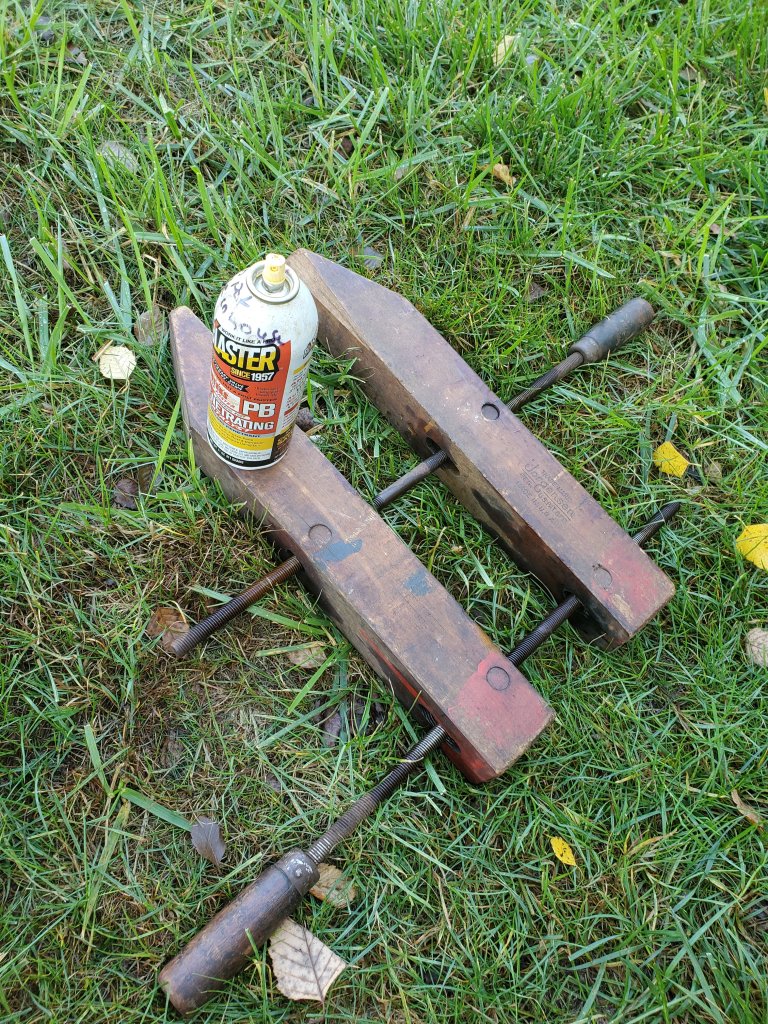
Last month, I went back to the Springfield Extravaganza Antique Show in Springfield, OH. It’s the bi-yearly pilgrimage I’ve taken for the past 20 years. I love it, even though I haven’t found that many tools in the past few years. It was slim pickings again last month so, I was happy to buy a few wooden clamps for $15.00 a piece.
When I started restoring them, they were completely seized as the handles were unable to turn. I thought to myself “did I just piss away $30.00?” Luckily, after spraying the threads with PB Blaster for about 30 minutes, I was able to break free the rust on the threaded rods.
I then went to my tried and true antique oil, of mineral oil, orange oil, and melted beeswax. The solution not only helped the parts move freely, but it made the parts move like they’re brand new. If I had half of a brain, I’d sell this solution as it works so damn well, but I already have enough on my plate these days.
After the parts were free, I used a Japanese metal file and carved away the rust that was in the threads. You can see in the photos how corroded the threads were on the clamps. I feel lucky to have them usable again.
The final step was to coat the whole clamp with my tool solution. With a everything clean, I have two very usable clamps for a fraction of buying new wooden clamps and it was a done in one afternoon while watching football on TV. You gotta love antique shows!
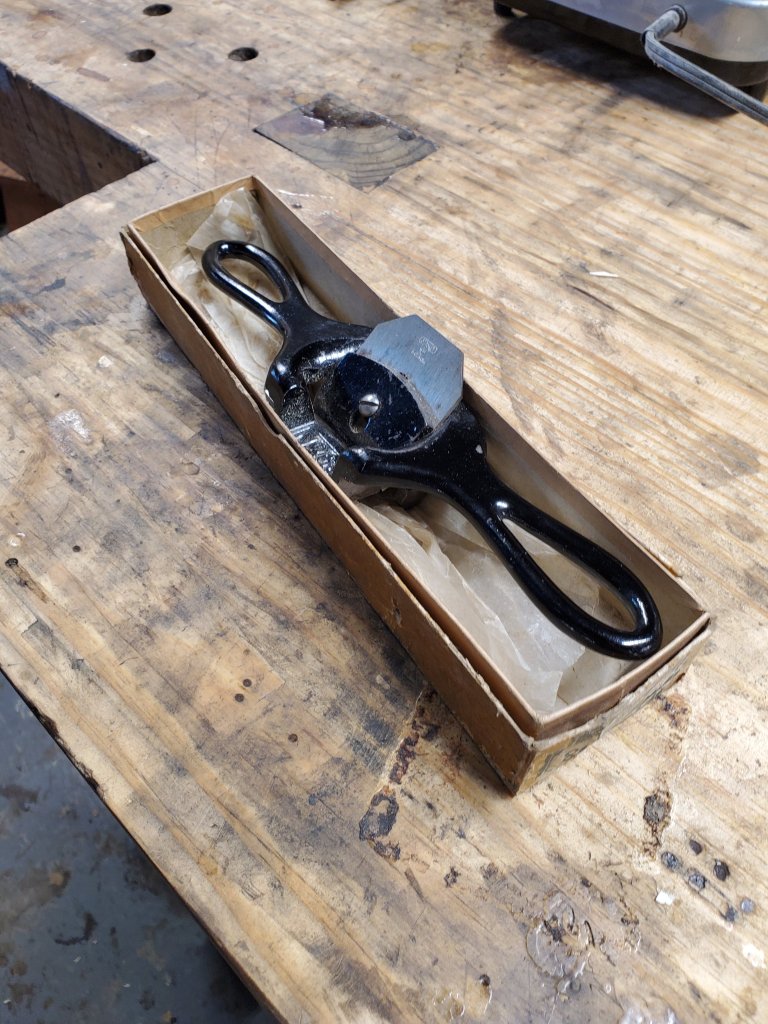
Yesterday, I went to an antique show and picked up the Stanley No 68 Rabbet Spokeshave in it’s original box. I’ve heard about the tool, but I don’t think I’ve ever seen one in person. The price the guy was asking was too good to pass up so I took it home.
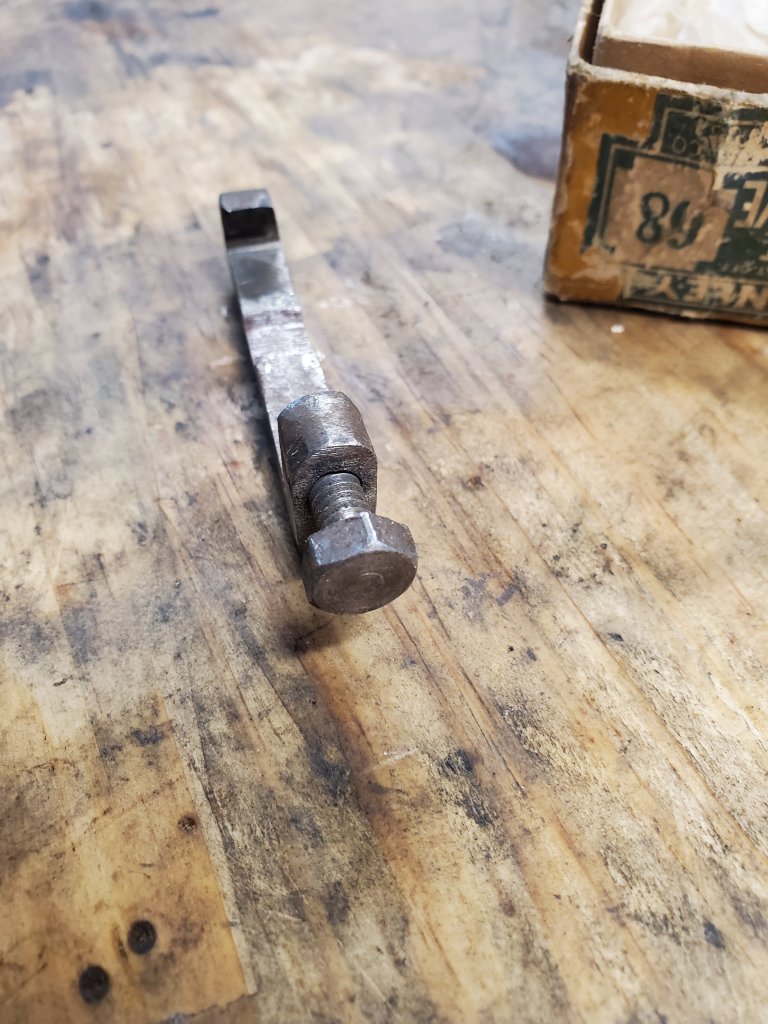
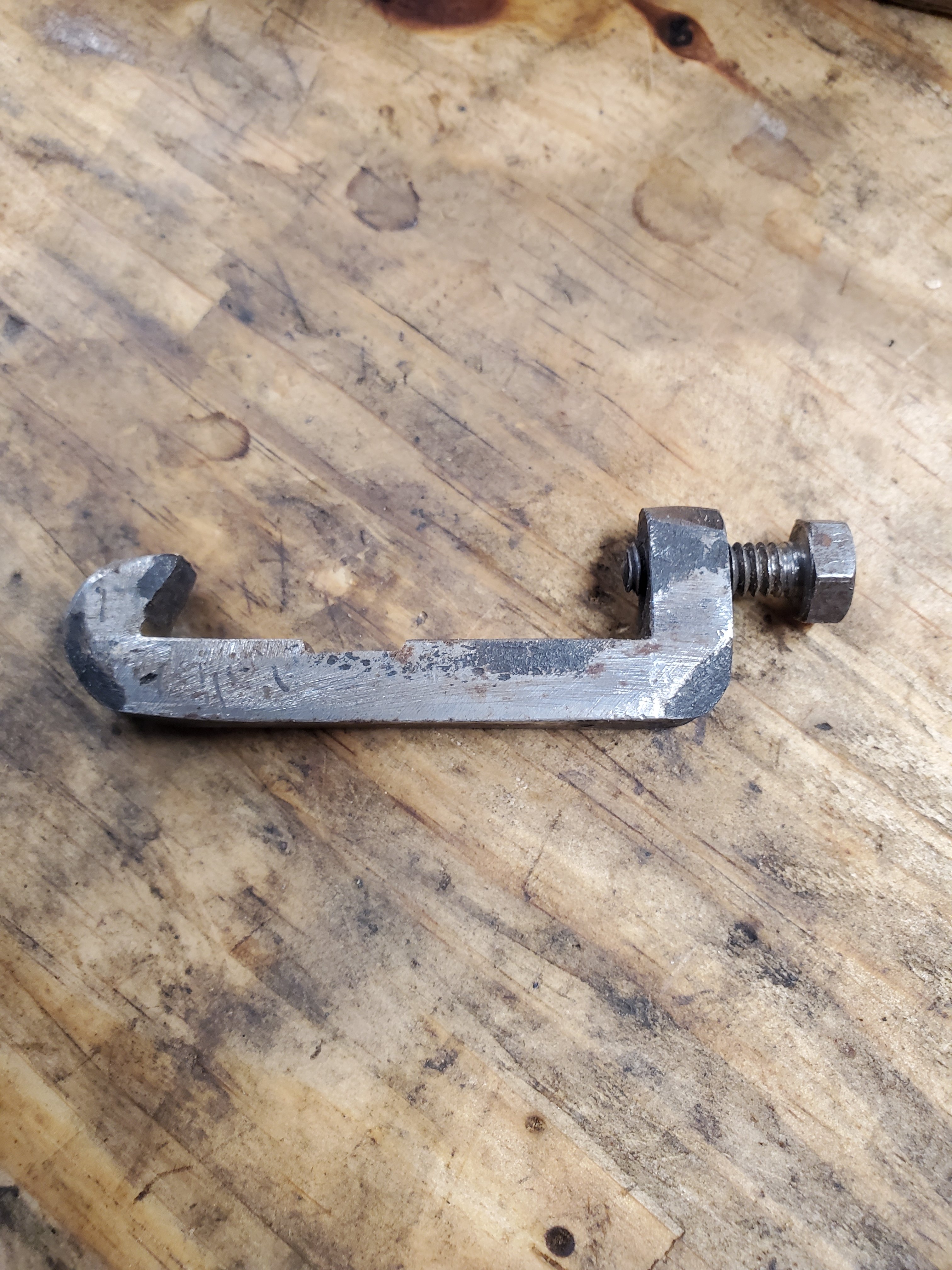
When I got home, I noticed a fence inside the box. At first, I thought it didn’t belong with the spokeshave but after looking at it for a few minutes, I saw that it clips on the back. The fence looks crude as if it was made by the original user, so I looked in John Walter’s Stanley book, but saw no mention of a fence that came with the tool.
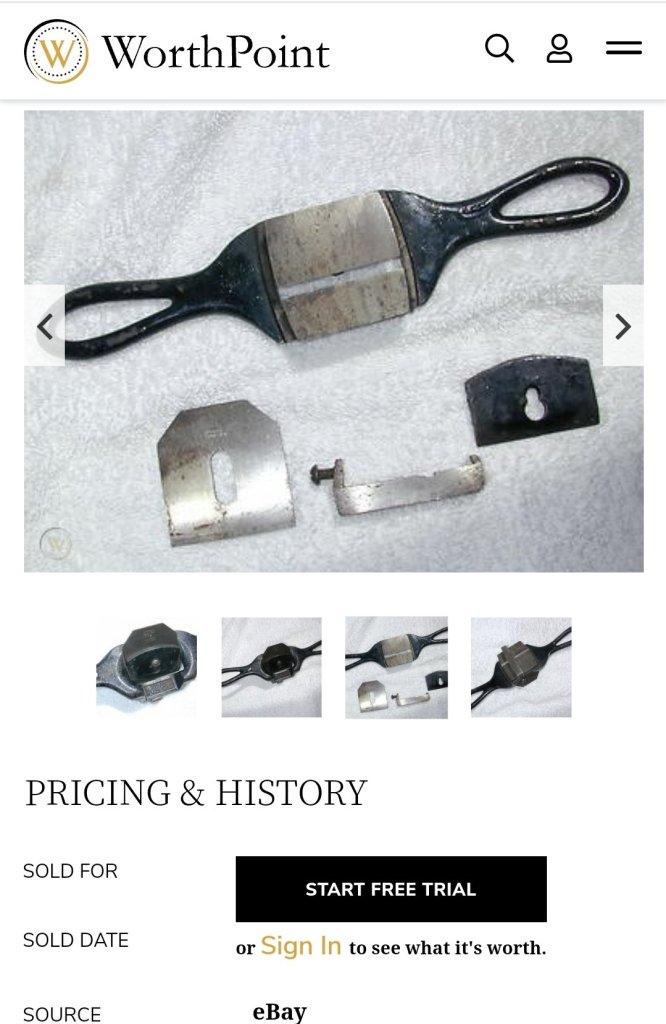
When looking online for more information for this spokeshave, I saw that the vast majority of them have no fence. Then I came across this photo on WorthPoint where it shows a similar fence as mine, except this fence has a screw to tighten it while mine has a bolt. So, I’m not sure if this was a user tip that people saw in magazines that they made themselves or not.
Here’s the spokeshave in action. It works quite well with the fence. I posted this video on instagram and people said that the spokeshave was used by boat builders and carriage makers which would make sense. Definitely an interesting tool.
Last weekend was the Springfield Extravaganza. It’s one of my favorite antique shows that happens in May and September in Springfield, Ohio. The fairgrounds is full with over 2000 dealers selling all sorts of antiques and the occasional junk. I look forward to it as much as the World’s Longest Yard Sale up and down US127 in August.
Luckily, I found some planes this time at the show. Many times in the past, I would only be able to pick up a Stanley plane or two, but this year, the Antique Tool Gods were with me as I ended picking up almost ten Stanley planes. None are exceptionally rare but all will make nice users. In fact, the rarest plane I bought was a Union X6 vertical post plane.
Ironically, the only tools I bought this weekend were planes. I was looking for drills, chisels and saws but there weren’t too many available. The one saw I had an interest in was a Disston Thumbhole D8 rip saw that was in a barrel with 50 other saws. When I asked the guy what he wanted for it, he replied “$50 per saw, unless you want all of them, then they’re $7.00 each.” I quickly put the saw back and walked away.
I’ll spend the next few weeks cleaning my planes up, but I’m not too sure how long that’ll take me as I just started my new job today (I got promoted) as I may end up working more hours with this new gig than I did before. However, I’m optimistic I’ll get back in the shop soon.
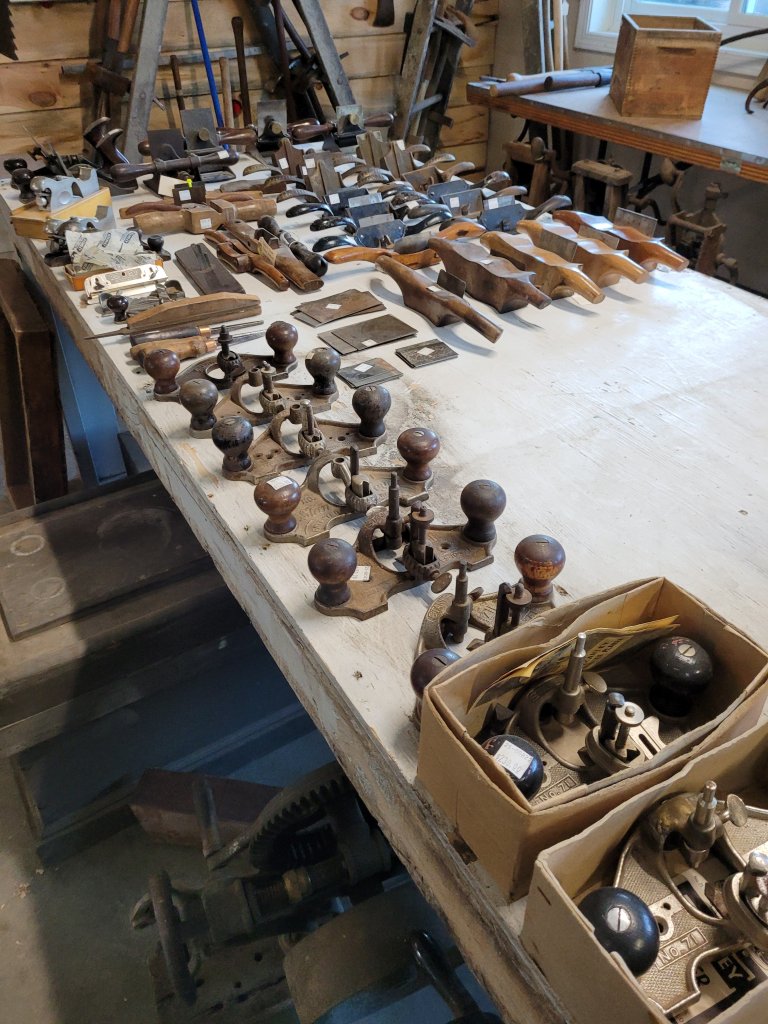
You can follow me on Instagram to see how the planes end up looking. I’ll remove the rust and sharpen the blades so that they can be put back to work. In fact, I just posted a couple of pictures of a Stanley No 71 Router Plane I restored after finding it at a yard sale earlier this month.
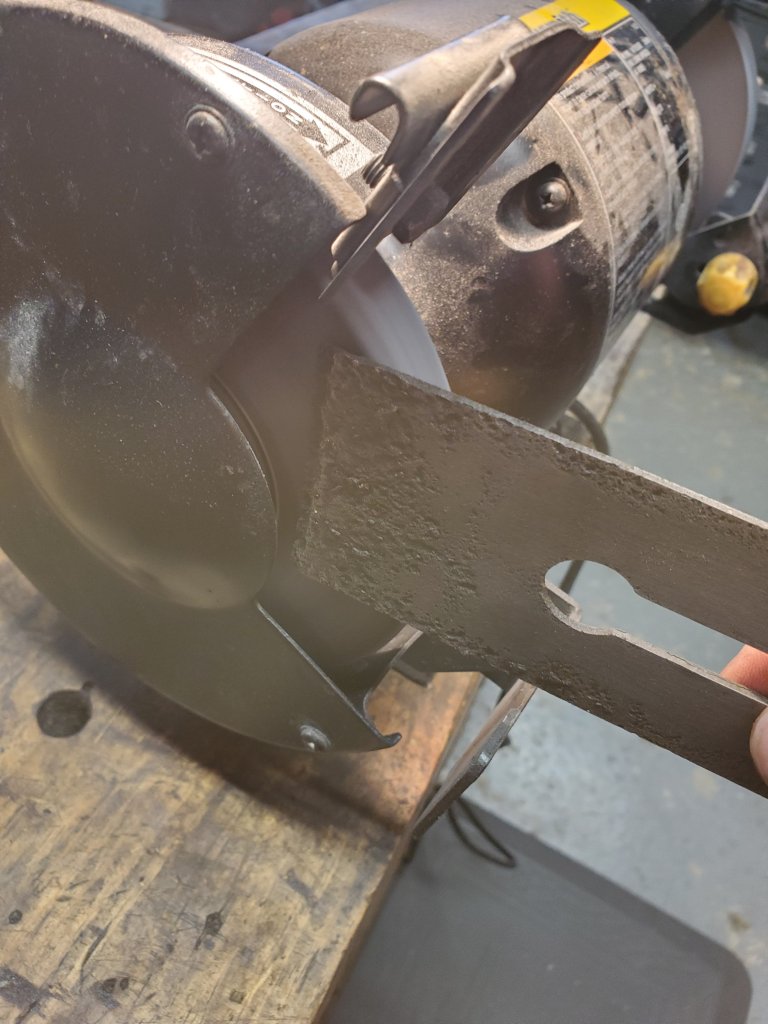
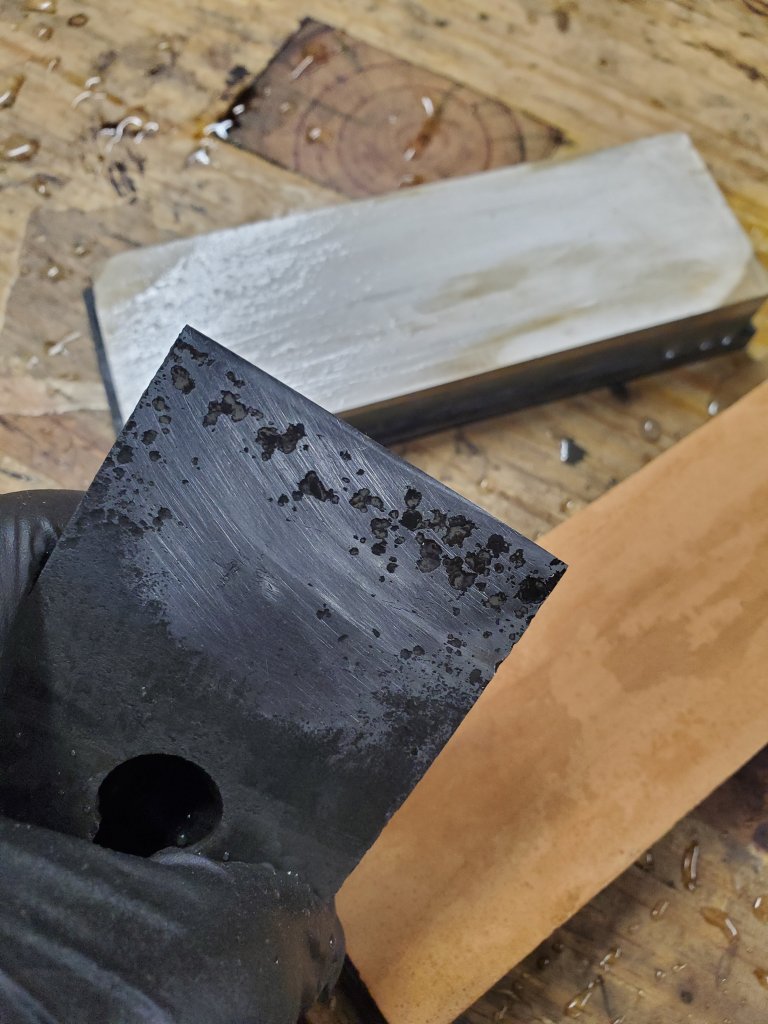
Every once in awhile I’ll come across a plane blade that is so heavily pitted and corroded, the best thing to do is to simply throw it away. This blade that came off a Stanley No 6 plane was no different. The problem was that I didn’t have a replacement blade to go with the plane I was restoring, so I was forced to see if I could get the blade to work again.
The first thing I did was take the blade over to my 8″ speed grinder and grind the face and back of the blade to remove the corrosion. I paid special attention not to heat the blade up too much so, I occasionally cooled it off in a bucket of water. Fortunately, the blade’s face had about a 1/4″ of metal at the bottom that wasn’t pitted, so I was hopeful I could still get a good edge out of it.
I took the blade over to my Tormek and ground a 25 degree bevel on it and honed the face flattler on the side of the Tormek grinding wheel the same way as I did with my 8″ speed grinder.
After the grinding was finished, I took the blade over to my water stones and sharpened it just as I do with any other blade. When I was done, there was a clean line of light at the tip of the cutting edge so I was hopeful it could achieve a nice cut.
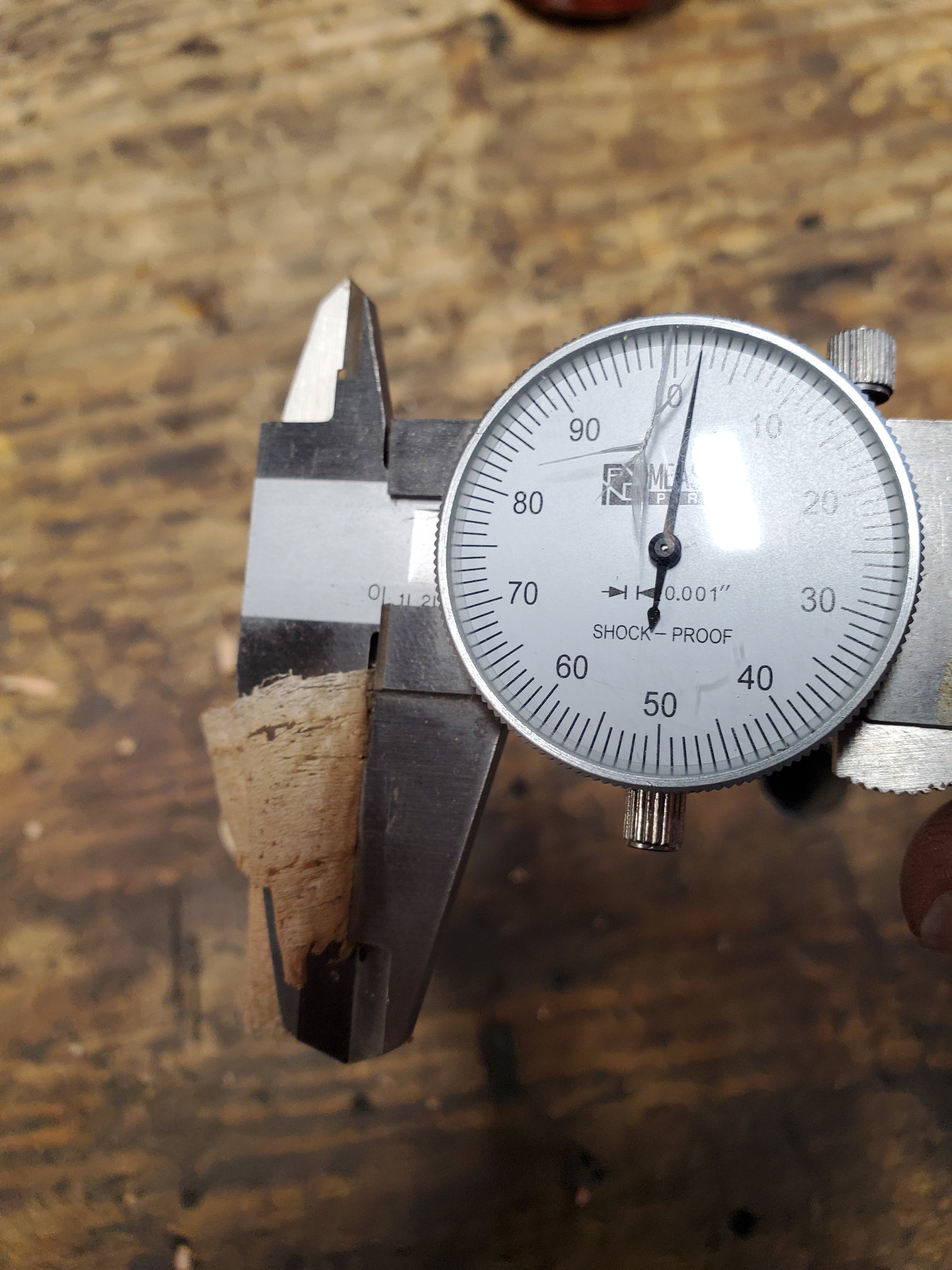
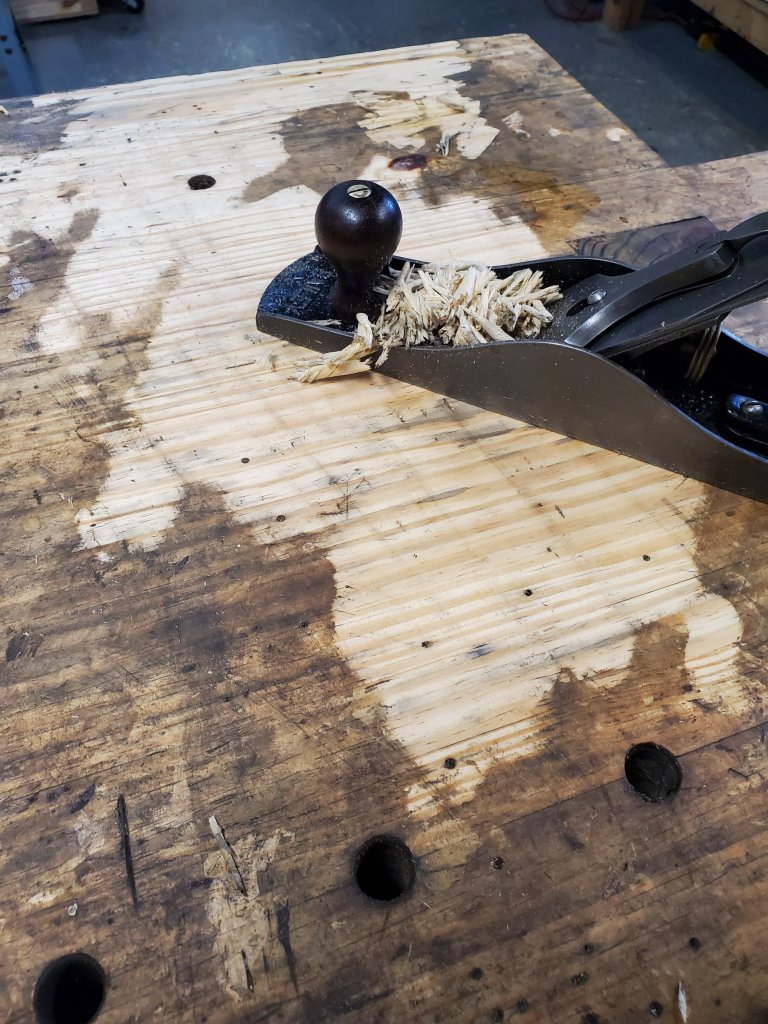
Placing the blade back into the plane, I tuned it up, and sure enough, this crappy blade cut pretty well. I took out my dial calipers, and the shavings measured .002″ thick. The blade will eventually need to be replaced, but at least the plane can function properly now.
The plane performed so nicely, I used it to flatten my workbench.
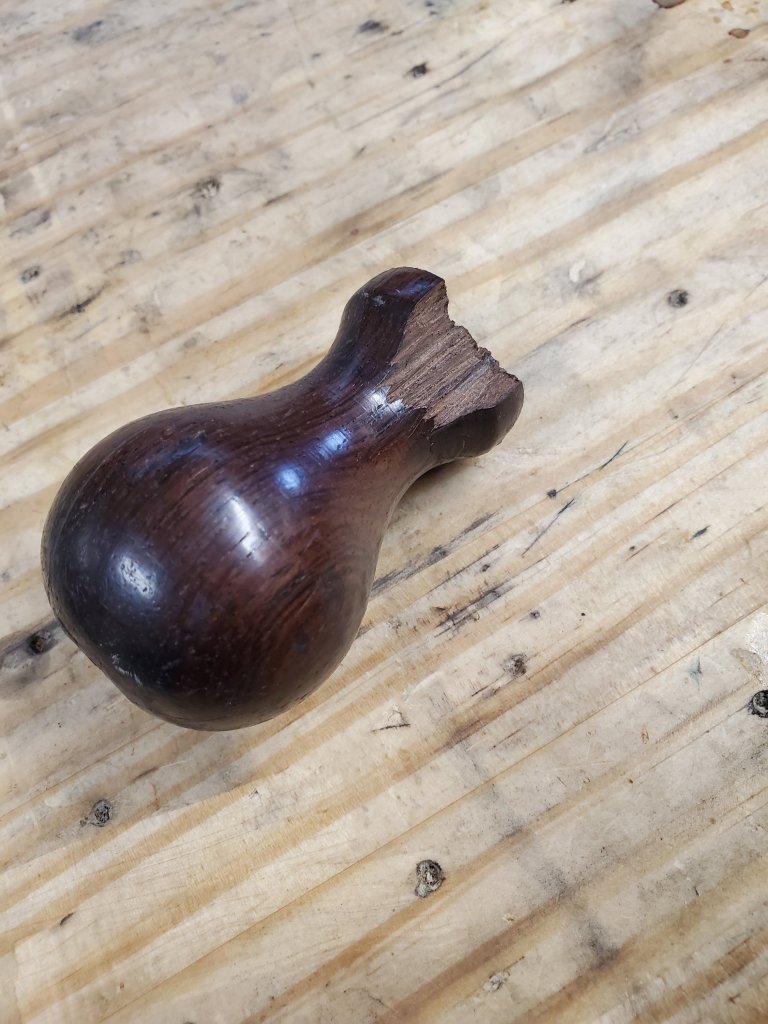
Sometimes when buying a plane, all the parts will be in good shape until you look at the front knob and see a big chunk missing from the bottom. I’ve repaired dozens of totes over the years, but I’ve never really tackled a knob as it looked like a big pain in the ass. So, I decided to give it a go and see how it turns out.
The first thing I did was shave the broken area smooth with a bastard file. It didn’t have to be completely clean, just good enough to hold some glue.
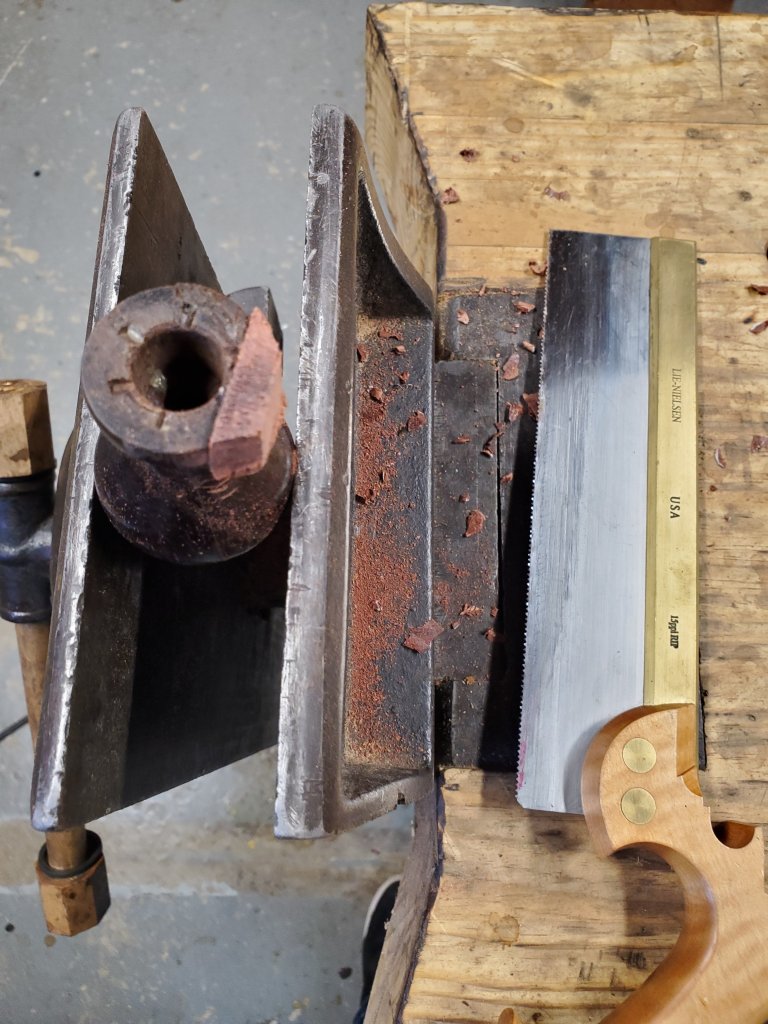
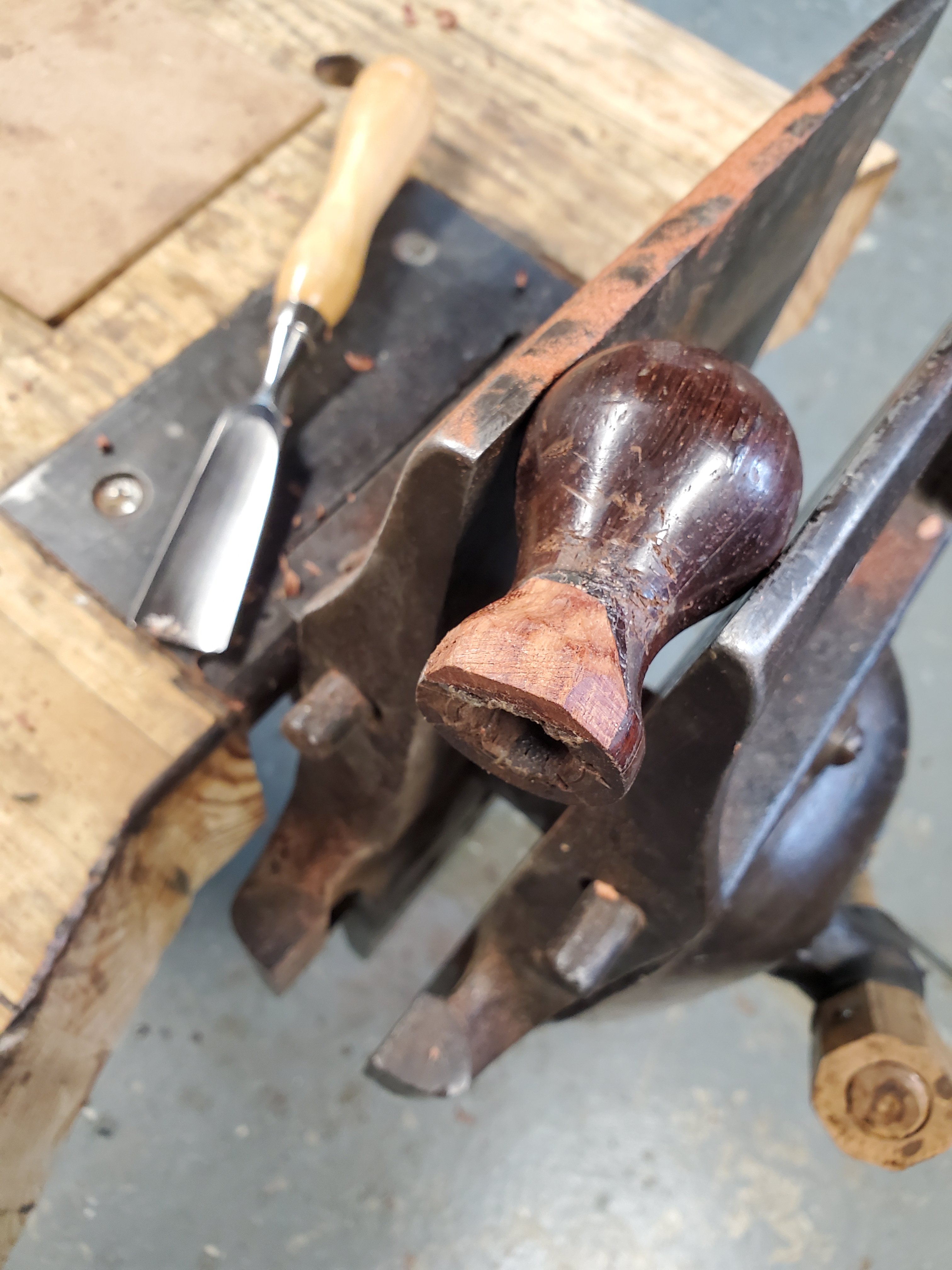
Then I took a piece of cocobolo scrap wood and glued it to the surface of the break. I paid careful attention to the orientation of the grain so the repair would look nicer. I used Gorilla Super Glue Gel as it works well gluing all type of rosewood woods together.
Once the glue dried, I cut off the excess with a dovetail saw and shaved the thick areas away with some chisels and gouges.
I wanted to shape the new area perfectly round with the rest of the knob so I created a little holding jig to be used on my lathe.
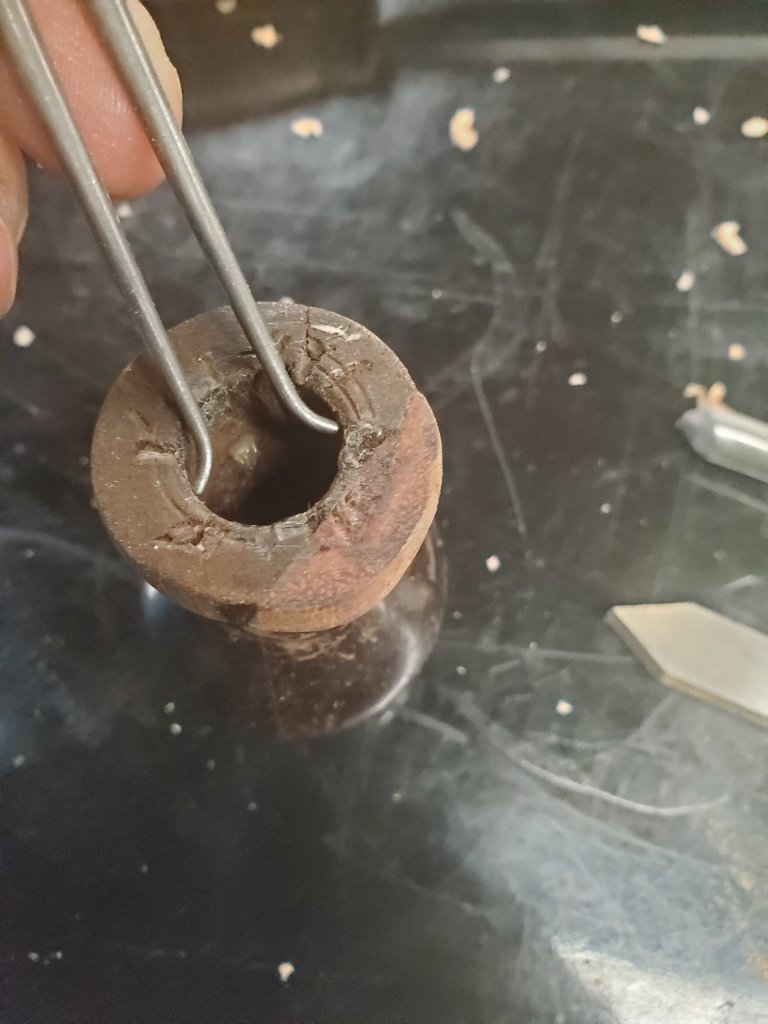
I measured the inside diameter of the knob’s mounting hole with inside calipers and transferred that measurement unto outside calipers, then turned a tenon to the measurement. Then I stuck the knob onto the tenon and stabalized the top of the knob with the lathe live center point.
With the knob spinning nice and true, I carefully used a round scraper and gently turned the new piece of wood concentric with the knob. After a few minutes, and a little bit of sanding, the knob was finished.
I noticed that the knob had split just a little bit while it was turning, so I applied more super glue gel to the bottom of the knob to stabalize the wood.
The final step was to apply a couple coats of shellac to the knob and stick it back on the plane. Because the piece of cocobolo was a little lighter in color than the rosewood, I colored the cocobolo darker with a black Sharpie marker then wiped off the excess with some fine steel wool.
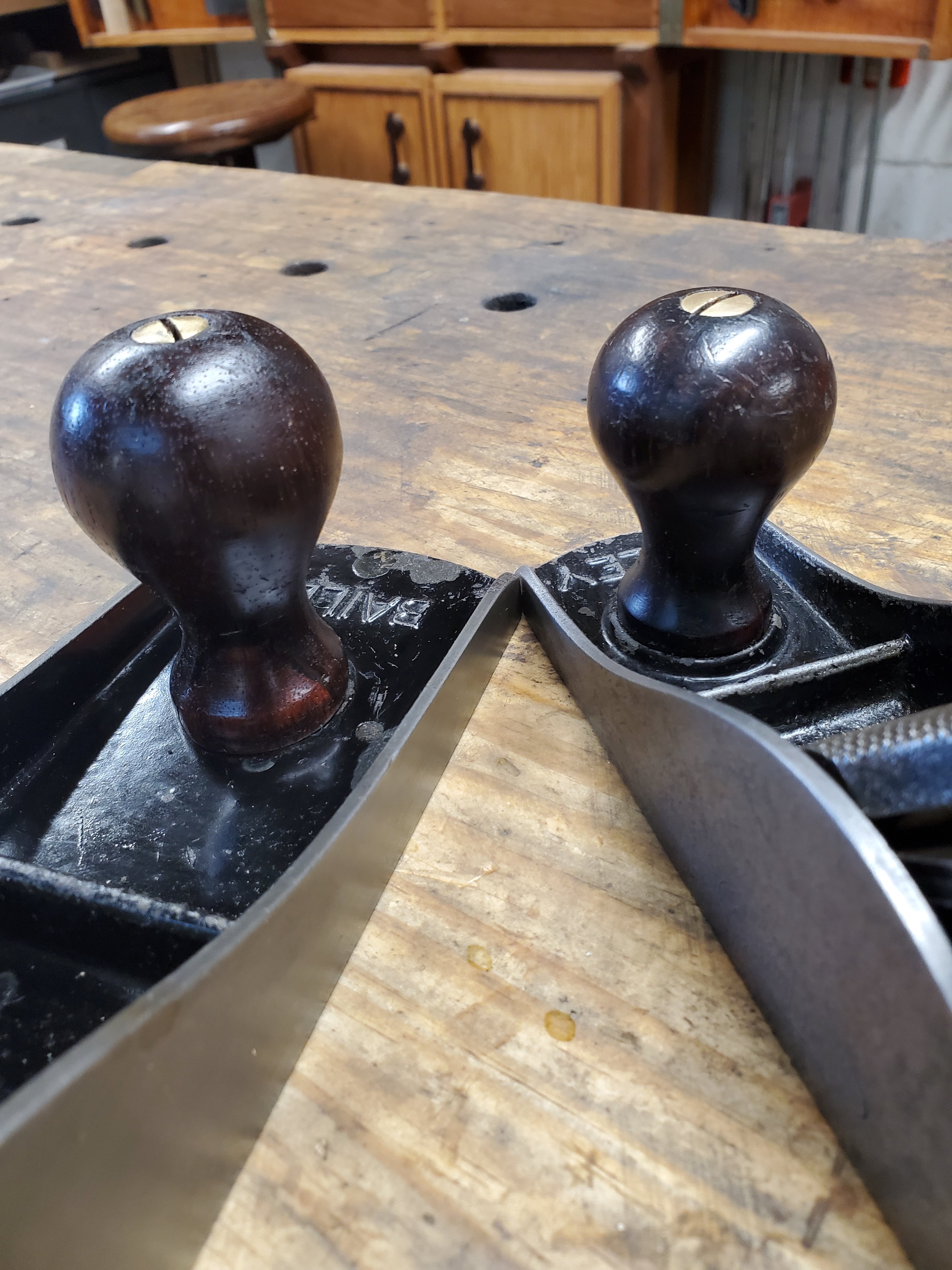
The end result came out fine. The knob looks complete and you can only notice the repair if you really look at it. In fact, the knob on the right was also repaired the same way, and you can hardly see it. Looks like I’ll have to start repairing more knobs from now on.


























 MVFlaim Furnituremaker