Rebuilding a Drawer

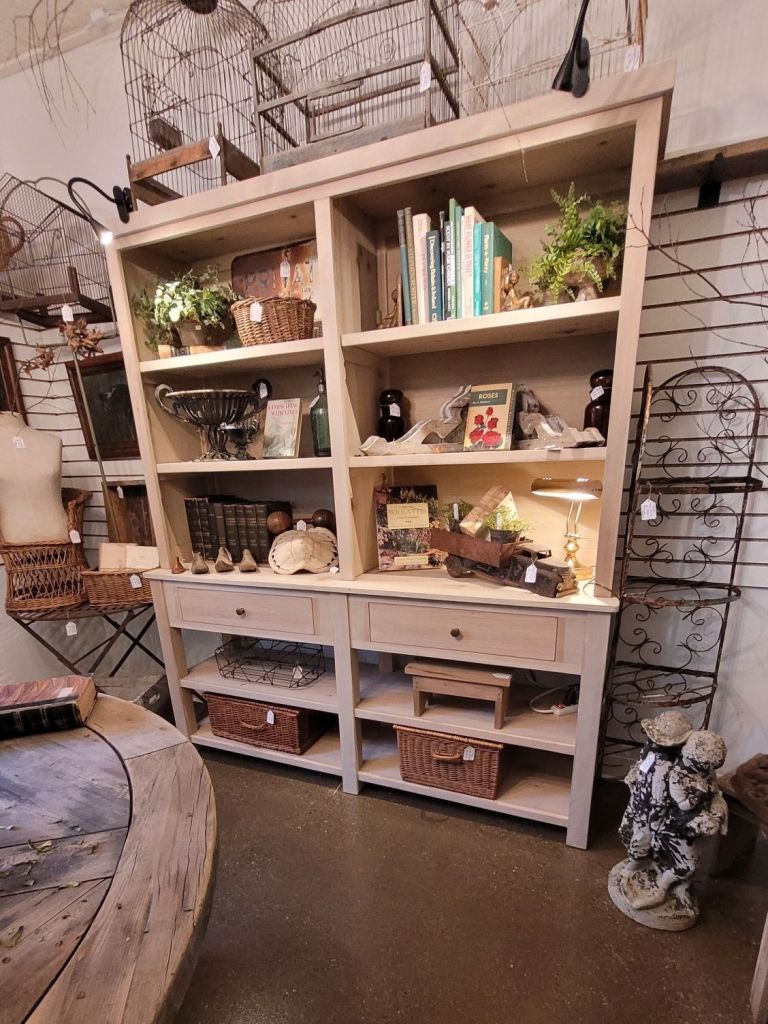
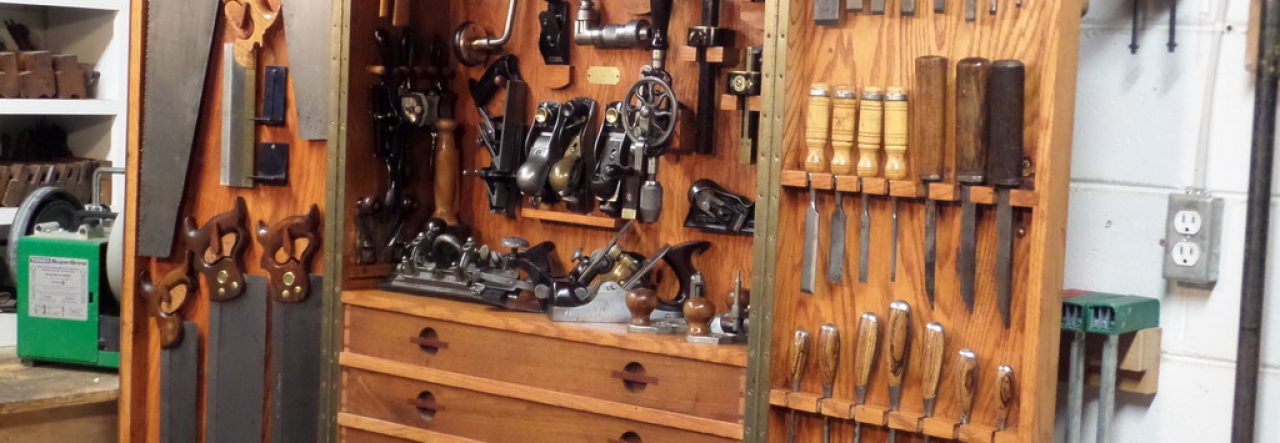
I bought this old cabinet at an antique show last month. I didn’t realize it at the time that the left drawer was an imposter. It’s basically the drawer face screwed to a smaller drawer. Shame on me for not checking before I bought it.

here is the drawer. you can see Bentley is not impressed.

So I took the drawer face off the stupid faux drawer and decided to rebuild the whole thing with some white pine .

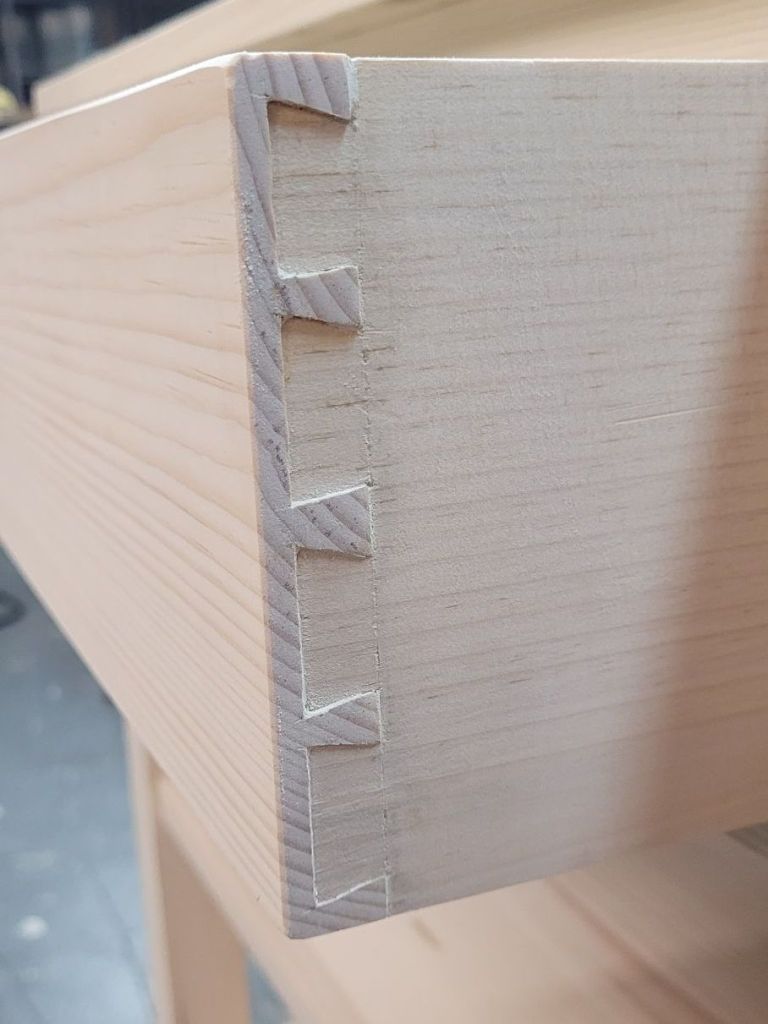
I cleaned up all the nails that the previous owner used to “fix” the drawer in order to use the existing pins as a jig to cut the dovetail tails. I also cleaned up the pins so that could work again.

Basically, what I did was scribe the pins onto the drawer side and cut tails into the wood. No different than making a drawer from scrap. The only difference is that not all the pins survived over the years, so there are ghost pins within the drawer side.

After I cut the front tails, I made normal dovetails on the back to match the other two drawers that survived.

I made a new bottom and stuck it in the drawer to make sure it worked. Everything was square and fit into the cabinet opening.

Here’s the drawer finished and glued together. They all fit nicely back into the cabinet and everything is good to go. I also glued one of the cabinet doors back together and attached both of them back on the cabinet.

American Windsor Chairs

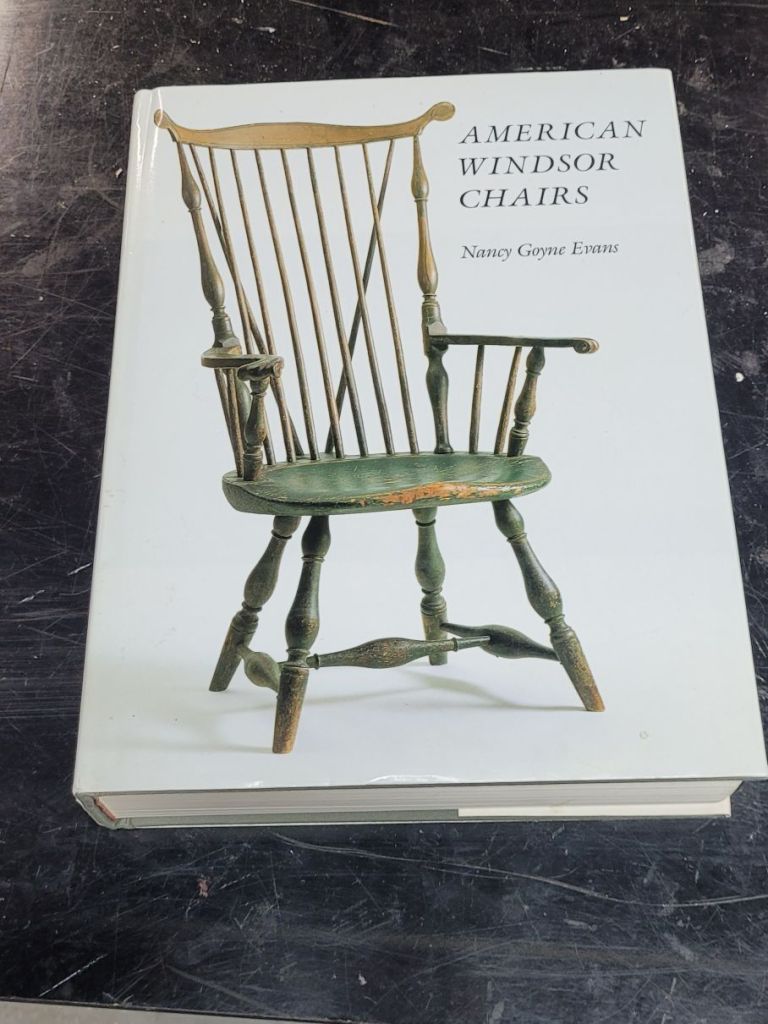
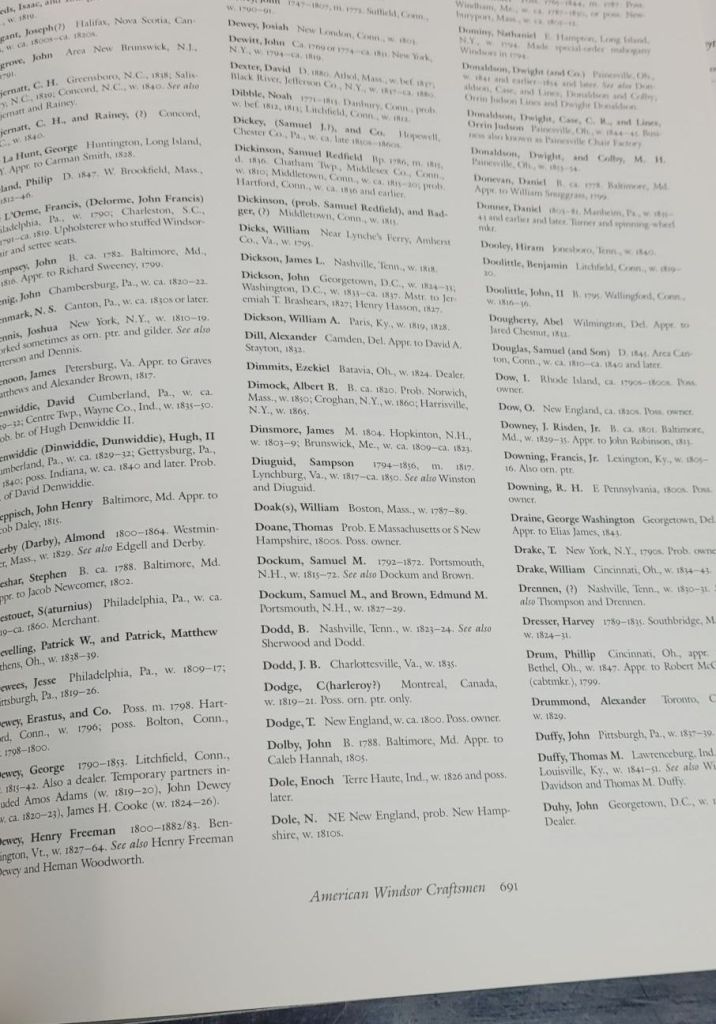
Several months ago, I was reading a post on the Lost Art Press, and someone asked Chris Schwarz which book on Windsor chairs he thought was the best. Chris mentioned American Windsor Chairs and said it’s worth getting if you can find it cheap enough. Curious, I checked Amazon and saw one was for sale for $300. Then I checked eBay and saw one seller was asking $40 plus shipping, so I jumped on it.

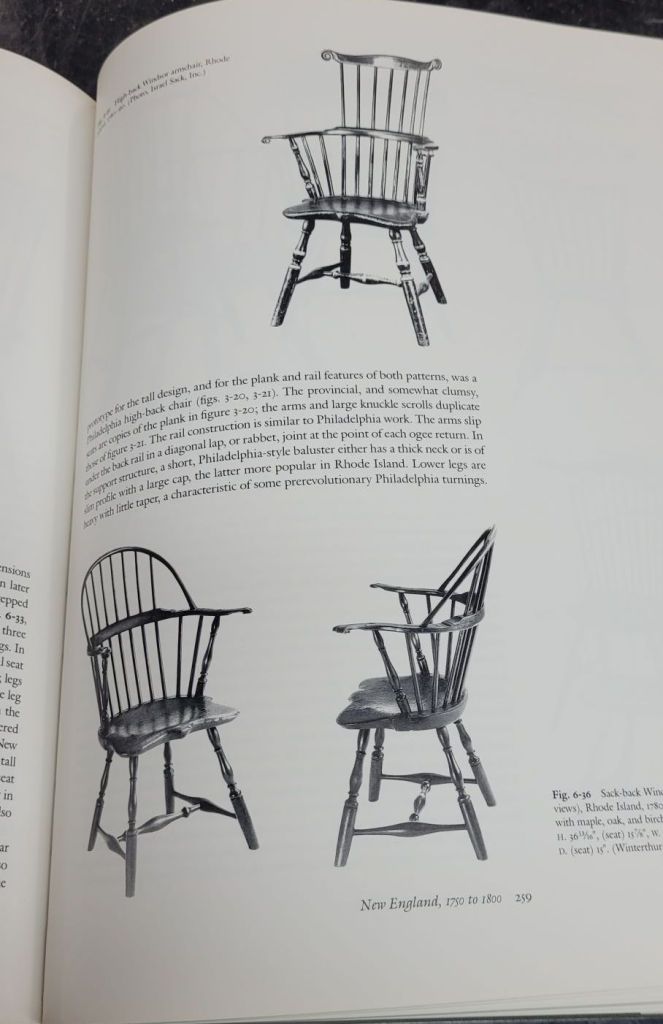
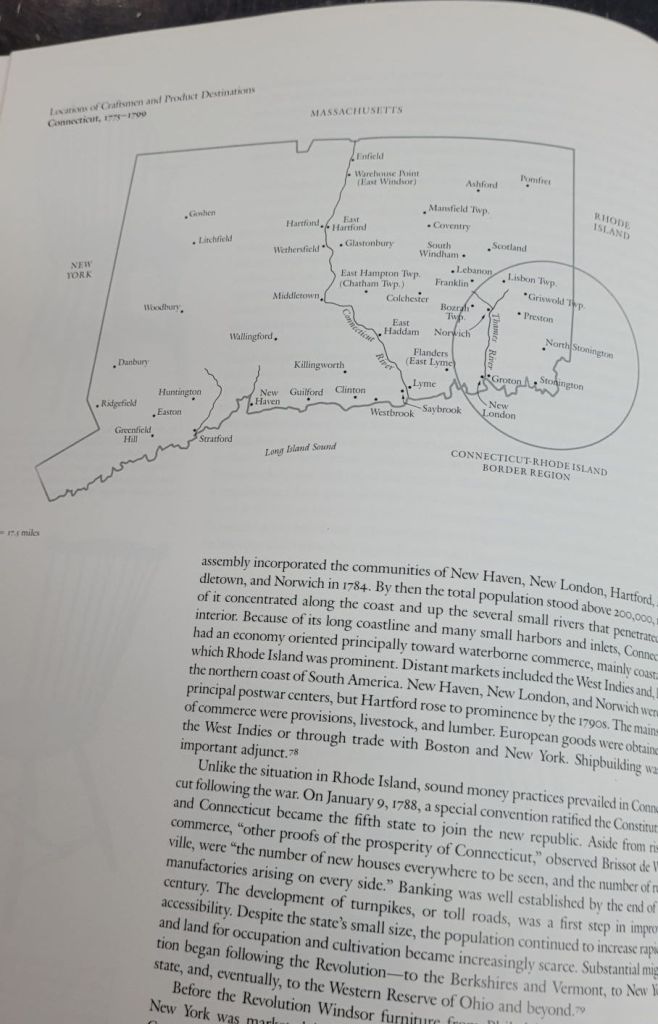
Written by Nancy Goyne Evans, the book is over 700 pages with 1000 illustrations of chairs of various makers. The book starts with the classic European design and how the chairs evolved in America with first handcrafted chairs to mass-produced units in the 1850s. The book is categorized by geographic region and describes the differences in Windsor chairs in different regions of the country. It’s extremely detailed with stories about some of the makers and their business practices. If you have a passion for Windsor chairs and their designs, then this a must-have book you need to own.
In the back of the book, there are reference pages where it lists the chair makers and the time of their business. Simply look up their name and determine where and when the chair was made. It’s an excellent reference book you’ll enjoy owning if you’re lucky enough to find one at a reasonable price.
If you own a Windsor chair and would like to know when it was made, drop me a comment, and I’ll look it up and see if I can find more information for you.

Restored Dry Sink

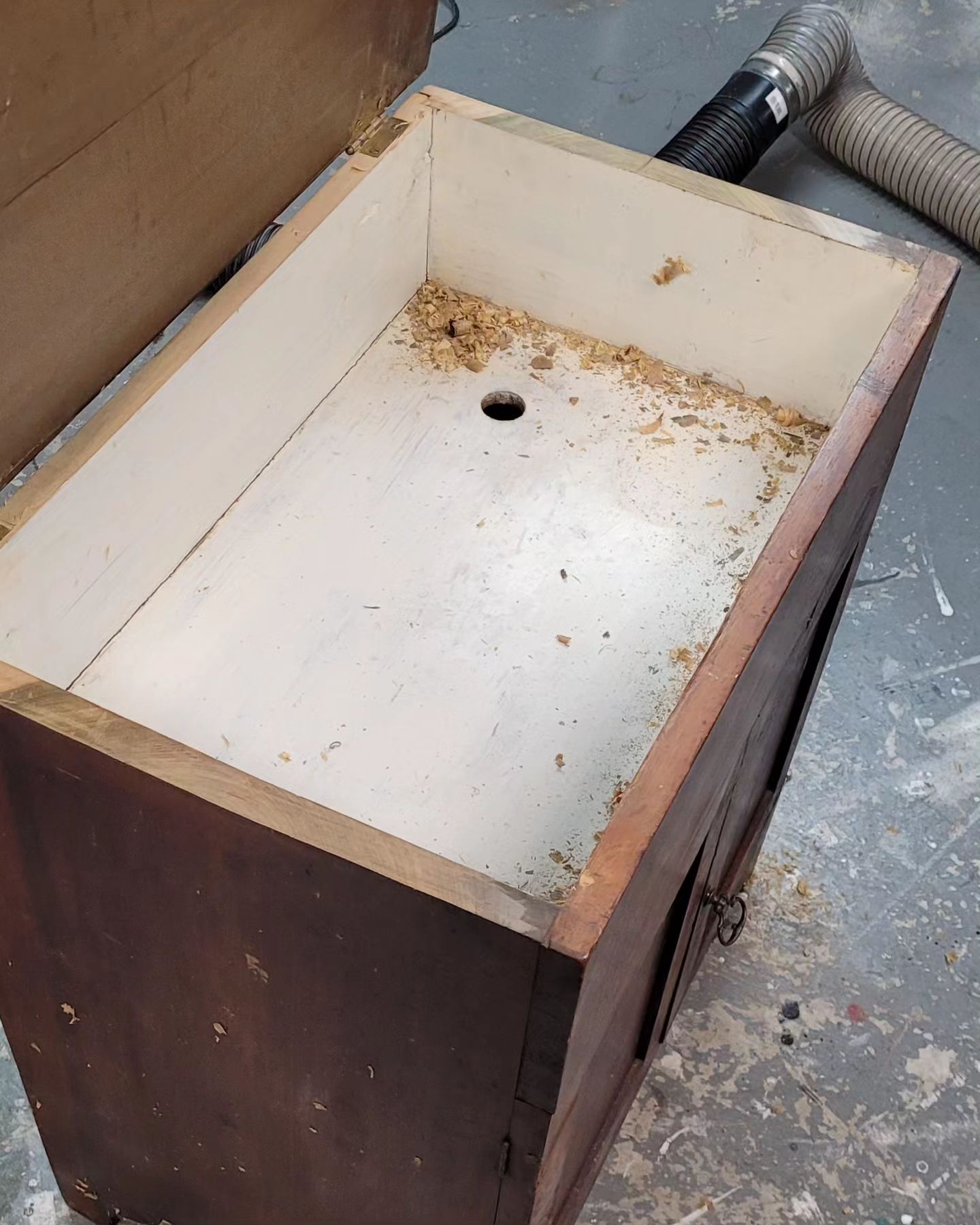
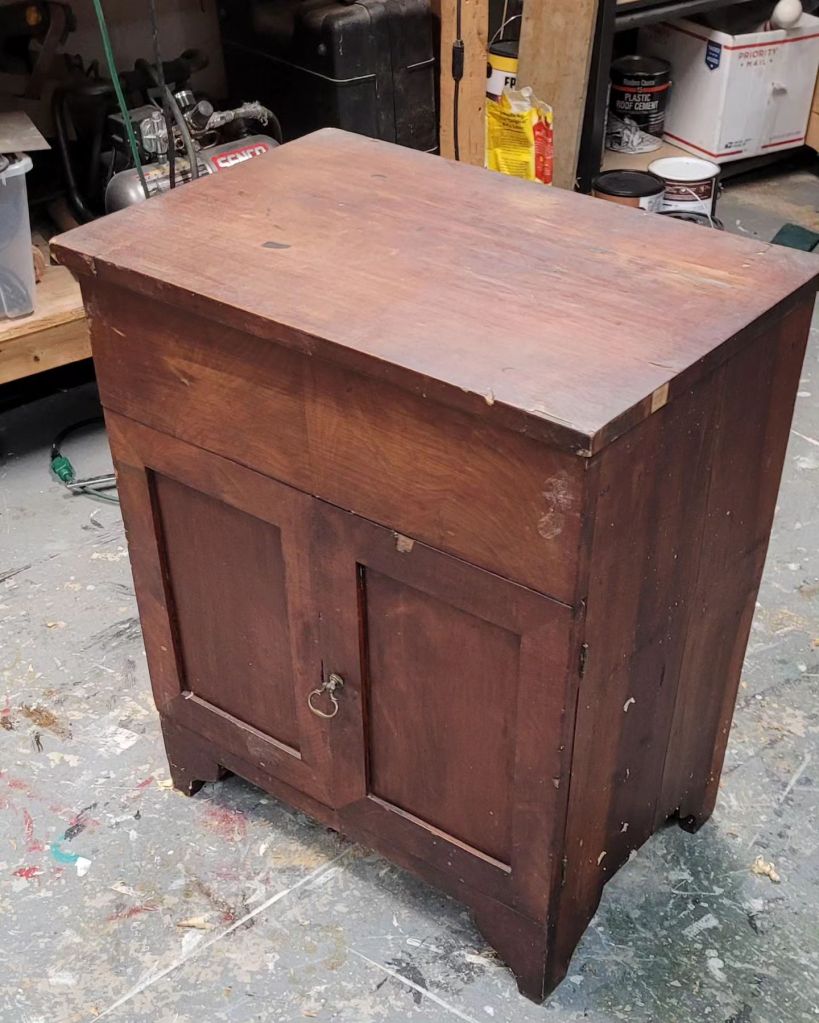
I haven’t been spending too much time in the shop the past few months since I’ve been working on the shed during the summer and fall, but I did have time today to work on an antique dry sink my wife bought at a local sale.

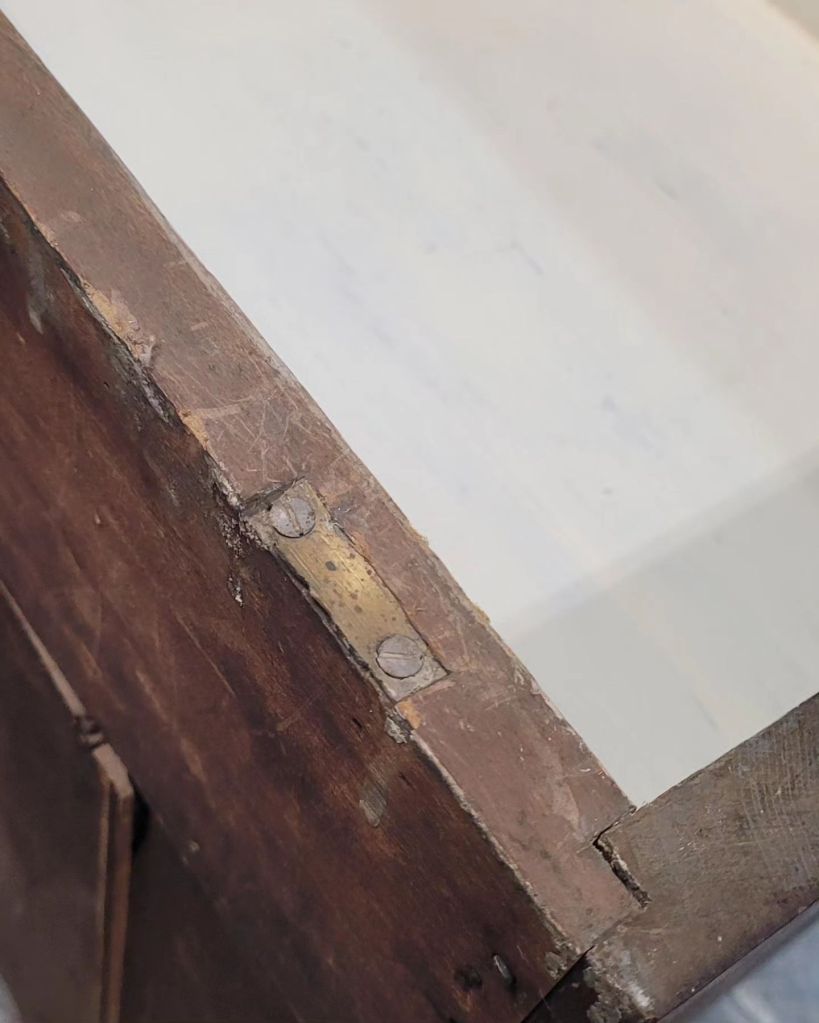
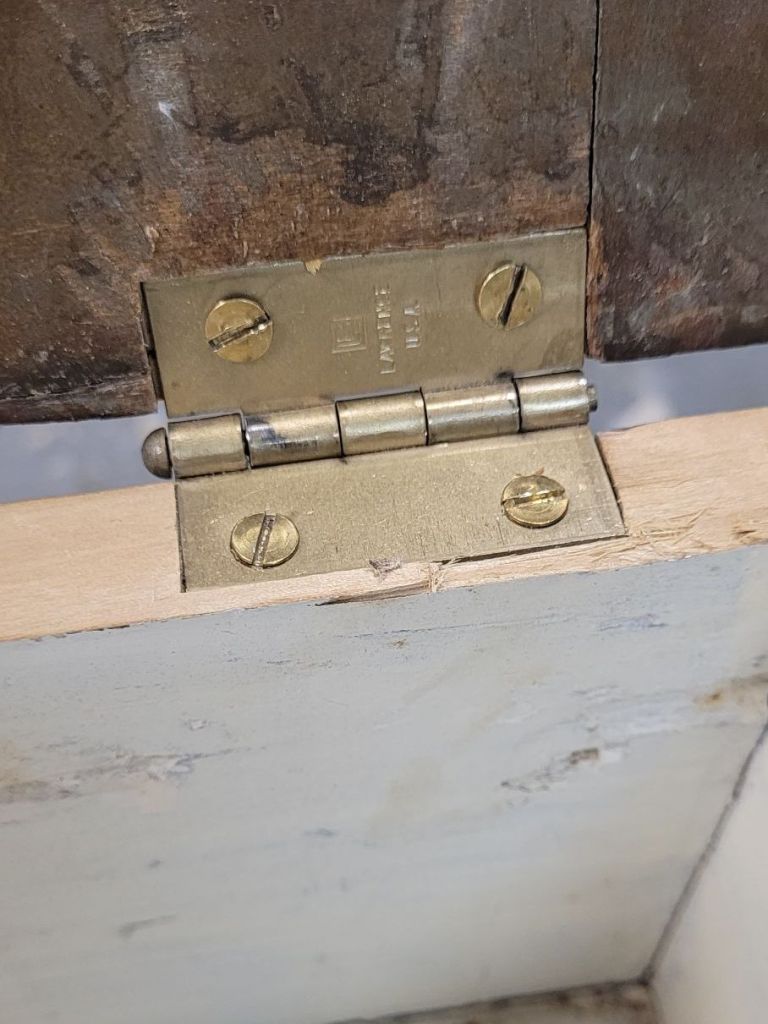
The cabinet was in good condition, but the top was off as the hinges had broken. I noticed that they were too small for the top, so I grabbed some larger hinges I had around to replace the small, broken ones.

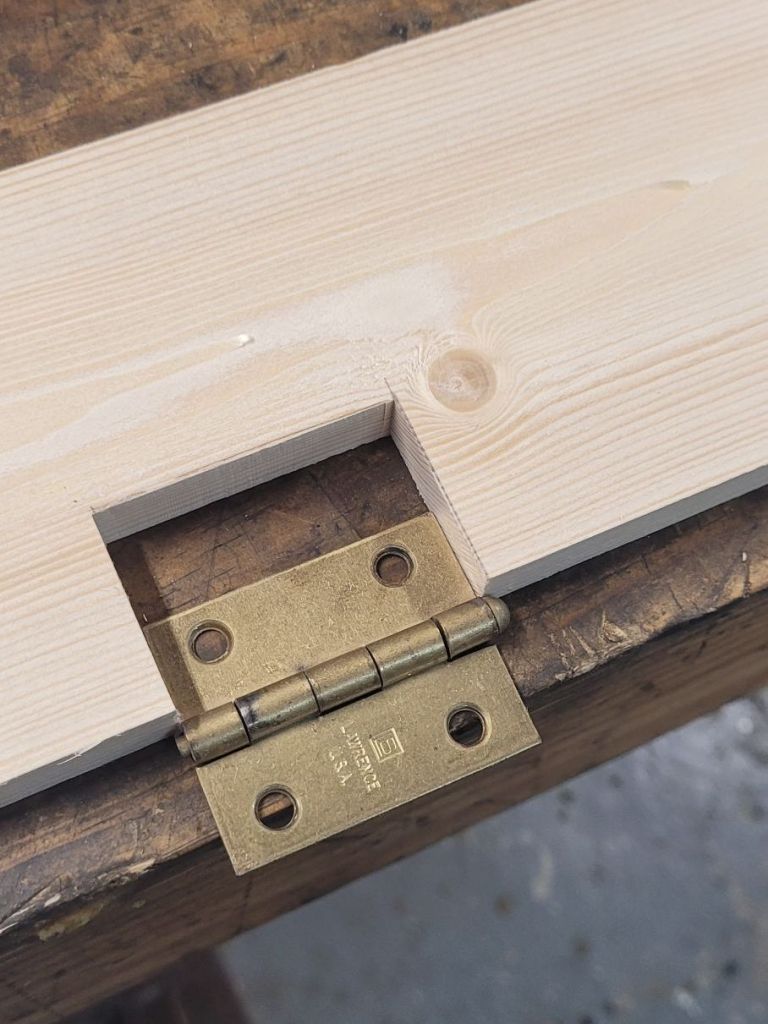
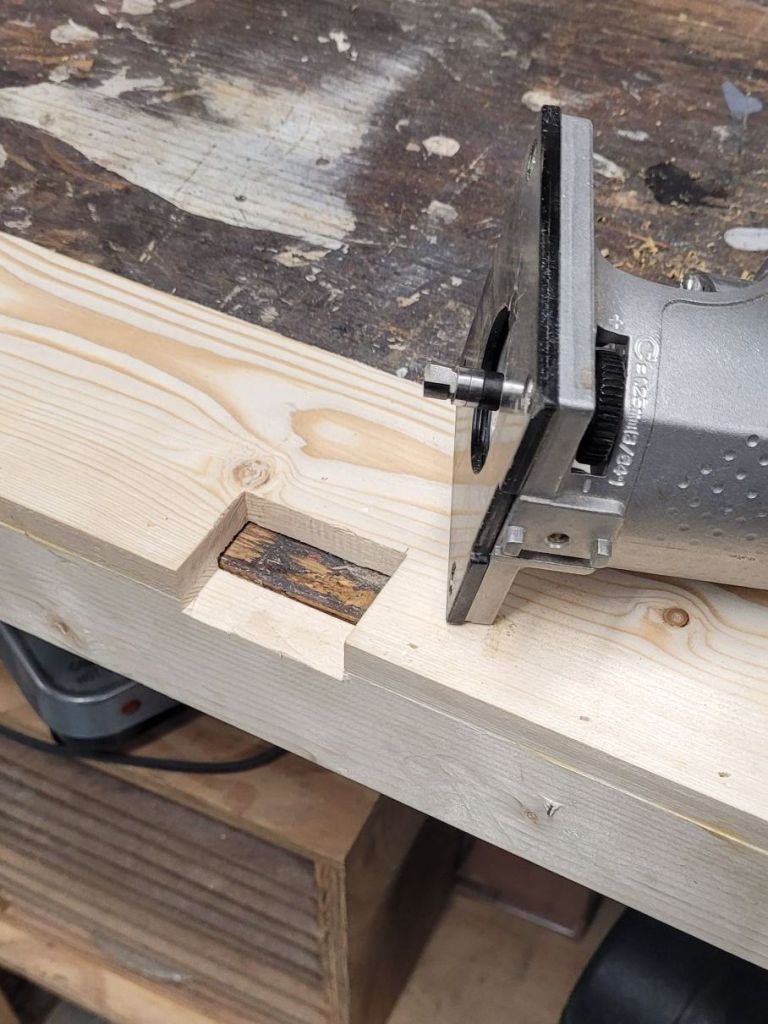
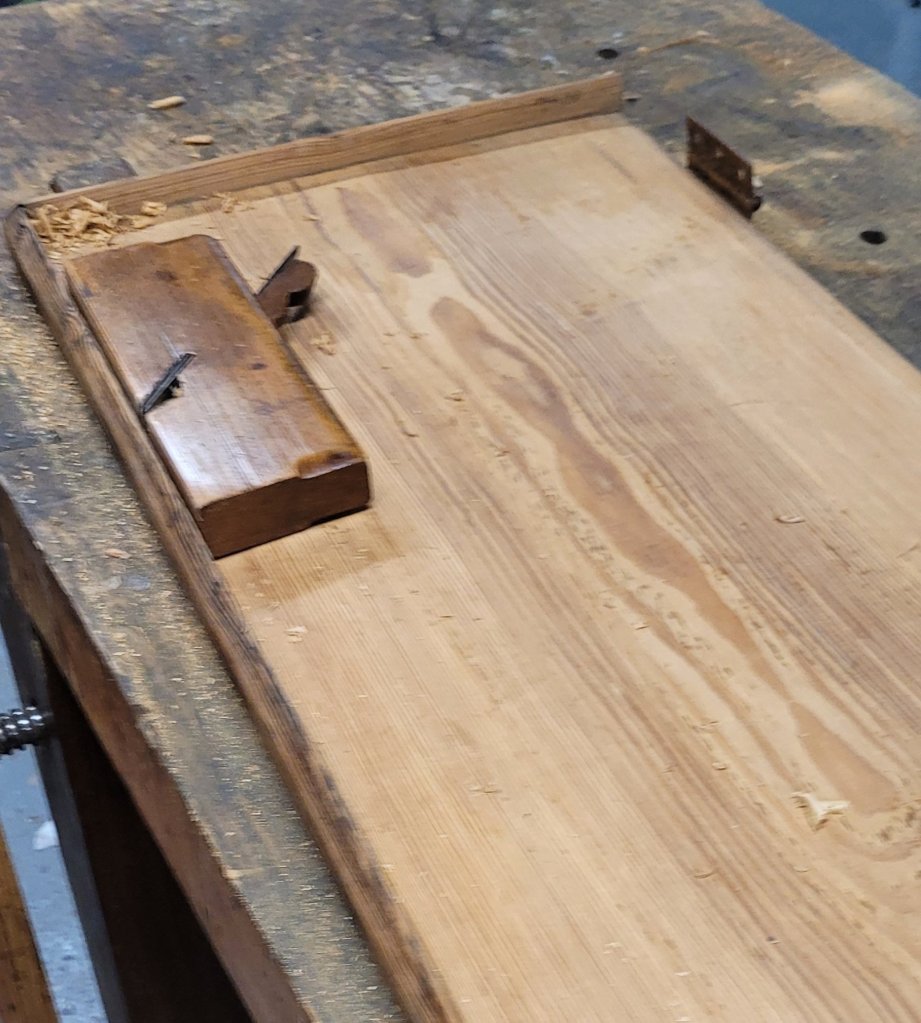
After removing the old broken hinges, I made a jig to route a perfect sized recess in the cabinet and top to accept the new hinges. I found this jig while reading Michael Pekovich’s book “Foundations of Woodworking”. The idea of the jig is to make a cutout in a piece of wood the exact length and depth of the hinge, then use a small flush cut patternmakers bit to route out a recess that’s the perfect size of the hinge.

After making the jig and routing a few test pieces to make sure it worked, I placed it over the cabinet back and the lid to route out the recess for the new larger size hinges.

After a few minutes, the hinges fit, and I shaved down the top of the cabinet for the lid to fit flush. This was a quick and easy project that will make this dry sink serve another 100 years. Plus, I’m finally back in the shop after a few months’ absence.

Refurbishing an Old Chest

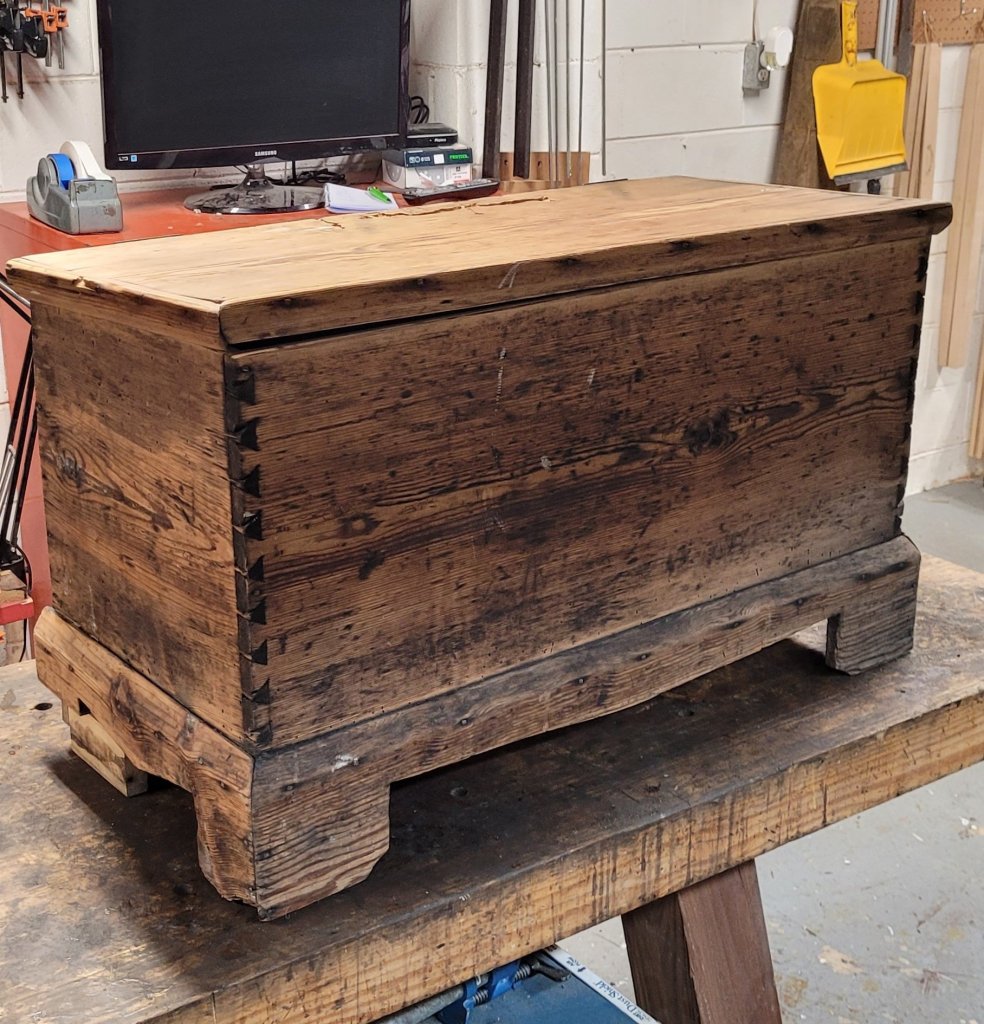
My wife came home from Florida with this old chest she bought off Facebook Marketplace for $20.00. She liked it because it was made from pine and had an old-world look to it. She asked me if I could repair it so it could be used as a coffee table.

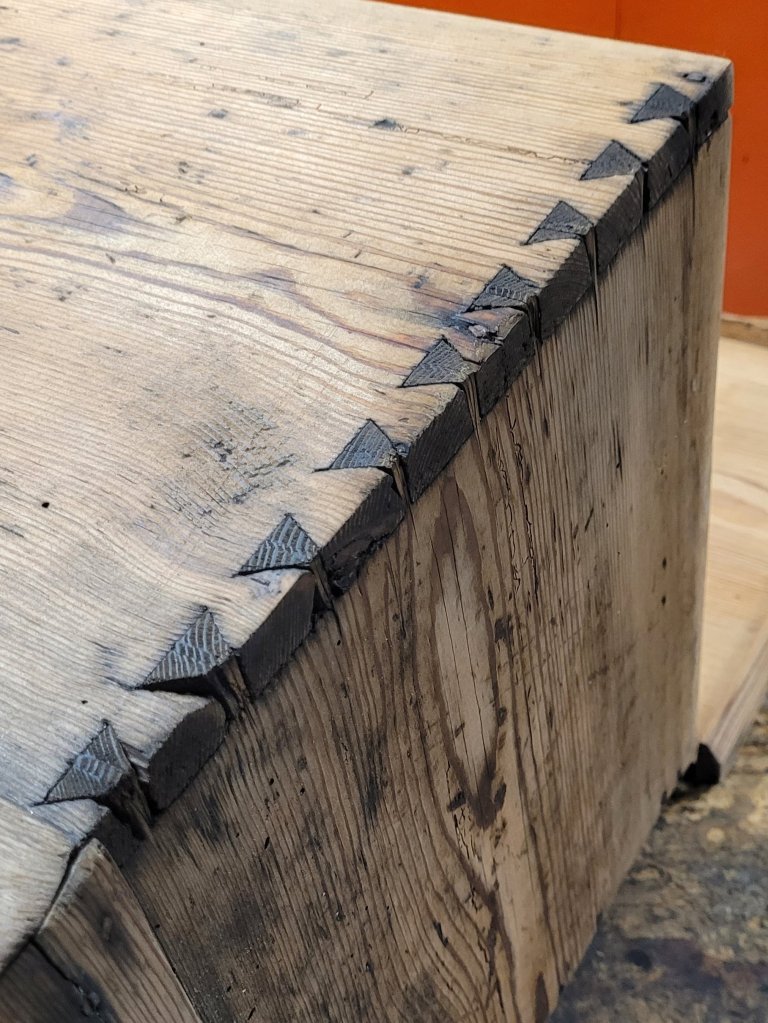
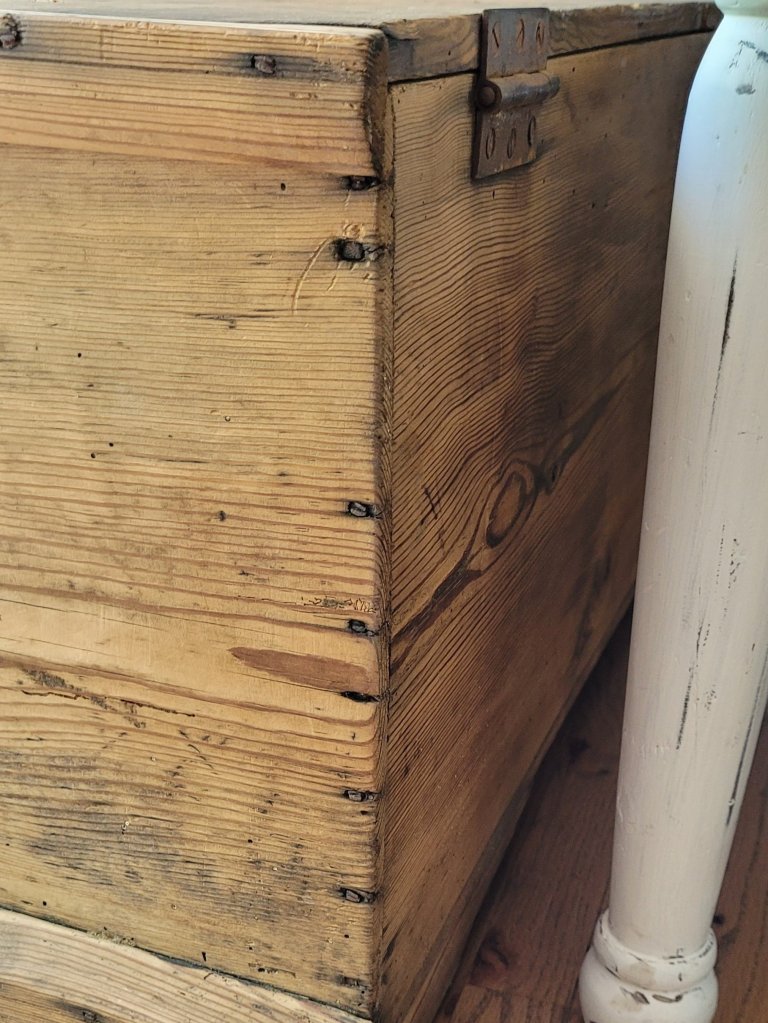
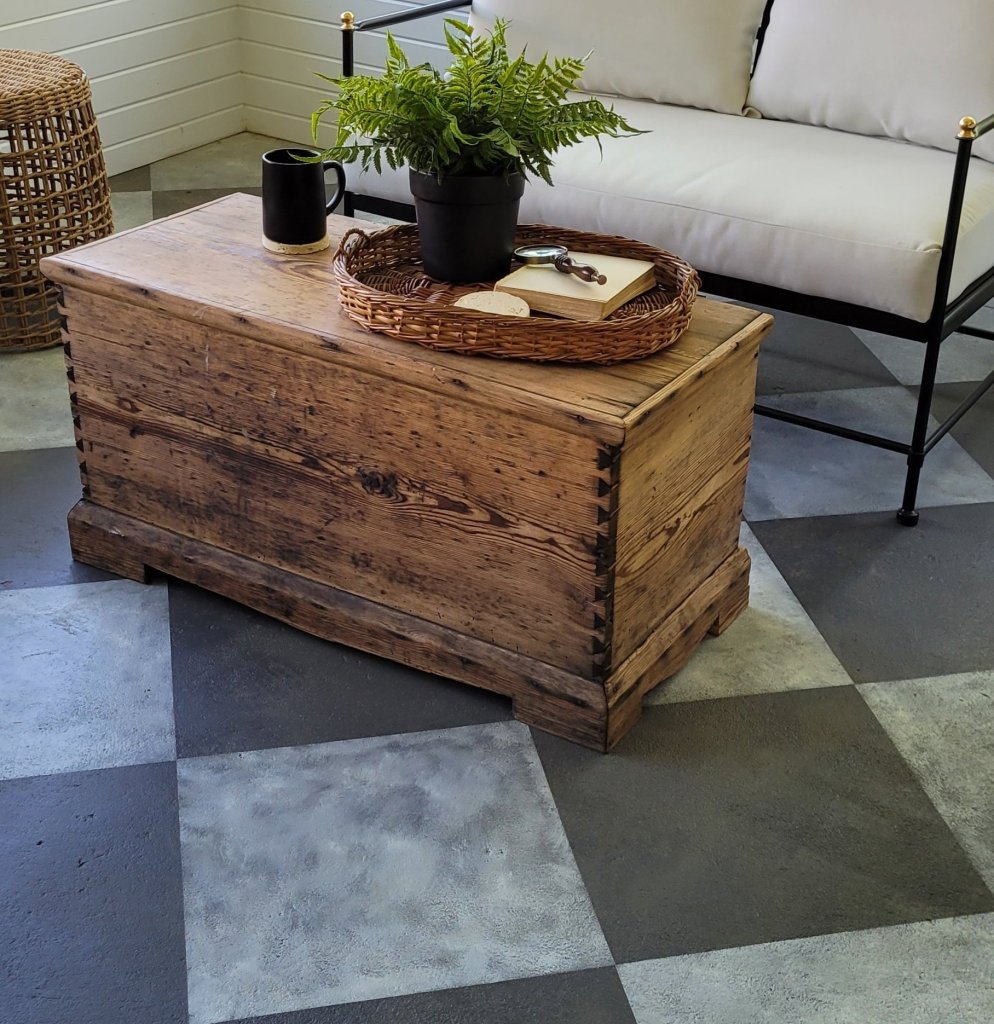
The chest had nice handcut dovetail joints on the front with really steep angles. So steep, they look like equilateral triangles. However, the back of the chest is just fastened together with a rabbet and some cut nails. I guess the craftsman who built the chest was tired of cutting so many dovetails that he opted for something easier for the back.

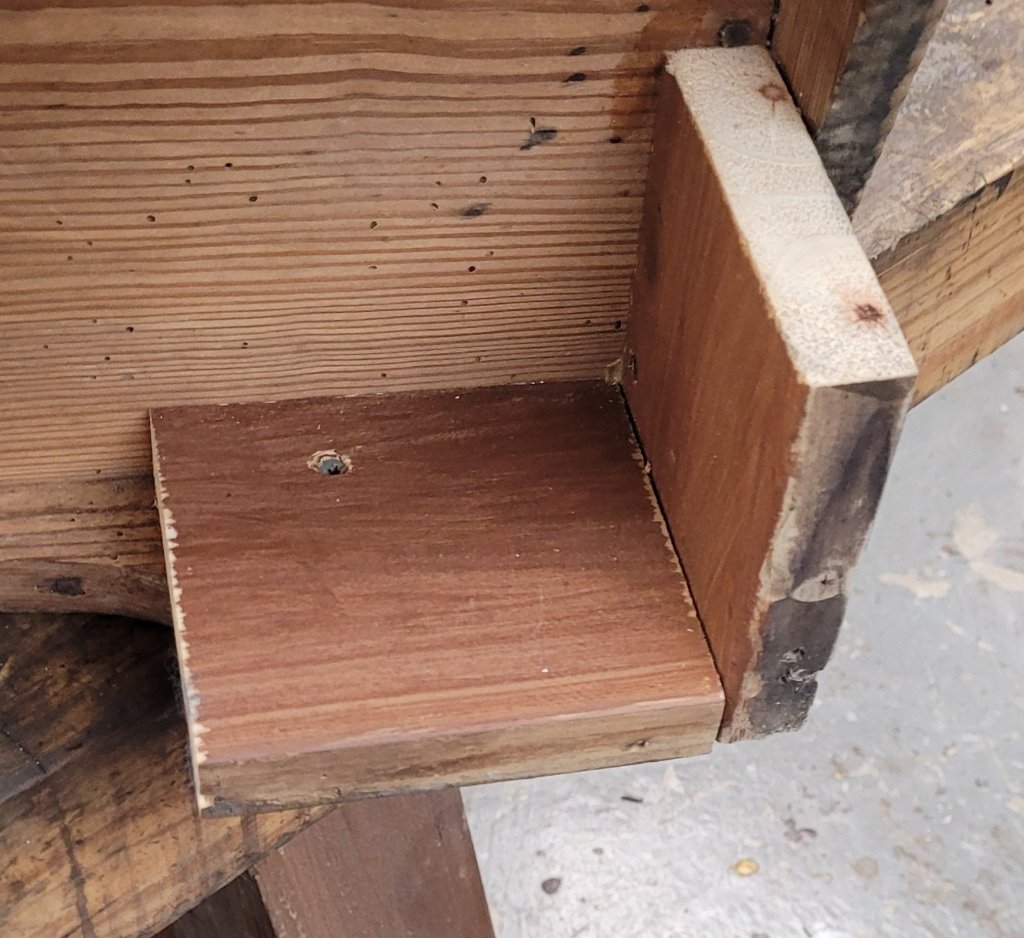
The bottom of the chest had a horrible repair to the back. Because the base was so tall, the wood failed and broke away. Somebody came in and simply installed L wood brackets to the back and screwed them in place with drywall screws.

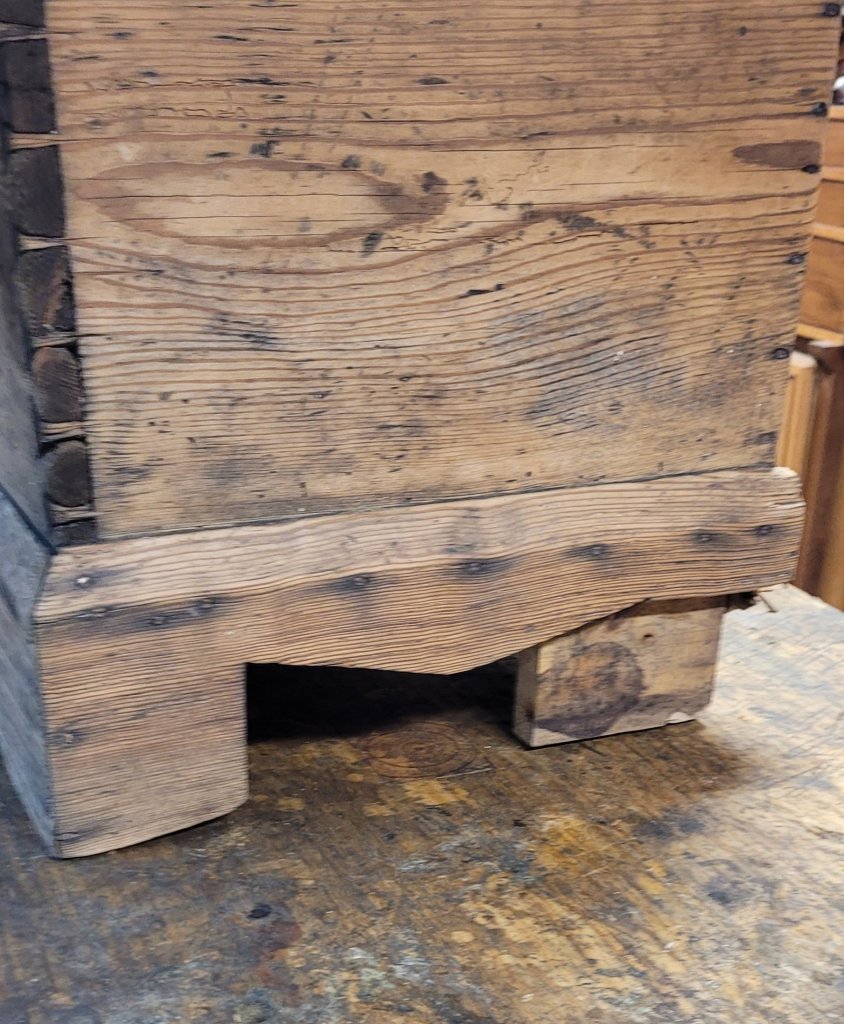
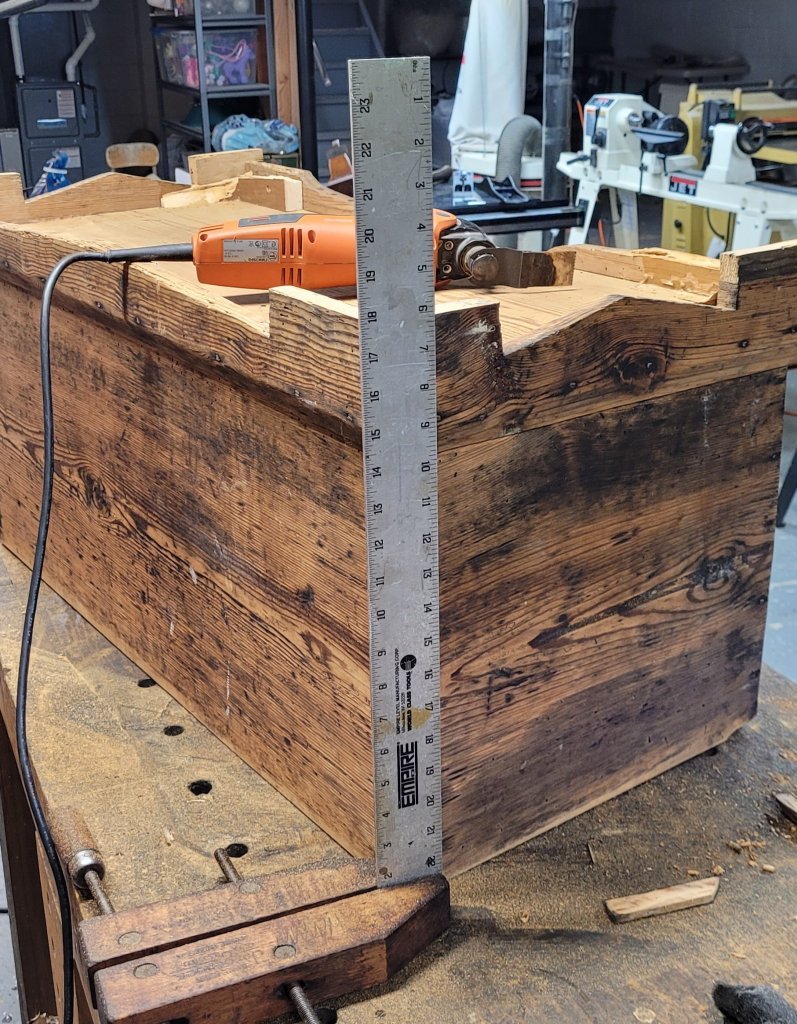
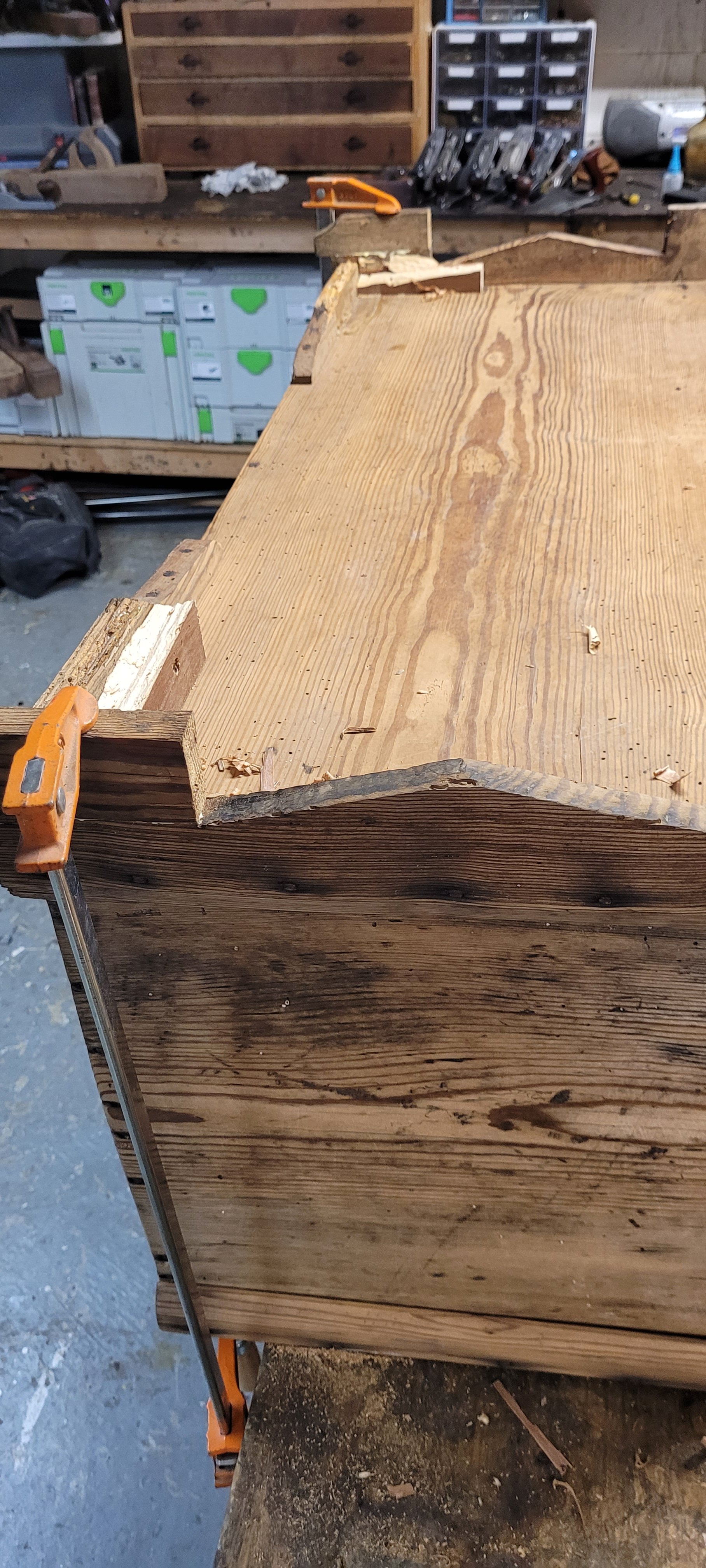
Flipping the chest on its top, I broke off the terrible repair and cut the front feet of the chest to 18″ tall. I then took the off cuts and glued them to back of the feet that were missing.

Once everything was glued, I flipped the chest back over on its feet and checked how it looked. The narrower base was more pleasing to the eye and less prone to breaking since the feet were no longer so tall.

I then worked on the lid shaving away the inside of the front trim so that it would close around the chest. After a few minutes of shaving, the lid closed fine when I reinstalled it.

The chest now serves us well as a coffee table in our screened in porch. Hell of a coffee table for $20.00, and you can barely notice it has been repaired. Anita is ordering old looking chest handles for the sides as we both feel it would look nicer with them.

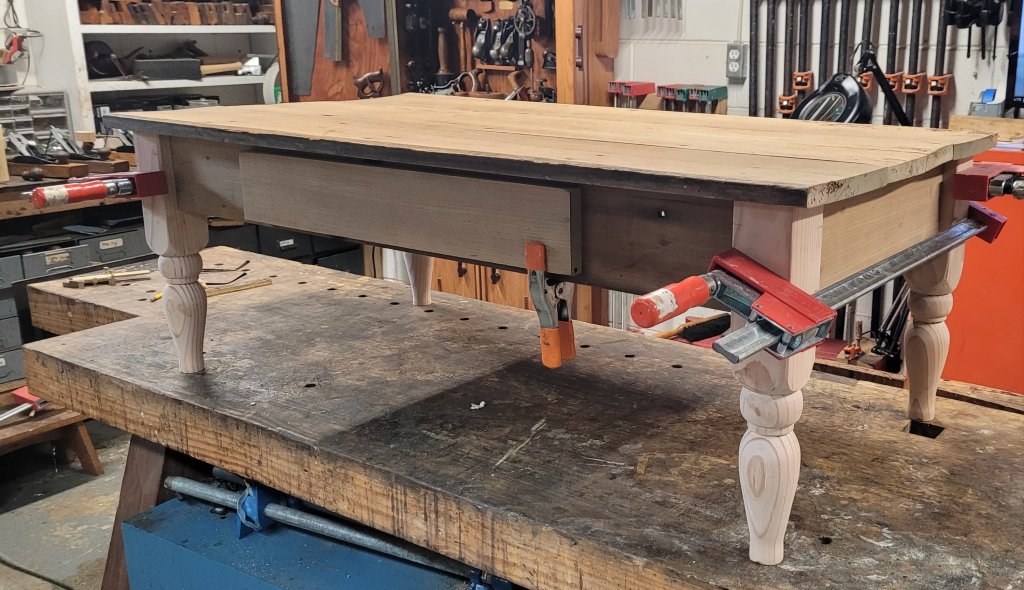
Rustic Coffee Table

Well, I finally built something! It’s been over a year since I built any type of piece of furniture. Mainly, because my new job keeps me busy during the week so the only time I have time to work in the shop is on the weekends.

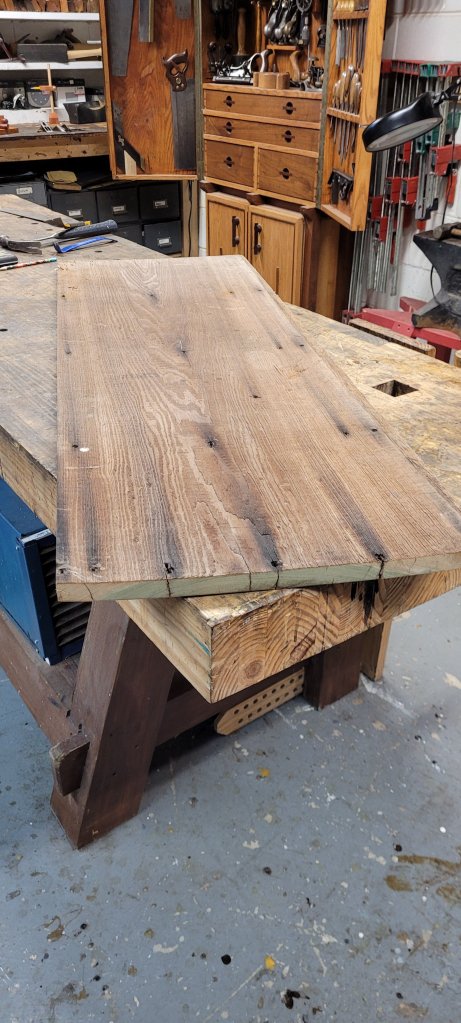
My wife bought an old bookcase on Marketplace last year. She originally wanted to use the bookcase in her booth, but it was in such poor shape that she decided that she wanted me to take it apart and make a coffee table with the wood instead. So, I disassembled it and removed all of the cut nails from the boards.

The wood was poplar and in decent shape, just dirty and covered in paint, so I sanded the surfaces clean with my random orbital sander. Some of the boards were nearly 20″ wide.

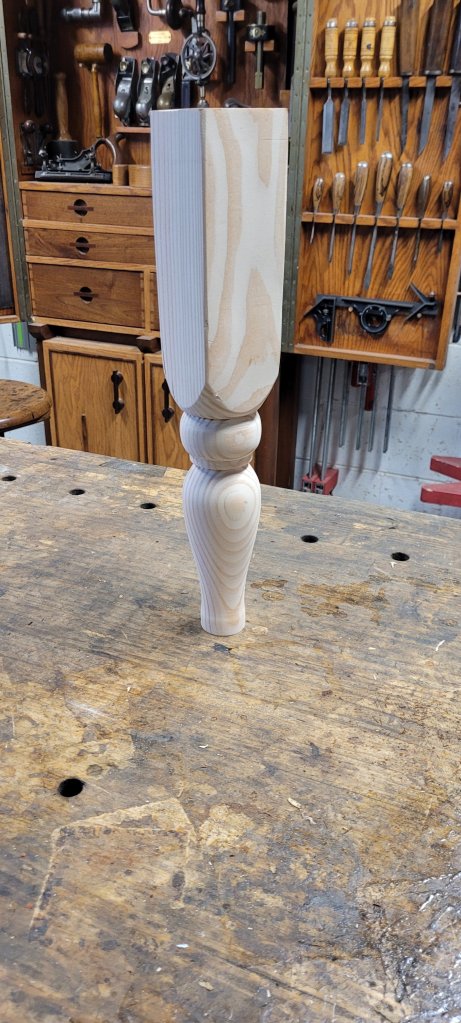
We originally wanted to use an old 4 x 4 to make the legs but came up empty at our local reclaimed wood supplier. So I ended up using a douglas fir 4 x 4 from Home Depot and turned four legs from it.

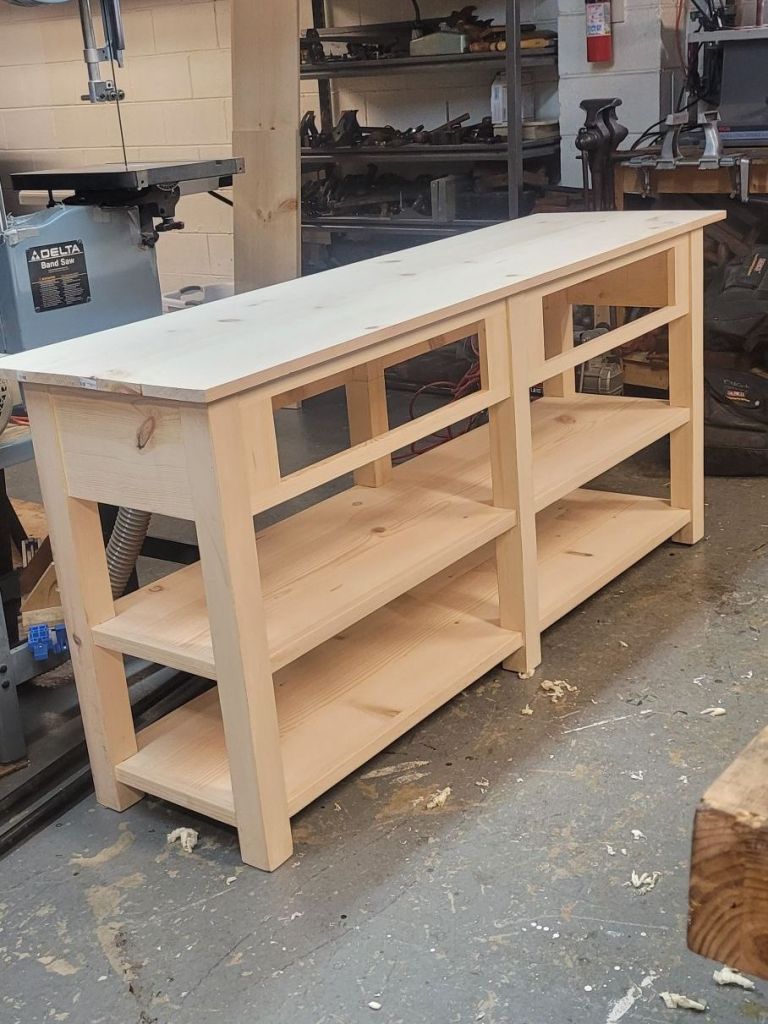
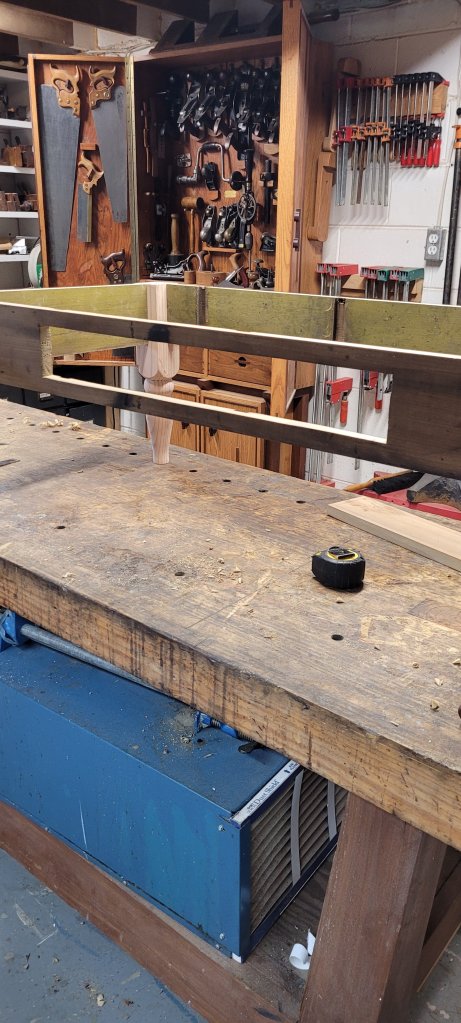
Assembling the table was super simple. I used Dominoes to attach the sides to legs and the top pieces were going to be screwed down from underneath.

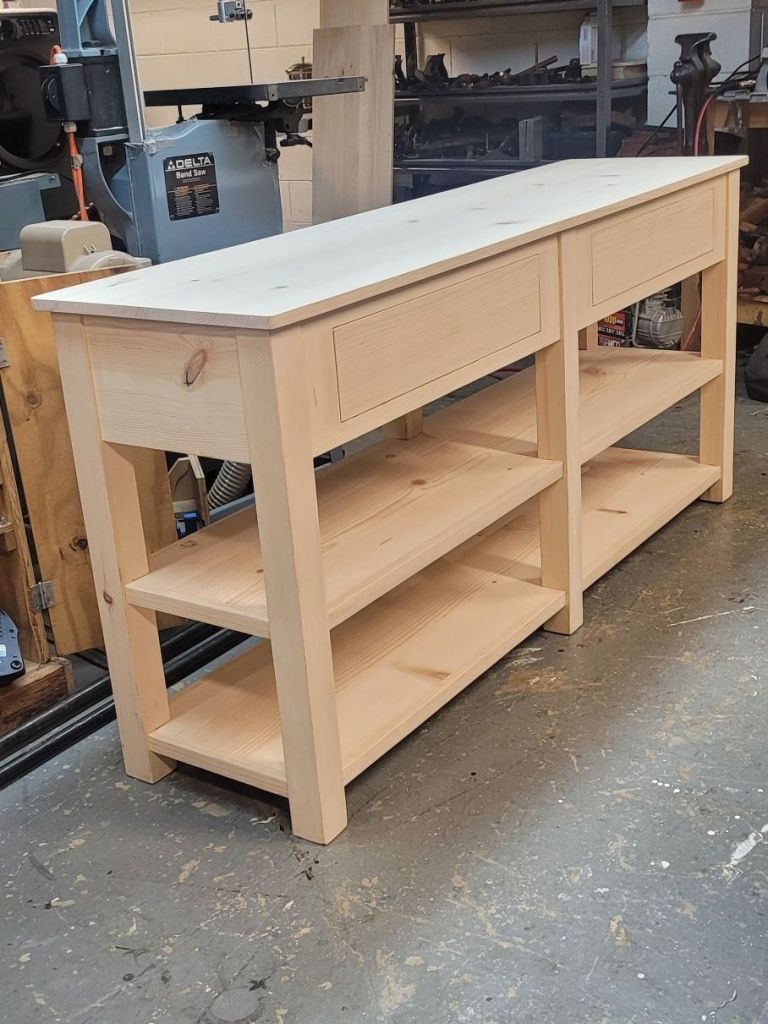
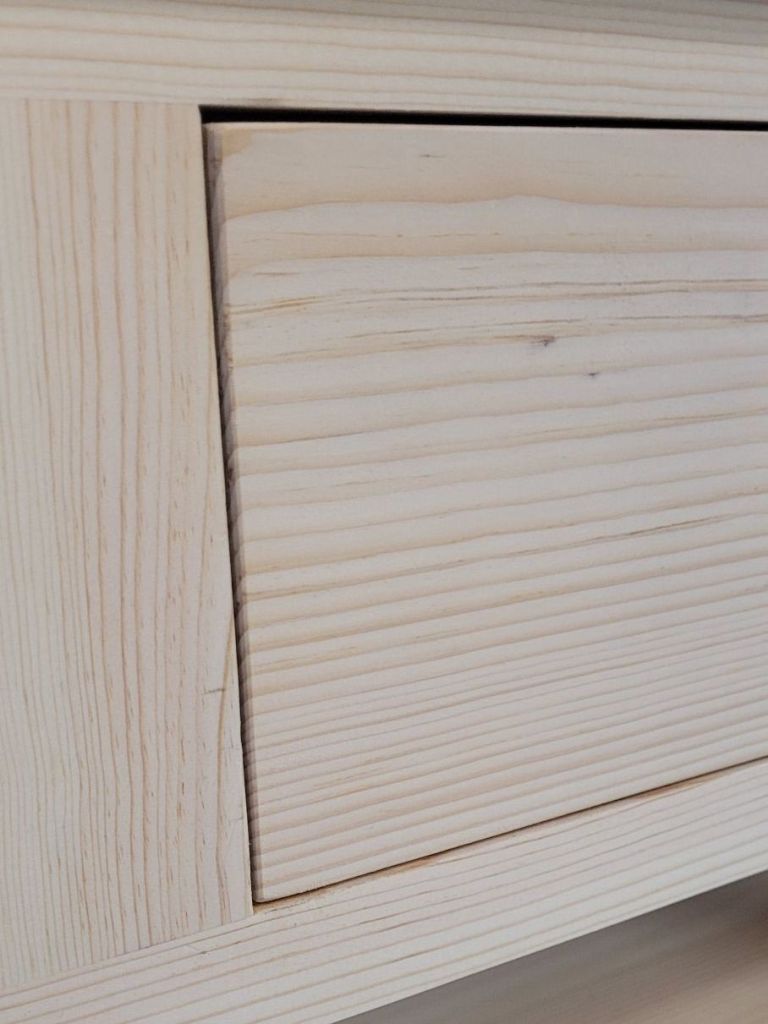
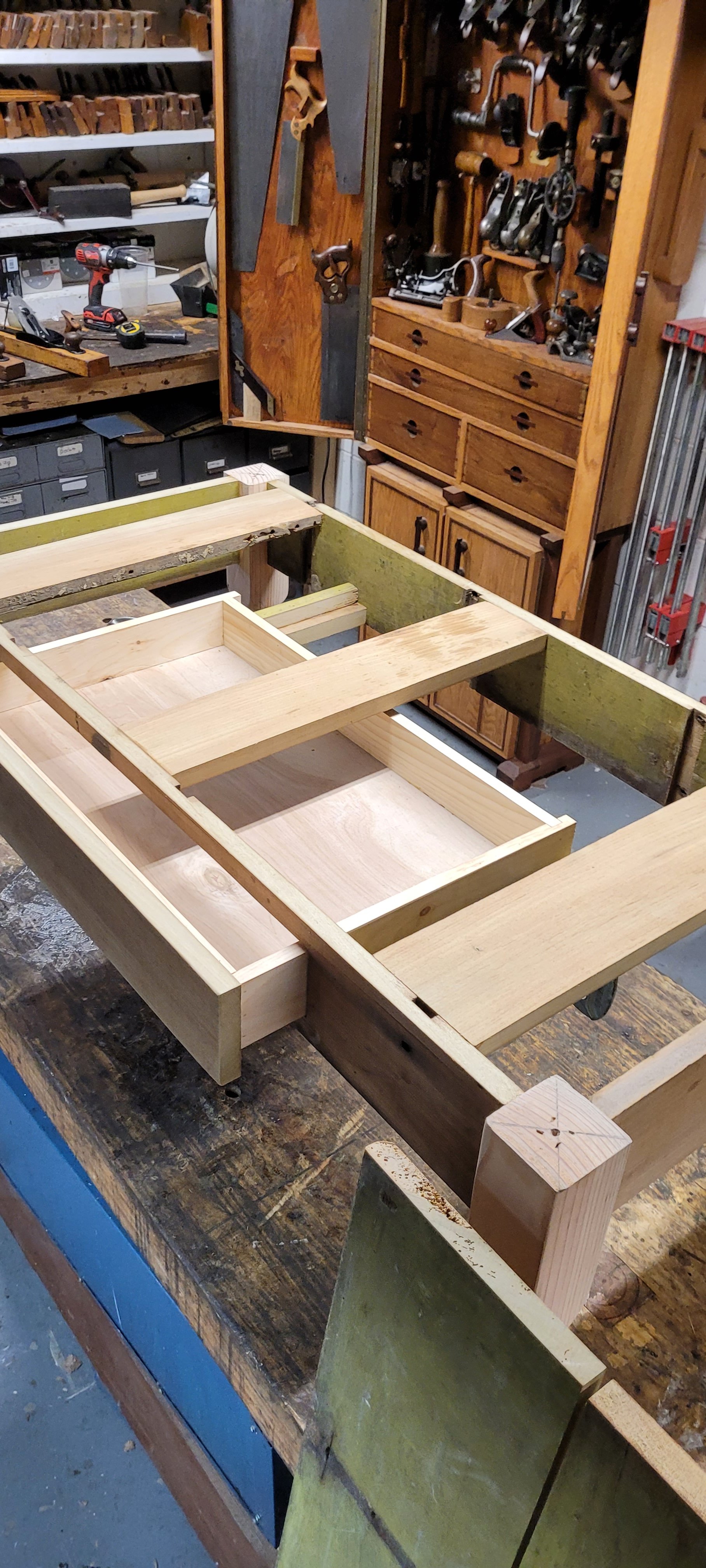
I opted to put a drawer in the front of the table so I cut out a rectangle hole in front with my jig saw. Then, I made a drawer with frame work with some scrap pine. The drawer face was glued and pinned onto the drawer box.

After the drawer was made and fitted well, I attached the top pieces and brought it upstairs into the living room. It was a fun, simple build, and it felt good to get back in the shop and build something.

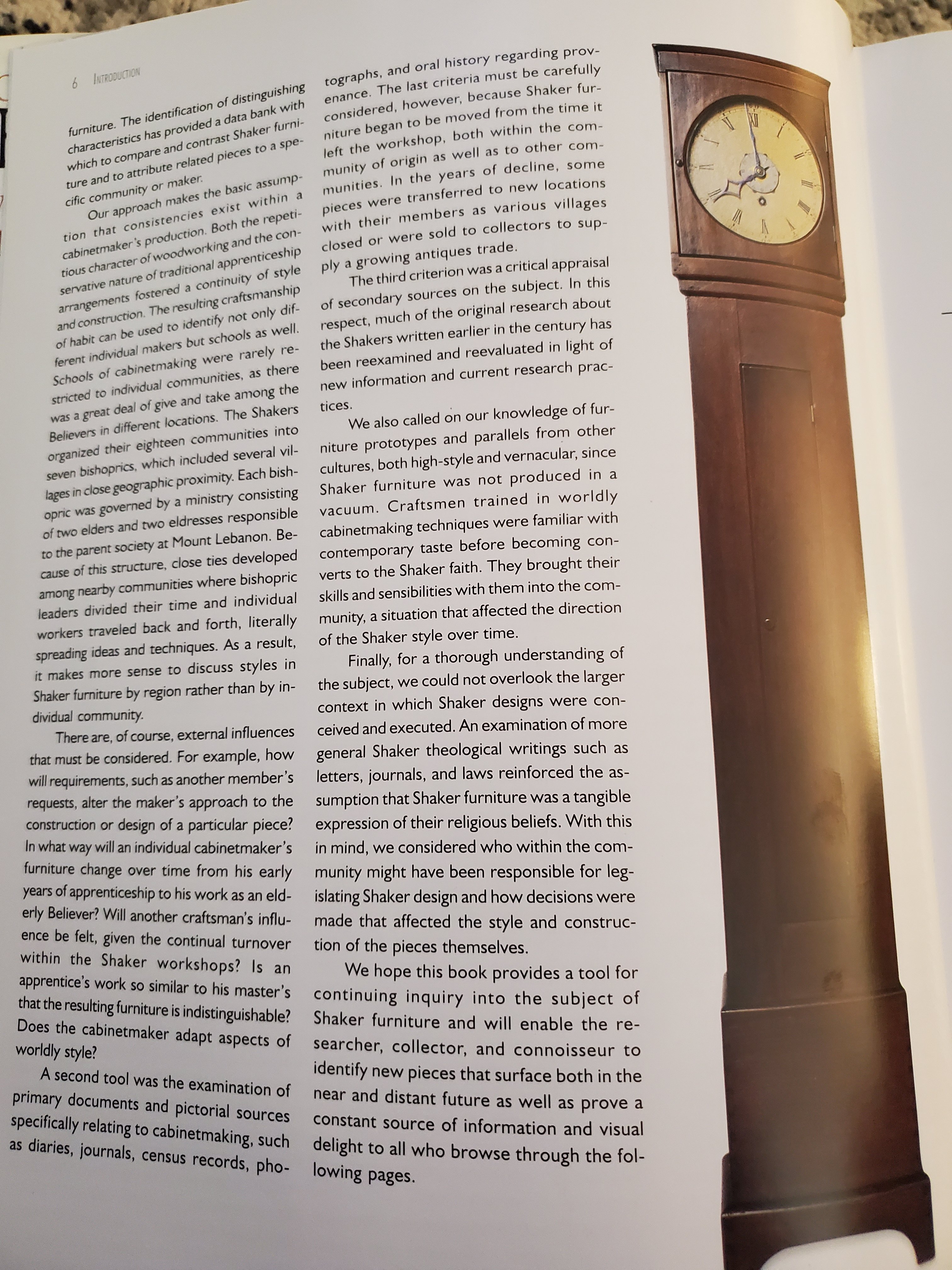
The Encyclopedia of Shaker Furniture

Yesterday I went to an antique show in Columbus, Ohio when I stumbled upon this book in one of the booths. When I first saw it, I thought the book was huge so, I browsed through it to see what was in it.

After looking through the pages for a few minutes and seeing the book originally sold for $125.00, I decided the $20.00 the guy wanted for it was too good to pass up.

I’ve had several books on Shaker furniture over the years, but none are as comprehensive as this one. The first 85 of 576 pages in this book goes into detail of how the Shakers came to be, their daily life, the tools and practices they used, and the different types of furniture each community made. There were over twenty different Shaker communities during the 18th and 19th century with a few of them only lasting a few years. The book talks about the different design and building practices the Shakers brought to their community as no one was born a Shaker. When you compare the furniture of one community to another, you can see suttle design differences between the two.

There must be over 1000 pictures of furniture along with the dimensions and descriptions of each piece. If nothing else, it makes an excellent reference book on Shaker design.

The book is so nice, it’s no wonder why it still sells for over $100 on eBay and Amazon. If you can find one that’s affordable, get it, you’ll be glad you did.

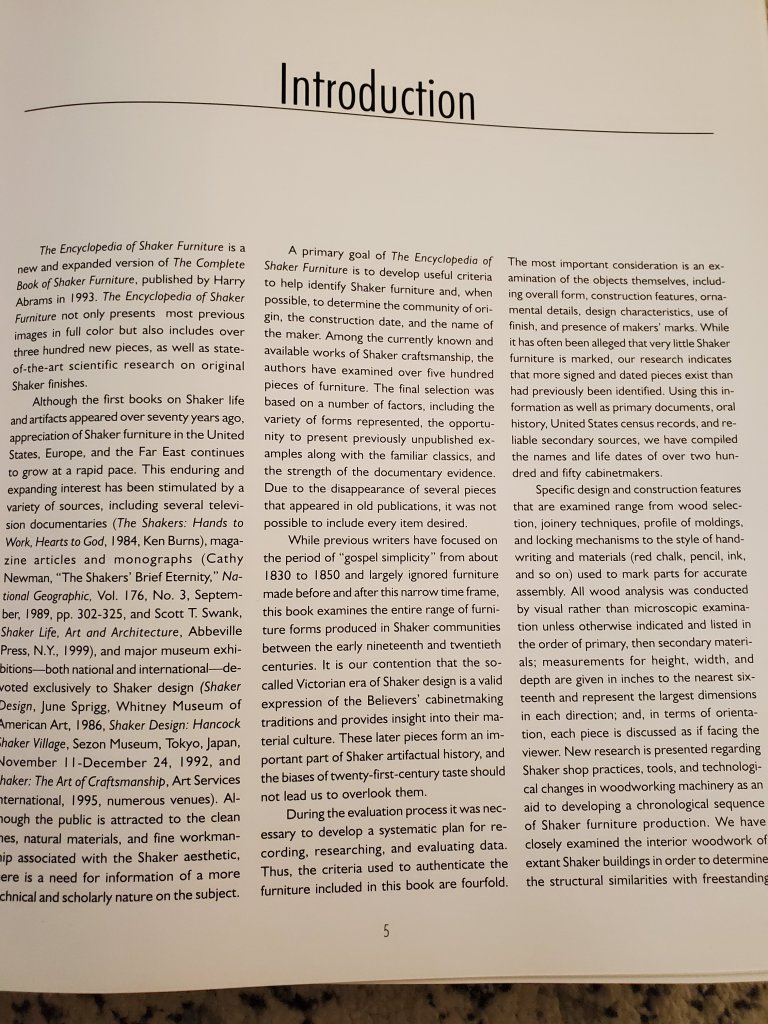
Here is the Introduction from the author himself to get a better understanding of the book’s purpose.

Repairing a Stool

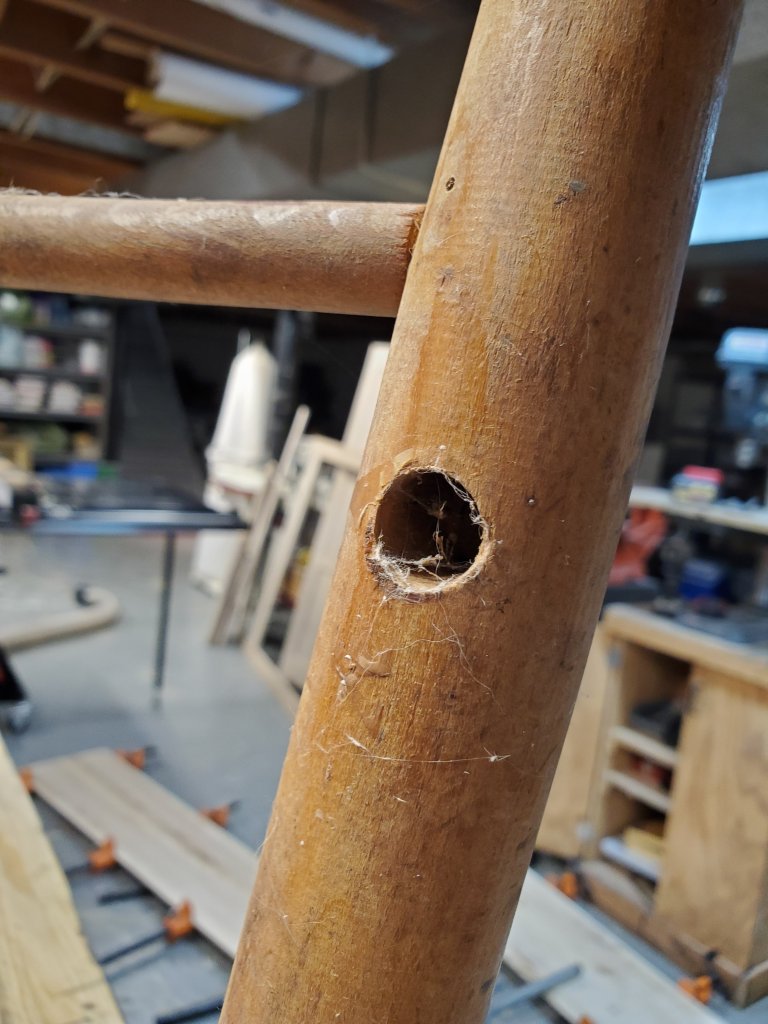
Back in the summer, my wife bought a stool for $5.00 at an antique show. I honestly forget which show it was as we go to one every weekend. The stool was in decent shape, it just had a broken rung which is why it was only $5.00. She asked if it could be fixed and I told her I could fix it pretty easily.

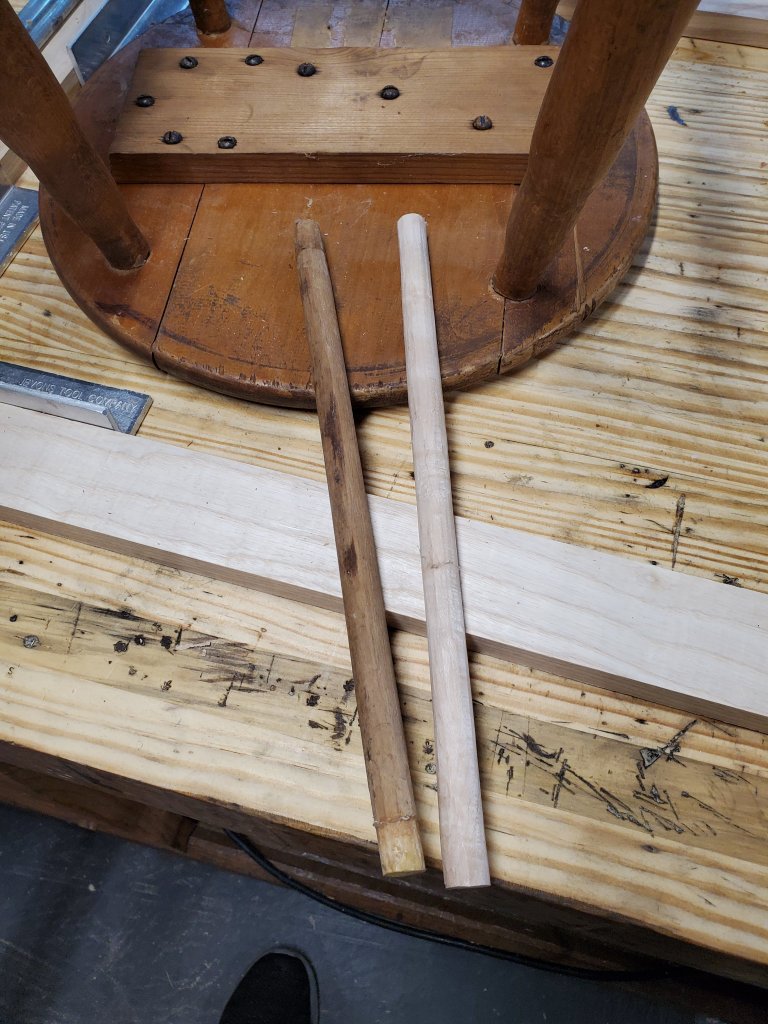
The first thing I did was clean out the hole the rung sat in with small drill bits and awls. I then cleaned up a bit of the glue residue with a small wire brush.

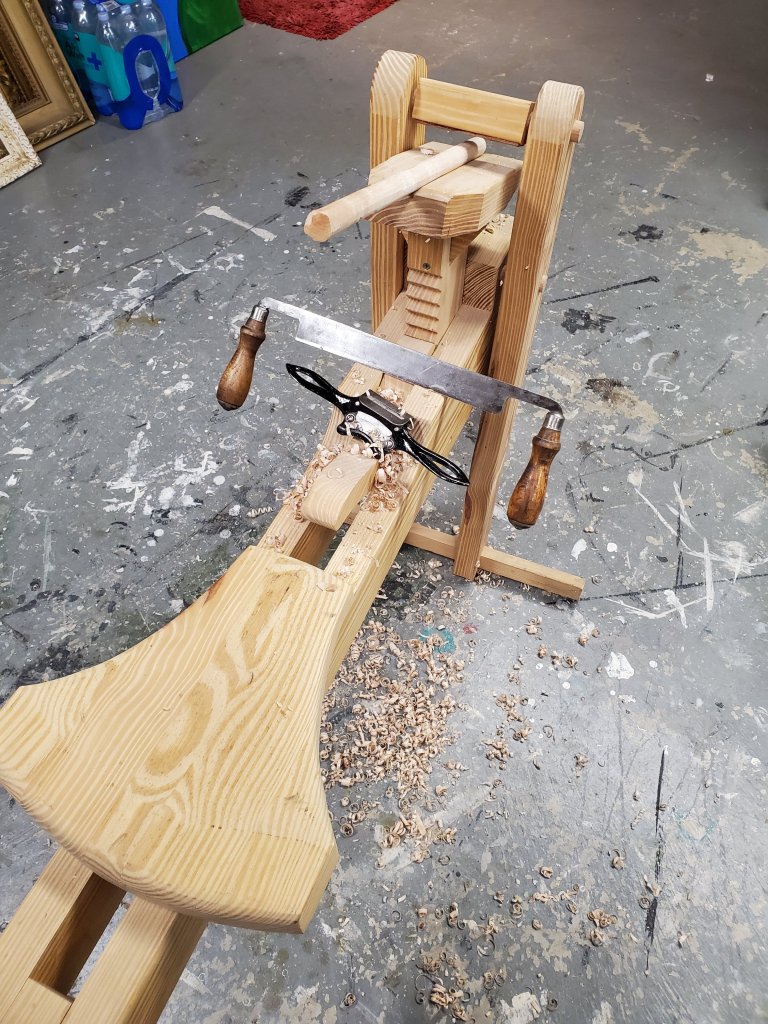
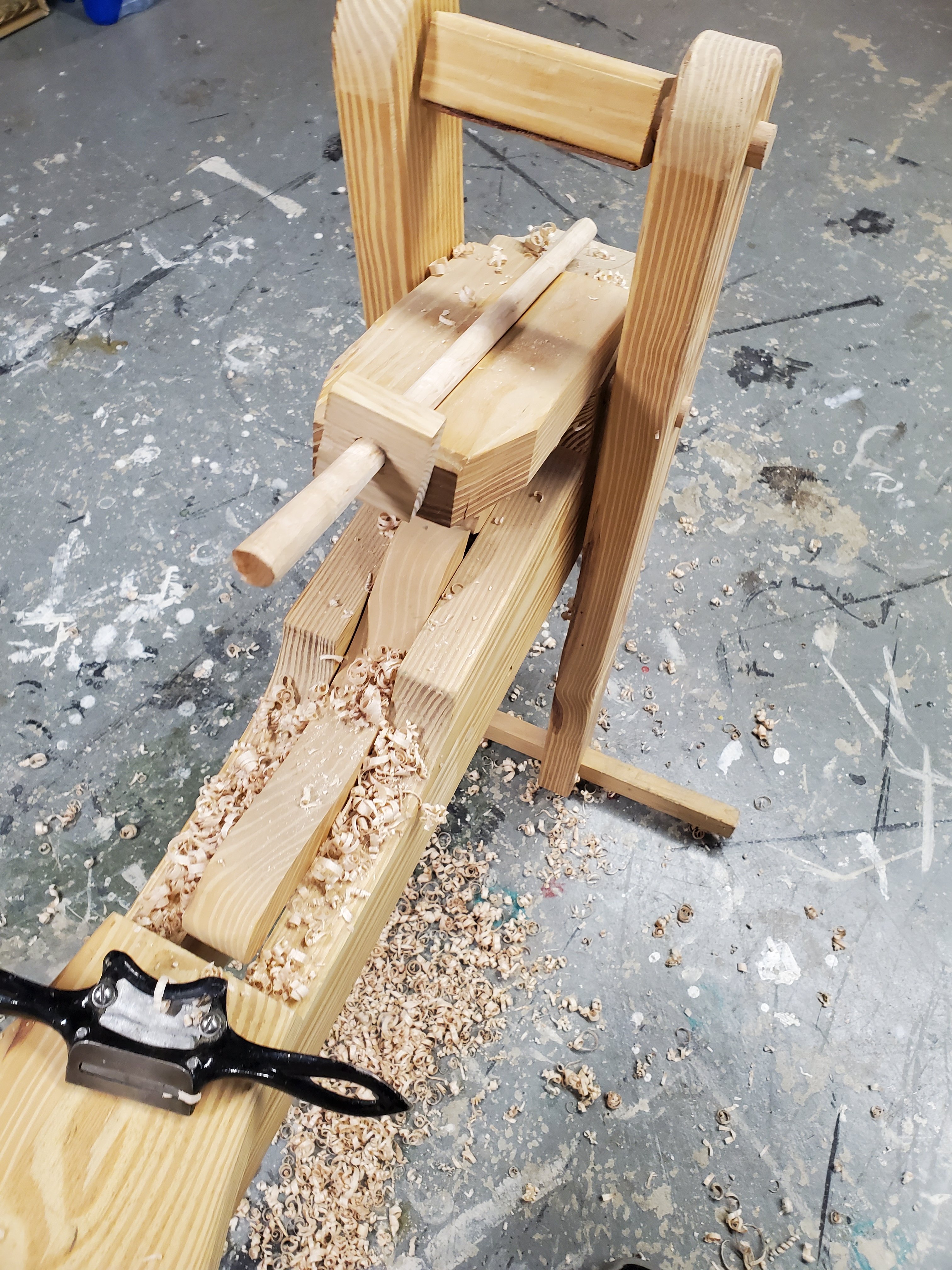
I needed a rung that was 3/4″ in diameter so I grabbed my shaving horse and went to work. I hardly use this thing so anytime I get a chance, I jump on it. Shaving horses are a blast to use.

I used my drawknife and spoke shave to get close to the final diameter, then I used a scrap piece of wood with a 3/4″ hole to check final dimension. I could have just bought a 3/4″ dowel, but where’s the fun in that?

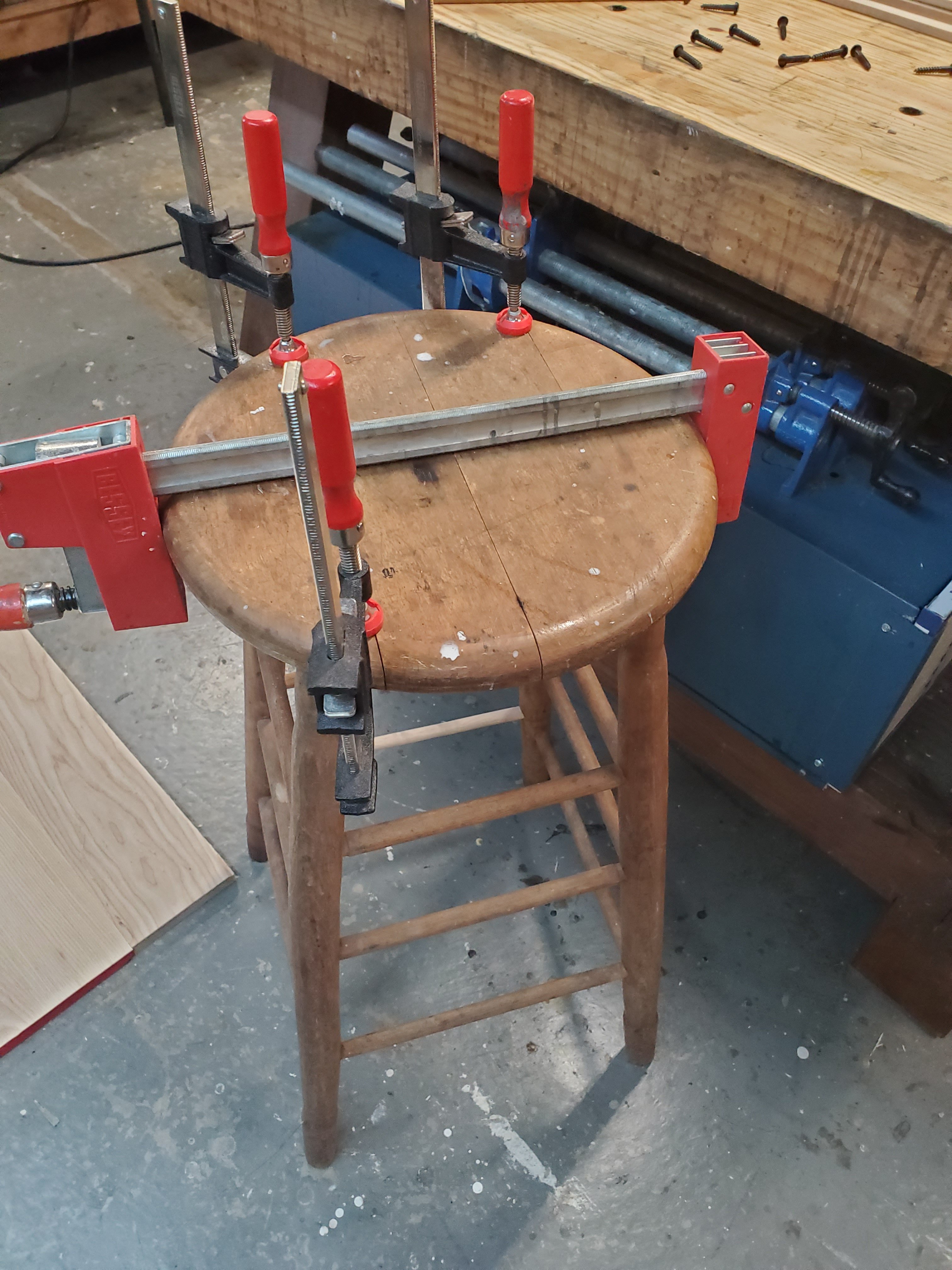
I removed the rung from the other side of the chair to determine the length my piece needed to be. I then glued and installed the rungs back into the chair while using strap clamps to hold everything tight while the glue dried.

The seat needed to be reglued a bit as well so some glue and clamps did the trick. When everything was dry, the stool was sturdy as a rock.

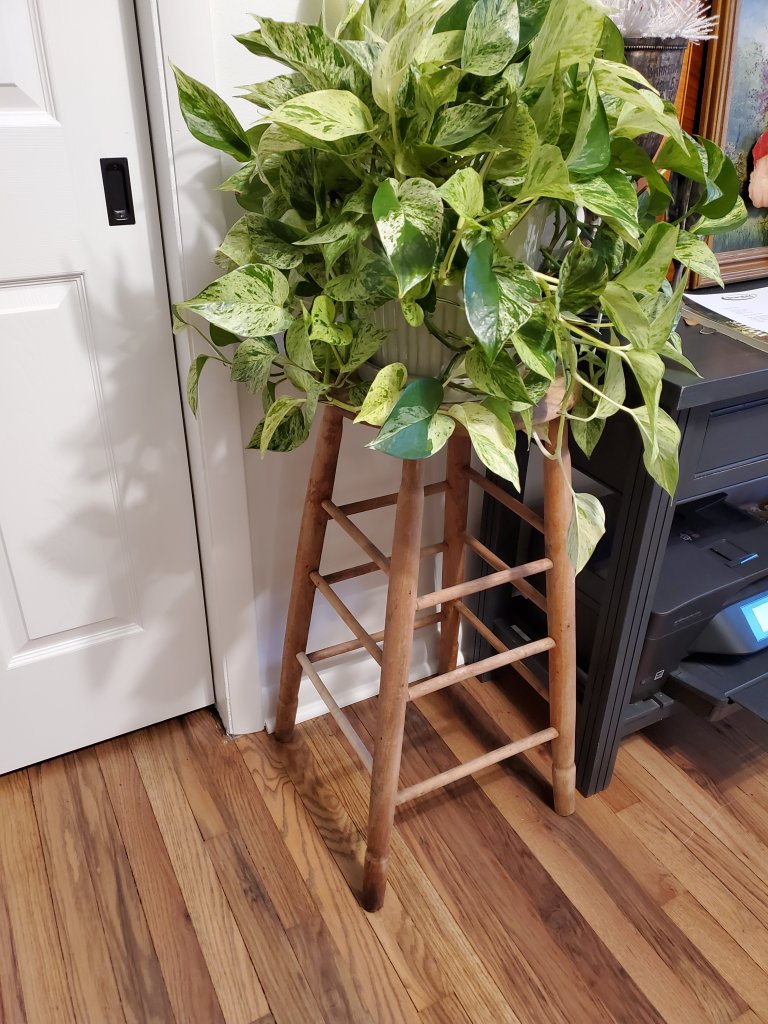
I thought Anita might have painted the stool, but she decided to keep it natural. She didn’t even stain the new rung dark to match the other rungs. The stool looks nice as a plant stand and for $5.00, I’m not complaining.

Pennsylvania Secretary up for Auction

A few months ago I wrote blog post about selling my Pennsylvania Secretary on Facebook Marketplace. Some of you commented that the $1800 I listed it for was way too low, but I knew that these types of furniture are not very popular anymore.

After a few weeks of it being listed and not getting any bites, I lowered it to $400. Even then, I only had one person contact me about it. The person was asking if it was a real antique or not. After I told him I made it, he never responded back. So it just sat out there with very little fews and no likes.

My wife was sick of the piece sitting in the garage so I decided to contact a local online auction company. After I sent them a few pictures, they responded that they would love to sell and I should bring it down to their warehouse.

When I met the owner of the company, he swooned over it. He thought the desk was the coolest piece of furniture he had seen in a long time. He even told me that he was going to feature it as his beauty shot for the auction.

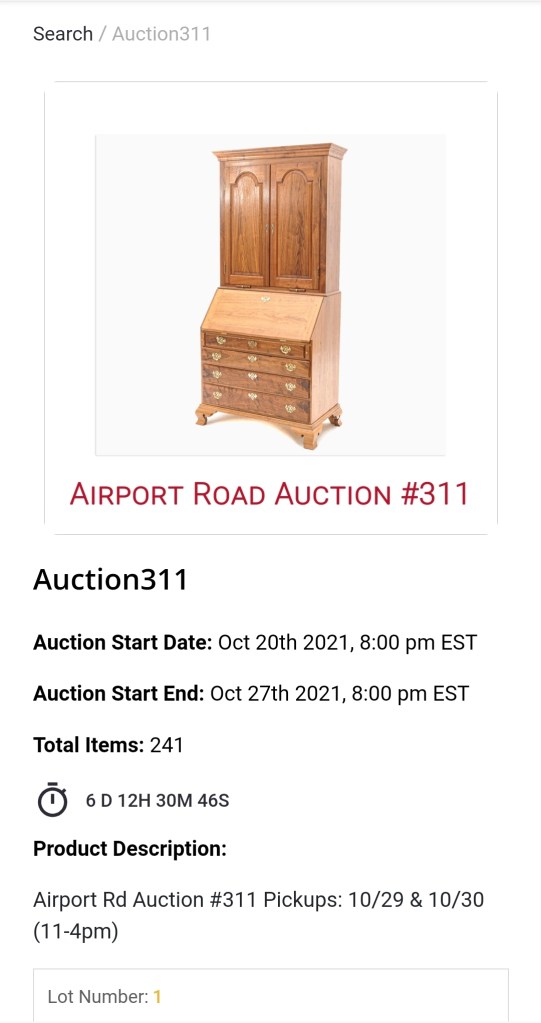
I woke up this morning and checked my email. Sure enough, there was my secretary on the front of his email. I’ll get 60% for whatever it sells for which probably won’t even come close to the amount it cost me to make back in 2004.

Here’s the link to the auction. The desk is lot No 27. My guess is that it will sell for under $500. What’s yours?

https://thevelvetcricket.com/search/product-buyer-auction/982?Airport%20Rd%20Auction%20#311Pickups:%2010/29%20&%2010/30%20(11-4pm)

New Life for a Display Piece

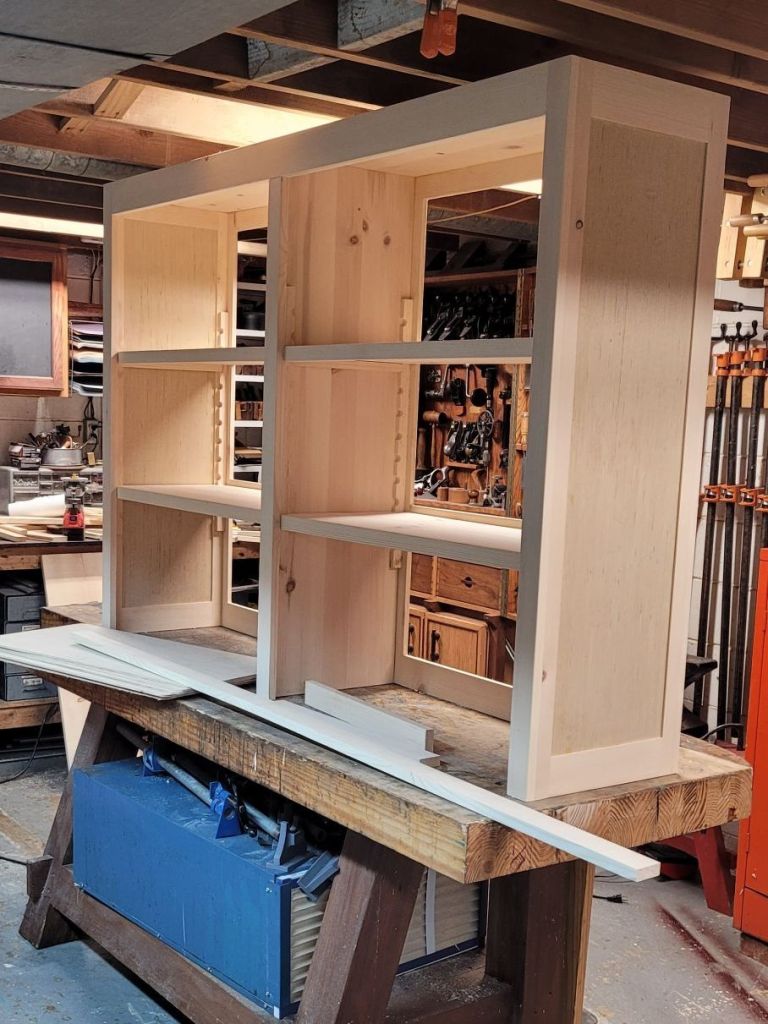
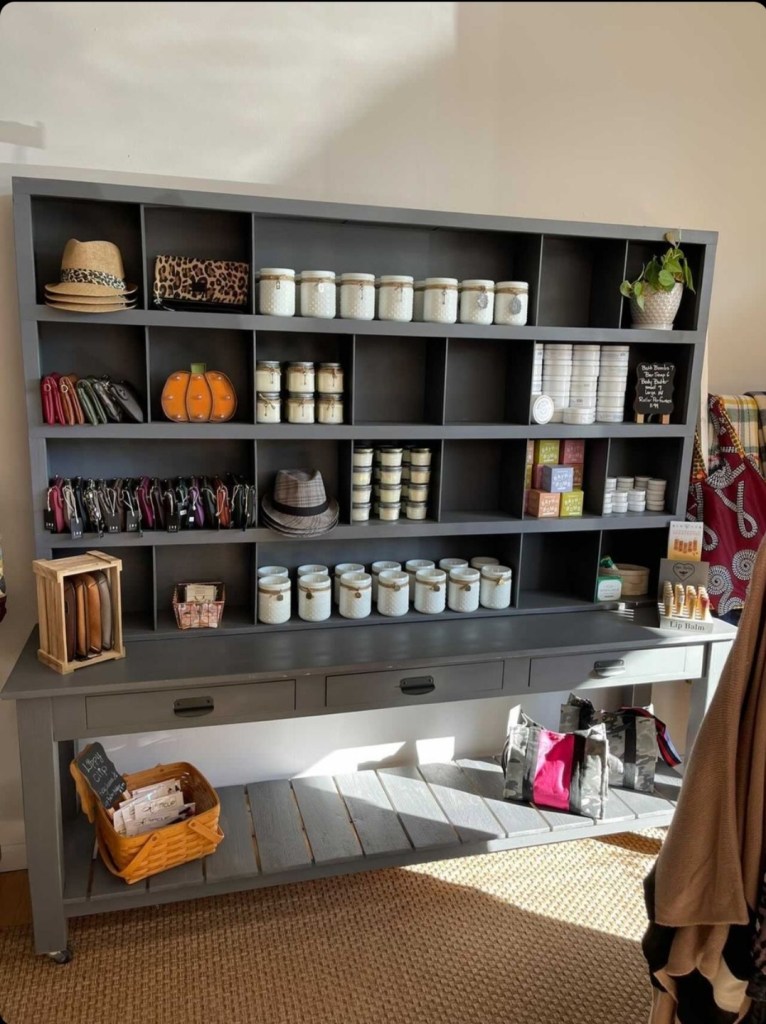
A couple years ago I wrote a blog post about building this huge display cabinet for my wife. She wanted it to use as a backdrop for doing shows. Being 7′ long, it was long enough to stick in the back of a 10′ x 10′ booth with a little room on the sides.

She was hoping to use it for a show in the spring, then Covid hit and the show was cancelled. We waited for everything to go back to normal, but the further things went, Anita decided not to do the show anymore. In the end, we never ended up even using the piece.

It sat in our garage over the months so Anita decided to get rid of it and told me to post it on Facebook Marketplace for dirt cheap. One of Anita’s customers saw the post and came by the next day to buy it. She owns a specialty shop and was planning on painting the piece gray and using it in her store.

Anita stopped by her shop this morning and saw the piece painted. It looks amazing in her store. At least someone got use out of it.

I’m thinking now that I should make these display pieces and put a big price tag on it instead of the garage sale price this lady got. What do you think?

Ash Display Cabinet

The ash display cabinet I’ve been building for Anita is finally done. Took longer than I wanted but, working full time, restoring and selling antique tools, and doing honey-do lists around the house has eaten up all of my time. Anita will eventually put handles on the doors once she figures out which ones she wants, but for the most part, it’s done.

The cabinet is 48″ x 66″ x 16″ and is the first piece of furniture I made without using a single piece of plywood. I would have at least liked to have made the shelves out of 3/4″ plywood but my lumber supplier doesn’t carry it. The piece is extremely heavy and cost me about $500 to build. But, it’s still way cheaper than the $1600 price tag that was on the one at Pottery Barn. Plus, this is made from American hardwood and not some junky looking Chinese lumber.

To help speed up the build, I went out and bought a Festool Domino. I waited ten years to buy one until the day I could afford it, but that day never came. So, I bit the bullet and bought the tool as well as the Domino kit with the extra drill bits. So far, I love the tool. I was told by the sales rep at the store that you set the tool on the first setting one one side of the board, then switch to the second setting for the other side of the board. The wider slot gives you a little bit of play when aligning the boards similar to using a biscuit joiner.

I used the machine for the case as well as the joinery on the glass doors and it performed wonderfully. The Domino is one of those tools you wished you would have bought sooner.

The other thing I did differently on the piece versus others I have built was to put feet on the cabinet. In years past, when I built something, the sides of the case would be the feet of piece of furniture but, after studying antiques over the years, I noticed that the well built pieces would have feet glued to the bottom. This helps protect the sides by lifting them off the floor by a 1/16″. Having square feet also makes sticking furniture pads on the bottom a lot easier.

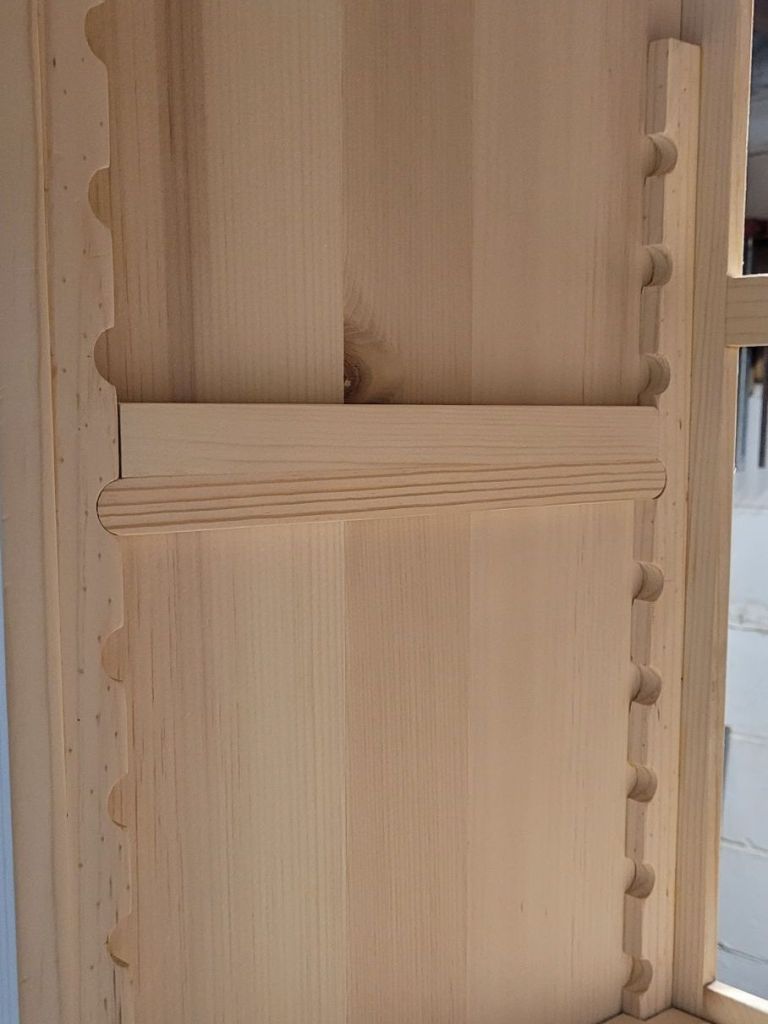
I already wrote about the wooden shelf supports a few weeks ago here. They work exceptionally well and can hold a massive amount of ironstone. I can’t even imagine all that weight on little brass pins.

Anita loves the cabinet, I love the cabinet, her friends love the cabinet, people on Instagram love the cabinet. It’s been a big hit and the money I saved building it, paid for my Festool Domino.. (see what I did there?)