CET Action Auction

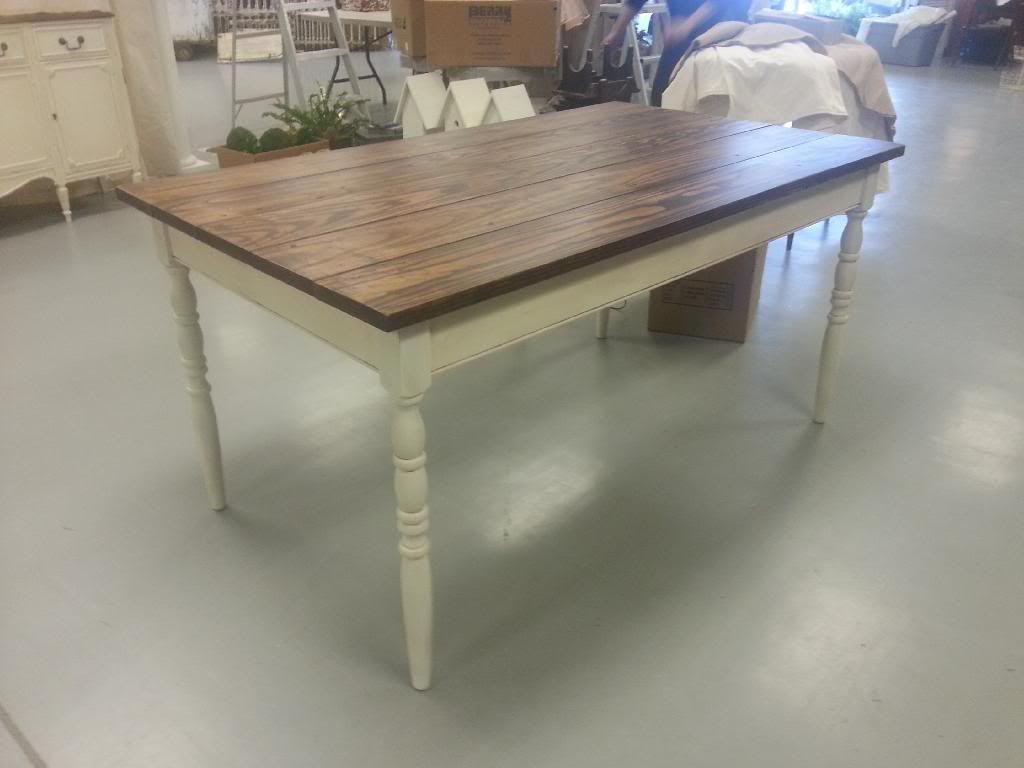
It’s that time of year again. Time for my local PBS station to hold their Action Auction where they auction off a bunch of items from donors around the Cincinnati area. Nearly every year I donate a shaker style table to them. The first few years, I made these tables out of nice cherry, however, the past couple of years I decided to build them with southern yellow pine to save on the costs. I make these tables out of a single 2 x 8 x 8 I buy from Lowes for around $6.00. I wrote a blog about it a few months ago. http://wp.me/p1gfza-d2

I painted the table using chalk paint which is a limestone based paint that is popular among people who repurpose and paint antique furniture. The paint leaves a chalky feel on the surface and with a bit of sanding, gives the piece an aged look. My wife, Anita, stenciled the lettering on for me to give the table a little bit something extra.

As you can see, the joinery is extremely simple. The stretchers on the top and bottom of the drawers have mortise and tenon as well as dovetail joinery, but the sides are simply pocket screwed together. The table is not going to be under a tremendous amount of stress so I opted not to mortise and tenon the sides to the legs in order to save time.

The custom work is left for the drawers. They are put together with hand cut half blind dovetails, but you can’t really tell since the sides are painted. I probably spend more time cutting those dovetails than I do on the rest of the piece.

It’s a simple piece that will be a nice little accent table in someone’s living room or foyer. The Action Auction takes place in a couple of weeks and my table will be auctioned off sometime during the weekend. The table should do well since painted black furniture is really popular right now. Anytime I make a bookcase for my wife so that she can sell it in her booth, it sells within a week. All I know is that it’s fun to see my furniture on TV.  I really don’t get anything out of it other than a good feeling from helping out my local PBS station that continues to keep The Woodwright’s Shop on the air.

Hiding a Blemish on the Top of a Desk

My wife Anita bought this desk at a local auction house a few weeks ago. The overall condition of the desk was really good, it just had a tear on the veneered top. She sanded and filled the missing area with wood putty hoping that when she applied a dark stain, it would blend in with the rest of the top. My dog Bentley photo bombed the shot.

Unfortunately, but not surprisingly, the repaired area stuck out like a sore thumb. Determined not wanting to paint the entire top and lose the look she was going after, she opted to add a stencil in the area where the blemish was.

She chose a large French postage stamp stencil and angled it across the top. Since the patched area was a little bit on the right side of the desk top, she couldn’t simply center the stencil on the top and completely hide the blemish.

She used a few colors of paint and painted the stencil completely hiding the patch. The stencil now adds quite a bit of character to the desk.

This is how the desk turned out after it was painted and she added a few coats of hemp oil to the top. She has received a lot of postive feedback on her facebook account. You can check out her page here; https://www.facebook.com/bellachicdecor

Can you find the blemish? I sure can’t.

Over The Moon

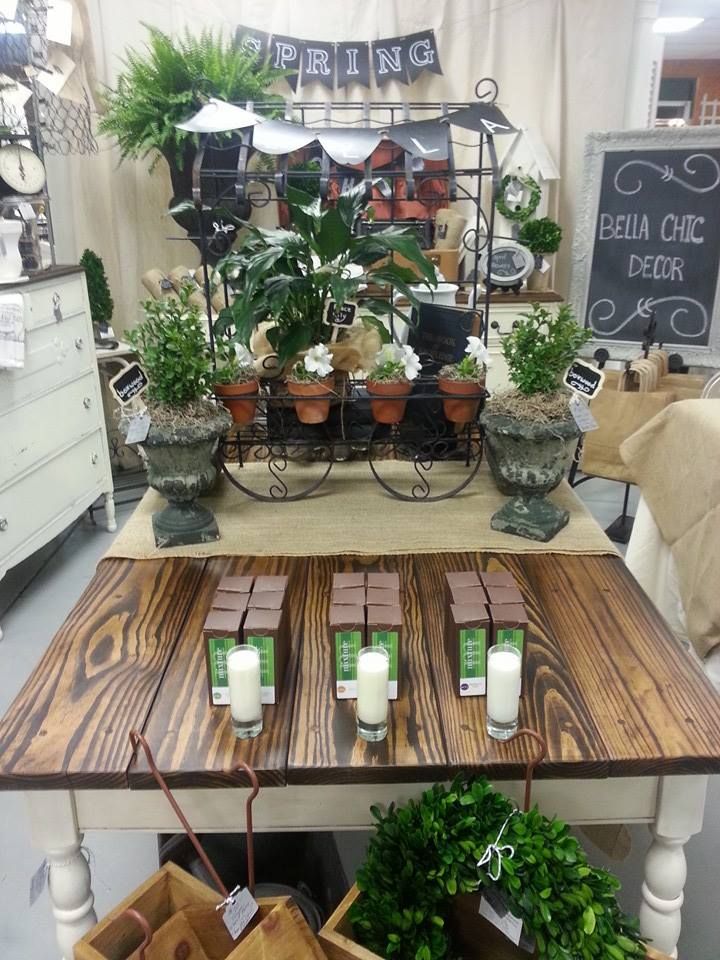
Last weekend was the Over The Moon show in Lawrenceburg, IN. My wife Anita did really well selling her painted furniture and home décor items. People were even telling her that she had the best booth at the show. She did so well that the organizers invited her back for the spring show in April.

Helping my wife out, I made a few things for her to sell at the show. All of my EATs and NOELs that she brought sold which made me happy. I need to make some more and let her sell them in her booth in That Shop in Milford.

Here’s the china cabinet hutch at the show. A lot of people were looking at it, but most were looking at the things inside the cabinet instead of the cabinet itself.  Beside it were chalk boards that she painted. Those are a very popular item for her. I simply cut out the plywood for the frames, she does everything else.

I made a bookcase for her a few months ago, but unfortunately no one bought it.  I’ve made two other ones before and both of them sold within a couple of weeks. We’re thinking it might be the paint job that’s hurting the piece. I’ll make another soon and Anita will just paint it black and see if it sells quicker.

The one piece that didn’t sell was the china cabinet hutch we worked on a few weeks ago. However, Anita is happy about that because she wanted to keep it anyway. It looks nice in our dining room. Now she needs to work for the next Over The Moon show in the spring.

Updating a China Cabinet

My wife bought this china cabinet at the Springfield Antique Show in Springfield, OH in September. It originally came with two glass paneled doors but she wanted to take them off and open up the top part of the cabinet for easy storage. We have a similar china cabinet in our dining room now and opening and closing the doors every time I want to unload my wallet and keys is kind of a pain in the ass, so taking the doors off permanently make sense to me.

You’ll see a lot of china cabinets with their doors removed in antique stores but most of them simply take the doors off and paint the piece leaving the sides of the case 3/4″ thin with the hinge mortises exposed and all. I knew I didn’t want to have that look, so I decided to add stiles to front to complete the case.

I started by milling two pieces of poplar 1″ x 1 3/4″ x 36″ and laid out where I wanted to rout fluting down each piece.

I then clamped the pieces in my modern Moxon vise and used a 1/4″ fluting bit to rout a flute about 1/4″ deep down the front of the stile. I opted to have three flutes 1/4″ apart down each stile.

The scrap portion of the stiles is key. Here I gauged where the fluting should go and then tested the layout. As you can tell, I had to move over the middle flute just a tad in order for it to line up evenly with the other two flutes on the side.

After the fluting was routed, I sanded the stiles and glued them onto the cabinet.

The reason I decided to use 1″ thick poplar 1 3/4″ wide is because I wanted to match the stiles to the top rail as it was 1″ x 1 3/4″. Had I used wood that was only 3/4″ thick it wouldn’t have looked as nice appearing like the stiles were an add on which I did not want.

The fluting on the china cabinet’s leg started up 2″ from the bottom so I mirrored the detail starting and stopping the fluting on the stiles 2″ from the top and bottom.

This is how the cabinet turned out. The fluted stiles gives the piece a nice added touch and finishes it off. It will be sold in my wife’s booth at a vintage designer’s market called “Over the Moon” in Lawrenceburg, IN near the end of the month. I think my wife secretly doesn’t want it to sell because she wants to keep it. I can’t blame her.

Fixing a Childs Rocking Chair

My wife’s cousin’s husband (does that make him my cousin in-law?) has a childhood rocking chair he wanted me to fix. My wife Anita brought to me and asked me what I could do with it. I looked it over for a few minutes and noticed that it had old glue repairs and screws all over the place trying to hold everything together. It must mean a lot to him if he tried so hard to keep intact, so I decided that it I’ll give it my best to return this chair to its former glory.

The first thing I had to do is carefully disassemble the top of the rocker and save as many pieces as possible. The seat was a piece of MDF that I was going to use as a template for the new seat.

The crest rail was all beaten up so I had to cut a new piece out of poplar using the original as a template.

I then used the holes off the old crest rail as a pattern for the new crest rail and drilled the appropriate size holes.

Since I was using the seat as a template, transferring the holes to the new seat was easy. I simply stuck the auger bit in the hole at the appropriate angle and drilled through. I realize that in theory that this doesn’t exactly work because the angle in which I drilled the holes through the new seat won’t perfectly line up with the where the holes are in the original seat, but the difference was miniscule and not enough for me to be concerned with.

After the holes were drilled, I shaped the seat on the band saw and cleaned up the edges with rasps and files.

I needed to make new spindles underneath the arm stretchers as one of them looked like a dog chewed on it. Luckily I had a couple of short 5/8″ dowels that would work.

I needed to put a 1/2″ tenon on them to fit in the 1/2″ holes I drilled through the seat. I used my tenon cutter and brace to do the job cutting a tenon on both ends of both pieces.

The test fit looks pretty good. Now I needed to make 3/8″ dowels for the back spindles.

I didn’t have a 3/8″ dowels on hand but I do have my Stanley No 77 dowel machine with a 3/8″ cutter in it. I actually sold this tool on eBay earlier this year, but the guy I sold it to claimed it was damaged in shipping so he returned it. I took it as a sign that I should keep it.

I grabbed some maple and cut 7/16″ square stock on the table saw. I then took the stock and shoved it into the cutter while turning the handle which makes the cutter head spin cutting the square stock round.

In no time flat I get perfect 3/8″ dowels. I cut them to size and stuck them in the holes to act as the back spindles.

After some sanding and glue, the rocking chair is back in business. Now Anita will paint it and give it back to her cousin’s husband.

UPDATE 12/24/13

The rocking chair has been repainted just in time for Christmas. My wife Anita did a nice job painting it with chalk paint and distressing it a little bit. We’re on our way to my Anita’s cousin’s house to deliver it to her husband. I’m sure it will be well received.

Empire Dresser

The Empire dresser is officially done. My wife Anita found some nice oil rubbed bronze drawer pulls on the internet after looking locally for some with no luck. It originally had glass knobs on it, but a few of them were in rough shape and not all of them matched. I think the drawer pulls she picked out look really nice and add to the character of the piece. She applied four to five coats of hemp oil to the dresser. It gives it a warm aged look without making it look too glossy.

I put a few hours in this as well. I had to strip all the old stain off, patch a veneer job, re-band all the drawer fronts with sapele, replace a brass key escutcheon, and reinforce some of the drawer bottoms with pieces of poplar.

She plans on selling this in her booth with her painted furniture and antiques this Saturday at a local street fair in Milford, OH called the Longstone Festival. She was lucky enough to get a booth as there is usually a waiting list every year. Hopefully it will sell there. I will let you know if it does. http://www.longstonestreetfestival.com/

Frames, Frames and more Frames

Last night, my wife Anita took me to an old frame factory in downtown Cincinnati. The factory stopped operating over a hundred years ago, but it looked like the frames hadn’t been touched since the workers packed up and went home.

Anita met a lady about a month ago who was selling some frames from the building and told us that she was going to have an open house on Aug 23rd to try to get rid of some more and invited us to come. Because Anita makes chalk boards out of old frames, she made an appointment with her to view the building before the open house to buy some of her frames, but going back to the open house was still a no-brainer as she wanted me to see the place.

When we arrived, there were people greeting us offering wine and cheese. I didn’t know if I was coming to a rummage sale or a gallery viewing, so I grabbed a glass of wine and headed upstairs. When I got up there, all I saw were tens of thousands of frames stacked everywhere. The floor was probably 5000 square feet and every inch was packed with old frames. It took five minutes just to absorb all of it as I wandered around checking everything out.

The factory stopped operating in 1910 and must have specialized in round and oval frames as there were thousands of them spewed out all over the floor. Every shape and size from tiny to gigantic were available as an oval. They did have some square frames available, but 95% were round of some shape. The owner said the building sat like this undisturbed since 1910.

Not all the frames were primed. They had some really nice ones made from mahogany in all sort of sizes. My wife bought a few of these before and cleaned them up with hemp oil. They look fantastic cleaned so she bought a few more last night . You can see the hundred years of dust that laid on these frames undisturbed.

Sadly, all the old machinery were long gone. I looked around the building for remnants of the machinery, but only came across this glue applicator directions inside one of the posts of the building. It’s from the Casein Manufacturing Company explaining how to properly use one of their mechanical glue pots.

The only big machine left was this nice old blower. There were a few pieces of duct work that went throughout the building, but I’m not sure what it was used for.

Anita ended buying 50 frames for $250. Dirt, dirt cheap as some of the old frames she picked out can go for as high as $35.00 a piece in antique stores. Now she needs to clean all of them up and turn them into chalk boards.

The Furniture Makers of Cincinnati 1790 to 1849

While shopping around a couple of antique stores in Lebanon, OH this weekend, I ran across this book placed on the bottom shelf of a bookcase in the back corner of the store. The book was “The Furniture Makers of Cincinnati 1790 to 1849” and it intrigued me since it was something that I was looking for a while. I have always known that back in the earlier 1800’s Cincinnati was the epicenter of the furniture industry, but I knew very little about any of the makers or furniture from that time.

The writer of the book Jane E. Sikes, who I can only imagine was Richard Gere’s mom, was a native Cincinnatian who held degrees from Bennett College and the University of Cincinnati. She researched and documented hundreds of cabinet makers, chair makers and turners during the earlier part of the 19th century and included their name, location, and year or years in which they operated in alphabetical order. She also wrote about the furniture industry in Cincinnati and the artisans who helped carve its future. If you’re from Cincinnati and would like to read the book yourself, you can buy a used copy on Amazon. http://www.amazon.com/Furniture-Makers-Cincinnati-1790-1849/dp/B002H2TIDE/ref=sr_1_1?ie=UTF8&qid=1376267859&sr=8-1&keywords=the+furniture+makers+of+cincinnati

During the earlier 1800’s, Cincinnati was the fifth largest city in the US and the largest in the West. Steamboats carried goods from the East and to New Orleans. Being a major port for travelers on the their way out west, Cincinnati flourished economically and by 1815, Cincinnati was exporting chairs and furniture out west, selling to the steamboat trade. Because of the expanding growth and the lush local forests, artisans from all over the world came to Cincinnati to help build the furniture that was in such heavy demand.

The book has a few pages of color plates showing furniture made in Cincinnati which is what I was really after.  Being a furniture maker from Cincinnati, I’d like to pay homage to the furniture makers before me by incorporating some of their shared styles into my own designs. Anytime I watch the Antiques Roadshow on PBS, I hear the Keno brothers talk about the Philadelphia style or New York style of furniture, but never hear them speak of a Cincinnati style of furniture. Unfortunately, there doesn’t appear to be any singular design that stands out as a Cincinnatian form as Sikes wrote, “It is difficult to attribute particular characteristics to Ohio furniture in general and Cincinnati in particular. However, there are certain pieces which have descended lineally in certain families and we know that these shapes are definitely the kind of furniture made here in 1820 and 1830.” However, she doesn’t go into detail what those shapes or pieces were.

As far as the furniture industry in Cincinnati is concerned, unfortunately, the Great Flood of 1832 wiped out a lot of the furniture makers who worked and lived downtown. The river was so high that year that it was reported by William Henry Harrison that steamboats were travelling down city streets. Seven of the major chair makers were decimated as all of their tools and paint were washed away down stream. After the flood in 1834, the sudden outbreak of Asian Cholera only added to their woes when as many as 100 people died a day from the illness. Steamboats weary of traveling to Cincinnati in fears of spreading the disease bypassed the city thwarting once again the chair makers who depended on the steamboat trade. Most of them closed up shop and went onto other trades.

While examining the pictures, I think there are some similarities in the curves of the pieces that I can incorporate in my own designs in the future. Since I have lived in Cincinnati for nearly thirty years, it only makes sense to continue the proud history of furniture makers who came before me.

Page 20 has a picture of the Book of Prices of the United Society of Journeymen Cabinet Makers of Cincinnati for the Manufacture of Cabinet Ware in 1836. Books like these were legal contracts for helping unionize furniture making. Whether or not they were adhered to is anyones guess.

One of the neatest furniture makers Sikes researched was an African-American man named Henry Boyd who was born into slavery in Kentucky on May 14, 1802 and then bought his freedom at the age of eighteen. He set up shop in Cincinnati and sold his furniture to people all over the South and Southwest. He began working in 1830 and by 1850 he employed 20 cabinet makers making beds for hotels. Some of his furniture can still be seen today at the Golden Lamb Inn, the oldest hotel and restaurant in Ohio in the city of Lebanon, just two doors down from where I bought the book. I have never eaten at the Golden Lamb but I’ve heard good things about the place. Looks like I’ll have to take my wife there soon and check out some of his furniture if possible. The Cincinnati Enquirer wrote an article about Henry Boyd a few years back. http://www.enquirer.com/editions/1997/02/21/loc_blackhistory.html

Somebody who owned the book before me was doing some research as there were still a couple of hand written notes tucked inside. This is definitely a great book that I will own for a long time. Maybe I’ll add my own notes to the book someday doing research on some Cincinnati furniture makers.