Display Cabinet

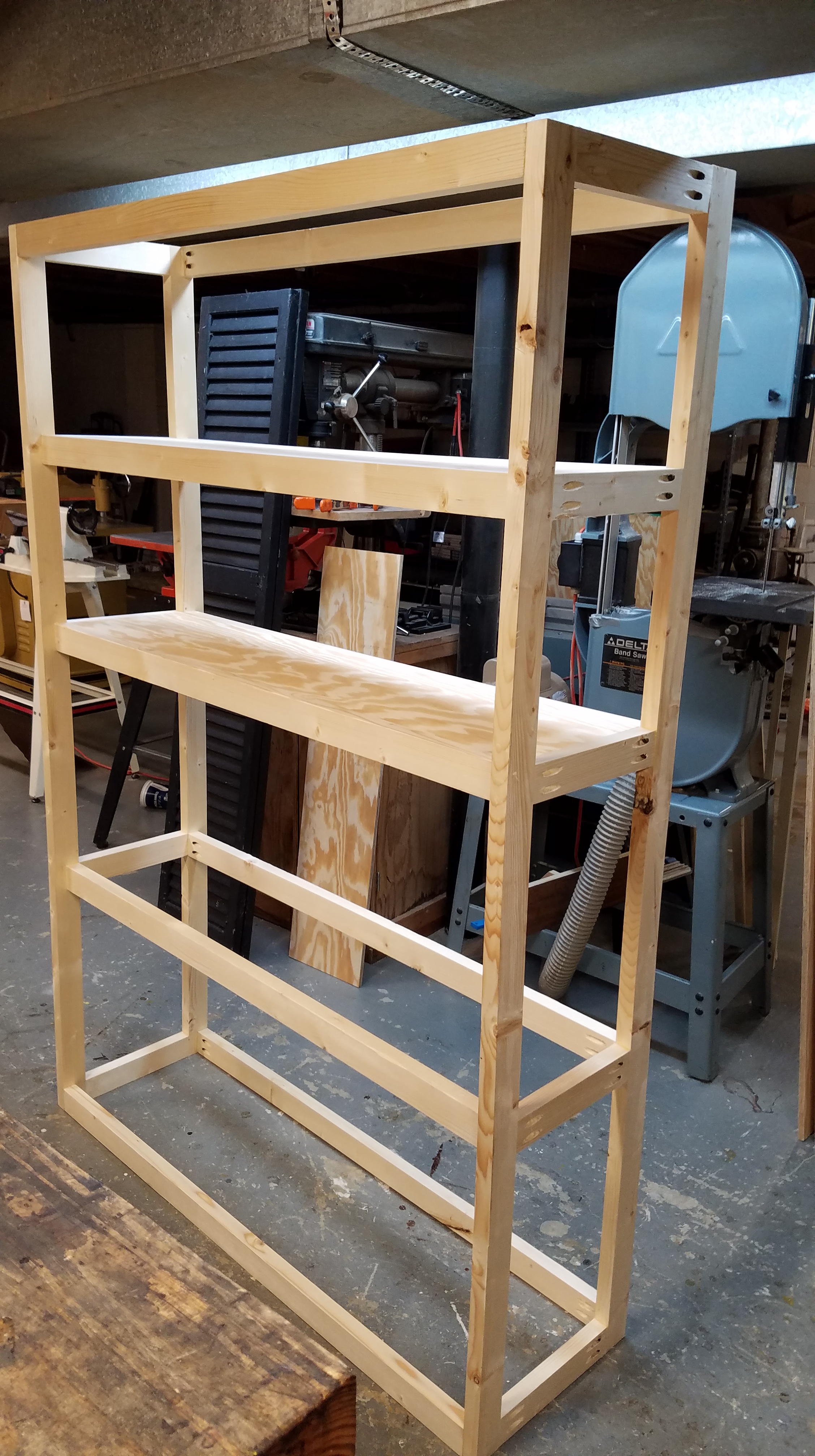
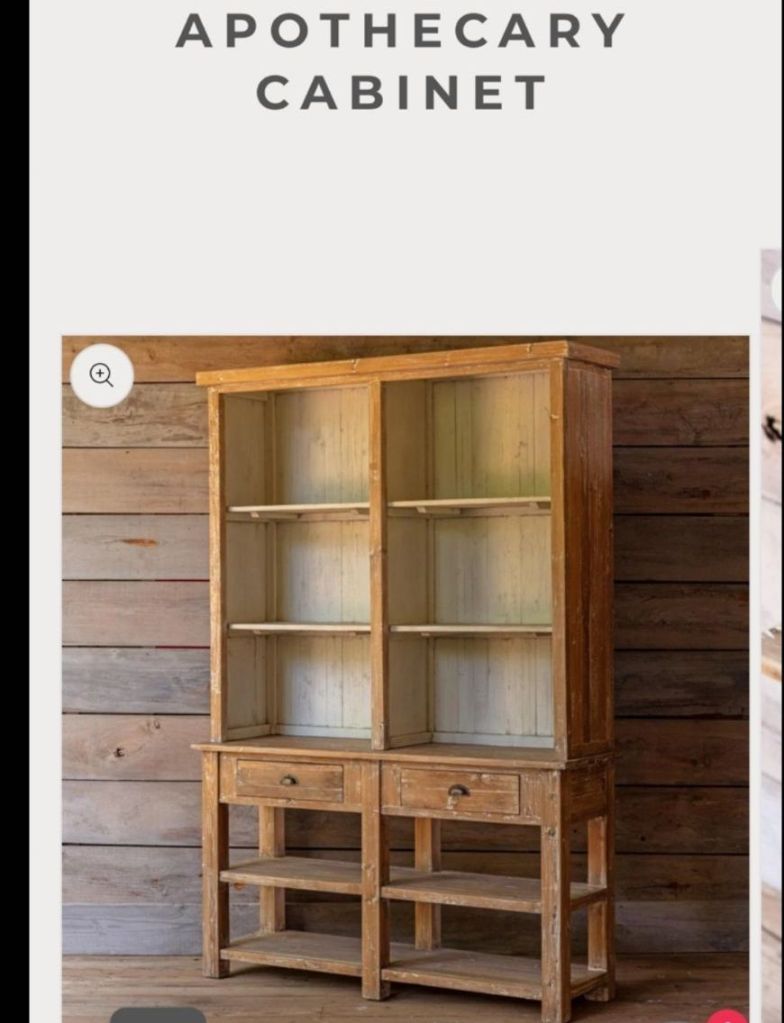
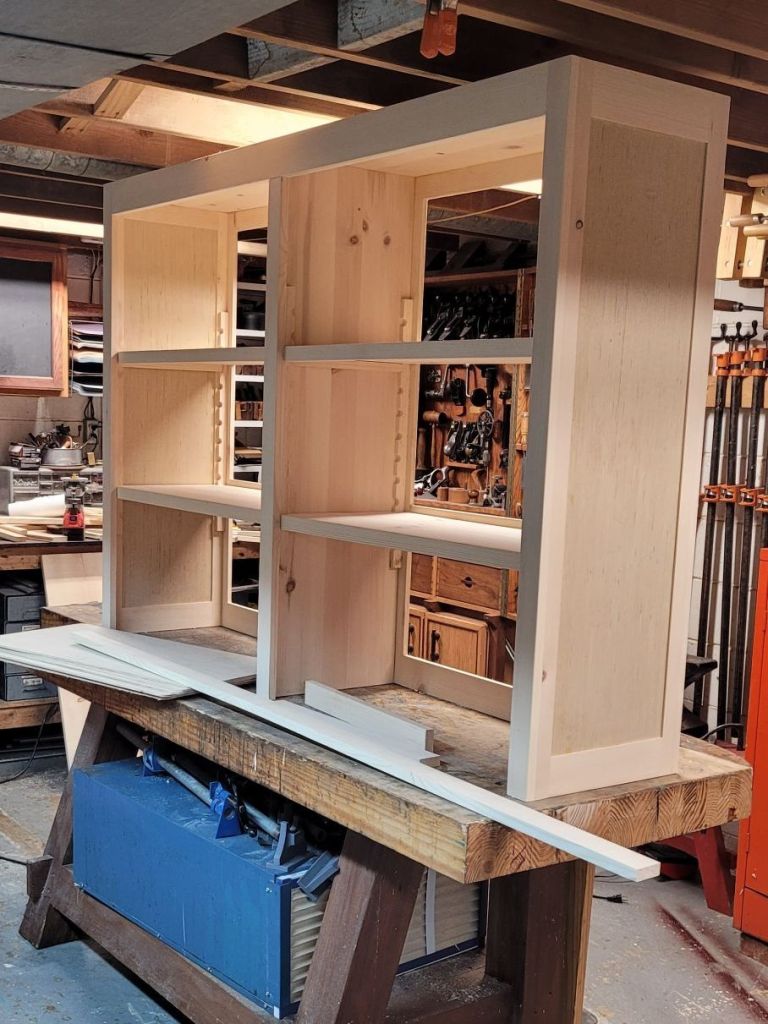
Anita got two new booths in the antique mall she sells in. She went from having a small 8′ x 10′ L shaped booth to having two big rooms. Because of this, she needed a big display cabinet for the back wall in one of her rooms. She searched the internet and asked me if I could make this apothecary cabinet for her.
She wanted the piece to be made of a light colored wood but didn’t want maple or poplar. We went to Lowes and bought a bunch of 1×12’s that were a light pine made in Sweden. Being that they were from Sweden, I assume that it’s the same pine that IKEA uses in their furniture.
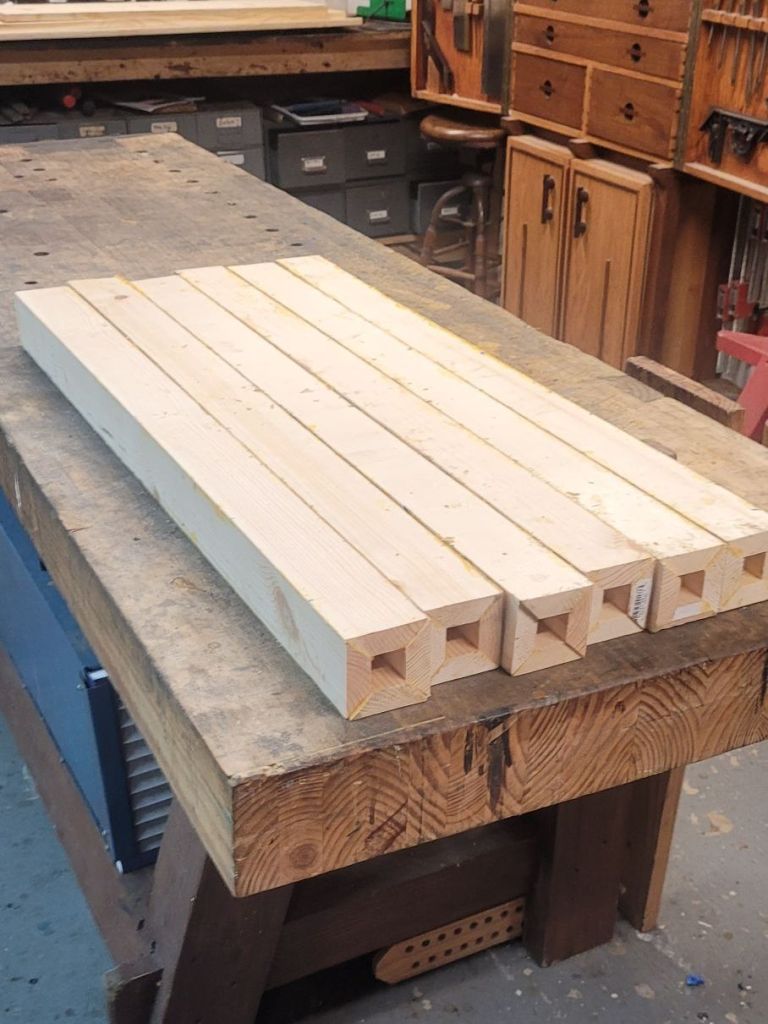
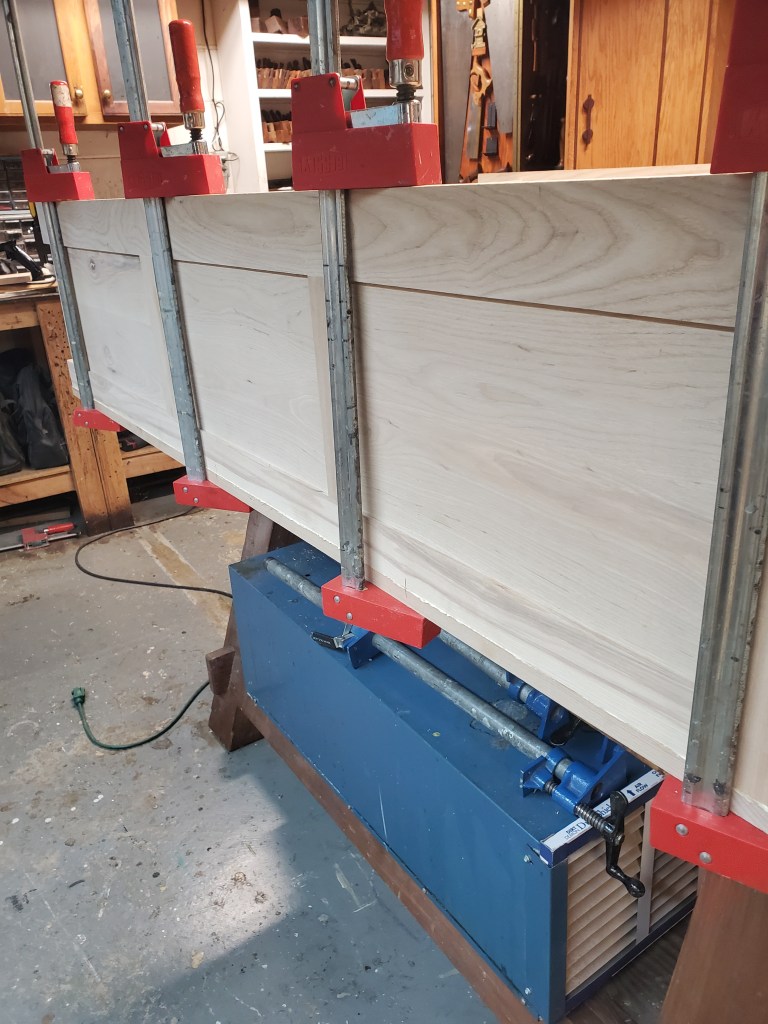
The first thing I did was make the legs by glueing up boards into a square. There’s a special lock miter router bit for this purpose but I have always heard that your stock has to be completely straight and flat in order for the bit to work well. My boards were neither, so I opted for 45 degree cuts and a lot of clamping pressure with band clamps and duct tape. Fortunately, they came out fine.
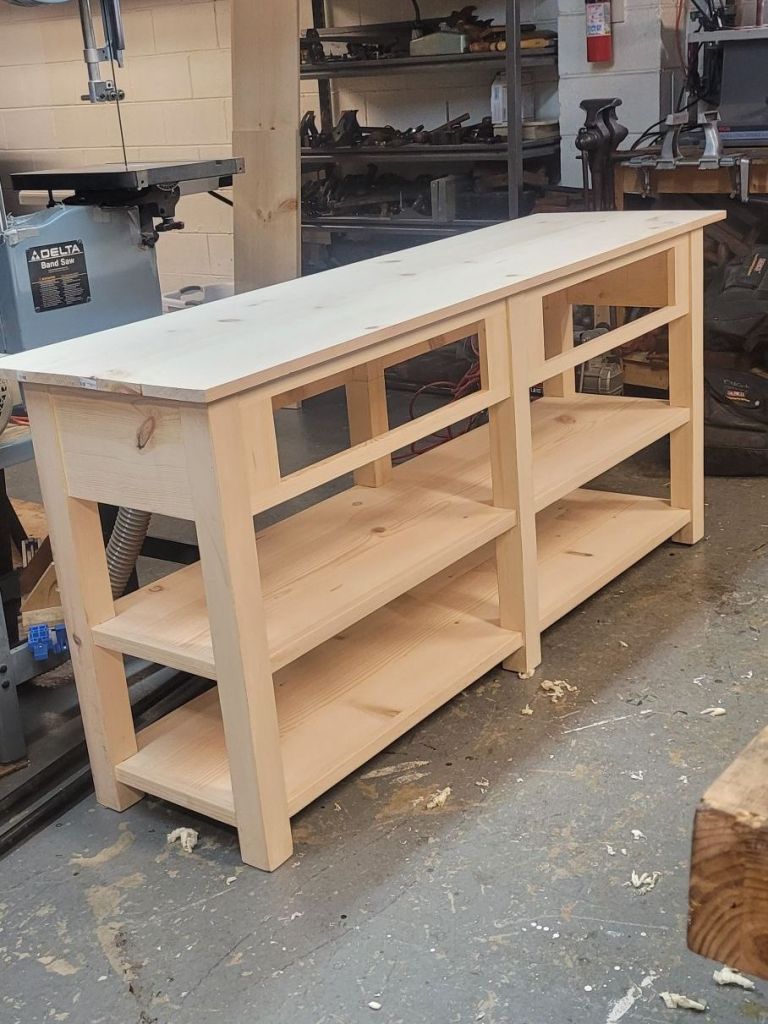
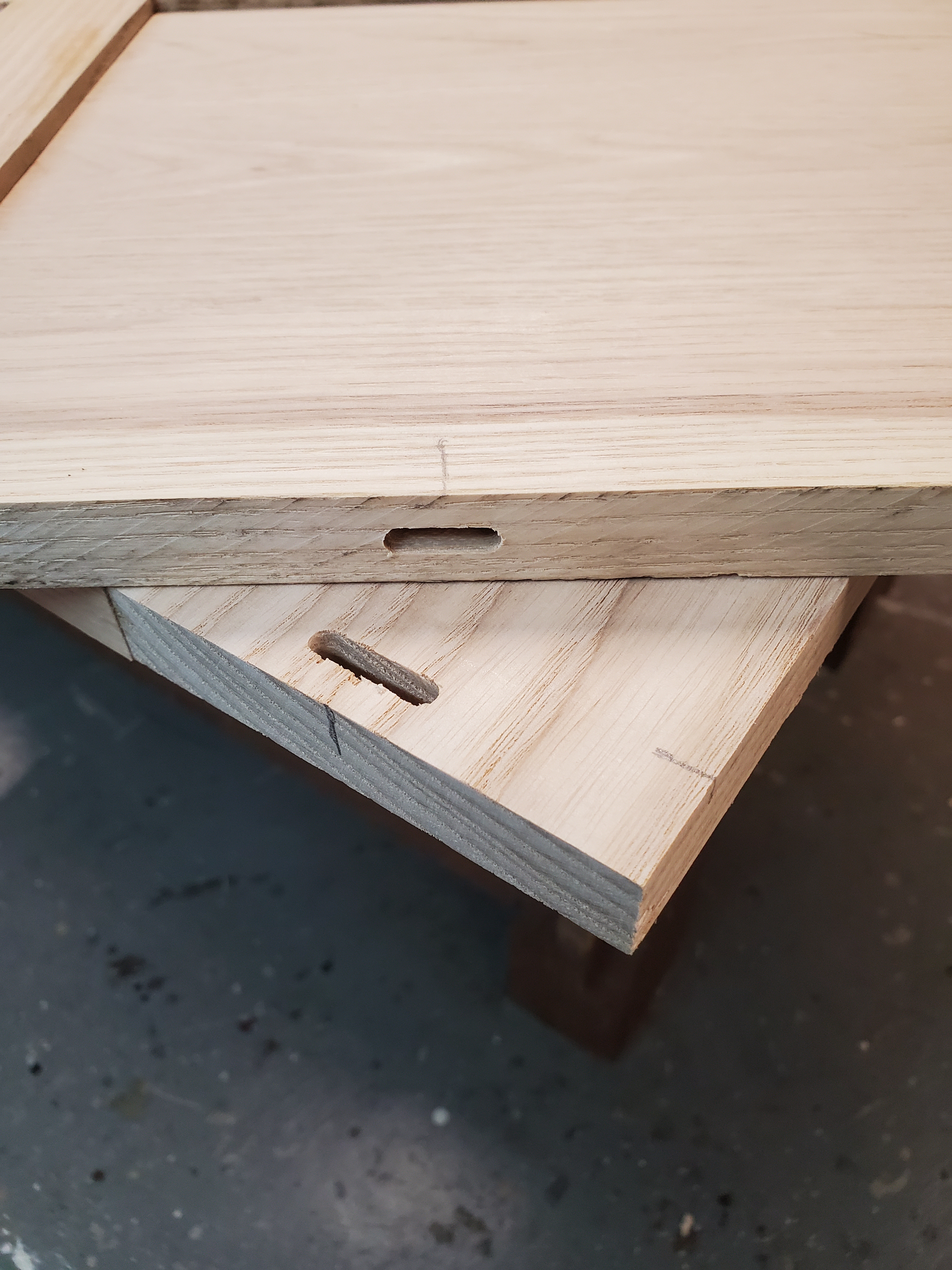
After the legs were made, I cut notches into them to fit the shelves. Then I wrapped the edge of the shelves with 1 1/4″ pieces of wood. On the end grain, I used a little bit of glue and pocket screws for the wood movemnet. The rest of the base was built with Festool Dominoes and glue.
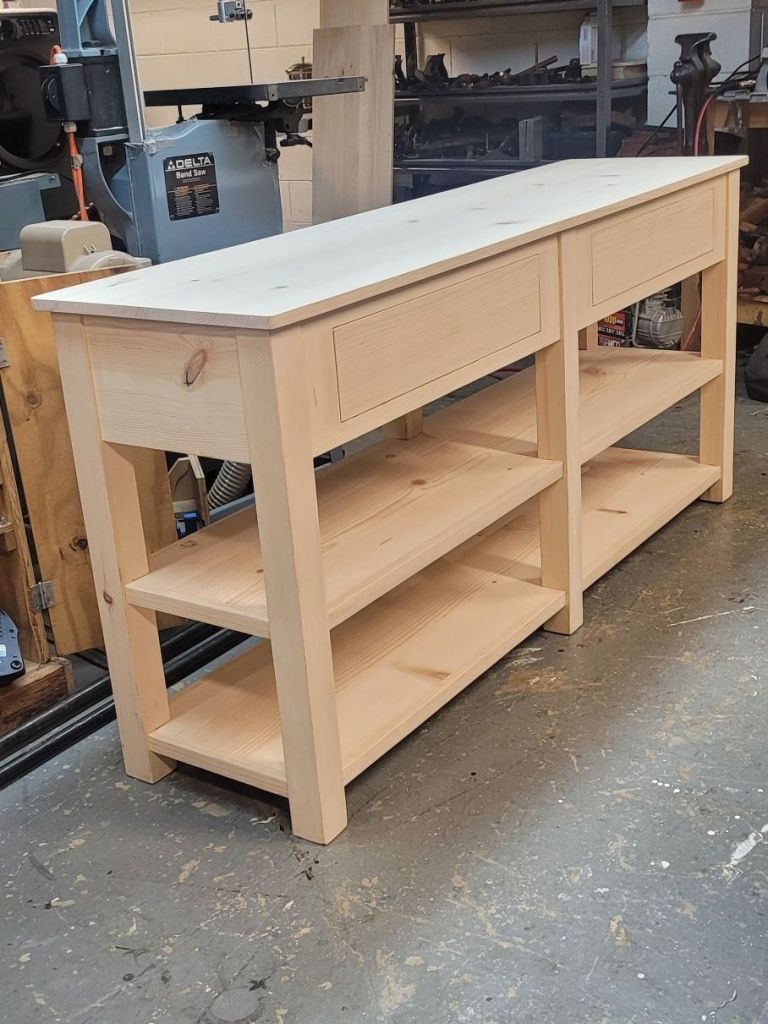
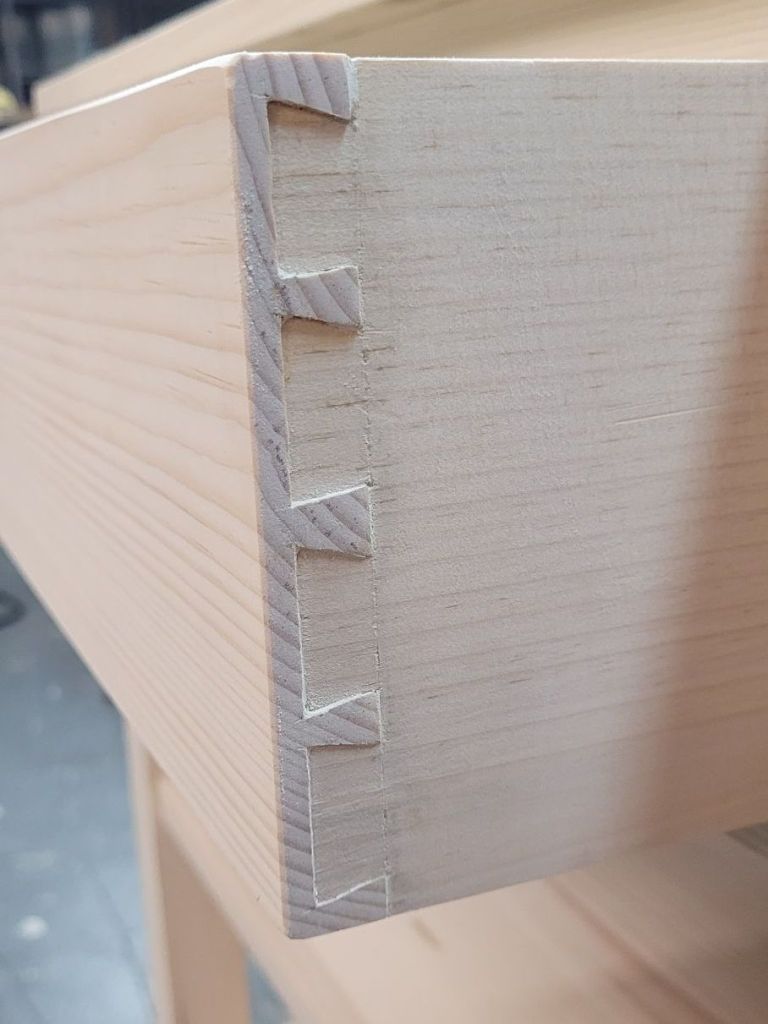
I wanted robust drawers so I made those with handcut half blind dovetails. It’s a lot of fun cutting dovetails by hand and it really doesn’t take too long once you get the hang of it.
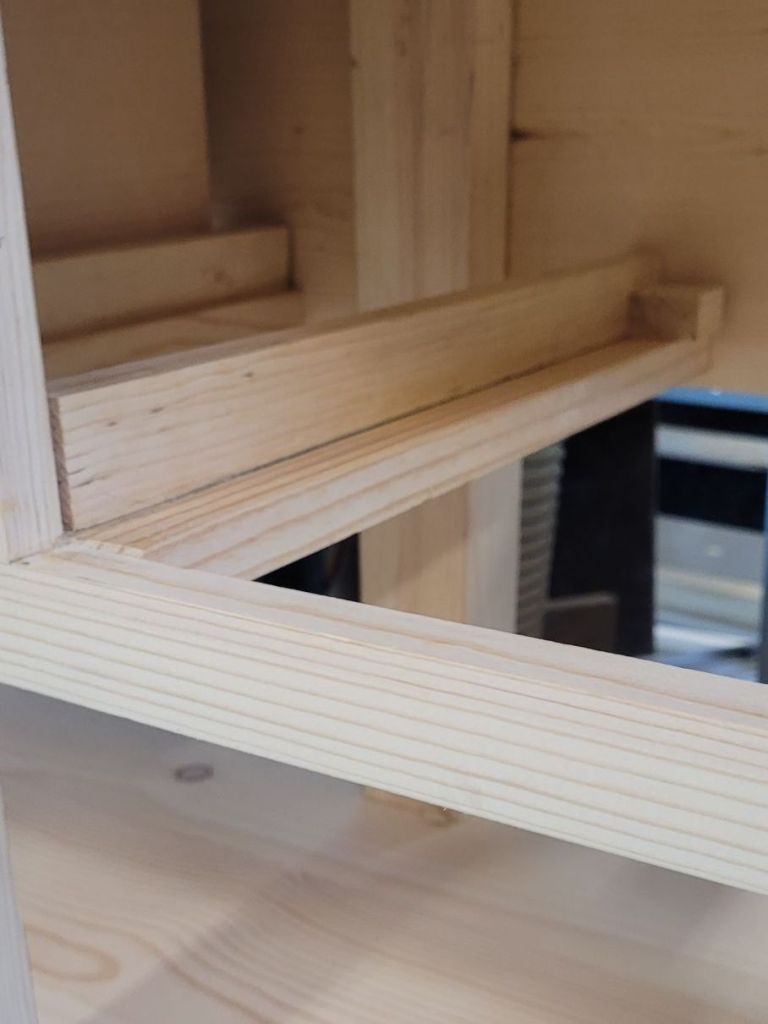
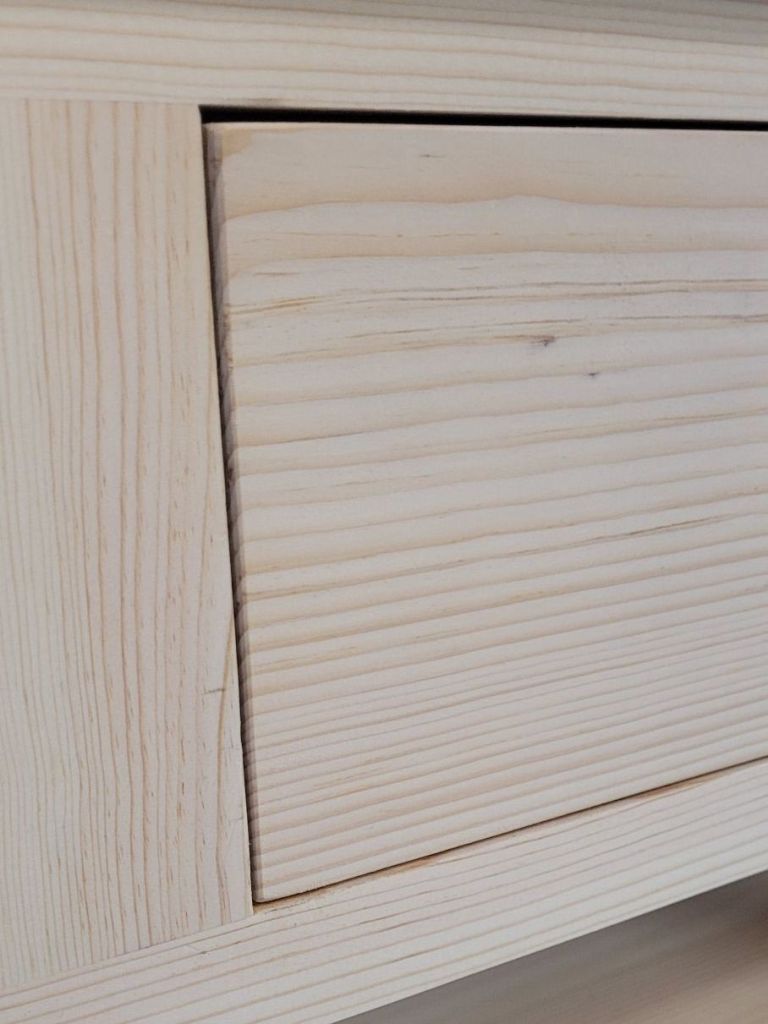
I wanted to make sure that the drawers wouldn’t bind, so I made the drawers a 1/8″ smaller in length and height so there would be a 1/16″ gap all around. I made sure the drawer runners were 1/16″ proud of the opening and screwed them in place with pocket screws and glue.
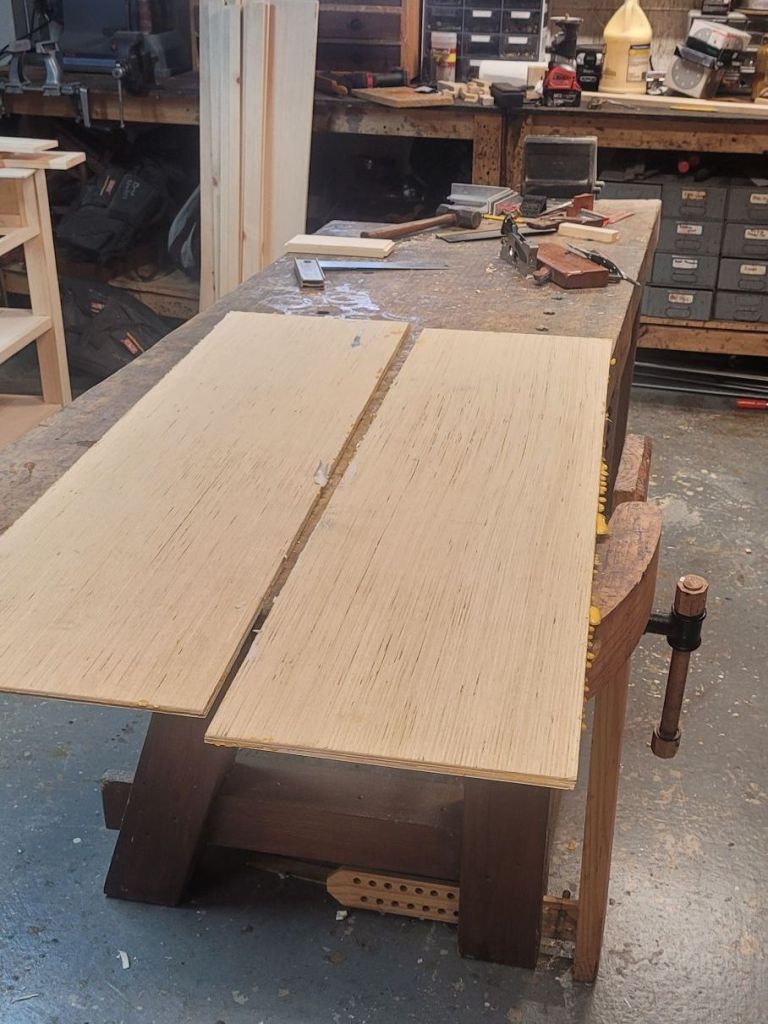
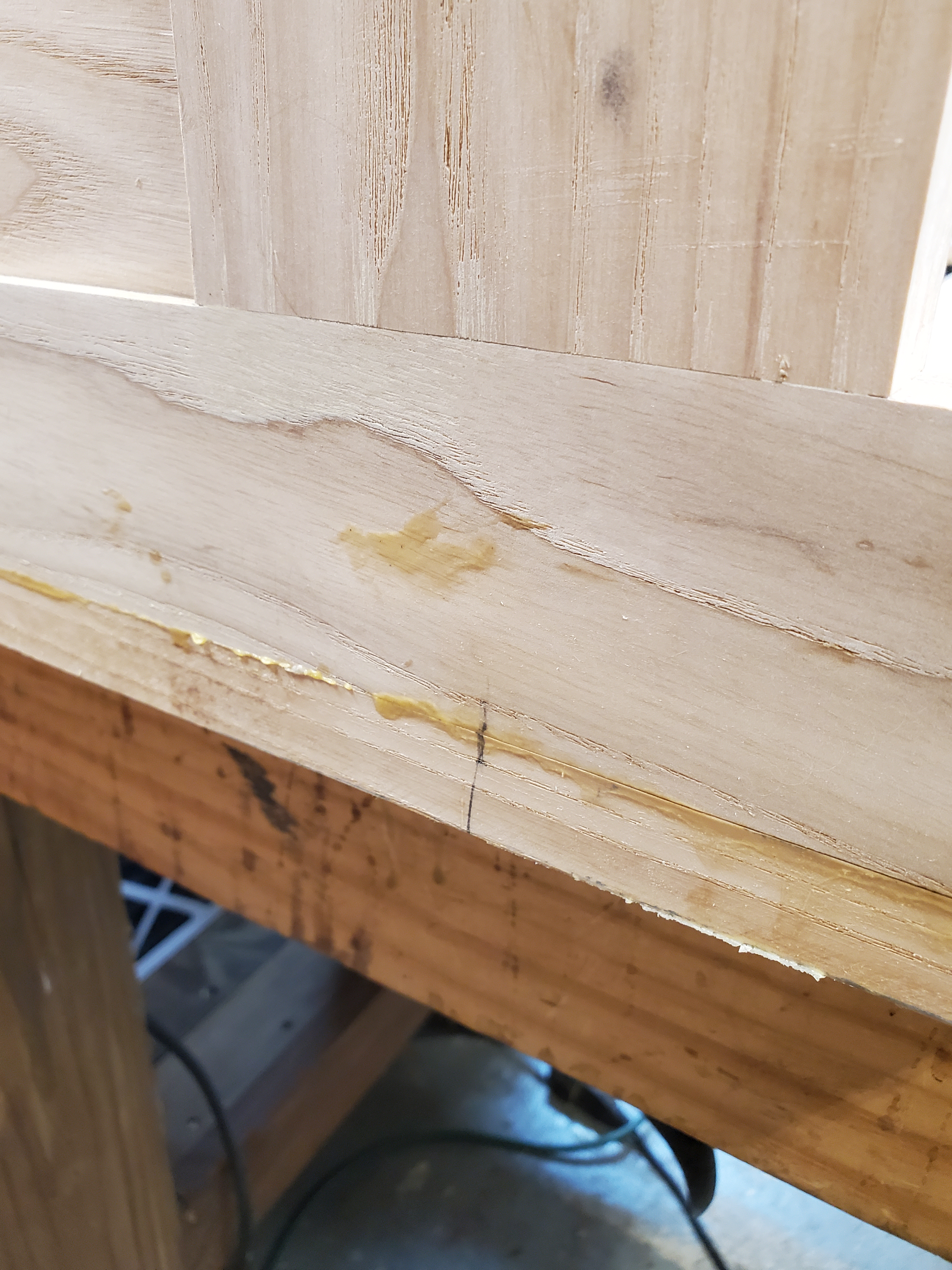
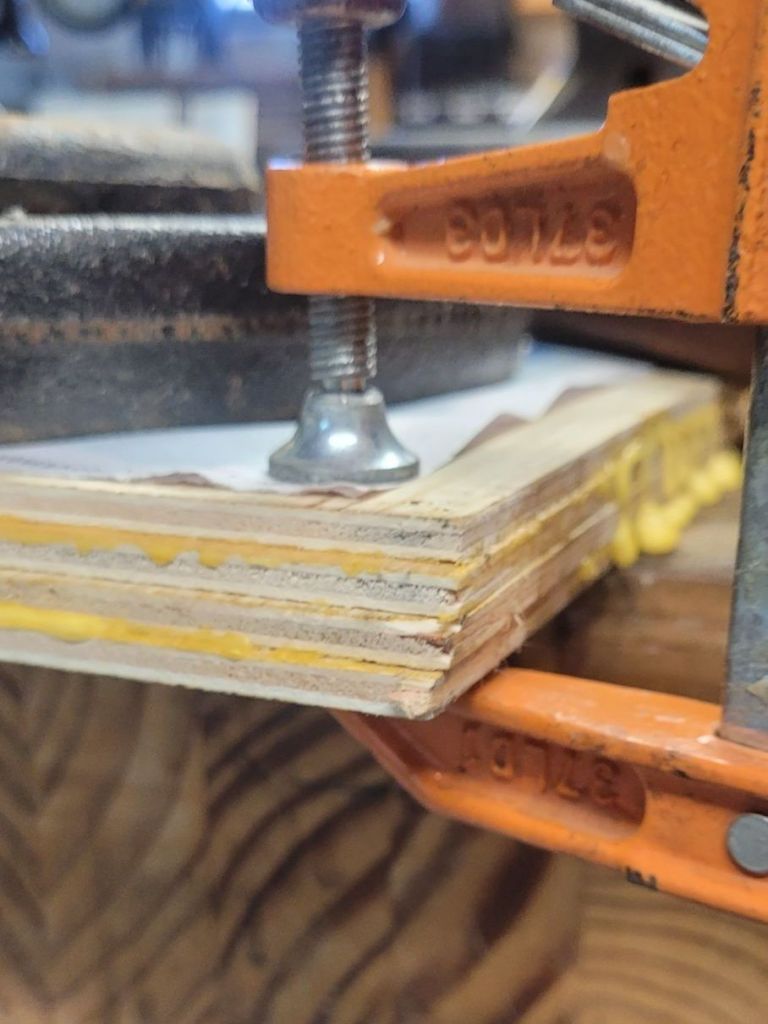
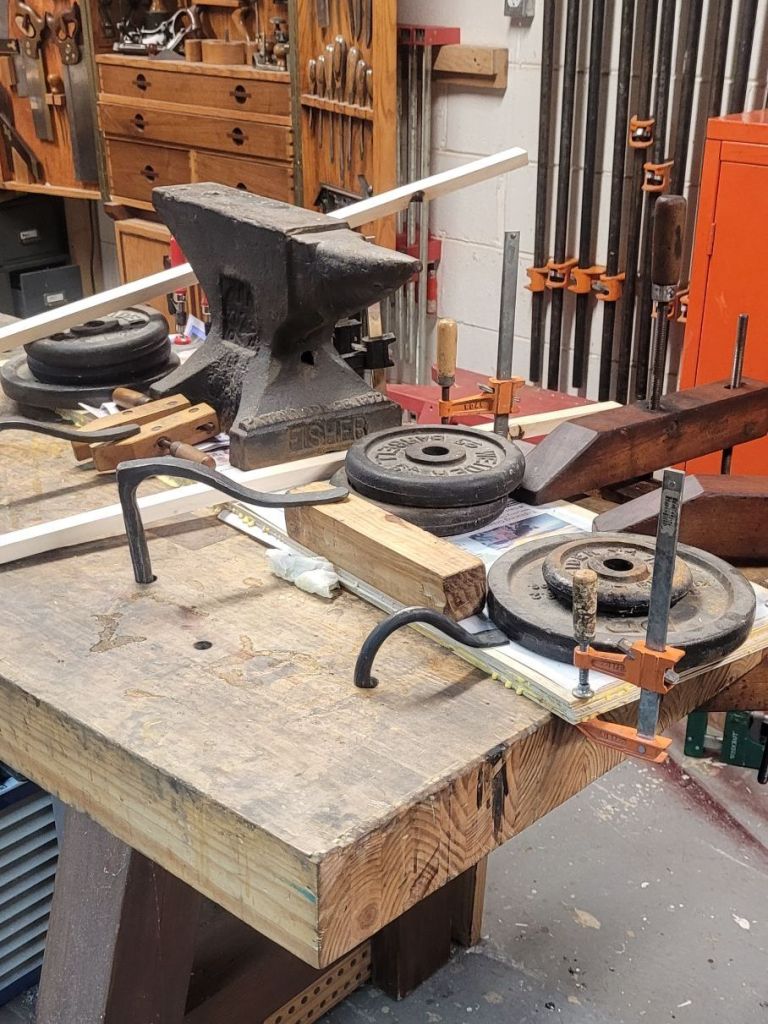
Once the base was made, I focused on the top. I wanted the sides to have a thicker panel in the middle of them, so I glued up the 1/8″ panels together. I used as many clamps I could find and stuck newspaper between the two panels so they wouldn’t stick together. Luckily, when the panels dried, I was left with two oversized panels for the sides of the cabinet.
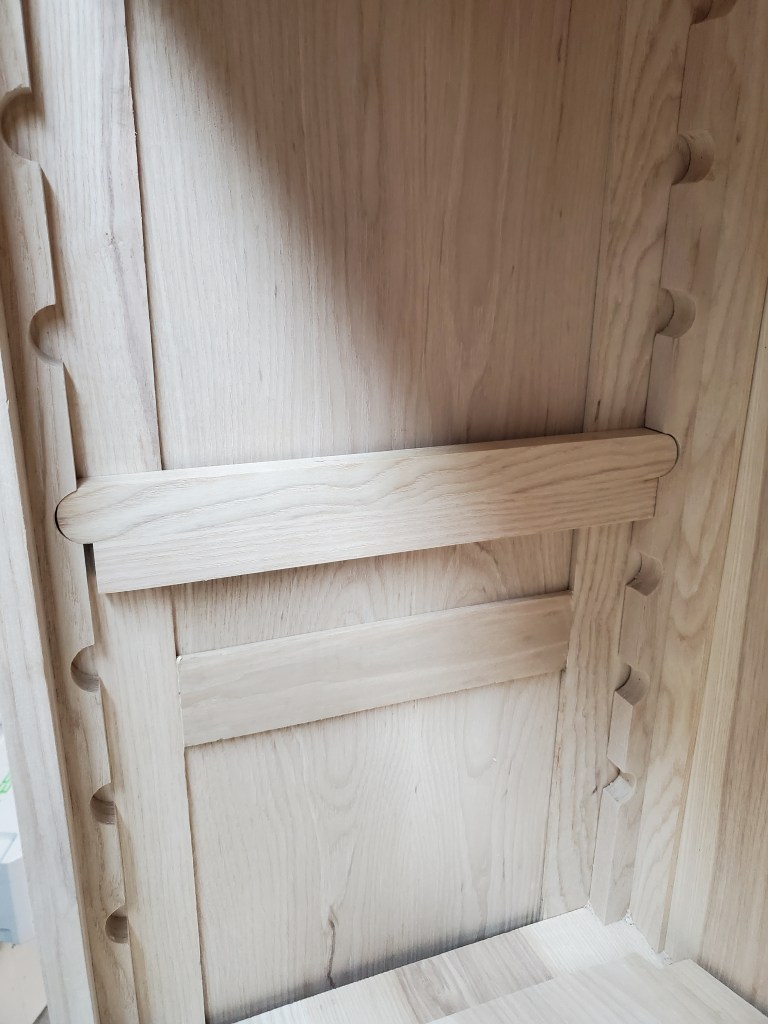
I built the case with more Dominoes and glue and created adjustable shelf supports with the scrap wood I had left over.
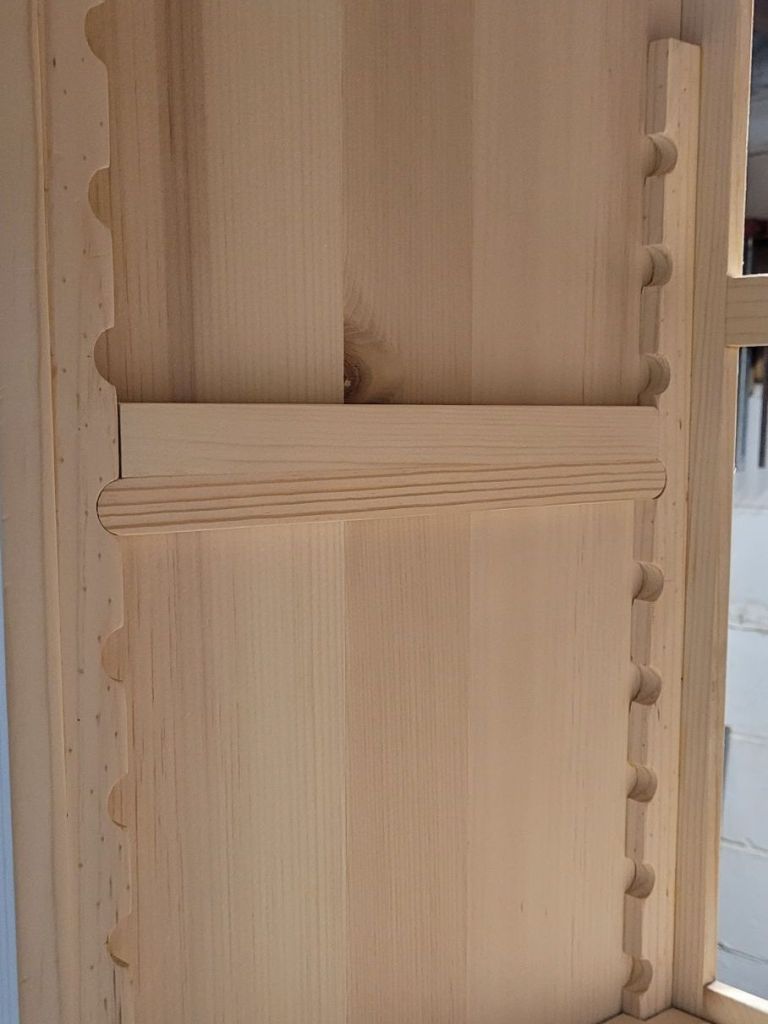
I love this technique for adjustable shelves. You drill a 3/4″ hole every 2″ then you rip the piece in half on the table saw. Then for the support, you add a 1″ filler on the bottom of the support stick. This way, if you need your shelf 1″ higher, you simply flip over your shelf support.
I installed the back with more of the 1/8″ thick panel wood and Anita put a natural aging solution on the piece as she didn’t want it stained.
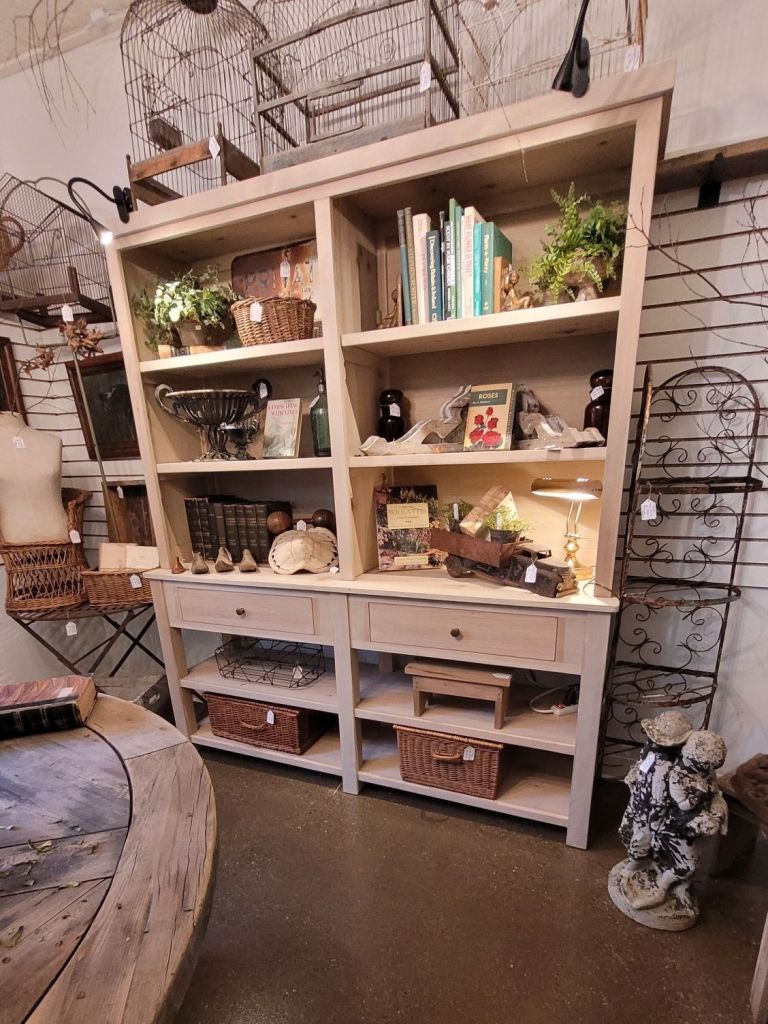
People in the antique shop love the piece and are perplexed that I built it out of 1×12’s from Lowes.
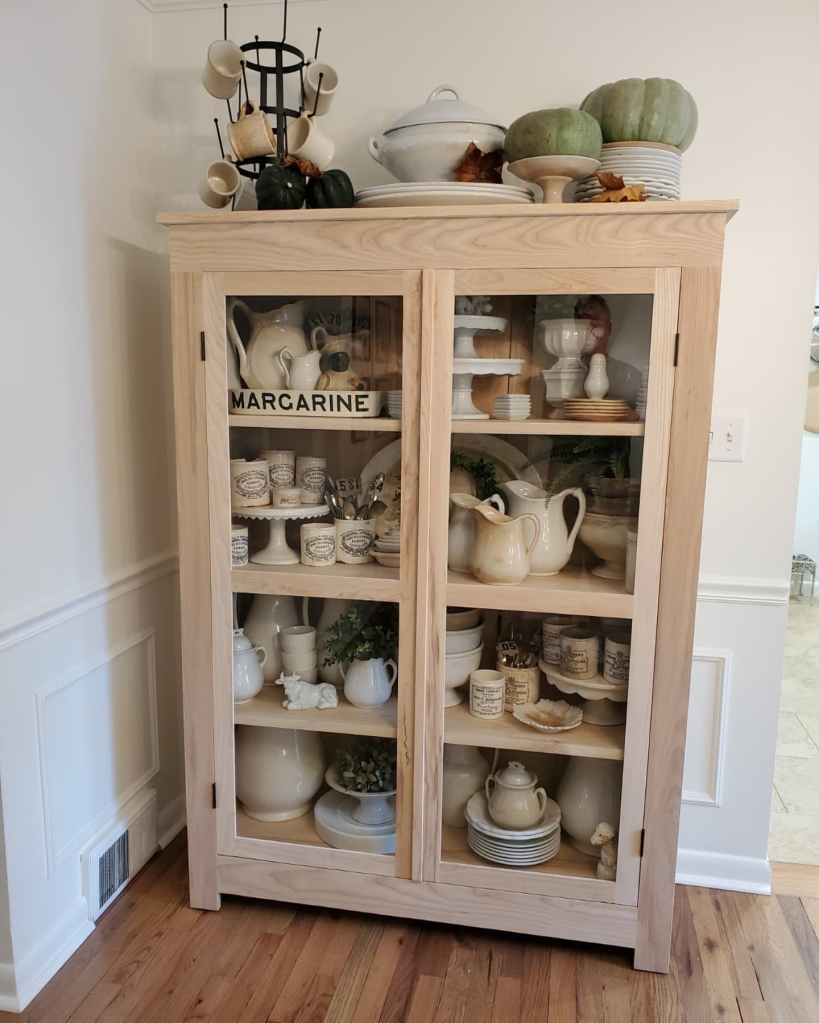
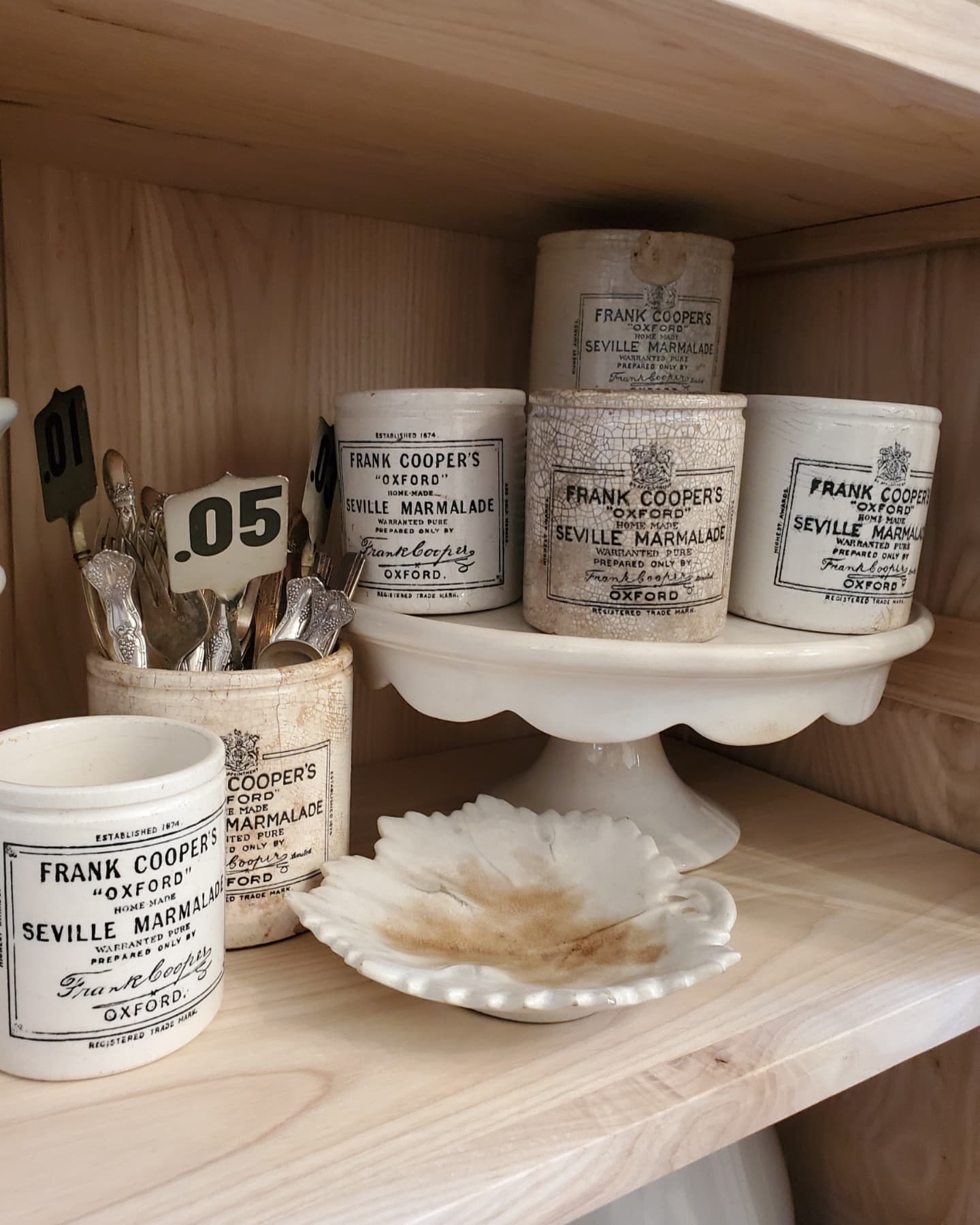
Ash Display Cabinet

The ash display cabinet I’ve been building for Anita is finally done. Took longer than I wanted but, working full time, restoring and selling antique tools, and doing honey-do lists around the house has eaten up all of my time. Anita will eventually put handles on the doors once she figures out which ones she wants, but for the most part, it’s done.

The cabinet is 48″ x 66″ x 16″ and is the first piece of furniture I made without using a single piece of plywood. I would have at least liked to have made the shelves out of 3/4″ plywood but my lumber supplier doesn’t carry it. The piece is extremely heavy and cost me about $500 to build. But, it’s still way cheaper than the $1600 price tag that was on the one at Pottery Barn. Plus, this is made from American hardwood and not some junky looking Chinese lumber.

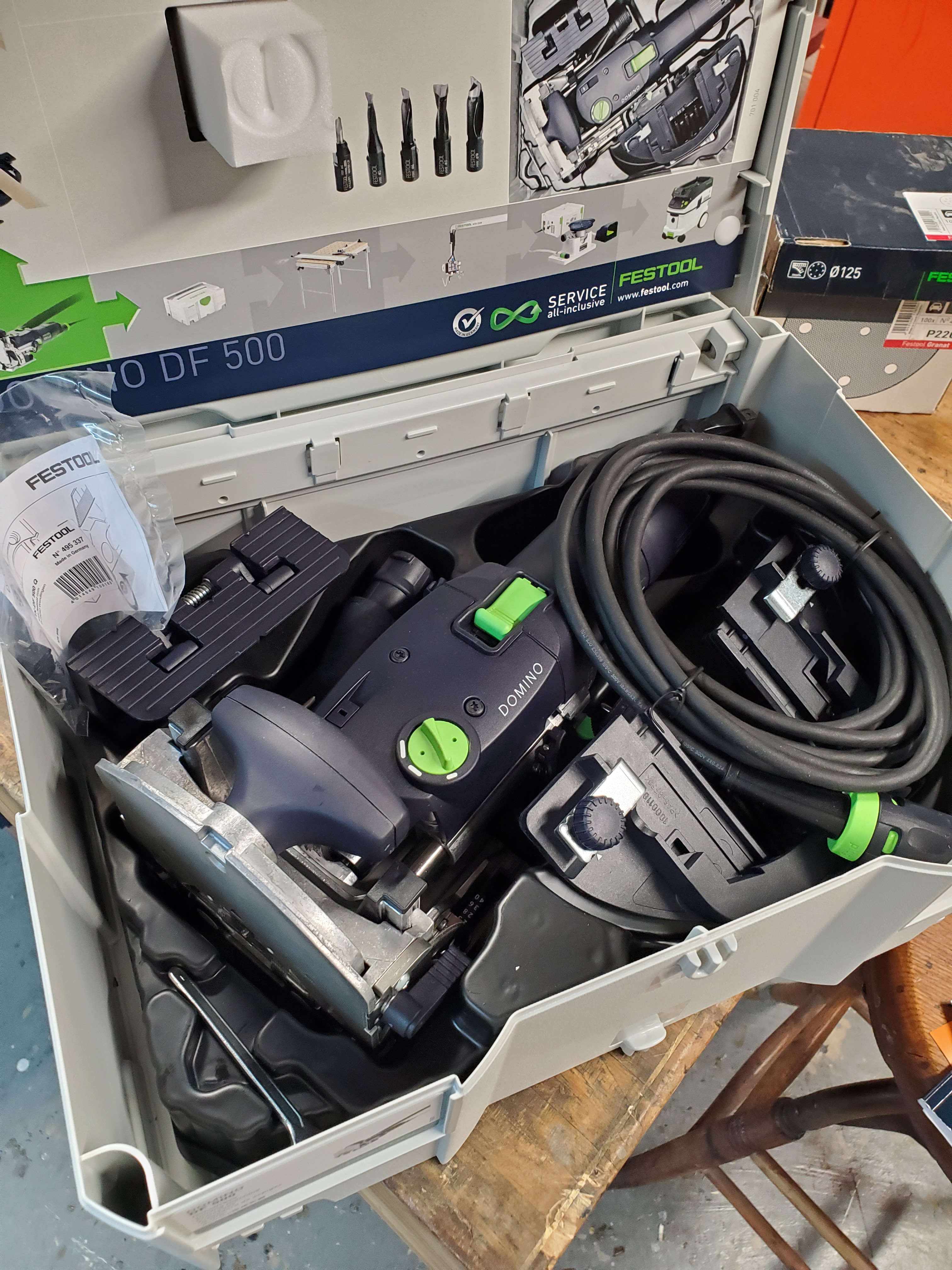
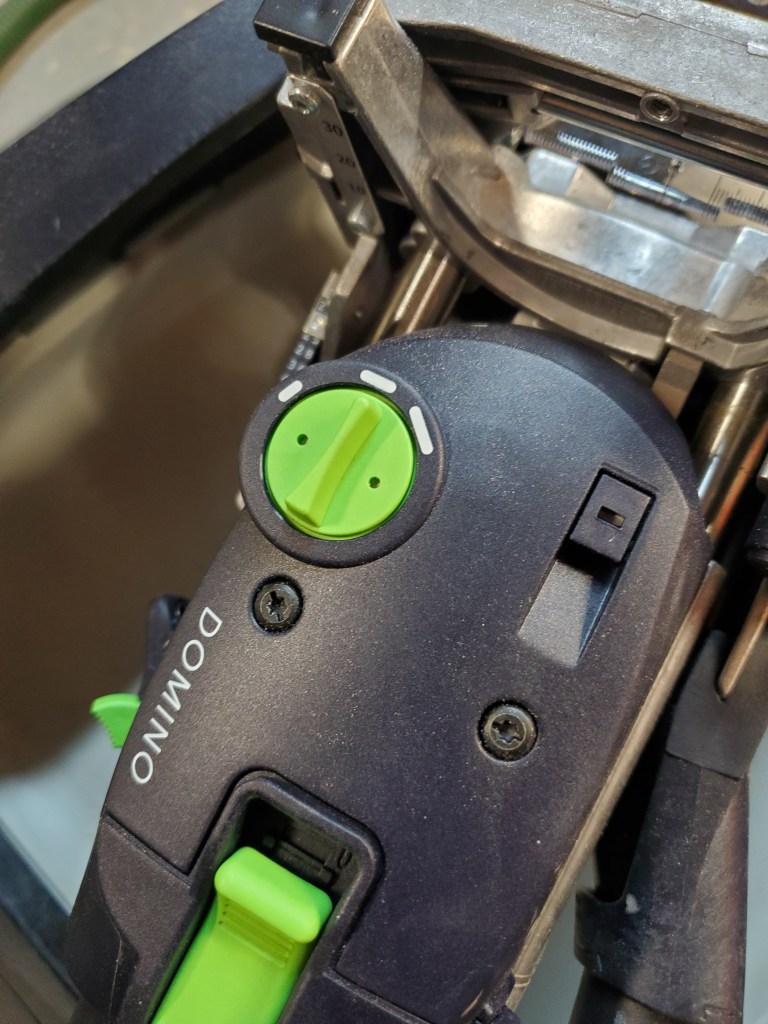
To help speed up the build, I went out and bought a Festool Domino. I waited ten years to buy one until the day I could afford it, but that day never came. So, I bit the bullet and bought the tool as well as the Domino kit with the extra drill bits. So far, I love the tool. I was told by the sales rep at the store that you set the tool on the first setting one one side of the board, then switch to the second setting for the other side of the board. The wider slot gives you a little bit of play when aligning the boards similar to using a biscuit joiner.

I used the machine for the case as well as the joinery on the glass doors and it performed wonderfully. The Domino is one of those tools you wished you would have bought sooner.

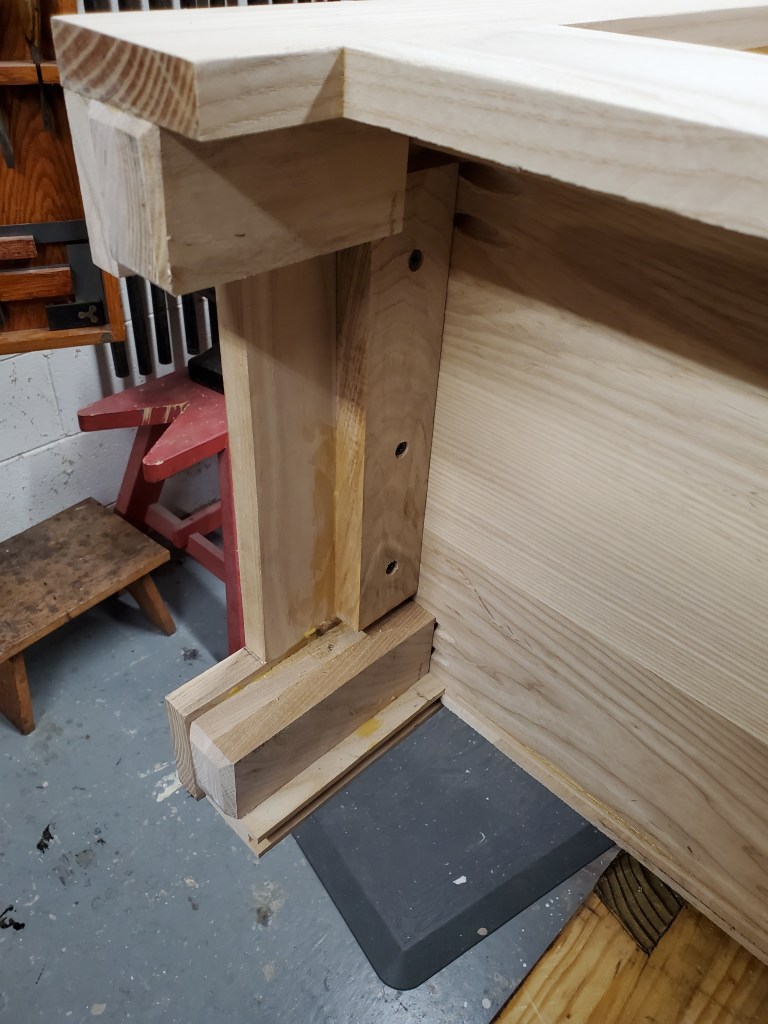
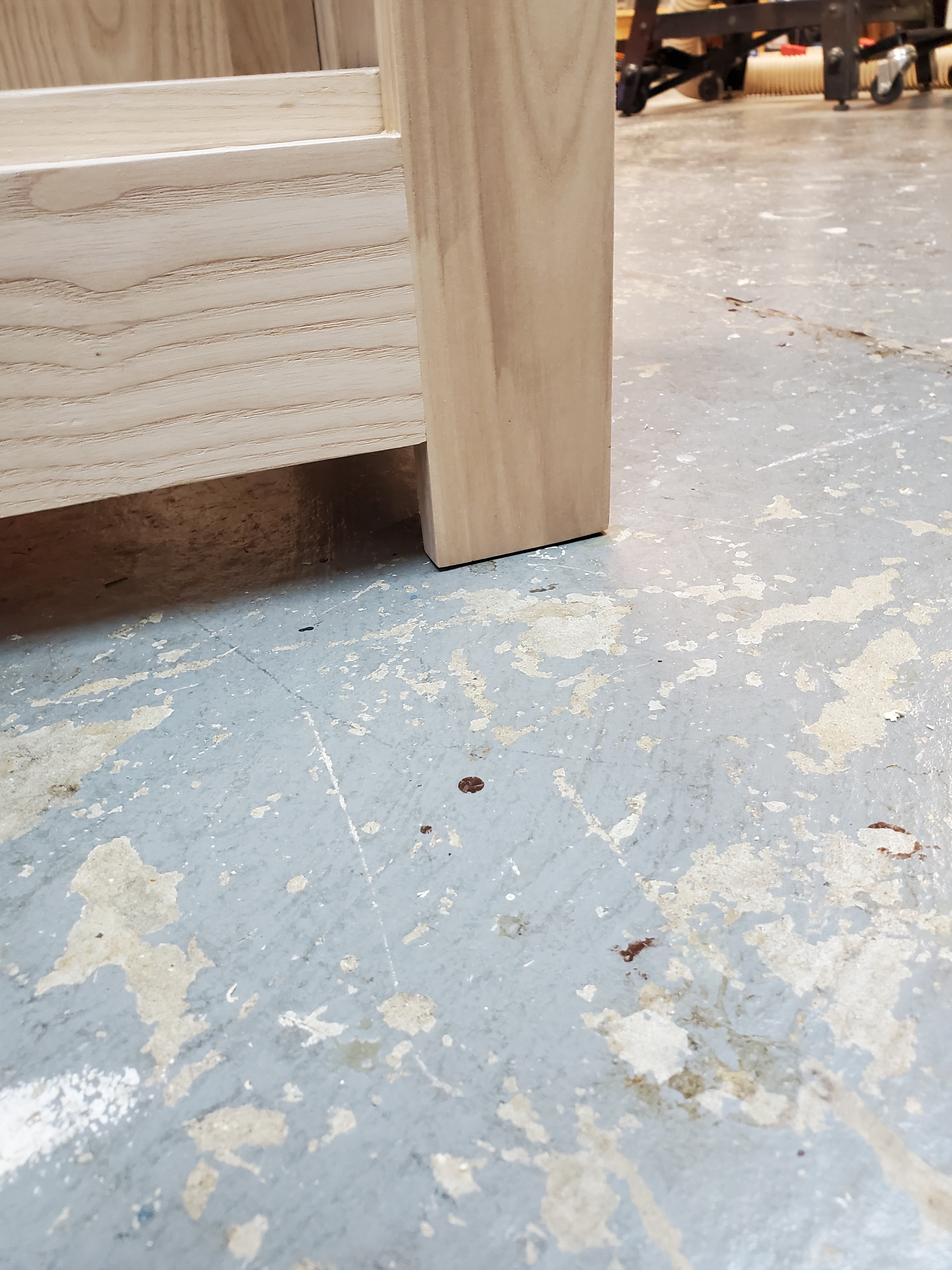
The other thing I did differently on the piece versus others I have built was to put feet on the cabinet. In years past, when I built something, the sides of the case would be the feet of piece of furniture but, after studying antiques over the years, I noticed that the well built pieces would have feet glued to the bottom. This helps protect the sides by lifting them off the floor by a 1/16″. Having square feet also makes sticking furniture pads on the bottom a lot easier.

I already wrote about the wooden shelf supports a few weeks ago here. They work exceptionally well and can hold a massive amount of ironstone. I can’t even imagine all that weight on little brass pins.

Anita loves the cabinet, I love the cabinet, her friends love the cabinet, people on Instagram love the cabinet. It’s been a big hit and the money I saved building it, paid for my Festool Domino.. (see what I did there?)

Dowel Joiner from the 1980’s

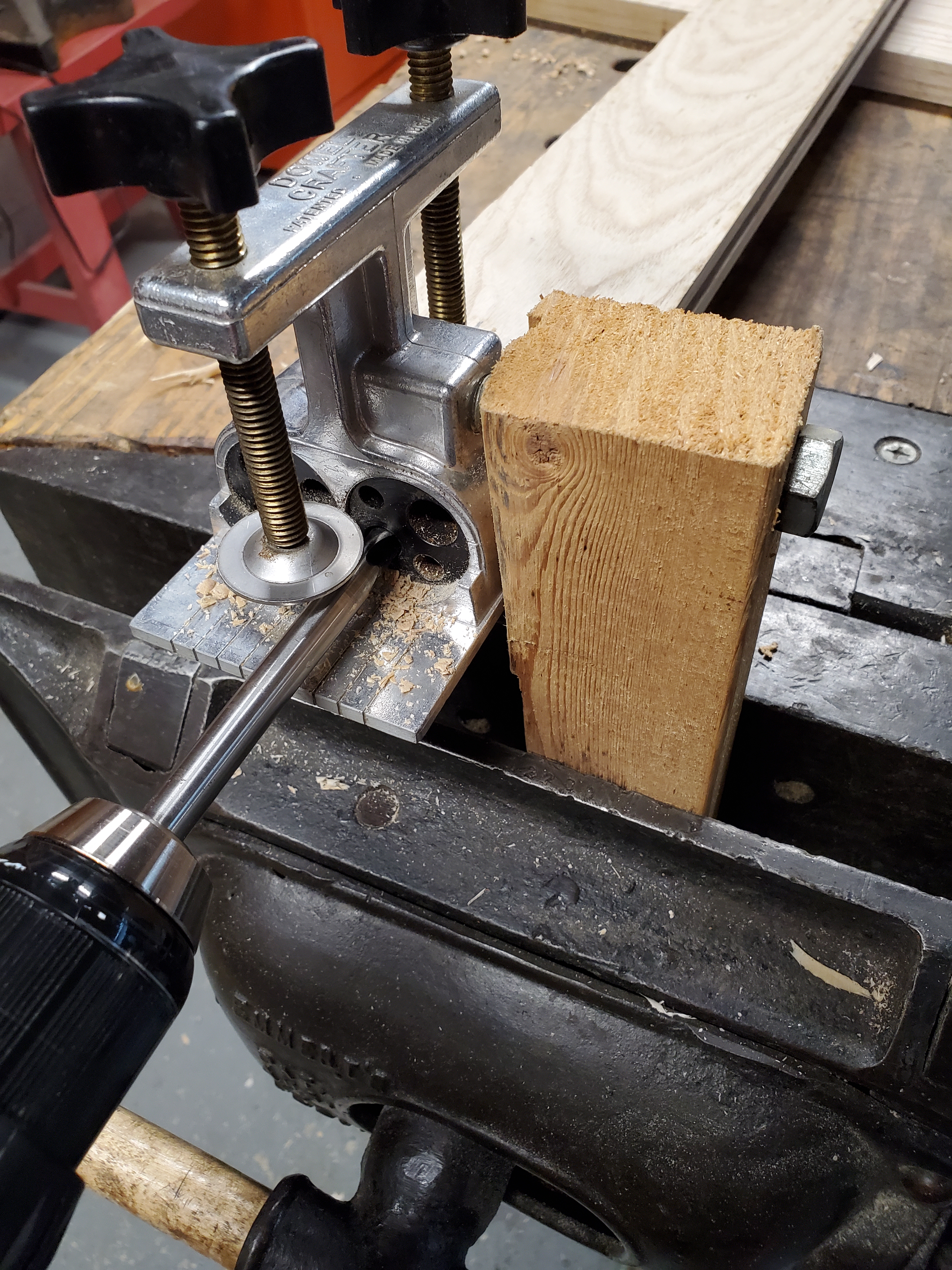
Many years ago, I went to The Woodworking Show in Columbus, Ohio and bought this Dowel Crafter jig after seeing it being demonstrated.

I can count on my hand how many times I used it over the decades. There’s really nothing wrong with it, I just never got excited about dowel joinery.

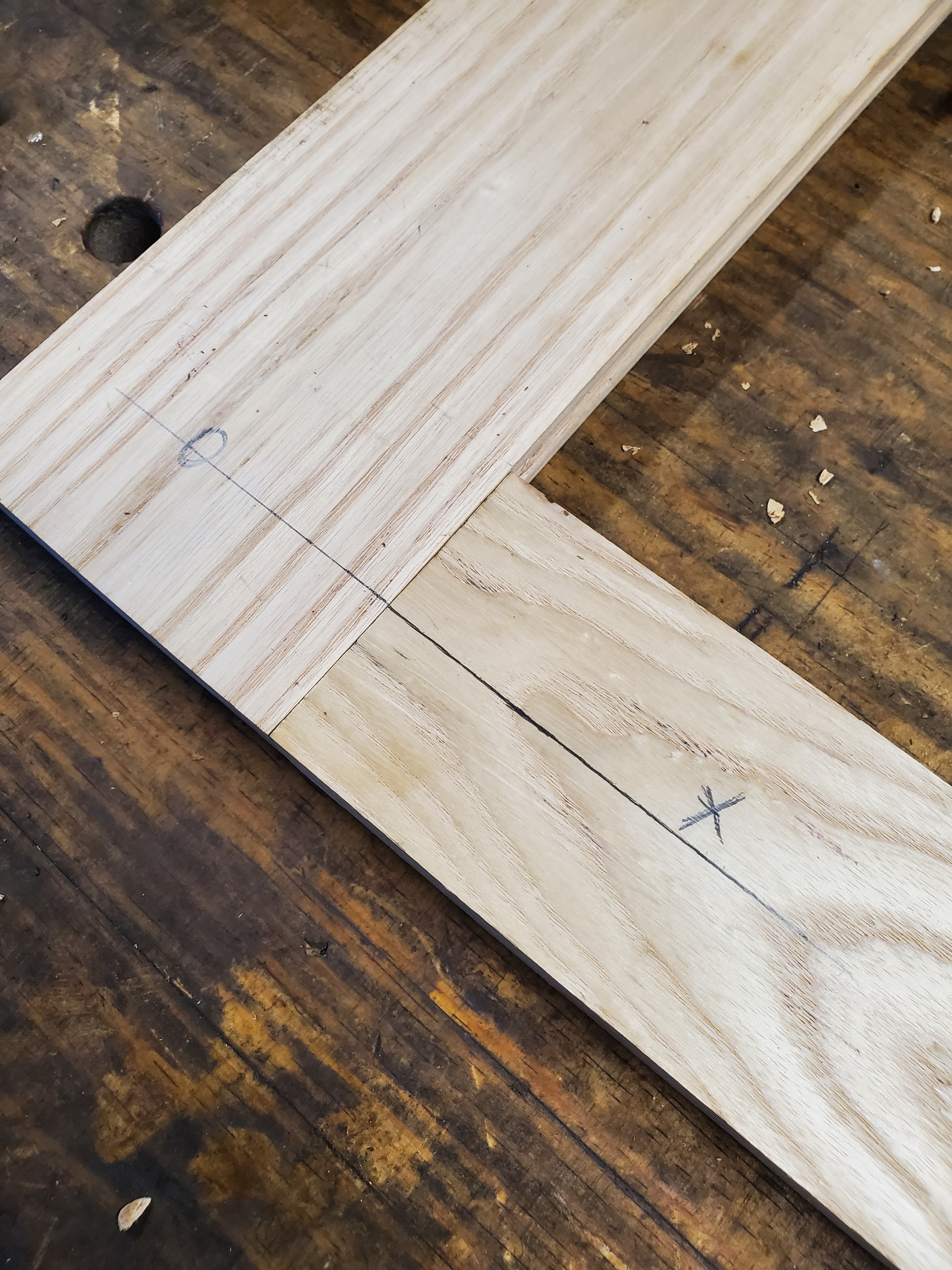
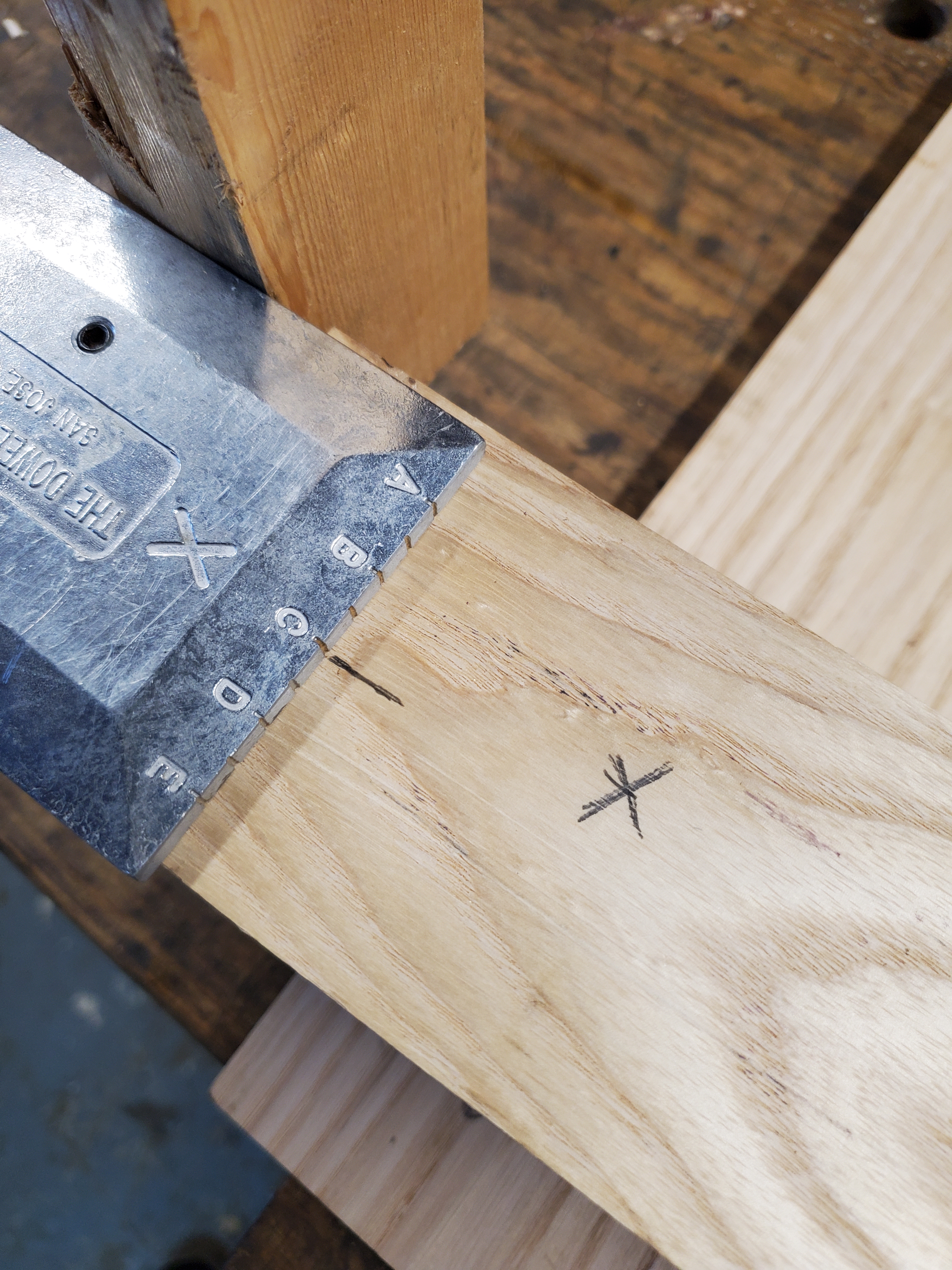
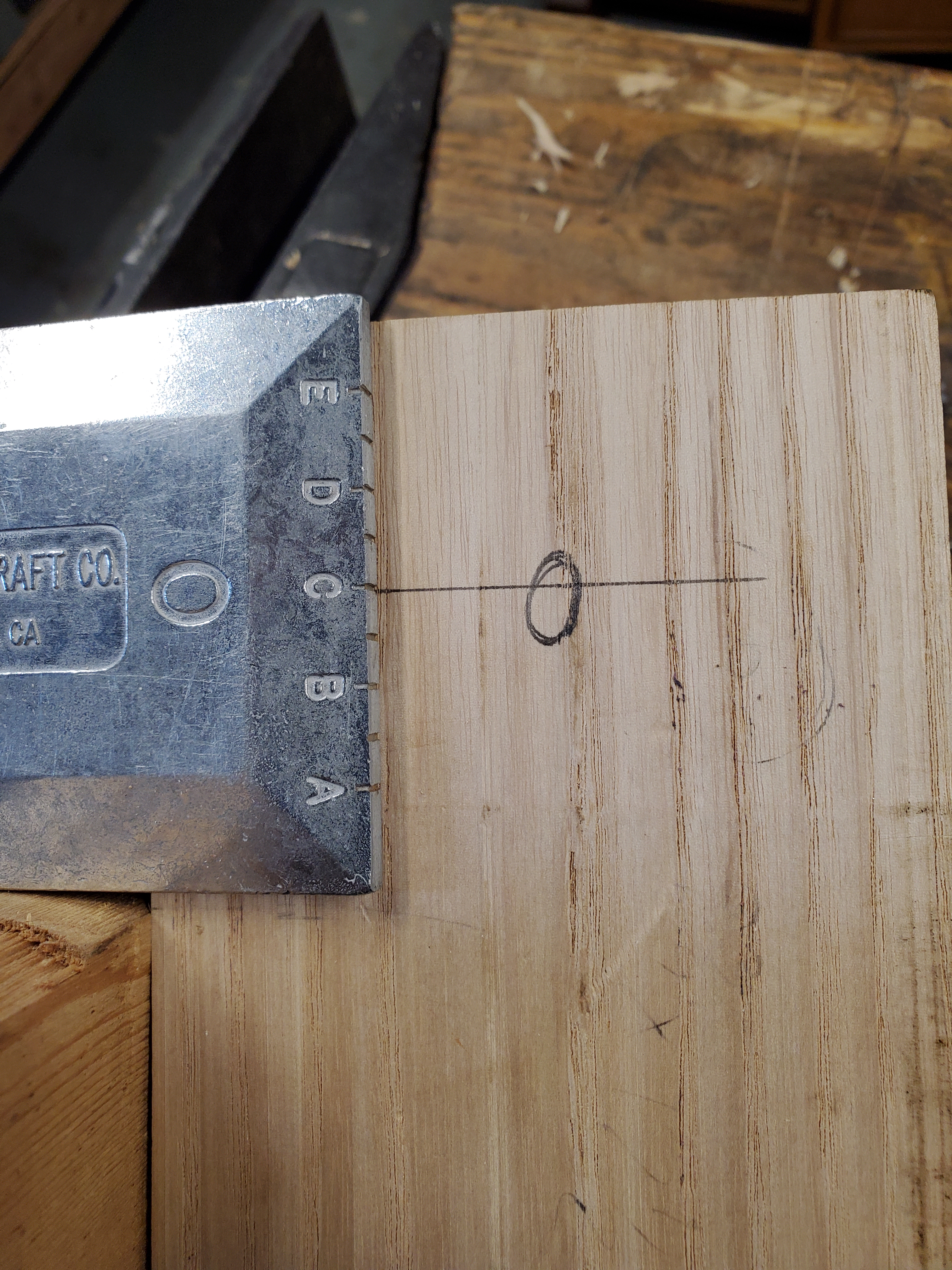
The concept is simple. You draw a line on two mating boards and use it as a guide for the jig. You mark one piece “X”and the other piece “O”.

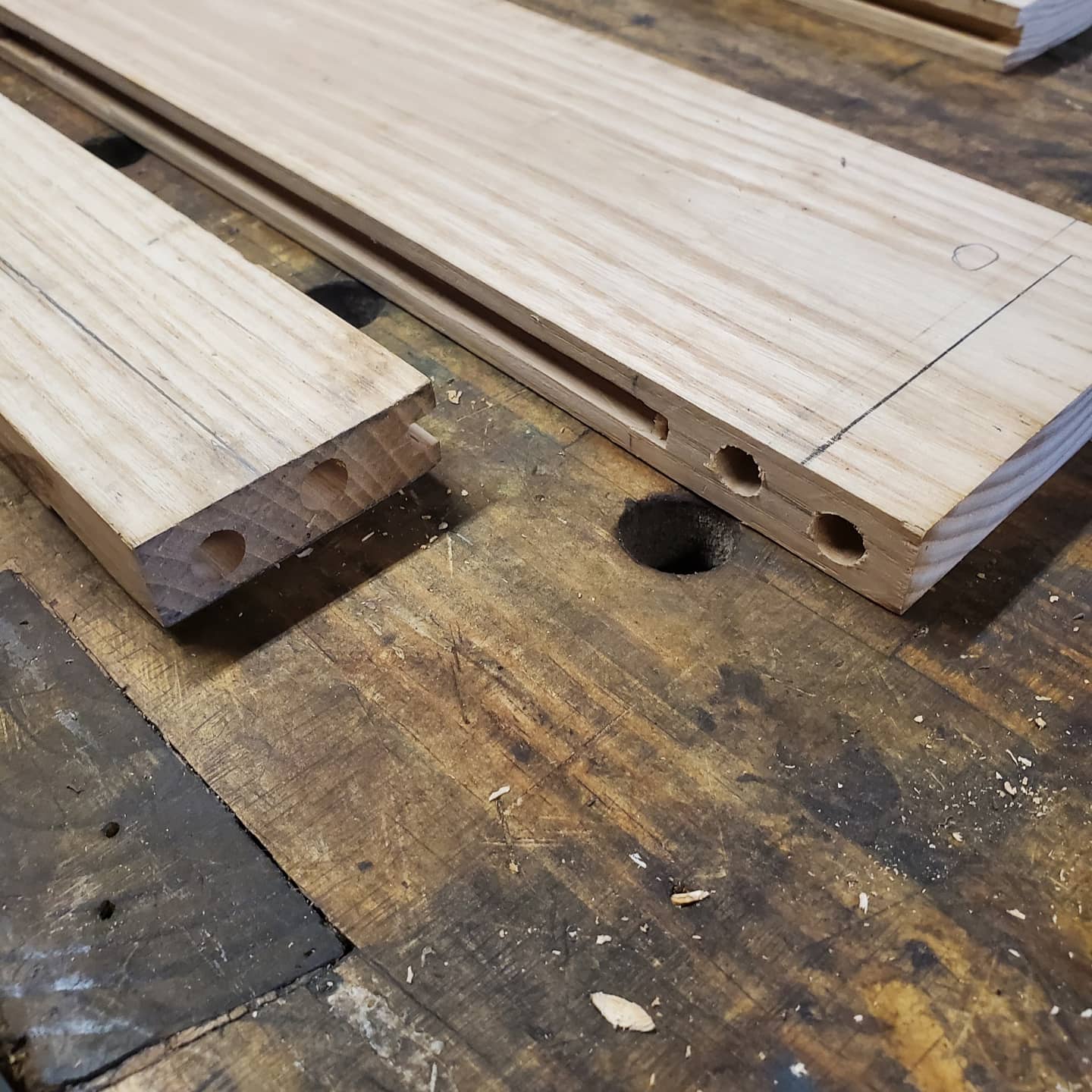
You then line up your mark with one of the alphabet letters on the jig and clamp it down. Then you flip it over and drill your holes through the circular black guides. The two guides spin and lock in place with a nut depending on how big of a dowel you’re using. Once you drill your “X” hole you repeat the process for the “O” hole.

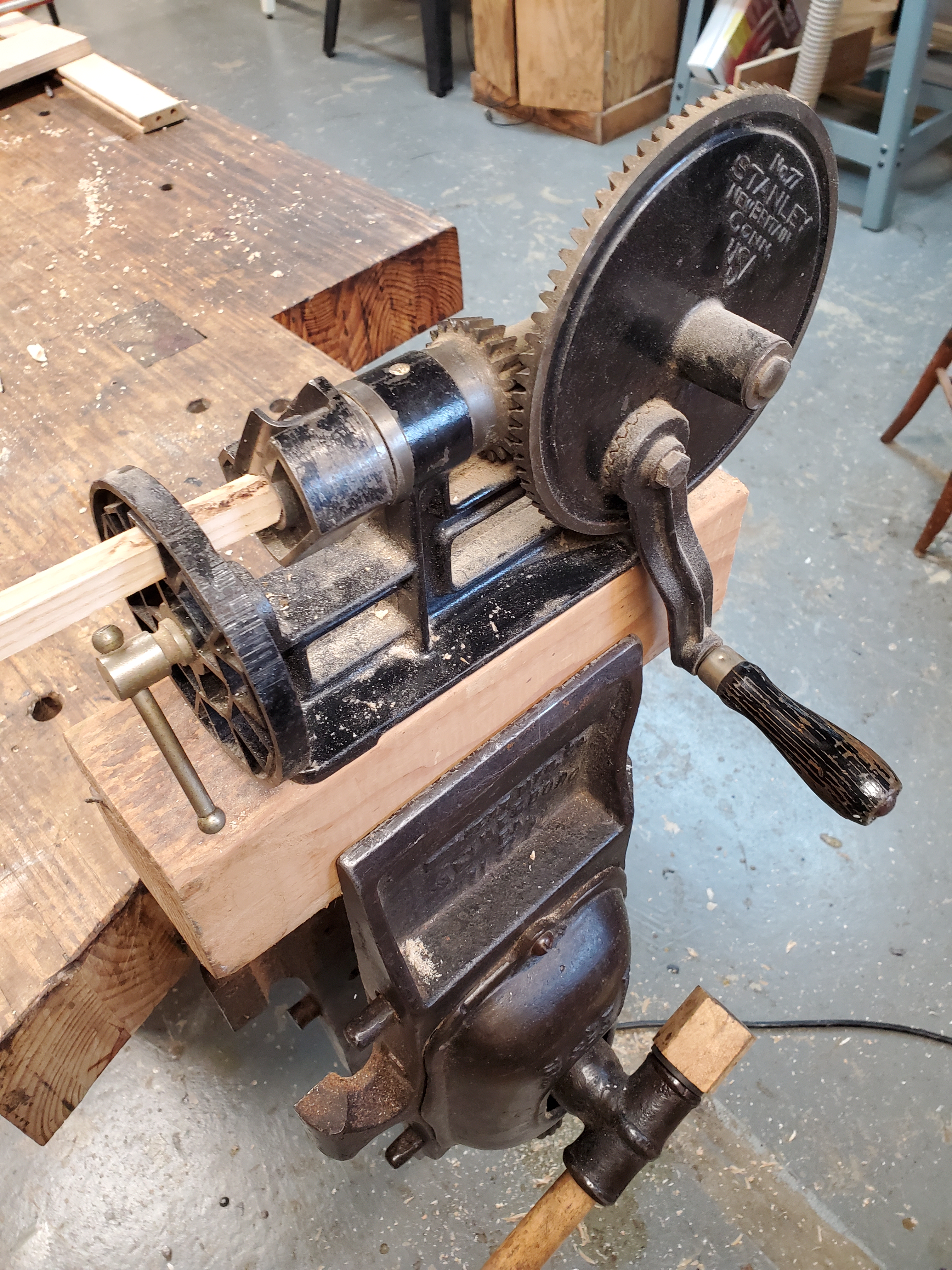
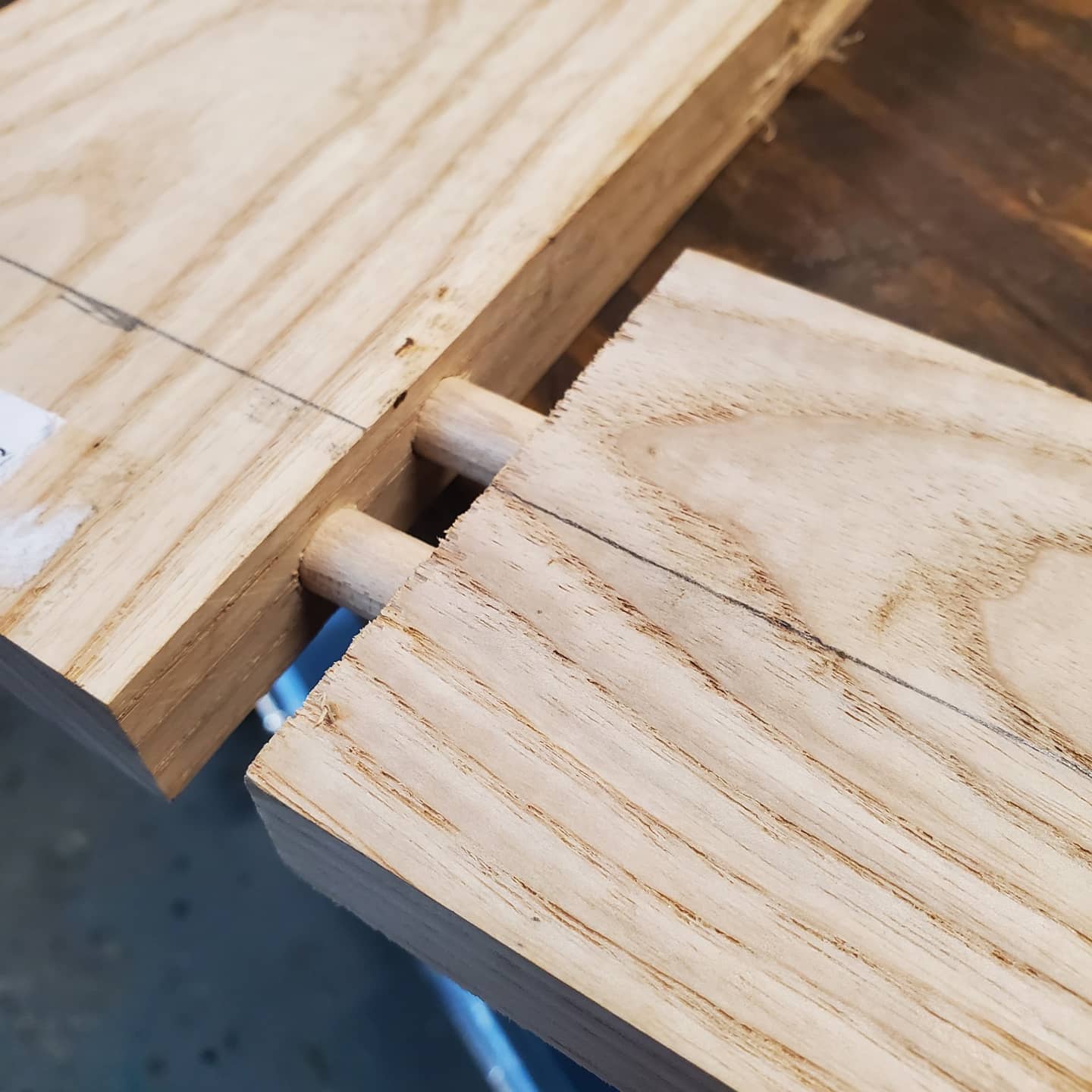
You now have four holes that correspond with eachother. Next you can either use dowels or in my case, make a dowel with my Stanley No77 Dowel Making machine. I then cut the dowels and punch them through my Lie Nielsen Dowel Plate so they are the perfect diameter. When sticking them in the holes, they line up perfectly, giving me a nice tight fitting and strong joint.

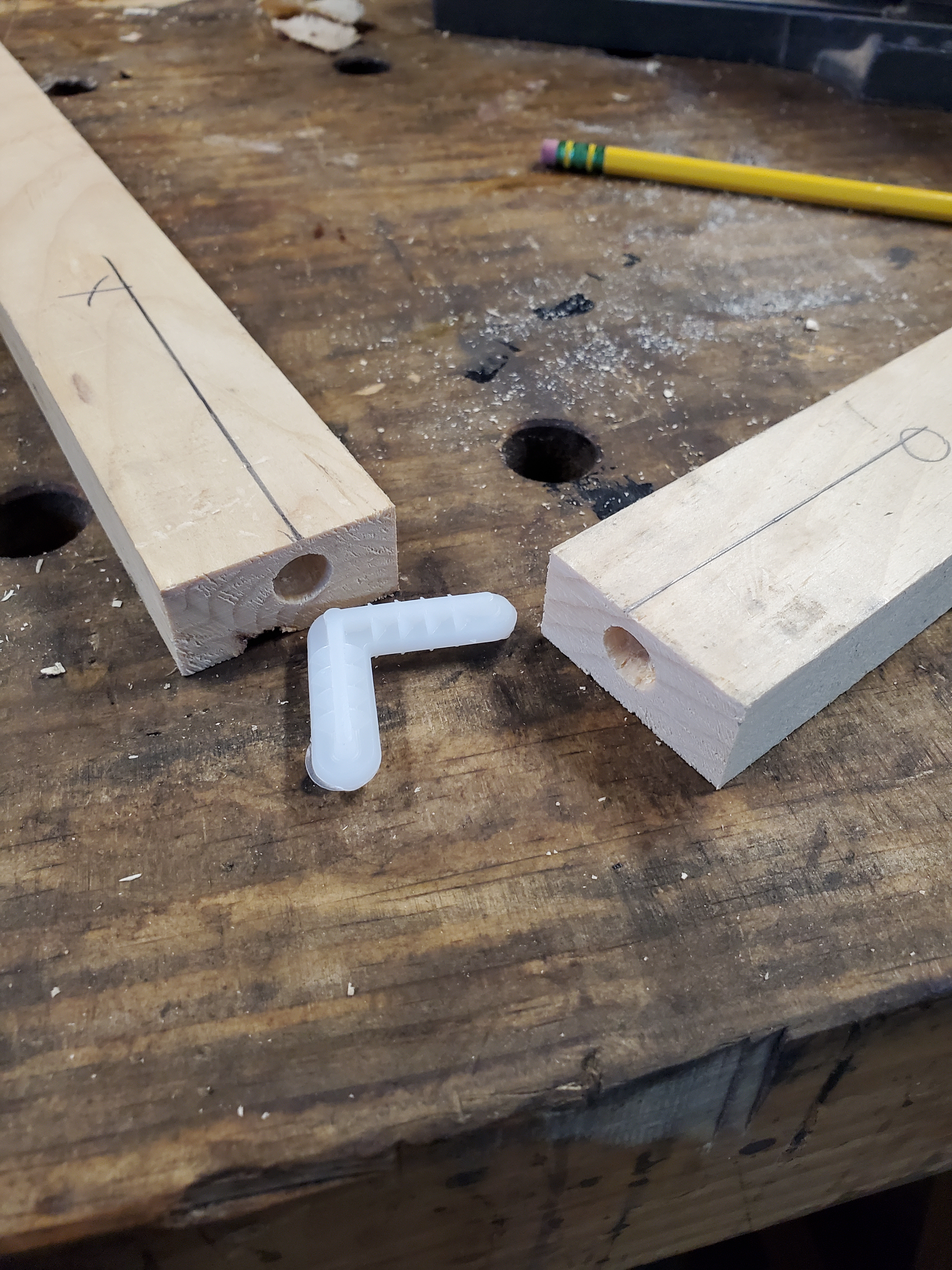
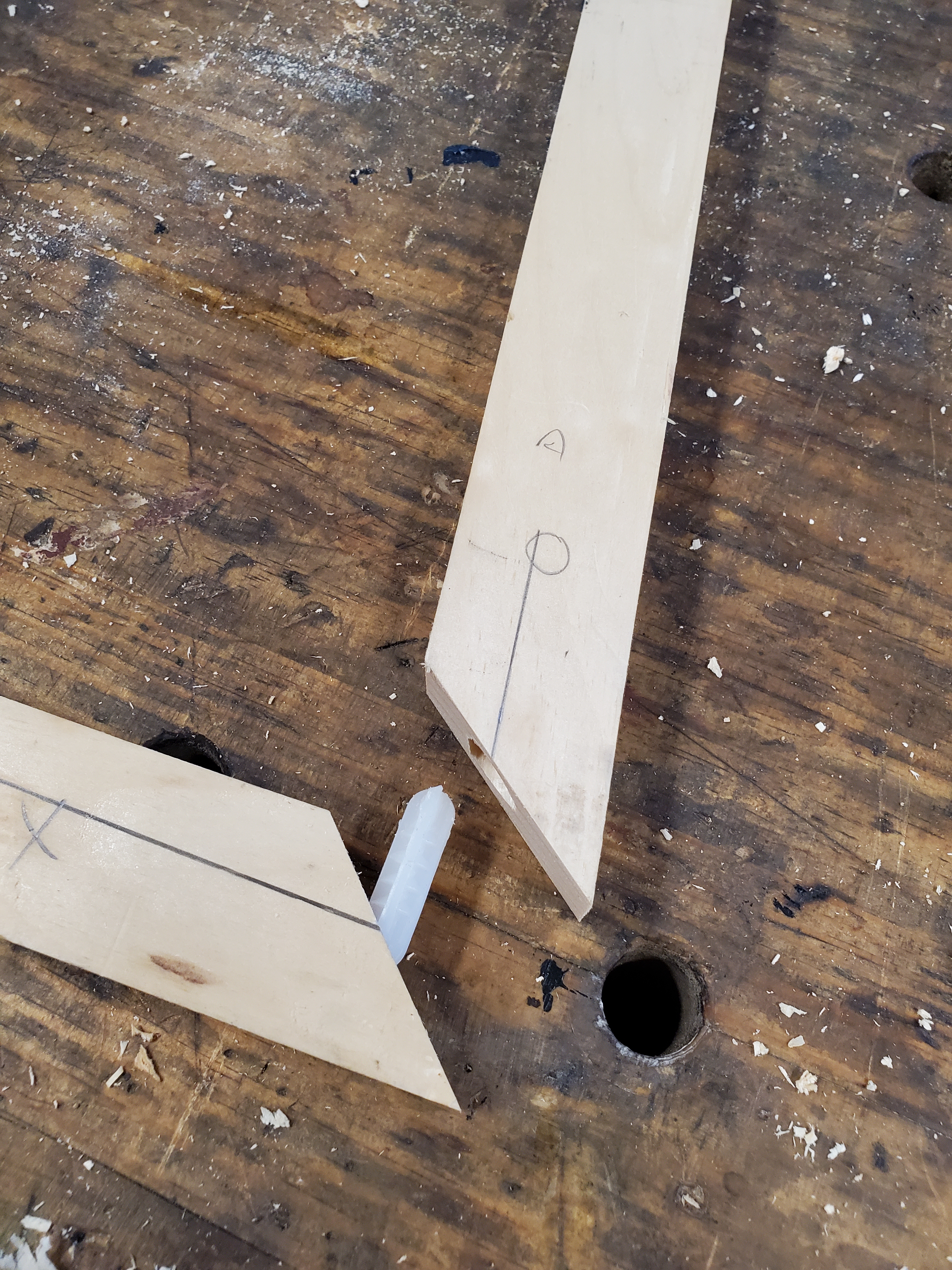
This jig can also make dowelled miter cuts but you have to do it bass-ackwards. You first take your two pieces and mark your line. Then you drill your holes just as before. The jig had plastic 90 degree dowels you could buy as a kit. You can see how many plastic dowels I have used over the past 35 years.

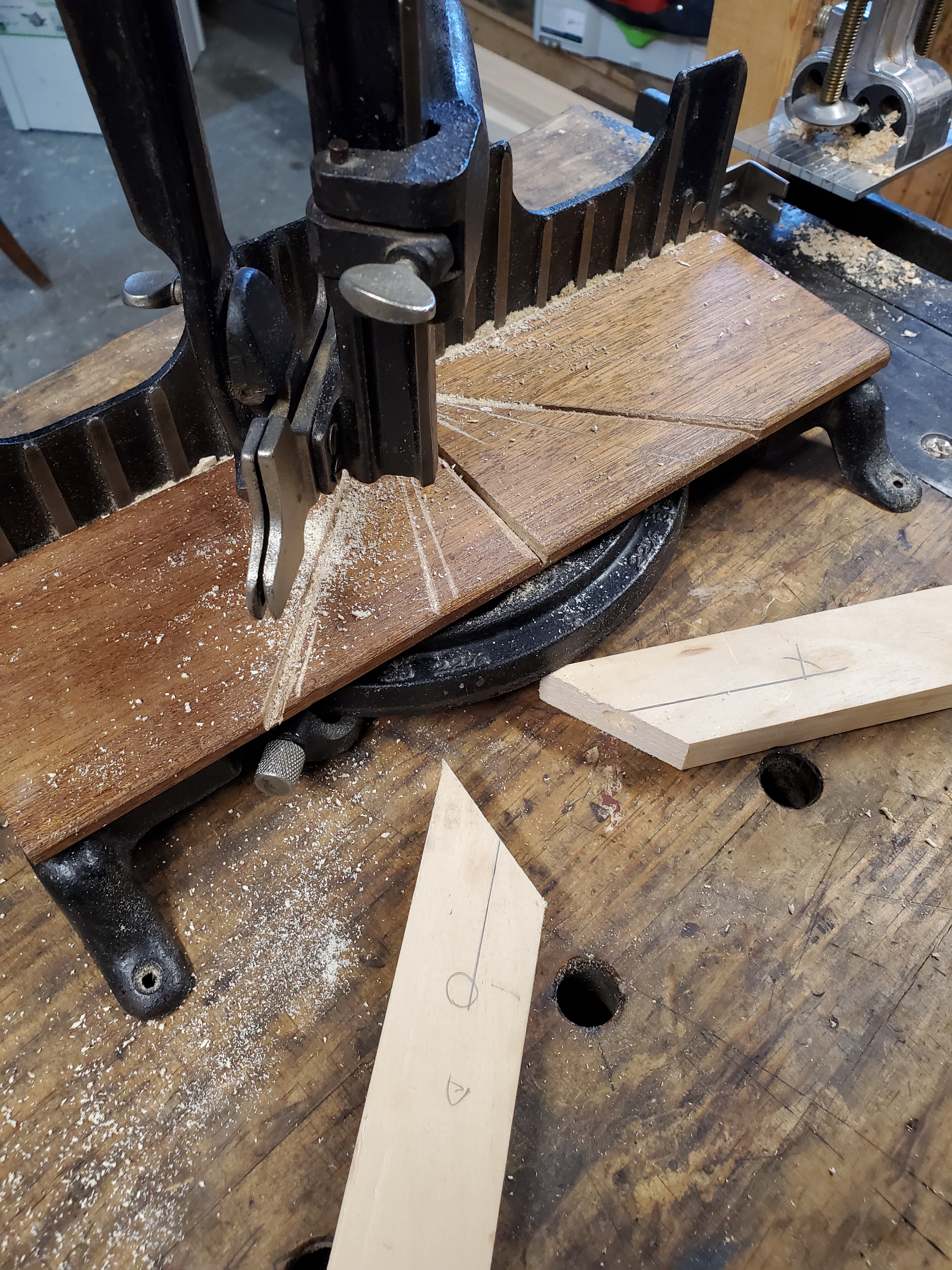
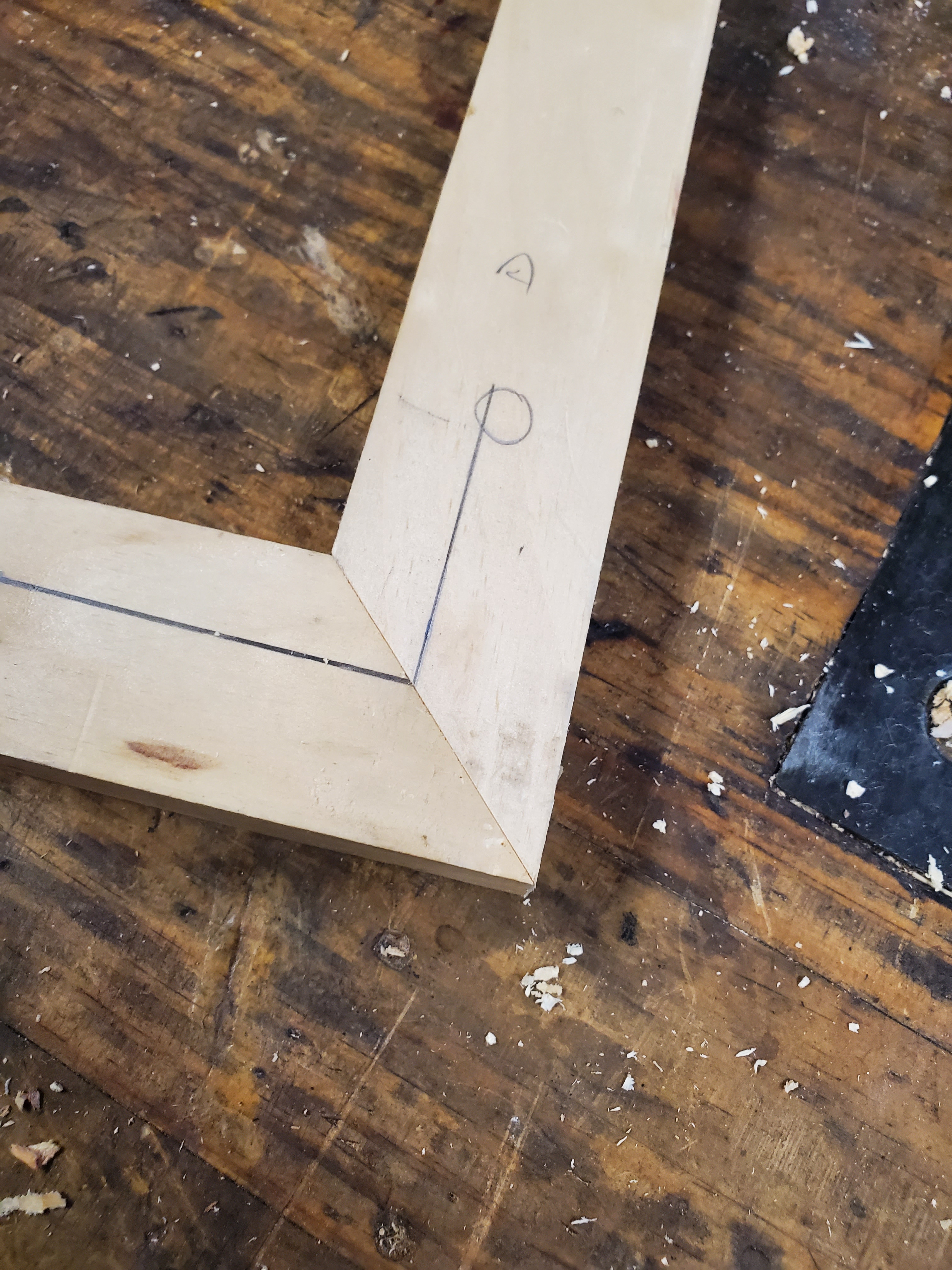
After the holes are drilled, you cut your 45’s on the miter box and glue them together. The joint is remarkably strong. By far the strongest miter joint I’ve ever made.

You can buy this jig on eBay for about $20 but good luck finding the 90 degree plastic dowels. I love using this jig so much that I went out and bought a Festool Domino. Go figure. I hate dowel joints!

Resizing another Shelving Unit

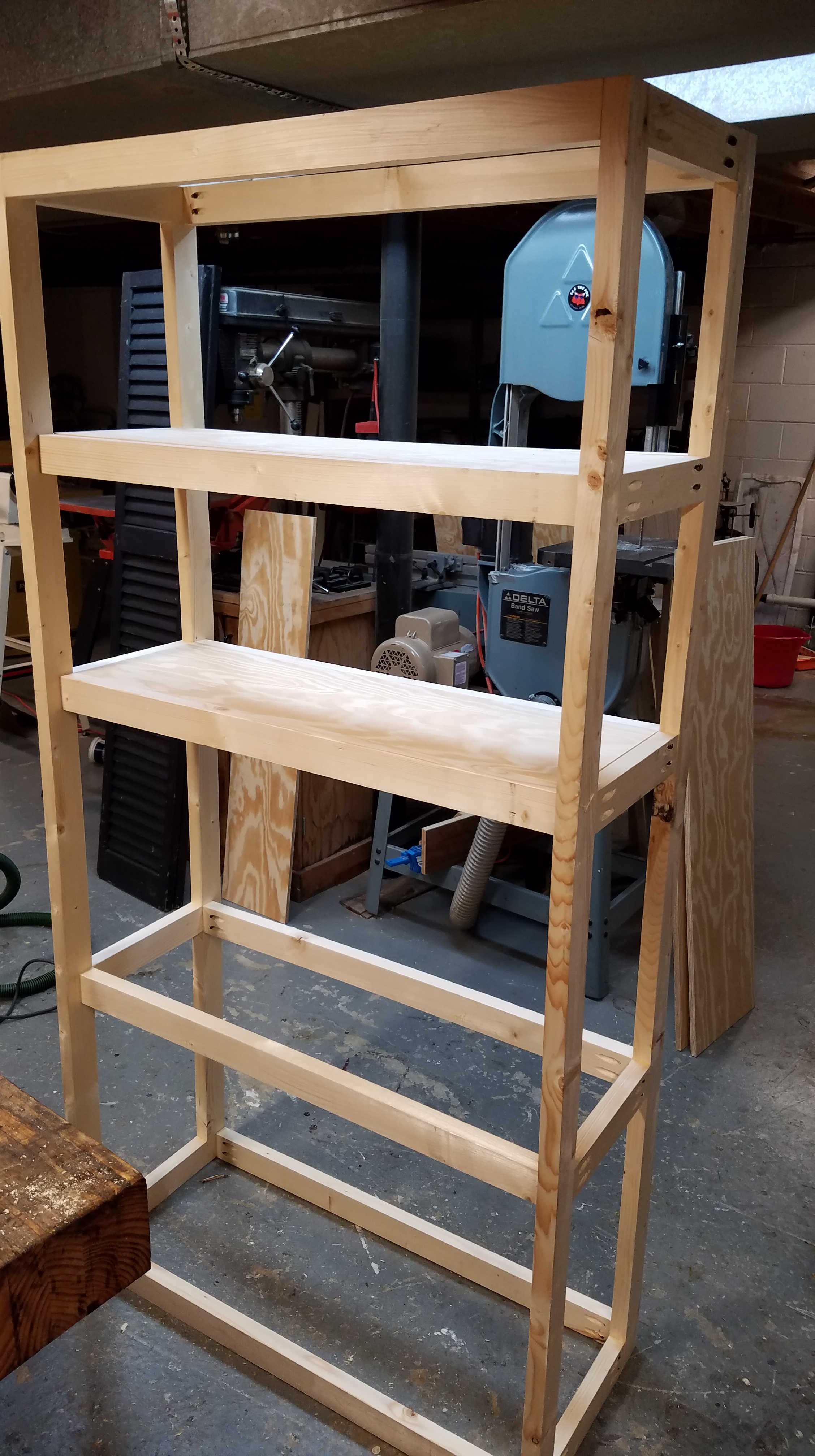
I was in the process of building another shelving unit for my wife’s new booth in Milford, Ohio. She originally asked me to build it four feet long. However, once I started to attach the shelves to the unit, she wasn’t too thrilled with the overall dimensions. I asked if she wanted it cut down to 36″ long instead of 48″, but she was afraid that it would be too much work. I assured her that I could cut it down without much problem.

20170916_143343.jpg

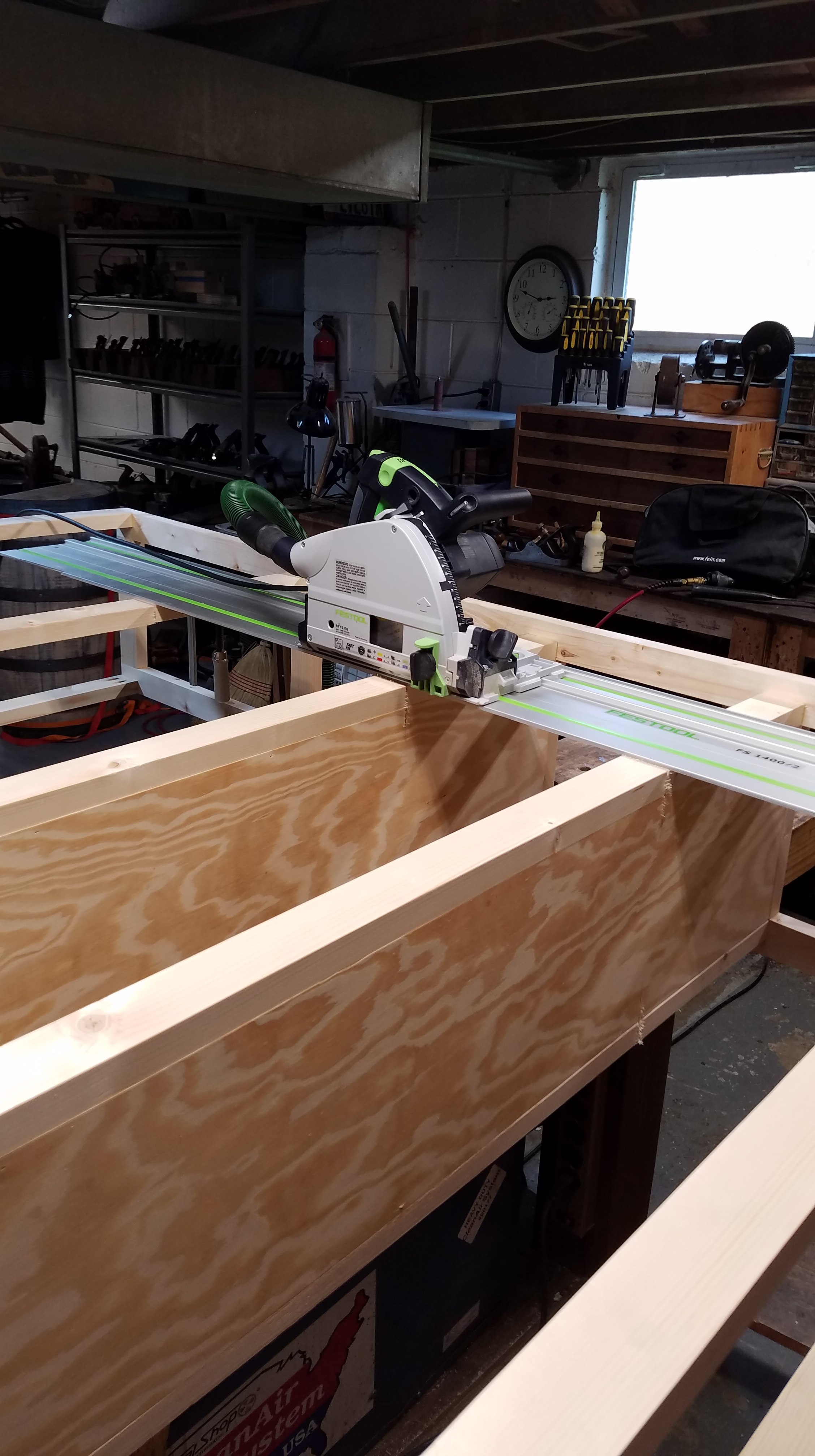
I slapped the unit on top of my workbench and carefully measured where the rails were to be cut. I then grabbed my Festool plunge saw and rail system, clamped it to the lines and ran down the rail cutting as deep the blade would go.

20170916_145039.jpg

I then flipped the unit off the bench and cut the two attached shelves in half.

20170916_145418.jpg

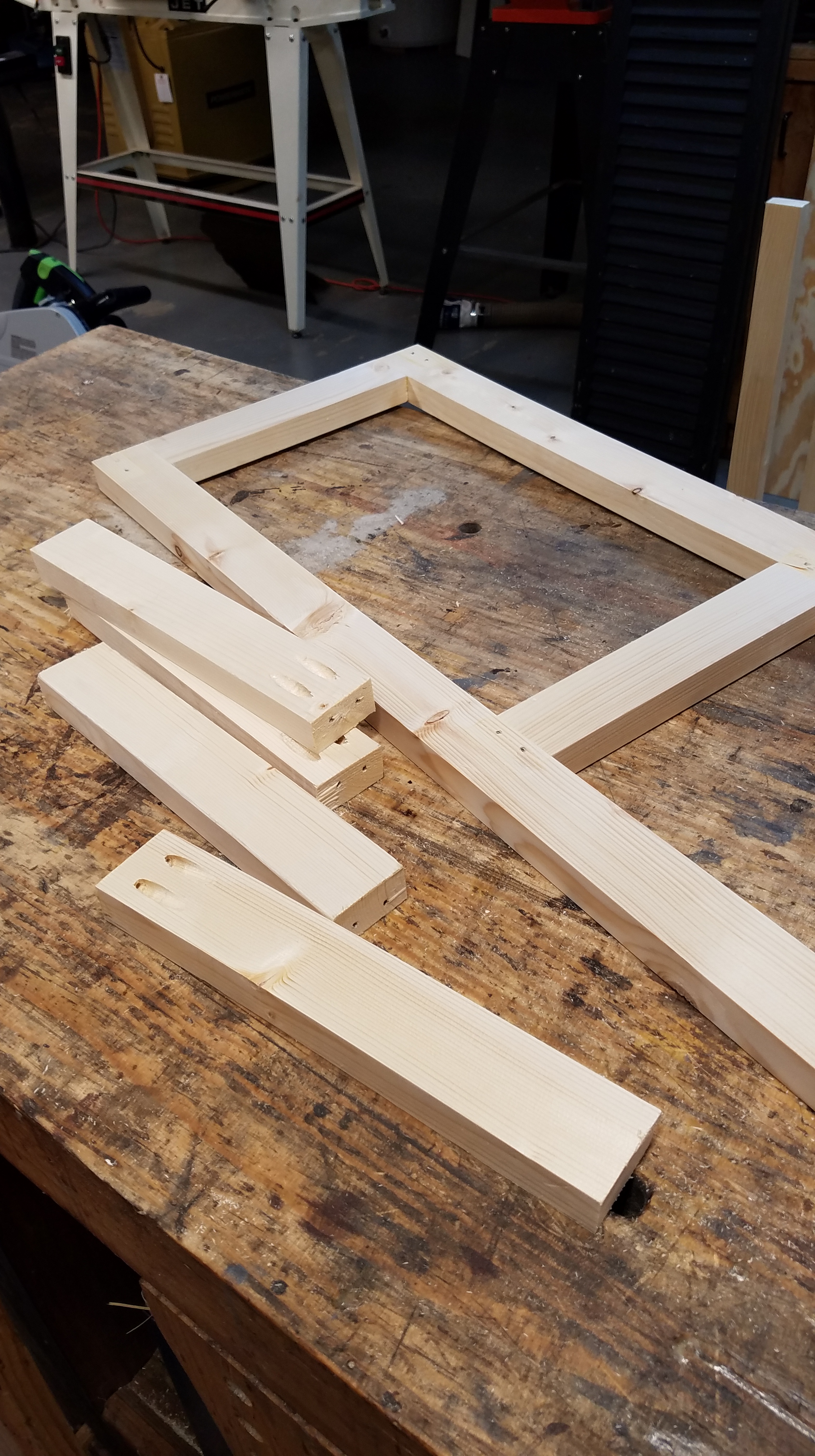
After one side was free, I unscrewed the pocket holes and broke away the rails with a hammer. I then cleaned the side up with a random orbital sander.

20170916_145846.jpg

I then flipped the other side of the unit back onto the bench and re-drilled the pocket holes to the shortened rails. For the two shelves that already had plywood nailed in place, I had to bust out the plywood with a hammer.

20170916_151515.jpg

After about twenty minutes, the shelving unit came back together a foot shorter. I cut the remaining plywood to the new measurements and installed them using cleats on the inside of the rails.

20170916_153255.jpg

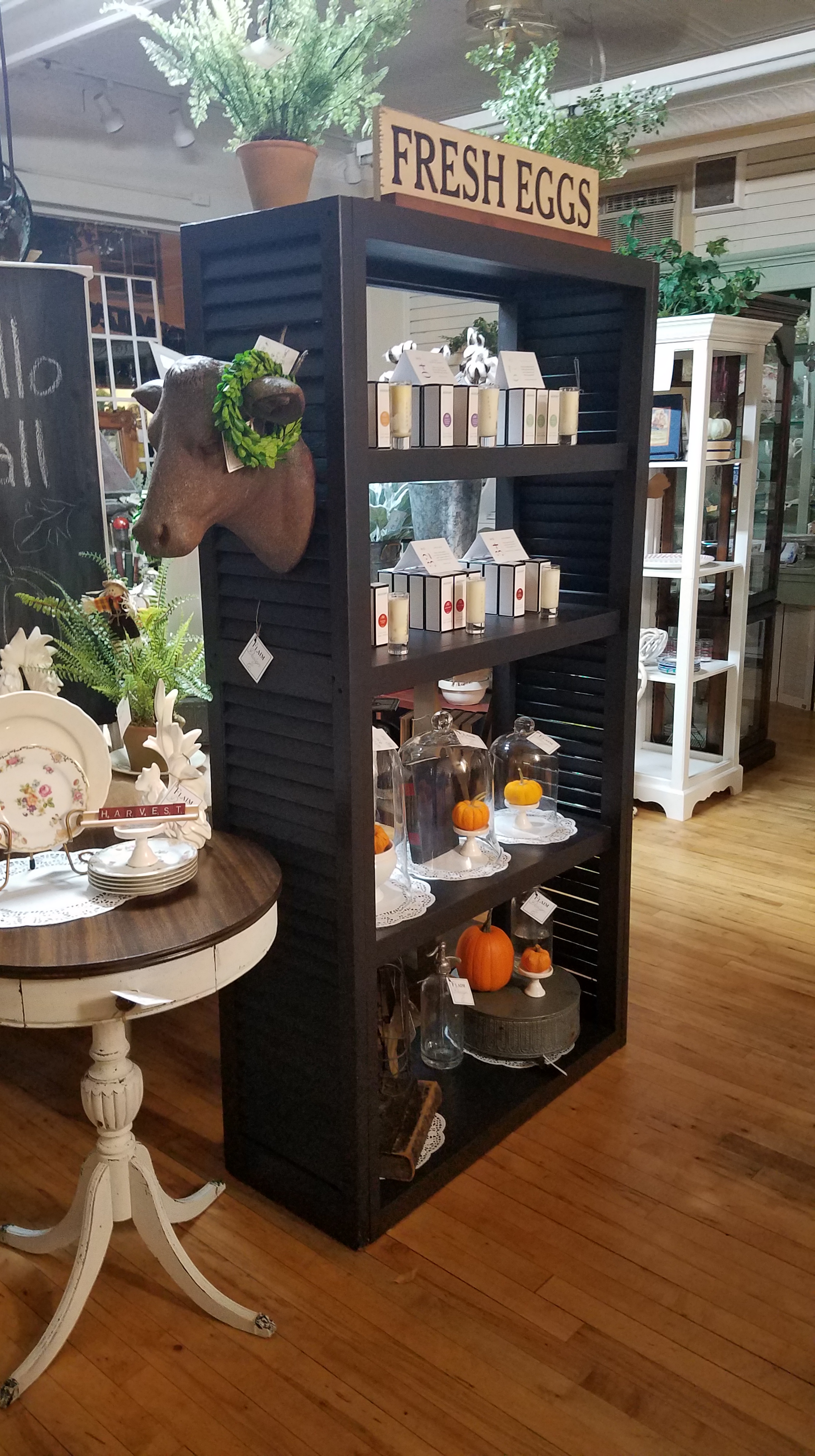
Now it was time for the antique shutters to be screwed onto the sides.

20170916_184259.jpg

After a coat of black paint, the shelving unit looks really nice in her new booth.

20171012_202337.jpg

Turning a Door into a Headboard

My wife Anita and I bought an old door off of Craigslist a few months ago with the intentions of using it as a headboard for our full size bed in our spare bed room. This type of “recycled” work is new to me but it’s all the rage nowadays and my wife has just opened up a business called Bella Chic Decor where she rehab’s old furniture. We’ve been antiquing for a few weeks picking up a whole bunch of old furniture to build up her inventory and she spends time sanding and repainting it. She also has rented a space at a local antique store to sell her stuff.  She’s been doing really well and the furniture she rehab’s looks the bomb so her future looks bright.

Once we got this door home I needed to measure it and decide where to cut it in half so it would work as a headboard. I ended up using three panels of the five panel door in order for the design to make sense. Cutting the door was the easy part. I whipped out my Festool panel saw and cleanly ripped the door in half. Then I filled the door knob hole and latch with scrap wood and putty.

Turning the door into a headboard was a sinch. I knew the headboard needed to be at least 54″ long in order to fit the bolt holes for the full size bed frame so I added extra wood on each side from a 2×8 ripped down to 6 1/2″.

For the top, I simply added a piece of 3 1/2″ wide ash I had lying around and nailed it to the top with my pneumatic finish nailer. From there I cut and nailed a piece of crown molding I bought at Home Depot.

After I was done, Anita painted the headboard with chalk paint and applied a coat of dark wax then clear wax on top in order to protect the finish. The old door really came out nice and makes a stunning headboard.