Display Cabinet

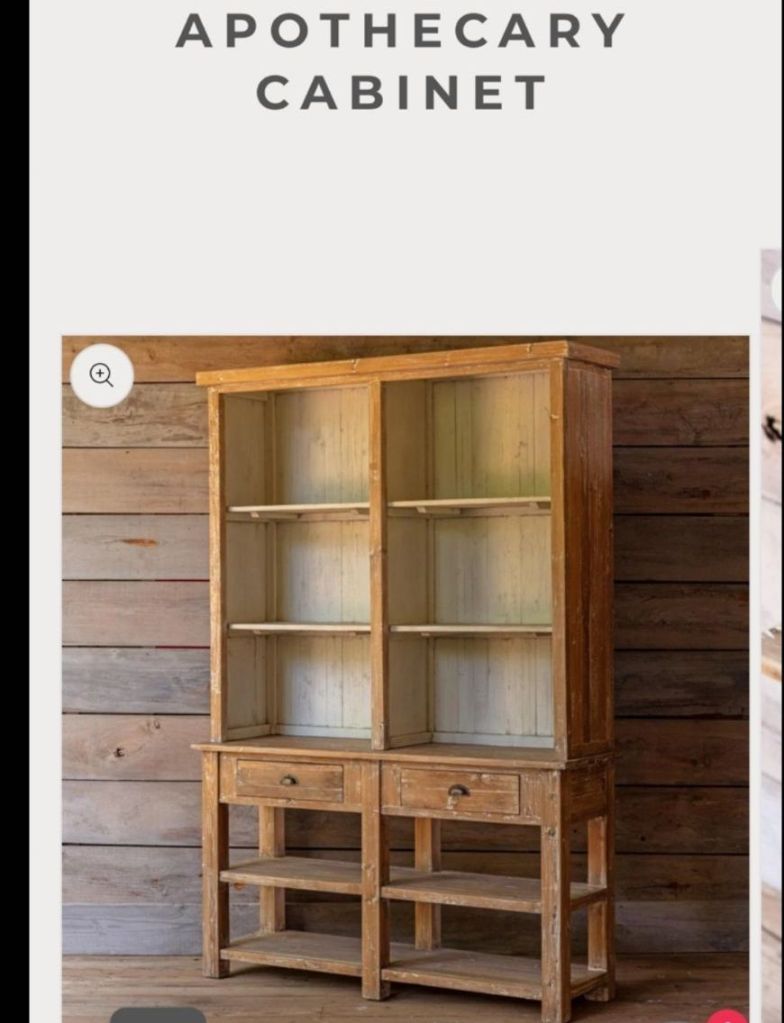
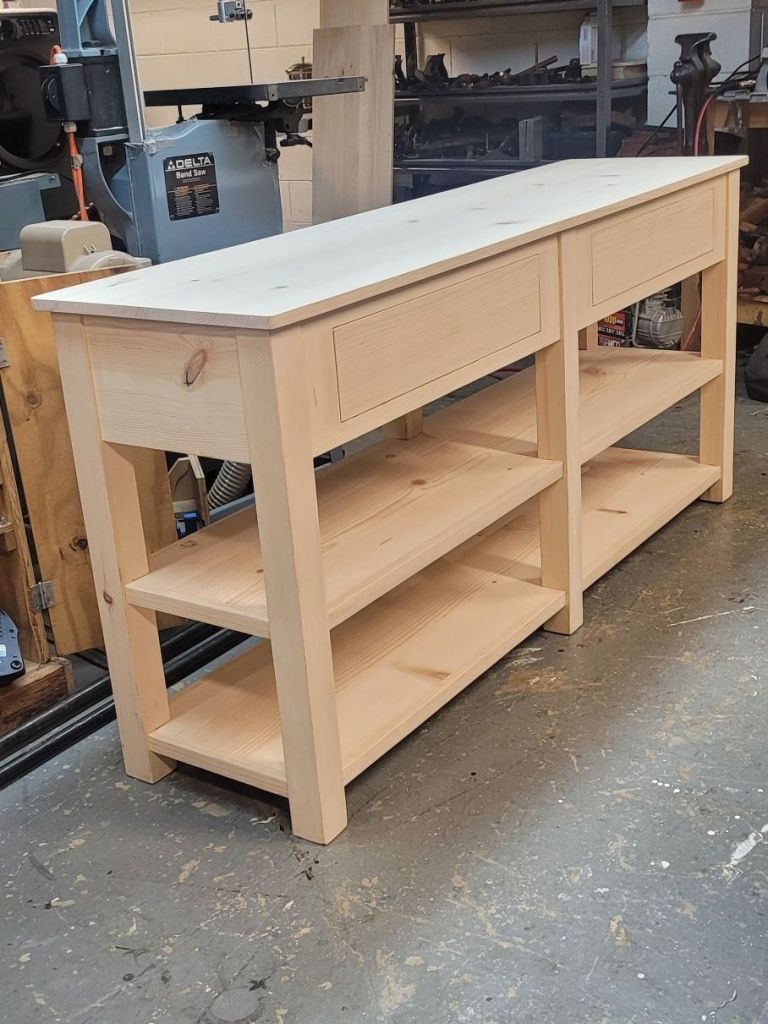
Anita got two new booths in the antique mall she sells in. She went from having a small 8′ x 10′ L shaped booth to having two big rooms. Because of this, she needed a big display cabinet for the back wall in one of her rooms. She searched the internet and asked me if I could make this apothecary cabinet for her.
She wanted the piece to be made of a light colored wood but didn’t want maple or poplar. We went to Lowes and bought a bunch of 1×12’s that were a light pine made in Sweden. Being that they were from Sweden, I assume that it’s the same pine that IKEA uses in their furniture.
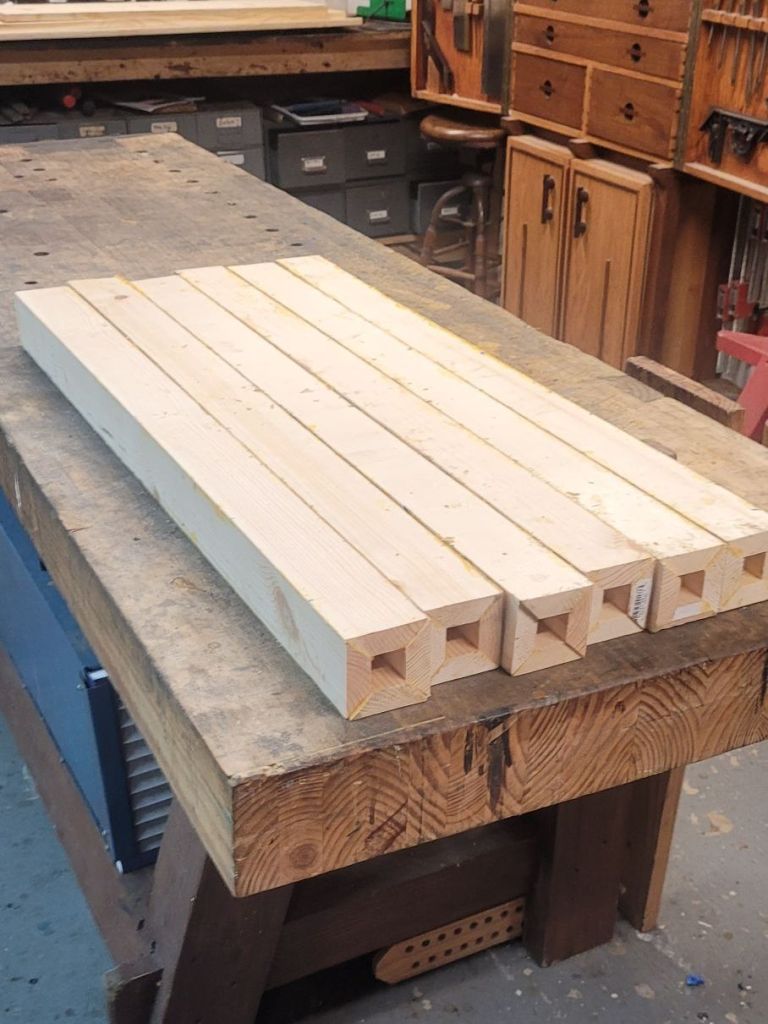
The first thing I did was make the legs by glueing up boards into a square. There’s a special lock miter router bit for this purpose but I have always heard that your stock has to be completely straight and flat in order for the bit to work well. My boards were neither, so I opted for 45 degree cuts and a lot of clamping pressure with band clamps and duct tape. Fortunately, they came out fine.
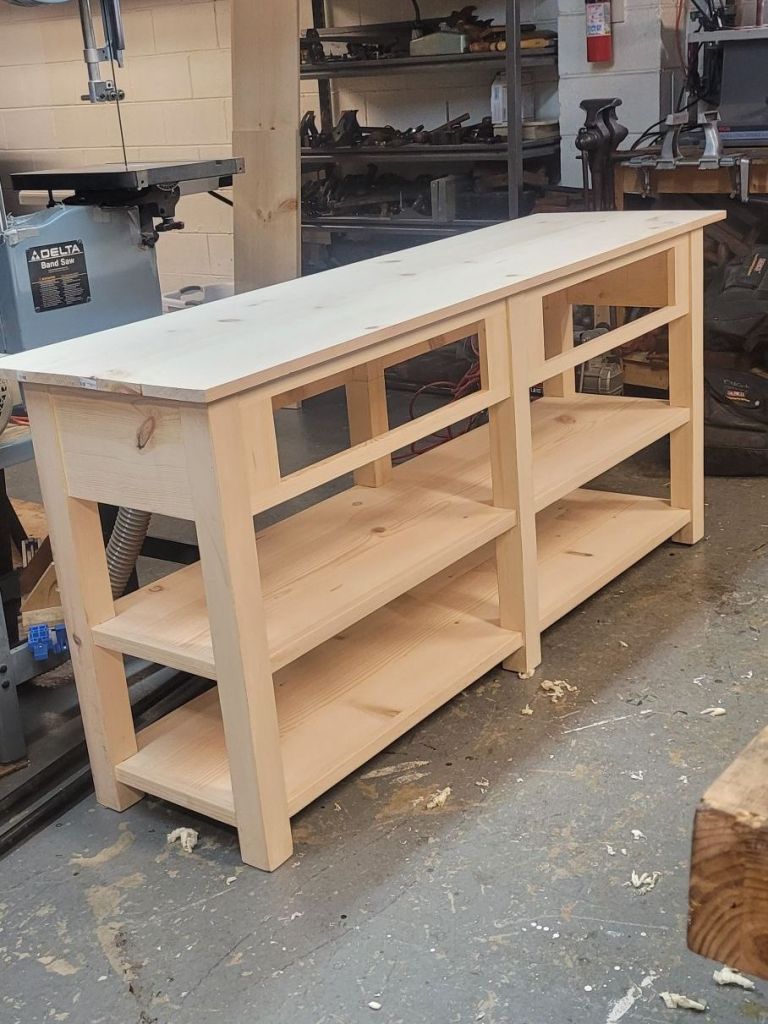
After the legs were made, I cut notches into them to fit the shelves. Then I wrapped the edge of the shelves with 1 1/4″ pieces of wood. On the end grain, I used a little bit of glue and pocket screws for the wood movemnet. The rest of the base was built with Festool Dominoes and glue.
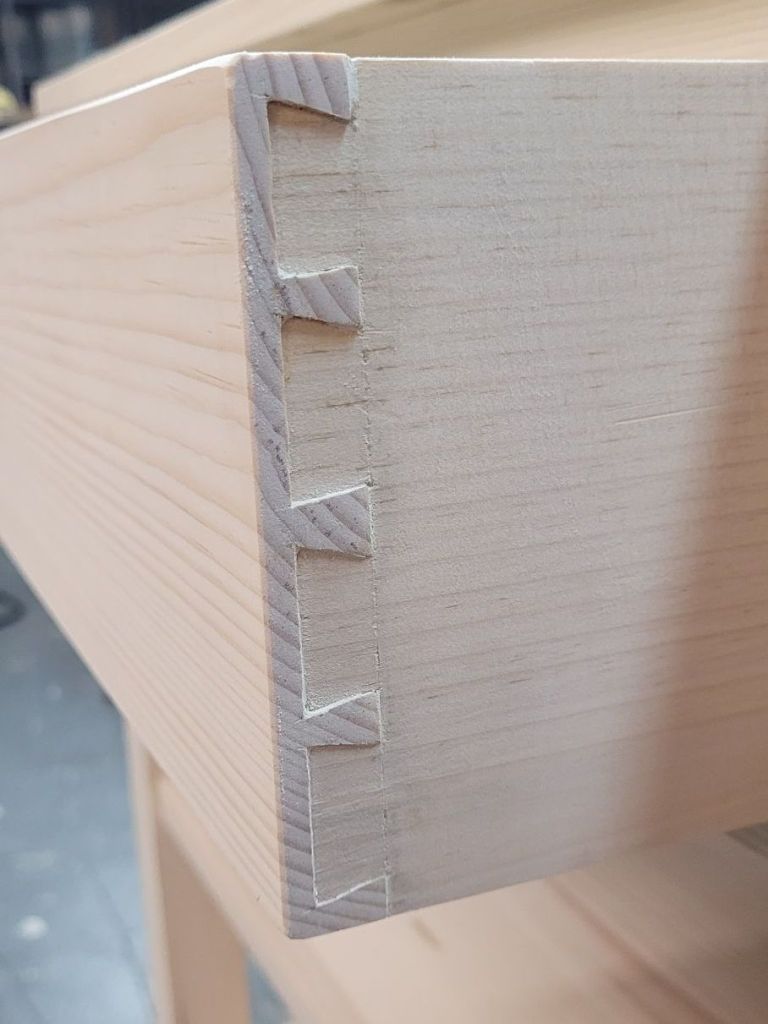
I wanted robust drawers so I made those with handcut half blind dovetails. It’s a lot of fun cutting dovetails by hand and it really doesn’t take too long once you get the hang of it.
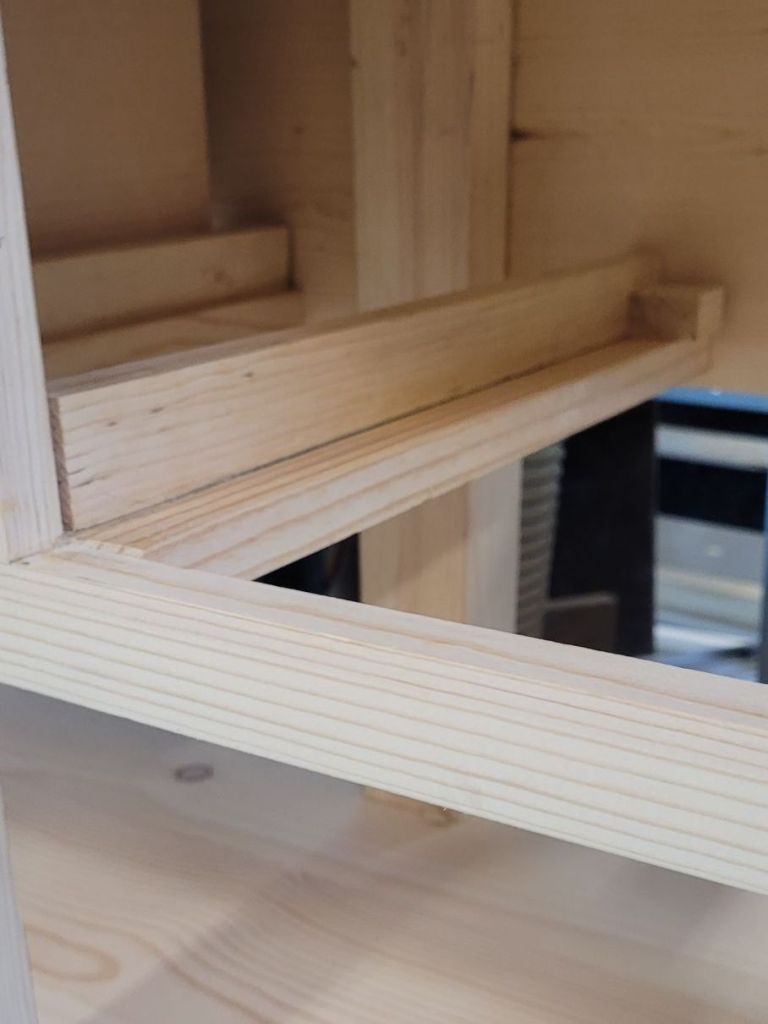
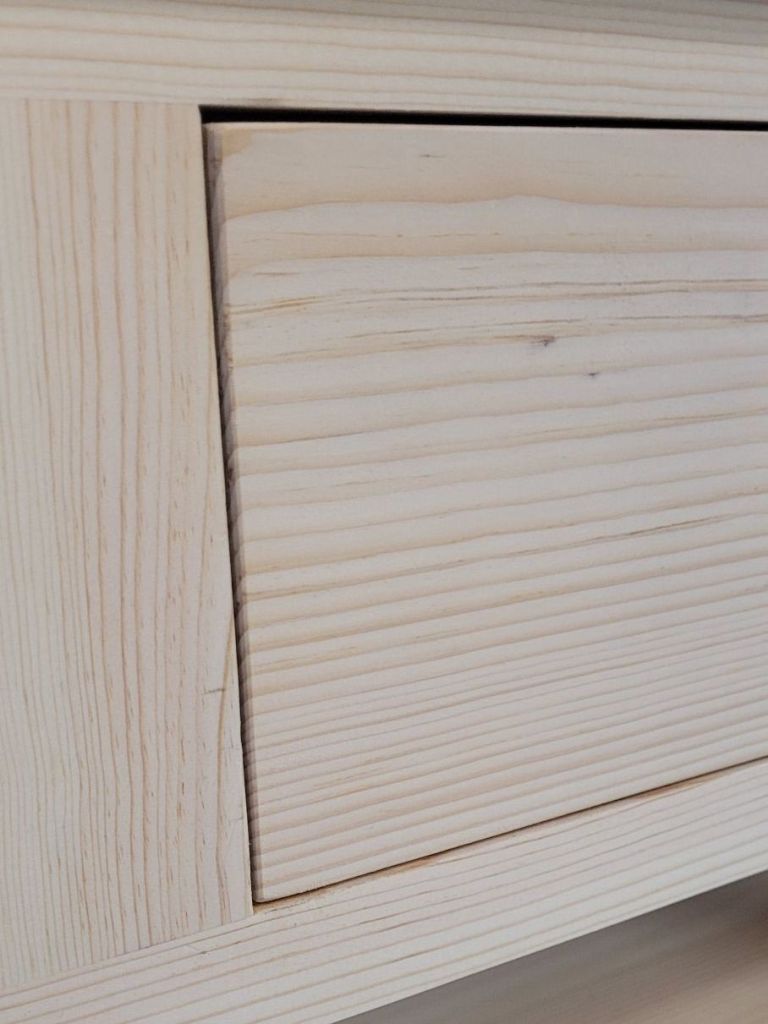
I wanted to make sure that the drawers wouldn’t bind, so I made the drawers a 1/8″ smaller in length and height so there would be a 1/16″ gap all around. I made sure the drawer runners were 1/16″ proud of the opening and screwed them in place with pocket screws and glue.
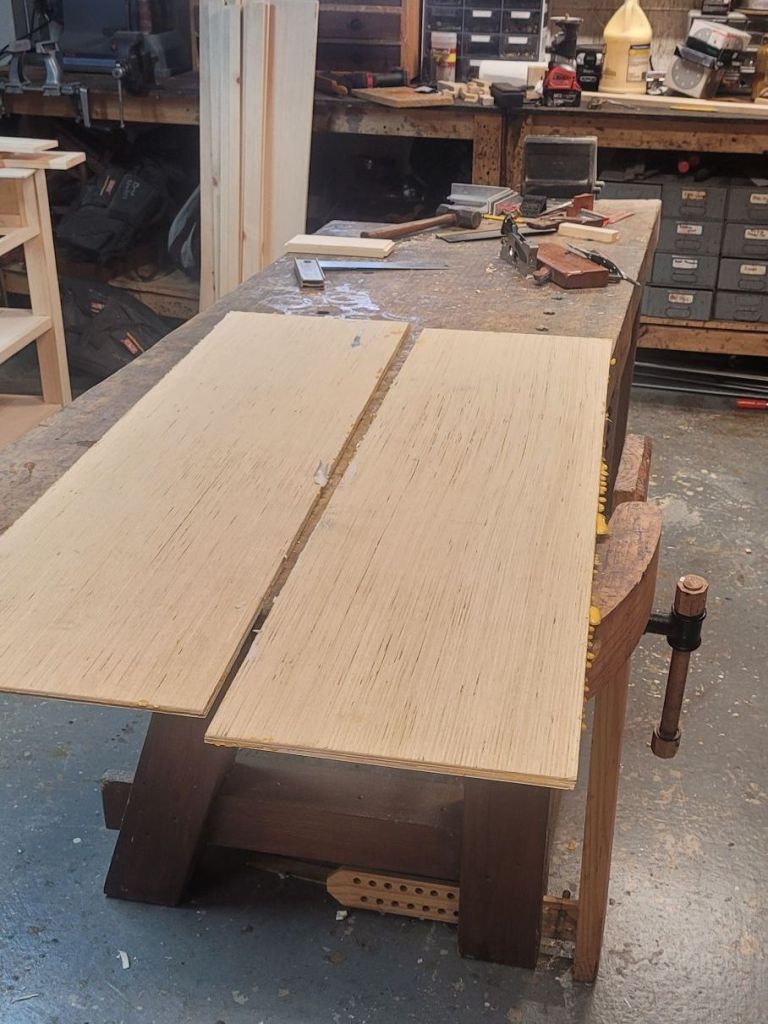
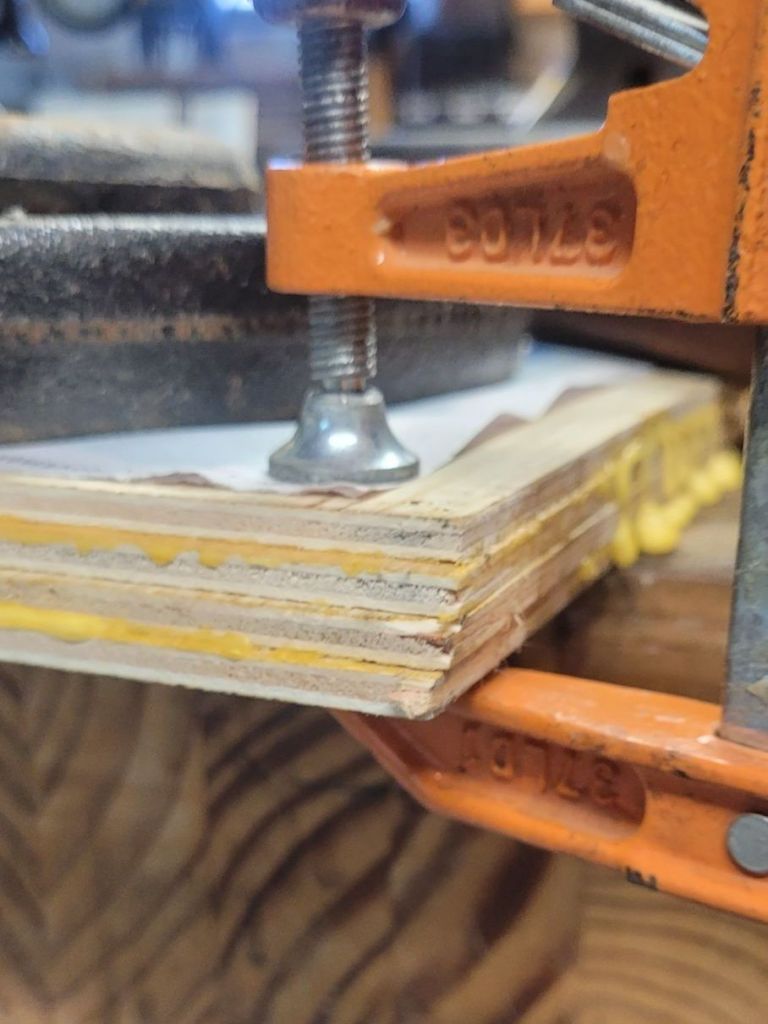
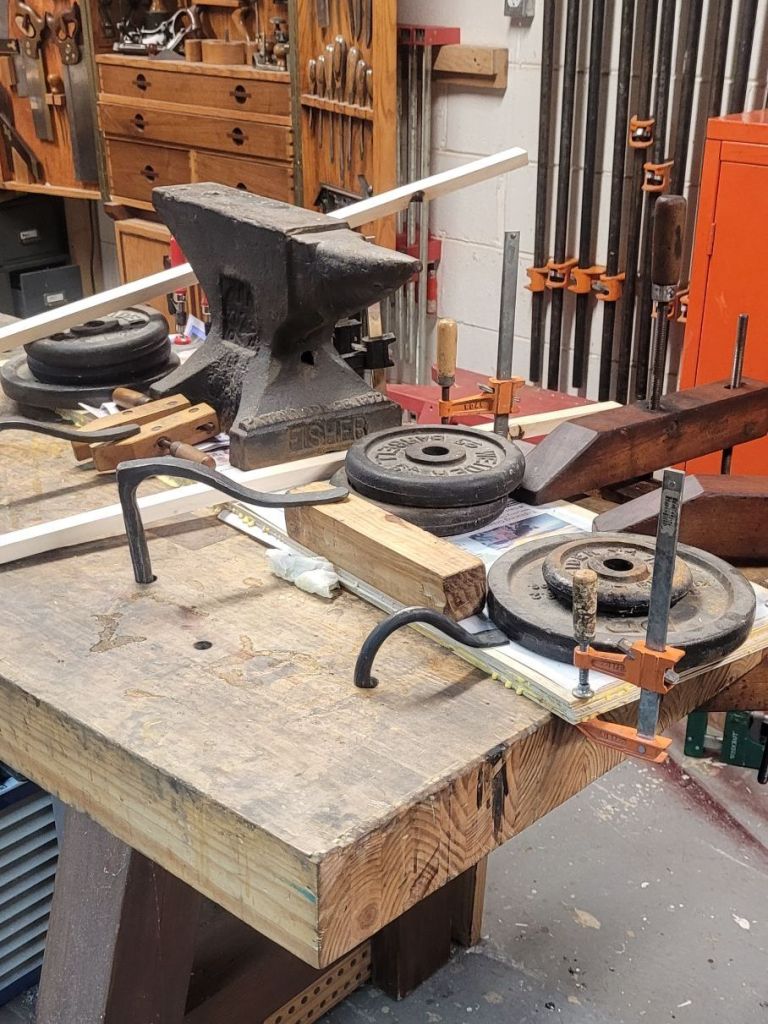
Once the base was made, I focused on the top. I wanted the sides to have a thicker panel in the middle of them, so I glued up the 1/8″ panels together. I used as many clamps I could find and stuck newspaper between the two panels so they wouldn’t stick together. Luckily, when the panels dried, I was left with two oversized panels for the sides of the cabinet.
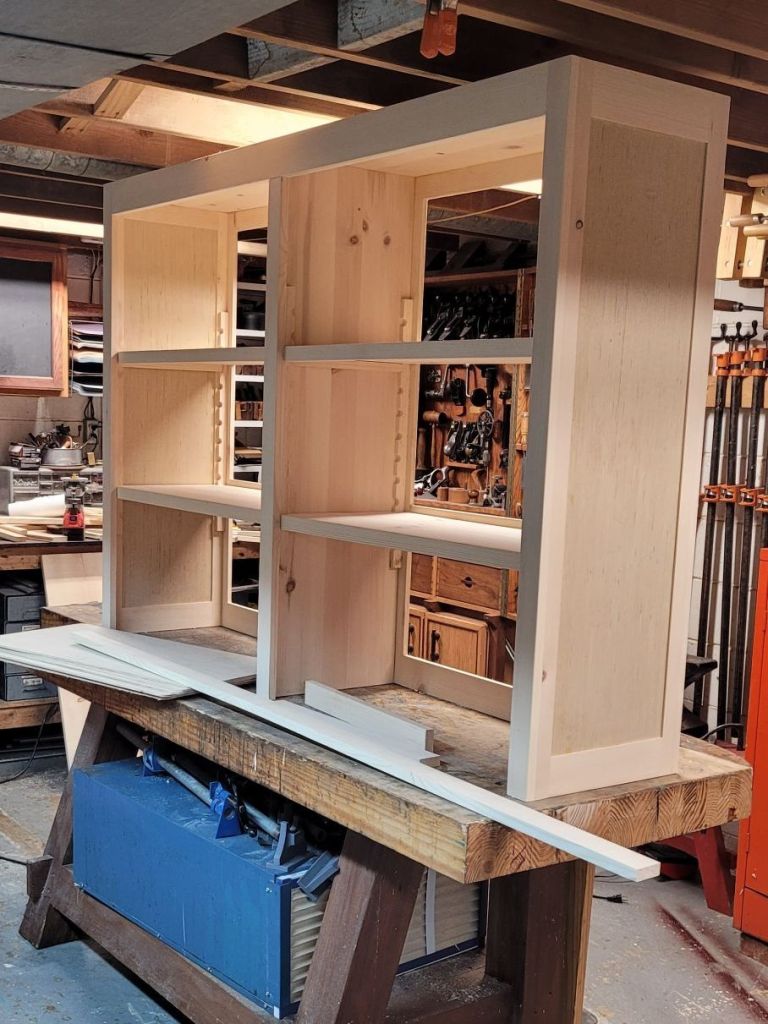
I built the case with more Dominoes and glue and created adjustable shelf supports with the scrap wood I had left over.
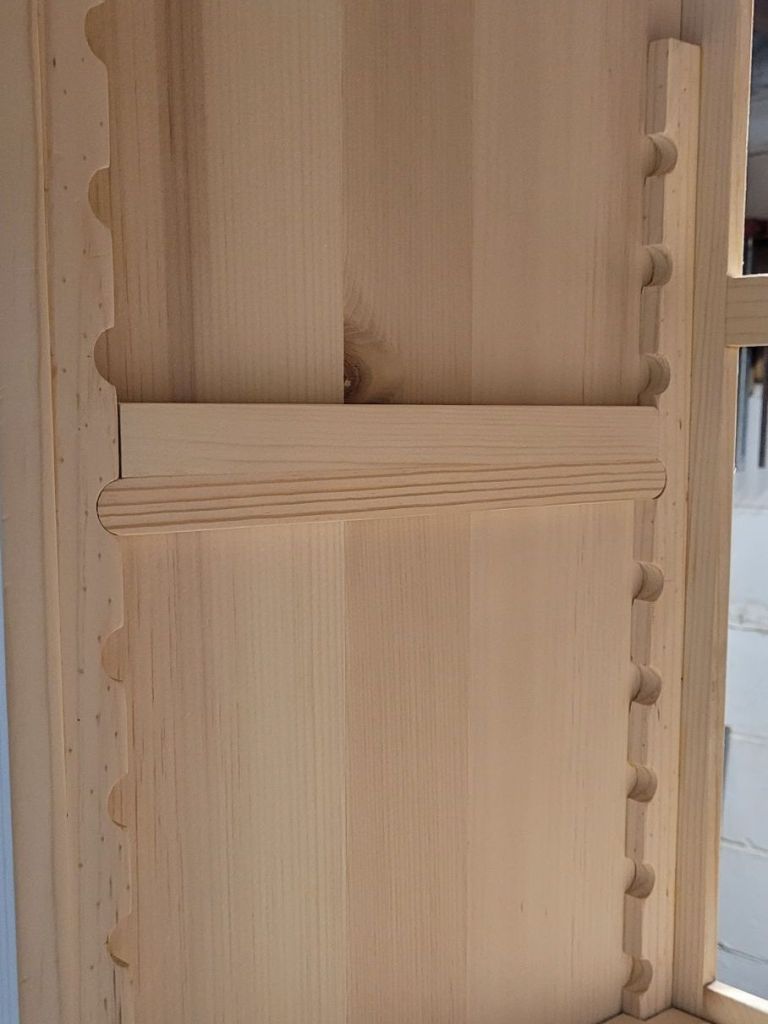
I love this technique for adjustable shelves. You drill a 3/4″ hole every 2″ then you rip the piece in half on the table saw. Then for the support, you add a 1″ filler on the bottom of the support stick. This way, if you need your shelf 1″ higher, you simply flip over your shelf support.
I installed the back with more of the 1/8″ thick panel wood and Anita put a natural aging solution on the piece as she didn’t want it stained.
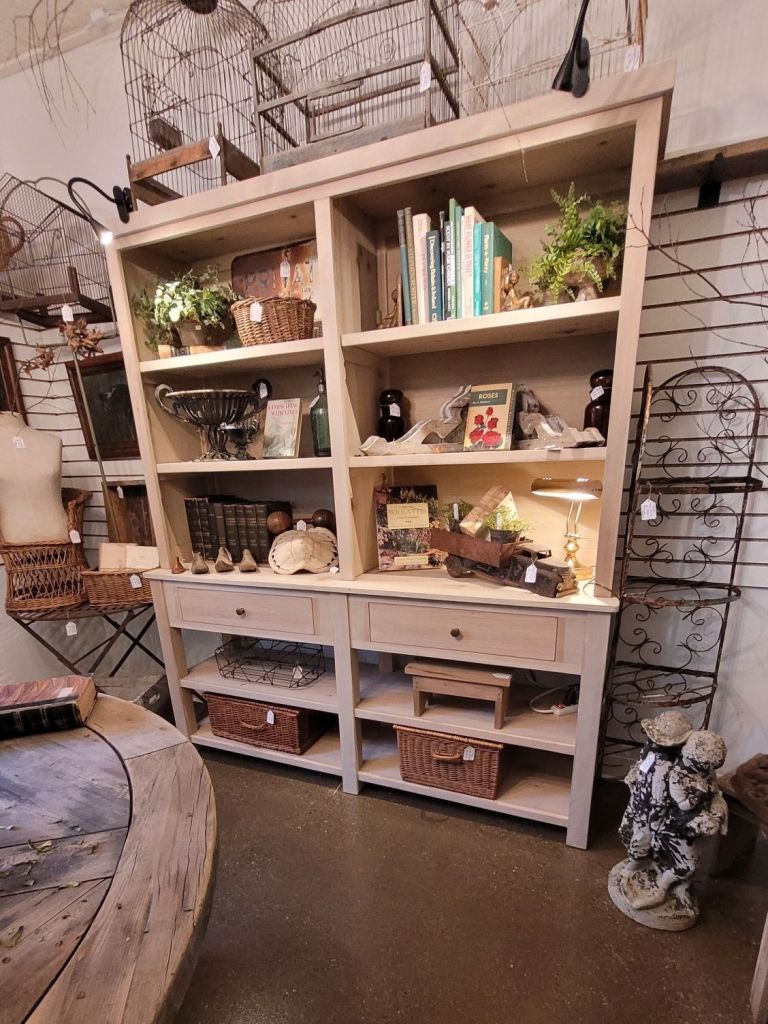
People in the antique shop love the piece and are perplexed that I built it out of 1×12’s from Lowes.

Bathroom Cabinet

My wife, Anita, came to me a couple of months ago saying she wanted a new bathroom cabinet. I made one when we remodeled the bathroom nine years ago, but for some reason, I made it rather narrow and too deep. It was only 24″ wide by 18″ deep. The cabinet worked, just not that well. Anita loves going to Ikea so when she came home with a brochure of a cabinet she saw in their showroom, I looked at it. It was a Hemnes cabinet for $329.00. I immediately thought to myself “that’s basically a box with doors. I can make a box with doors for a lot less than $329.00”. That’s the downside of marrying a woodworker. We always want to make a piece of furniture rather than buy it. The good thing, is we usually can make it for a lot less and customize the dimensions to fit our needs.

HEMNES Cabinet with panel/glass door IKEA Solid wood has a natural feel.

I convinced Anita that I could make the cabinet quick enough that she wouldn’t have to wait six months for it to be completed. I also told her I could make it 32″ wide as opposed to 36″ so the cabinet wouldn’t cover up part of our heat register in the bathroom. A few days later, we went to Home Depot and bought a  1/2″ thick of birch plywood for about $50.00. I cut the sheet down for 11 1/4″ wide to be used for all the parts. Once I got the sides cut, I routed a couple of 1/2″ wide dadoes in the sides for the bottom and middle shelf of the cabinet. I then used a jig made from peg board to bore the shelf pin holes on each side.

SAMSUNG CAMERA PICTURES

I cut the bottom and middle shelf to size and stapled them to the sides with my 1/4″ pneumatic stapler. Because I was going to apply 1/4″ thick x 2″ wide trim around the sides of the cabinet to act as a faux frame and panel, I wasn’t concerned about the driver marks in the wood made from the stapler.

SAMSUNG CAMERA PICTURES

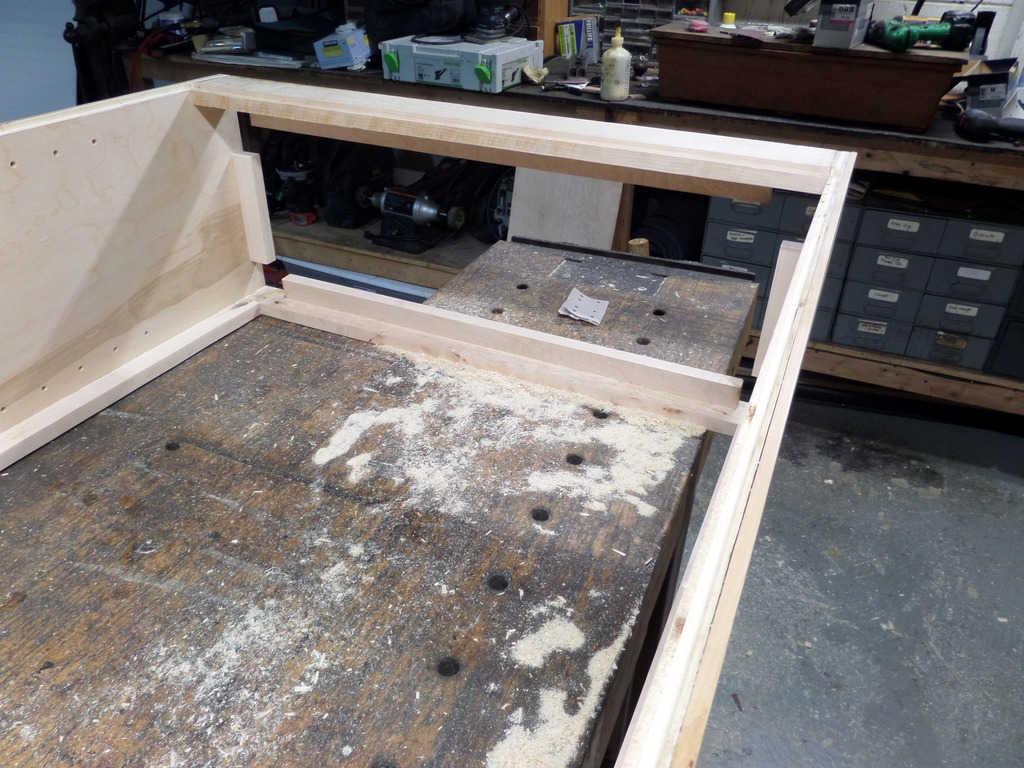
Next, I glued the 1/4″ x 2″ wood trim to the sides. Because I still needed to put a 3/4″ face frame  on the front, the trim on the front side of the cabinet was only 1 1/4″ wide, not 2″. You can see in the picture how the trim on the right (the back) is wider than the trim on the left (the front).

SAMSUNG CAMERA PICTURES

Next I glued the 3/4″ face frame to the carcass. I used pocket hole joinery to attach the stiles to the rails. This was a super easy cabinet to build.

SAMSUNG CAMERA PICTURES

I added glue block to the inside top of the cabinet where I could screw the top to the carcass.

SAMSUNG CAMERA PICTURES

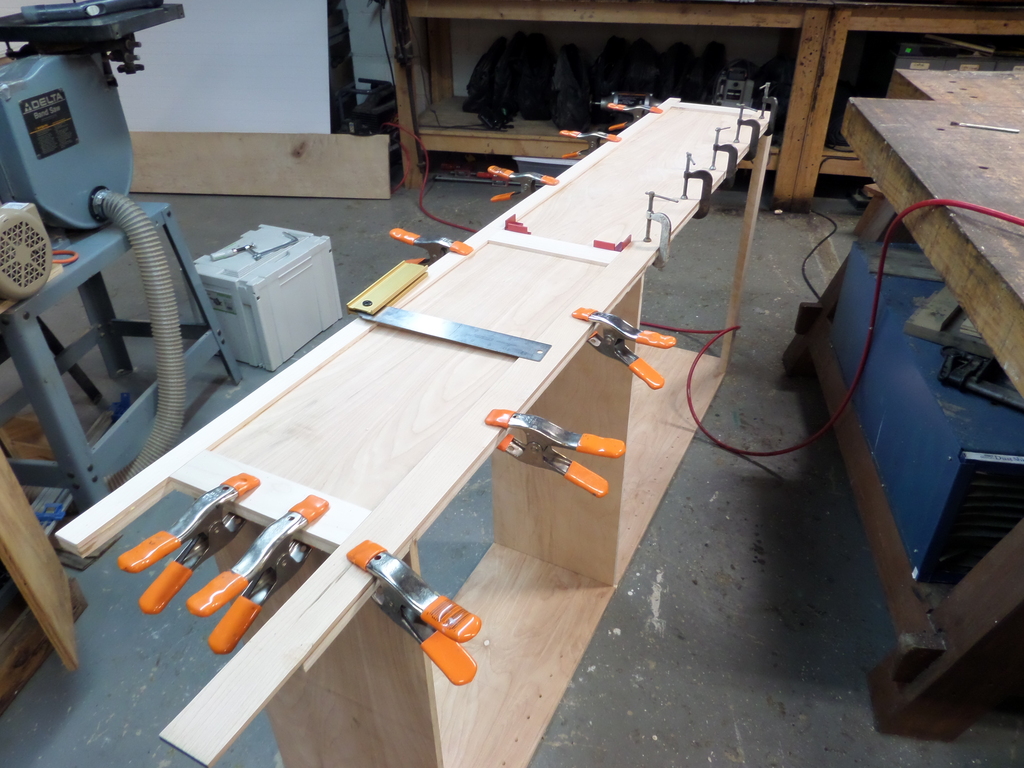
I wrote a post a few weeks ago where I described how I stretched a board to size after I cut a board too short. You can read it here. This is the board for the top of the cabinet being glued up after it was stretched.

SAMSUNG CAMERA PICTURES

In the end, we decided not to add doors to the cabinet, but instead use baskets with open shelving. The woven baskets give the piece more character rather than having an entirely white cabinet with doors that would cover up the bottom shelves. We now have more room in the bathroom as the cabinet is only 12″ deep and is a lot more stylish.

20170820_213154

PS Wood Machines 21″ Scroll Saw

A few weeks ago my wife and I went down to Louisville, KY for the day. There’s a new antique mall where we live called the Peddler’s Mall and noticed that there were several more of them in Louisville. So we figured we’d make a day of it and check out the malls down there. Well, the trip was nearly a waste of time as most of the stuff that was for sale in all of the Peddler’s Mall were junk. Nearly every booth was a bunch of yard sale crap where people would try to sell things like Scooby Doo drinking glasses for a buck.

Near the end of the day, I strolled down the aisle and caught my eye on an old scroll saw for $99.00. The saw was sitting on its stand in the back of the booth and had duct tape wrapped around it. I checked it over for a second and looked at Anita. She looked back at me and asked “what are you going to do with that thing?” I didn’t have an answer as I wasn’t in the market for a new scroll saw. So we left the mall and drove back home.

On my way back home I couldn’t get the saw out of my mind. I really didn’t need a new scroll saw as I don’t do all that much scrolling, but I have always longed to own a Hegner. Out of curiosity, I pulled up eBay on my phone and typed in “PS Wood 21″ scroll saw” and saw that used ones sell for $400. Ugh, I should have bought it!

A couple of weeks go by and my boss asked to do some market research in Louisville. The rep for Louisville, knew I was coming down to help him out with the research, so he asked if I wanted to have lunch with him at his favorite Chinese buffet. It sounded good to me, so he gave me the address. As soon as I pulled into the parking lot of the buffet, low and behold, the Peddler’s Mall with the scroll saw was right across the street. I told myself that after lunch that I was going back in to see if the saw was still there.

I walked into the store and went back to the booth. Luckily it was still sitting there for $99.00. I checked over the saw again and it seemed like everything was there. The only thing that it needed was a new diaphragm for the blower and a new belt. I asked a worker if there was anyway I could plug it in to see if the motor worked. She told me that there was an outlet up by the registers, so I picked up the saw and carried it all the way to the front of the store. I had to unwrap the duct tape that was holding the arms down so that they could move. As soon as I turned the switch on the saw worked just fine. Happily, I bought the saw and shoved it into my car.

blog

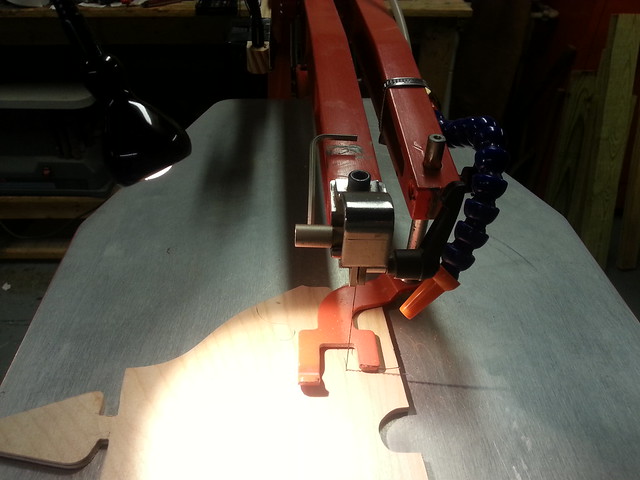
After cleaning the saw up a little bit, it worked fine. I bought the new blower and belt along with a selection of scroll saw blades to make the saw perform better. Now I wanted to snazz it up a little bit by adding a light to it so I could see what I was cutting. I ended up buying a cheap clamp-on light from Ikea for $15.00.

I needed a way for the light to hold onto the saw. I tapped the two holes on the left side arm and threaded a couple of screws into them to hold a wooden arm.

I wanted the light to have a cleaner look rather than just have it clamp onto a wooden arm. I drilled a hole through the top of the arm to be able to feed the wire of the light through.

blog

I carefully removed the clamp portion of the light and spliced the wire to feed it through the hole. I used electrical tape to re-attach the wires and hold everything onto the arm. I guess I could have painted the arm black for style points, but no one will probably see the saw other than me.

The light turned out well as it’s a much better scrolling with proper lighting. I’ll be using this saw for decades and loving it.

blog