Making a Farm House Table

My wife Anita was getting ready for a design show she was doing called Over the Moon in Lawrenceburg, IN. She asked me to make a farm house table from basic 2 x 8’s I bought from Lowe’s. So I bought the wood and laid out the boards on the floor to see how big of a table she wanted. We ended up deciding on a table that was around 3′ x 5′.

When I bought the lumber, I chose boards with the straightest grain possible with very little or no knots. However, most of the boards I chose were still high in moisture content so I had to let them acclimate in my shop so they could dry out a little bit.
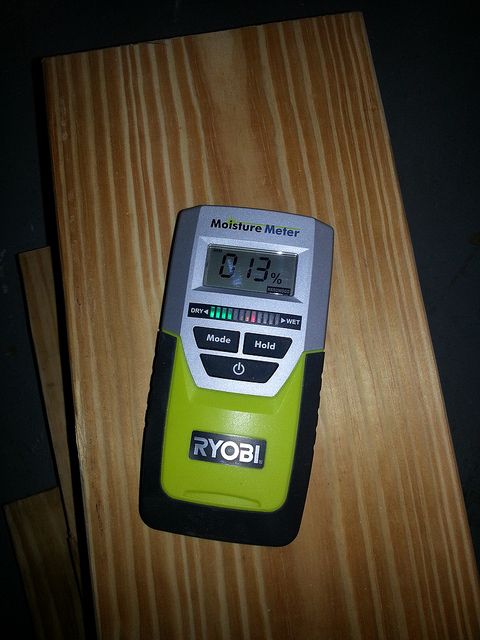
After milling the boards to one inch thick, I stickered them on the floor and placed a fan near them to help the boards dry out a bit. I placed weights on the top board just to prevent it from cupping. The paper towel underneath the weight is to prevent the iron of the weight staining the wood.

After about a week, the boards were down to a workable moisture content. You wouldn’t think that simply laying boards down for a week would change the moisture content that much, but it did.

Anita already bought legs at an antique show back in the fall for about $10.00. All I had to do was make the frame and top and assemble it all together. I used a 3/8″ beading molding plane to put a bead on the sides of the table to give it a bit of detail.

It doesn’t get much simpler than this. I used pocket screws to attach everything together. The idea of a farm table is keep the joinery simple.

Anita stained the top with gel stain and painted the base with chalk paint. The table was too wide to get through my basement door so I had to finish it in the living room.

I asked Anita if she wanted me to attach the boards from the bottom so the fasteners wouldn’t show. She told me no. She said “just screw down the boards and fill in the holes with plugs”. So I did just that leaving about a 1/8″ gap between the boards for expansion and contraction of the wood. After I was done, Anita sanded the top again with 220 grit sand paper and reapplied some more stain.

This is how the table looked when it was done and ready for the show. Anita applied a dark wax to the paint to highlight the details of the legs. She also waxed the top to give it some luster.
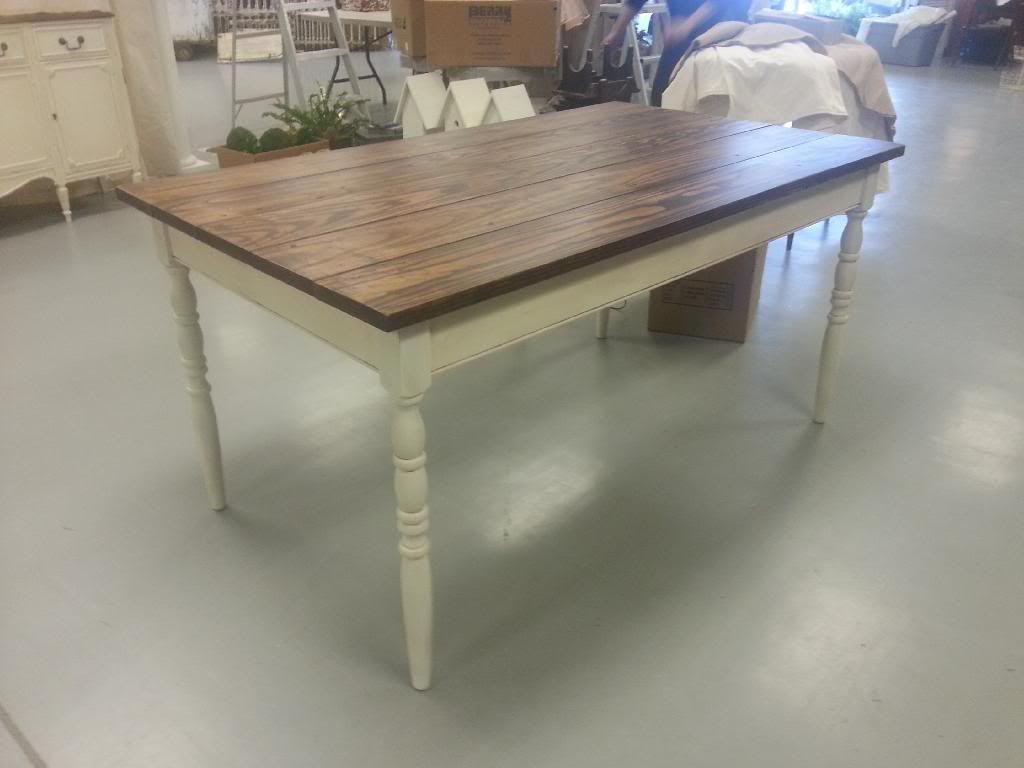
You can see some of the dark wax detail here.
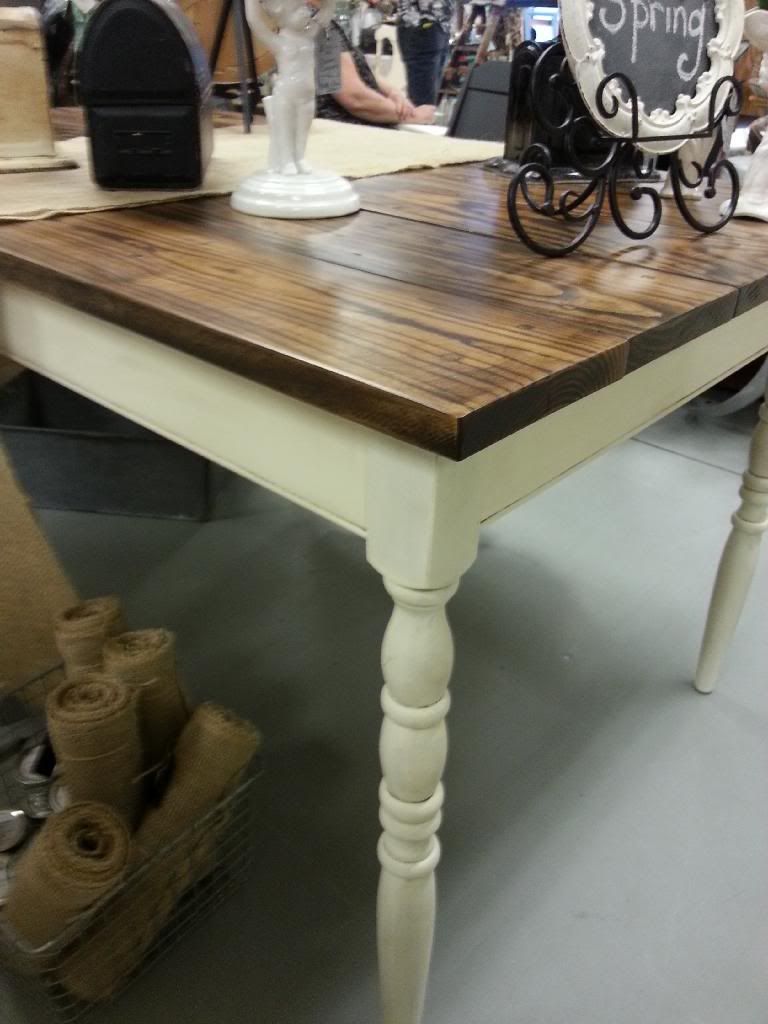
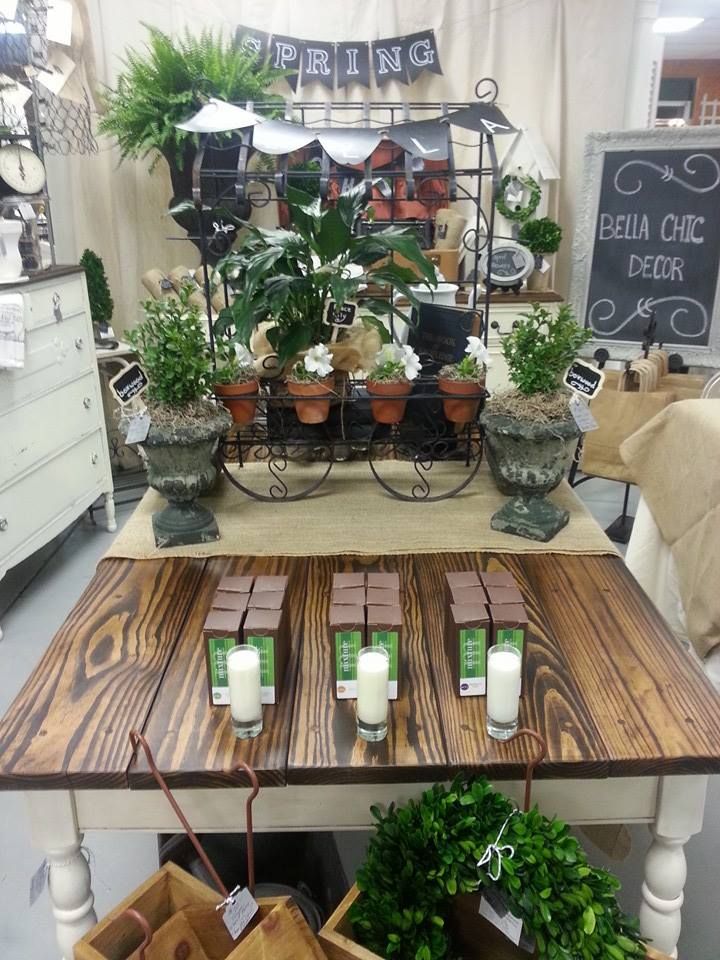
Anita posted this picture of the table on her Facebook account right before the show started. One of her followers saw the picture and private messaged her asking Anita to hold the table, however Anita never saw her message. When the show opened, the young woman ran to her booth and asked if the table was still available. Anita said it was and the woman bought it right on the spot. It’s nice to know someone likes my work. haha.
Trying to Antique Pine

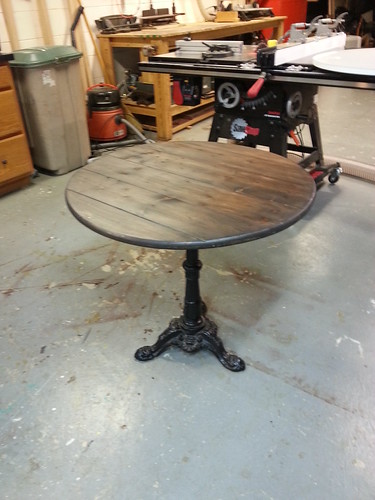
My wife asked me to make a new table top for this table she bought. She wanted the top to look like old worn pine with a gray tone to it. Even though I had never tried it before, I thought it should be something that I could accomplish.

The first thing I did was to buy a couple of 2 x 6’s from Lowe’s and cut them so that I could create a 30″ round table top.

I wanted the 2 x 6’s to have some strength between them. I plowed a 1/4″ channel about 3/8″ deep though all the pieces so that I could fit a piece of poplar down the middle. Looking back at it, this may have been an unnecessary step as the glue should have held the pieces together good enough anyway since they were being edge glued. To give the top a bit of character, I chamfered the boards on each side so that the top would have the look of planked boards.

This is how the planks looked right before glue up. You can see how the slightly chamfered edges gives a little bit of character to the top making it look a bit old.

The next step was to cut it to a 30″ radius. I simply set up my plunge router to a circle jig and plunged the bit down a few times to cut out the circle.

Making the top was the easy part, but now I needed to antique it. I’ve heard about using distilled vinegar and steel wool to antique wood, but I never tried it before, so I bought a bottle of vinegar and dipped a steel wool pad in jar leaving it overnight.

When I applied the mixture, the wood immediately turned a dark brown. However, after it dried overnight the wood had a purple hue to it. It also raised the grain a little bit so I hit it with 220 grit sandpaper to remove the grit from the top.

Another big issue with the top, which is hard to see, is that it warped. When I was testing what type of dyes, stains or waxes to uses, I did it on the underside of the top. I think that all the oils and stain put the wood out of equilibrium causing the wood to warp. Oops!

After the vinegar/steel wool mixture dried I wanted the top to be a little darker so I applied a coat of ebony Briwax. The top took on a darker color, but a little too dark for my taste. I probably should have tried some other type of wax or added another coat of vinegar/steel wool mixture to see how that would have turned out.

Overall the top came out okay, but it wasn’t the look I was going after, plus it’s warped. When doing things I have never done before, sometimes I get it right and other times I stink it up. I think this top may be headed out as fire wood. What do you think? Where did I screw up and how can you antique pine to a grayish tone?

Making Walnut Stain

I have a big walnut tree in my backyard that drops hundreds of walnuts on the ground every fall. For some reason the walnuts were excessive this year as I have never seen so many on the ground. It must have been a good year to be a walnut tree.

I usually just trip on them while I cut the grass but I decided it might be fun to try to make my own walnut stain from the nuts.

I looked around for the walnuts that had opened up while the squirrels were giving me dirty looks and took about a dozen of them to my shop. I then wrapped them in an onion bag and tightened them up so the walnuts wouldn’t fall out. Wrapping them in cheese cloth would work just as well.

I grabbed a big pot I bought a few months ago and a hot plate burner to cook the walnuts. There was no way I was going to use a pot from my wife’s kitchen as I didn’t want to get punched in the face. I filled the pot with water with a couple of gallons of water, placed the nuts in it and turned on the hot plate until the water was at a boil.

After the water came to a boil, I turned the hot plate off and let the walnuts sit in the pot overnight. In the morning, I dipped a stick in the water to see how dark the stain was. It wasn’t as dark as I would have liked so I turned the burner on again. After I got the water to a boil, I turned the hot plate to low and let the walnuts simmer in the water for a few more hours.

This was the most frustrating part of the process. I kept testing the stain on some scrap oak to see how dark it was. Every hour I checked, the stain was real light and looked like tea. I started to think it wouldn’t work. So I decided that I probably had too much water in the pot and poured some of it in the sink. After removing about half the water and cooking the walnuts for a few more hours, this is what I was left with.

Satisfied with the color, I poured the stain into a mason jar using a funnel and paint strainer to collect all the gunk that had accumulated in the water from the walnuts.

This is how the stain looks on white oak. It dries a little lighter than this and raises the grain a bit but considering I made it from nuts in backyard is pretty cool.

I marked the date on top of the can so I know how fresh it is. Ideally you would want to store the stain in the refrigerator so it doesn’t go bad, but I doubt I’ll do that. I’ll  keep it around and test it every week to see how long it lasts. Unfortunately, I have nothing to stain right now. Maybe I’ll make a bookcase out of oak in the next few weeks so I can at least use it before it goes bad.