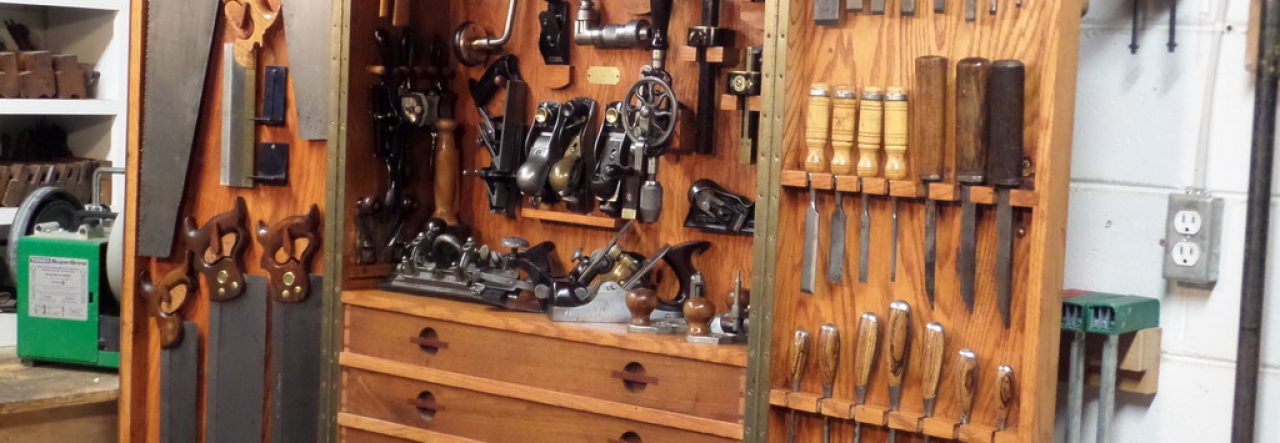
Popular Woodworking’s New Look

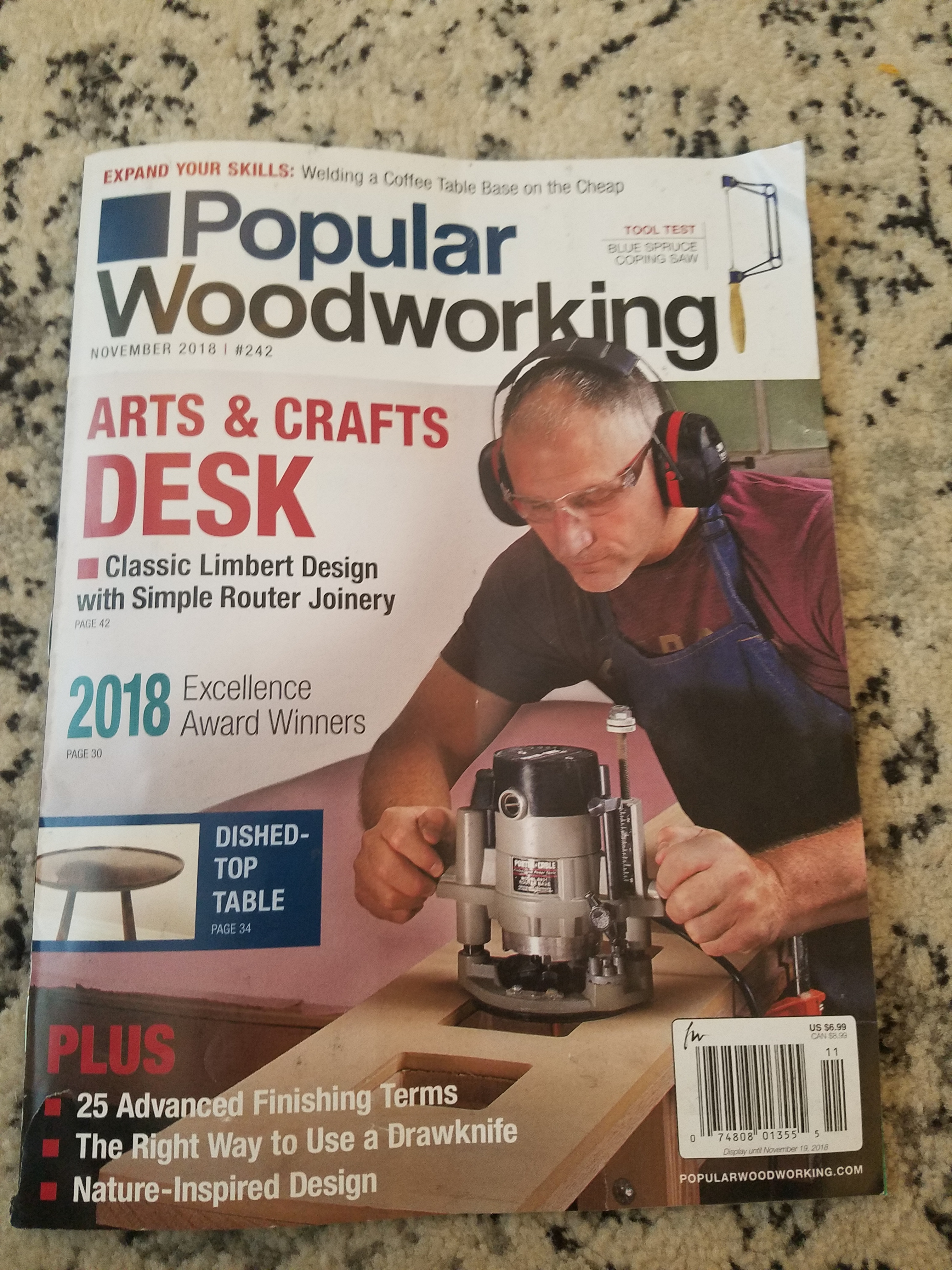
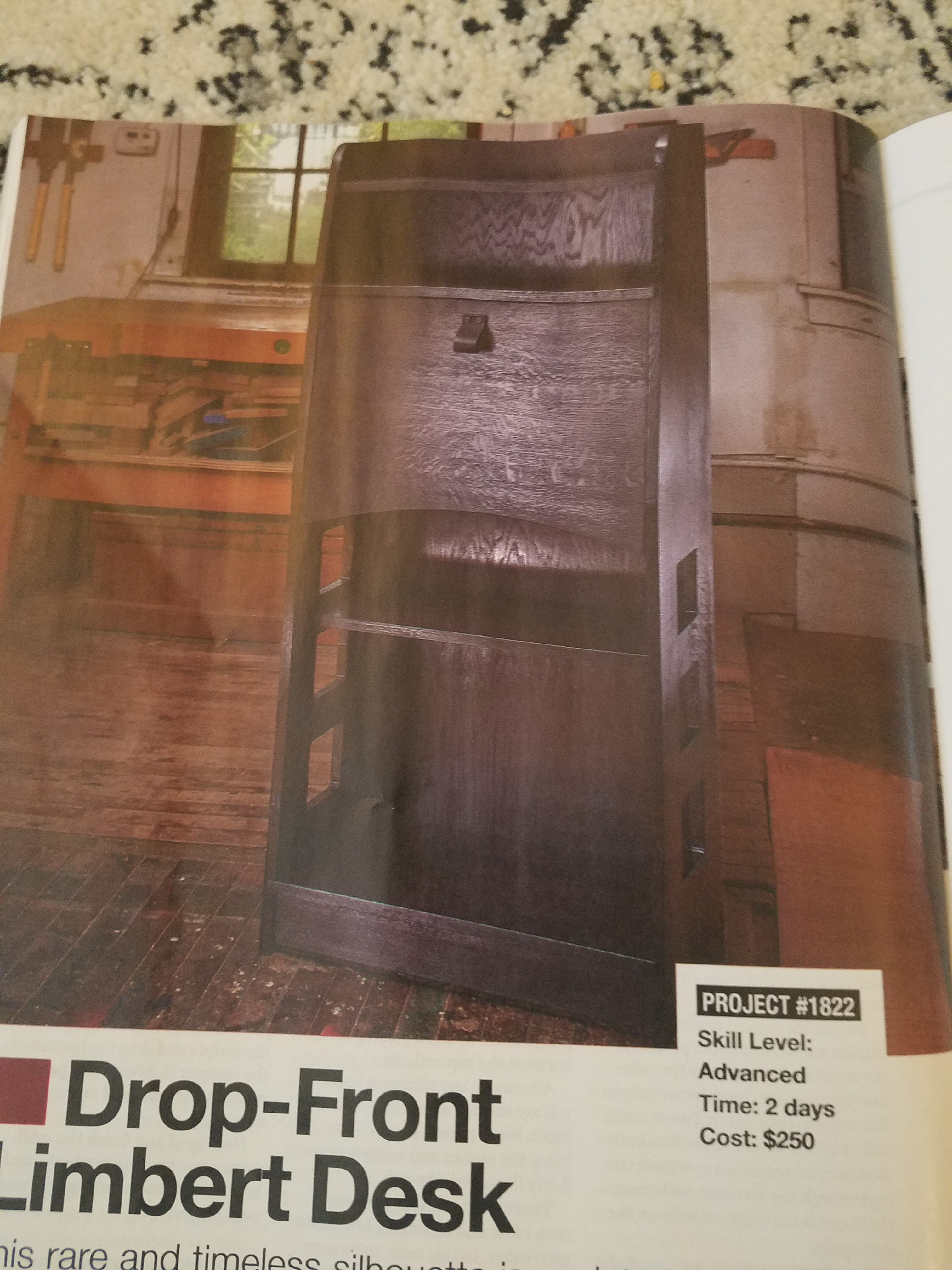
I received the latest issue of Popular Woodworking today. As soon as I saw the cover, I knew things had changed big time with the magazine. I read on Lost Art Press blog a few weeks ago that Chris Schwarz will no longer write articles for them. That, and the fact that since a lot of the old contributors like Megan Fitzpatrick, Bob Lang, and Glen Huey are long gone, the magazine is a complete a new rag.

20181015_172954.jpg

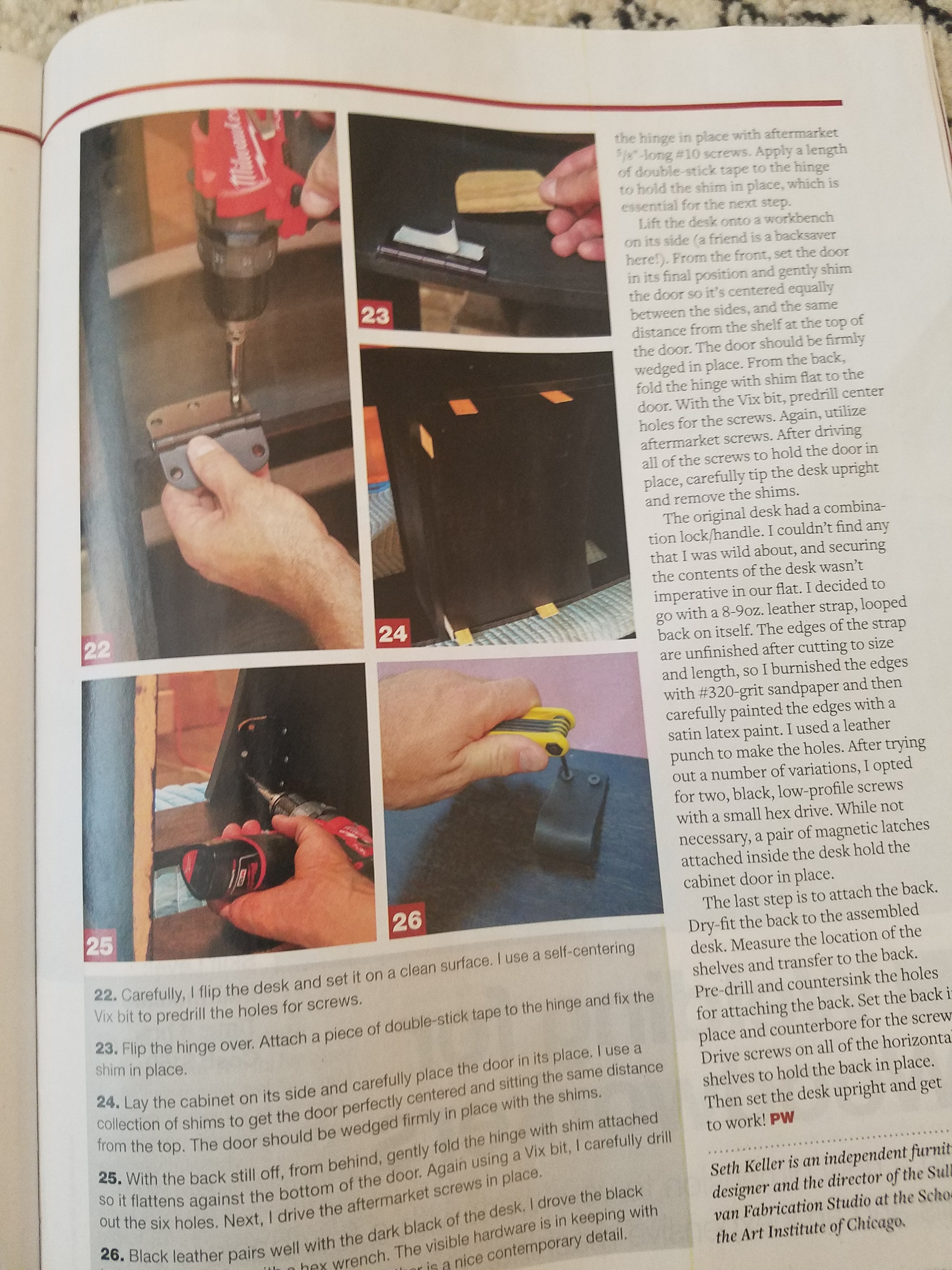
The new look just looks like a typical run of the mill woodworking magazine that appeals to the masses. Something like a Woodworker’s Journal or American Woodworker. It definitely lost its old hand tool feel charm. As far as the projects inside, don’t get me started. I asked my wife about the projects in it (basically two of them) and she said “who builds this shit? Why don’t they put furniture in there that people want to make?” It’s been an ongoing conversation with us for years about why I subscribe to woodworking magazines with uninspiring projects in it.

20181015_181409.jpg

The new look has a lot of photo boxes where they describe what’s going on in the picture. Not a bad idea as it’s kind of the same idea of how I write this blog, but the layout seems a bit impersonal. On the plus side, they did have an article about welding. I’ve always thought that woodworking magazines should focus more on mixed mediums. Plus, Peter Follansbee’s Arts and Mysteries and George Walker’s Design Matters are still there.

20181015_173001.jpg

I also noticed there are a lot of ads in the magazine for people who are old. From hearing aids, to walk in tubs, to a plethora of ads for medications. Don’t get me wrong, I actually don’t mind ads. If anything I learn from the good ones, but damn, don’t make me feel like I need to go get my dentures fitted.

20181015_173044.jpg

Did you get your copy? If so, what do you think? Am I being too harsh? Are the days of the old Popular Woodworking concentrating on hand tools techniques long gone? It’s frustrating because Popular Woodworking was my favorite magazine. I guess I’ll have to start subscribing to Mortise and Tenon instead.

Fixin’ Up a Buffet

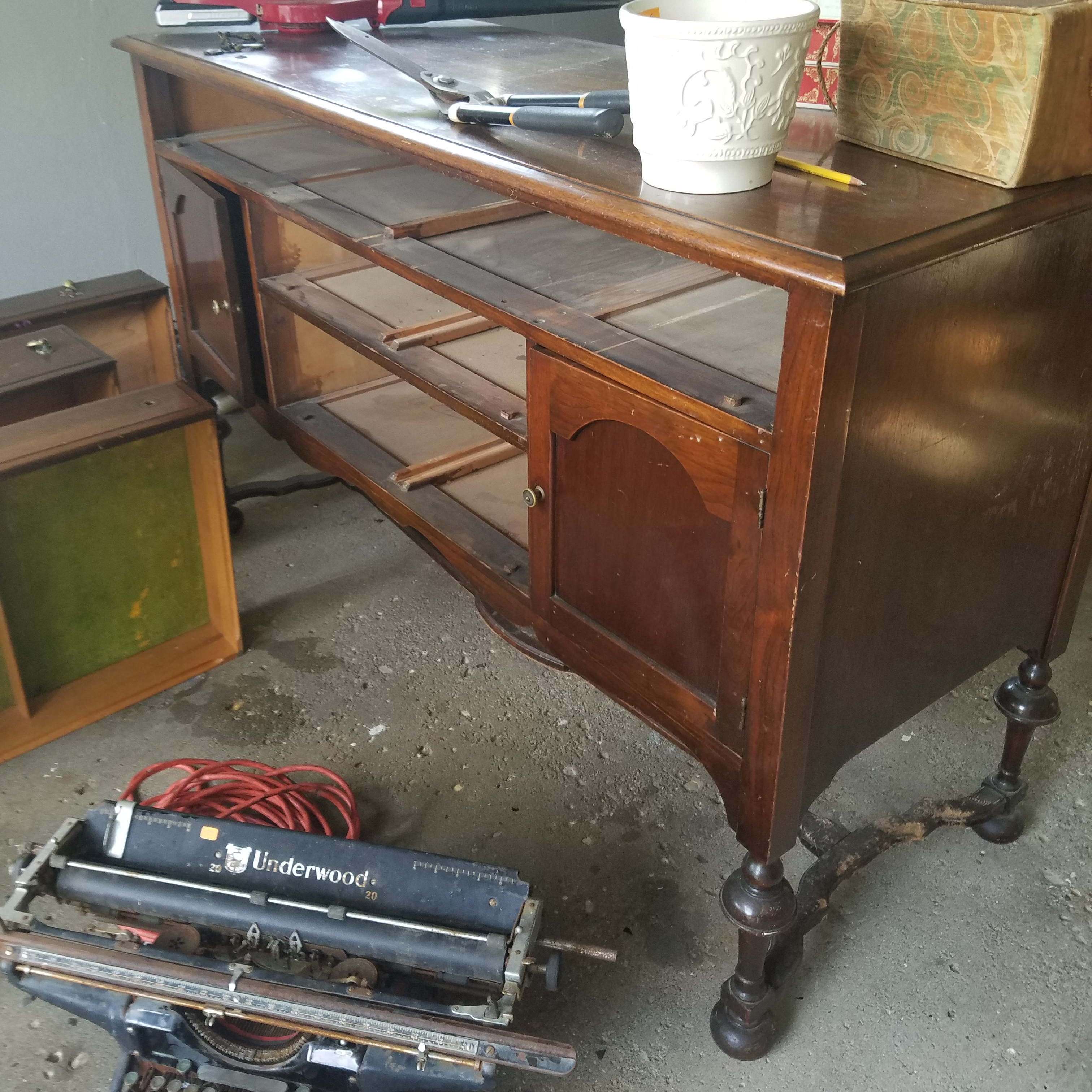
If you follow my blog, then you know that my wife and I have a couple of booths in antique malls where we buy and sell antiques. Occasionally we’ll buy old furniture and fix it up. This is a buffet we found at a yard sale for dirt cheap. It had some issues, but the price was too good to pass up, plus I knew I could make it usable again.

20180827_180939.jpg

The first issue I had to take care of was the stretcher on the bottom looked like a dog gnawed on it.

20180827_180950.jpg

The easiest thing to do was simply cut it off. Since Anita was going to paint the piece, I wasn’t too concerned about the dowel cut offs showing. Removing the stretcher didn’t cause the buffet to lose any stability.

20180827_181429.jpg

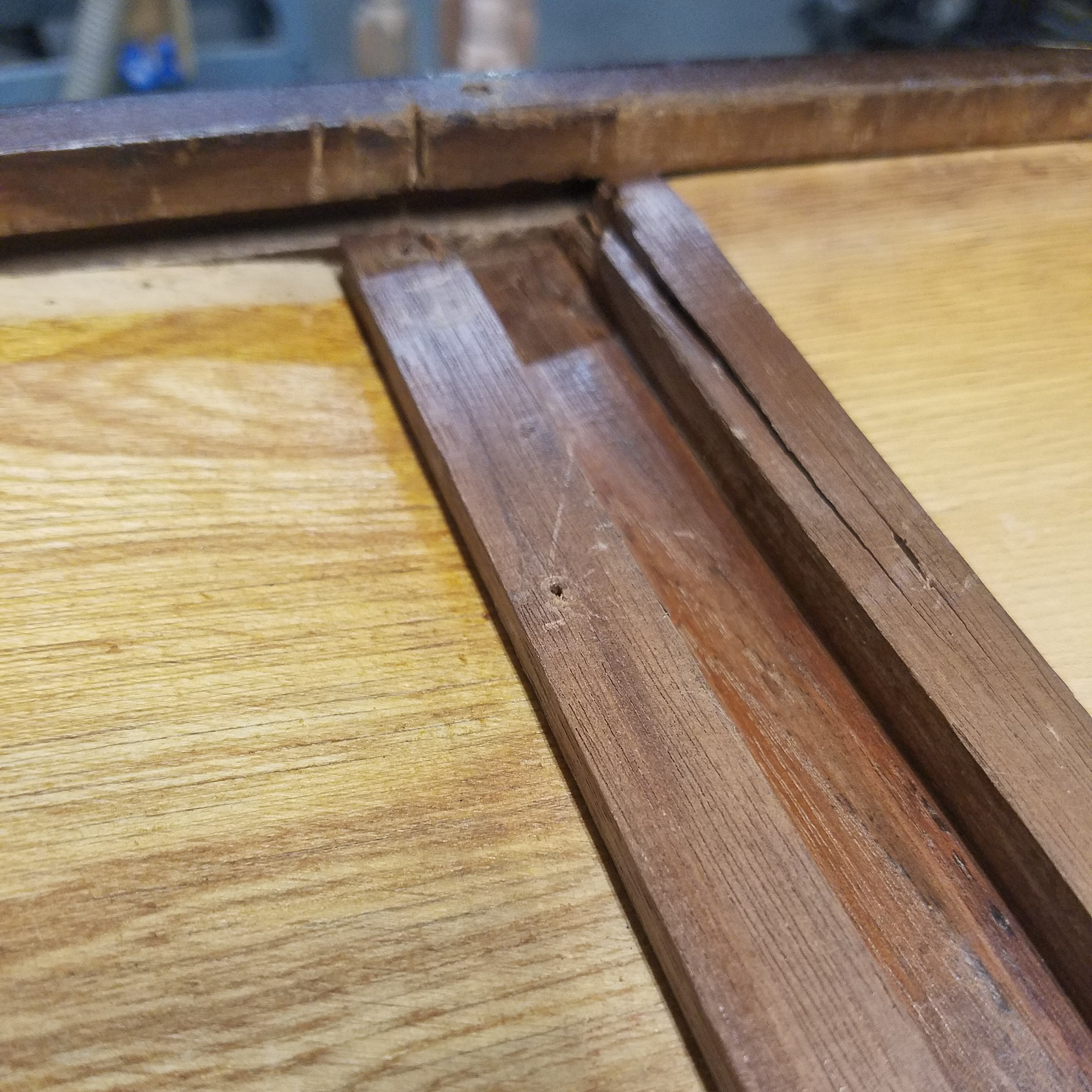
The biggest issue the buffet had was the runner on the large drawer on top was  completely broken off. There was no way  to properly repair it so I decide to make a new one out of some scrap wood.

20180827_181907.jpg

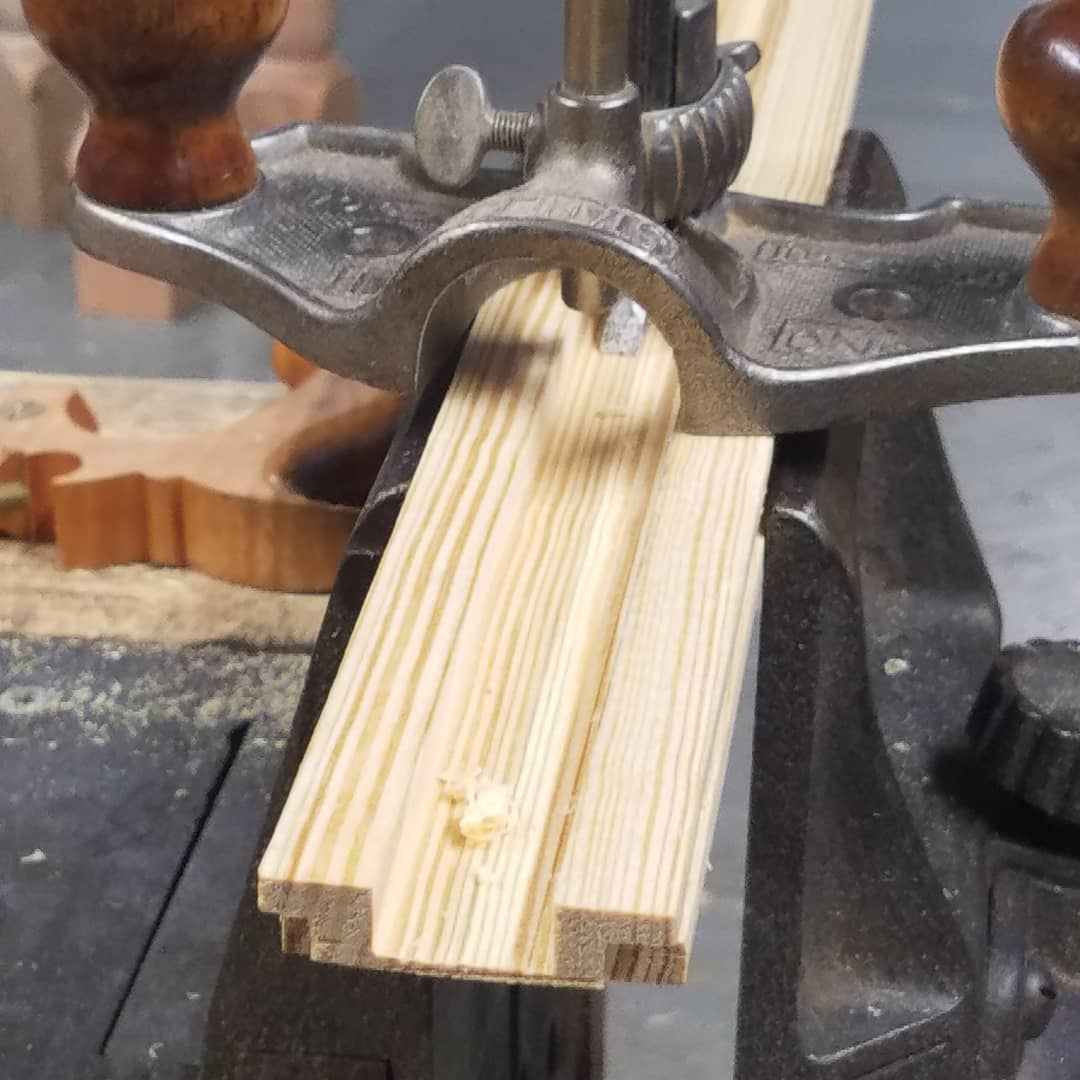
I milled a new piece to size and then used my Stanley No 45 plane to plow a 1/4″ groove down the middle on both edges.

IMG_20180827_192515_937.jpg

I then cut a wide groove down the face of the piece with my table saw and cleaned it up with my router plane.

IMG_20180827_192515_930.jpg

With a tenon cut on the end of the piece and a rabbet cut on the other end, the new piece worked perfectly in the old drawer. I tacked down the runner to the back of the drawer with a couple of small nails.

20180827_190817.jpg

After the drawer was fixed, I shaved down the edges of the doors with a block plane so that they would close better. Once the buffet was functional again, Anita painted the piece with milk paint.

20180916_192155.jpg

You can see how the milk paint gives the buffet old world character. This piece should sell quick in the booth.

20180916_192201.jpg

Hillbilly Tool Stand

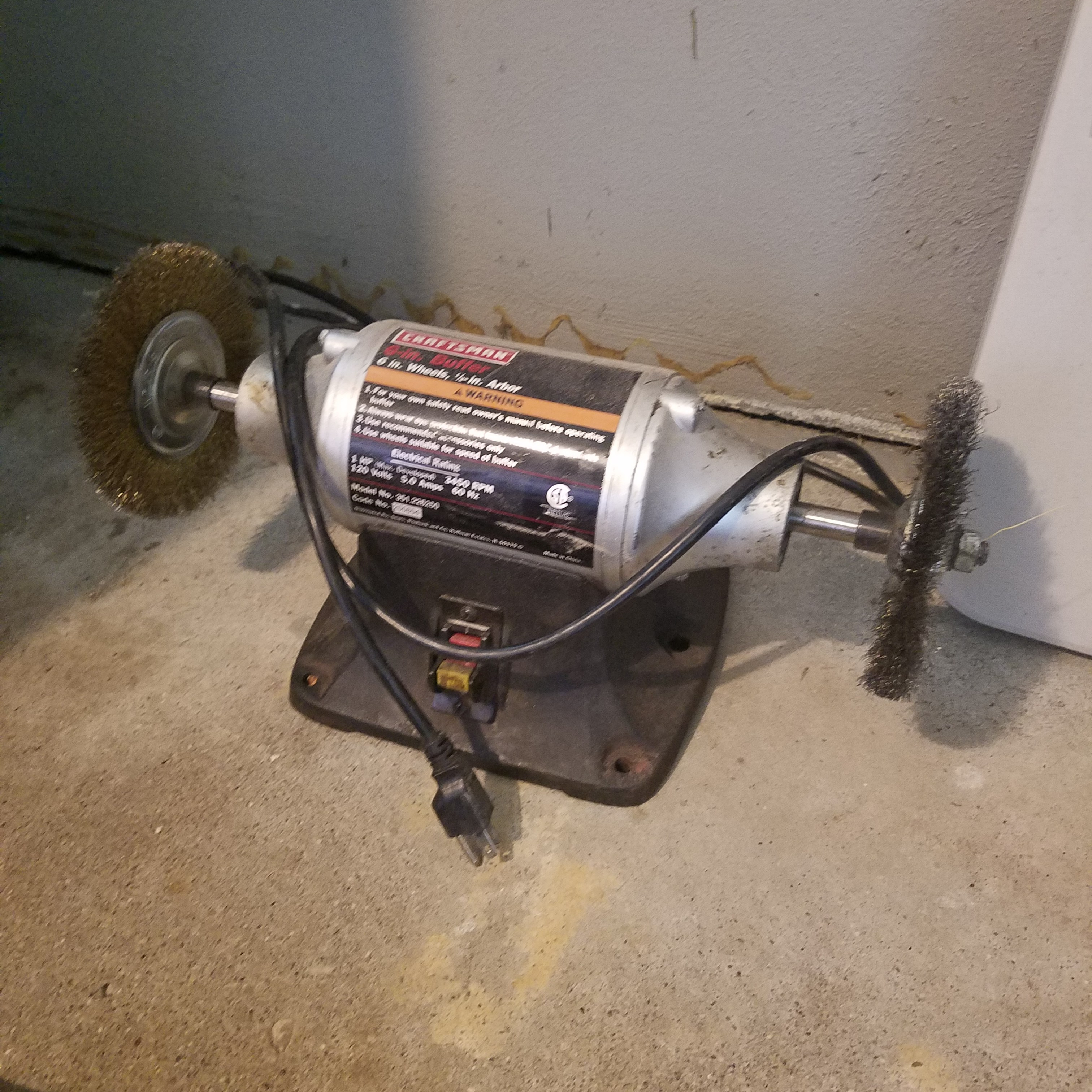
My wife hates this thing. She hates the noise it makes as well as the little wire bristles that fly off the wheel and land onto the floor only to be stepped on with bare feet. Can’t say I blame her as I too have had the fun of pulling a wire out of my foot from time to time. So, it’s been delegated to the garage from now on. The problem was when I used the thing in the garage, I had to step on the end of it with my foot so it wouldn’t spin away, and then bend over to clean my tool parts. Not exactly ideal working conditions.

20180902_114700.jpg

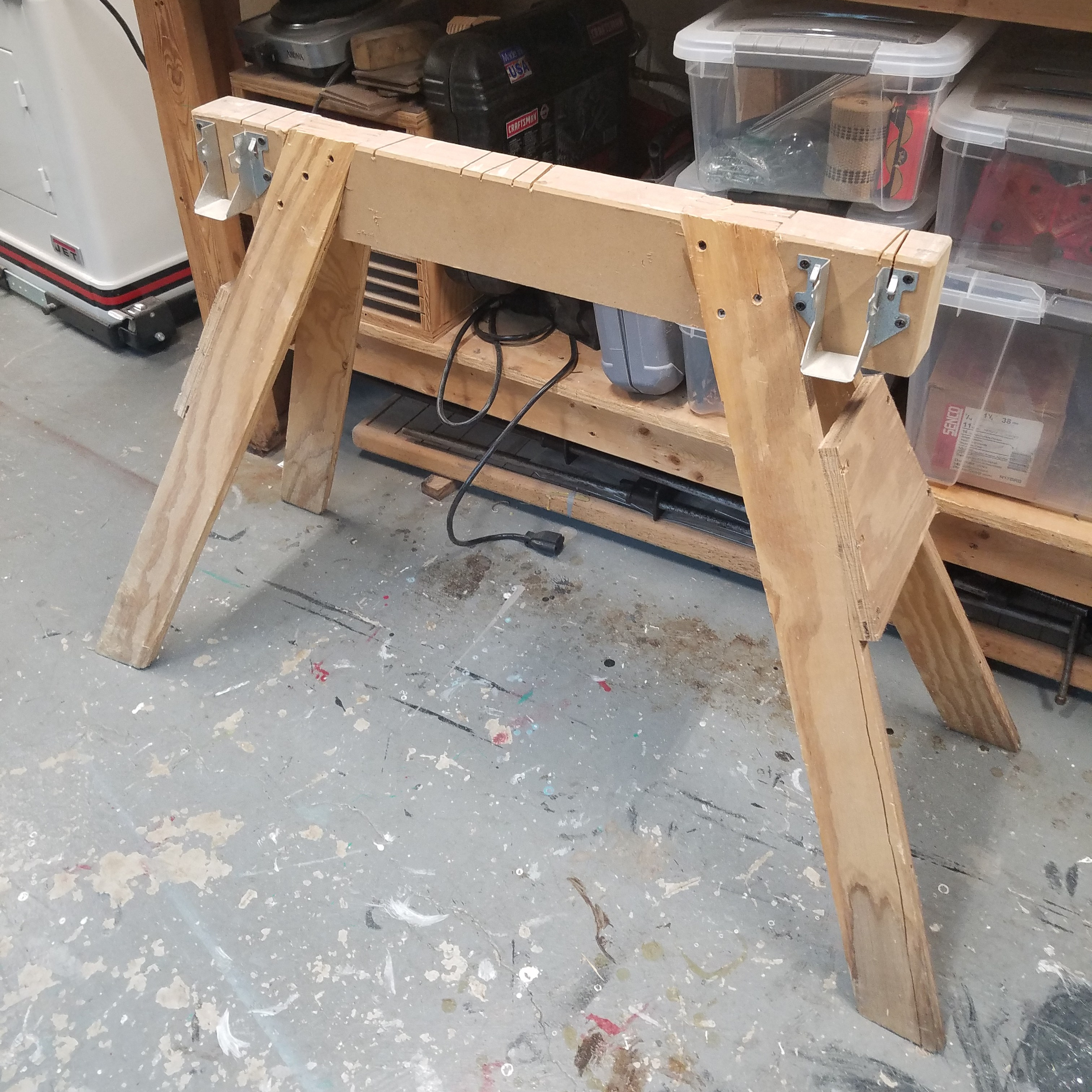
I was going to buy a tool stand from Harbor Freight for $40 but, I was too cheap to buy one. Seems like the money was never available since it’s been tight around here for awhile. I kept thinking of what else I could use as a tool stand when it dawned on me to use one of my old sawhorses.

20180902_114725.jpg

I simply took three 3/4″ boards that were 6″ wide to lift the buffer to a comfortable height, and laminated them together. Then took two more to straddle the side of the sawhorse and bolted the buffer onto a base. So simple it’s stupid, but it works.

IMG_20180902_161821_320.jpg

I guess if I worked for a woodworking magazine, I’d make this fixture out of nice cabinet grade maple plywood and stainless steel woodworking screws, but since I don’t, I just whipped it up with some scrap wood and drywall screws. Terrible I know. If you want, you could probably submit this tip to a magazine and win a cordless jigsaw. haha. You can thank me later.

My $1.00 Plane

A couple of weekends ago, I went on the World’s Longest Yard Sale on US 127 looking for old tools and other things to sell. Sunday, I ran across a guy selling junk just north of Cincinnati and saw this plane on a table. The guy told me that his prices were negotiable so I asked what he wanted for this plane. He told me $2.00, but I countered that I would give him a buck for it and he accepted. I really didn’t need it, but I wanted to buy something during the day. The blade was marked Van Camp which I believe was a hardware store back in the day however, the plane was more likely made by the Sargent Tool Company.

20180805_151950.jpg

Every time I restore a tool, I start by sticking the parts in a tub of water with a cup of citric acid. I let the parts soak for about an hour and then wipe them clean once I take them out of the solution.

20180811_161149.jpg

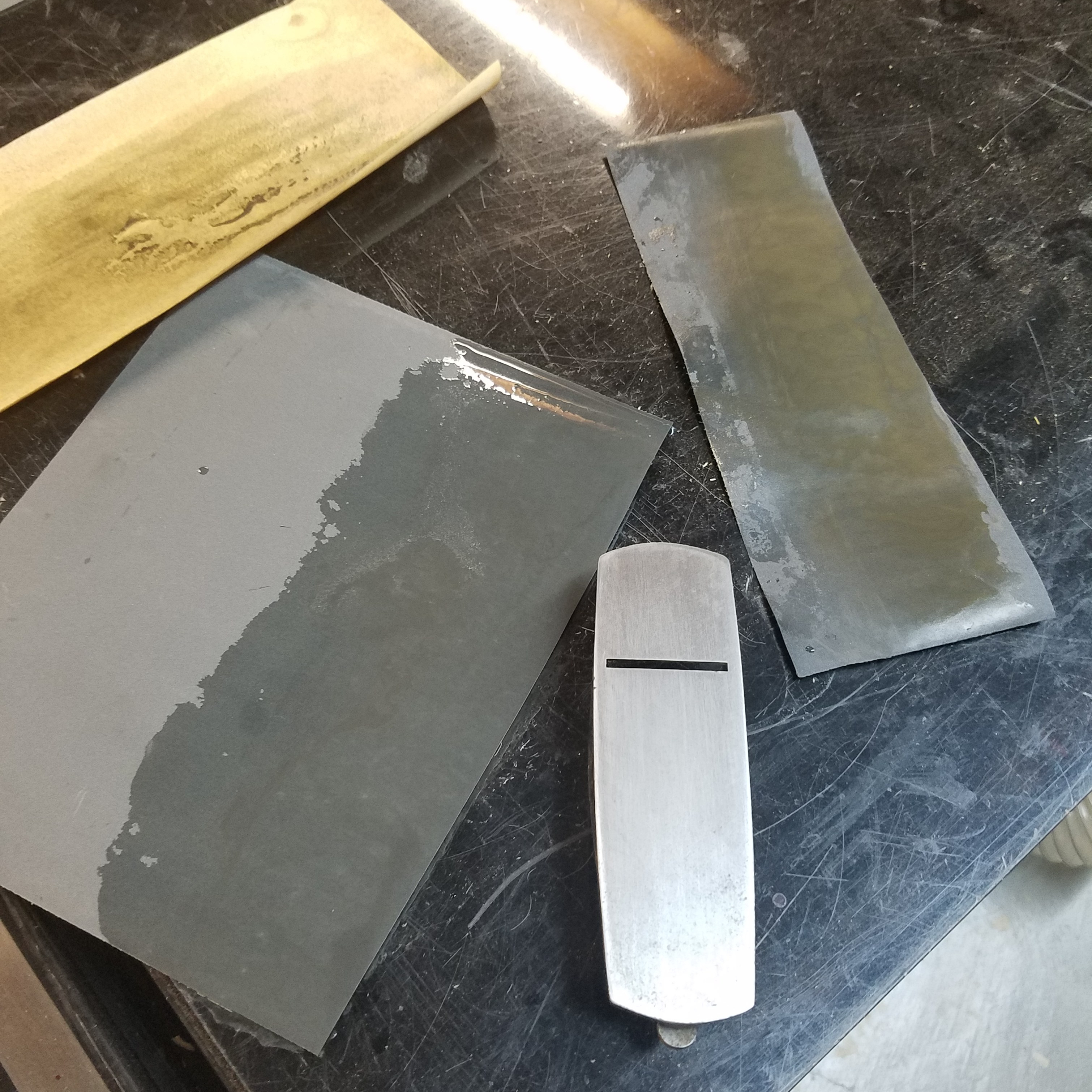
I took the time to fettle the bed since the plane’s body was so small. Honestly, I don’t think the bed was that bad to deserve to be fettled, but I was in the mood. I went through a series of wet sand paper grits, from 220 to 500 to 1000 grit.

20180811_162631.jpg

You can see the smoothness of the bed when shown through the light. The bed doesn’t have to be completely free of pitting, just flat enough from front to back.

20180812_165832.jpg

After the bed was fettled, I soaked all the parts of the plane with my custom solution of mineral oil, orange oil, and melted bees-wax.

20180811_163717.jpg

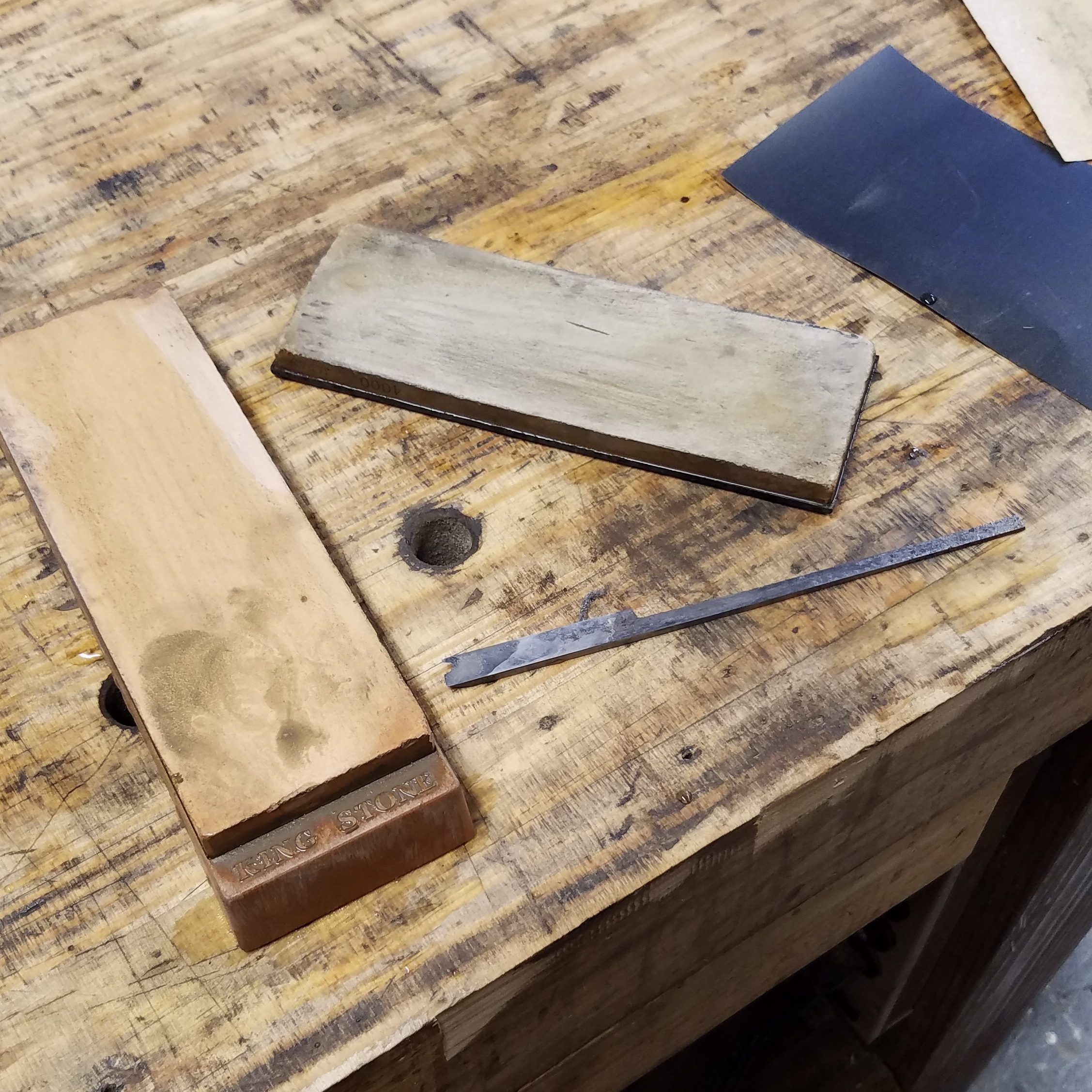
Next, I sharpened the blade by using my Tormek sharpening system and a set of water stones. I was able to shave the hairs on my arm with this blade.

20180812_165801.jpg

All tuned up, the plane takes nice curly shavings. Not bad for a buck.

20180812_180847.jpg

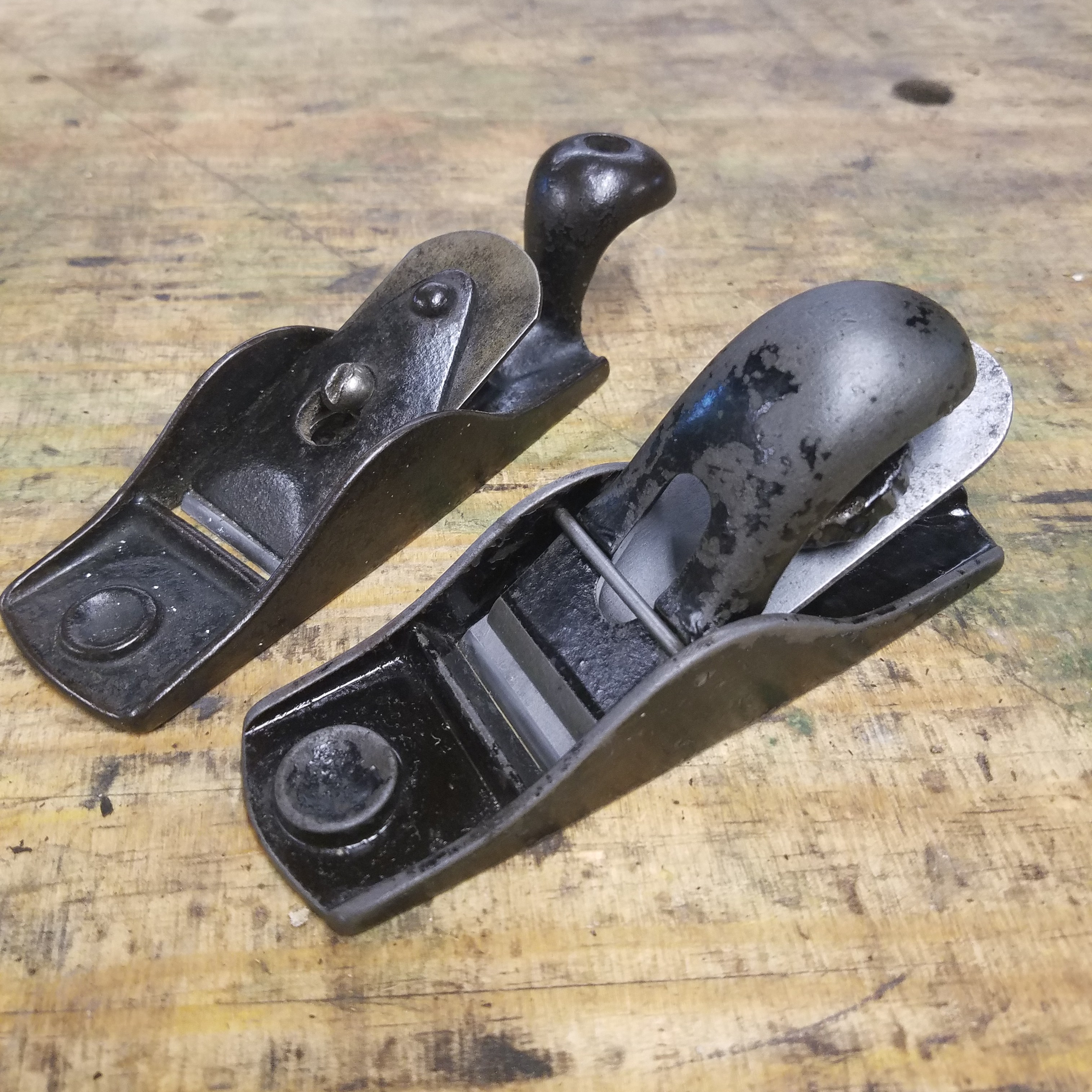
For years I used this squirrel tailed plane. It works okay but the shavings are not that clean and it’s a pain in the ass to set properly with the screw and cap.

20180812_165945.jpg

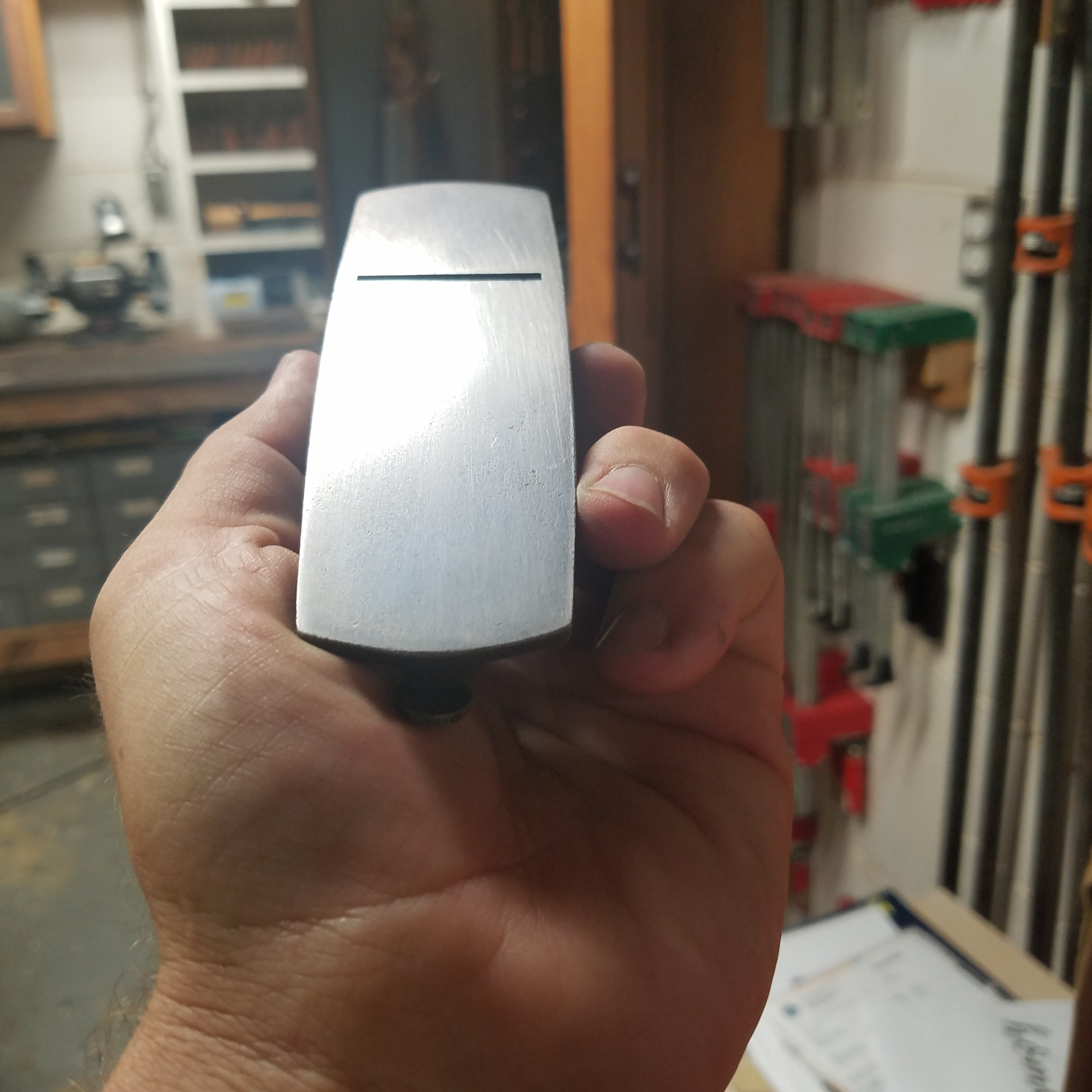
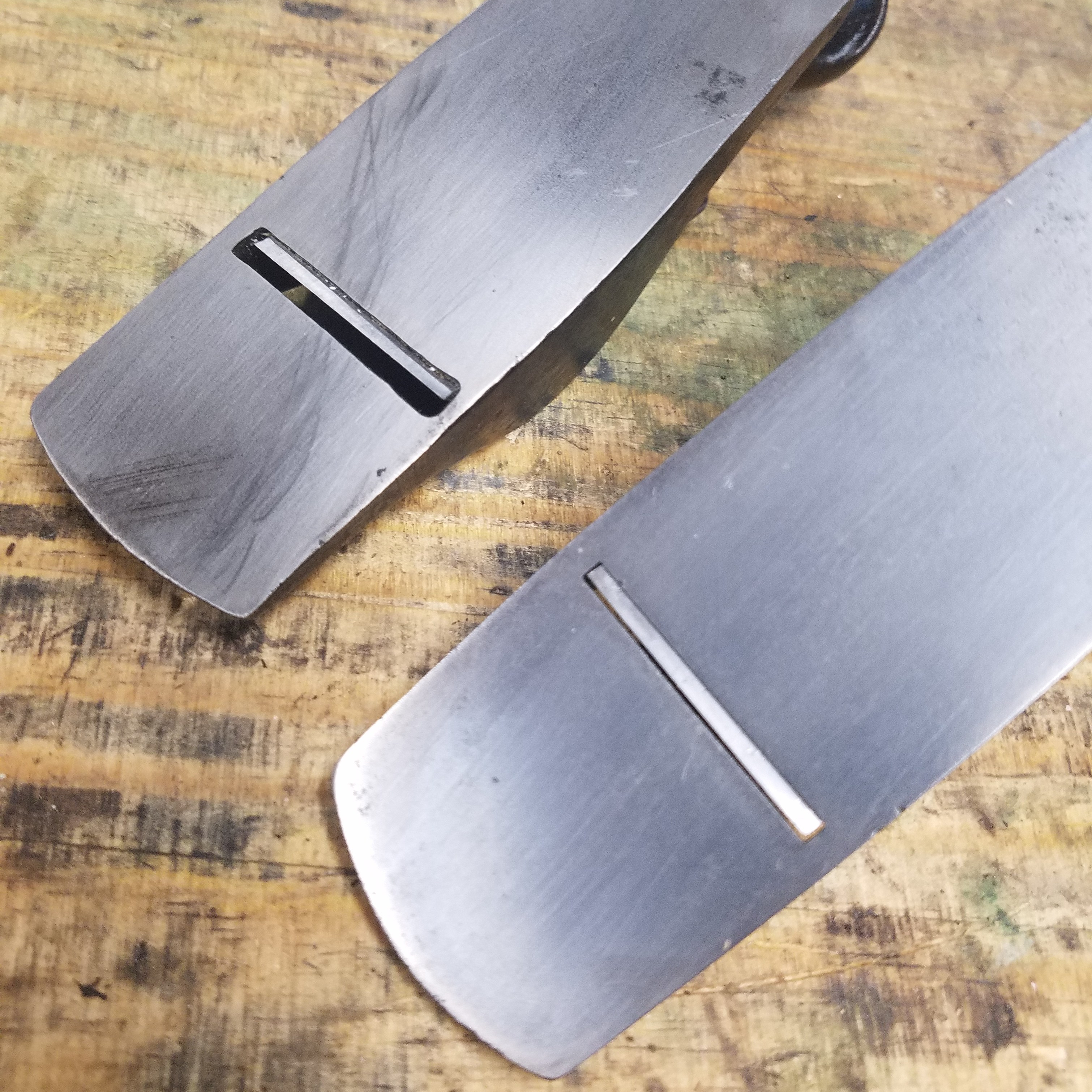
You can see the difference when you flip the two over. The area of the mouth is a lot tighter on my buck plane than the squirrel tail plane. The tight mouth keeps the wood fibers pressed down just until they hit the edge of the blade giving me a nicer shaving.

20180812_170008.jpg

My new plane still fits nicely in the holder where my old squirrel tailed plane sat. Maybe I should have given the guy $2.00. haha

20180812_180731.jpg

The World’s Longest Yard Sale 2018

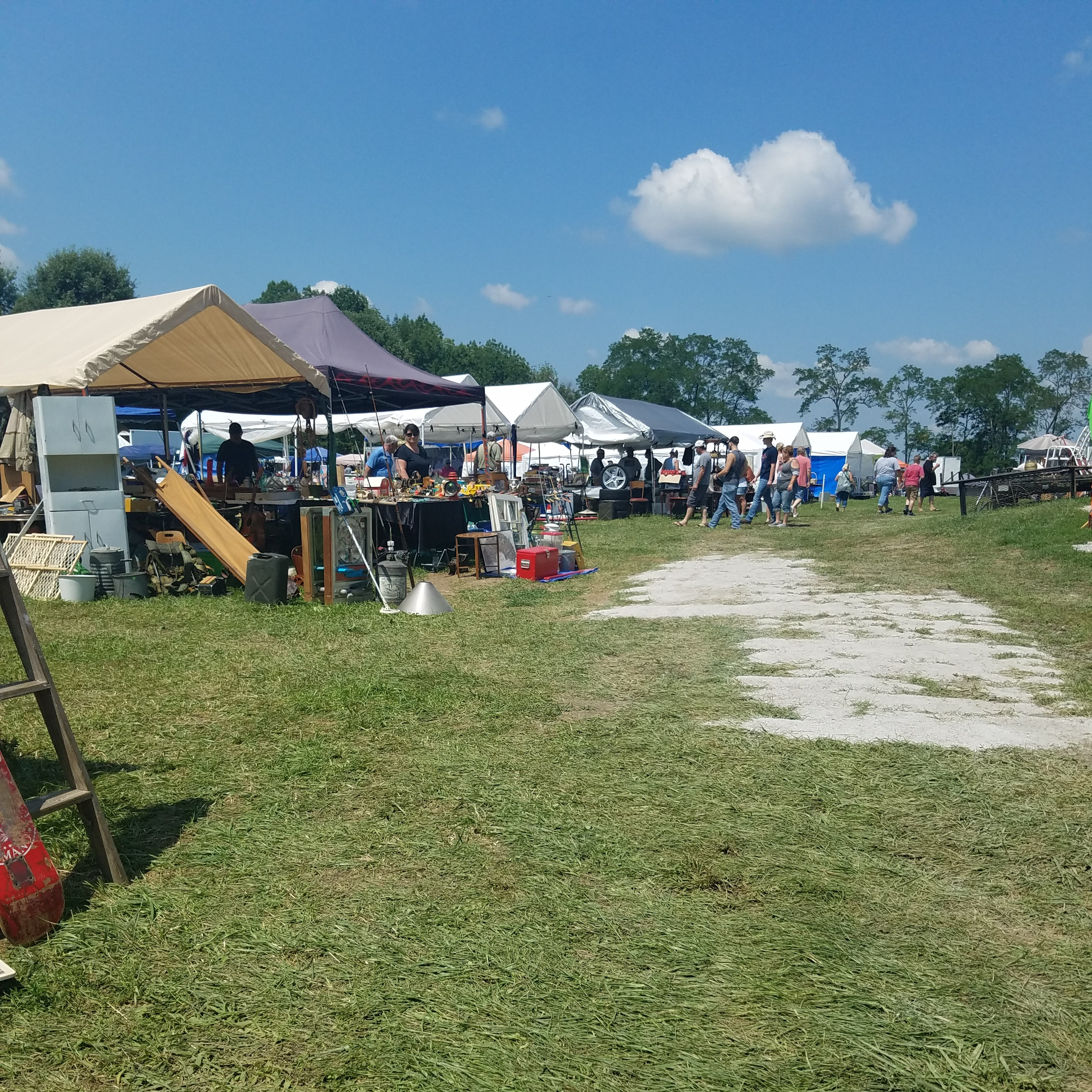
This weekend, my wife and I went back on the World’s Longest Yard Sale. If you’re not familiar with the sale, it runs the first weekend in August on US 127 from Michigan down to Alabama. In years’ past, we would head down to Chattanooga, TN to stay the night, then work our way home staying another night in Lexington, KY, but this year we decided just to make day trips and head back home at night.

This banner hangs in Mainstrassa Village in Covington, KY just a few blocks from the Lost Art Press. Many years ago, the yard sale started here, but in recent years Ohio and Michigan started to participate.

img_20180803_092048_113.jpg

Heading down US 127, there will be areas set up every few miles down the road with vendors. Since we’ve done this sale for years, we know where the good stops are, but some of the smaller areas may have some of the best deals as those are true yard-salers selling their crap and not professional antique dealers selling their prize possessions for top dollar.

20180803_121834.jpg

You’ll get a bit of everything at this sale. From antiques, to used tires, to baby toys, to a whole bunch of used clothes. It is after all a yard sale, so take your normal Saturday afternoon yard sale and times it by 690 miles.

20180803_171112.jpg

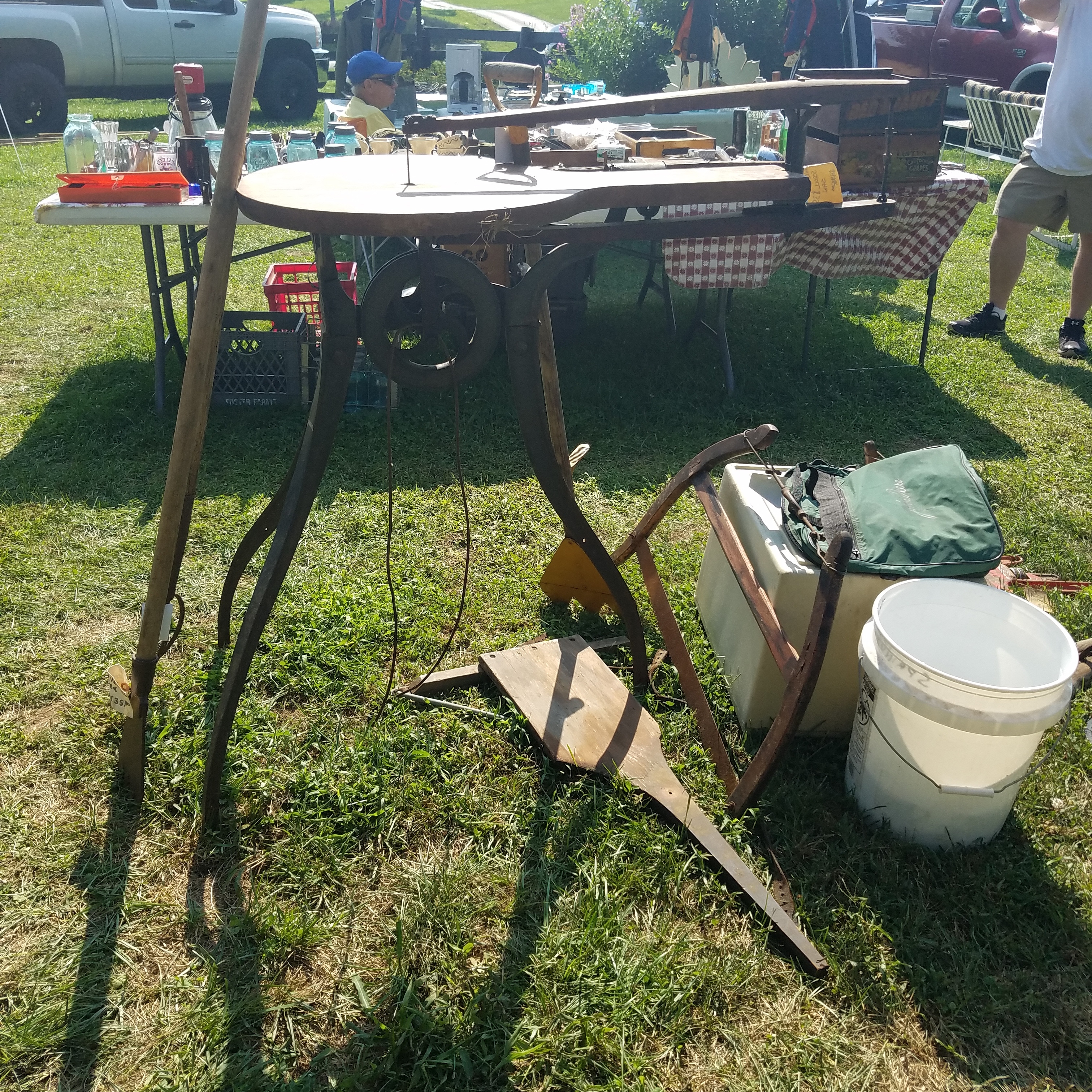
Since we stayed away from the antique dealer mega stops, I didn’t see many antique tools from collectors. I did spot this old scroll saw in central Kentucky with a $350 price tag on it. Probably not a bad buy, but I wasn’t in the market for one, so I passed on it.

IMG_20180804_124224_048.jpg

The most unusual piece I saw was this picture frame miter saw box just north of Cincinnati. There was no manufacturer’s name on it but it looked professionally made. I assumed it sat on top of a three-legged stand because of the length of back, but that is just a guess.

20180805_125521.jpg

It came with a Disston saw, but there was no way for me to date it. If I had to guess, I’d say it was late 1800’s early 1900’s from the look of the screws.

20180805_125529.jpg

The weather was nice, hot but nice. Every year it usually rains as we have to walk and drive around in the mud which is no fun. Everyday this weekend it was in the 90’s and humid as hell. We started at 8:00am and by 6:00pm we were suffering from the three B’s. Beat, Burnt, and Broke.

20180803_173957.jpg

At the end of the weekend, this is what I came home with. A few Stanley planes, a veenering plane, Langdon miter box with a Disston saw, a set of Stanley No 105 forstner style bits, Millers Falls eggbeater drill, and a 2 1/2″ wide Ohio Tool Co chisel/slick. Not too bad considering what I paid for everything. There are a few hard to find tools in the group.

20180805_151229.jpg

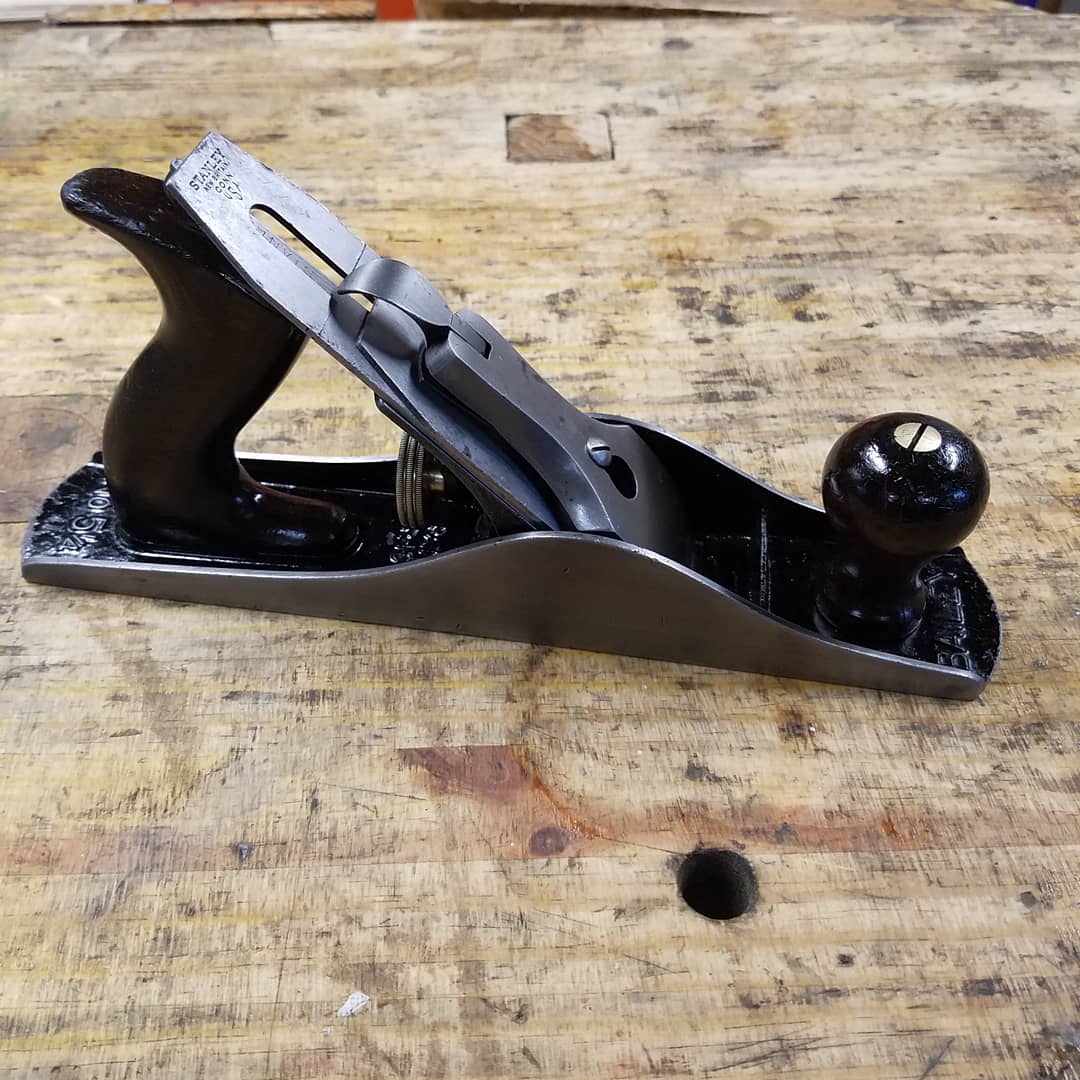
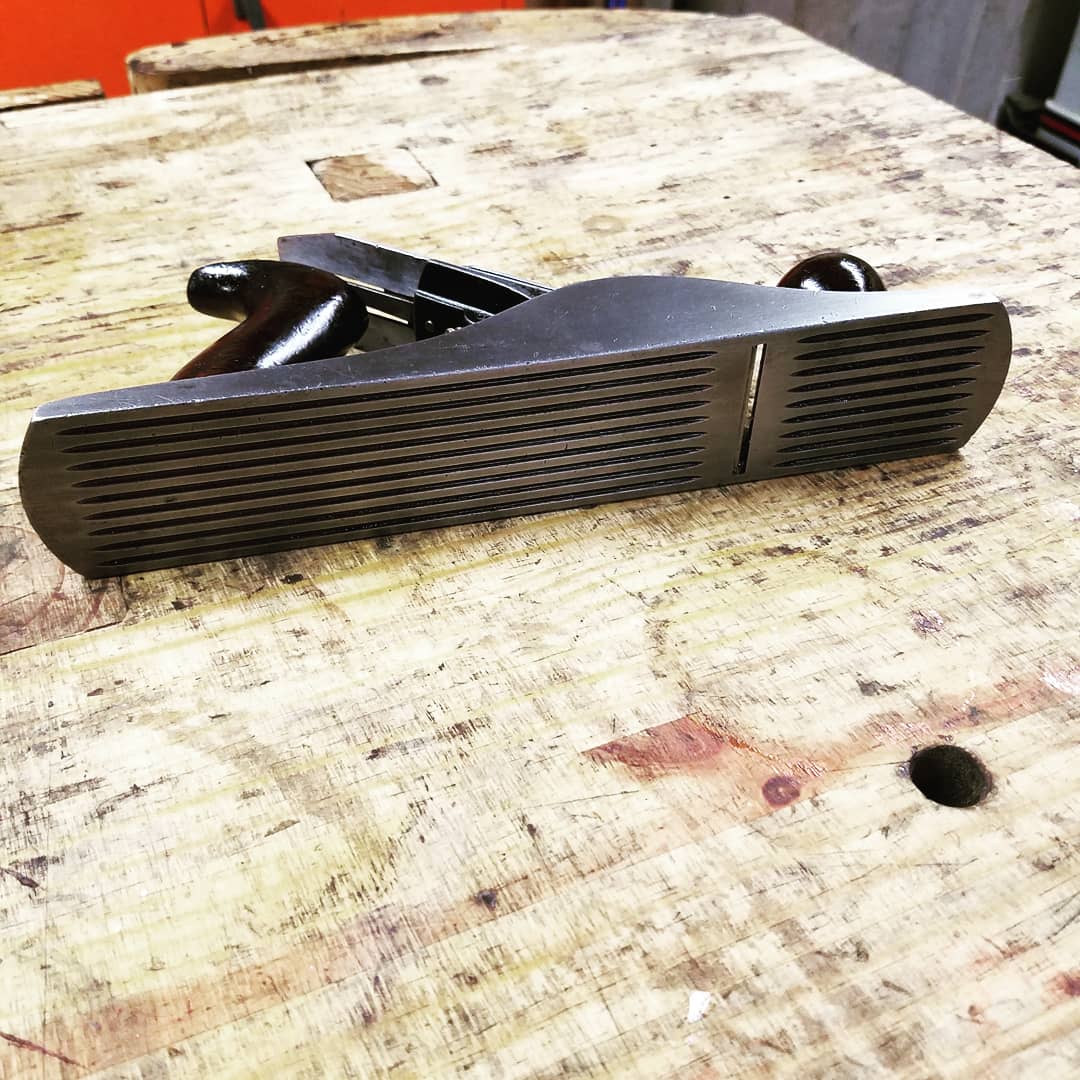
The prize of the bunch is the Stanley 5 1/4 C corrugated plane which is one of the rarest planes Stanley ever made. I found it in booth in Ohio from a young couple who were just selling random stuff. It was the only tool they had in their booth so I have no idea where they got it. They told me they looked up its value on the internet, but they were just trying to get rid of it, so I gladly took it off their hands.
IMG_20180807_085053_741.jpg

I already spent the last couple of days cleaning it up. I already own a Stanley No 5 1/4 so I doubt I’ll use it. It’ll more likely be one of my top shelf tools.
IMG_20180807_084653_796.jpg

A Quick Harvest Table

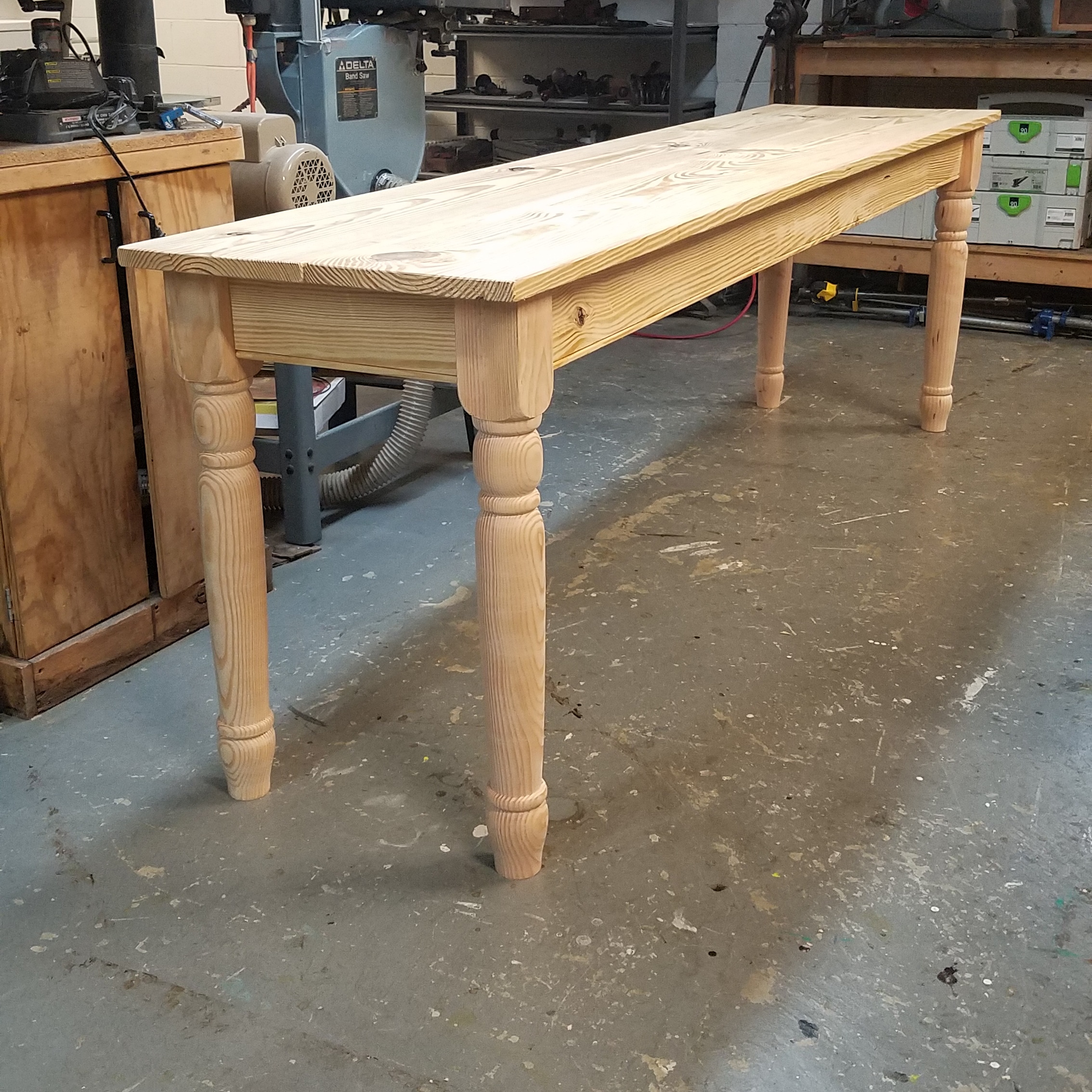
My wife, Anita, wanted me to make another farmhouse table for her. She sold the last one I made several months ago and missed how it looked in her booth. So, I went to Home Depot and bought three 2×12’s and two 4×4’s.

20180609_164634.jpg

Two of the 2 x 12’s I bought, I planed down to 1″ with my surface planer. It did a fine job, but I had three garbage cans full of shavings that I had to burn in my fire pit in order to get rid of.

20180609_191531.jpg

I ripped the last 2×12 in half on my band saw, then ran kerfs down each side on my table saw 7/8″ wide so I could use them for the frame of the table. Ripping them down to 7/8″ would allow me to plane one of the pieces to 3/4″. Then I took the 1/2″ off cuts and glued them together to create a 1″ thick stock to mill down to 3/4″ back at the surface planer.

20180610_165822.jpg

In the past, I ripped kerfs down the sides of the board and then take it over to the band saw to finish up the ripping. However, this board gave me some real trouble as it kept binding up the band saw blade. Frustrated, I tried everything, even giving it a go with my rip saw, with no luck.

IMG_20180610_185551_180.jpg

I was so disgusted I threw up a picture of my struggles on Instagram and then a follower of mine gave me the idea of finishing the ripping with a sawzall. Curious, I gave it a shot and sure enough, it worked perfectly only taking me ten minutes. Social media is awesome!

20180611_173657.jpg

With the ripping done, I was ready to get back to business milling and gluing up the off cuts so I could still use them to build the frame of the harvest table.

IMG_20180611_192452_845.jpg

With the wood gluing, I turned my attention to the legs. Taking the 4×4’s I cut them to 30″ and turned a leg that my wife was pleased with.

20180616_155059.jpg

I then repeated the steps of the first leg to the next three. I ended up with four legs that were identical enough to one another.

IMG_20180616_184003_730.jpg

I wanted to use mortise and tenon joinery to attach the frame to the legs. so I set my mortising gauge to 3/8″ wide, the same width of my mortise chisel.

20180617_122228.jpg

I ran my mortising gauge down the side of the leg where I wanted a mortise and used the chisel to chop out a shallow area.

IMG_20180617_180210_104.jpg

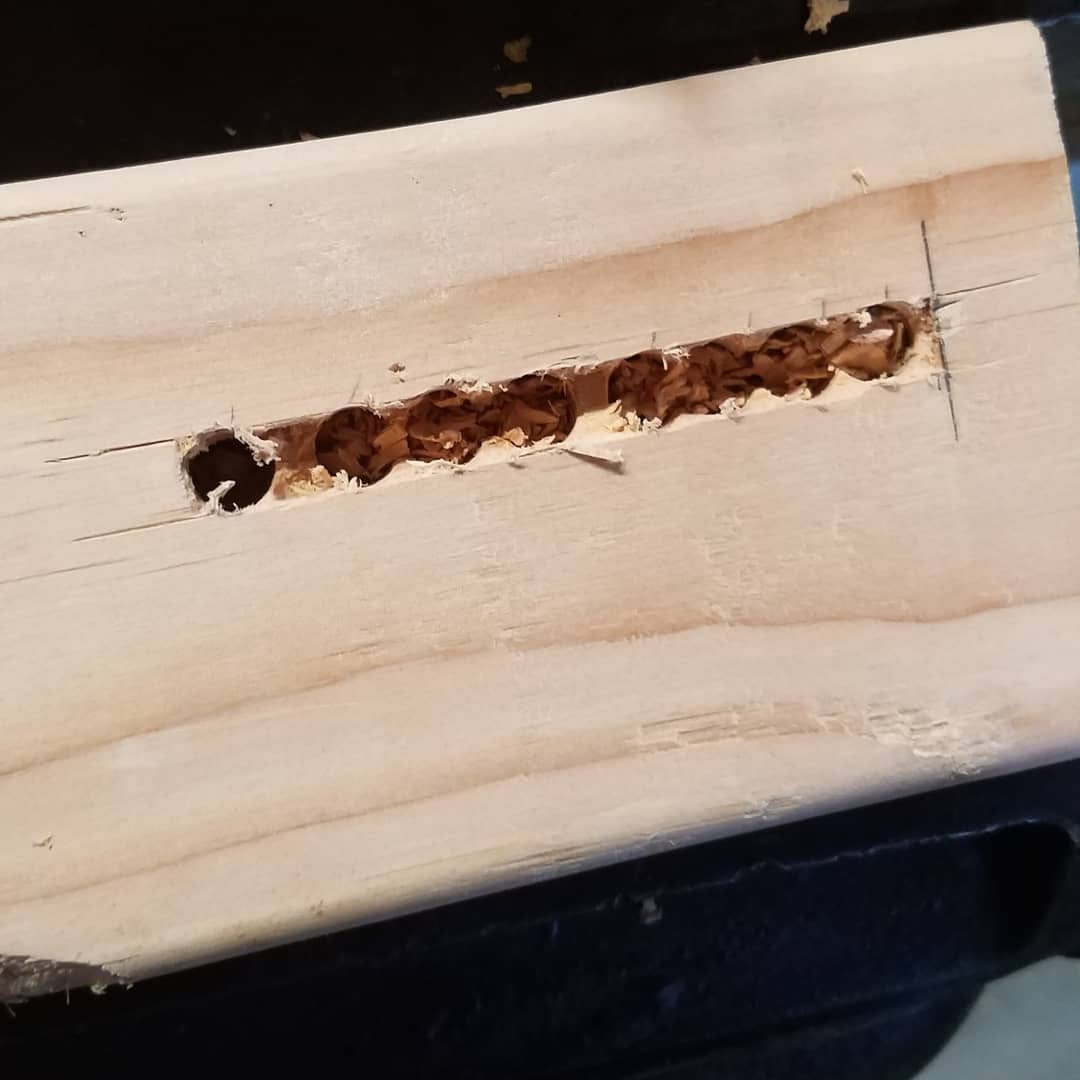
Next I used a 3/8″ forstner bit and drilled down the depth of the mortise. Doing the mortise this way allowed me to not have my drill bit sway outside the mortised area.

IMG_20180617_180210_115.jpg

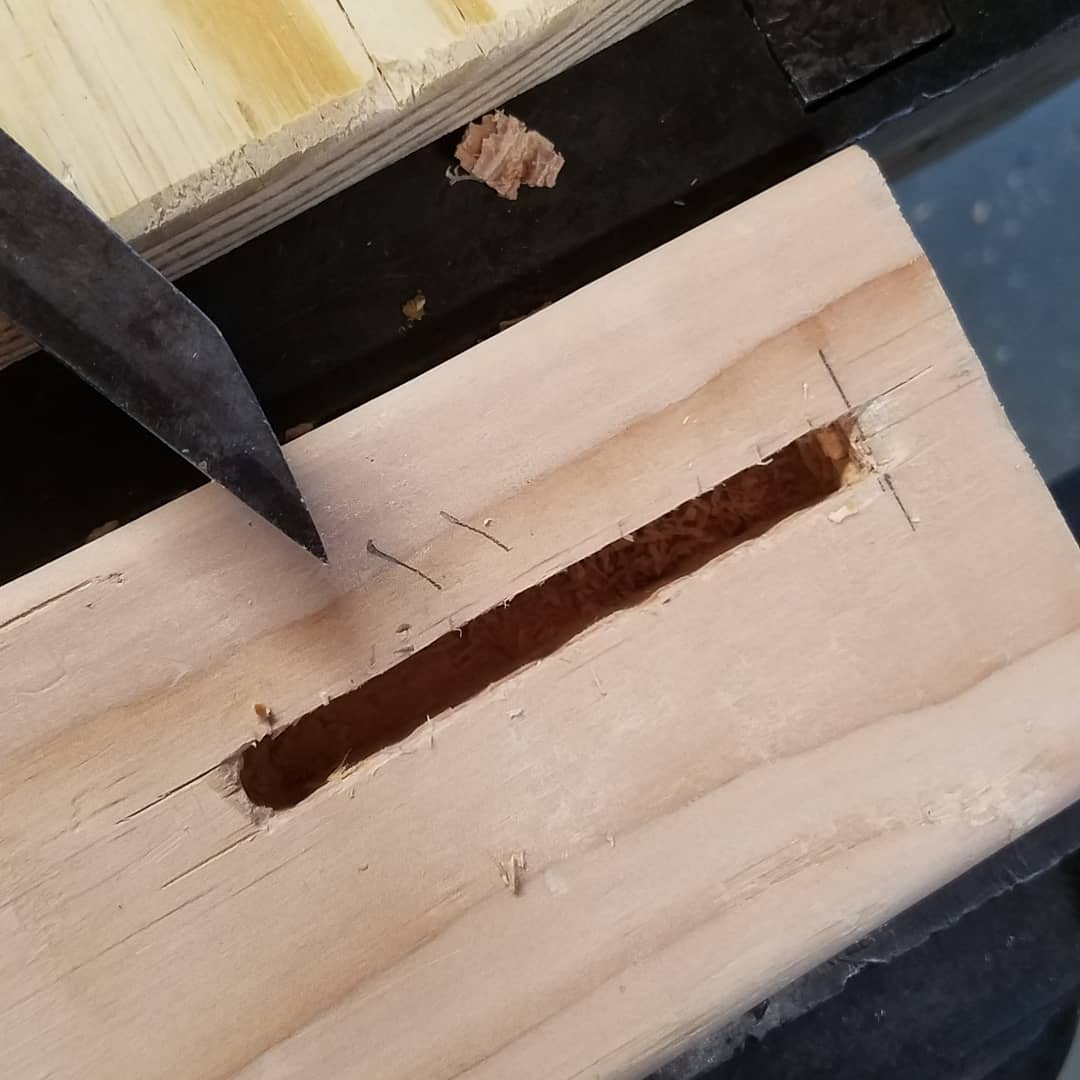
I then finished up the mortise back with my chisel making the ends of the mortise nice and square. This is an unconventional way to make a mortise,  but it allowed me to remove a lot of the waste much quicker than with the chisel alone.

IMG_20180617_180210_105.jpg

Test fitting the joint, I was pleased with the results. It took me less than an hour to cut all eight mortises.

IMG_20180617_180210_095.jpg

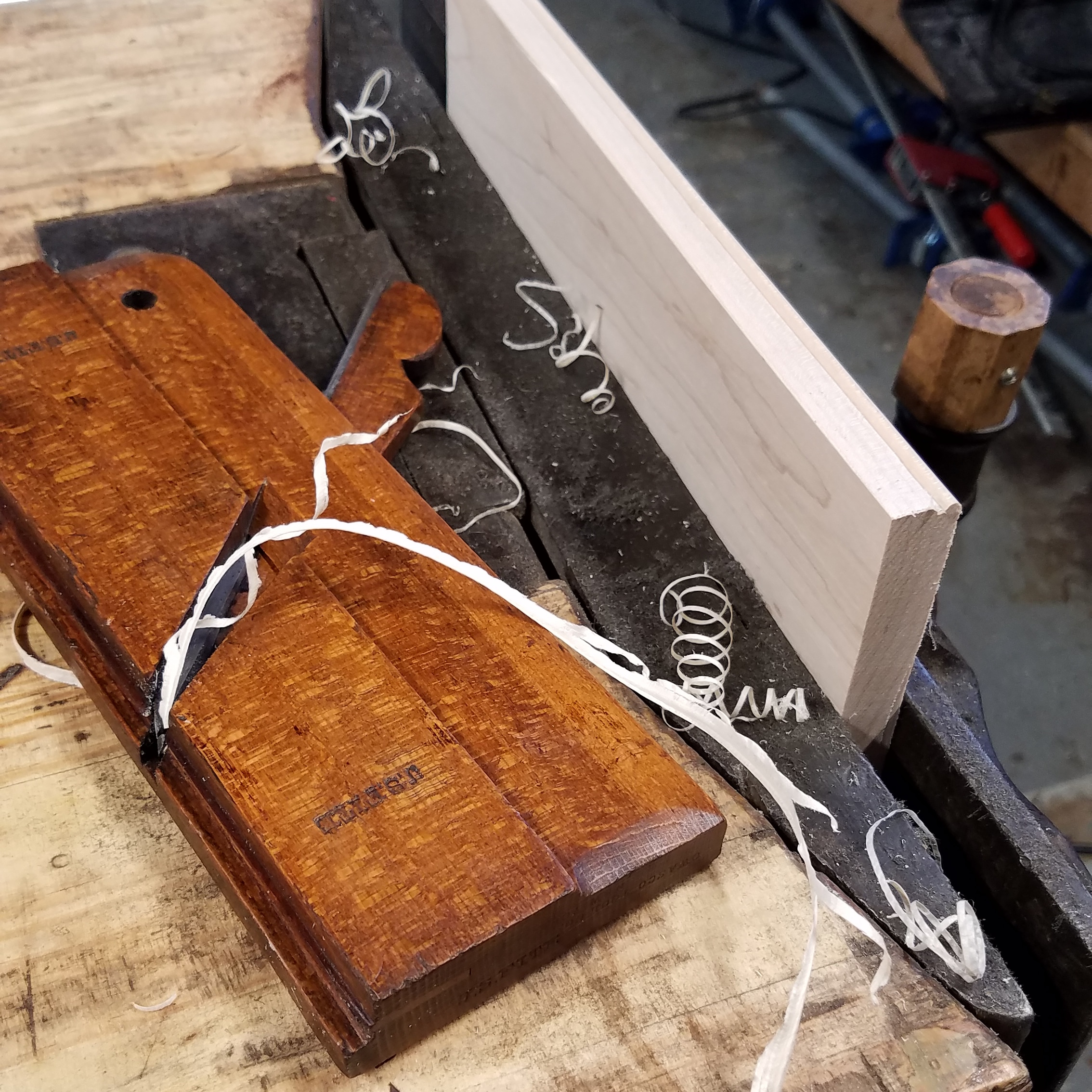
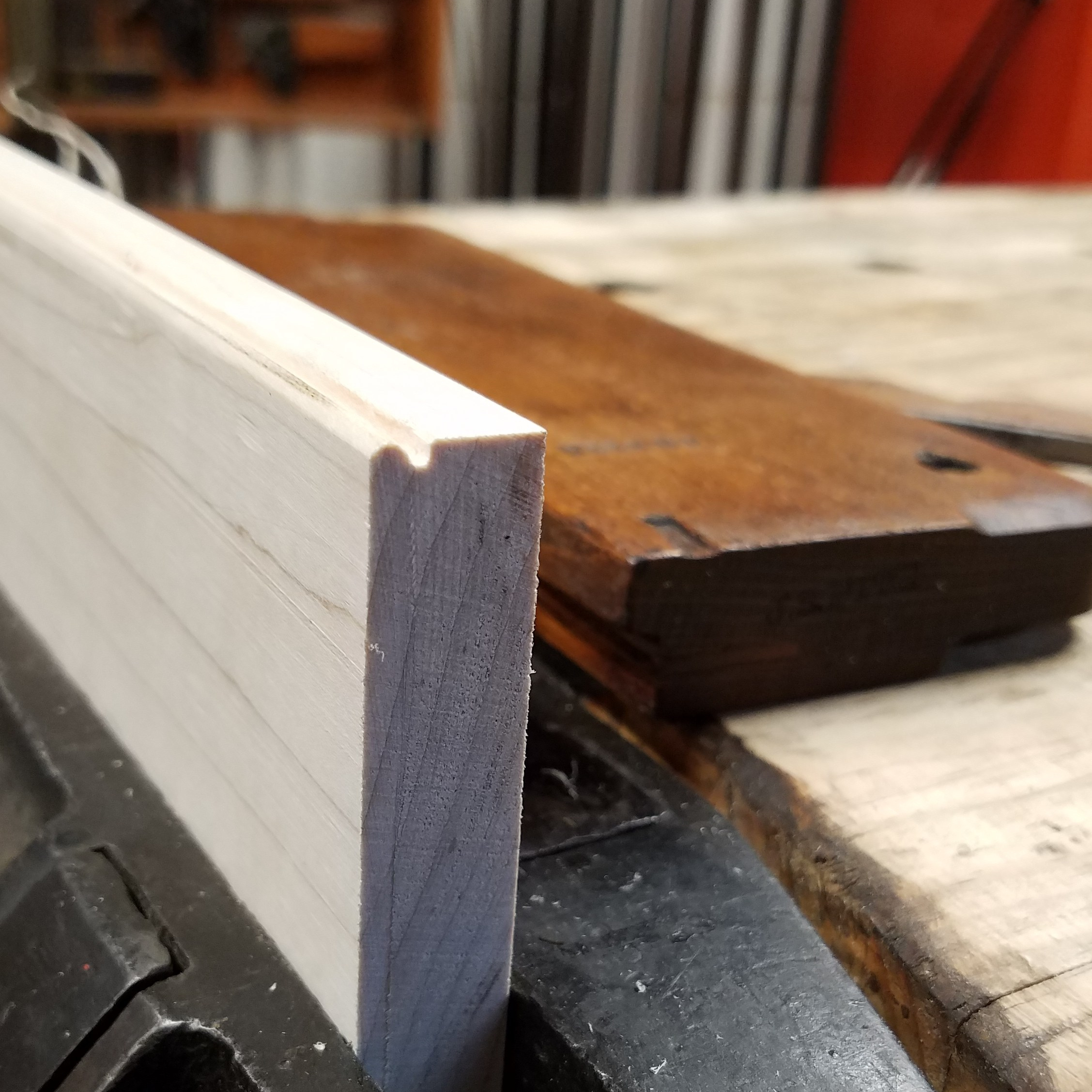
Using one of my beading planes, I planed a 3/8″ bead down the bottom of the frame boards. Cutting a bead on a seven-foot long board takes a bit of patience.

IMG_20180622_094900_433.jpg

Using pocket holes, I glued and screwed the frame to the legs and top. My wife wanted this table to be quick and easy which it was.

20180623_115851.jpg

I flipped the table over and was happy with my work. The top is just two boards lying next to each other, not even being glued together.

IMG_20180623_133140_732.jpg

My wife stained the wood with steel wool and vinegar solution and then applied a couple of coats of milk paint to give the table an old world look.

IMG_20180630_112756_543.jpg

Here’s the table in her booth with some of her antiques on top. Quick and easy.

IMG_20180701_101137_655.jpg

10 Signs You Might be a Woodworking Snob

10. When your friend tells you about his awesome CNC machine, you walk away.

9. You think all the employees at Woodcraft are idiots.

8. You use liquid hide glue on everything.

7. You claim to be a hand tool only purist, yet you stream all your favorite TV shows on Netflix.

6. You think using Kreg pocket screws are beneath you.

5. You use the word “bespoke” because “custom” is too pedestrian.

4. You haven’t been inspired by an article in a woodworking magazine since 1996.

3. Your workbench is nicer than your dining room table.

2. You think smelling like walnut sawdust is a good thing.

1. You own every title from Lost Art Press even though you have no idea where Estonia is.

Cheers!

Happy Easter.

Mike

Restoring a Beading Plane

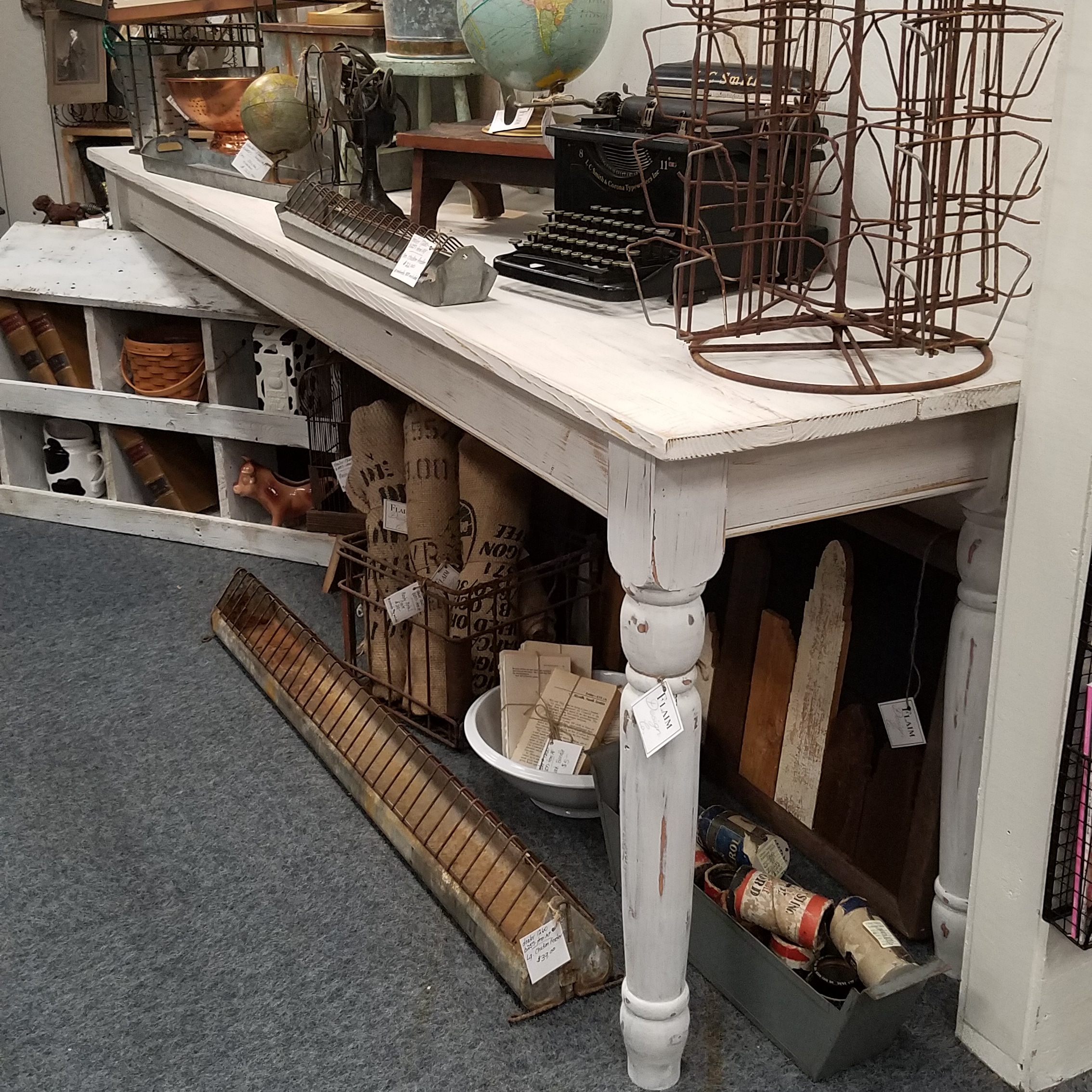
Beading planes are some of the most common molding planes you’ll run across while hunting for old tools at antique shows. I found this 3/16″ beading plane in Augusta, GA for just $14.00. Some people feel that it isn’t worth the time and effort to tune up old molding planes like this however, with a few simple steps, you can easily bring these guys back to life.

An important thing about buying an old molding plane that you want to use is to buy one that is in good shape. You need to make sure that the plane’s body is straight and the boxwood is in good shape (if there is any). If the body is curved or the boxwood is missing, then it’s best not to even bother with it as it will be too much work than it’s worth.

IMG_20180324_203613_217.jpg

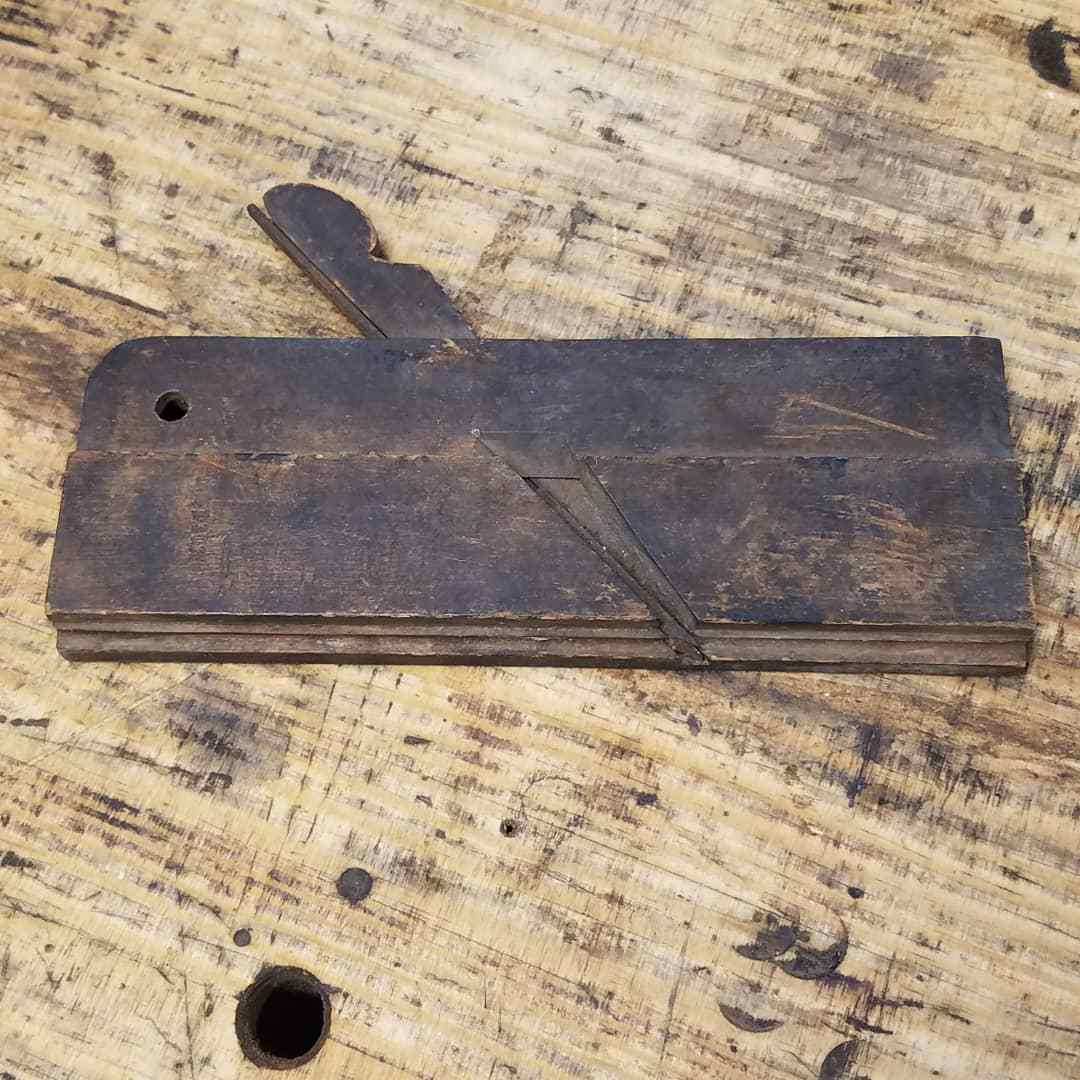
When you decide that the plane is worth restoring, the first step is to clean off the dirt. With a little elbow grease and some steel wool, you can clean the body of the plane in no time flat. It took me about ten minutes to get rid of all the dirt and grime.

IMG_20180324_203613_218.jpg

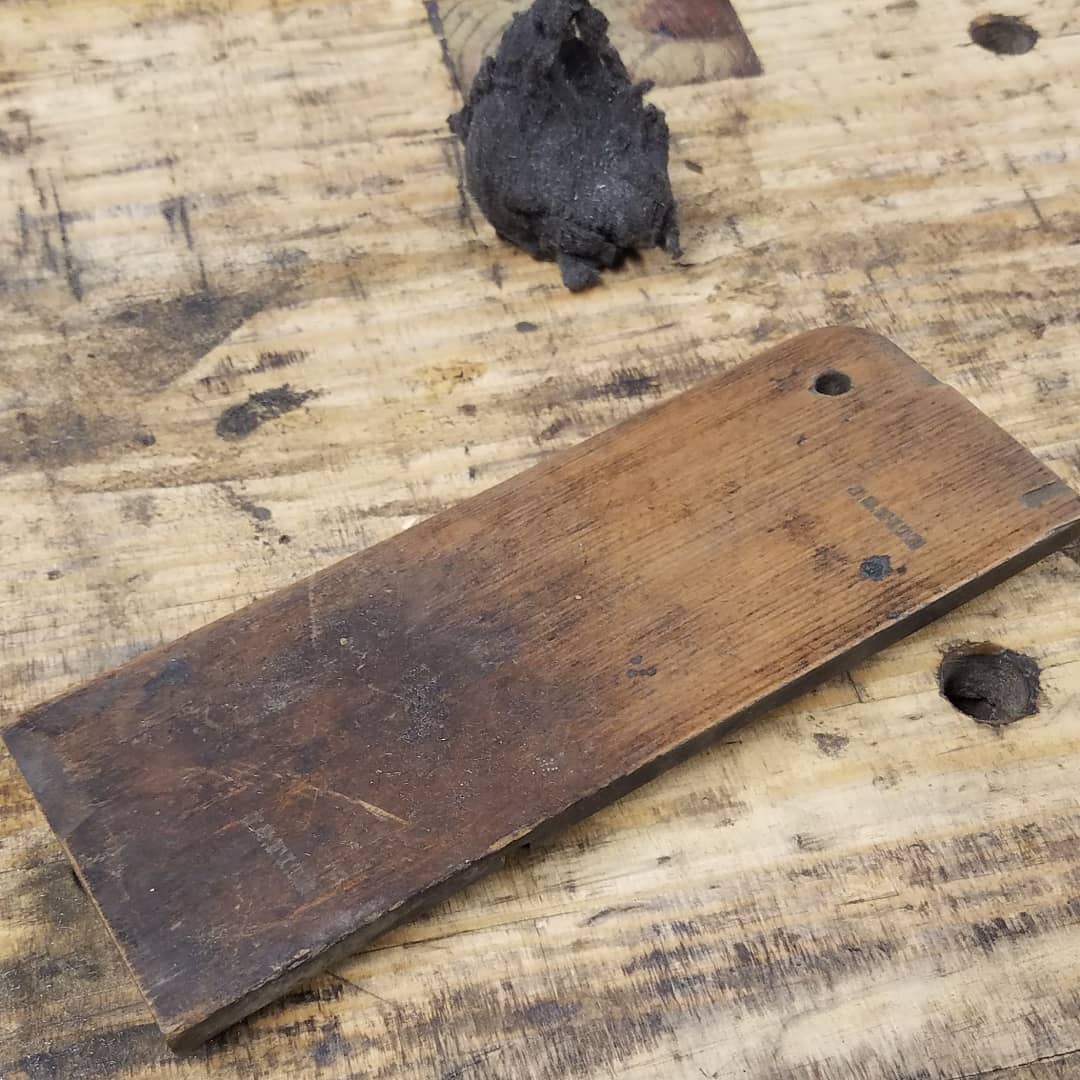
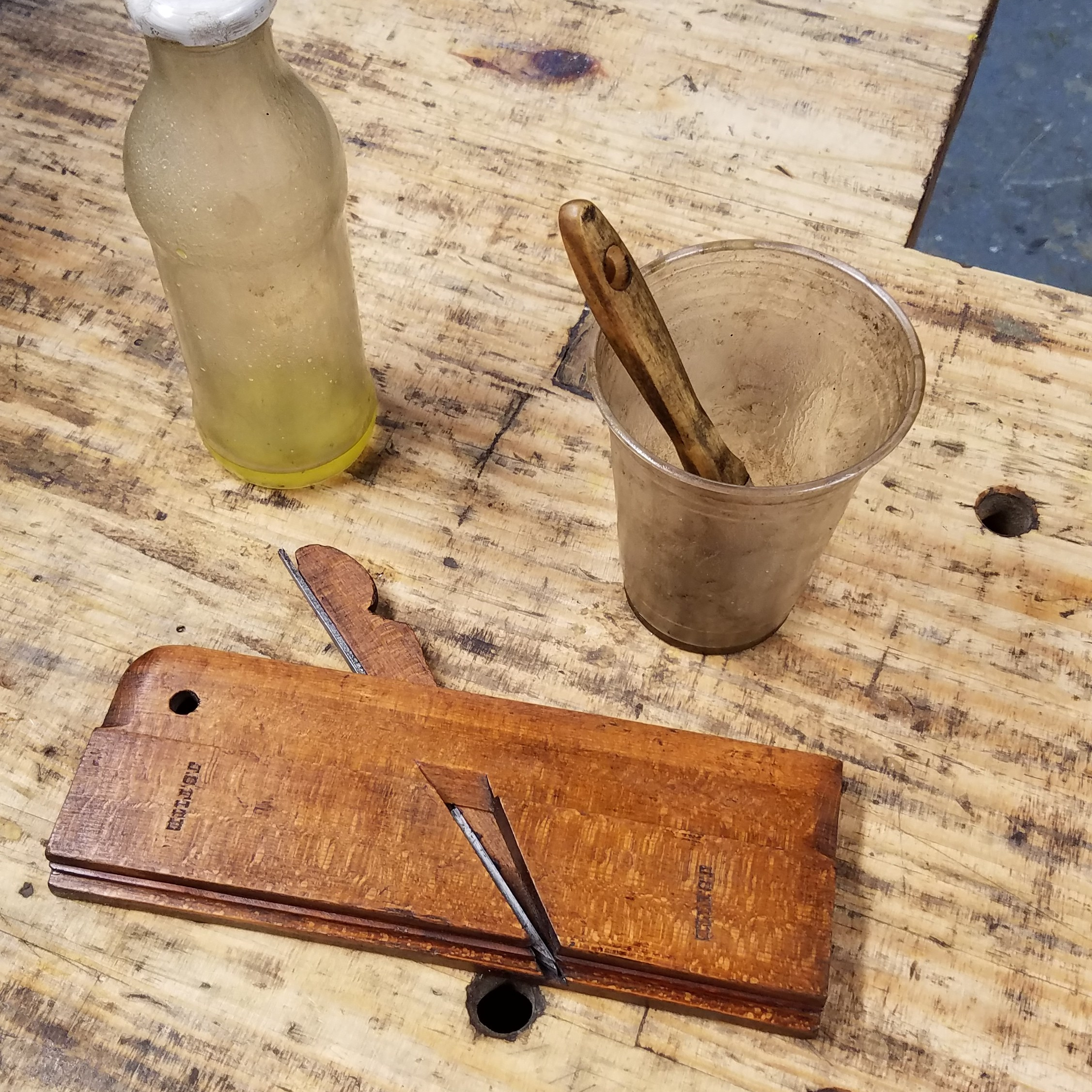
After everything is clean, I coat the plane body with my homemade oil and beeswax. Now, if all I wanted to do is display this on my shelf and collect dust I’d be done, but I want to put this baby back to work so, I need to work on the blade.

20180331_192408.jpg

To start cleaning the blade, I soak it in a solution of water and a little bit of citric acid. After an hour, I took the blade out and scrubbed off all the rust with a fine sanding sponge.

20180324_160418.jpg

Once the rust is removed, I sharpen the blade by honing the back over a series of sand paper and water stones. I started with 400 grit sand paper then move to 1000 grit, to 4000 to 12000 grit water stones. Only takes a few minutes to go through the process.

20180325_112821.jpg

After the back is honed, I sharpen the bevel angle and the profile of the cutter with 800 grit sand paper. Chances are, the profile of the iron is still in good shape when compared to the profile of the bed of the molding plane. If the profile of the blade is out of whack with the plane bed, then you’ll have to re-grind the shape of the iron to match the bed which is a taunting task, but I doubt you’ll have to do that if you took the time to examine the plane well before you bought it.

20180325_112939.jpg

With the blade sharp and back in the plane, I tap the iron down until enough of the edge is popping out of the bed to make a nice cut.

IMG_20180325_113918_332.jpg

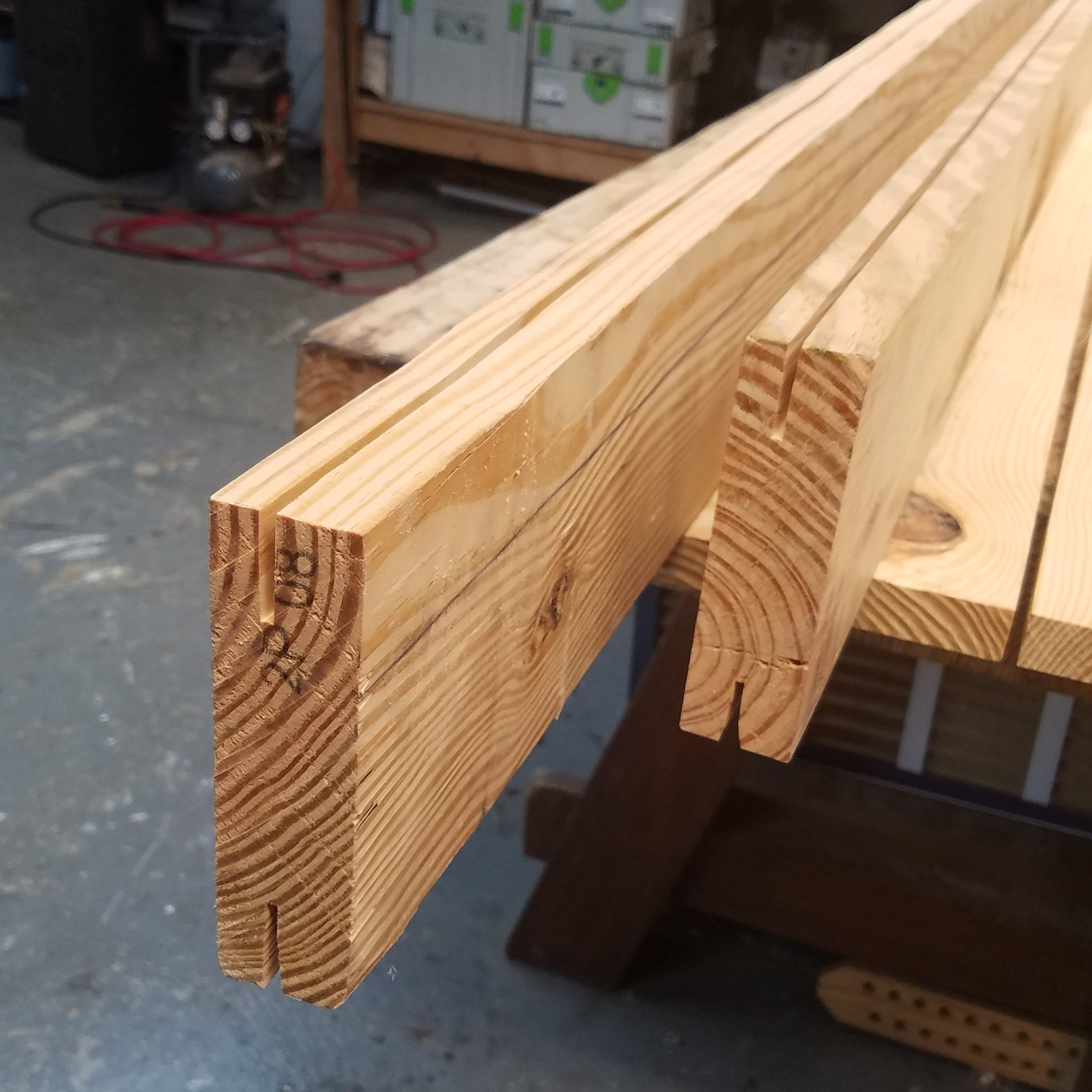
With a little effort, you’ll have a nice plane that’s a joy to use and much easier to make a bead on a piece of wood that using a router.
20180331_204832.jpg

Whiskey Barrel Coffee Table

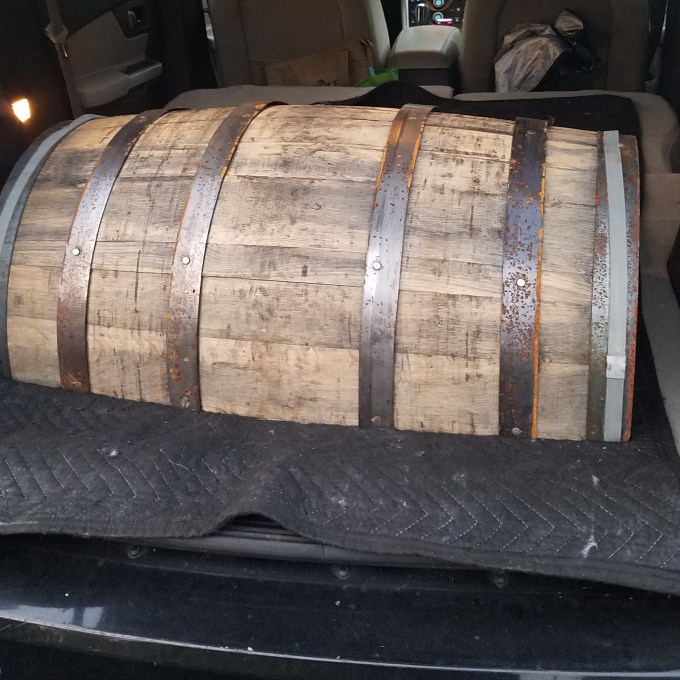
My cousin had been asking me to make a whiskey barrel coffee table for her for over a year. I put it off for months because I didn’t know where to buy a whiskey or wine barrel until I ran across a guy on Craigslist who sells them out of his house. Even better, he sells half barrels which was perfect for me as I really didn’t feel like cutting a barrel in half.

20170820_202148.jpg

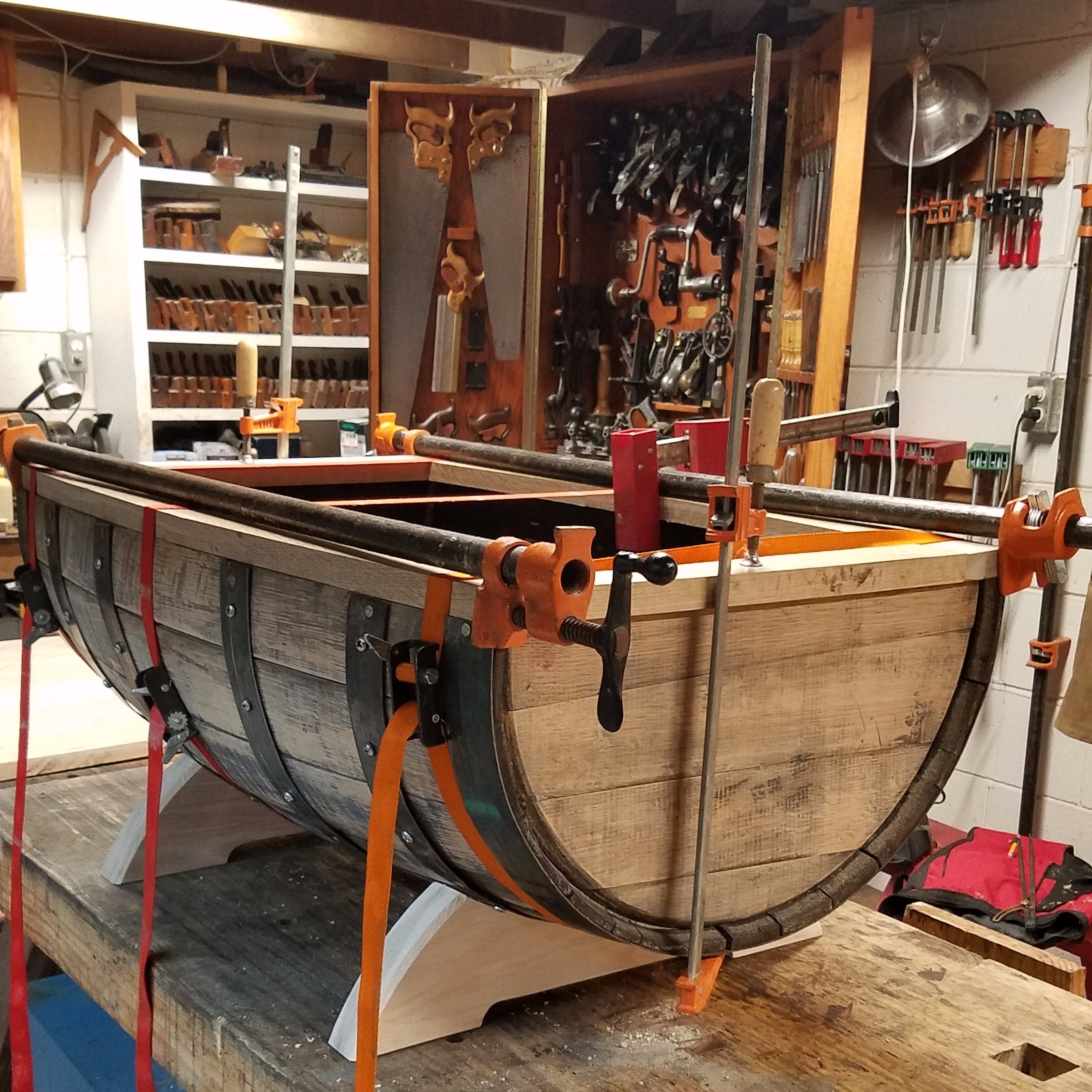
When I got the barrel home, I let it acclimate in my shop for a few weeks. As the barrel dried out, the staves started to fall apart, so I clamped them together using band clamps until I was able to screw fasteners into each stave to hold it in place. While the band clamps were holding the whole barrel together, I laid it on top of white oak boards I bought at a sawmill to see how big I wanted to make the top of the coffee table.

20170927_091615.jpg

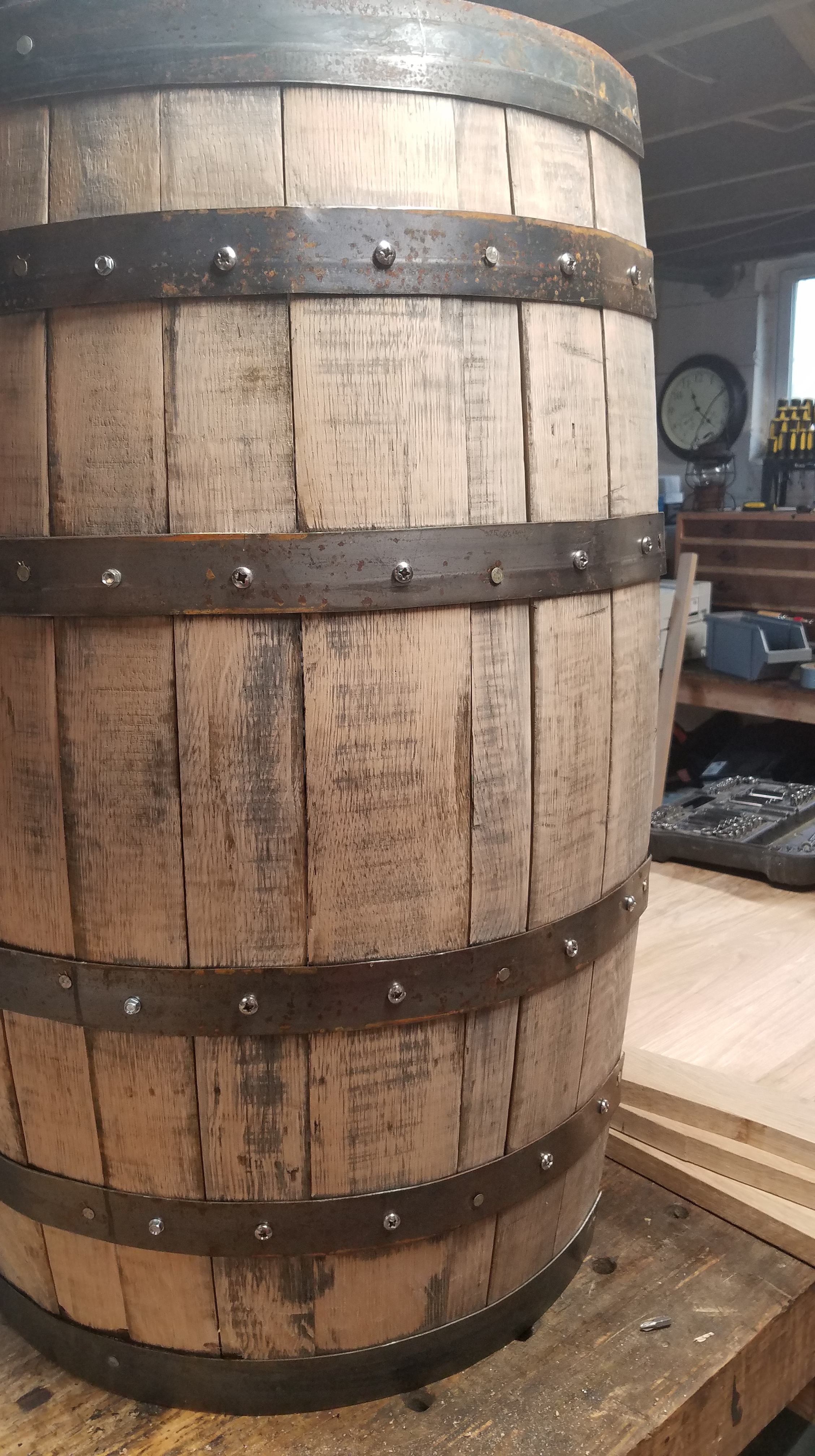
To keep the barrel together, I screwed hex bolts through the bands into the wood to hold each stave in place. I also leveled the top of the barrel by sanding the edges straight with my belt sander. The barrel came with a stand for it to be used as an outside planter which was helpful in holding it in place while I worked on it.

img_20171023_081036_611.jpg

My wife didn’t like the look of the hex bolts I used so, I replaced them with #14 stainless steel pan head screws. She was right, the pan head screws look much nicer.

20171104_112336.jpg

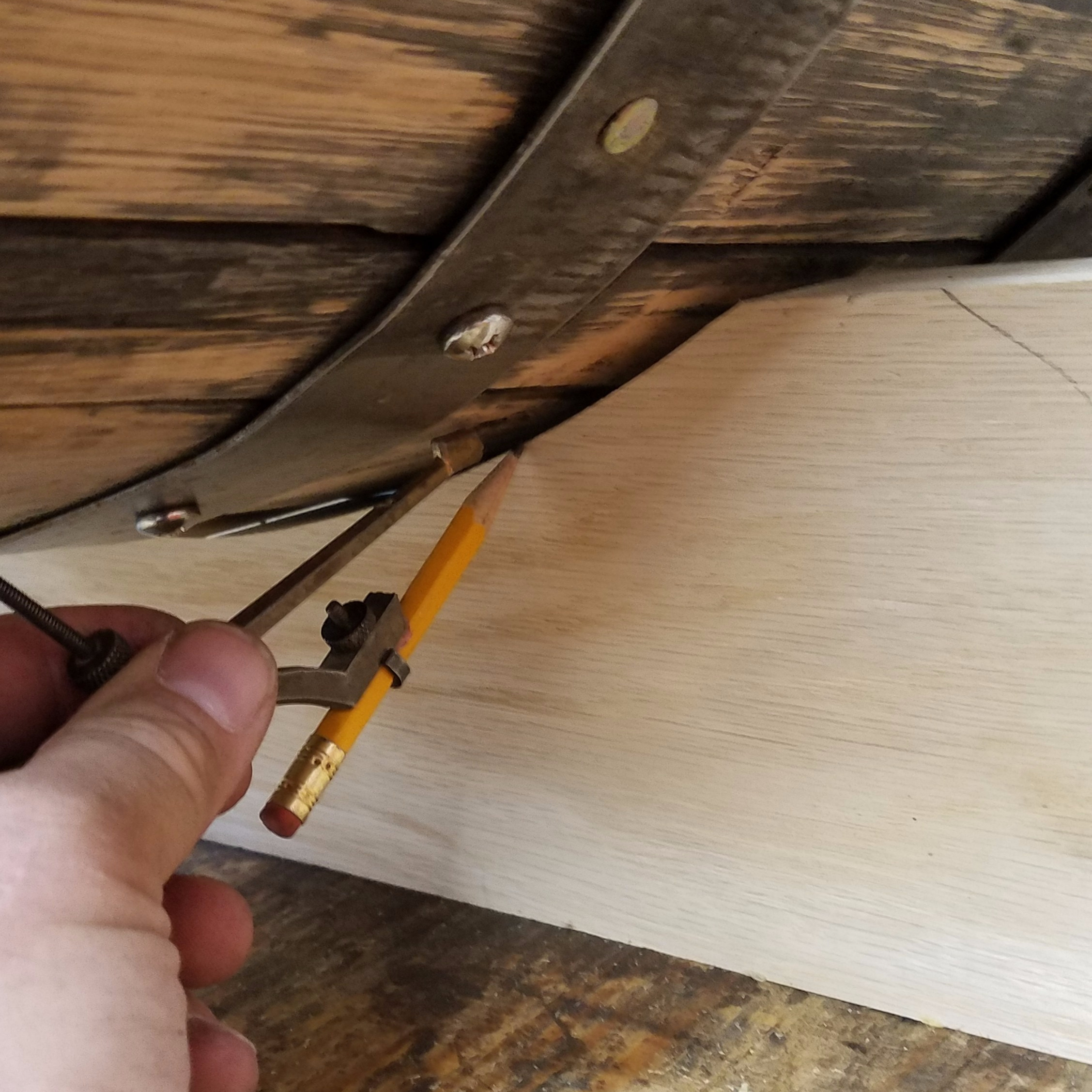
I designed the shape of the legs by using the stand that came with the barrel to shape the curves. Each leg had an angle to the top that fit the angle of the barrel as it laid flat. I chamfered the edges of the feet to mimic the chamfers on the top and bottom of the barrel.

IMG_20171105_174750_413.jpg

You can see how I used the compass to figure out the gap that I needed to shave off the other side of the leg in order for the barrel to fit tight.

20171105_130250.jpg

Once I was happy with the legs, I focused on the frame of the barrel. I traced the shape of the barrel onto a piece of wood and cut it out on my band saw. I then trimmed the end of the sides 90 degrees to the edge and double-stick taped it to the other side. This allowed me to clamp the whole frame while it was screwed and glued together.

20171105_120020.jpg

After carefully measuring all the pieces, I test fitted the frame together to make sure it would fit nicely on top of the barrel.

IMG_20171105_145213_229.jpg

I was more aggressive with the clamps when it came time for the actual glue up. I let this set in place for 24 hours.

20171105_184017.jpg

As the base was setting up, I turned my attention to the top. I glued up several white oak boards together and flattened them with my hand planes because the panel was too wide to fit through planer.

20171028_135625.jpg

I wanted the top to have a bread board edge so I plowed a groove into the ends that was the same width as my 3/8″ mortising chisel. I would later chop three mortises into the groove to fit tenons I would make.

20171028_152808.jpg

To make the tenons, I used both power and hand tools to get the job done. I routed most of the material away with my plunge router, then finalized the fit with my Stanley No 10 1/2 rabbet plane.

20171028_150436.jpg

I made sure the panel would fit into to the groove before I cut the tenons

20171028_152719.jpg

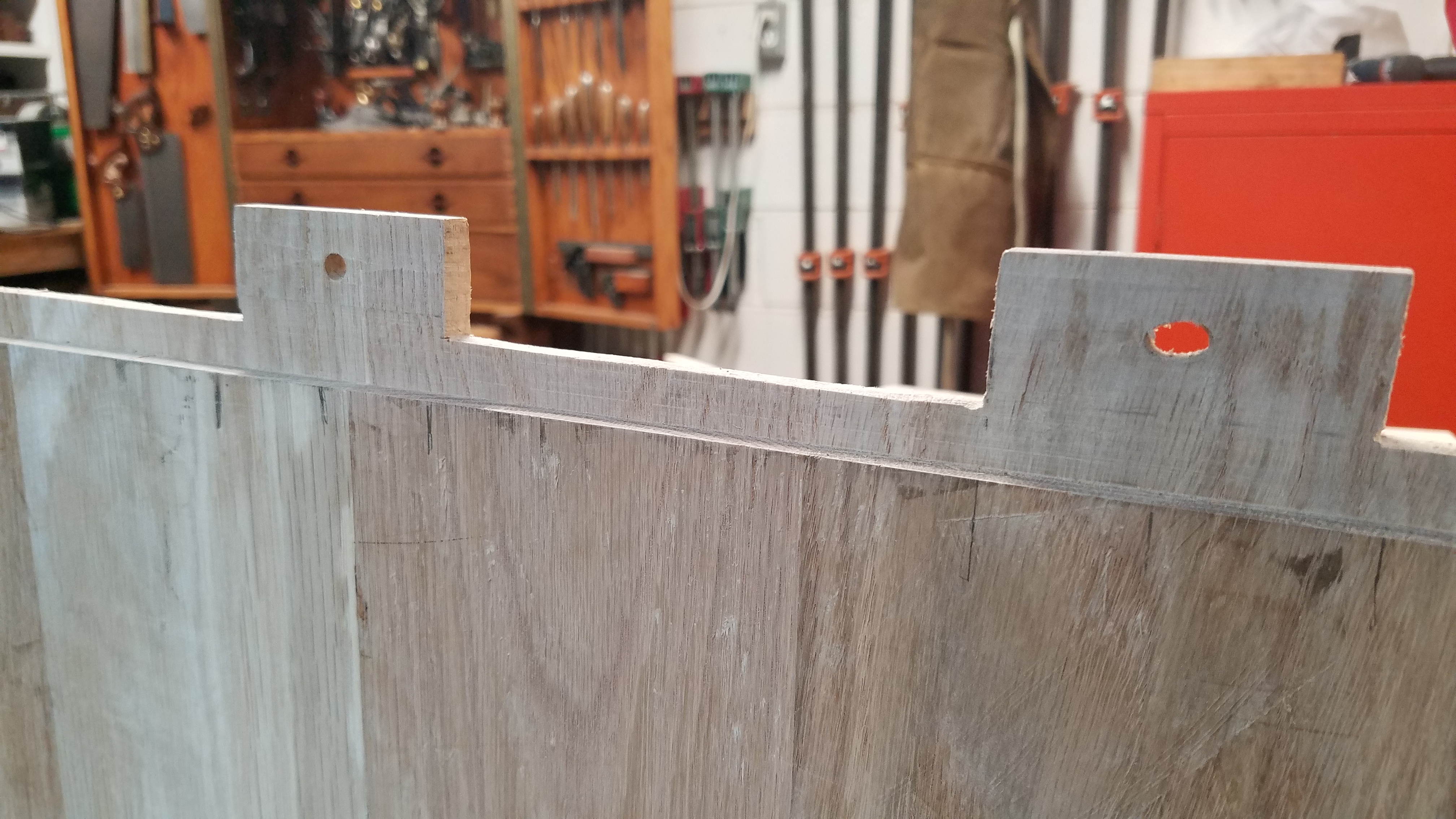
Cutting out the tenons, I drilled holes through the middle for pins. The middle hole I left round while the tenons on the outside I elongated for the expansion and contraction of the wood.

20171029_124858.jpg

Once the joints fit well, I drove pins into the holes and added a dab of glue so the pins wouldn’t fall out.

20171029_131304.jpg

I shaped the sides of the top to match the curve of the barrel and lightly rounded over the sides with my hollow molding plane.

20171111_122834.jpg

The final shape of the coffee table top came out nicely. Now I needed to find away to attach it to the frame.

20171111_124241-1.jpg

After days of pondering, I decided to attach hinges to the top so that the lid could open and close. The inside of the barrel was charred from the brewing of the whiskey so, it’s not very useful as it will leave ash on your finger if you touch it, but I thought it was cool enough to show off. I clamped my level to the middle of the frame to determine where in proximity the hinges would need to be installed.

20171111_130736.jpg

Because the lid overhangs the side by an inch, the barrel of the hinges lay underneath the top when closed. I had to rout out a recess on the underneath of the lid so the top could properly close.

20171111_142117.jpg

Even with all my calculating, I ran into a problem. The top would hit the middle of the barrel when I tried opening it. I had to route a recess in the middle of the lid so that there would be enough room for the lid to open. It took several hours of trial and error to make it work, but I finally made it work.

20171111_153501-1.jpg

Once everything worked, I sanded the entire coffee table to 220 grit sand paper and applied a weathered wood enhancer to blend the old barrel to the new white oak. This turned the coffee table a bit purplish gray.

20180113_130306.jpg

Next, I stained it Minwax Espresso stain and applied three coats of water based polyurethane for a protective finish. I think the coffee table turned out really nice. Luckily, my work has me going to Detroit next week, so I can deliver the coffee table to my cousin.

IMG_20180203_075400_114.jpg


Enlarging an Image

Over the past few months, I’ve been making and selling these Ohio signs in our booths in the antique malls we rent space in. They’re super simple to make. Just old scrap wood I have lying around, painted and stained to make it look like old barn wood. Then I cut the wood out from a pattern and attach the pieces to a plywood back.

20171217_103234.jpg

They’ve been so popular, I decided to make a Kentucky one as well since Cincinnati is near the Kentucky border. The Ohio signs are about 15″ x 16″ so I knew I wanted the Kentucky one to be about 24″ long. The problem was that I didn’t have a map of Kentucky that was 24″ large. I decided to Google image a map of Kentucky and print it out on my printer. That left me with a map that was 10 1/2″ long, but I didn’t have a scaling ruler that would work for that size.

20171217_103207.jpg

I decided to make a scaling ruler where 10 1/2″ equals 24″ in scale. I grabbed a piece of plywood and ran a line down the board 10 1/2″ wide. I then took my ruler and put the end of the ruler on the line and angled it so that the 12″ mark would be at the other end of the board. I then made a mark on every 1/2″ increment giving me 24 equal units for the 10 1/2″ length.

20171217_103432.jpg

I then drew the lines down the board, grabbed a scrap stick and transferred those increments to the board creating my scaled ruler. The units didn’t have to be perfect. I was just trying to get an approximate measurement.

20171217_103712.jpg

I then used that scaled ruler and marked lines on both the horizontal and vertical axis of the map creating a grid.

20171217_104430.jpg

I then drew 1″ grids on the piece of plywood and drew the pattern of the map onto the wood carefully transferring the image of each little box to the corresponding box on the plywood. This is very similar to games I played as a kid where you would have to create a picture based off random shaded box patterns.

20171217_105652.jpg

Once the pattern was transferred, I cut it out on the band saw. The template ended up being 24″ long by 12″ tall.

20171217_124233.jpg

Here’s the finished Kentucky sign. I shared this image on Instagram and someone wants me to make him one. The work is already paying off. Merry Christmas!

20171217_165411.jpg