Building a Shed Part X

The same weekend it was too hot to work on the shed, was the same weekend I built the corbels. I sell to 26 Lowe’s and 14 Home Depot’s in the Cincinnati-Dayton area, and in all those stores, only one of them carried cedar 2 x 4’s. So, I’m lucky to be building these corbels out of cedar instead of douglas fir. I glued two cedar 2 x 4’s together to give me a post 3″ thick. I then cut the posts to 25″, 25″ and 46″.
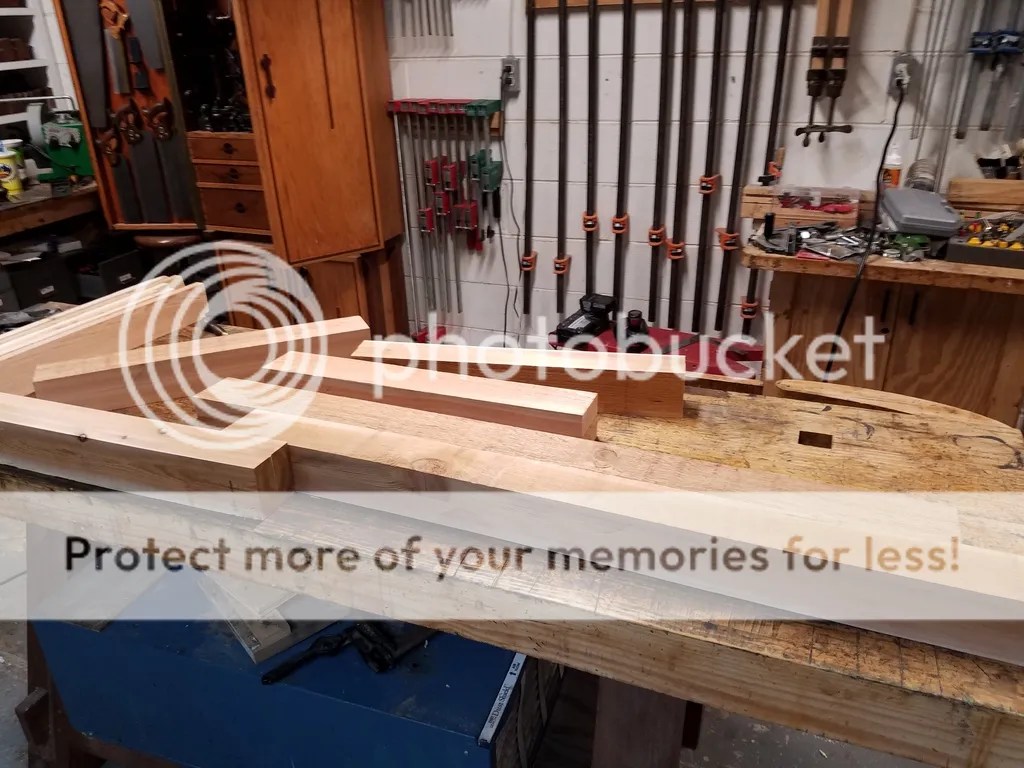
 photo 20160724_111841.jpg

I sized the 25″ long posts to two 12″ lengths. I then built a sled for my table saw so I could cut one of the ends to a 45 degree chamfer. The stop on the sled made sure all the cuts were the same on each side.

 photo 20160724_114450.jpg

Flipping the post over with each cut, I quickly made the soft point for the front of the corbels.

 photo 20160724_114601.jpg

I made eight of these pieces. Two of the eight, I will save for a trellis that I will build over the side window.

 photo 20160724_115544.jpg

I then took the 46″ long pieces and cut them to 12″ long with 45 degree cuts on each end.

 photo 20160724_120046.jpg

I got lucky with my first post as I was able to avoid a large knot in the middle.

 photo 20160724_120626.jpg

The woodworking Gods were with me that day as I was able to avoid another large knot on the other post.

 photo 20160724_121321.jpg

I wanted a 45 degree chamfer on the bottom of the back of the corbels, so I moved the stop over on my sled and reattached it in the proper place.

 photo 20160724_122630.jpg

Using exterior wood glue, 3″ deck screws and 1 1/2″ long, 1/4″ crown galvanized staples, I fastened the hell out of the corbels as I built them.

 photo 20160724_123819.jpg

Eight corbels are all the same. I took the best two corbels and set them aside for the trellis as it will be stained and not painted.

 photo 20160724_131837.jpg

When it cooled down, I fitted the corbels into the soffit. I used a level to accurately scribe where I needed to cut and then used my Fein Multi-Master to cut away the wood.

 photo 20160731_152000.jpg

As luck would have it, the width of my level was pretty much the correct location of where I needed to cut. I attached the corbels to the trim of the shed with 1 1/2″ long 15 gauge pneumatic nails.

 photo 20160731_152644.jpg

After a few minutes of work, one side of the shed was done.

 photo 20160731_160233.jpg

The shed is getting really close to being complete. We just need to build a platform in the front for a step, build and attach the trellis over the side window, build shelving inside, paint/stain the shed, add landscaping, and possibly add electric. Shit, we’re not that close after all. HAHA.

 photo 20160731_190224.jpg


Building a Shed Part IX

I’ve been as motivated to work while it’s 100 degrees as I was when it was 30 degrees, so the shed has been sitting the past few weeks acclimating to the sun. The good news is that it has given me time to work in my nice cool basement workshop building the doors and corbels. I bought ten more 8′ long 8″ wide siding and slid five of them together to figure out how much to cut off the end boards to make a nice centered door.

 photo 20160723_131952.jpg

After figuring how much to trim off the end boards, I clamped them together and stapled 4″ cedar trim across the top and bottom. I used 1/4″ crown galvanized staples 1 1/2″ long.

 photo 20160723_142050.jpg

I attached the sides and center rail the same way. I used a liberal amount of Titebond III exterior glue to help hold everything together.

 photo 20160723_143520.jpg

I flipped the door over and did the same thing on the other side. I left the door over hang the inside trim about 2″ so that the bottom of the door would be flush with the bottom of the siding. I attached one board on the back at the diagonal to strengthen the door.

 photo 20160723_145540.jpg

I built the other door exactly the same way with the only difference being the diagonal board was going the other way.

 photo 20160723_155948.jpg

After the weather cooled down a bit, I took the doors out to the shed to see how they fit. In a perfect world they would fit perfectly, however I don’t live in a perfect world and I’ve never built anything perfectly. So, I had to trim the doors down to size about 1/4″ and shave down one end about 1/8″ less than the top.

 photo 20160731_121507.jpg

After fiddling around with the doors, they fit well enough for me to be happy. I used large hand screw clamps and clamped the inside of the doors to the frame opening. I then attached three hinges per door while they were clamped.

 photo 20160731_121836.jpg

After they were hung, they stuck a little bit at the top. I grabbed my block plane and shaved away the tops of the doors so that they would open and close freely.

 photo 20160731_130231.jpg

Installing the locking handle was a breeze. A simple hole drilled through the door allowed the stem to pass through. I then attached the inside handle with a set screw.

 photo 20160731_133941.jpg

I needed the left door to stay put while the right door was locked, so I drilled a 5/8″ hole through the floor and used two-part epoxy to glue a small piece of 1/2″ copper pipe inside the hole.

 photo 20160731_140154.jpg

I then attached the door hardware to the left door so that the bar would fit nicely in the hole.

 photo 20160731_140308.jpg

I did the same thing for the top of the door except I used a 1/4″ copper coupler instead of a 1/2″ pipe.

 photo 20160808_151638.jpg

I trimmed out the inside of the door the same way I did with the windows. I took a 2 x 6 and ripped into three pieces that were 3/8″ thick by 2″ wide and attached them with finish nails.

 photo 20160731_145234.jpg

I’m happy with the way the doors turned out. Now on to the corbels.

 photo 20160731_150347.jpg

Painted Apothecary Drawer

I built this apothecary drawer for a cabinet my wife bought a few months ago. You can read the post here. My wife needed to paint the drawer and make it look old to match all the other ones.

 photo 20160521_143848.jpg

The first thing she did was take a solution of white distilled vinegar with steel wool and wiped it on the drawer so it would take on an aged look.

 photo 20160719_091145.jpg

She then painted the front with white milk paint. She built up the coats to give the front some depth since the original drawers had multiple layers of paint on them. After the paint dried, she applied some green paint to front and quickly wiped it away as there was also some green highlights showing through the white paint on the original drawers.

 photo 20160717_151258.jpg

The drawer was a little too white, so she gently applied dark wax and rubbed it in. Getting a perfect match with the colors from old drawers is really hard, but she did a really good job making the new drawer blend with the others..

 photo 20160723_174215.jpg

Here’s the drawer with the rest of the them back in the cabinet. She got lucky with the hardware as she found matching pulls from a seller on eBay. She had to replace nine of the handles because when she bought the cabinet, it came with handles of two different designs.

 photo 20160724_110358.jpg

Bentley came to see which drawer was the new one, but couldn’t figure it out. Can you?

 photo 20160724_110423.jpg

Building a Shed Part VIII

Moving forward with the shed, I installed the large fifteen pane window on the right side of the shed. Being so big and heavy, I screwed some scrap siding boards to the corners so I could lay the window in the frame and shim around the window until it was plum and square.

 photo 20160709_113900.jpg

With the window secure, I used scrap siding for the inside of the window frame and nailed it to the 2 x 4 framing.

 photo 20160709_122307.jpg

I then started to build the window trim by taking away one piece of the scrap wood and replacing it with 4″ wide cedar. I nailed it to the siding with 15 gauge galvanized finish nails. The bottom and top of the trim over hang the sides by 1″ on each side, with the top angled at 10 degrees. I then nailed a piece of cedar to the top for a little added detail.

 photo 20160709_163946.jpg

Putting up the trim was one of the easiest parts of building the shed so far. The cuts were simple and straight forward. Home Depot even had 3 1/4″ wide cedar boards so that I didn’t have to rip  4″ boards down to wrap the corners properly.

 photo 20160709_192205.jpg

I nailed the trim around the two front windows very much the same way as the side window.

 photo 20160709_180351.jpg

The only difference is that I had to cut a notch on the side trim boards to fit around the window sill. I had a follower tell me on my last post that I need to add a drip edge to the bottom of the sill to prevent water from going inside the shed wall. I’ll do that soon by either cutting a shallow groove or a gluing bead of wood underneath the bottom.

 photo 20160709_180345.jpg

Here’s a quick shot of the side finished with the trim. It’s starting to really look like a shed now. I just have to install three  corbels around the roof line and a cedar trellis above the window. Stay tuned.

 photo 20160710_131615.jpg

I wanted to work on the door frame, so I took two of the 2 x 6’s that I used to make the scaffolding and ripped them on the table saw.

 photo 20160710_132138.jpg

I cut almost half way through the wood on the table saw and then finished up the cut on the band saw.

 photo 20160710_133540.jpg

After they were ripped, I planed them down to 3/8″ on the planer. I only need one of the shorter boards so the other one will provide heat to make S’mores.

 photo 20160710_133746.jpg

I attached the boards to the inside of the front door frame. The boards did two things. First, it cleaned up the edges with a full piece of wood, especially on the top. The second is it kept the top trim of the door level with the top trim of the windows because I used 3/8″ wood to make the window frames as well.

 photo 20160710_145408.jpg

The trim has been installed around the door frame with a similar top detail in the middle. Now it’s on to make the two front doors.

 photo 20160710_155633.jpg

Harvest Table

A few moths ago my wife, Anita, and I picked up some old barn wood flooring in Dayton to be used for a harvest table she wanted me to build for her booth. While the wood sat in the basement, she kept looking for the right legs to use for the table. In the end, she opted for me to make some out of Douglas Fir 4×4’s I could buy from Lowe’s. She searched Pinterest for a leg she liked and printed off a picture so I could make it.

 photo ebay 014.jpg

I looked at the picture and started to turn something like it on the lathe. I kept the top of the leg similar to the picture, but changed the bottom to be a bit more simpler. After a few tweaks, I was happy with the end result. Now the challenge was to make three more legs that matched this one.

 photo ebay 017.jpg

I used a piece of scrap wood and marked every major location where there was a bead or valley in the board. I then used calipers to measure those increments and carefully tried to copy them to the next turning.

 photo ebay 019.jpg

After several minutes of careful turning, my second leg looked very similar to the first one on top. Even if the legs weren’t exactly the same, it was fine as they would be far enough away from one another that your eye wouldn’t be able to see the difference.

 photo ebay 023.jpg

If you’ve never turned Douglas Fir, I highly recommend it. It sucks..sucks bad. The crap chips like crazy even with sharp turning tools. Fortunately since the harvest table was suppose to look old, the chips wouldn’t be a big deal.

 photo ebay 022.jpg

After a couple of hours, I turned four legs that sort of looked like one another. The final step was to put them back on the lathe and use my parting tool to cut them at all the same length which was 30″ tall.

 photo ebay 026.jpg

The simplest part about building the harvest table was actually building it. I simply screwed the skirt onto the legs using 2″ screws. I didn’t even bother plugging the holes.

 photo ebay 028.jpg

I used cleats and pocket hole screws to keep the sides from bowing. I then attached the top onto the cleats using 1 1/4″ screws. Super simple.

 photo ebay 029.jpg

This was the table before sanding the grime off the boards.

 photo ebay 031.jpg

This is the table after a couple coats of white milk paint.

 photo blog 002_8.jpg

As you can see, once sanded, the milk paint gives the table a nice worn look. Even though this table breaks three of the seven deadly sins of woodworking, it works for it’s intended purpose. Just don’t expect to see it in a woodworking magazine anytime soon. All that matters is that Anita is very happy with it and finally has the harvest table she has always wanted.

 photo blog 003_10.jpg

Bathroom Cabinet

My wife, Anita, came to me a couple of months ago saying she wanted a new bathroom cabinet. I made one when we remodeled the bathroom nine years ago, but for some reason, I made it rather narrow and too deep. It was only 24″ wide by 18″ deep. The cabinet worked, just not that well. Anita loves going to Ikea so when she came home with a brochure of a cabinet she saw in their showroom, I looked at it. It was a Hemnes cabinet for $329.00. I immediately thought to myself “that’s basically a box with doors. I can make a box with doors for a lot less than $329.00”. That’s the downside of marrying a woodworker. We always want to make a piece of furniture rather than buy it. The good thing, is we usually can make it for a lot less and customize the dimensions to fit our needs.

HEMNES Cabinet with panel/glass door IKEA Solid wood has a natural feel.

I convinced Anita that I could make the cabinet quick enough that she wouldn’t have to wait six months for it to be completed. I also told her I could make it 32″ wide as opposed to 36″ so the cabinet wouldn’t cover up part of our heat register in the bathroom. A few days later, we went to Home Depot and bought a  1/2″ thick of birch plywood for about $50.00. I cut the sheet down for 11 1/4″ wide to be used for all the parts. Once I got the sides cut, I routed a couple of 1/2″ wide dadoes in the sides for the bottom and middle shelf of the cabinet. I then used a jig made from peg board to bore the shelf pin holes on each side.

SAMSUNG CAMERA PICTURES

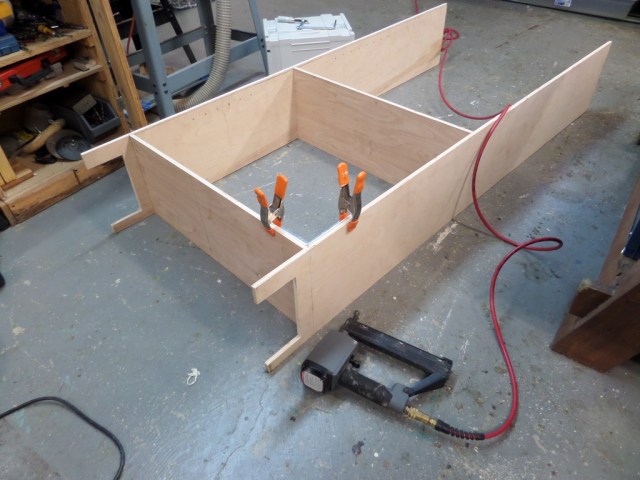
I cut the bottom and middle shelf to size and stapled them to the sides with my 1/4″ pneumatic stapler. Because I was going to apply 1/4″ thick x 2″ wide trim around the sides of the cabinet to act as a faux frame and panel, I wasn’t concerned about the driver marks in the wood made from the stapler.

SAMSUNG CAMERA PICTURES

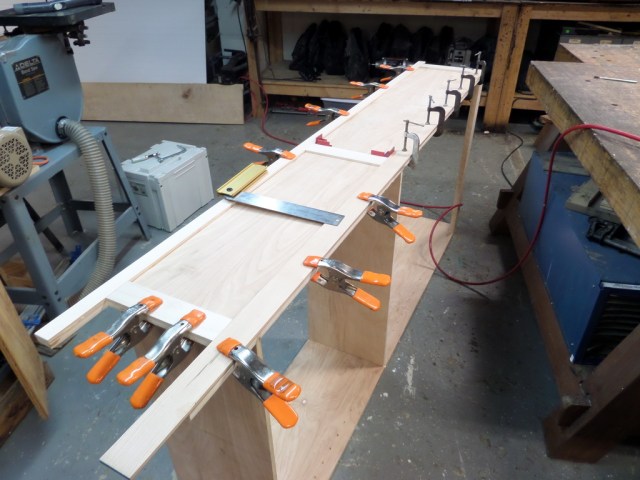
Next, I glued the 1/4″ x 2″ wood trim to the sides. Because I still needed to put a 3/4″ face frame  on the front, the trim on the front side of the cabinet was only 1 1/4″ wide, not 2″. You can see in the picture how the trim on the right (the back) is wider than the trim on the left (the front).

SAMSUNG CAMERA PICTURES

Next I glued the 3/4″ face frame to the carcass. I used pocket hole joinery to attach the stiles to the rails. This was a super easy cabinet to build.

SAMSUNG CAMERA PICTURES

I added glue block to the inside top of the cabinet where I could screw the top to the carcass.

SAMSUNG CAMERA PICTURES

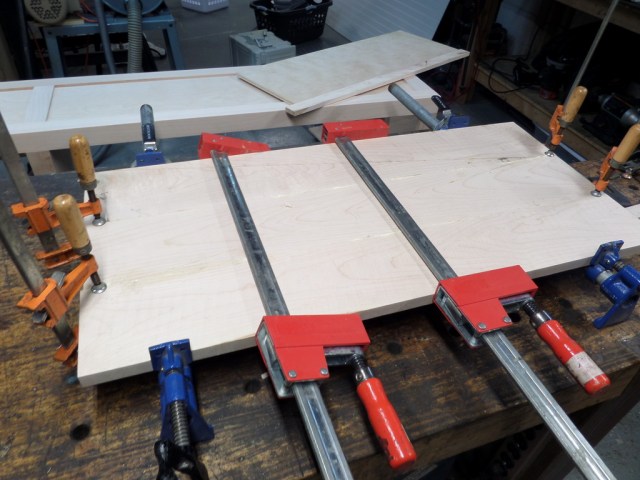
I wrote a post a few weeks ago where I described how I stretched a board to size after I cut a board too short. You can read it here. This is the board for the top of the cabinet being glued up after it was stretched.

SAMSUNG CAMERA PICTURES

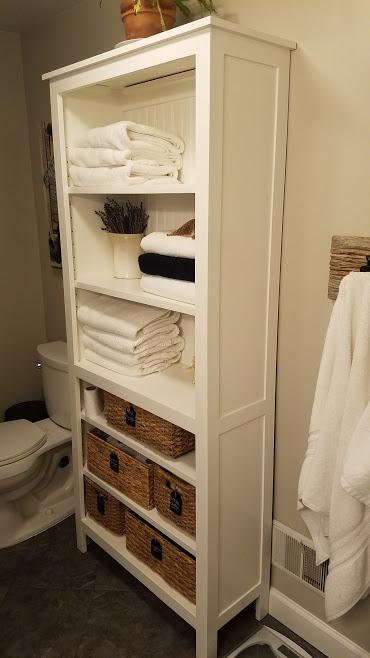
In the end, we decided not to add doors to the cabinet, but instead use baskets with open shelving. The woven baskets give the piece more character rather than having an entirely white cabinet with doors that would cover up the bottom shelves. We now have more room in the bathroom as the cabinet is only 12″ deep and is a lot more stylish.

20170820_213154

New Lumber Rack

A couple of weeks ago I picked up a Port a Mate lumber rack on clearance for $20.00 at a local Lowe’s. Even though at the time, redoing my lumber area wasn’t top on my list, the price of the rack (originally $70) was too good to pass up.

SAMSUNG CAMERA PICTURES

My lumber area was basically trashed and had been for several years. I’d clean it up every once in awhile, but it always ended up being a catch all for junk I had lying around. The shelves I used for storing lumber was made from 2×4’s I built from a plan I saw in Shop Notes years ago. They did the job for the most part, but it still wasn’t very organized for storing my lumber. My wife, Anita, was glad I bought the lumber rack because she was sick of looking at the mess.

SAMSUNG CAMERA PICTURES

After Anita helped me clean up the area, I bought some Dry Lock mold inhibitor paint and we painted both the back and side walls. Then we painted white latex paint on top of it. I moved the cabinet that stored my finishes over closer to my work bench and moved the shelving rack from the back wall to the side. This gave me room to store a full sheet of plywood if I ever needed. I didn’t want the lumber rack to hang off my block wall because I was afraid the added weight may damage the foundation so, I notched out 2×4’s at the top and screwed them to the floor joists. I let the 2×4’s “hang” from the floor joist, then screwed one screw at the bottom of the grey block using plastic wall anchors. I then simply screwed the lumber rack onto the 2×4’s.

As you can see, I use the just-in-time inventory system when it comes to buying lumber. I really don’t have that much lumber to begin with as I buy what I need every time I build something. Any remaining wood is scrap that I can never throw away. The biggest piece of lumber I have is a slab of 2″ thick cherry I bought a couple of years ago during the Longest Yard Sale. I’ve had plans to build something with it, just haven’t yet. Maybe now I will since I can finally get to the board.


Building the Shed Part II

It’s been months since I updated about the shed I’ve been building. I originally broke ground on it back in September. I hadn’t done anything on it for weeks because my wife and I didn’t want the floor of the shed to be plywood. While looking at sheds that Weaver Barns make, we saw that they used a 2 x 8 tongue and groove pressure treated lumber flooring. We both loved it, so we searched around to see who carried it.

 photo 20151019_092930.jpg

I have a friend who works for Universal Forest Products (UFP), so I asked him if he knew anything about it. He told me it’s called V Groove Decking, and that he could get it for me since Lowe’s nor Home Depot carried it in stock. Well, after waiting a couple of weeks, I knew that was a dead end. Anita found that Menard’s carried it in stock, but the boards were 20 feet long and about $30 a board. We really didn’t feel like driving 20 miles to Menard’s to pick them up so I went to Home Depot down the street and asked how much it would be to special order from them. The price was a lot cheaper, but it would take three weeks to get them delivered to the store. I wasn’t in a real rush so I went ahead and ordered them.

 photo 20151220_131443.jpg

Well, three weeks turned into six as I found out that UFP doesn’t manufacture the boards, only treats them. They were waiting for the manufacture to make the boards which caused the delay. What really sucked was that Cincinnati had mild weather during that time and there were many weekends where the temperature rose to 70 degrees. All I could do was stand in my dining room looking back at the frame wishing my boards were in.

 photo 20151220_140423.jpg

I finally got the board in early December, dragged them out to the base and laid them out to see how much overhang I had on each side. Luckily I ordered the right amount of boards as I had only a couple of inches overhand on each side.The boards were 16 feet long so I had a foot of overhang on each of the long sides.

 photo 20151220_140638.jpg

The best part was that the floor was completely level on all four sides with the floor laid down.

 photo 20151220_143536.jpg

I took my time and went through the boards to find the straightest board and screwed them to the base crown up so that they were as straight as possible. I screwed three screws per joist which totaled over 600 screws used to attach all the deck boards.

 photo 20151220_155956.jpg

The last boards were the most warped so I grabbed a couple of 6 foot long pipe clamps and squeezed the boards to the rest of the decking and screwed them down.

 photo 20151224_133134.jpg

Once all the boards were attached, I trimmed off the excess with a circular saw and flush cut them with a router bit. Thankfully Christmas Eve was warm as I was working on the shed in only a t-shirt.

 photo 20151224_140230.jpg

Hopefully we’ll have a mild winter as the next part is to start framing the walls. I work outside during the winter building displays for my day job, so as long as the temperature is over freezing, I’ll be fine. I just doubt I’ll be able to get any of my friends to help me.

Stretching a Board

I’m in the process of building a new cabinet for our bathroom to hold towels and toiletries. I work on it in between work and building my shed. Because I work on it only when I have the time, it opens up the opportunity for brain farts to happen. Last Monday, I went back into the shop to start making the top of the cabinet and grabbed a board of maple, looked at the 31 1/4″ measurement I had written down on a scrap piece of wood on my bench, and cut the board into 32″ segments. As soon as I cut the board, I realized my error. The top of the cabinet is 33 1/2″ long. The 31 1/4″ measurement is the width of the 1/4″ back for the cabinet. I didn’t measure twice and cut once like Norm Abram would always tell me to do. After spewing a few cuss words, I had to decide what to do next. I had two options. I could either go back to the lumber yard and buy a new board for $15.00, or somehow make these boards work. So, I decided to “stretch” these boards.

Stretching a board is often a gag placed on an apprentice in a cabinet shop.  One of the veteran cabinet makers will ask the newbie to go get the Board Stretcher. The newbie will look around the shop and then ask other cabinet makers where the board stretcher is. After a couple of minutes, everyone in the shop will turn around and laugh at the apprentice making him feel like a dumb ass. I know this story first hand.

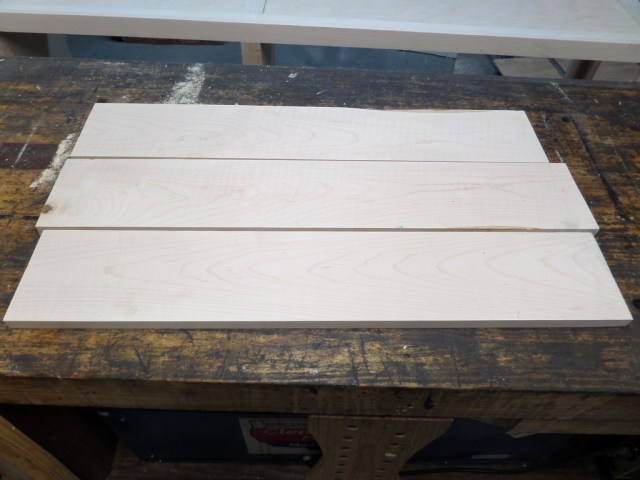
However, you can legitimately stretch a board if you know the trick. There are a couple of criteria that makes board stretching possible. One, the board you’re stretching has to be wider than the final width you need . The second, is the grain of the board should not be pronounced highlighting the fact that the board has been cut and re-glued. This cabinet will be painted white, so I wasn’t concerned about the grain. And, the width of the three boards together is 16″ while the top only needs to be 13 3/4″ wide, so I was good to go.

SAMSUNG CAMERA PICTURES

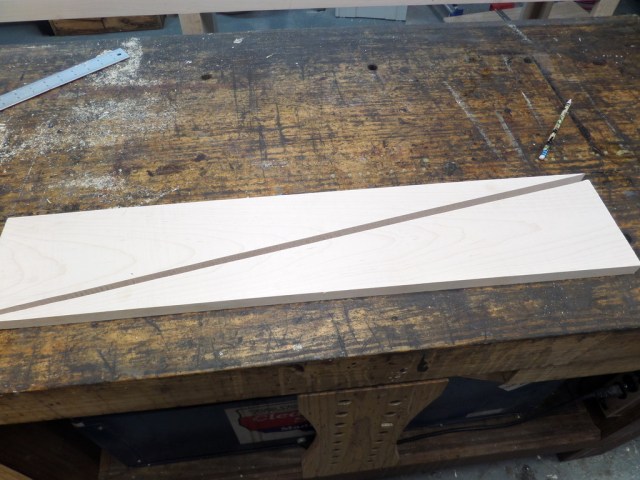
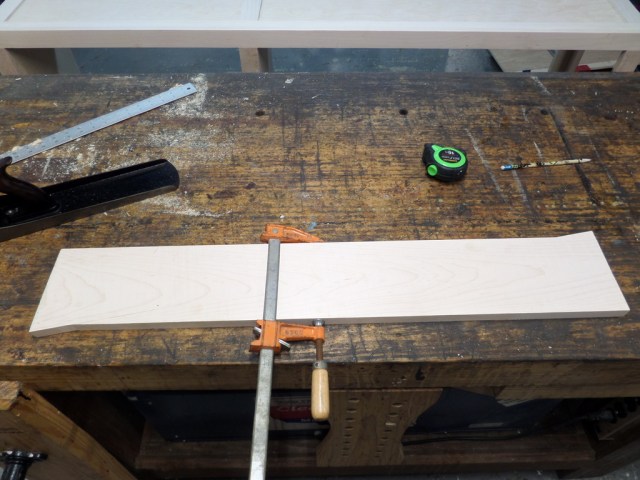
The first step in stretching a board is slicing it diagonal down it’s length on a band saw. Try to make sure the cut is as straight as possible so you don’t lose more of the board’s width than necessary.

SAMSUNG CAMERA PICTURES

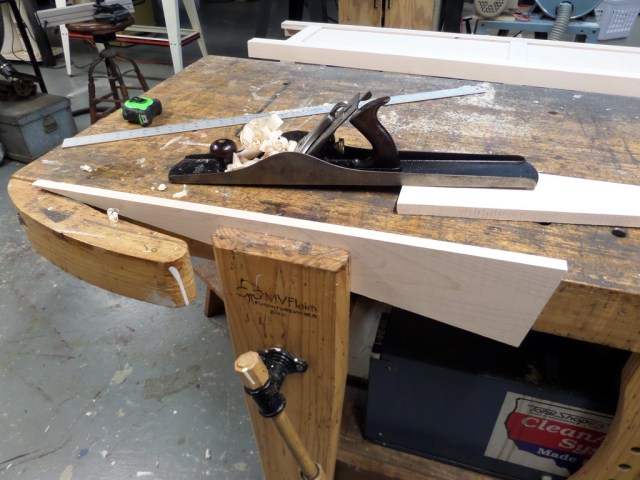
Next, plane the diagonal edge straight with a jointer plane to get a nice tight seam where the two halves are glued back together.

SAMSUNG CAMERA PICTURES

Bring the two diagonal halves together and slide them so that the length of the new board is where you need it. Since my top is 33 1/2″, I glued the board 34″ long. I’m sure there’s a mathematical formula that can determine how much width of board you lose for every inch you lengthen it but, I haven’t taken trigonometry in twenty years, so unfortunately, I can’t help you with that.

SAMSUNG CAMERA PICTURES

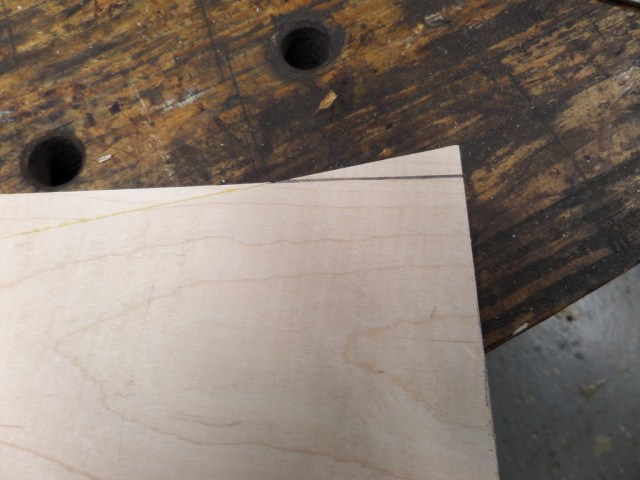
After the glue dries, you’ll have a little triangular shaped area you’ll need to remove with a hand plane. After you plane that area away, joint the whole edge straight with the jointer plane, and rip the other side straight on the table saw.

SAMSUNG CAMERA PICTURES

After I stretched all three boards and trimmed them square, I edge glued all three pieces together. This board is now 34″ long x 15″ wide.

SAMSUNG CAMERA PICTURES

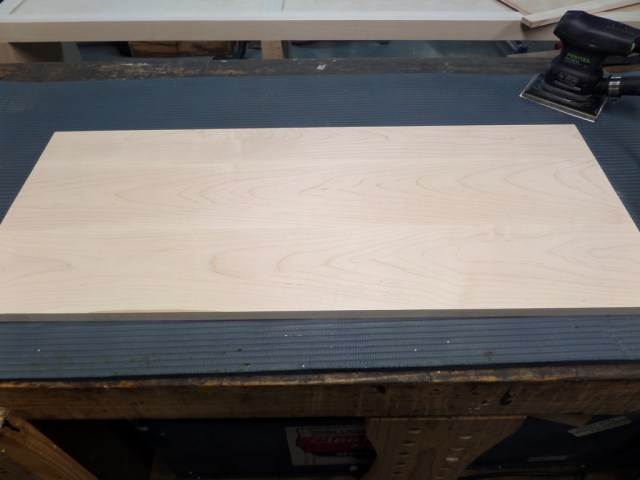
Here’s the board after it was sized to the final dimension of the top of the cabinet and sanded to 220 grit sand paper. This top will work perfectly fine and no one will ever know I screwed up.

SAMSUNG CAMERA PICTURES

Here’s a close up shot of the board. If you look closely, you can see the diagonal glue lines that pass through the grain. However, it still looks really nice even if the grain of the board would be shown in the piece of furniture.

Merry Christmas everyone!

Chairmaker’s Notebook: The Best Chairmaking Book on Earth

A few weeks ago I stopped by the home office of Popular Woodworking to go to their Lie-Nielsen Hand Tool Event. It’s always fun to take a break out of my day to play around with their tools. While I was there, I tried their No 5 1/2 jack plane that cut such nice shavings it almost got me thinking of quitting restoring my old Stanley planes.

Along with Lie-Nielsen, Lost Art Press was there selling their books and apparel. I took a peek inside one of their newest offerings, “Chairmaker’s Notebook”, to see if it was something I wanted to open my wallet for. I love books about making chairs. I’ve read over a half-dozen of them over the years including John Alexander’s “Make a Chair from a Tree: An Introduction to Working Green Wood” as well as Drew Langsner’s “The Chairmaker’s Workshop”. In fact, if I was ever a professional woodworker, I’d probably be a chair maker. So, I decided to bite the bullet and purchase the book. Needless to say, I’m glad I did.

I read a few chapters a night as I wanted all the information to absorb. What I love about this book is that it takes you through all the aspects of building a chair. From buying a log at a sawmill, to setting up a chairmaker’s workshop, to modifying and sharpening your tools, to assembly and finish. Peter even gives you a scaled model of a “sightline ruler” so you can photocopy it and make one yourself. It’s by far the most complete woodworking book I’ve ever read. Absolutely nothing was missed when writing this book.

As an example of how well this book is written, in the beginning, Peter talks about buying a log from a sawmill and what to look for when picking a log. He tells you not to buy the veneer logs as they tend to be too expensive and go for a premium. He says you should ask for “veneer rejects” because those logs will work just fine for building chairs and will be a whole lot cheaper. He then goes on to recommend that you bring a chain with you to wrap around your log so that the guy on the forklift can gently lower it down on your trailer instead of slamming it down breaking your trailer in half. It’s first hand stories like this that really sets this book apart from other books I have read.

A few years ago I made a few Windsor chairs of my own, but I used kiln dried lumber because I had no idea how to go buy a log. Regretfully, had I owned this book at the time, I would have made my chairs a whole lot better.

 photo ef7d23d7-3262-4d97-8202-2d51a3494aa6.jpg

Along with the excellent information in the book, Peter is also one hell of an artist as he drew all the pictures in the book. In fact, the pictures are so well drawn, that you know exactly what he is describing in his illustrations.

 photo 20150421_200208.jpg

If you have ever been intrigued with building a chair, then I highly recommend that you add this book to your library. You can buy it from The Lost Art Press.